
Religion
Pope Asks Pardon for Church’s ‘Crimes’ Against Indigenous


Pope Francis waves from his popemobile as he arrives to celebrate Mass at Christ the Redeemer square in Santa Cruz, Bolivia, Thursday, July 9, 2015. After the Mass, Francis’ main event of the day is a keynote speech to a summit of grass-roots groups whose advocacy for the poor and marginalized has been championed by history’s first Latin American pope. (AP Photo/Eduardo Verdugo)
NICOLE WINFIELD, Associated Press
FRANK BAJAK, Associated Press
SANTA CRUZ, Bolivia (AP) — Pope Francis apologized Thursday for the sins, offenses and crimes committed by the Catholic Church against indigenous peoples during the colonial-era conquest of the Americas, delivering a powerful mea culpa on the part of the church in the climactic highlight of his South American pilgrimage.
History’s first Latin American pope “humbly” begged forgiveness during an encounter in Bolivia with indigenous groups and other activists and in the presence of Bolivia’s first-ever indigenous president, Evo Morales.

Francis noted that Latin American church leaders in the past had acknowledged that “grave sins were committed against the native peoples of America in the name of God.” St. John Paul II, for his part, apologized to the continent’s indigenous for the “pain and suffering” caused during the 500 years of the church’s presence in the Americas during a 1992 visit to the Dominican Republic.
But Francis went farther, and said he was doing so with “regret.”
“I would also say, and here I wish to be quite clear, as was St. John Paul II: I humbly ask forgiveness, not only for the offenses of the church herself, but also for crimes committed against the native peoples during the so-called conquest of America,” he said to applause from the crowd.
Then deviating from his prepared script, he added: “I also want for us to remember the thousands and thousands of priests who strongly opposed the logic of the sword with the power of the cross. There was sin, and it was plentiful. But we never apologized, so I now ask for forgiveness. But where there was sin, and there was plenty of sin, there was also an abundant grace increased by the men who defended indigenous peoples.”
Francis’ apology was met with wild applause from the indigenous and other grass-roots groups gathered for a world summit of popular movements whose fight against injustice and social inequality has been championed by the pope.
“We accept the apologies. What more can we expect from a man like Pope Francis?” said Adolfo Chavez, a leader of a lowlands indigenous group. “It’s time to turn the page and pitch in to start anew. We indigenous were never lesser beings.”
The apology was significant given the controversy that has erupted in the United States over Francis’ planned canonization of the 18th century Spanish priest Junipero Serra, who set up missions across California. Native Americans contend Serra brutally converted indigenous people to Christianity, wiping out villages in the process, and have opposed his canonization. The Vatican insists Serra defended natives from colonial abuses.
Francis’ apology was also significant given the controversy that blew up the last time a pope visited the continent. Benedict XVI drew heated criticism when, during a 2007 visit to Brazil, he defended the church’s campaign to Christianize indigenous peoples. He said the Indians of Latin America had been “silently longing” to become Christians when Spanish and Portuguese conquerors violently took over their lands.
“In effect, the proclamation of Jesus and of his Gospel did not at any point involve an alienation of the pre-Columbus cultures, nor was it the imposition of a foreign culture,” Benedict told the continent’s bishops.
Amid an outcry from indigenous groups, Benedict subsequently acknowledged that “shadows accompanied the work of evangelizing” the continent and said European colonizers inflicted “sufferings and injustices” on indigenous populations. He didn’t apologize, however.
The Vatican spokesman, the Rev. Federico Lombardi, said that Francis wrote the speech on his own and that the apology for the sins, offenses and crimes of the church was a “particularly important declaration.”
Church officials have long insisted Catholic missionaries protected indigenous peoples from the abuses of military colonizers and were often punished by European colonial powers as a result. Francis’ own Jesuit order developed missions across the continent, educating the indigenous and turning their communities into organized Christian-Indian societies. The Jesuits were expelled in the 17th century.
Mexican Bishop Raul Vera, who attended the summit where Francis made the apology, said the church was essentially a passive participant in allowing natives to become enslaved under the Spanish “encomienda” system, by which the Spanish king granted land in conquered territories to those who settled there. Indians were allowed to live on the haciendas as long as they worked them.
“It’s evident that the church did not defend against it with all its efforts. It allowed it to be imposed,” Vera told The Associated Press earlier Thursday.
He acknowledged that John Paul had previously asked forgiveness for the church’s sins against indigenous. But he said Francis’ apology was particularly poignant given the setting.
Campesino leader Amandina Quispe, of Anta, Peru, who attended the grass-roots summit, said the church still holds lands it should give back to Andean natives. The former seat of the Inca empire, conquered by Spaniards in the 16th century, is an example.
“The church stole our land and tore down our temples in Cuzco and then it built its own churches — and now it charges admission to visit them,” she said.
Francis’ apology was not the first. After his 1992 apology, John Paul II issued a sweeping but vague apology for the Catholic Church’s sins of the past during the church’s 2000 Jubilee. A year later, he apologized specifically for missionary abuses against aborigines in Oceania. He did so in the first ever papal email.
During the speech, the longest and most important of Francis’ week-long, three-nation South American trip, the pope touched on some of the key priorities of his pontificate: the need to change an unjust global economic system that excludes the poor and replace it with a “communitarian economy” involving the “fitting distribution” of the Earth’s resources.
“Working for a just distribution of the fruits of the Earth and human labor is not mere philanthropy. It’s a moral obligation,” he said.
He ended the speech with a fierce condemnation of the world’s governments for what he called “cowardice” in defending the Earth. Echoing his environmental encyclical of last month, the pope said the Earth “is being pillaged, laid waste and harmed with impunity” while “one international summit after another takes place without any significant result.”
He urged the activists present to “keep up your struggle.”
It was a message he articulated earlier in the day when he denounced the “throwaway” culture of today’s society that discards anyone who is unproductive. He made the comments as he celebrated his first public Mass in Bolivia, South America’s poorest country.
The government declared a national holiday so workers and students could attend the Mass, which featured prayers in Guarani and Aimara, two of Bolivia’s indigenous languages, and an altar carved from wood by artisans of the Chiquitano people.
In a blending of the native and new, the famously unpretentious pope changed into his vestments for the Mass in a nearby Burger King.
___
Associated Press writers Paola Flores, Jacobo Garcia and Carlos Valdez contributed to this report.
___
Nicole Winfield on Twitter: at www.twitter.com/nwinfield
Copyright 2015 The Associated Press. All rights reserved. This material may not be published, broadcast, rewritten or redistributed.


Activism
Tribute to Allen Temple Baptist Church Pastor Emeritus Rev. Dr. J. Alfred Smith Sr., 94
Dr. Smith did not set out to become famous; however, he became a renowned, celebrated pastor, preacher, professor, prophet, author, and theologian. He has been honored as one of the top Black preachers of America, earned and received countless awards, and was the recipient of hundreds of honoree acknowledgements that would be a small book in itself.

“I decided early to give my life to something eternal and absolute. Not too little gods…. but to God who is the same yesterday, today, and tomorrow.” J. Alfred Smith Sr.
By Rev. Dr. Martha C. Taylor, Allen Temple Baptist Church Historian
Most tributes are written from the writer’s personal perspective of the deceased. My intent is to expand this tribute so that readers feel a sense of shared experiences and admiration. Pastor Smith had a unique gift of making each person feel as if their relationship with him was deep and personal; making every single one of us feel like the most important person he knew. To that extent this tribute is written as shared experiences and admiration for a man who was exceptional in his ministry, his mission and his life. To pay tribute to this giant of a man is a high privilege and honor.
The Rev. Dr. J. Alfred Smith Sr., lived a life beyond himself. Using his famous quote, “I wish I could make it plain,” my desire is to make this tribute plain so that the reader can feel Dr. Smith’s compassion, wisdom, his love for the other, his faithful service while he traveled the Jericho Road.
His deep faith was a powerful example to others; affirming a shared hope in God as we recall his lasting legacy. We celebrate his life, his love for the other, and a legacy that few will attain.
Alfred Smith was born May 19, 1931, in Kansas City, Missouri. He was raised by his loving mother, Amy Gates Smith, and his grandmother, Mrs. Martha Henry. He obtained his early education in Kansas City and graduated in 1948 from the R. T. Coles High School. That same year, he was licensed to preach, and in 1951 he was ordained at Pilgrim Rest Baptist Church in Kansas City where he served as assistant pastor for three years.
In 1950, Pastor Smith married the love of his life, Joanna Goodwin. To this union, five beautiful children were added to the family bringing even more joy and happiness. Their marriage lasted until she was called home to be with the Lord on Aug. 12, 2007. Later, The Lord blessed Dr. Smith and Rev. Bernestine Farley in marriage. Together they were powerful ministry partners with a blended family. Rev. Bernie, as she is fondly called, is an ordained minister having served at the Allen Temple Arms I and II.
During the 1950s to ’60s, Dr. Smith pastured various small churches in Missouri He also served for three years as principal of Lincoln Elementary School at Keyesville, Missouri, over a period of 20 years. With a heart to excel, and knowing that God wants his leaders properly equipped to serve the people, he burned the midnight oil and enrolled in several colleges and universities and earned four degrees; a Bachelor of Science in elementary education (1952), Bachelor of Divinity (1959), Masters of Theology in Church and Community (1966), Master’s in American Church History (1972), and a Doctor of Ministry (1975).
In 1971, Dr. Smith was elected senior pastor of Allen Temple Baptist Church. He was elected president of the Progressive Baptist State Convention of California in 1979, and president of the Progressive National Baptist Convention in 1986. Smith joined the teaching faculty at the American Baptist Seminary of the West as professor of Christian Ministries in 1992.
The question that arises at this time is what were some of the human qualities, God-given gifts, his dedication to his calling that impacted his ministry locally and beyond? Pastor Smith loved to pray; he knew his power and strength came from a deep prayer life with God. His meetings started with prayer, his phone calls ended in prayer, and amazingly, he often would make phone calls and say, “I was just thinking of you, let’s have a word of prayer.”
Dr. Smith did not set out to become famous; however, he became a renowned, celebrated pastor, preacher, professor, prophet, author, and theologian. He has been honored as one of the top Black preachers of America, earned and received countless awards, and was the recipient of hundreds of honoree acknowledgements that would be a small book in itself.
He addressed the United Nations to oppose South African apartheid and preached in pulpits worldwide, never shying away from controversial issues that represent the marginalized. Dr. Smith had a way of attracting people; he led marches that galvanized communities and people of varying nationalities to the steps of City Hall to speak on issues that plague communities. One of his favorite quotes: “To get to the sweet bye and bye you have to deal with the nasty now and now.” Dr. Smith fuels his passionate, prophetic preaching and praying power from his dependence upon God, which started at his mother’s knee, Amy Gates Smith.
Pastor Smith served everyone – from the lonely to high-ranking officials. Like Jesus, he walked with the marginalized with an open-door policy, all were welcome. The powerful often sought wise counsel from him. Pastor Smith preached and taught all over the universe.
Life has many turns; the Rev. Dr. Jacqueline A. Thompson – Allen Temple’s senior pastor – was licensed and ordained by Dr. Smith; she was his daughter in the ministry who became his pastor. They shared a close relationship.
James Ella James said it like this “He was one of the most important people in my life. He was a real friend, brother, trustworthy and very caring person. It is so hard to describe James Alfred Smith. I don’t know anybody like him.”
I believe we all share James Ella James thoughts and feelings about Dr Smith.
He was never too busy to listen; he had a compassionate heart that comforted others. Most of us know he could shed tears at the drop of a hat. He was a wonderful counselor who offered grace and perspective.
After Sunday morning worship, he always went to the narthex, shook hands, and personally greeted people. He told me when you are greeting the people don’t forget to pat the little children on the head and tell them how much they are growing.
The Rev Dr. Otis Moss Jr said Pastor Smith’s preaching, teaching, and leadership commitments did not take him away from human rights struggles. ‘They take him deeper and deeper into the human rights struggles.”
Perhaps one of the outstanding contributions Pastor Smith made in his ministry was not only housing for seniors and HIV AIDS, but he also ensured that women were ordained and preached in the pulpit and elsewhere.
Among those he ordained early on was Rev. Dr. Ella Mitchell. Women from the four corners of America, there are numerous women who owe Dr. Smith a debt of gratitude for embracing them into the ministry.
When Dr. Smith’s health was challenged with a stroke, crippling him, he then preached from a wheelchair. His last sermon at Allen Temple was on Father’s Day, June 15: “A Good Daddy and his two sons.”
On Sept. 19, 2025, the Lord said, “Well Done, Good and Faithful Servant.”
Dr. Smith’s legacy of faith will live on.
All Services will be held on the Allen Temple Baptist Church Campus and will be livestreamed on Thursday, Oct. 9, 2025, lying in repose from 2 p.m. to 5 p.m., followed by an evening of worship and witness on Friday, Oct. 10, Celebration of Life – 11 a.m.
Activism
Juneteenth: Celebrating Our History, Honoring Our Shared Spaces
It’s been empowering to watch Juneteenth blossom into a widely celebrated holiday, filled with vibrant outdoor events like cookouts, festivals, parades, and more. It’s inspiring to see the community embrace our history—showing up in droves to celebrate freedom, a freedom delayed for some enslaved Americans more than two years after the Emancipation Proclamation was signed.

By Wayne Wilson, Public Affairs Campaign Manager, Caltrans
Juneteenth marks an important moment in our shared history—a time to reflect on the legacy of our ancestors who, even in the face of injustice, chose freedom, unity, and community over fear, anger, and hopelessness. We honor their resilience and the paths they paved so future generations can continue to walk with pride.
It’s been empowering to watch Juneteenth blossom into a widely celebrated holiday, filled with vibrant outdoor events like cookouts, festivals, parades, and more. It’s inspiring to see the community embrace our history—showing up in droves to celebrate freedom, a freedom delayed for some enslaved Americans more than two years after the Emancipation Proclamation was signed.
As we head into the weekend full of festivities and summer celebrations, I want to offer a friendly reminder about who is not invited to the cookout: litter.
At Clean California, we believe the places where we gather—parks, parade routes, street corners, and church lots—should reflect the pride and beauty of the people who fill them. Our mission is to restore and beautify public spaces, transforming areas impacted by trash and neglect into spaces that reflect the strength and spirit of the communities who use them.
Too often, after the music fades and the grills cool, our public spaces are left littered with trash. Just as our ancestors took pride in their communities, we honor their legacy when we clean up after ourselves, teach our children to do the same, and care for our shared spaces.
Small acts can inspire big change. Since 2021, Clean California and its partners have collected and removed over 2.9 million cubic yards of litter. We did this by partnering with local nonprofits and community organizations to organize grassroots cleanup events and beautification projects across California.
Now, we invite all California communities to continue the incredible momentum and take the pledge toward building a cleaner community through our Clean California Community Designation Program. This recognizes cities and neighborhoods committed to long-term cleanliness and civic pride.
This Juneteenth, let’s not only celebrate our history—but also contribute to its legacy. By picking up after ourselves and by leaving no litter behind after celebrations, we have an opportunity to honor our past and shape a cleaner, safer, more vibrant future.
Visit CleanCA.com to learn more about Clean California.
Activism
Oak Temple Hill Hosts Interfaith Leaders from Across the Bay Area
Distinguished faith leaders Rev. Ken Chambers, executive director the Interfaith Council of Alameda County (ICAC); Michael Pappas, executive director of the San Francisco Interfaith Council; and Dr. Ejaz Naqzi, president of the Contra Costa County Interfaith Council addressed the group on key issues including homelessness, food insecurity, immigration, and meaningful opportunities to care for individuals and communities in need.

Special to the Post
Interfaith leaders from the Bay Area participated in a panel discussion at the annual meeting of communication leaders from The Church of Jesus Christ of Latter-day Saints held on Temple Hill in Oakland on May 31. Distinguished faith leaders Rev. Ken Chambers, executive director the Interfaith Council of Alameda County (ICAC); Michael Pappas, executive director of the San Francisco Interfaith Council; and Dr. Ejaz Naqzi, president of the Contra Costa County Interfaith Council addressed the group on key issues including homelessness, food insecurity, immigration, and meaningful opportunities to care for individuals and communities in need.
Chambers, said he is thankful for the leadership and support of the Church of Jesus Christ Latter-Day Saints’ global ministry, which recently worked with the interfaith congregations of ICAC to help Yasjmine Oeveraas a homeless Norwegian mother and her family find shelter and access to government services.
Oeveraas told the story of how she was assisted by ICAC to the Oakland Post. “I’m a Norwegian citizen who escaped an abusive marriage with nowhere to go. We’ve been homeless in Florida since January 2024. Recently, we came to California for my son’s passport, but my plan to drive for Uber fell through, leaving us homeless again. Through 2-1-1, I was connected to Rev. Ken Chambers, pastor of the West Side Missionary Baptist Church and president of the Interfaith Council of Alameda County, and his car park program, which changed our lives. We spent about a week-and-a-half living in our car before being blessed with a trailer. After four years of uncertainty and 18 months of homelessness, this program has given us stability and hope again.

“Now, both my son and I have the opportunity to continue our education. I’m pursuing cyber analytics, something I couldn’t do while living in the car. My son can also complete his education, which is a huge relief. This program has given us the space to focus and regain our dignity. I am working harder than ever to reach my goals and give back to others in need.”
Richard Kopf, communication director for The Church of Jesus Christ in the Bay Area stated: “As followers of Jesus Christ, we embrace interfaith cooperation and are united in our efforts to show God’s love for all of his children.”


WORK FROM HOME
Home-based business with potential monthly income of $10K+ per month. A proven training system and website provided to maximize business effectiveness. Perfect job to earn side and primary income. Contact Lynne for more details: Lynne4npusa@gmail.com 800-334-0540


Bling It On: Holiday Lights Brighten Dark Nights All Around the Bay

Oakland Council Expands Citywide Security Cameras Despite Major Opposition

Lu Lu’s House is Not Just Toying Around with the Community

Desmond Gumbs — Visionary Founder, Mentor, and Builder of Opportunity

Families Across the U.S. Are Facing an ‘Affordability Crisis,’ Says United Way Bay Area

Black Arts Movement Business District Named New Cultural District in California

Support Your Child’s Mental Health: Medi-Cal Covers Therapy, Medication, and More

Ann Lowe: The Quiet Genius of American Couture

2025 in Review: Seven Questions for Black Women’s Think Tank Founder Kellie Todd Griffin

BRIDGE Housing President and CEO Ken Lombard Scores Top Honors for Affordable Housing Leadership

Oakland School Board Grapples with Potential $100 Million Shortfall Next Year

COMMENTARY: If You Don’t Want Your ‘Black Card’ Revoked, Watch What You Bring to Holiday Dinners

Mayor Lee, City Leaders Announce $334 Million Bond Sale for Affordable Housing, Roads, Park Renovations, Libraries and Senior Centers

Fayeth Gardens Holds 3rd Annual Kwanzaa Celebration at Hayward City Hall on Dec. 28

Post Salon to Discuss Proposal to Bring Costco to Oakland Community meeting to be held at City Hall, Thursday, Dec. 18

Oakland Post: Week of November 12 – 18, 2025

IN MEMORIAM: William ‘Bill’ Patterson, 94

How Charles R. Drew University Navigated More Than $20 Million in Fed Cuts – Still Prioritizing Students and Community Health

No Justice in the Justice System

Oakland Post: Week of November 19 – 25, 2025

LIHEAP Funds Released After Weeks of Delay as States and the District Rush to Protect Households from the Cold

Seth Curry Makes Impressive Debut with the Golden State Warriors

Oakland Post: Week of November 26 – December 2, 2025

Seven Steps to Help Your Child Build Meaningful Connections

Beyoncé and Jay-Z make rare public appearance with Lewis Hamilton at Las Vegas Grand Prix

Seven Steps to Help Your Child Build Meaningful Connections

Lewis Hamilton set to start LAST in Saturday Night’s Las Vegas Grand Prix

Protecting Pedophiles: The GOP’s Warped Crusade Against Its Own Lies

The Perfumed Hand of Hypocrisy: Trump Hosted Former Terror Suspect While America Condemns a Muslim Mayor

Trinidad and Tobago – Prime Minister Confirms U.S. Marines Working on Tobago Radar System

Hyundai Ioniq 5 Parking, Safety, and 360 View #shorts

2025 Ioniq 5 New Wiper & Powerful Performance! #shorts

Electric SUV Range: Is 259 Miles Enough? #shorts

EV Charging: How Fast Can You Charge an Electric Vehicle? #shorts

Biometric Cooling… Messaging Seats…Come on! 2025 Infiniti QX80 Autograph 4WD

Charged Up: Witness the Magic of a Fully Electric Car! #shorts

Range Rover Sport PHEV Included…: See What’s Inside This Luxury SUV! #shorts

Invisible Hood View: Perfect Parking with X-Ray Vision! #shorts

AI Is Reshaping Black Healthcare: Promise, Peril, and the Push for Improved Results in California

ESSAY: Technology and Medicine, a Primary Care Point of View

Sanctuary Cities

The RESISTANCE – FREEDOM NOW

STATE OF THE PEOPLE: Freddie

ECONOMIC BOYCOTT DAY!!!!!

I told You So
-
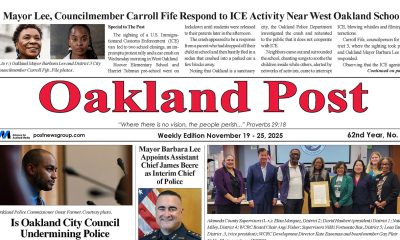 Activism4 weeks ago
Oakland Post: Week of November 19 – 25, 2025
-
 #NNPA BlackPress3 weeks ago
LIHEAP Funds Released After Weeks of Delay as States and the District Rush to Protect Households from the Cold
-
 Alameda County3 weeks ago
Seth Curry Makes Impressive Debut with the Golden State Warriors
-
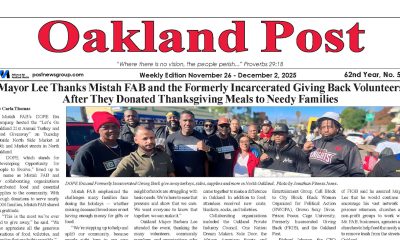 Activism4 weeks ago
Oakland Post: Week of November 26 – December 2, 2025
-
 #NNPA BlackPress3 weeks ago
Seven Steps to Help Your Child Build Meaningful Connections
-
 #NNPA BlackPress4 weeks ago
Beyoncé and Jay-Z make rare public appearance with Lewis Hamilton at Las Vegas Grand Prix
-
 #NNPA BlackPress3 weeks ago
Seven Steps to Help Your Child Build Meaningful Connections
-
 #NNPA BlackPress3 weeks ago
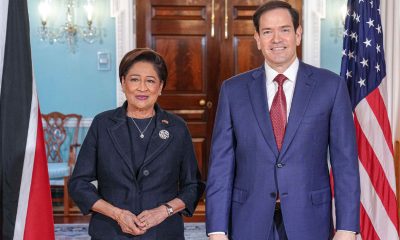
Trinidad and Tobago – Prime Minister Confirms U.S. Marines Working on Tobago Radar System
