
Oakland
Open Letter: County Board of Supervisors Should Reject Transfer of Youth Center to Sheriff’s Office

Let’s not play politics with our youth. The school to prison pipeline is a reality for many Black and Brown young people in Alameda County.
Supervisor Nate Miley (District 4) is positioning the Alameda County Sheriff’s Office to take over the REACH Ashland Youth Center from its current lead operator, Alameda County Health Care Services Agency.
The foundation of this proposed transfer to a law enforcement agency goes against the fundamental values, philosophy and approach to community and youth investment that promote racial and gender equity, community building and sustaining healthy communities.
Law enforcement’s position in society is to enforce the law, militarize communities, not to mention that the Sheriff’s Office oversees county jail facilities and has an incentive to keep those beds filled.
REACH Ashland Youth Center was, and still is, a dream of youth and community members in the unincorporated area of Ashland/Cherryland in Alameda County.
After numerous years of planning and design, led and operated by the Alameda County Health Care Services Agency (HCSA), REACH opened its doors in 2013.
HCSA and partners engaged in extensive community/youth input, facility design, strategic planning process and developing public-private partnerships. REACH AYC primarily serves the unincorporated area of Alameda County (Ashland, Cherryland, San Lorenzo) – a community made up of predominantly working-class families, African-American and Latino, immigrants, undocumented community members and recent refugees.
The concerning matter is that Supervisor Miley is positioning the Alameda County Sheriff’s Office to take over the lead operations and management of the youth center without an extensive youth and community process, until mandated by the board in March.
According to a memo released in December 2017, he announced the decision to transfer management to the Sheriff’s Office, effective July 1, 2018.
Many community members are concerned about this change as it does not appear there was robust engagement with community stakeholders about the change of management of REACH from a health focused agency to a law enforcement agency.
Supervisor Miley is now backtracking, and the Board of Supervisors is requiring community input through a series of “listening sessions” to be held in April and May.
We demand an open, transparent, community/youth involved process for any decisions that transfer oversight of the REACH Ashland Youth Center (AYC) from Alameda County Health Care Services Agency (HCSA) to any agency that best meets the strategic goals of the youth center.
The Alameda County Board of Supervisors has a major decision to make. REACH AYC was created with an open, community led strategic planning process.
We urge each of you to contact your supervisor regarding REACH AYC and request the following:
- Do Not Allow the transfer of REACH AYC to go from HCSA to the Sheriff’s Office and rescind the letter/memo that Supervisor Miley released;
- Mandate that, if there is to be a change in the lead operator (County agency or other), the decision must be based on a new 5-year strategic plan for REACH AYC, that then goes out to public bid;
- Ensure a fully engaged community and youth process is core to the strategic plan and that youth are in positions of decision making in the process/plan;
- Require the bid process to go through a non-biased review committee;
- Demand board oversight of transition, if it occurs.
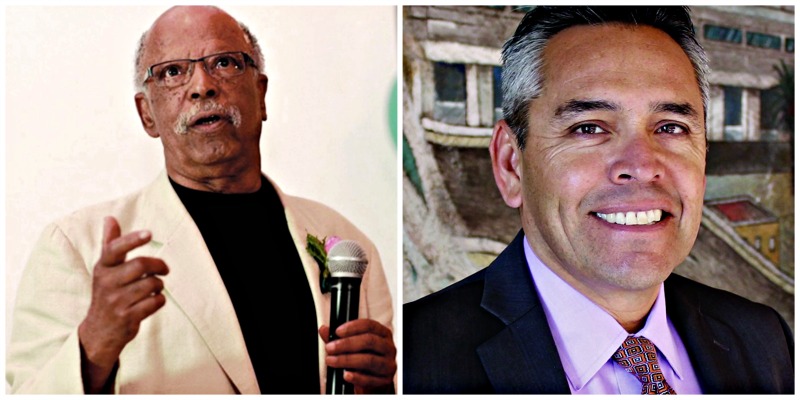
Joe Brooks and Chris Iglesias are members of the African American Latino Action Alliance (AALAA).




Activism
BRIDGE Housing President and CEO Ken Lombard Scores Top Honors for Affordable Housing Leadership
The Development Company of the Year honor represents a milestone for BRIDGE Housing, which received the Gold award—its top designation—in a category that included both affordable and market-rate developers. The recognition caps what has been one of the strongest growth periods in the organization’s 42-year history.

By the Oakland Post Staff
San Francisco-based BRIDGE Housing and its president and CEO, Ken Lombard, have been named among the nation’s housing industry standouts, earning two of the top prizes at the 2025 Multi-Housing News Excellence Awards.
BRIDGE Housing was named Development Company of the Year, while Lombard received Executive of the Year, recognition that places the nonprofit affordable housing provider alongside leading national developers of both affordable and market-rate housing.
The awards were announced in New York for the accomplishments achieved during 2024.
Multi-Housing News is one of the industry’s most respected publications. Award winners are selected by a panel of housing professionals, including multifamily developers, architects, and owners.
“BRIDGE Housing is deeply honored to be recognized by Multi-Housing News and our industry peers,” Lombard said. “These awards are a testament to the high-impact, mission-driven work by BRIDGE’s exceptional team to deliver quality affordable housing and support services that empower residents to improve their lives.”
The Development Company of the Year honor represents a milestone for BRIDGE Housing, which received the Gold award—its top designation—in a category that included both affordable and market-rate developers. The recognition caps what has been one of the strongest growth periods in the organization’s 42-year history.
In 2024, BRIDGE significantly expanded its footprint across California, Oregon, and Washington. That momentum continued into 2025, with portfolio growth of 9%, including the addition of nine new communities and 1,187 new or acquired affordable housing units. The nonprofit also added three new projects to its development pipeline as it nears a portfolio of 16,000 units.

The growth reflects a broader strategy aimed at accelerating both acquisitions and ground-up development, supported by partnerships with major financial institutions and innovative capital markets strategies. BRIDGE has also emphasized high-quality design and deep community engagement as central elements of its approach.
BRIDGE became the first affordable housing developer to issue tax-exempt construction bonds for one of the largest affordable housing projects in Portland, Ore., leveraging its strong credit rating.
Earlier this year, the nonprofit launched the BRIDGE Housing Impact Fund, with a goal of investing $1 billion to preserve and create affordable housing. It also closed on $175 million in taxable general-obligation bonds after increasing the offering in response to strong investor demand.
The company’s performance also underscores the role of Lombard, who has led BRIDGE since 2021 and was honored individually for his leadership.
Under Lombard’s tenure, BRIDGE has built a new leadership team with experience drawn from both the nonprofit and private sectors, with a particular focus on what the organization describes as efforts to “break the status quo,” especially in affordable housing finance. Those initiatives have helped reduce capital and construction costs, strengthen relationships with institutional investors, and expand resident support services.
Today, BRIDGE Housing serves more than 33,000 residents across 139 communities on the West Coast.
“Ken has dedicated his career to innovative real estate solutions that improve the quality of life in underserved neighborhoods,” said Kenneth Novack, chair of BRIDGE Housing’s board of directors. “His visionary leadership and the work of our incredible team have positioned BRIDGE for long-term growth that will extend our impact throughout the West Coast.”
Founded in 1983, BRIDGE Housing has helped create more than 23,000 affordable homes with a total development cost of $6 billion.
Activism
Oakland School Board Grapples with Potential $100 Million Shortfall Next Year
The school board approved Superintendent Denise Saddler’s plan for major cuts to schools and the district office, but they are still trying to avoid outside pressure to close flatland schools.

By Post Staff
The Oakland Board of Education is continuing to grapple with a massive $100 million shortfall next year, which represents about 20% of the district’s general fund budget.
The school board approved Superintendent Denise Saddler’s plan for major cuts to schools and the district office, but they are still trying to avoid outside pressure to close flatland schools.
Without cuts, OUSD is under threat of being taken over by the state. The district only emerged from state receivership in July after 22 years.
“We want to make sure the cuts are away from the kids,” said Kampala Taiz-Rancifer, president of the Oakland Education Association, the teachers’ union. “There are too many things that are important and critical to instruction, to protecting our most vulnerable kids, to safety.”
The school district has been considering different scenarios for budget cuts proposed by the superintendent, including athletics, libraries, clubs, teacher programs, and school security.
The plan approved at Wednesday’s board meeting, which is not yet finalized, is estimated to save around $103 million.
Staff is now looking at decreasing central office staff and cutting extra-curricular budgets, such as for sports and library services. It will also review contracts for outside consultants, limiting classroom supplies and examine the possibility of school closures, which is a popular proposal among state and county officials and privatizers though after decades of Oakland school closures, has been shown to save little if any money.
Advice
COMMENTARY: If You Don’t Want Your ‘Black Card’ Revoked, Watch What You Bring to Holiday Dinners
From Thanksgiving to Christmas to New Year’s Day, whether it’s the dining room table or the bid whist (Spades? Uno, anyone?) table, your card may be in danger.

By Wanda Ravernell
Post Staff
From the fourth week of November to the first week in January, if you are of African descent, but particularly African American, certain violations of cultural etiquette will get your ‘Black card’ revoked.
From Thanksgiving to Christmas to New Year’s Day, whether it’s the dining room table or the bid whist (Spades? Uno, anyone?) table, your card may be in danger.
It could take until Super Bowl Sunday for reinstatement.
I don’t know much about the card table, but for years I was on probation by the ‘Aunties,’ the givers and takers of Black cards.
How I Got into Trouble
It was 1970-something and I was influenced by the health food movement that emerged from the hippie era. A vegetarian (which was then considered sacrilegious by most Black people I knew) prepared me a simple meal: grated cheese over steamed broccoli, lentils, and brown rice.
I introduced the broccoli dish at the Friday night supper with my aunt and grandfather. She pronounced the bright green broccoli undone, but she ate it. (I did not, of course, try brown rice on them.)
I knew that I would be allowed back in the kitchen when she attempted the dish, but the broccoli had been cooked to death. (Y’all remember when ALL vegetables, not just greens, were cooked to mush?)
My Black card, which had been revoked was then reattained because they ate what I prepared and imitated it.
Over the decades, various transgressions have become normalized. I remember when having a smoked turkey neck instead of a ham hock in collard greens was greeted with mumblings and murmurings at both the dining room and card tables. Then came vegan versions with just olive oil (What? No Crisco? No bacon, at least?) and garlic. And now my husband stir fries his collards in a wok.
But No Matter How Things Have Changed…
At holiday meals, there are assigned tasks. Uncle Jack chopped raw onions when needed. Uncle Buddy made the fruit salad for Easter. My mother brought the greens in winter, macaroni salad in summer. Aunt Deanie did the macaroni and cheese, and the great aunts, my deceased grandmother’s sisters, oversaw the preparation of the roast beef, turkey, and ham. My father, if he were present, did the carving.
These designations/assignments were binding agreements that could stand up in a court of law. Do not violate the law of assignments by bringing some other version of a tried-and-true dish, even if you call it a new ‘cheese and noodle item’ to ‘try out.’ The auntie lawgivers know what you are trying to do. It’s called a menu coup d’état, and they are not having it.
The time for experiments is in your own home: your spouse and kids are the Guinea pigs.
My mother’s variation of a classic that I detested from that Sunday to the present was adding crushed pineapple to mashed sweet potatoes. A relative stops by, tries it, and then it can be introduced as an add-on to the standard holiday menu.
My Aunt Vivian’s concoctions from Good Housekeeping or Ladies’ Home Journal magazine also made it to the Black people’s tables all over the country in the form of a green bean casserole.
What Not to Do and How Did It Cross Your Mind?
People are, of all things holy, preparing mac ‘n’ cheese with so much sugar it tastes like custard with noodles in it.
Also showing up in the wrong places: raisins. Raisins have been reported in the stuffing (makes no sense unless it’s in a ‘sweet meats’ dish), in a pan of corn bread, and – heresy in the Black kitchen – the MAC ‘n’ CHEESE.
These are not mere allegations: There is photographic evidence of these Black card violations, but I don’t want to defame witnesses who remained present at the scene of the crimes.
The cook – bless his/her heart – was probably well-meaning, if ignorant. Maybe they got the idea from a social media influencer, much like Aunt Viv got recipes from magazines.
Thankfully, a long-winded blessing of the food at the table can give the wary attendee time to locate the oddity’s place on the table and plan accordingly.
But who knows? Innovation always prevails, for, as the old folks say, ‘waste makes want.’ What if the leftovers were cut up, dipped in breadcrumbs and deep fried? The next day, that dish might make it to the TV tray by the card table.
An older cousin – on her way to being an Auntie – in her bonnet, leggings, T-shirt, and bunny slippers and too tired to object, might try it and like it….
And if she ‘rubs your head’ after eating it, the new dish might be a winner and (Whew!) everybody, thanks God, keeps their Black cards.
Until the next time.

WORK FROM HOME
Home-based business with potential monthly income of $10K+ per month. A proven training system and website provided to maximize business effectiveness. Perfect job to earn side and primary income. Contact Lynne for more details: Lynne4npusa@gmail.com 800-334-0540


Support Your Child’s Mental Health: Medi-Cal Covers Therapy, Medication, and More

Ann Lowe: The Quiet Genius of American Couture

2025 in Review: Seven Questions for Black Women’s Think Tank Founder Kellie Todd Griffin

BRIDGE Housing President and CEO Ken Lombard Scores Top Honors for Affordable Housing Leadership

Oakland School Board Grapples with Potential $100 Million Shortfall Next Year

COMMENTARY: If You Don’t Want Your ‘Black Card’ Revoked, Watch What You Bring to Holiday Dinners

Mayor Lee, City Leaders Announce $334 Million Bond Sale for Affordable Housing, Roads, Park Renovations, Libraries and Senior Centers

Fayeth Gardens Holds 3rd Annual Kwanzaa Celebration at Hayward City Hall on Dec. 28

Post Salon to Discuss Proposal to Bring Costco to Oakland Community meeting to be held at City Hall, Thursday, Dec. 18

Oakland Post: Week of December 10 – 16, 2025

Seth Curry Makes Impressive Debut with the Golden State Warriors

A Nation in Freefall While the Powerful Feast: Trump Calls Affordability a ‘Con Job’

The Numbers Behind the Myth of the Hundred Million Dollar Contract

FBI Report Warns of Fear, Paralysis, And Political Turmoil Under Director Kash Patel

ACA Deadline Nears as 20 million Brace for Higher Health Costs

Oakland Post: Week of October 29 – November 4, 2025

Oakland Post: Week of November 5 – 11, 2025

Oakland Post: Week of November 12 – 18, 2025

IN MEMORIAM: William ‘Bill’ Patterson, 94

How Charles R. Drew University Navigated More Than $20 Million in Fed Cuts – Still Prioritizing Students and Community Health

No Justice in the Justice System

Oakland Post: Week of November 19 – 25, 2025

Beyoncé and Jay-Z make rare public appearance with Lewis Hamilton at Las Vegas Grand Prix

Lewis Hamilton set to start LAST in Saturday Night’s Las Vegas Grand Prix

LIHEAP Funds Released After Weeks of Delay as States and the District Rush to Protect Households from the Cold
Seth Curry Makes Impressive Debut with the Golden State Warriors

Oakland Post: Week of November 26 – December 2, 2025

Seven Steps to Help Your Child Build Meaningful Connections

Seven Steps to Help Your Child Build Meaningful Connections

Protecting Pedophiles: The GOP’s Warped Crusade Against Its Own Lies

Hyundai Ioniq 5 Parking, Safety, and 360 View #shorts

2025 Ioniq 5 New Wiper & Powerful Performance! #shorts

Electric SUV Range: Is 259 Miles Enough? #shorts

EV Charging: How Fast Can You Charge an Electric Vehicle? #shorts

Biometric Cooling… Messaging Seats…Come on! 2025 Infiniti QX80 Autograph 4WD

Charged Up: Witness the Magic of a Fully Electric Car! #shorts

Range Rover Sport PHEV Included…: See What’s Inside This Luxury SUV! #shorts

Invisible Hood View: Perfect Parking with X-Ray Vision! #shorts

AI Is Reshaping Black Healthcare: Promise, Peril, and the Push for Improved Results in California

ESSAY: Technology and Medicine, a Primary Care Point of View

Sanctuary Cities

The RESISTANCE – FREEDOM NOW

STATE OF THE PEOPLE: Freddie

ECONOMIC BOYCOTT DAY!!!!!

I told You So
-
 Activism4 weeks ago
IN MEMORIAM: William ‘Bill’ Patterson, 94
-
 Activism3 weeks ago
Oakland Post: Week of November 19 – 25, 2025
-
 #NNPA BlackPress3 weeks ago
Beyoncé and Jay-Z make rare public appearance with Lewis Hamilton at Las Vegas Grand Prix
-
 #NNPA BlackPress4 weeks ago
Lewis Hamilton set to start LAST in Saturday Night’s Las Vegas Grand Prix
-
 #NNPA BlackPress2 weeks ago
LIHEAP Funds Released After Weeks of Delay as States and the District Rush to Protect Households from the Cold
-
 Alameda County2 weeks ago
Seth Curry Makes Impressive Debut with the Golden State Warriors
-
 Activism3 weeks ago
Oakland Post: Week of November 26 – December 2, 2025
-
 #NNPA BlackPress2 weeks ago
Seven Steps to Help Your Child Build Meaningful Connections
