
Community
Veterans receive free resources at U.S. VETS Inglewood
WAVE NEWSPAPERS — Los Angeles County is currently grappling with a homeless crisis and statistics indicate that veterans in the county experience homelessness at a higher rate than the civilian population. Los Angeles County leads the way with the largest population of homeless veterans in the country.

By Shirley Hawkins

INGLEWOOD — As the country celebrates Independence Day, thousands of military veterans who fought for their country are living under freeways, seeking refuge in shelters or simply surviving on the streets.
Los Angeles County is currently grappling with a homeless crisis and statistics indicate that veterans in the county experience homelessness at a higher rate than the civilian population. Los Angeles County leads the way with the largest population of homeless veterans in the country.
In January, volunteers from the Los Angeles Homeless Services Authority counted 3,874 veterans living in tents, cars or on the street.Approximately 2,800 veterans received housing last year in Los Angeles, but vets sleeping on the streets or in temporary shelters still increased by 12%.
Due to the extreme housing shortages and high rents in L.A. County, many veterans find themselves losing their residences. Statistics indicate that the same number of vets — 12% — fall into homelessness, many for the first time. The population of former military personnel living on the streets dropped by just 12 individuals between 2018 and 2019.
But the nonprofit U. S. VETS in Inglewood, located at 733 Hindry Ave., is on a mission to assist veterans with free services and to provide housing for as many veterans as possible.
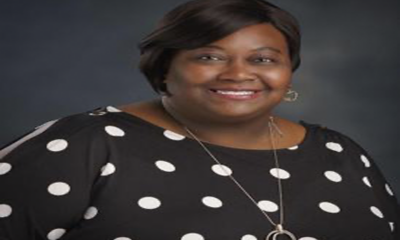
U. S. VETS Inglewood Executive Director Akilah Templeton said she is dedicated to helping vets transition off the streets and move into permanent housing.
“It’s been quite a journey, but every day you have the opportunity to serve,” she said, adding, “Currently, we have 600 vets at the site and 225 of those are in transitional housing.”
U.S Vets opened its doors in 1993 with only five clients. Since then, it has grown to operate more than 600 beds and supplies both transitional and permanent housing. To date, the organization has served more than 10,000 veterans.Funds to run the facility are derived from local and federal funding, including funds from the Veterans Administration, the Los Angeles Homeless Services Authority, several banks as well as individual and corporate donors.
Housed in an eight-story, white brick building, the nonprofit organization provides drug and alcohol counseling and free housing as well as comprehensive supportive services that include individual case management, employment assistance, job placement, psychological counseling and social activities. A workforce program helps more than 100 veterans return to employment each year.
Services include Veterans in Progress, which prepares veterans to obtain and maintain employment while providing comprehensive support including housing, counseling and basic needs.
The Fathers Program helps non-custodial fathers to become more emotionally and financially involved in their children’s lives and helps them find employment along with comprehensive support.
The High Barriers Program works with veterans who have additional obstacles to overcome in seeking employment including advanced age, a history of felonies and incarceration or long periods of unemployment.
The Substance Abuse Services Coordination Agency (SASCA) works in conjunction with a community parolee program to provide case management, substance abuse education and re-entry programs for veterans.
The Long-Term Supportive Housing program provides affordable, sober, service-enriched rental housing for vets with employment or other income such as disability payments.
Workforce Development offers career counseling, training, interviewing skills, job placement services and employment support.
Sixty-four year old Bobby Lee Marshall, a resident at U.S. VETS, said that the organization has been a godsend.
Born in Mississippi and raised in Arkansas, Marshall joined the U.S. Army. While traveling with his unit to Beirut, Lebanon, he got hurt and fell off a five-ton trunk.
“When I went home, my mother died and I started drinking,” he recalls. “I turned to alcohol and drugs. I came to California and lived on Skid Row. I was suffering from post-traumatic stress disorder and I slept in boxes on the street.
“A friend told me about U.S. VETS. He had been at his lowest ebb, but he had gone from zero to hero. He came back to see me on Skid Row and he looked and smelled good. He was working at the Veteran’s Administration. He said, ‘Hey, I’m at this place called U.S. VETS and you should come and check it out,’” Marshall said.
“I decided to try it too. When I got here, so many powerful things began to take place. I started working on myself, working to receive my benefits and started using the career center here. I started doing gardening on the grounds and that lifted my spirits.
“Now I’m back in touch with my family. It had been eight years since I had seen my family because I was pitying myself feeling ashamed about myself.”
Pausing, he said, “When vets go through these conflicts of war, it does something to the vet. A lot of times they come back home and the family cannot deal with them and they do not understand what happened to the vet.”
Marshall said the help he has received at U.S. VETS has been life transforming.
“It’s like a power touch, there’s something magical about U. S. Vets,” he said. “A vet can come here with zero and he goes to hero. You begin to feel good about yourself because they have powerful case management here.”
Templeton said that any vet can visit and learn about their services.
“A veteran can simply walk into our facility — no appointment is needed,” Templeton said. “We even provide them with a lunch.
“Then they meet with our outreach counselors for a brief screening and assessment. Once we find out what their needs are, they are placed in an individual treatment program, so they receive supplemental services from day one. If they need it, we can offer them an emergency shelter bed which allows us to house vets that may not have an honorable discharge, so we cover all the bases.”
Templeton said that U.S. VETS Inglewood is constantly reaching out to the community. Outreach workers take to the streets daily to search for veterans and to inform them about the free programs that are available.
“Many veterans are not aware that they qualify for an array of free services,” Templeton said. “I am shocked that so many veterans don’t know that we can offer them help. Every time I come face to face with a family member, a veteran or even an agency in the community, so many times they have no idea that these services at U.S. VETS exist.”
Templeton said that veterans enrolled in their programs range from young to old.
“We’re seeing a lot of younger guys coming into the program, but our senior population is rising,” she said. “Many have physical or mental health problems. We have a team of people working with them and we’re trying to meet the needs of that population.”
Templeton said the Inglewood community has really embraced U.S. VETS.
“Inglewood’s Mayor [James] Butts has been very supportive and very responsive to our needs. And the Inglewood Police Department has a homeless task force where they refer veterans to us who are living on the streets. They’re on the phone with us all the time and they are always reaching out.”
Pausing, Templeton added, “The Fourth of July is when we can all collectively enjoy our freedom. We have to remember why we are free and that is because of the sacrifices made by our service men and women and our veterans.”
U.S. VETS can be contacted by calling (310) 744-6533.
This article originally appeared in the Wave Newspapers.






#NNPA BlackPress
Poll Shows Support for Policies That Help Families Afford Child Care
BLACKPRESSUSA NEWSWIRE — New national polling shows persistent voter concern about the affordability and availability of child care for working parents, alongside broad support across key demographic groups for federal child care policies that help families afford care.


By First Five Years Fund
New national polling shows persistent voter concern about the affordability and availability of child care for working parents, alongside broad support across key demographic groups for federal child care policies that help families afford care.
The national survey was conducted by UpOne Insight on behalf of the First Five Years Fund from January 13–18, 2026.
Key findings include:
• Parents need help: 80% of voters say the ability of working parents to find and afford child care is either in a state of crisis or a major problem.
• This is an affordability issue: 82% believe federal child care funding will help lower costs for working families — including 69% of Republicans, 84% of Independents, and 94% of Democrats.
• And there continues to be strong support (62%) for the Child Care and Development Block Grant (CCDBG), a federal program that makes it possible for hundreds of thousands of families to afford safe, quality care for their children while parents work or go to school, including a majority of Republicans, 63% of Independents and 72% of Democrats.
• Support for funding child care programs remains strong: 75% believe child care funding should be increased or kept at current levels — including 75% of Republicans, 85% of Independents, and 97% of Democrats.
• 74% say funding for child care is an important and good use of tax dollars, including a majority of Republicans, three-quarters of Independents, and nine in ten Democrats.
FFYF Executive Director Sarah Rittling said, “Voters across the country are sending a clear message: federal child care and early learning programs work. These investments help parents stay in the workforce, strengthen families, and support healthy child development. They have also long had strong bipartisan support in Congress. At a time when affordability is top of mind for families, continued federal funding is essential to ensure child care remains accessible and within reach.”
First Five Years Fund works to protect, prioritize, and build bipartisan support for quality child care and early learning programs at the federal level. Reliable, affordable, and high-quality early learning and child care can be transformative, not only enhancing a child’s prospects for a brighter future but also bolstering working parents and fostering economic stability nationwide.
We work with Congress and the Administration to identify federal solutions that work for families with young children, as well as states and communities. We work with policymakers to identify ways to increase access to affordable, high-quality child care and early learning programs for children. And we collaborate with advocacy groups to help align best practices with the best possible policies. http://www.ffyf.org

Activism
Oakland Post: Week of February 25 – March 3, 2026
The printed Weekly Edition of the Oakland Post: Week of – February 25 – March 3, 2026

To enlarge your view of this issue, use the slider, magnifying glass icon or full page icon in the lower right corner of the browser window.
#NNPA BlackPress
Trump’s MAGA Allies are Creating Executive Order Plan to Steal the 2026 Midterms
NNPA NEWSWIRE — The document that could lead to an executive order proposes using the claim that China interfered with the 2020 elections as grounds to “declare a national emergency.” The move would be an unprecedented step that would grant Trump new authority over the voting systems in the U.S.

By Lauren Victoria Burke, NNPA Newswire Correspondent
A group of MAGA pro-Trump activists, who say they are working in coordination with the White House, are circulating a 17-page draft executive order that would claim without evidence that China interfered with the 2020 presidential election. Donald Trump lost the 2020 presidential to President Joe Biden by over 7 million votes. Since Trump lost to Biden in 2020, he has repeatedly claimed that the election was “stolen” without evidence. The report of a group of “Trump allies” preparing an executive order to give Trump power over elections was first reported by The Washington Post.
The lies around the right-wing campaign that pushed falsehoods that the 2020 election was stolen was trafficked through right-wing media, particularly Fox News. Fox News was then sued for defamation for the claims by Dominion Voting Systems. Fox lost the case and had to settle for the largest defamation amount on record of $787.5 million in April 2023.
The document that could lead to an executive order proposes using the claim that China interfered with the 2020 elections as grounds to “declare a national emergency.” The move would be an unprecedented step that would grant Trump new authority over the voting systems in the U.S.

The story in The Washington Post arrives as Trump increasingly signals that he may take actions that would alter the result of the 2026 midterms. The Republicans are widely expected to lose as their approval ratings plummet as a result of a failing economy under Trump. Over 50 members of Congress have announced they will retire this year and not return in 2027.
The Trump Department of Justice, which now has a large image of Trump on the side of it, “sued five new states Thursday [Feb. 26, 2026] demanding access to their unredacted voter rolls — escalating a campaign that has been rejected by multiple federal courts and faces resistance from Republican-led states as well,” according to Democracy Docket, a group that works to protect voting rights.
Trump claimed back in late 2020, the last year of his first term, that he had the authority to issue an executive order related to mail-in voting for the 2020 elections — which he would then lose. But the Constitution states that control of elections lies with the states. As the GOP works to place hurdles in front of voting, Democrats worked to make voting easier.
In March 2021, President Biden signed an executive order calling on federal agencies to expand voting access as part of the Biden Administration’s effort “to promote and defend the right to vote for all Americans who are legally entitled to participate in elections.”
Trump’s focus is clearly on altering the November 2026 midterm elections. Trump’s polling numbers and the elections and special elections that have taken place around the U.S. over the last year clearly indicate that Republicans are about to be hit by a blue wave of Democratic victories.
Lauren Victoria Burke is an independent investigative journalist and the founder of Black Virginia News. She is a political analyst who appears on #RolandMartinUnfiltered and hosts the show LAUREN LIVE on YouTube @LaurenVictoriaBurke. She can be contacted at LBurke007@gmail.com and on twitter at @LVBurke


WORK FROM HOME
Home-based business with potential monthly income of $10K+ per month. A proven training system and website provided to maximize business effectiveness. Perfect job to earn side and primary income. Contact Lynne for more details: Lynne4npusa@gmail.com 800-334-0540


Poll Shows Support for Policies That Help Families Afford Child Care

Oakland Post: Week of February 25 – March 3, 2026

Trump’s MAGA Allies are Creating Executive Order Plan to Steal the 2026 Midterms

PRESS ROOM: NBA Hall of Fame Nominee Terry Cummings Joins 100 Black Men of DeKalb County to Launch Victory & Values Initiative

Reflecting on Black History Milestones in Birmingham AL

OP-ED: One Hundred Years of Black Workers Telling the Truth

PRESS ROOM: Civil Rights TV Launches in Selma as the World’s First 24/7 Civil Rights Television Network

Advancements in solar technology that are changing the way we power the world

U.S. manufacturing rebounds – how foundry services are adapting to rising demand

Why has blood testing become so popular in today’s world?

Ghana Mourns a Son of the African World

OP-ED: Trump’s Policies Hurt Black America—and Everyone Else

OP-ED: Meta Deleted Me. I Still Don’t Know Why. And neither will you.

More than a Mission: Paying It Forward for the Future of Education

Avoid Eviction This Season: Landlord Checklist for Stable Tenancies

Life Expectancy in Marin City, a Black Community, Is 15-17 Years Less than the Rest of Marin County

Oakland Post: Week of January 28, 2025 – February 3, 2026

Community Celebrates Turner Group Construction Company as Collins Drive Becomes Turner Group Drive

California Launches Study on Mileage Tax to Potentially Replace Gas Tax as Republicans Push Back

Discrimination in City Contracts

Oakland Post: Week of January 21 – 27, 2026

Book Review: Books on Black History and Black Life for Kids

COMMENTARY: The Biases We Don’t See — Preventing AI-Driven Inequality in Health Care

Medi-Cal Cares for You and Your Baby Every Step of the Way

Post Newspaper Invites NNPA to Join Nationwide Probate Reform Initiative

After Don Lemon’s Arrest, Black Officials Raise Concerns About Independent Black Media

OP-ED: The Dream Cannot be Realized Without Financial Freedom

COMMENTARY: The National Protest Must Be Accompanied with Our Votes

Black History Events in the East Bay

Art of the African Diaspora Celebrates Legacy and Community at Richmond Art Center

Hyundai Ioniq 5 Parking, Safety, and 360 View #shorts

2025 Ioniq 5 New Wiper & Powerful Performance! #shorts

Electric SUV Range: Is 259 Miles Enough? #shorts

EV Charging: How Fast Can You Charge an Electric Vehicle? #shorts

Biometric Cooling… Messaging Seats…Come on! 2025 Infiniti QX80 Autograph 4WD

Charged Up: Witness the Magic of a Fully Electric Car! #shorts

Range Rover Sport PHEV Included…: See What’s Inside This Luxury SUV! #shorts

Invisible Hood View: Perfect Parking with X-Ray Vision! #shorts

AI Is Reshaping Black Healthcare: Promise, Peril, and the Push for Improved Results in California

ESSAY: Technology and Medicine, a Primary Care Point of View

Sanctuary Cities

The RESISTANCE – FREEDOM NOW

STATE OF THE PEOPLE: Freddie

ECONOMIC BOYCOTT DAY!!!!!

I told You So

-
 Activism4 weeks ago
Life Expectancy in Marin City, a Black Community, Is 15-17 Years Less than the Rest of Marin County
-
 Activism4 weeks ago
Oakland Post: Week of January 28, 2025 – February 3, 2026
-
 Activism3 weeks ago
Community Celebrates Turner Group Construction Company as Collins Drive Becomes Turner Group Drive
-
 Business3 weeks ago
California Launches Study on Mileage Tax to Potentially Replace Gas Tax as Republicans Push Back
-
 Activism3 weeks ago
Discrimination in City Contracts
-
 Arts and Culture3 weeks ago
Book Review: Books on Black History and Black Life for Kids
-
 Activism3 weeks ago
COMMENTARY: The Biases We Don’t See — Preventing AI-Driven Inequality in Health Care
-
 Activism4 weeks ago
Medi-Cal Cares for You and Your Baby Every Step of the Way

1 Comment