
History
AFRICVILLE: A Canadian Station for the Underground Railroad

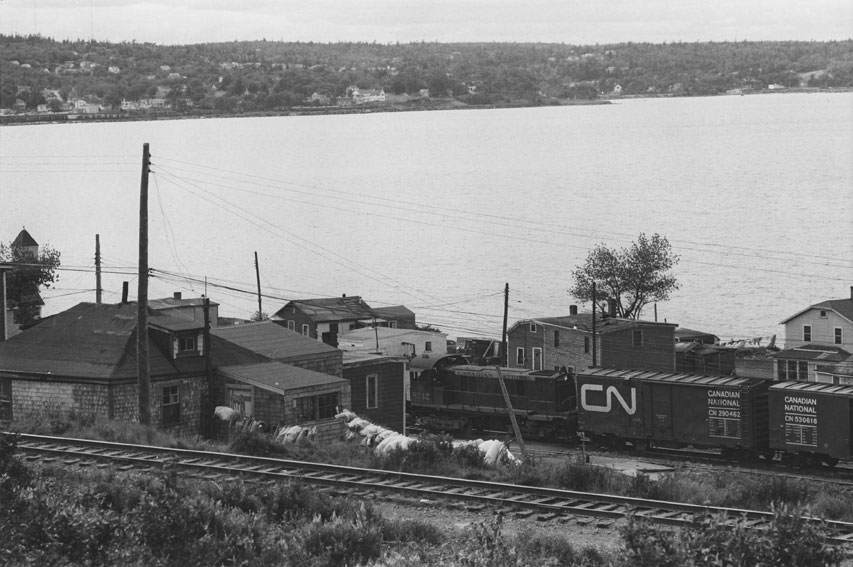
Africville was an African-Canadian village located just north of Halifax and founded in the mid-18th century. The City of Halifax demolished the once-prosperous seaside community in the 1960s in what many said was an act of racism. The mayor of the Halifax Regional Municipality apologized for the action in 2010. For many people, Africville represents the oppression faced by Black Canadians, and the efforts to right historic wrongs.
Halifax was founded in 1749, when African people held as slaves dug out roads and built much of the city. Some evidence indicates that this early Black community lived a few miles north of the city on the southern shore of the Bedford Basin—an area that became Africville. Other evidence suggests that some of the Maroons of Jamaica (Africans who escaped enslavement), resettled to Nova Scotia by the British government, moved to the basin in 1796.
The first official record of Africville is from 1761, when the land was granted to several white families, including the families of men who imported and sold enslaved African men and women.
In 1848, William Arnold and William Brown, both Black settlers, bought land in Africville. Other families followed and in 1849 Seaview African United Baptist Church was opened to serve the village’s 80 residents. After much petitioning by Africvillians, a school opened in 1883. A local resident had taught many of the children in Africville before the City school opened.
Africville residents ran fishing businesses from the Bedford Basin, selling their catch locally and in Halifax. Other residents ran farms, and several opened small stores toward the end of the 19th century. It was a haven from the anti-Black racism they faced in Halifax.
The City of Halifax collected taxes in Africville, but did not provide services such as paved roads, running water or sewers.
The City of Halifax continued to place undesirable services in Africville in the second half of the 19th century, including: a fertilizer plant, slaughterhouses, Rockhead Prison (1854), the “night-soil disposal pits” (human waste) and the Infectious Diseases Hospital (1870s). In 1915, Halifax City Council declared that Africville “will always be an industrial district.” Many Africville residents believed anti-Black racism was behind these decisions.
Multi-Ethnic Sports Hall of Fame to Tour Africville’s Black Loyalist Museum
Before the end of slavery in the United States, some freed and escaped slaves headed north to Canada’s Africville. In continuance of tradition, each July hundreds of former residents and their children head to the Africville Reunion on the former site—located on Bedford Basin’s shore on the northwestern end of Halifax Harbour in Nova Scotia—to reminisce, to re-acquaint, and re-establish themselves as a community.
While Africville as a town no longer exists, its spirit continues in the unity of its people.
The Multi-Ethnic Sports Hall of Fame (MESHOF) and its Nova Scotia partners have collaborated to tour the Black Loyalist Museum, July5 – 28, 2019. The museum was featured in the film Book of Negroes.
Arif Khatib, MESHOF founder, said the complete travel package includes a tour of several Black cities including the Black Loyalist Museum.
“Nova Scotia is considered the birthplace of modern ice hockey,” said Khatib, “Through the years MESHOF has presented educational sessions about the establishment of Colored Hockey, its upstanding role models, and an organizational talent never seen in Black sport.”






Activism
Ann Lowe: The Quiet Genius of American Couture
Lowe was born in Clayton, Alabama, into a family of gifted seamstresses. Her mother and grandmother were well-known dressmakers who created exquisite gowns for women in the area. By the time Lowe was a young girl, she was already showing extraordinary talent — cutting, sewing, and decorating fabric with a skill that far exceeded her age. When her mother died unexpectedly, Lowe – only 16 years old then – took over her mother’s sewing business, completing all the orders herself.

By Tamara Shiloh
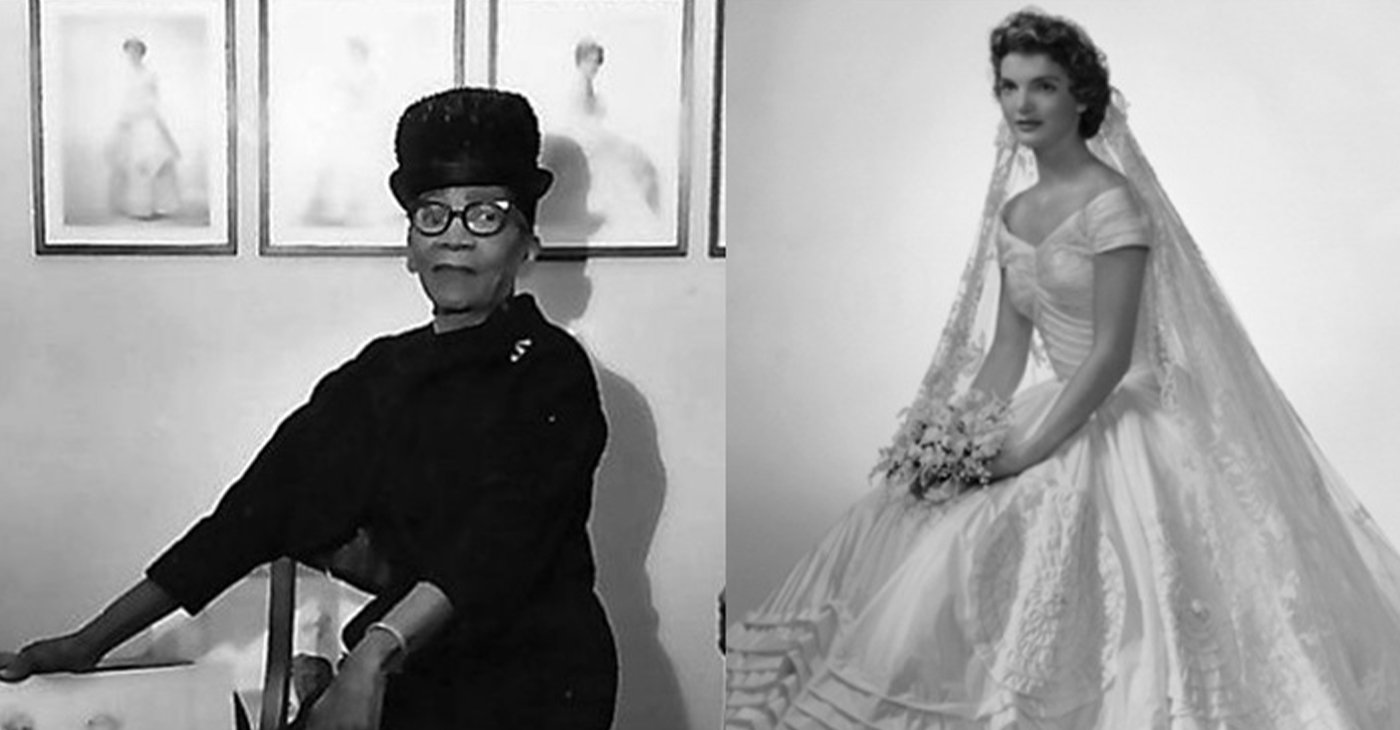
Ann Cole Lowe, born Dec.14, 1898, was a pioneering American fashion designer whose extraordinary talent shaped some of the most widely recognized and celebrated gowns in U.S. history.
Although she designed dresses for society’s wealthiest families and created masterpieces worn at historic events, Lowe spent much of her life in the shadows — uncredited, underpaid, yet unmatched in skill. Today, she is celebrated as one of the first nationally recognized African American fashion designers and a true visionary in American couture.
Lowe was born in Clayton, Alabama, into a family of gifted seamstresses. Her mother and grandmother were well-known dressmakers who created exquisite gowns for women in the area. By the time Lowe was a young girl, she was already showing extraordinary talent — cutting, sewing, and decorating fabric with a skill that far exceeded her age. When her mother died unexpectedly, Lowe – only 16 years old then – took over her mother’s sewing business, completing all the orders herself. This early responsibility would prepare her for a lifetime of professional excellence.
In 1917, Lowe moved to New York City to study at the S.T. Taylor Design School. Although she was segregated from White students and forced to work separately, she, of course, excelled, graduating earlier than expected. Her instructors quickly recognized that her abilities were far above the typical student, especially her skill in hand-sewing, applique, and intricate floral embellishment – techniques that would become her signature.
Throughout the 1920s and 1930s, she designed gowns for high-society women in Florida and New York, operating boutiques and working for prestigious department stores. Her reputation for craftsmanship, originality, and elegance grew increasingly. She was known for creating gowns that moved beautifully, featured delicate hand-made flowers, and looked sculpted rather than sewn. Many wealthy clients specifically requested “an Ann Lowe gown” for weddings, balls, and galas.
Her most famous creation came in 1953: the wedding gown worn by Jacqueline Bouvier when she married Massachusetts Sen. John F. Kennedy. The dress – crafted from ivory silk taffeta with dozens of tiny, pleated rosettes – became one of the most photographed bridal gowns in American history. Despite this achievement, Lowe received no public credit at the time. When a flood destroyed her completed gowns 10 days before the wedding, she and her seamstresses worked day and night to remake everything – at her own expense. Her dedication and perfectionism never wavered.
She eventually opened “Ann Lowe Originals,” her own salon on New York’s Madison Avenue. She served clients such as the Rockefellers, DuPonts, Vanderbilts, and actresses like Olivia de Havilland. Yet even with her wealthy clientele, she struggled financially, often undercharging because she wanted every dress to be perfect, even if it meant losing money.
Lowe’s contributions were finally recognized later in life. Today, her exquisite gowns are preserved in museums, including the Smithsonian National Museum of African American History and Culture and the Metropolitan Museum of Art.
In the last five years of her life, Lowe lived with her daughter Ruth in Queens, N.Y. She died at her daughter’s home on Feb. 25, 1981, at the age of 82, after an extended illness.

Activism
How Charles R. Drew University Navigated More Than $20 Million in Fed Cuts – Still Prioritizing Students and Community Health
Named after the pioneering physician Dr. Charles R. Drew, famous for his work in blood preservation, CDU’s mission is to cultivate “diverse health professional leaders dedicated to social justice and health equity for underserved populations through education, research, clinical service, and, above all, community engagement.”
Charlene Muhammad | California Black Media

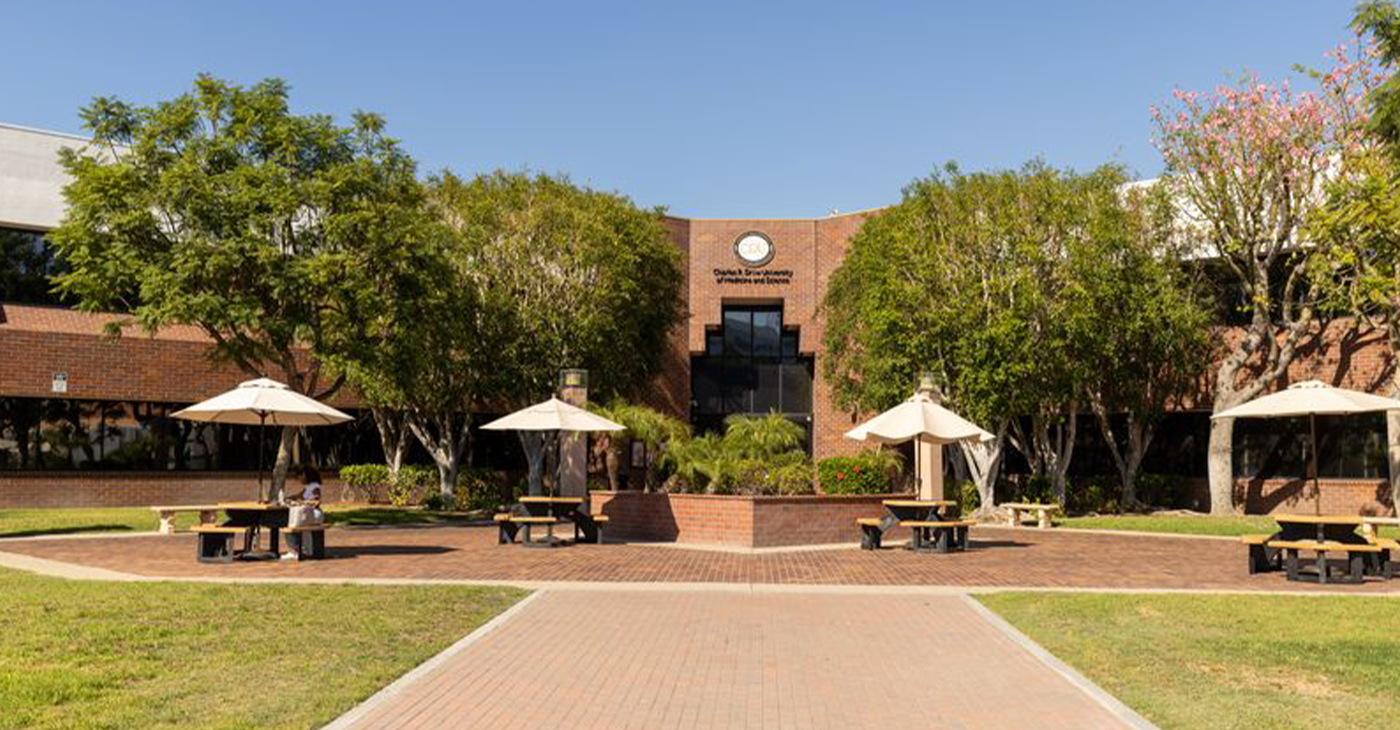
Earlier this year, when the federal government slashed more than $20 million in grants to Charles R. Drew University of Medicine and Science (CDU), the leadership of California’s only historically Black medical school scrambled to stabilize its finances — while protecting its staff and students.
Named after the pioneering physician Dr. Charles R. Drew, famous for his work in blood preservation, CDU’s mission is to cultivate “diverse health professional leaders dedicated to social justice and health equity for underserved populations through education, research, clinical service, and, above all, community engagement.”
The school is widely recognized as a vital pipeline for Black doctors and other health professionals throughout California.

Dr. David Carlisle (center), President of Charles R. Drew University of Medicine and Science (CDU), with two of the university’s students. Photo Courtesy of Charles R. Drew University of Medicine and Science.
Dr. Jose Torres-Ruiz, CDU’s Executive Vice President for Academic Affairs and Provost, said the university—designated as a Historically Black Graduate Institution (HBGI)—was notified in early March 2025 that most of its major grants, including the Research Centers in Minority Institutions (RCMI) award, known at CDU as the “Accelerating Excellence in Translational Science” (AXIS Grant), would be terminated. Initially renewed, the grant was later revoked because its language did not align with the current federal administration’s priorities.

The AXIS Grant provides $4.5 million per year for five years through the National Institutes of Health’s National Institute on Minority Health and Health Disparities. CDU quickly reallocated other funds to protect its scientists, staff, and technicians, though some personnel losses were unavoidable.
“We didn’t want to fire them because these people have expertise that takes years to gain,” Torres-Ruiz said.
The grant is crucial, he added, funding research in cancer, diabetes, and metabolic diseases that affect the Willowbrook community in South Los Angeles, training the next generation of scientists, and supporting community outreach.
Programs at the school, including its youth and teen mentoring programs reach beyond the walls of the university, impacting the lives and quality of health care of people in the surrounding community, one of the most underserved areas in Los Angeles County.
Confronted with the harsh reality of funding cuts, the university’s leadership made an early, strategic choice to honor its foundational commitment and prioritize its students. Dr. Deborah Prothrow-Stith, dean of CDU’s College of Medicine, highlighted the school’s deliberate focus on admitting students from economically disadvantaged backgrounds — many of whom are Pell Grant recipients and graduates of public high schools.
“We are staying true to our mission, finding creative ways to prioritize what’s most important,” she said. “I’m optimistic because of our students—they are dedicated and committed to service.”
In addition, the $2 million-per-year John Lewis NIMHD Research Endowment Program, intended to strengthen CDU’s research infrastructure, was terminated with three years remaining after a February 2025 freeze on nearly all federal grants for public health, education, and infrastructure projects.
Following an appeal, CDU learned in June that the RCMI grant had been fully reinstated, along with all but eight smaller grants. The university’s next priority is restoring the John Lewis Endowment.
“We are working with NIH staff to adjust the language. Certain words like ‘diversity’ and ‘equity,’ which are core values of our institution, are now under scrutiny,” Torres-Ruiz explained.
CDU has also expanded funding sources by targeting foundations and private donors. “This may happen again. We cannot rely solely on federal agencies,” Torres-Ruiz said, emphasizing the importance of building relationships with politicians and private partners.
Prothrow Stith echoed Ruiz’s perspective on cultivating multiple funding sources. “Building bridges with private foundations helps, but it doesn’t erase the disruption,” she said.
Many students rely on federal loans, CDU leaders say. Those loans are now capped at $150,000. So, most medical students graduate with $300,000–$350,000 in debt when accounting for tuition and living expenses.
To lower the burden on students, CDU is exploring options to make education more affordable, including overlapping school years to reduce annual costs.
Students like Isaiah Hoffman and Bailey Moore epitomize CDU’s values.
Hoffman, an aspiring orthopedic surgeon from Inglewood, credits Drew for inspiring his career choice. Out of 12 medical school acceptances, he chose CDU to give back to his community and continue Drew’s legacy. Hoffman also founded H.O.M.I.E.S. Inc., a nonprofit pairing Black K–12 students with mentors to support academic and personal growth.
Moore, 23, from Southeast Washington, D.C., pursued CDU to address maternal health disparities she observed in her own community – an underserved area of the nation’s capital city. “CDU pours into you. It emphasizes service, and I hope for a world without health disparities,” she said. “Drew may be small, but Drew is mighty. It was created out of necessity to save lives and empower communities.”
CDU President and CEO Dr. David Carlisle acknowledged during the Aug. 28 “State of the University” that the institution faces ongoing challenges. Political threats and grant disruptions contributed to a sizable unrestricted budget deficit, despite achievements over the past year.
Successful appeals and alternative sources of funding, led by Vice Provost Dr. Ali Andallibi, have now restored all the monies previously lost in research funding, he said.
Carlisle expressed gratitude to L.A. Care Health Plan and Sutter Health for providing multimillion-dollar scholarships and highlighted that CDU would welcome approximately 1,050 incoming students—near its highest enrollment ever. “I’m deeply grateful for the resolve, diligence, and unwavering commitment of everyone here, even when the path is not easy,” he said.
At the gathering, Carlisle referred to the sounds of ambulances passing by with blaring sirens as- the “music of healthcare,” while students and the school’s leadership attending expressed resilience in their speeches and conversations. The activities of the day captured the institution’s focus on education, service and advancing health care across disadvantaged communities in California – and beyond.
Video Report: How Charles Drew Stayed Strong Amid Federal Funding Cuts
Activism
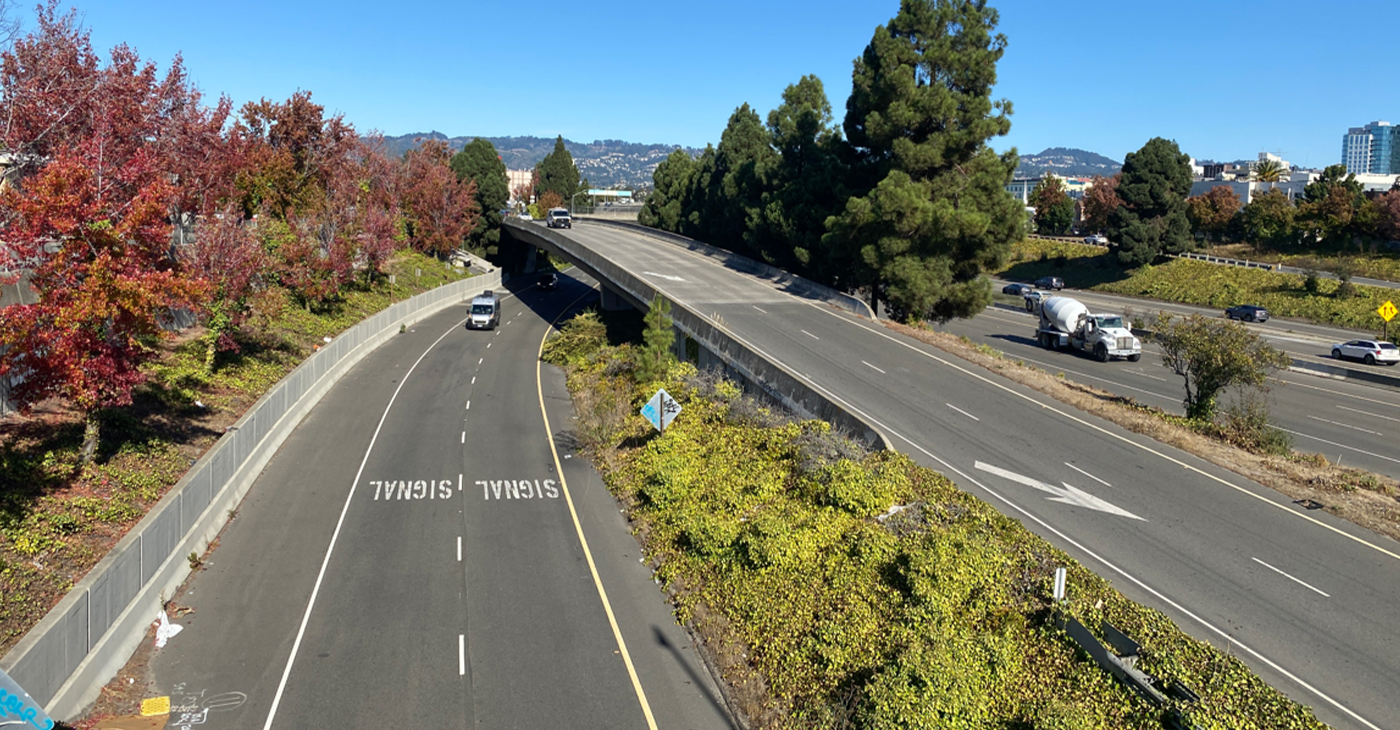
Past, Present, Possible! Oakland Residents Invited to Reimagine the 980 Freeway
Organizers ask attendees coming to 1233 Preservation Park Way to think of the event as a “time portal”—a walkable journey through the Past (harm and flourishing), Present (community conditions and resilience), and Future (collective visioning).
By Randolph Belle
Special to The Post
Join EVOAK!, a nonprofit addressing the historical harm to West Oakland since construction of the 980 freeway began in 1968, will hold a block party on Oct. 25 at Preservation Park for a day of imagination and community-building from 10 a.m. to 4 p.m.
Organizers ask attendees coming to 1233 Preservation Park Way to think of the event as a “time portal”—a walkable journey through the Past (harm and flourishing), Present (community conditions and resilience), and Future (collective visioning).
Activities include:
- Interactive Visioning: Site mapping, 3-D/digital modeling, and design activities to reimagine housing, parks, culture, enterprise, and mobility.
- Story & Memory: Oral history circles capturing life before the freeway, the rupture it caused, and visions for repair.
- Data & Policy: Exhibits on health, environment, wealth impacts, and policy discussions.
- Culture & Reflection: Films, installations, and performances honoring Oakland’s creativity and civic power.
The site of the party – Preservation Park – itself tells part of the story of the impact on the community. Its stately Victorians were uprooted and relocated to the site decades ago to make way for the I-980 freeway, which displaced hundreds of Black families and severed the heart of West Oakland. Now, in that same space, attendees will gather to reckon with past harms, honor the resilience that carried the community forward, and co-create an equitable and inclusive future.
A Legacy of Resistance
In 1979, Paul Cobb, publisher of the Post News Group and then a 36-year-old civil-rights organizer, defiantly planted himself in front of a bulldozer on Brush Street to prevent another historic Victorian home from being flattened for the long-delayed I-980 Freeway. Refusing to move, Cobb was arrested and hauled off in handcuffs—a moment that landed him on the front page of the Oakland Tribune.
Cobb and his family had a long history of fighting for their community, particularly around infrastructure projects in West Oakland. In 1954, his family was part of an NAACP lawsuit challenging the U.S. Post Office’s decision to place its main facility in the neighborhood, which wiped out an entire community of Black residents.
In 1964, they opposed the BART line down Seventh Street—the “Harlem of the West.” Later, Cobb was deeply involved in successfully rerouting the Cypress Freeway out of the neighborhood after the Loma Prieta earthquake.
The 980 Freeway, a 1.6-mile stretch, created an ominous barrier severing West Oakland from Downtown. Opposition stemmed from its very existence and the national practice of plowing freeways through Black communities with little input from residents and no regard for health, economic, or social impacts. By the time Cobb stood before the bulldozer, construction was inevitable, and his fight shifted toward jobs and economic opportunity.
Fast-forward 45 years: Cobb recalled the story at a convening of “Super OGs” organized to gather input from legacy residents on reimagining the corridor. He quickly retrieved his framed Tribune front page, adding a new dimension to the conversation about the dedication required to make change. Themes of harm repair and restoration surfaced again and again, grounded in memories of a thriving, cohesive Black neighborhood before the freeway.
The Lasting Scar
The 980 Freeway was touted as a road to prosperity—funneling economic opportunity into the City Center, igniting downtown commerce, and creating jobs. Instead, it cut a gash through the city, erasing 503 homes, four churches, 22 businesses, and hundreds of dreams. A promised second approach to the Bay Bridge never materialized.
Planning began in the late 1940s, bulldozers arrived in 1968, and after years of delays and opposition, the freeway opened in 1985. By then, Oakland’s economic engines had shifted, leaving behind a 600-foot-wide wound that resulted in fewer jobs, poorer health outcomes, and a divided neighborhood. The harm of displacement and loss of generational wealth was compounded through redlining, disinvestment, drugs, and the police state. Many residents fled to outlying cities, while those who stayed carried forward the spirit of perseverance.
The Big Picture
At stake now is up to 67 acres of new, buildable land in Downtown West Oakland. This time, we must not repeat the institutional wrongs of the past. Instead, we must be as deliberate in building a collective, equitable vision as planners once were in destroying communities.
EVOAK!’s strategy is rooted in four pillars: health, housing, economic development, and cultural preservation. These were the very foundations stripped away, and they are what they aim to reclaim. West Oakland continues to suffer among the worst social determinants of health in the region, much of it linked to the three freeways cutting through the neighborhood.
The harms of urban planning also decimated cultural life, reinforced oppressive public safety policies, underfunded education, and fueled poverty and blight.
Healing the Wound
West Oakland was once the center of Black culture during the Great Migration—the birthplace of the Black Panther Party and home to the “School of Champions,” the mighty Warriors of McClymonds High. Drawing on that legacy, we must channel the community’s proud past into a bold, community-led future that restores connection, sparks innovation, and uplifts every resident.
Two years ago, Caltrans won a federal Reconnecting Communities grant to fund Vision 980, a community-driven study co-led by local partners. Phase 1 launched in Spring 2024 with surveys and outreach; Phase 2, a feasibility study, begins in 2026. Over 4,000 surveys have already been completed. This once-in-a-lifetime opportunity could transform the corridor into a blank slate—making way for accessible housing, open space, cultural facilities, and economic opportunity for West Oakland and the entire region.
Leading with Community
In parallel, EVOAK! is advancing a community-led process to complement Caltrans’ work. EVOAK! is developing a framework for community power-building, quantifying harm, exploring policy and legislative repair strategies, structuring community governance, and hosting arts activations to spark collective imagination. The goal: a spirit of co-creation and true collaboration.
What EVOAK! Learned So Far
Through surveys, interviews, and gatherings, residents have voiced their priorities: a healthy environment, stable housing, and opportunities to thrive. Elders with decades in the neighborhood shared stories of resilience, community bonds, and visions of what repair should look like.
They heard from folks like Ezra Payton, whose family home was destroyed at Eighth and Brush streets; Ernestine Nettles, still a pillar of civic life and activism; Tom Bowden, a blues man who performed on Seventh Street as a child 70 years ago; Queen Thurston, whose family moved to West Oakland in 1942; Leo Bazille who served on the Oakland City Council from 1983 to 1993; Herman Brown, still organizing in the community today; Greg Bridges, whose family’s home was picked up and moved in the construction process; Martha Carpenter Peterson, who has a vivid memory of better times in West Oakland; Sharon Graves, who experienced both the challenges and the triumphs of the neighborhood; Lionel Wilson, Jr., whose family were anchors of pre-freeway North Oakland; Dorothy Lazard, a resident of 13th Street in the ’60s and font of historical knowledge; Bishop Henry Williams, whose simple request is to “tell the truth,” James Moree, affectionately known as “Jimmy”; the Flippin twins, still anchored in the community; and Maxine Ussery, whose father was a business and land owner before redlining.
EVOAK! will continue to capture these stories and invites the public to share theirs as well.
Beyond the Block Party
The 980 Block Party is just the beginning. Beyond this one-day event, EVOAK! Is building a long-term process to ensure West Oakland’s future is shaped by those who lived its past. To succeed, EVOAK! Is seeking partners across the community—residents, neighborhood associations, faith groups, and organizations—to help connect with legacy residents and host conversations.
980 Block Party Event Details
Saturday, Oct. 25
10 a.m. – 4 p.m.
Preservation Park, 1233 Preservation Park Way, Oakland, CA 94612
980BlockParty.org
info@evoak.org

WORK FROM HOME
Home-based business with potential monthly income of $10K+ per month. A proven training system and website provided to maximize business effectiveness. Perfect job to earn side and primary income. Contact Lynne for more details: Lynne4npusa@gmail.com 800-334-0540


Bling It On: Holiday Lights Brighten Dark Nights All Around the Bay

Oakland Council Expands Citywide Security Cameras Despite Major Opposition

Lu Lu’s House is Not Just Toying Around with the Community

Desmond Gumbs — Visionary Founder, Mentor, and Builder of Opportunity

Families Across the U.S. Are Facing an ‘Affordability Crisis,’ Says United Way Bay Area

Black Arts Movement Business District Named New Cultural District in California

Oakland Post: Week of December 17 – 23, 2025

Support Your Child’s Mental Health: Medi-Cal Covers Therapy, Medication, and More

Ann Lowe: The Quiet Genius of American Couture

2025 in Review: Seven Questions for Black Women’s Think Tank Founder Kellie Todd Griffin

BRIDGE Housing President and CEO Ken Lombard Scores Top Honors for Affordable Housing Leadership

Oakland School Board Grapples with Potential $100 Million Shortfall Next Year

COMMENTARY: If You Don’t Want Your ‘Black Card’ Revoked, Watch What You Bring to Holiday Dinners

Mayor Lee, City Leaders Announce $334 Million Bond Sale for Affordable Housing, Roads, Park Renovations, Libraries and Senior Centers

Fayeth Gardens Holds 3rd Annual Kwanzaa Celebration at Hayward City Hall on Dec. 28

Oakland Post: Week of November 12 – 18, 2025

IN MEMORIAM: William ‘Bill’ Patterson, 94

How Charles R. Drew University Navigated More Than $20 Million in Fed Cuts – Still Prioritizing Students and Community Health

No Justice in the Justice System

Oakland Post: Week of November 19 – 25, 2025

LIHEAP Funds Released After Weeks of Delay as States and the District Rush to Protect Households from the Cold

Seth Curry Makes Impressive Debut with the Golden State Warriors

Oakland Post: Week of November 26 – December 2, 2025

Seven Steps to Help Your Child Build Meaningful Connections

Beyoncé and Jay-Z make rare public appearance with Lewis Hamilton at Las Vegas Grand Prix

Seven Steps to Help Your Child Build Meaningful Connections

Lewis Hamilton set to start LAST in Saturday Night’s Las Vegas Grand Prix

Protecting Pedophiles: The GOP’s Warped Crusade Against Its Own Lies

The Perfumed Hand of Hypocrisy: Trump Hosted Former Terror Suspect While America Condemns a Muslim Mayor

Trinidad and Tobago – Prime Minister Confirms U.S. Marines Working on Tobago Radar System

Hyundai Ioniq 5 Parking, Safety, and 360 View #shorts

2025 Ioniq 5 New Wiper & Powerful Performance! #shorts

Electric SUV Range: Is 259 Miles Enough? #shorts

EV Charging: How Fast Can You Charge an Electric Vehicle? #shorts

Biometric Cooling… Messaging Seats…Come on! 2025 Infiniti QX80 Autograph 4WD

Charged Up: Witness the Magic of a Fully Electric Car! #shorts

Range Rover Sport PHEV Included…: See What’s Inside This Luxury SUV! #shorts

Invisible Hood View: Perfect Parking with X-Ray Vision! #shorts

AI Is Reshaping Black Healthcare: Promise, Peril, and the Push for Improved Results in California

ESSAY: Technology and Medicine, a Primary Care Point of View

Sanctuary Cities

The RESISTANCE – FREEDOM NOW

STATE OF THE PEOPLE: Freddie

ECONOMIC BOYCOTT DAY!!!!!

I told You So
-
 #NNPA BlackPress3 weeks ago
LIHEAP Funds Released After Weeks of Delay as States and the District Rush to Protect Households from the Cold
-
 Alameda County3 weeks ago
Seth Curry Makes Impressive Debut with the Golden State Warriors
-
 Activism4 weeks ago
Oakland Post: Week of November 26 – December 2, 2025
-
 #NNPA BlackPress3 weeks ago
Seven Steps to Help Your Child Build Meaningful Connections
-
 #NNPA BlackPress3 weeks ago
Seven Steps to Help Your Child Build Meaningful Connections
-
 #NNPA BlackPress3 weeks ago
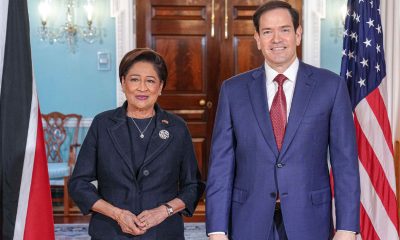
Trinidad and Tobago – Prime Minister Confirms U.S. Marines Working on Tobago Radar System
-

 #NNPA BlackPress3 weeks ago
Thanksgiving Celebrated Across the Tri-State
-
 #NNPA BlackPress3 weeks ago
Teens Reject Today’s News as Trump Intensifies His Assault on the Press
