
National
Mother: Son Accused in Officer Killings Had Drug Problem


This combination of undated photos released the Mississippi Bureau of Investigation shows, Marvin Banks, left, and his brother Curtis Banks. The brothers are wanted in the fatal shooting of two Hattiesburg, Miss., police officers on Saturday, May 9, 2015. (Mississippi Bureau of Investigation via The Hattiesburg Police Department via AP)
JAY REEVES, Associated Press
JEFF AMY, Associated Press
HATTIESBURG, Miss. (AP) — Marvin Banks’ drug use and drinking had worsened in recent years and he was hearing voices in his head.
His mother said she had hoped he would get help. He didn’t, and now he is charged with capital murder in the deaths of two police officers in Mississippi. His girlfriend and brother are charged as accessories and a friend faces an obstruction charge.
Banks’ mother, Mary Smith, said when she saw the booking photos of her 26-year-old son, she knew something was off.

“He was sick and out of his head and I tried to get him some help,” she said on the steps of the Forrest County Courthouse, where she had gone to find out more information about her sons’ arrest.
Marvin Banks had been smoking synthetic marijuana, known as spice, every day.
“He was on that spice. He was on every drug there was. Spice, powder, marijuana, drinking,” she said.
Marvin Banks is accused of shooting officers Benjamin Deen and Liquori Tate. The officers died Saturday after Deen was shot in the face, and Tate in the back.
Banks and another man identified as Cornelius Clark were passengers in a Hyundai that Deen stopped for speeding, said Mississippi Bureau of Investigation spokesman Warren Strain. The car was driven by Banks’ girlfriend, 22-year-old Joanie Calloway, Strain said. Deen called Tate for backup when he decided to search the car. Strain said that when officers asked the three to get out of the car, Banks shot Deen and Tate.
Calloway was initially charged with two counts of murder, but authorities lowered those charges to accessory to murder after the fact Monday. Clark, 28, is charged with obstruction. Banks’ brother, 29-year-old Curtis Banks, is also charged with accessory to murder after the fact.
More than 1,000 people filled a hall at the Hattiesburg convention center Monday for a memorial. With photos of the uniformed men projected above the stage, Mississippi Gov. Phil Bryant — himself a former sheriff’s deputy — said the city was enduring a difficult, sad time.
“We will persevere, we will prevail,” he said.
Marvin Banks and his 6-year-old son lived with Smith, who works the night shift at a nursing home. She said she was resting before work when she got a call Saturday night that her son, known by “Big Boy,” was involved in the shootings.
After that, Curtis Banks called and said he had nothing to do with it and had been at his apartment at the time.
Smith said Marvin was attacked several years ago by a man who hit him in the head with a pipe. The reason for the attack wasn’t clear, but he spent time in intensive care.
She said she repeatedly urged him to get help for his drug addiction and apparent mental illness, but he wouldn’t go.
Katie Walmon, the mother of Marvin’s son, said he had changed.
“He said he was hearing voices in his head. I say it was the devil,” she said.
In their initial court appearance Monday, Forrest County Justice Court Judge Gay Polk-Payton denied bond to Marvin Banks, who was convicted of a felony in 2010 for possession of a stolen gun. She set Curtis Banks’ bond at $100,000. However, both Banks brothers were on bond for 2013 drug charges at the time of their arrest, and Polk-Payton revoked those bonds, meaning Curtis Banks is also likely to remain in jail. The judge set $75,000 bonds for both Calloway and Clark.
Marvin Banks also was charged Monday with one count of being a felon in possession of a firearm and with grand theft for fleeing for a few blocks in a squad car after the shooting and then ditching the vehicle, authorities said.
Smith said she was trying to get lawyers for both of her sons. She said after Curtis’ arrest, he complained to her that officers had kicked him repeatedly, stripped him of his clothes and were holding him in cold cell. She has not talked to Marvin since his arrest. The mother said officers often stop young black men without cause in Hattiesburg, sometimes simply to ask them what they are doing.
“The way police here in Hattiesburg harass young black men, you could tell something was going to happen, but I never thought it would be my sons,” she said.
Police didn’t immediately respond to a telephone call Monday.
Attorney General Loretta Lynch said Monday that the officers’ deaths “is made even more tragic by the fact that, on the day they were killed this past Saturday, the country began observing Police Week – a time when we pause to remember and honor the more than 20,000 law enforcement officers who have been killed in the line of duty.”
Hulett-Winstead Funeral Home said Deen will be buried Thursday following a funeral in nearby Sumrall. A funeral home McComb said arrangements for Tate will be released Tuesday.
Deen, 34, is a former “Officer of the Year” in Hattiesburg. He was married and the father of two.
Family spokesman J.T. Taylor said he would want his friend of more than 30 years to know that he was going to take care of his family.
Tate, 25, graduated from the police academy last year.
Tate grew up in Starkville, 150 miles north of Hattiesburg. Strain said he was a 2014 graduate of the law enforcement academy. He grew up wanting to be a policeman.
Copyright 2015 The Associated Press. All rights reserved. This material may not be published, broadcast, rewritten or redistributed.








Activism
Desmond Gumbs — Visionary Founder, Mentor, and Builder of Opportunity
Gumbs’ coaching and leadership journey spans from Bishop O’Dowd High School, Oakland High School, Stellar Prep High School. Over the decades, hundreds of his students have gone on to college, earning academic and athletic scholarships and developing life skills that extend well beyond sports.

Special to the Post
For more than 25 years, Desmond Gumbs has been a cornerstone of Bay Area education and athletics — not simply as a coach, but as a mentor, founder, and architect of opportunity. While recent media narratives have focused narrowly on challenges, they fail to capture the far more important truth: Gumbs’ life’s work has been dedicated to building pathways to college, character, and long-term success for hundreds of young people.
A Career Defined by Impact
Gumbs’ coaching and leadership journey spans from Bishop O’Dowd High School, Oakland High School, Stellar Prep High School. Over the decades, hundreds of his students have gone on to college, earning academic and athletic scholarships and developing life skills that extend well beyond sports.
One of his most enduring contributions is his role as founder of Stellar Prep High School, a non-traditional, mission-driven institution created to serve students who needed additional structure, belief, and opportunity. Through Stellar Prep numerous students have advanced to college — many with scholarships — demonstrating Gumbs’ deep commitment to education as the foundation for athletic and personal success.

NCAA football history was made this year when Head Coach from
Mississippi Valley State, Terrell Buckley and Head Coach Desmond
Gumbs both had starting kickers that were women. This picture was
taken after the game.
A Personal Testament to the Mission: Addison Gumbs
Perhaps no example better reflects Desmond Gumbs’ philosophy than the journey of his son, Addison Gumbs. Addison became an Army All-American, one of the highest honors in high school football — and notably, the last Army All-Americans produced by the Bay Area, alongside Najee Harris.
Both young men went on to compete at the highest levels of college football — Addison Gumbs at the University of Oklahoma, and Najee Harris at the University of Alabama — representing the Bay Area on a national level.
Building Lincoln University Athletics From the Ground Up
In 2021, Gumbs accepted one of the most difficult challenges in college athletics: launching an entire athletics department at Lincoln University in Oakland from scratch. With no established infrastructure, limited facilities, and eventually the loss of key financial aid resources, he nonetheless built opportunities where none existed.
Under his leadership, Lincoln University introduced:
- Football
- Men’s and Women’s Basketball
- Men’s and Women’s Soccer
Operating as an independent program with no capital and no conference safety net, Gumbs was forced to innovate — finding ways to sustain teams, schedule competition, and keep student-athletes enrolled and progressing toward degrees. The work was never about comfort; it was about access.
Voices That Reflect His Impact
Desmond Gumbs’ philosophy has been consistently reflected in his own published words:
- “if you have an idea, you’re 75% there the remaining 25% is actually doing it.”
- “This generation doesn’t respect the title — they respect the person.”
- “Greatness is a habit, not a moment.”
Former players and community members have echoed similar sentiments in public commentary, crediting Gumbs with teaching them leadership, accountability, confidence, and belief in themselves — lessons that outlast any single season.
Context Matters More Than Headlines
Recent articles critical of Lincoln University athletics focus on logistical and financial hardships while ignoring the reality of building a new program with limited resources in one of the most expensive regions in the country. Such narratives are ultimately harmful and incomplete, failing to recognize the courage it takes to create opportunity instead of walking away when conditions are difficult.
The real story is not about early struggles — it is about vision, resilience, and service.
A Legacy That Endures
From founding Stellar PREP High School, to sending hundreds of students to college, to producing elite athletes like Addison Gumbs, to launching Lincoln University athletics, Desmond Gumbs’ legacy is one of belief in young people and relentless commitment to opportunity.
His work cannot be reduced to headlines or records. It lives on in degrees earned, scholarships secured, leaders developed, and futures changed — across the Bay Area and beyond.
Activism
Families Across the U.S. Are Facing an ‘Affordability Crisis,’ Says United Way Bay Area
United Way’s Real Cost Measure data reveals that 27% of Bay Area households – more than 1 in 4 families – cannot afford essentials such as food, housing, childcare, transportation, and healthcare. A family of four needs $136,872 annually to cover these basic necessities, while two adults working full time at minimum wage earn only $69,326.

By Post Staff
A national poll released this week by Marist shows that 61% of Americans say the economy is not working well for them, while 70% report that their local area is not affordable. This marks the highest share of respondents expressing concern since the question was first asked in 2011.
According to United Way Bay Area (UWBA), the data underscores a growing reality in the region: more than 600,000 Bay Area households are working hard yet still cannot afford their basic needs.
Nationally, the Marist Poll found that rising prices are the top economic concern for 45% of Americans, followed by housing costs at 18%. In the Bay Area, however, that equation is reversed. Housing costs are the dominant driver of the affordability crisis.
United Way’s Real Cost Measure data reveals that 27% of Bay Area households – more than 1 in 4 families – cannot afford essentials such as food, housing, childcare, transportation, and healthcare. A family of four needs $136,872 annually to cover these basic necessities, while two adults working full time at minimum wage earn only $69,326.
“The national numbers confirm what we’re seeing every day through our 211 helpline and in communities across the region,” said Keisha Browder, CEO of United Way Bay Area. “People are working hard, but their paychecks simply aren’t keeping pace with the cost of living. This isn’t about individual failure; it’s about policy choices that leave too many of our neighbors one missed paycheck away from crisis.”
The Bay Area’s affordability crisis is particularly defined by extreme housing costs:
- Housing remains the No. 1 reason residents call UWBA’s 211 helpline, accounting for 49% of calls this year.
- Nearly 4 in 10 Bay Area households (35%) spend at least 30% of their income on housing, a level widely considered financially dangerous.
- Forty percent of households with children under age 6 fall below the Real Cost Measure.
- The impact is disproportionate: 49% of Latino households and 41% of Black households struggle to meet basic needs, compared to 15% of white households.
At the national level, the issue of affordability has also become a political flashpoint. In late 2025, President Donald Trump has increasingly referred to “affordability” as a “Democrat hoax” or “con job.” While he previously described himself as the “affordability president,” his recent messaging frames the term as a political tactic used by Democrats to assign blame for high prices.
The president has defended his administration by pointing to predecessors and asserting that prices are declining. However, many Americans remain unconvinced. The Marist Poll shows that 57% of respondents disapprove of Trump’s handling of the economy, while just 36% approve – his lowest approval rating on the issue across both terms in office.
Activism
Ann Lowe: The Quiet Genius of American Couture
Lowe was born in Clayton, Alabama, into a family of gifted seamstresses. Her mother and grandmother were well-known dressmakers who created exquisite gowns for women in the area. By the time Lowe was a young girl, she was already showing extraordinary talent — cutting, sewing, and decorating fabric with a skill that far exceeded her age. When her mother died unexpectedly, Lowe – only 16 years old then – took over her mother’s sewing business, completing all the orders herself.
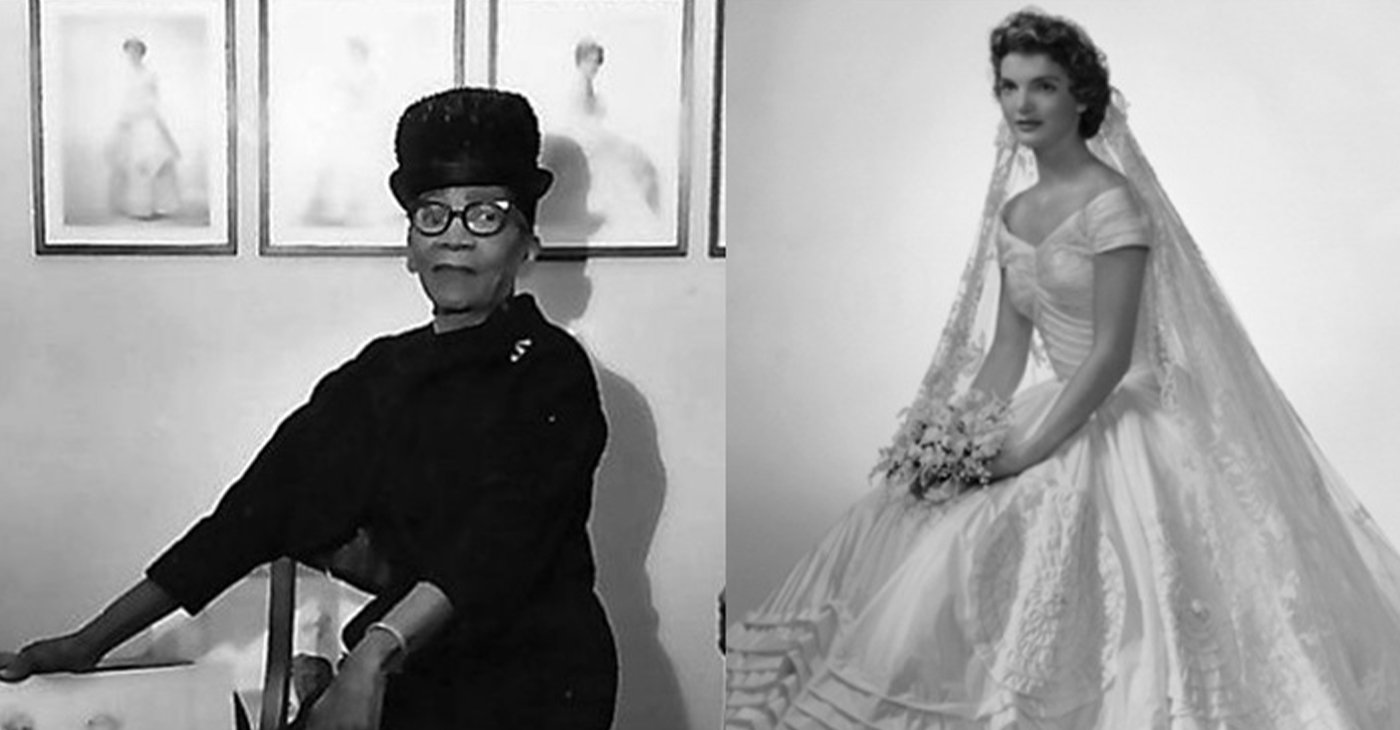
By Tamara Shiloh
Ann Cole Lowe, born Dec.14, 1898, was a pioneering American fashion designer whose extraordinary talent shaped some of the most widely recognized and celebrated gowns in U.S. history.
Although she designed dresses for society’s wealthiest families and created masterpieces worn at historic events, Lowe spent much of her life in the shadows — uncredited, underpaid, yet unmatched in skill. Today, she is celebrated as one of the first nationally recognized African American fashion designers and a true visionary in American couture.
Lowe was born in Clayton, Alabama, into a family of gifted seamstresses. Her mother and grandmother were well-known dressmakers who created exquisite gowns for women in the area. By the time Lowe was a young girl, she was already showing extraordinary talent — cutting, sewing, and decorating fabric with a skill that far exceeded her age. When her mother died unexpectedly, Lowe – only 16 years old then – took over her mother’s sewing business, completing all the orders herself. This early responsibility would prepare her for a lifetime of professional excellence.
In 1917, Lowe moved to New York City to study at the S.T. Taylor Design School. Although she was segregated from White students and forced to work separately, she, of course, excelled, graduating earlier than expected. Her instructors quickly recognized that her abilities were far above the typical student, especially her skill in hand-sewing, applique, and intricate floral embellishment – techniques that would become her signature.

Throughout the 1920s and 1930s, she designed gowns for high-society women in Florida and New York, operating boutiques and working for prestigious department stores. Her reputation for craftsmanship, originality, and elegance grew increasingly. She was known for creating gowns that moved beautifully, featured delicate hand-made flowers, and looked sculpted rather than sewn. Many wealthy clients specifically requested “an Ann Lowe gown” for weddings, balls, and galas.
Her most famous creation came in 1953: the wedding gown worn by Jacqueline Bouvier when she married Massachusetts Sen. John F. Kennedy. The dress – crafted from ivory silk taffeta with dozens of tiny, pleated rosettes – became one of the most photographed bridal gowns in American history. Despite this achievement, Lowe received no public credit at the time. When a flood destroyed her completed gowns 10 days before the wedding, she and her seamstresses worked day and night to remake everything – at her own expense. Her dedication and perfectionism never wavered.
She eventually opened “Ann Lowe Originals,” her own salon on New York’s Madison Avenue. She served clients such as the Rockefellers, DuPonts, Vanderbilts, and actresses like Olivia de Havilland. Yet even with her wealthy clientele, she struggled financially, often undercharging because she wanted every dress to be perfect, even if it meant losing money.
Lowe’s contributions were finally recognized later in life. Today, her exquisite gowns are preserved in museums, including the Smithsonian National Museum of African American History and Culture and the Metropolitan Museum of Art.
In the last five years of her life, Lowe lived with her daughter Ruth in Queens, N.Y. She died at her daughter’s home on Feb. 25, 1981, at the age of 82, after an extended illness.


WORK FROM HOME
Home-based business with potential monthly income of $10K+ per month. A proven training system and website provided to maximize business effectiveness. Perfect job to earn side and primary income. Contact Lynne for more details: Lynne4npusa@gmail.com 800-334-0540


Bling It On: Holiday Lights Brighten Dark Nights All Around the Bay

Oakland Council Expands Citywide Security Cameras Despite Major Opposition

Lu Lu’s House is Not Just Toying Around with the Community

Desmond Gumbs — Visionary Founder, Mentor, and Builder of Opportunity

Families Across the U.S. Are Facing an ‘Affordability Crisis,’ Says United Way Bay Area

Black Arts Movement Business District Named New Cultural District in California

Support Your Child’s Mental Health: Medi-Cal Covers Therapy, Medication, and More

Ann Lowe: The Quiet Genius of American Couture

2025 in Review: Seven Questions for Black Women’s Think Tank Founder Kellie Todd Griffin

BRIDGE Housing President and CEO Ken Lombard Scores Top Honors for Affordable Housing Leadership

Oakland School Board Grapples with Potential $100 Million Shortfall Next Year

COMMENTARY: If You Don’t Want Your ‘Black Card’ Revoked, Watch What You Bring to Holiday Dinners

Mayor Lee, City Leaders Announce $334 Million Bond Sale for Affordable Housing, Roads, Park Renovations, Libraries and Senior Centers

Fayeth Gardens Holds 3rd Annual Kwanzaa Celebration at Hayward City Hall on Dec. 28

Post Salon to Discuss Proposal to Bring Costco to Oakland Community meeting to be held at City Hall, Thursday, Dec. 18

Oakland Post: Week of November 12 – 18, 2025

IN MEMORIAM: William ‘Bill’ Patterson, 94

How Charles R. Drew University Navigated More Than $20 Million in Fed Cuts – Still Prioritizing Students and Community Health

No Justice in the Justice System

Oakland Post: Week of November 19 – 25, 2025

LIHEAP Funds Released After Weeks of Delay as States and the District Rush to Protect Households from the Cold

Seth Curry Makes Impressive Debut with the Golden State Warriors

Oakland Post: Week of November 26 – December 2, 2025

Seven Steps to Help Your Child Build Meaningful Connections

Beyoncé and Jay-Z make rare public appearance with Lewis Hamilton at Las Vegas Grand Prix

Seven Steps to Help Your Child Build Meaningful Connections

Lewis Hamilton set to start LAST in Saturday Night’s Las Vegas Grand Prix

Protecting Pedophiles: The GOP’s Warped Crusade Against Its Own Lies

The Perfumed Hand of Hypocrisy: Trump Hosted Former Terror Suspect While America Condemns a Muslim Mayor

Trinidad and Tobago – Prime Minister Confirms U.S. Marines Working on Tobago Radar System

Hyundai Ioniq 5 Parking, Safety, and 360 View #shorts

2025 Ioniq 5 New Wiper & Powerful Performance! #shorts

Electric SUV Range: Is 259 Miles Enough? #shorts

EV Charging: How Fast Can You Charge an Electric Vehicle? #shorts

Biometric Cooling… Messaging Seats…Come on! 2025 Infiniti QX80 Autograph 4WD

Charged Up: Witness the Magic of a Fully Electric Car! #shorts

Range Rover Sport PHEV Included…: See What’s Inside This Luxury SUV! #shorts

Invisible Hood View: Perfect Parking with X-Ray Vision! #shorts

AI Is Reshaping Black Healthcare: Promise, Peril, and the Push for Improved Results in California

ESSAY: Technology and Medicine, a Primary Care Point of View

Sanctuary Cities

The RESISTANCE – FREEDOM NOW

STATE OF THE PEOPLE: Freddie

ECONOMIC BOYCOTT DAY!!!!!

I told You So
-
 Activism4 weeks ago
Oakland Post: Week of November 19 – 25, 2025
-
 #NNPA BlackPress3 weeks ago
LIHEAP Funds Released After Weeks of Delay as States and the District Rush to Protect Households from the Cold
-
 Alameda County3 weeks ago
Seth Curry Makes Impressive Debut with the Golden State Warriors
-
 Activism4 weeks ago
Oakland Post: Week of November 26 – December 2, 2025
-
 #NNPA BlackPress3 weeks ago
Seven Steps to Help Your Child Build Meaningful Connections
-
 #NNPA BlackPress4 weeks ago
Beyoncé and Jay-Z make rare public appearance with Lewis Hamilton at Las Vegas Grand Prix
-
 #NNPA BlackPress3 weeks ago
Seven Steps to Help Your Child Build Meaningful Connections
-
 #NNPA BlackPress3 weeks ago
Trinidad and Tobago – Prime Minister Confirms U.S. Marines Working on Tobago Radar System
