
Politics
FACT CHECK: Why Bush’s Growth Forecast is a Stretch


Republican presidential candidate, former Florida Gov. Jeb Bush talks to members of the media after speaking to voters at the Derry Opera House, Tuesday, June 16, 2015, in Derry, N.H. Bush is campaigning in the nation’s earliest presidential primary state. (AP Photo/Jim Cole)
JOSH BOAK, AP Economics Writer
WASHINGTON (AP) — Republican presidential candidate Jeb Bush says there’s “not a reason in the world” why the U.S. economy can’t grow at 4 percent annually.
Actually, there are a bunch of reasons it probably can’t.
Many economists say the U.S. economy is ill equipped to grow consistently at even close to 4 percent. Current forecasts put growth averaging half that rate. Any president, Republican or Democrat, would have to overcome decades-long trends that are largely beyond the control of the Oval Office.
Those trends include the retirements of the vast generation of baby boomers — an exodus that limits the number of workers in the economy. Rising automation and low-wage competition overseas are among other factors. A result has been meager income growth, which has cut into the consumer spending that drives most economic growth.
“It would require substantial changes in fiscal and regulatory policy that I don’t believe any president could reasonably expect to enact in one term,” said Robert Stein, an economist at First Trust Advisors who was a Treasury Department official during George W. Bush’s presidency.
In his campaign announcement on Monday, Jeb Bush said “there is not a reason in the world why we cannot grow at a rate of 4 percent a year. And that will be my goal as president – 4 percent growth, and the 19 million new jobs that come with it.”
The pledge originated from a plan by the George W. Bush Institute to achieve growth averaging 4 percent for a decade.
Conservative economists defend the target as aspirational, a pledge that would leave the economy better off even if the next president fell short.
“I’m less concerned about the number than the commitment to grow rapidly,” said Douglas Holtz-Eakin, an economist who has advised Republican presidential candidates and now serves as president of the American Action Forum.
The historical odds of doubling growth from its current level are low.
Only four of the 16 presidential terms since World War II have experienced annual economic growth averaging more than 4 percent after inflation, according to research published last year by Princeton University economists Alan Blinder and Mark Watson.
President Harry Truman reaped the peace dividend as U.S. manufacturers helped rebuild nations devastated by World War II. The Kennedy and Johnson administrations enjoyed a boom because of tax cuts. And President Bill Clinton benefited during his second term from low interest rates and what eventually became a tech-stock bubble.
There are two primary ways to grow an economy faster: add more workers or increase their efficiency so that each hour on the job generates more income. Neither factor looks spectacular enough to deliver 4 percent growth, particularly since the share of Americans working has drifted downward as the number of retirees has increased.
“The demographics right now are for slowing population growth,” said Chad Stone, chief economist at the Center on Budget and Policy Priorities, a liberal think tank.
The economy has 157.5 million workers, including the unemployed on the hunt for a job, according to the Labor Department. Their ranks increased just 0.3 percent in 2014, the best year for hiring since the late 1990s. When economic growth averaged roughly 4 percent during Clinton’s second term, the growth rate for the number of workers joining the economy averaged 1.5 percent, nearly five times higher than the current level.
Because baby boomers are starting to retire, the nonpartisan Congressional Budget Office expects the rate will remain low and hinder broader growth. The CBO in January estimated that growth would average just 2.1 percent annually from 2018 to 2025.
In theory, Bush as president could overcome that obstacle by welcoming substantially more immigrants in the United States. This would cause the growth rate of workers to rise much more quickly, said Michael Strain, deputy director of economic policy studies at the American Enterprise Institute, a conservative think tank.
But efficiency gains — what economists call productivity — would still be a challenge.
For the past seven years, productivity growth has averaged a poky 1.4 percent, according to the Labor Department. That’s nearly half its rate between 2000 and 2007. Economists say it’s generally difficult for government policymakers to unleash sudden bursts of productivity.
One easy form of boosting productivity would involve government spending in infrastructure such as roads, bridges, ports and airports.
Josh Bivens, director of research at the liberal Economic Policy Institute, sees these investments as the “most reliable lever” to bolster productivity. Yet he notes that a 10-year, $2.5 trillion government infrastructure program would increase economic growth only 0.2 to 0.3 percent annually.
That increase would not be nearly enough to achieve consistent 4 percent growth after inflation.
And the Republican presidential candidates have been committed to finding ways to shrink government’s footprint instead of introducing new spending programs.
“There’s really no way,” Bivens said.
___
Associated Press writer Ken Thomas contributed to this report.
Copyright 2015 The Associated Press. All rights reserved. This material may not be published, broadcast, rewritten or redistributed.







Alameda County
Oakland Council Expands Citywide Security Cameras Despite Major Opposition
In a 7-1 vote in favor of the contract, with only District 3 Councilmember Carroll Fife voting no, the Council agreed to maintain its existing network of 291 cameras and add 40 new “pan-tilt-zoom cameras.”

By Post Staff
The Oakland City Council this week approved a $2.25 million contract with Flock Safety for a mass surveillance network of hundreds of security cameras to track vehicles in the city.
In a 7-1 vote in favor of the contract, with only District 3 Councilmember Carroll Fife voting no, the Council agreed to maintain its existing network of 291 cameras and add 40 new “pan-tilt-zoom cameras.”
In recent weeks hundreds of local residents have spoken against the camera system, raising concerns that data will be shared with immigration authorities and other federal agencies at a time when mass surveillance is growing across the country with little regard for individual rights.
The Flock network, supported by the Oakland Police Department, has the backing of residents and councilmembers who see it as an important tool to protect public safety.
“This system makes the Department more efficient as it allows for information related to disruptive/violent criminal activities to be captured … and allows for precise and focused enforcement,” OPD wrote in its proposal to City Council.
According to OPD, police made 232 arrests using data from Flock cameras between July 2024 and November of this year.
Based on the data, police say they recovered 68 guns, and utilizing the countywide system, they have found 1,100 stolen vehicles.
However, Flock’s cameras cast a wide net. The company’s cameras in Oakland last month captured license plate numbers and other information from about 1.4 million vehicles.
Speaking at Tuesday’s Council meeting, Fife was critical of her colleagues for signing a contract with a company that has been in the national spotlight for sharing data with federal agencies.
Flock’s cameras – which are automated license plate readers – have been used in tracking people who have had abortions, monitoring protesters, and aiding in deportation roundups.
“I don’t know how we get up and have several press conferences talking about how we are supportive of a sanctuary city status but then use a vendor that has been shown to have a direct relationship with (the U.S.) Border Control,” she said. “It doesn’t make sense to me.”
Several councilmembers who voted in favor of the contract said they supported the deal as long as some safeguards were written into the Council’s resolution.
“We’re not aiming for perfection,” said District 1 Councilmember Zac Unger. “This is not Orwellian facial recognition technology — that’s prohibited in Oakland. The road forward here is to add as many amendments as we can.”
Amendments passed by the Council prohibit OPD from sharing camera data with any other agencies for the purpose of “criminalizing reproductive or gender affirming healthcare” or for federal immigration enforcement. California state law also prohibits the sharing of license plate reader data with the federal government, and because Oakland’s sanctuary city status, OPD is not allowed to cooperate with immigration authorities.
A former member of Oakland’s Privacy Advisory Commission has sued OPD, alleging that it has violated its own rules around data sharing.
So far, OPD has shared Flock data with 50 other law enforcement agencies.
Activism
Families Across the U.S. Are Facing an ‘Affordability Crisis,’ Says United Way Bay Area
United Way’s Real Cost Measure data reveals that 27% of Bay Area households – more than 1 in 4 families – cannot afford essentials such as food, housing, childcare, transportation, and healthcare. A family of four needs $136,872 annually to cover these basic necessities, while two adults working full time at minimum wage earn only $69,326.

By Post Staff
A national poll released this week by Marist shows that 61% of Americans say the economy is not working well for them, while 70% report that their local area is not affordable. This marks the highest share of respondents expressing concern since the question was first asked in 2011.
According to United Way Bay Area (UWBA), the data underscores a growing reality in the region: more than 600,000 Bay Area households are working hard yet still cannot afford their basic needs.
Nationally, the Marist Poll found that rising prices are the top economic concern for 45% of Americans, followed by housing costs at 18%. In the Bay Area, however, that equation is reversed. Housing costs are the dominant driver of the affordability crisis.
United Way’s Real Cost Measure data reveals that 27% of Bay Area households – more than 1 in 4 families – cannot afford essentials such as food, housing, childcare, transportation, and healthcare. A family of four needs $136,872 annually to cover these basic necessities, while two adults working full time at minimum wage earn only $69,326.
“The national numbers confirm what we’re seeing every day through our 211 helpline and in communities across the region,” said Keisha Browder, CEO of United Way Bay Area. “People are working hard, but their paychecks simply aren’t keeping pace with the cost of living. This isn’t about individual failure; it’s about policy choices that leave too many of our neighbors one missed paycheck away from crisis.”

The Bay Area’s affordability crisis is particularly defined by extreme housing costs:
- Housing remains the No. 1 reason residents call UWBA’s 211 helpline, accounting for 49% of calls this year.
- Nearly 4 in 10 Bay Area households (35%) spend at least 30% of their income on housing, a level widely considered financially dangerous.
- Forty percent of households with children under age 6 fall below the Real Cost Measure.
- The impact is disproportionate: 49% of Latino households and 41% of Black households struggle to meet basic needs, compared to 15% of white households.
At the national level, the issue of affordability has also become a political flashpoint. In late 2025, President Donald Trump has increasingly referred to “affordability” as a “Democrat hoax” or “con job.” While he previously described himself as the “affordability president,” his recent messaging frames the term as a political tactic used by Democrats to assign blame for high prices.
The president has defended his administration by pointing to predecessors and asserting that prices are declining. However, many Americans remain unconvinced. The Marist Poll shows that 57% of respondents disapprove of Trump’s handling of the economy, while just 36% approve – his lowest approval rating on the issue across both terms in office.
Activism
Black Arts Movement Business District Named New Cultural District in California
Located in the heart of District 3, the BAMBD is widely regarded as one of the nation’s most important centers of Black cultural production — a space where artists, entrepreneurs, organizers, and cultural workers have shaped generations of local and national identity. The state’s recognition affirms the district’s historic importance and its future promise.
By Post Staff
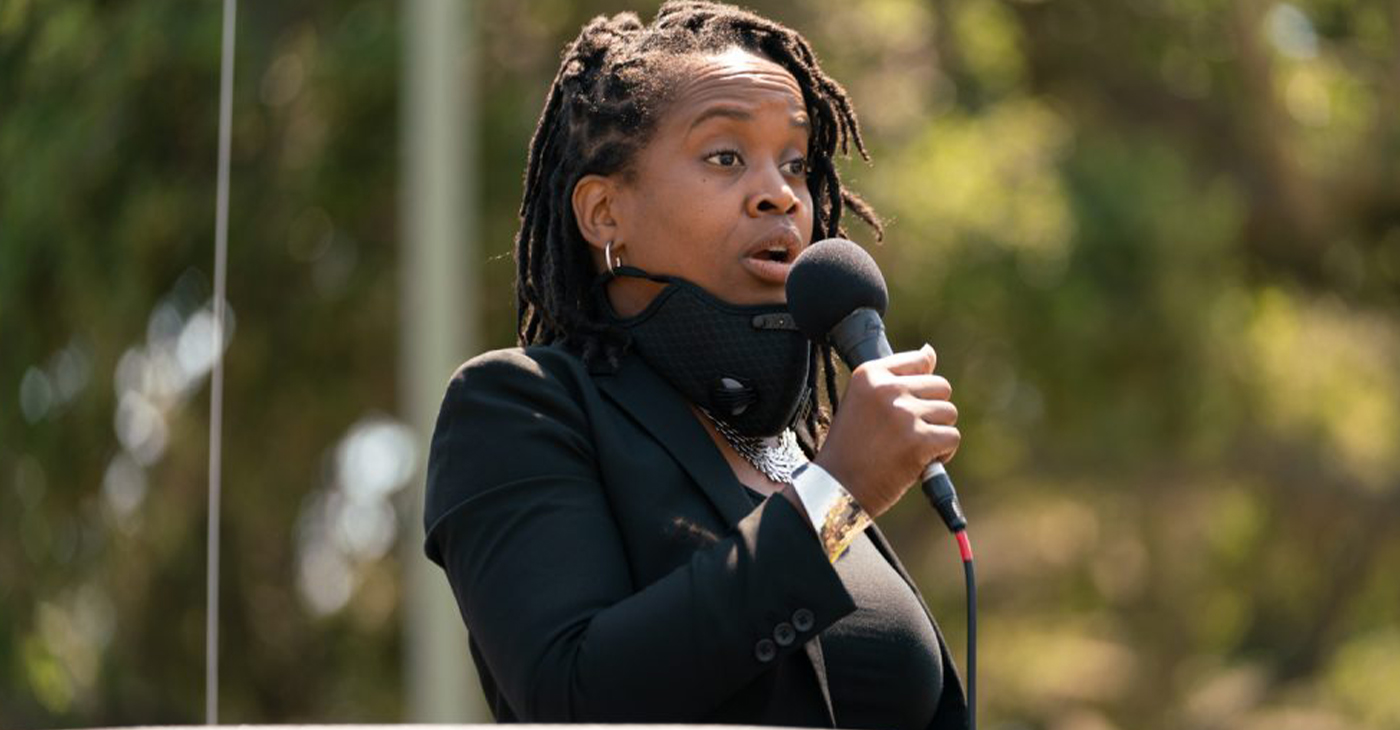
Oakland’s Black Arts Movement Business District (BAMBD) has been selected as one of California’s 10 new state-designated Cultural Districts, a distinction awarded by the California Arts Council (CAC), according to a media statement released by Councilmember Carroll Fife.
The BAMBD now joins 23 other districts across the state recognized for their deep cultural legacy, artistic excellence, and contributions to California’s creative economy.
Located in the heart of District 3, the BAMBD is widely regarded as one of the nation’s most important centers of Black cultural production — a space where artists, entrepreneurs, organizers, and cultural workers have shaped generations of local and national identity. The state’s recognition affirms the district’s historic importance and its future promise.
“This designation is a testament to what Black Oakland has built — and what we continue to build when we insist on investing in our own cultural and economic power,” said Fife.
“For years, our community has fought for meaningful recognition and resources for the Black Arts Movement Business District,” she said. “This announcement validates that work and ensures that BAMBD receives the support it needs to grow, thrive, and continue shaping the cultural fabric of California.”
Since taking office, Fife has led and supported multiple initiatives that strengthened the groundwork for this achievement, including:
- Restoring and protecting arts and cultural staffing within the City of Oakland.
- Creating the West Oakland Community Fund to reinvest in historically excluded communities
- Advancing a Black New Deal study to expand economic opportunity for Black Oakland
- Ensuring racial equity impact analyses for development proposals, improving access for Black businesses and Black contractors
- Introduced legislation and budget amendments that formalized, protected, and expanded the BAMBD
“These efforts weren’t abstract,” Fife said. “They were intentional, coordinated, and rooted in a belief that Black arts and Black businesses deserve deep, sustained public investment.”
As part of the Cultural District designation, BAMBD will receive:
- $10,000 over two years
- Dedicated technical assistance
- Statewide marketing and branding support
- Official designation from Jan. 1, 2026, through Dec. 31, 2030
This support will elevate the visibility of BAMBD’s artists, cultural organizations, small businesses, and legacy institutions, while helping attract new investment to the district.
“The BAMBD has always been more than a district,” Fife continued. “This recognition by the State of California gives us another tool in the fight to preserve Black culture, build Black economic power, and protect the families and institutions that make Oakland strong.”
For questions, contact Councilmember Carroll Fife at CFife@oaklandca.gov.


WORK FROM HOME
Home-based business with potential monthly income of $10K+ per month. A proven training system and website provided to maximize business effectiveness. Perfect job to earn side and primary income. Contact Lynne for more details: Lynne4npusa@gmail.com 800-334-0540


Bling It On: Holiday Lights Brighten Dark Nights All Around the Bay

Oakland Council Expands Citywide Security Cameras Despite Major Opposition

Lu Lu’s House is Not Just Toying Around with the Community

Desmond Gumbs — Visionary Founder, Mentor, and Builder of Opportunity

Families Across the U.S. Are Facing an ‘Affordability Crisis,’ Says United Way Bay Area

Black Arts Movement Business District Named New Cultural District in California

Oakland Post: Week of December 17 – 23, 2025

Support Your Child’s Mental Health: Medi-Cal Covers Therapy, Medication, and More

Ann Lowe: The Quiet Genius of American Couture

2025 in Review: Seven Questions for Black Women’s Think Tank Founder Kellie Todd Griffin

BRIDGE Housing President and CEO Ken Lombard Scores Top Honors for Affordable Housing Leadership

Oakland School Board Grapples with Potential $100 Million Shortfall Next Year

COMMENTARY: If You Don’t Want Your ‘Black Card’ Revoked, Watch What You Bring to Holiday Dinners

Mayor Lee, City Leaders Announce $334 Million Bond Sale for Affordable Housing, Roads, Park Renovations, Libraries and Senior Centers

Fayeth Gardens Holds 3rd Annual Kwanzaa Celebration at Hayward City Hall on Dec. 28

Oakland Post: Week of November 12 – 18, 2025

IN MEMORIAM: William ‘Bill’ Patterson, 94

How Charles R. Drew University Navigated More Than $20 Million in Fed Cuts – Still Prioritizing Students and Community Health

No Justice in the Justice System

Oakland Post: Week of November 19 – 25, 2025

LIHEAP Funds Released After Weeks of Delay as States and the District Rush to Protect Households from the Cold

Seth Curry Makes Impressive Debut with the Golden State Warriors

Oakland Post: Week of November 26 – December 2, 2025

Seven Steps to Help Your Child Build Meaningful Connections

Beyoncé and Jay-Z make rare public appearance with Lewis Hamilton at Las Vegas Grand Prix

Seven Steps to Help Your Child Build Meaningful Connections

Lewis Hamilton set to start LAST in Saturday Night’s Las Vegas Grand Prix

Protecting Pedophiles: The GOP’s Warped Crusade Against Its Own Lies

The Perfumed Hand of Hypocrisy: Trump Hosted Former Terror Suspect While America Condemns a Muslim Mayor

Trinidad and Tobago – Prime Minister Confirms U.S. Marines Working on Tobago Radar System

Hyundai Ioniq 5 Parking, Safety, and 360 View #shorts

2025 Ioniq 5 New Wiper & Powerful Performance! #shorts

Electric SUV Range: Is 259 Miles Enough? #shorts

EV Charging: How Fast Can You Charge an Electric Vehicle? #shorts

Biometric Cooling… Messaging Seats…Come on! 2025 Infiniti QX80 Autograph 4WD

Charged Up: Witness the Magic of a Fully Electric Car! #shorts

Range Rover Sport PHEV Included…: See What’s Inside This Luxury SUV! #shorts

Invisible Hood View: Perfect Parking with X-Ray Vision! #shorts

AI Is Reshaping Black Healthcare: Promise, Peril, and the Push for Improved Results in California

ESSAY: Technology and Medicine, a Primary Care Point of View

Sanctuary Cities

The RESISTANCE – FREEDOM NOW

STATE OF THE PEOPLE: Freddie

ECONOMIC BOYCOTT DAY!!!!!

I told You So
-
 #NNPA BlackPress3 weeks ago
LIHEAP Funds Released After Weeks of Delay as States and the District Rush to Protect Households from the Cold
-
 Alameda County3 weeks ago
Seth Curry Makes Impressive Debut with the Golden State Warriors
-
 Activism4 weeks ago
Oakland Post: Week of November 26 – December 2, 2025
-
 #NNPA BlackPress3 weeks ago
Seven Steps to Help Your Child Build Meaningful Connections
-
 #NNPA BlackPress3 weeks ago
Seven Steps to Help Your Child Build Meaningful Connections
-
 #NNPA BlackPress3 weeks ago
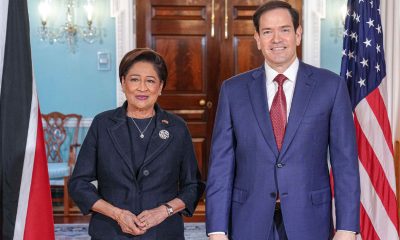
Trinidad and Tobago – Prime Minister Confirms U.S. Marines Working on Tobago Radar System
-

 #NNPA BlackPress3 weeks ago
Thanksgiving Celebrated Across the Tri-State
-

 #NNPA BlackPress3 weeks ago
Teens Reject Today’s News as Trump Intensifies His Assault on the Press
