
Politics
Black Republican Opponent Expected to Defeat Stockton’s Popular Democratic Mayor Michael Tubbs

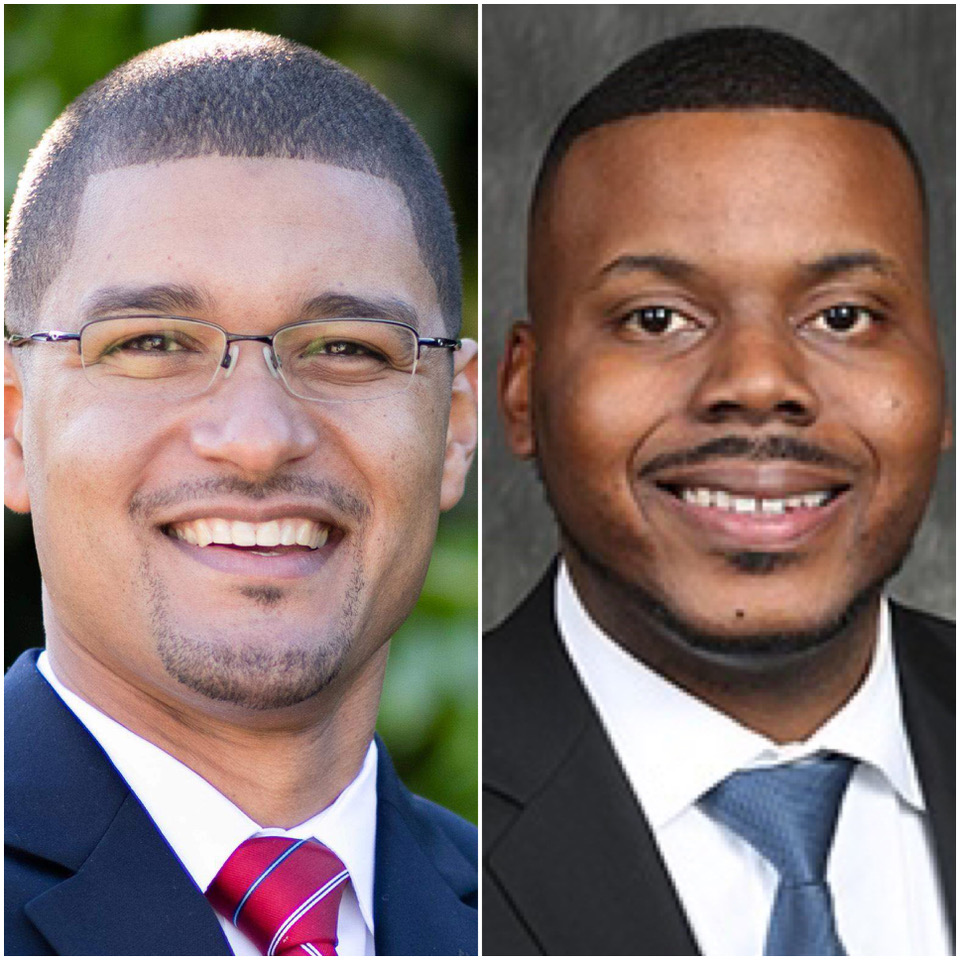
In 2012, Stockton, California, elected 22-year-old Michael Tubbs to his hometown’s city council.
From that celebrated victory to his 2017 rise to mayor of the Central Valley city, media pundits and Democratic Party insiders have hailed Tubbs, calling him one of the Democratic Party’s rising stars.
Tubbs’s future as a force in the Democratic party still remains almost certain, but on Nov. 3, the 30-year-old Stanford grad suffered an unexpected blow. As of Friday, Nov. 13, Tubbs was trailing Republican challenger Kevin Lincoln in his reelection bid.
Lincoln, who has never held political office, was leading Tubbs by almost 4,000 votes. Lincoln currently has 43,751 votes (55.05%) to Tubbs’s 35,724 votes (44.95%), with more ballots to be counted.
With this loss, Tubbs, the 79th mayor of the seat of San Joaquin County, joins a club of one-term Stockton mayors who couldn’t pull off a run for a second term.
Edward Chavez (2005 – 2008), Ann Johnston (2009 – 2012), and Anthony Silva (2013 – 2016) were all one-term mayors of the San Joaquin River port city.
“Over the last four years we have built a solid foundation towards a better future,” Tubbs said in a written statement. “It is my hope to continue this work as (Stockton’s) mayor. However, before anyone can declare a victory, each and every vote must be counted.”
When he was elected in 2016, Tubbs, then 26, became the youngest mayor in Stockton’s history and the first Black person to claim the seat.
Tubbs’s opponent is also Black. Lincoln’s grandfather, an immigrant from Mexico who came to California and settled in South Stockton, raised his family there and became a United States citizen.
Lincoln, who was born in Stockton, grew up in a U.S. Army family. As a youth, he volunteered at the California Youth Authority where he spoke to and encouraged youth in the juvenile justice system.
For now, Lincoln is excited about his lead, but cautious.
“There are definitely more votes to be counted and we’re definitely not counting our chickens before they hatch,” Lincoln said. “We still feel really good.”
Stockton has a population of 312,697 residents, according to the 2019 U.S. Census. An estimated 35,548 residents (12.2%) of Stockton are African American.
Even as he faces a career-derailing loss, Tubbs can look back on a record full 0f accomplishments and a personal
contact list of heavy hitters. He made both national and California history as the youngest mayor who has led a city with a population of over 100,000 residents.
Fortune magazine honored Tubbs among its 2018 Top “40 under 40,” and he made Forbes’ 2018 list of the “30 Under 30.” He was also celebrated that year among the “Root 100,” that publication’s annual list of influential African American achievers.
The Sacramento Observer, California capital city’s oldest African American-owned newspaper, has also celebrated Tubbs among its own “30 Under 30” award recipients.
Tubbs also has close and longstanding relationships with former U.S. President Barack Obama and entertainment mogul Oprah Winfrey. He also served as one of billionaire Michael Bloomberg’s surrogates when the New York businessman was running for president.
HBO released a documentary, “Stockton On My Mind,” featuring Tubbs, then a millennial, who was born to a teenage mother and father who spent some time in prison.
Some political observers say that Tubbs’s perceived star status on the national scene may have distracted him from paying close attention to political priorities at home.
“The mayor may have too much star power and may or may not be sufficiently focused on doing the work in Stockton,” Brian Clark, associate professor of political science at Stockton’s University of Pacific.
Other Stockton residents say Tubbs ran afoul of the will of local voters when he recommended selling one of the city’s 70-year-old golf course to a private operator.
Meanwhile, the national media praised Tubbs for launching the Economic Security Project, the nation’s first municipal-level basic income pilot. About 125 people in high-poverty areas were randomly picked to receive $500 monthly in cash to help with unaffordable expenses.
The program is expected to end in January 2021. Billionaire and Twitter Chief Executive Officer Jack Dorsey donated $3 million to Tubbs’ “universal basic income” program.
As a council member, Tubbs created the Reinvent South Stockton Coalition, championed the creation of the City’s Office of Violence Prevention, and was part of the council that led the city out of bankruptcy as Chair of the Audit and Legislative Committee.
“I tell people from the beginning, whenever you make a change, whenever you push another system, whenever you talk about equity or justice and opportunity for the people, there’s going to be some pushback. I didn’t expect to get 70% of the votes like I did four years ago because I’ve done some things,” Tubbs said on Nov. 3 at BellaVista Rooftop in Stockton.
As for Little, he says, he has always had a desire to serve his country. He joined the United States Marine Corps (USMC) in 2001. He was later recruited by the White House Military Office and assigned to Marine One, where he served President George W. Bush.
Following his service in the military, Lincoln worked for one of the nation’s top private security companies for eight years in Silicon Valley.
In 2013, Lincoln resigned from his corporate position to serve his community in Stockton through full-time ministry at a local church.
Both Tubbs and Lincoln said homelessness, public safety, affordable housing, and the city’s economic future were their top priorities.
“I think Stockton is ready for change. I’ve seen that time and time again during this campaign,” Lincoln said. “Stockton is ready for leadership.”




Activism
Oakland Post: Week of March 4 – 10, 2026
The printed Weekly Edition of the Oakland Post: Week of March 4 – 10, 2026


To enlarge your view of this issue, use the slider, magnifying glass icon or full page icon in the lower right corner of the browser window.

Activism
Oakland Post: Week of February 25 – March 3, 2026
The printed Weekly Edition of the Oakland Post: Week of – February 25 – March 3, 2026

To enlarge your view of this issue, use the slider, magnifying glass icon or full page icon in the lower right corner of the browser window.
Activism
Oakland Post: Week of February 18 – 24, 2026
The printed Weekly Edition of the Oakland Post: Week of – February 18 – 24, 2026
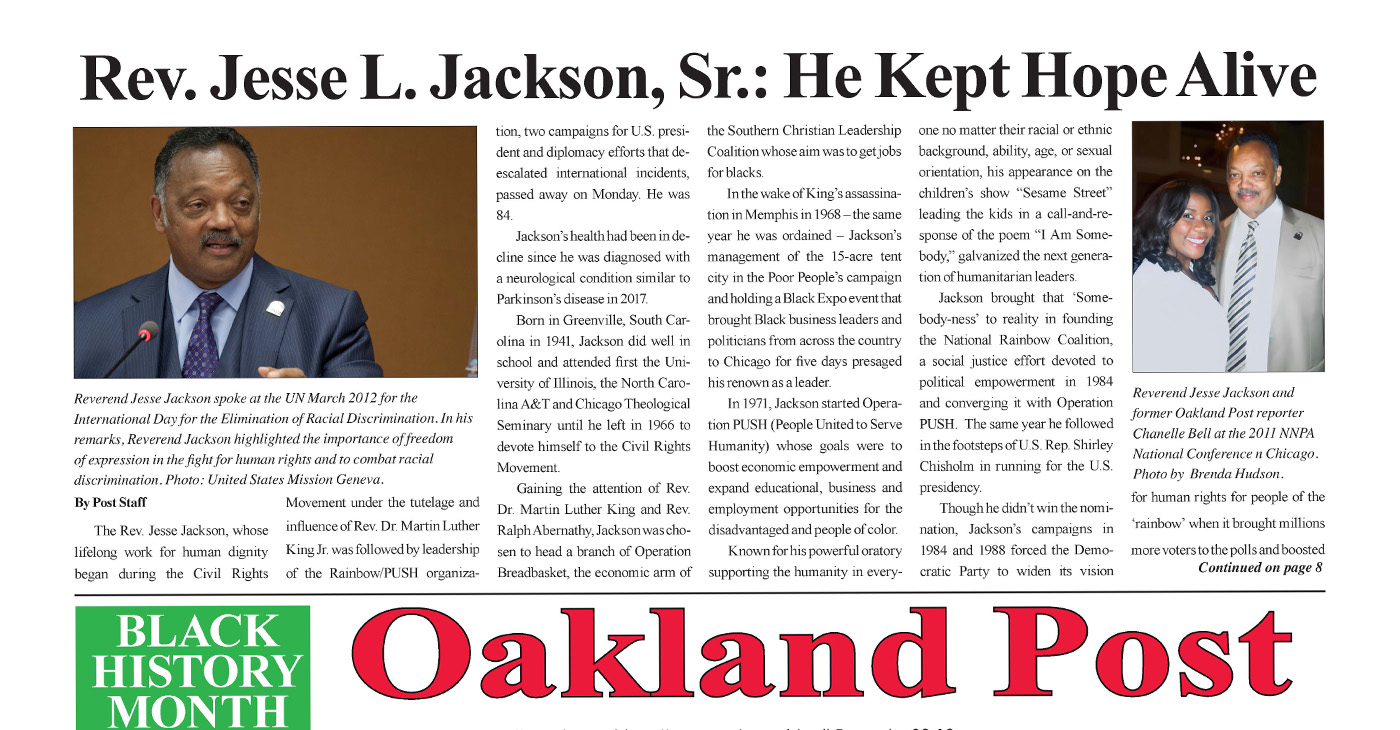
To enlarge your view of this issue, use the slider, magnifying glass icon or full page icon in the lower right corner of the browser window.


WORK FROM HOME
Home-based business with potential monthly income of $10K+ per month. A proven training system and website provided to maximize business effectiveness. Perfect job to earn side and primary income. Contact Lynne for more details: Lynne4npusa@gmail.com 800-334-0540


COMMENTARY: Women of Color Shape Our Past and Future

Woman’s Search for Family’s Roots Leads to Ancestor John T. Ward – A Successful Entrepreneur and Conductor on the Underground Railroad

Advocates Raise Alarm Over ICE Operation, MOU and Detention Risks in Baltimore County

Pete Buttigieg to Join Mayor Randall Woodfin for Community Town Hall in Birmingham

WATCH: Week One – NNPA’s “Leadership Matters” Video Series

Oakland Post: Week of March 4 – 10, 2026

OP-ED: NNPA Launches 2026 “Leadership Matters” Video Series

PRESS ROOM: PMG and Cranbrook Horizons-Upward Bound Launch Journey Fellowship Cohort 2

Los Angeles Summit Brings Together Leaders to Tackle Poverty and Affordability

Civil Rights TV Launches 24/7 Network Focused on Black History, Education and Equity

REVIEW: The Ultimate Hot Girl Summer Getaway: Sunseeker Resort Florida

COMMENTARY: How You Stop a Prescription Medicine is as Important as How You Start

PRESS ROOM: From Congress to Corporate America: NNPA Spotlights Visionaries in New Video Series

Poll Shows Support for Policies That Help Families Afford Child Care

Oakland Post: Week of February 25 – March 3, 2026

Oakland Post: Week of January 28, 2025 – February 3, 2026

Life Expectancy in Marin City, a Black Community, Is 15-17 Years Less than the Rest of Marin County

California Launches Study on Mileage Tax to Potentially Replace Gas Tax as Republicans Push Back

Community Celebrates Turner Group Construction Company as Collins Drive Becomes Turner Group Drive

Book Review: Books on Black History and Black Life for Kids

Discrimination in City Contracts

COMMENTARY: The Biases We Don’t See — Preventing AI-Driven Inequality in Health Care

Black History Events in the East Bay

Post Newspaper Invites NNPA to Join Nationwide Probate Reform Initiative

Medi-Cal Cares for You and Your Baby Every Step of the Way

Art of the African Diaspora Celebrates Legacy and Community at Richmond Art Center

COMMENTARY: The National Protest Must Be Accompanied with Our Votes

New Bill, the RIDER Safety Act, Would Support Transit Ambassadors and Safety on Public Transit

Oakland Post: Week of February 4 – 10, 2026

After Don Lemon’s Arrest, Black Officials Raise Concerns About Independent Black Media

Hyundai Ioniq 5 Parking, Safety, and 360 View #shorts

2025 Ioniq 5 New Wiper & Powerful Performance! #shorts

Electric SUV Range: Is 259 Miles Enough? #shorts

EV Charging: How Fast Can You Charge an Electric Vehicle? #shorts

Biometric Cooling… Messaging Seats…Come on! 2025 Infiniti QX80 Autograph 4WD

Charged Up: Witness the Magic of a Fully Electric Car! #shorts

Range Rover Sport PHEV Included…: See What’s Inside This Luxury SUV! #shorts

Invisible Hood View: Perfect Parking with X-Ray Vision! #shorts

AI Is Reshaping Black Healthcare: Promise, Peril, and the Push for Improved Results in California

ESSAY: Technology and Medicine, a Primary Care Point of View

Sanctuary Cities

The RESISTANCE – FREEDOM NOW

STATE OF THE PEOPLE: Freddie

ECONOMIC BOYCOTT DAY!!!!!

I told You So
-

 Activism4 weeks ago
Oakland Post: Week of February 11 – 17, 2026
-

 #NNPA BlackPress3 weeks ago
Reflecting on Black History Milestones in Birmingham AL
-

 Bay Area4 weeks ago
CITY OF SAN LEANDRO STATE OF CALIFORNIA PUBLIC WORKS DEPARTMENT ENGINEERING DIVISION NOTICE TO BIDDERS FOR ANNUAL STREET OVERLAY/REHABILITATION 2019-21 – PHASE III
-
 #NNPA BlackPress3 weeks ago
PRESS ROOM: NBA Hall of Fame Nominee Terry Cummings Joins 100 Black Men of DeKalb County to Launch Victory & Values Initiative
-

 #NNPA BlackPress3 weeks ago
U.S. manufacturing rebounds – how foundry services are adapting to rising demand
-
 Activism3 weeks ago
Oakland Post: Week of February 18 – 24, 2026
-

 #NNPA BlackPress3 weeks ago
OP-ED: One Hundred Years of Black Workers Telling the Truth
-

 #NNPA BlackPress3 weeks ago
Advancements in solar technology that are changing the way we power the world
