
Bay Area
Black Leaders: Spending Must Include Minorities as State Prepares for Billions in Fed Cash
The leaders say California has not lived up to its commitment to equitably include African American contractors and businesses in the state’s ongoing infrastructure investments. The state has also failed, they say, to include Black-owned institutions like newspapers and other media when informing the public about open bids for taxpayer-funded contracts, hiring, and other economic opportunities.


Some African American leaders in California are concerned. As the state looks forward to receiving billions in new federal funding this year for development projects, they fear African American and other minority-owned businesses and their workers will be left out.
The leaders say California has not lived up to its commitment to equitably include African American contractors and businesses in the state’s ongoing infrastructure investments. The state has also failed, they say, to include Black-owned institutions like newspapers and other media when informing the public about open bids for taxpayer-funded contracts, hiring, and other economic opportunities.
John Warren, the publisher of the San Diego Voice & Viewpoint, the city’s largest African American-owned publication, said that there is little-to-no community outreach when government agencies allocate funds for contracts and announce job opportunities.
“The notices for the jobs are not being advertised in our Black and Brown newspapers,” Warren said. “If they don’t reach out to us from a standpoint of being proactive inclusive, we won’t benefit from these jobs.”
On March 31, during a visit to Pennsylvania, Pres. Joe Biden announced a $2 trillion infrastructure federal spending plan called the “American Jobs Plan.”
He says, if the U.S. Congress approves it, the proposal would create 19 million jobs. In addition, it would invest in research and development that helps the United States “out-compete” China and other countries around the world.
Biden also promised that his plan would also address existing racial disparities that have resulted from the government’s historical neglect or isolation of African Americans and other minorities when undertaking large-scale national development projects.
“Inaction is not an option,” Biden said, chiding the U.S. Congress to pass the bill.
“It is an 8-year program that invests in our roads, our bridges, broadband, airports, ports, fixing our water systems. It is going to repair our V.A. hospitals across the country – many of them more than 50 years old,” Biden said.
Responding to Biden’s announcement, Gov. Gavin Newsom sounded upbeat.
“President Biden put forward a transformative vision for a healthier and cleaner future for our country, with unparalleled investments in infrastructure and clean energy which will create millions of high-paying jobs along the way,” said Newsom.
Newsom said California is “uniquely positioned to benefit from these investments.”
The governor mentioned how California will likely use some of the federal money, citing projects like expanding broadband access; making the state’s electric grid more resilient to wildfires and blackouts, improving schools, hospitals, and housing; expanding clean transportation; and more.
Newsom said the spending will also “lift up opportunities for communities too often overlooked.”
To help get the word out on the infrastructure plan, Newsom and Vice President Kamala Harris toured an Oakland-based facility on Monday morning to emphasize the importance of the American Jobs Plan. Harris held a listening session with local leaders, including a small business owner who received resources and funding from the Community Development Financial Institutions Fund.
But even though the California state government has already set aside lump sums of money to invest in the building and maintenance of state highways, bridges, and additional mass transit infrastructure, Black leaders say African American companies have yet to equitably benefit from those projects.
The overall infrastructure budget for Caltrans, for example, includes a $273 million investment from Senate Bill 1, passed in 2017, to repair the state’s roads and various transportation systems. The California Department of Transportation (Caltrans) is responsible for managing and distributing $491 million in funds, allocated by the California Transportation Commission. Caltrans is also in charge of distributing job opportunities including construction contracts and jobs across the state.
Gene Hale, chairman of the Greater Los Angeles African American Chamber of Commerce, said the state’s transport agencies need to increase the spending among minority groups, “to make a lasting impression in Black and Latino communities.”
“Caltrans should also increase their small business goals on state-funded highway projects, and also continue to do more outreach to reach these disadvantaged communities,” said Hale.
Toks Omishakin, the director of Caltrans – who Newsom appointed in September 2019 — said his department has opened the Caltrans Office of Race and Equity (CORE), which works closely with the Office of Civil Rights for equity efforts in August 2020.
The transportation agency also hosted a virtual business summit to support local businesses.
The inaugural virtual small business summit included 800 businesses from across the state networking with federal government officials and representatives from banking institutions.
Despite the success of the event, Omishakin said that Caltrans struggled to get participation from Black and Latino business owners.
“One of the things we need to do is engage more with the communities,” Omishakin said. “We need to reach out more to people and businesses to let them know what opportunities exist.”
According to the Economic Policy Institute, the unemployment rate for Black Californians in the last quarter of 2020 was 15%, the highest in the state. Latinos were a close second at 13% within the same fiscal quarter.
Warren said using trusted messengers like established Black-owned media publications around the state is a practical way to promote equitable hiring processes and distribution of funds.
“They have to put money in inclusive media for community outreach — the same way they did with the Census,” Warren said. “There has to be a directive that these jobs be inclusively placed before us and made available to us.”
Omishakin, Caltrans director, said that ethnic media is a viable option for community engagement in Black and Latino communities.
“We’re going to step up even more on this type of engagement,” Omishakin said. “We know that some communities rely on ethnic media to get our information, so we’re going to do more to get the engagement we were looking for.”
Omishakin said Caltrans is committed to boosting equity in its funding programs and hiring processes.
One important way to address issues of inclusion issues of diversity and equity across the board, “is through our business practices, and how we give more opportunity to marginalized businesses,” said Omishakin.
Hale, who is also the CEO of G&C Equipment Corporation, a construction equipment, material, and supplies company said the transportation agency must be willing to set up goals that prioritize minority businesses for government contracting jobs in predominantly Black and Latino communities.
Hale says he also supports direct outreach to African American businesses.
The businessman and civic leader said Caltrans needs to design programs that, “specifically reach the disadvantaged minority communities and business people.”





Activism
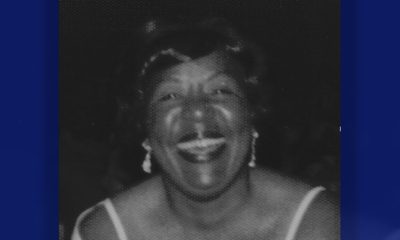
Ann Lowe: The Quiet Genius of American Couture
Lowe was born in Clayton, Alabama, into a family of gifted seamstresses. Her mother and grandmother were well-known dressmakers who created exquisite gowns for women in the area. By the time Lowe was a young girl, she was already showing extraordinary talent — cutting, sewing, and decorating fabric with a skill that far exceeded her age. When her mother died unexpectedly, Lowe – only 16 years old then – took over her mother’s sewing business, completing all the orders herself.


By Tamara Shiloh
Ann Cole Lowe, born Dec.14, 1898, was a pioneering American fashion designer whose extraordinary talent shaped some of the most widely recognized and celebrated gowns in U.S. history.
Although she designed dresses for society’s wealthiest families and created masterpieces worn at historic events, Lowe spent much of her life in the shadows — uncredited, underpaid, yet unmatched in skill. Today, she is celebrated as one of the first nationally recognized African American fashion designers and a true visionary in American couture.
Lowe was born in Clayton, Alabama, into a family of gifted seamstresses. Her mother and grandmother were well-known dressmakers who created exquisite gowns for women in the area. By the time Lowe was a young girl, she was already showing extraordinary talent — cutting, sewing, and decorating fabric with a skill that far exceeded her age. When her mother died unexpectedly, Lowe – only 16 years old then – took over her mother’s sewing business, completing all the orders herself. This early responsibility would prepare her for a lifetime of professional excellence.
In 1917, Lowe moved to New York City to study at the S.T. Taylor Design School. Although she was segregated from White students and forced to work separately, she, of course, excelled, graduating earlier than expected. Her instructors quickly recognized that her abilities were far above the typical student, especially her skill in hand-sewing, applique, and intricate floral embellishment – techniques that would become her signature.
Throughout the 1920s and 1930s, she designed gowns for high-society women in Florida and New York, operating boutiques and working for prestigious department stores. Her reputation for craftsmanship, originality, and elegance grew increasingly. She was known for creating gowns that moved beautifully, featured delicate hand-made flowers, and looked sculpted rather than sewn. Many wealthy clients specifically requested “an Ann Lowe gown” for weddings, balls, and galas.
Her most famous creation came in 1953: the wedding gown worn by Jacqueline Bouvier when she married Massachusetts Sen. John F. Kennedy. The dress – crafted from ivory silk taffeta with dozens of tiny, pleated rosettes – became one of the most photographed bridal gowns in American history. Despite this achievement, Lowe received no public credit at the time. When a flood destroyed her completed gowns 10 days before the wedding, she and her seamstresses worked day and night to remake everything – at her own expense. Her dedication and perfectionism never wavered.
She eventually opened “Ann Lowe Originals,” her own salon on New York’s Madison Avenue. She served clients such as the Rockefellers, DuPonts, Vanderbilts, and actresses like Olivia de Havilland. Yet even with her wealthy clientele, she struggled financially, often undercharging because she wanted every dress to be perfect, even if it meant losing money.
Lowe’s contributions were finally recognized later in life. Today, her exquisite gowns are preserved in museums, including the Smithsonian National Museum of African American History and Culture and the Metropolitan Museum of Art.
In the last five years of her life, Lowe lived with her daughter Ruth in Queens, N.Y. She died at her daughter’s home on Feb. 25, 1981, at the age of 82, after an extended illness.

Activism
BRIDGE Housing President and CEO Ken Lombard Scores Top Honors for Affordable Housing Leadership
The Development Company of the Year honor represents a milestone for BRIDGE Housing, which received the Gold award—its top designation—in a category that included both affordable and market-rate developers. The recognition caps what has been one of the strongest growth periods in the organization’s 42-year history.

By the Oakland Post Staff
San Francisco-based BRIDGE Housing and its president and CEO, Ken Lombard, have been named among the nation’s housing industry standouts, earning two of the top prizes at the 2025 Multi-Housing News Excellence Awards.
BRIDGE Housing was named Development Company of the Year, while Lombard received Executive of the Year, recognition that places the nonprofit affordable housing provider alongside leading national developers of both affordable and market-rate housing.
The awards were announced in New York for the accomplishments achieved during 2024.
Multi-Housing News is one of the industry’s most respected publications. Award winners are selected by a panel of housing professionals, including multifamily developers, architects, and owners.
“BRIDGE Housing is deeply honored to be recognized by Multi-Housing News and our industry peers,” Lombard said. “These awards are a testament to the high-impact, mission-driven work by BRIDGE’s exceptional team to deliver quality affordable housing and support services that empower residents to improve their lives.”
The Development Company of the Year honor represents a milestone for BRIDGE Housing, which received the Gold award—its top designation—in a category that included both affordable and market-rate developers. The recognition caps what has been one of the strongest growth periods in the organization’s 42-year history.
In 2024, BRIDGE significantly expanded its footprint across California, Oregon, and Washington. That momentum continued into 2025, with portfolio growth of 9%, including the addition of nine new communities and 1,187 new or acquired affordable housing units. The nonprofit also added three new projects to its development pipeline as it nears a portfolio of 16,000 units.
The growth reflects a broader strategy aimed at accelerating both acquisitions and ground-up development, supported by partnerships with major financial institutions and innovative capital markets strategies. BRIDGE has also emphasized high-quality design and deep community engagement as central elements of its approach.
BRIDGE became the first affordable housing developer to issue tax-exempt construction bonds for one of the largest affordable housing projects in Portland, Ore., leveraging its strong credit rating.
Earlier this year, the nonprofit launched the BRIDGE Housing Impact Fund, with a goal of investing $1 billion to preserve and create affordable housing. It also closed on $175 million in taxable general-obligation bonds after increasing the offering in response to strong investor demand.
The company’s performance also underscores the role of Lombard, who has led BRIDGE since 2021 and was honored individually for his leadership.
Under Lombard’s tenure, BRIDGE has built a new leadership team with experience drawn from both the nonprofit and private sectors, with a particular focus on what the organization describes as efforts to “break the status quo,” especially in affordable housing finance. Those initiatives have helped reduce capital and construction costs, strengthen relationships with institutional investors, and expand resident support services.
Today, BRIDGE Housing serves more than 33,000 residents across 139 communities on the West Coast.
“Ken has dedicated his career to innovative real estate solutions that improve the quality of life in underserved neighborhoods,” said Kenneth Novack, chair of BRIDGE Housing’s board of directors. “His visionary leadership and the work of our incredible team have positioned BRIDGE for long-term growth that will extend our impact throughout the West Coast.”
Founded in 1983, BRIDGE Housing has helped create more than 23,000 affordable homes with a total development cost of $6 billion.
Activism
Oakland School Board Grapples with Potential $100 Million Shortfall Next Year
The school board approved Superintendent Denise Saddler’s plan for major cuts to schools and the district office, but they are still trying to avoid outside pressure to close flatland schools.

By Post Staff
The Oakland Board of Education is continuing to grapple with a massive $100 million shortfall next year, which represents about 20% of the district’s general fund budget.
The school board approved Superintendent Denise Saddler’s plan for major cuts to schools and the district office, but they are still trying to avoid outside pressure to close flatland schools.
Without cuts, OUSD is under threat of being taken over by the state. The district only emerged from state receivership in July after 22 years.
“We want to make sure the cuts are away from the kids,” said Kampala Taiz-Rancifer, president of the Oakland Education Association, the teachers’ union. “There are too many things that are important and critical to instruction, to protecting our most vulnerable kids, to safety.”
The school district has been considering different scenarios for budget cuts proposed by the superintendent, including athletics, libraries, clubs, teacher programs, and school security.
The plan approved at Wednesday’s board meeting, which is not yet finalized, is estimated to save around $103 million.
Staff is now looking at decreasing central office staff and cutting extra-curricular budgets, such as for sports and library services. It will also review contracts for outside consultants, limiting classroom supplies and examine the possibility of school closures, which is a popular proposal among state and county officials and privatizers though after decades of Oakland school closures, has been shown to save little if any money.


WORK FROM HOME
Home-based business with potential monthly income of $10K+ per month. A proven training system and website provided to maximize business effectiveness. Perfect job to earn side and primary income. Contact Lynne for more details: Lynne4npusa@gmail.com 800-334-0540


Support Your Child’s Mental Health: Medi-Cal Covers Therapy, Medication, and More

Ann Lowe: The Quiet Genius of American Couture

2025 in Review: Seven Questions for Black Women’s Think Tank Founder Kellie Todd Griffin

BRIDGE Housing President and CEO Ken Lombard Scores Top Honors for Affordable Housing Leadership

Oakland School Board Grapples with Potential $100 Million Shortfall Next Year

COMMENTARY: If You Don’t Want Your ‘Black Card’ Revoked, Watch What You Bring to Holiday Dinners

Mayor Lee, City Leaders Announce $334 Million Bond Sale for Affordable Housing, Roads, Park Renovations, Libraries and Senior Centers

Fayeth Gardens Holds 3rd Annual Kwanzaa Celebration at Hayward City Hall on Dec. 28

Post Salon to Discuss Proposal to Bring Costco to Oakland Community meeting to be held at City Hall, Thursday, Dec. 18

Oakland Post: Week of December 10 – 16, 2025

Seth Curry Makes Impressive Debut with the Golden State Warriors

A Nation in Freefall While the Powerful Feast: Trump Calls Affordability a ‘Con Job’

The Numbers Behind the Myth of the Hundred Million Dollar Contract

FBI Report Warns of Fear, Paralysis, And Political Turmoil Under Director Kash Patel

ACA Deadline Nears as 20 million Brace for Higher Health Costs

Oakland Post: Week of October 29 – November 4, 2025

Oakland Post: Week of November 12 – 18, 2025

Oakland Post: Week of November 5 – 11, 2025

IN MEMORIAM: William ‘Bill’ Patterson, 94

How Charles R. Drew University Navigated More Than $20 Million in Fed Cuts – Still Prioritizing Students and Community Health

No Justice in the Justice System

Beyoncé and Jay-Z make rare public appearance with Lewis Hamilton at Las Vegas Grand Prix

Lewis Hamilton set to start LAST in Saturday Night’s Las Vegas Grand Prix

Oakland Post: Week of November 19 – 25, 2025

LIHEAP Funds Released After Weeks of Delay as States and the District Rush to Protect Households from the Cold

The Perfumed Hand of Hypocrisy: Trump Hosted Former Terror Suspect While America Condemns a Muslim Mayor
Seth Curry Makes Impressive Debut with the Golden State Warriors

Protecting Pedophiles: The GOP’s Warped Crusade Against Its Own Lies

Trump’s Death Threat Rhetoric Sends Nation into Crisis

Trinidad and Tobago – Prime Minister Confirms U.S. Marines Working on Tobago Radar System

Hyundai Ioniq 5 Parking, Safety, and 360 View #shorts

2025 Ioniq 5 New Wiper & Powerful Performance! #shorts

Electric SUV Range: Is 259 Miles Enough? #shorts

EV Charging: How Fast Can You Charge an Electric Vehicle? #shorts

Biometric Cooling… Messaging Seats…Come on! 2025 Infiniti QX80 Autograph 4WD

Charged Up: Witness the Magic of a Fully Electric Car! #shorts

Range Rover Sport PHEV Included…: See What’s Inside This Luxury SUV! #shorts

Invisible Hood View: Perfect Parking with X-Ray Vision! #shorts

AI Is Reshaping Black Healthcare: Promise, Peril, and the Push for Improved Results in California

ESSAY: Technology and Medicine, a Primary Care Point of View

Sanctuary Cities

The RESISTANCE – FREEDOM NOW

STATE OF THE PEOPLE: Freddie

ECONOMIC BOYCOTT DAY!!!!!

I told You So
-
 Activism4 weeks ago
Oakland Post: Week of November 12 – 18, 2025
-
 Activism4 weeks ago
IN MEMORIAM: William ‘Bill’ Patterson, 94
-
 Activism4 weeks ago
How Charles R. Drew University Navigated More Than $20 Million in Fed Cuts – Still Prioritizing Students and Community Health
-
 Bay Area4 weeks ago
No Justice in the Justice System
-
 #NNPA BlackPress3 weeks ago
Beyoncé and Jay-Z make rare public appearance with Lewis Hamilton at Las Vegas Grand Prix
-
 #NNPA BlackPress3 weeks ago
Lewis Hamilton set to start LAST in Saturday Night’s Las Vegas Grand Prix
-
 Activism3 weeks ago
Oakland Post: Week of November 19 – 25, 2025
-
 #NNPA BlackPress2 weeks ago
LIHEAP Funds Released After Weeks of Delay as States and the District Rush to Protect Households from the Cold
