
Activism
Panel Discusses Supreme Court Case Threatening End of Affirmative Action
On Oct. 31, SCOTUS listened to oral arguments in two cases challenging race-conscious student admissions policies used by Harvard University and the University of North Carolina (UNC) to promote creating diverse student populations at their schools. The case emerged in 2014, when SFFA, a nonprofit advocacy organization opposed to affirmative action, brought an action alleging Harvard violated Title VI of the Civil Rights Act (Title VI).


By Antonio Ray Harvey | California Black Media
A webinar hosted by ChangeLawyers, the American Constitution Society (ACS) Bay Area, and Equal Justice Society was held Nov. 15 to discuss the possible outcomes of the pending decision by the Supreme Court of the United States (SCOTUS) in the case of Students for Fair Admissions (SFFA) v. Harvard.
The online event titled, “The End of Affirmative Action: How SCOTUS Is Coming After BIPOC Students” delved into the impact of banning the consideration of race as a factor during the college admissions process.
Black, Indigenous, and People of Color (BIPOC) students would be affected by such a ruling, said panelist Lisa Holder, an attorney and president of Equal Justice Society (EJS). EJS is an Oakland-based nonprofit and civil rights organization that does work geared toward transforming the nation’s consciousness on race through law, social sciences, and the arts.
“(Ending Affirmative Action) essentially, completely upends our ability to level the playing field and remediate for centuries of discrimination and marginalization,” said Holder. “If you do not have intervention and take affirmative steps to counteract continued systemic racism, it’s going to take hundreds of years to repair those gaps. It will not happen by itself.”
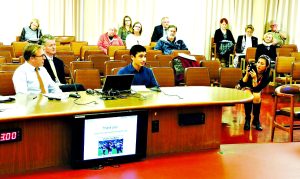
Holder is also a member of the California Task Force to Study and Develop Reparation Proposals for African Americans, a nine-member panel established after Gov. Gavin Newsom signed Assembly Bill 3121, authored by then-Assemblymember Shirley Weber. The task force is investigating the history and costs of slavery in California and is charged with recommending an appropriate remedy for the state to implement.
Also participating on the End of Affirmative Action panel were Sally Chen, education equity program manager at Chinese for Affirmative Action, and Sarah C. Zearfoss, senior assistant dean for the University of Michigan Law School.
Shilpa Ram — senior staff attorney for Education Equity, Public Advocates and a board member of the ACS Bay Area Lawyer Chapter — was the moderator.
On Oct. 31, SCOTUS listened to oral arguments in two cases challenging race-conscious student admissions policies used by Harvard University and the University of North Carolina (UNC) to promote creating diverse student populations at their schools.
The case emerged in 2014, when SFFA, a nonprofit advocacy organization opposed to affirmative action, brought an action alleging Harvard violated Title VI of the Civil Rights Act (Title VI).
SFFA argues that Harvard instituted a race-conscious admissions program that discriminated against Asian American applicants. SFFA also alleges that UNC is violating the Equal Protection Clause of the 14th Amendment, by unfairly using race to provide preference to underrepresented minority applicants to the detriment of white and Asian American applicants.
Chen, of Chinese for Affirmative Action, is a first-generation college graduate from a working-class immigrant family. She is an alumna of Harvard College. She was one of eight students and alumni that gave oral testimony in support of affirmative action in the 2018 federal lawsuit Students for Fair Admissions, Inc. v. Harvard.
“Particularly as these cases were taking advantage of a claim that Asian American students don’t benefit from Affirmative Action or are harmed; we really saw how this was a misrepresentation of our community needs,” Chen said of hers and seven other students’ testimonies. “My testimony really spoke to that direct experience and making clear that Asian American students and communities are in support of affirmative action.”
In 1965, President Lyndon B. Johnson issued Executive Order 11246, requiring all government contractors and subcontractors to take affirmative action to expand job opportunities for minorities.
Fifty-seven years later, a decision by SCOTUS could be reached at the end of the current term in late June or early July 2023 banning affirmative action. The decision would dismantle race-conscious admission policies that overwhelmingly help BIPOC students create a better future for themselves, members of the panel stated.
“Schools take race into account as a factor in admission because that is the single-best, most effective way to create a racially diverse class,” Zearfoss said.
Zearfoss directs the University of Michigan Law School Jurist Doctorate (JD) and Master of Law (LLM) admissions and supervises the Office of Financial Aid.
California ended affirmative action policies in 1996 with the passage of Proposition 209.
Prop 209 states that the government and public institutions cannot discriminate against or grant preferential treatment to persons based on race in public employment, public education, and public contracting.
Proposition 16 was a constitutional amendment designed to repeal Prop 209, but the initiative was defeated by voters in 2020. Secretary of State Dr. Shirley Weber introduced the legislation that was the basis for Prop 16 when she was a state Assemblymember for the 79th District.
“When we no longer live in a white supremacist society then we can start thinking about ending these interventions that are necessary to counteract preferences for white people that exist and continue to exist,” Holder said.











Activism
Oakland Post: Week of March 18 – 24, 2026
The printed Weekly Edition of the Oakland Post: Week of March 18 – 24, 2026

To enlarge your view of this issue, use the slider, magnifying glass icon or full page icon in the lower right corner of the browser window.
Activism
Oakland Post: Week of March 11 -17, 2026
The printed Weekly Edition of the Oakland Post: Week of March 11 – 17, 2026

To enlarge your view of this issue, use the slider, magnifying glass icon or full page icon in the lower right corner of the browser window.
Activism
Oakland Post: Week of March 4 – 10, 2026
The printed Weekly Edition of the Oakland Post: Week of March 4 – 10, 2026

To enlarge your view of this issue, use the slider, magnifying glass icon or full page icon in the lower right corner of the browser window.


WORK FROM HOME
Home-based business with potential monthly income of $10K+ per month. A proven training system and website provided to maximize business effectiveness. Perfect job to earn side and primary income. Contact Lynne for more details: Lynne4npusa@gmail.com 800-334-0540


Black Artists in America, Installation Three Wraps at the Dixon Gallery and Gardens

Grief, Advocacy, and Education: A Counselor Reflects on Black Maternal Health

Future of Florida’s Black History Museum in Limbo

New Research Shows the Many Benefits of Early Learning

South Hampton K-8 Students Among Top 10 Finalists for Samsung’s ‘Solve for Tomorrow’ Competition

Cuba: No Negotiation with US on the President or Political System

Brooklyn Academy of Music Names Jamaican-Born Tamara McCaw as President

Trinidad & Tobego – U.S. Launches WhatsApp Channel for American Citizens in the Country

Oakland Post: Week of March 18 – 24, 2026

AI Innovation vs. Ethics and Environmental Impact

AI, Web3, and Digital Reparations

What If You Owned Your AI Agent?

Season 7, Episode 3 – January Reporter’s Roundtable 📱

Season 7, Episode 3 – January Reporter’s Roundtable

AI, Media, and Power | Part 2, Real-World Impacts and Tradeoffs

Oakland Post: Week of February 11 – 17, 2026

Reflecting on Black History Milestones in Birmingham AL

CITY OF SAN LEANDRO STATE OF CALIFORNIA PUBLIC WORKS DEPARTMENT ENGINEERING DIVISION NOTICE TO BIDDERS FOR ANNUAL STREET OVERLAY/REHABILITATION 2019-21 – PHASE III

Oakland Post: Week of February 18 – 24, 2026

PRESS ROOM: NBA Hall of Fame Nominee Terry Cummings Joins 100 Black Men of DeKalb County to Launch Victory & Values Initiative

Oakland Post: Week of February 25 – March 3, 2026

Trump’s MAGA Allies are Creating Executive Order Plan to Steal the 2026 Midterms

U.S. manufacturing rebounds – how foundry services are adapting to rising demand

OP-ED: One Hundred Years of Black Workers Telling the Truth

Poll Shows Support for Policies That Help Families Afford Child Care

Chase Oakland Community Center Hosts Alley-Oop Accelerator Building Community and Opportunity for Bay Area Entrepreneurs

Advancements in solar technology that are changing the way we power the world

Oakland Post: Week of March 4 – 10, 2026

PRESS ROOM: Civil Rights TV Launches in Selma as the World’s First 24/7 Civil Rights Television Network

Woman’s Search for Family’s Roots Leads to Ancestor John T. Ward – A Successful Entrepreneur and Conductor on the Underground Railroad

Hyundai Ioniq 5 Parking, Safety, and 360 View #shorts

2025 Ioniq 5 New Wiper & Powerful Performance! #shorts

Electric SUV Range: Is 259 Miles Enough? #shorts

EV Charging: How Fast Can You Charge an Electric Vehicle? #shorts

Biometric Cooling… Messaging Seats…Come on! 2025 Infiniti QX80 Autograph 4WD

Charged Up: Witness the Magic of a Fully Electric Car! #shorts

Range Rover Sport PHEV Included…: See What’s Inside This Luxury SUV! #shorts

Invisible Hood View: Perfect Parking with X-Ray Vision! #shorts

AI Is Reshaping Black Healthcare: Promise, Peril, and the Push for Improved Results in California

ESSAY: Technology and Medicine, a Primary Care Point of View

Sanctuary Cities

The RESISTANCE – FREEDOM NOW

STATE OF THE PEOPLE: Freddie

ECONOMIC BOYCOTT DAY!!!!!

I told You So
-
 Activism4 weeks ago
Oakland Post: Week of March 4 – 10, 2026
-
 #NNPA BlackPress3 weeks ago
Woman’s Search for Family’s Roots Leads to Ancestor John T. Ward – A Successful Entrepreneur and Conductor on the Underground Railroad
-

 #NNPA BlackPress4 weeks ago
OP-ED: NNPA Launches 2026 “Leadership Matters” Video Series
-

 #NNPA BlackPress3 weeks ago
Advocates Raise Alarm Over ICE Operation, MOU and Detention Risks in Baltimore County
-

 #NNPA BlackPress3 weeks ago
COMMENTARY: Women of Color Shape Our Past and Future
-

 #NNPA BlackPress3 weeks ago
Pete Buttigieg to Join Mayor Randall Woodfin for Community Town Hall in Birmingham
-

 Activism2 weeks ago
Oakland Post: Week of March 11 -17, 2026
-

 #NNPA BlackPress4 weeks ago
PRESS ROOM: PMG and Cranbrook Horizons-Upward Bound Launch Journey Fellowship Cohort 2
