
Community
Climate-Induced Displacement is a Global Phenomenon, but Not Evenly Experienced
As world leaders presented their plans to combat rising global temperatures at the annual United Nations Climate Change Conference (COP 28) in Dubai from Nov. 30-Dec. 13, 2023, discussions are centered on how countries can cut greenhouse gas emissions and mitigate a dire environmental future. But a UC Berkeley researcher says that future is already here for millions of people displaced by the climate crisis. And those climate refugees are predominantly from formerly colonized countries that are not responsible, in large part, for the factors that exacerbate climate change.


UC Berkeley policy analyst from the Othering and Belonging Institute shares recommendations to protect people displaced from the climate crisis.
By Ivan Natividad
UC Berkeley News
As world leaders presented their plans to combat rising global temperatures at the annual United Nations Climate Change Conference (COP 28) in Dubai from Nov. 30-Dec. 13, 2023, discussions are centered on how countries can cut greenhouse gas emissions and mitigate a dire environmental future.
But a UC Berkeley researcher says that future is already here for millions of people displaced by the climate crisis. And those climate refugees are predominantly from formerly colonized countries that are not responsible, in large part, for the factors that exacerbate climate change.
Those nations — in the global south regions of Africa, Latin America, the Caribbean and much of Asia and Oceania — also lack the wealth and infrastructure to withstand intensifying natural disasters, rising sea levels and the collapse of industries dependent on stable climates, according to a recent Berkeley report.
“There are many examples of how global south countries face the brunt of a crisis they did not produce, due to the activities of countries and industries in the global north,” says report co-author Hossein Ayazi, a senior policy analyst at UC Berkeley’s Othering and Belonging Institute. “So, we want to help protect the most marginalized — climate-induced displaced persons — while targeting the sources of their marginalization.”
That is why the institute’s Global Justice Program recently launched an interactive database that helps both policymakers and impacted communities explore global data on climate-induced displacement. The report also offers strategies to ensure the protection of people displaced by the climate crisis, and climate resilience for them moving forward.
Ayazi said the research shows that sea levels are expected to rise drastically in the coming decades, which will impact nearly 40% of the world’s population that lives in coastal areas. And over 75% of all coastal populations — 90% of the world’s poor rural coastal areas — live in the global south.
Berkeley News spoke with Ayazi about what’s causing climate change displacement and what needs to happen to protect climate refugees and make their communities more resilient.
Berkeley News: Your research unpacks why people in the global south are more vulnerable to being displaced from the impacts of the climate crisis. What are some of the economic dimensions of this vulnerability?
Hossein Ayazi: Many countries in the global south have a relatively large percentage of their gross domestic product (GDP) derived from agriculture, forestry, and fishing — industries that are by nature more vulnerable to a changing climate.
In Ethiopia, for example, agriculture comprises almost 40% of its total GDP. That sector also employs over 80% of its population. So as these countries experience climate extremes — droughts, floods, increased temperatures and so on— their economies are impacted on a deep level.
A defining feature of countries in the global south is that their economies have been organized by, and to the benefit of, the global north — wealthier and powerful nations in North America and Europe. This means agricultural production that’s largely export-oriented, and not diversified, makes these countries especially inflexible and vulnerable to climate impacts.
Berkeley News: What other significant economic or financial factors cause or worsen climate-induced displacement?
Hossein Ayazi: Global south countries have a high external debt burden, with surcharges making things worse. In fact, global south debt payments in 2023 reached their highest level in 25 years.
This high debt burden means a poor sovereign credit rating, and a lack of fiscal space to invest in climate-resilient infrastructure and economies that can adequately respond to disasters. This is true at the individual and household level: When disaster strikes, it’s hard for people to manage when they are struggling financially.
Protecting climate refugees and affording people the right to stay in their communities means addressing such issues.
Berkeley News: While the focus of your data is on the global south, when you talk about climate displacement in this way it seems like it can happen anywhere — even in the United States.
Hossein Ayazi: It certainly can. Consider Hurricane Katrina in 2005. Residential segregation and decades of disinvestment in New Orleans’ levee infrastructure meant that when the storm hit, it would be the city’s poorer Black residents who would be displaced or lose their lives.
In the wildfires in Maui this year, we saw the inequalities in those communities exacerbated. Tourists had the means to reach safety and secure a place to stay, while many Native Hawaiians struggled to flee, save their homes, or recover afterward.
The climate crisis is a global phenomenon, but its impacts are not evenly experienced.
Berkeley News: Your research reveals that industries using extreme amounts of nonrenewable energy sources mostly come from wealthier countries in the global north. How do those industries affect the surrounding communities they inhabit?
Hossein Ayazi: Globally, we have come to be dependent on extractive, exploitative industries that might provide for some, but collectively harm us all, and certainly harm the people in closest proximity to them.
These industries are usually placed in marginalized communities in the global north — and in countries across the global south — and, rife with health and environmental impacts, they become mainstays of the broader economy.
Berkeley News: What is an example of this locally?
Hossein Ayazi: We can look to Richmond, California, and the Chevron oil refinery located there. Nearly 24% of the city’s general fund comes from the refinery, which also provides regional employment.
So, the question is: How do communities and countries become less dependent on these extractive industries that harm them, and us? How are these harms — past and present — addressed?
That’s the point of this work: Protecting peoples most harmed by the climate crisis, targeting the sources of the climate crisis, and building communities and economies that are just, sustainable and resilient against the climate crisis.
Berkeley News: What do world leaders need to do to make this vision a reality?
Hossein Ayazi: World leaders need to recognize the rights of people displaced by the climate crisis and across international borders. They also need to act upon demands for the transformational changes needed to materialize inclusive, just, and climate-resilient communities.
These demands entail ending the exploitation of land, resources and labor, and demilitarizing borders, among other key climate justice demands.
Berkeley News: What type of policy does your research recommend?
Hossein Ayazi: What we conceptualize as the “Right to Stay” is not only the right for climate-displaced people to safely resettle when their lives are uprooted. It is also the right to stay in place amidst the climate crisis, and against the extractive and exploitative structures that are forcing them to move.
To be able to aid the transition to climate-resilient societies and regenerative economies globally — while protecting the world’s most marginalized and exploited people and communities — a Right to Stay policy platform entails:
- Legal rights for all peoples displaced by the climate crisis, within and across national borders
- Climate reparations to countries in the global south, whose vulnerability to the climate crisis follows centuries of global north extractive and exploitative political and economic activity
- Just transitions that democratize, decentralize, and diversify economic activity and (re)distribute resources and power
Berkeley News: Why should the general public care about people displaced by climate change?
Hossein Ayazi: To address the condition of climate displacement is to come at the work of climate justice from multiple angles — from worker protections to migrant rights to prison abolition to reparations for the harms of colonialism and slavery to food sovereignty, and so on.
These struggles for justice and self-determination are all connected, especially under the climate crisis.
It’s that work that we’re trying to hold together through this database, and through the reports and recommendations that accompany it. Our work aims to map and strengthen this global constellation of efforts by helping the public and policymakers understand the structural nature of climate displacement.
Berkeley News: How do we build climate resilience in our own communities?
Hossein Ayazi: It begins with organizing ourselves as renters, as students, as workers, as debtors and so on. It’s about all the ways that we can collectively determine and respond to the sources of hardship in our life, in ways that are connected to these other issues.
And it must be through a hopeful message, a message that we’re going to co-create the future that we all deserve to live in.







Alameda County
Seth Curry Makes Impressive Debut with the Golden State Warriors
Seth looked comfortable in his new uniform, seamlessly fitting into the Warriors’ offensive and defensive system. He finished the night with an impressive 14 points, becoming one of the team’s top scorers for the game. Seth’s points came in a variety of ways – floaters, spot-up three-pointers, mid-range jumpers, and a handful of aggressive drives that kept the Oklahoma City Thunder defense on its heels.

By Y’Anad Burrell
Tuesday night was anything but ordinary for fans in San Francisco as Seth Curry made his highly anticipated debut as a new member of the Golden State Warriors. Seth didn’t disappoint, delivering a performance that not only showcased his scoring ability but also demonstrated his added value to the team.
At 35, the 12-year NBA veteran on Monday signed a contract to play with the Warriors for the rest of the season.
Seth looked comfortable in his new uniform, seamlessly fitting into the Warriors’ offensive and defensive system. He finished the night with an impressive 14 points, becoming one of the team’s top scorers for the game. Seth’s points came in a variety of ways – floaters, spot-up three-pointers, mid-range jumpers, and a handful of aggressive drives that kept the Oklahoma City Thunder defense on its heels.
One of the most memorable moments of the evening came before Seth even scored his first points. As he checked into the game, the Chase Center erupted into applause, with fans rising to their feet to give the newest Warrior a standing ovation.
The crowd’s reaction was a testament not only to Seth’s reputation as a sharpshooter but also to the excitement he brings to the Warriors. It was clear that fans quickly embraced Seth as one of their own, eager to see what he could bring to the team’s championship aspirations.
Warriors’ superstar Steph Curry – Seth’s brother – did not play due to an injury. One could only imagine what it would be like if the Curry brothers were on the court together. Magic in the making.
Seth’s debut proved to be a turning point for the Warriors. Not only did he contribute on the scoreboard, but he also brought a sense of confidence and composure to the floor.
While their loss last night, OKC 124 – GSW 112, Seth’s impact was a game-changer and there’s more yet to come. Beyond statistics, it was clear that Seth’s presence elevated the team’s performance, giving the Warriors a new force as they look to make a deep playoff run.
#NNPA BlackPress
LIHEAP Funds Released After Weeks of Delay as States and the District Rush to Protect Households from the Cold
BLACKPRESSUSA NEWSWIRE — The federal government has released $3.6 billion in home heating assistance after a delay that left states preparing for the start of winter without the program’s annual funding.


By Stacy M. Brown
Black Press USA Senior National Correspondent
The federal government has released $3.6 billion in home heating assistance after a delay that left states preparing for the start of winter without the program’s annual funding. The Low-Income Home Energy Assistance Program, known as LIHEAP, helps eligible households pay heating and cooling bills. The release follows a shutdown that stretched 43 days and pushed agencies across the country to warn families of possible disruptions.
State officials in Minnesota, Kansas, New York, and Pennsylvania had already issued alerts that the delay could slow the processing of applications or force families to wait until December for help. In Pennsylvania, more than 300,000 households depend on the program each year. Minnesota officials noted that older adults, young children, and people with disabilities face the highest risk as temperatures fall.
The delay also raised concerns among advocates who track household debt tied to rising utility costs. National Energy Assistance Directors Association Executive Director Mark Wolfe said the funds were “essential and long overdue” and added that high arrearages and increased energy prices have strained families seeking help.
Some states faced additional pressure when other services were affected by the shutdown. According to data reviewed by national energy advocates, roughly 68 percent of LIHEAP households also receive nutrition assistance, and the freeze in multiple programs increased the financial burden on low-income residents. Wolfe said families were placed in “an even more precarious situation than usual” as the shutdown stretched into November.
In Maryland, lawmakers urged the Trump administration to release funds after the state recorded its first cold-related death of the season. The Maryland Department of Health reported that a man in his 30s was found outdoors in Frederick County when temperatures dropped. Last winter, the state documented 75 cold-related deaths, the highest number in five years. Rep Kweisi Mfume joined more than 100 House members calling for immediate federal action and said LIHEAP “is not a luxury” for the 100,000 Maryland households that rely on it. He added that seniors and veterans would be placed at risk if the program remained stalled.
Maryland Gov. Wes Moore used $10.1 million in state funds to keep benefits moving, but noted that states cannot routinely replace federal dollars. His administration said families that rely on medical equipment requiring electricity are particularly vulnerable.
The District of Columbia has already mapped out its FY26 LIHEAP structure in documents filed with the federal government. The District’s plan shows that heating assistance, cooling assistance, weatherization, and year-round crisis assistance operate from October 1 through September 30. The District allocates 50 percent of its LIHEAP funds to heating assistance, 10 percent to cooling, 13 percent to year-round crisis assistance, 15 percent to weatherization, and 10 percent to administrative costs. Two percent is used for services that help residents reduce energy needs, including education on reading utility bills and identifying energy waste.
The District’s plan lists a minimum LIHEAP benefit of $200 and a maximum of $1,800 for both heating and cooling assistance. Crisis benefits are provided separately and may reach up to $500 when needed to resolve an emergency. The plan states that a household is considered in crisis if it has been disconnected from energy service, if heating oil is at 5 percent or less of capacity, or if the household has at least $200 owed after the regular benefit is applied.
The District’s filing notes that LIHEAP staff conduct outreach through community meetings, senior housing sites, Advisory Neighborhood Commissions, social media, posters, and mass mailings. The plan confirms that LIHEAP applicants can apply in person, by mail, by email, or through a mobile-friendly online application and that physically disabled residents may request in-home visits.
As agencies nationwide begin distributing the newly released funds, states continue working through large volumes of applications. Wolfe said LIHEAP administrators “have been notified that the award letters have gone out and the states can begin to draw down the funds.”

#NNPA BlackPress
Seven Steps to Help Your Child Build Meaningful Connections
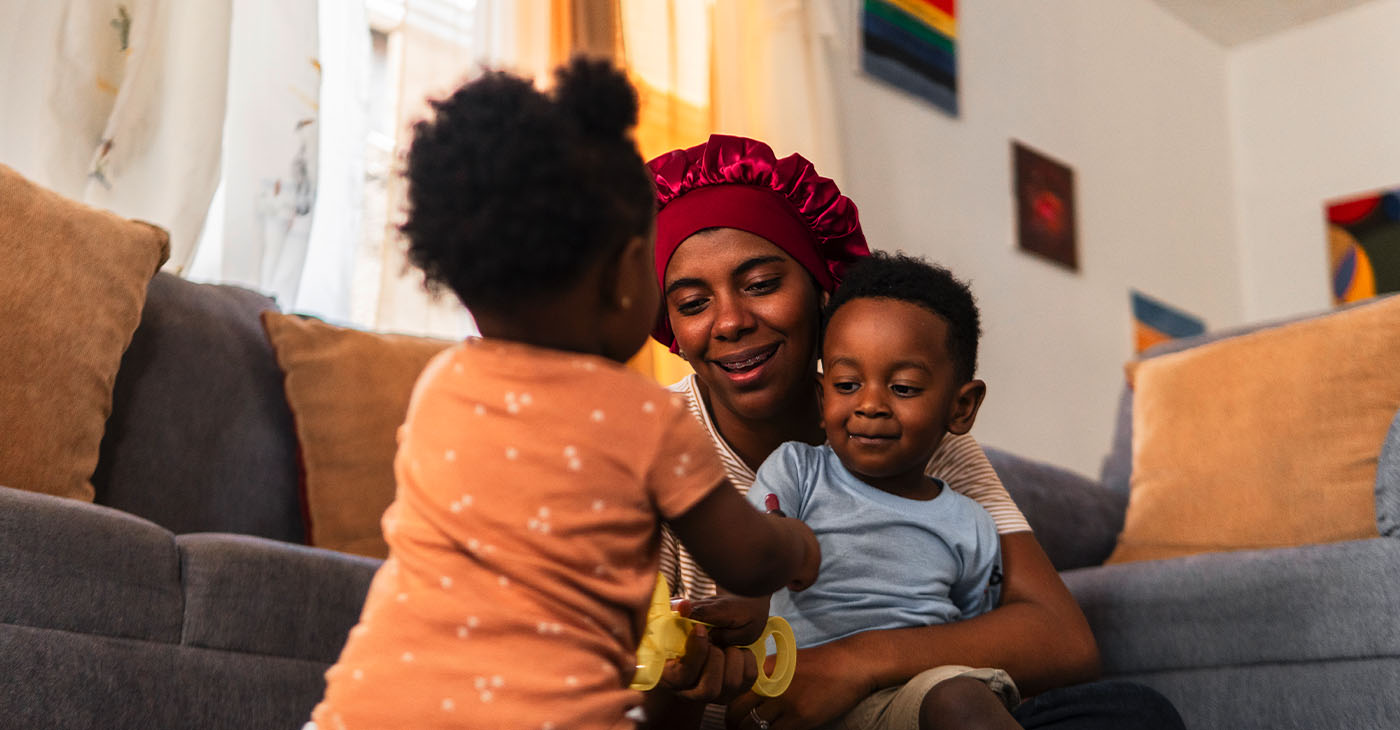
BLACKPRESSUSA NEWSWIRE — Swinging side by side with a friend on the playground. Sharing chalk over bright, colorful sidewalk drawings. Hiding behind a tree during a spirited game of hide-and-seek. These simple moments between children may seem small, but they matter more than we think
By Niyoka McCoy, Ed.D., Chief Learning Officer, Stride/K12
Swinging side by side with a friend on the playground. Sharing chalk over bright, colorful sidewalk drawings. Hiding behind a tree during a spirited game of hide-and-seek. These simple moments between children may seem small, but they matter more than we think: They lay the foundation for some of life’s most important skills.
Through everyday play, young children begin learning essential social and emotional skills like sharing, resolving conflicts, showing empathy, and managing their emotions. These social skills help shape emotional growth and set kids up for long-term success. Socialization in early childhood isn’t just a “nice-to-have”—it’s essential for development.
Yet today, many young children who haven’t yet started school aren’t getting enough consistent, meaningful interaction with peers. Research shows that there’s a decline in active free play and peer socialization when compared to previous generations.
There are many reasons for this. Children who are home with a parent during the day may spend most of their time with adults, limiting opportunities for peer play. Those in daycare or preschool may have restricted free play, and large classrooms can reduce supervision and social coaching. Some children live in rural areas, are homebound due to illness, have full schedules, or rely on screens to fill their playtime. And for some families, finding other families with young children to connect with isn’t easy.

While these challenges can feel significant, opportunities for connection still exist in every community. Families can take simple steps to help children build friendships, create a sense of belonging, and strengthen social skills. Here are some ideas to get started:
- Storytime sessions at libraries or local bookstores
- Community offerings such as parent-child workshops, art, music, gymnastics, swimming, or sports programs
- Weekly events at children’s museums, which may include art projects, music workshops, or science experiments
- Outdoor exploration, where kids can play with peers
- Local parenting groups that organize playdates and group activities
- Volunteer opportunities where children can participate, such as pet adoption events or packing meals at a food bank
- Classes for kids at local businesses, including hardware, grocery, or craft stores
Some of these community activities are free or low-cost and give kids the chance to build friendships and practice social skills. Parents can also model positive social behavior by interacting with other parents and encouraging their children to play with their peers.
These may seem like small moments of connection, but they can have a powerful impact. Every time your child shares a toy, plays make-believe with peers, or races a friend down the slide, they’re not just playing—they’re learning the skills that build confidence, empathy, and lasting friendships. And it’s good for you, too. Creating intentional opportunities for play also helps you strengthen your own network of parents who can support one another as your children grow together.


WORK FROM HOME
Home-based business with potential monthly income of $10K+ per month. A proven training system and website provided to maximize business effectiveness. Perfect job to earn side and primary income. Contact Lynne for more details: Lynne4npusa@gmail.com 800-334-0540


Seth Curry Makes Impressive Debut with the Golden State Warriors

LIHEAP Funds Released After Weeks of Delay as States and the District Rush to Protect Households from the Cold

Seven Steps to Help Your Child Build Meaningful Connections

Seven Steps to Help Your Child Build Meaningful Connections

Teens Reject Today’s News as Trump Intensifies His Assault on the Press

Thanksgiving Celebrated Across the Tri-State

Breaking the Silence: Black Veterans Speak Out on PTSD and the Path to Recovery

Trinidad and Tobago – Prime Minister Confirms U.S. Marines Working on Tobago Radar System

‘Tis the Season: Festive Holiday Pop-ups Happening Around Atlanta

IN MEMORIAM: Mardelle Walker, 101

Oakland Post: Week of November 26 – December 2, 2025

‘Targeted’ Shooting of Two National Guardsmen Blocks From the White House

Meet Roxanne Brown, The First African American And The First Woman President Of The United Steelworkers

Tax Refunds Expected to Rise by About $1,000 Next Year

CFP Rankings: Top Five Remains Unchanged; Major Decision Looms for Lane Kiffin

Oakland School Board Proposes Budget Solutions to Avoid State or County Takeover

A Call to Save Liberty Hall: Oakland’s Beacon of Black Heritage Faces an Uncertain Future

Port of Oakland September Cargo Volumes Dip Amid Shifting Trade Patterns

Oakland Post: Week of October 22 – 28, 2025

Prescribing Prevention: Doctors Turn to Lifestyle, Herbs and Veggies to Protect Against Chronic Illness in Black Californians

Mayor Lee Responds to OPD Chief Floyd Mitchell’s Decision to Resign

Past, Present, Possible! Oakland Residents Invited to Reimagine the 980 Freeway

Oakland Post: Week of October 29 – November 4, 2025

California Teachers Association Rallies Behind Prop. 50: A Stand for Education and Democracy

Man Arrested for Making Death Threats Against Mayor Barbara Lee

Essay: Intentional Self Care and Community Connections Can Improve Our Wellbeing

Oakland Post: Week of November 12 – 18, 2025

Oakland Post: Week of November 5 – 11, 2025

MLK Way at 57th Street in Oakland Renamed Bobby Seale Way for Black Panther Co-Founder

IN MEMORIAM: William ‘Bill’ Patterson, 94

Hyundai Ioniq 5 Parking, Safety, and 360 View #shorts

2025 Ioniq 5 New Wiper & Powerful Performance! #shorts

Electric SUV Range: Is 259 Miles Enough? #shorts

EV Charging: How Fast Can You Charge an Electric Vehicle? #shorts

Biometric Cooling… Messaging Seats…Come on! 2025 Infiniti QX80 Autograph 4WD

Charged Up: Witness the Magic of a Fully Electric Car! #shorts

Range Rover Sport PHEV Included…: See What’s Inside This Luxury SUV! #shorts

Invisible Hood View: Perfect Parking with X-Ray Vision! #shorts

AI Is Reshaping Black Healthcare: Promise, Peril, and the Push for Improved Results in California

ESSAY: Technology and Medicine, a Primary Care Point of View

Sanctuary Cities

The RESISTANCE – FREEDOM NOW

STATE OF THE PEOPLE: Freddie

ECONOMIC BOYCOTT DAY!!!!!

I told You So
-
 Activism3 weeks ago
Oakland Post: Week of November 12 – 18, 2025
-
 Activism2 weeks ago
IN MEMORIAM: William ‘Bill’ Patterson, 94
-

 Activism3 weeks ago
How Charles R. Drew University Navigated More Than $20 Million in Fed Cuts – Still Prioritizing Students and Community Health
-

 Bay Area3 weeks ago
No Justice in the Justice System
-

 #NNPA BlackPress3 weeks ago
The Perfumed Hand of Hypocrisy: Trump Hosted Former Terror Suspect While America Condemns a Muslim Mayor
-

 #NNPA BlackPress2 weeks ago
Trump’s Death Threat Rhetoric Sends Nation into Crisis
-
 #NNPA BlackPress4 weeks ago
Protecting Pedophiles: The GOP’s Warped Crusade Against Its Own Lies
-

 #NNPA BlackPress3 weeks ago
In Major Win for Rep. Al Green, Texas Maps Blocked by Federal Judge
