
California Black Media
California Students Make Progress in Key Academic Areas, But Challenges Remain
On Oct. 10, the California Department of Education released its 2023-24 statewide assessment results showing promising but gradual progress within some key academic areas. The report highlights improvements, especially among Black and socioeconomically disadvantaged students, while overall scores remain below pre-pandemic levels.


By Joe W. Bowers, California Black Media
On Oct. 10, the California Department of Education released its 2023-24 statewide assessment results showing promising but gradual progress within some key academic areas. The report highlights improvements, especially among Black and socioeconomically disadvantaged students, while overall scores remain below pre-pandemic levels.
Overall, the percentage of students statewide meeting or exceeding standards in English language arts (ELA) was 47%, up from 46.7% last year. Those reaching proficiency in mathematics were at 35.5%, from 34.6%. Science scores rose from 30.2% to 30.7%. Black/African American students showed the most improvement in third-grade math, with scores increasing by 0.9 percentage points. Socioeconomically disadvantaged students also saw notable gains, with a 1.5% increase in ELA and a 2.1% gain in math.
State Superintendent of Public Instruction Tony Thurmond praised the efforts of California’s schools and students, saying, “I commend California’s students and educators for their hard work and continued growth in academic achievement across the state. We know the high potential of all California’s students, and we still have a ways to go to ensure that every child is supported to build strong academic skills and access a bright future.”
Linda Darling-Hammond, President of the State Board of Education, emphasized the importance of continued investment in student success. “Today’s results suggest that California’s public schools are making encouraging gains in all of the key subject areas, and these gains are largest for our most vulnerable groups of students,” she said.
Despite the progress, overall student performance remains a concern. Vernon M. Billy, CEO of the California School Boards Association, stressed the need for more rapid and widespread improvement. “Despite incremental improvement of less than half a percentage point in English Language Arts (ELA) and less than one percentage point in Mathematics, overall student performance remains below pre-pandemic levels — which were already unacceptable,” Billy said.
He also expressed concern over the sustainability of improvements as COVID-19 relief funds expire in 2025, which provided critical support for interventions like tutoring and expanded learning programs. “It’s high time the state’s investment and focus match our rhetoric, so California schools can prepare all students, regardless of background, for success in college, career, and civic life,” Billy concluded.
Maintaining momentum beyond the pandemic will require continued investment and innovation to close the persistent achievement gaps affecting California’s most vulnerable students.





Activism
Oakland Post: Week of November 26 – December 2, 2025
The printed Weekly Edition of the Oakland Post: Week of November 26 – December 2, 2025
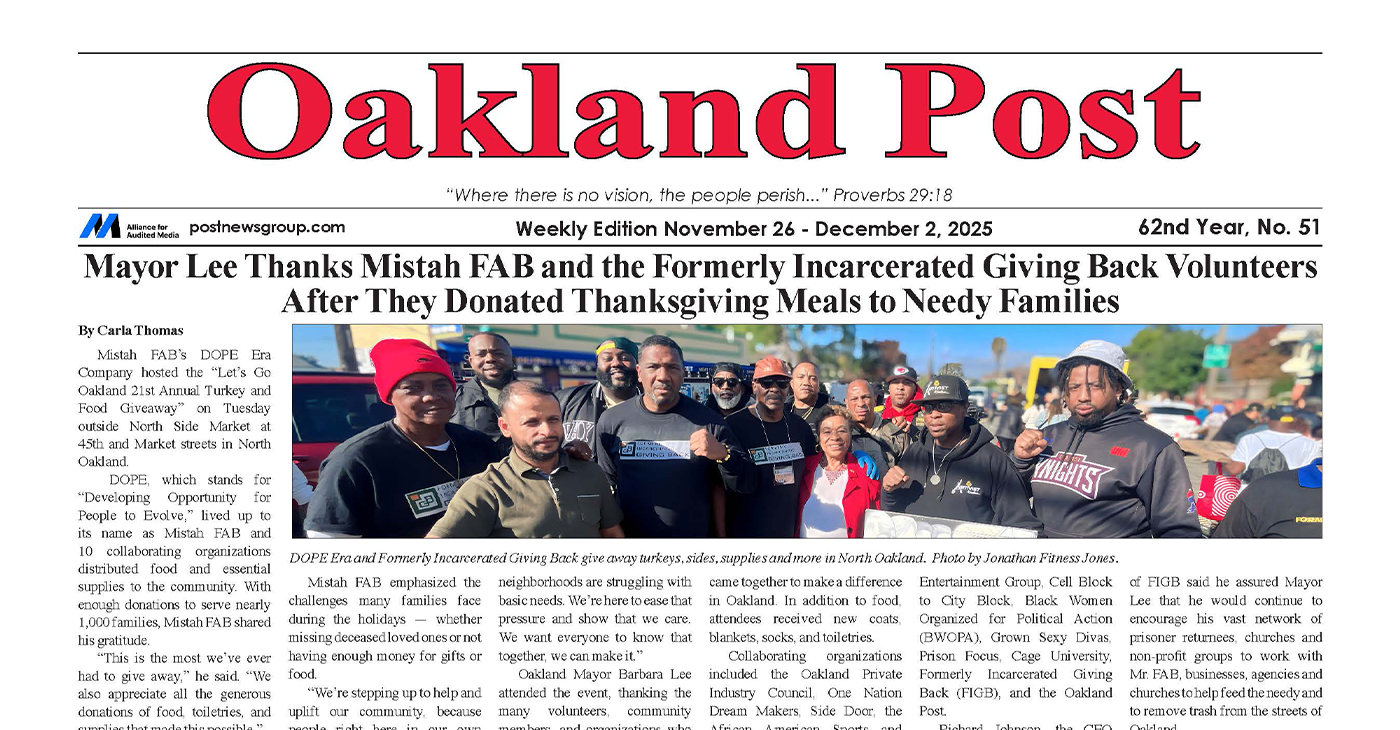
To enlarge your view of this issue, use the slider, magnifying glass icon or full page icon in the lower right corner of the browser window.
Activism
Oakland Post: Week of November 19 – 25, 2025
The printed Weekly Edition of the Oakland Post: Week of November 19 – 25, 2025
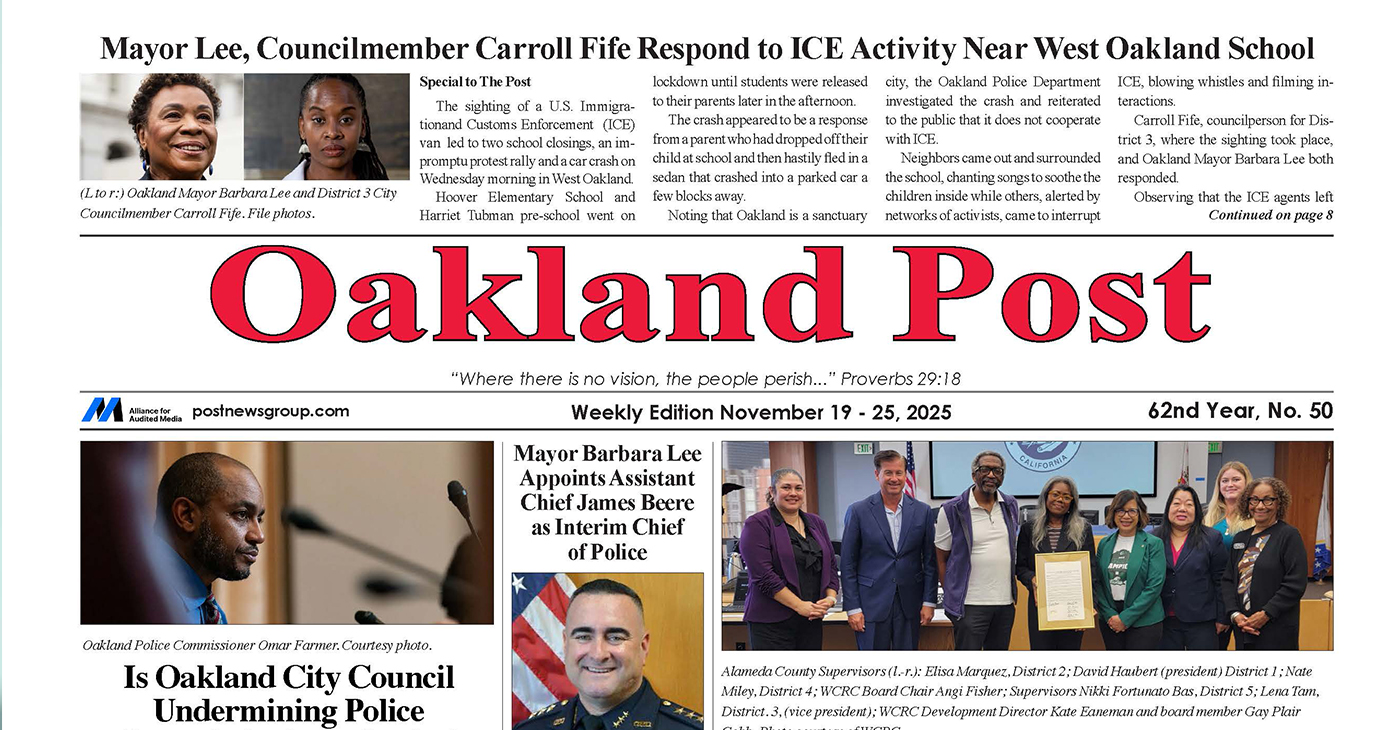
To enlarge your view of this issue, use the slider, magnifying glass icon or full page icon in the lower right corner of the browser window.
Activism
How Charles R. Drew University Navigated More Than $20 Million in Fed Cuts – Still Prioritizing Students and Community Health
Named after the pioneering physician Dr. Charles R. Drew, famous for his work in blood preservation, CDU’s mission is to cultivate “diverse health professional leaders dedicated to social justice and health equity for underserved populations through education, research, clinical service, and, above all, community engagement.”
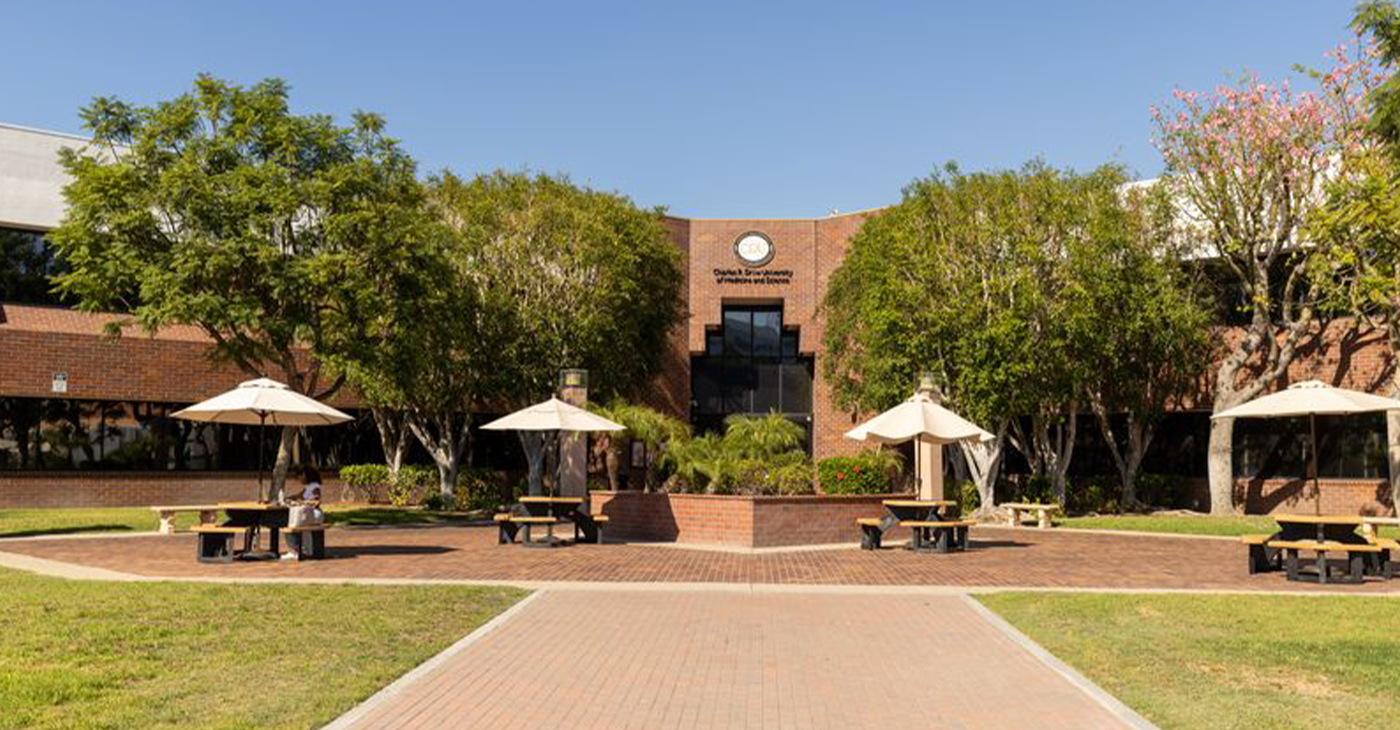
Charlene Muhammad | California Black Media

Earlier this year, when the federal government slashed more than $20 million in grants to Charles R. Drew University of Medicine and Science (CDU), the leadership of California’s only historically Black medical school scrambled to stabilize its finances — while protecting its staff and students.
Named after the pioneering physician Dr. Charles R. Drew, famous for his work in blood preservation, CDU’s mission is to cultivate “diverse health professional leaders dedicated to social justice and health equity for underserved populations through education, research, clinical service, and, above all, community engagement.”
The school is widely recognized as a vital pipeline for Black doctors and other health professionals throughout California.

Dr. David Carlisle (center), President of Charles R. Drew University of Medicine and Science (CDU), with two of the university’s students. Photo Courtesy of Charles R. Drew University of Medicine and Science.
Dr. Jose Torres-Ruiz, CDU’s Executive Vice President for Academic Affairs and Provost, said the university—designated as a Historically Black Graduate Institution (HBGI)—was notified in early March 2025 that most of its major grants, including the Research Centers in Minority Institutions (RCMI) award, known at CDU as the “Accelerating Excellence in Translational Science” (AXIS Grant), would be terminated. Initially renewed, the grant was later revoked because its language did not align with the current federal administration’s priorities.
The AXIS Grant provides $4.5 million per year for five years through the National Institutes of Health’s National Institute on Minority Health and Health Disparities. CDU quickly reallocated other funds to protect its scientists, staff, and technicians, though some personnel losses were unavoidable.
“We didn’t want to fire them because these people have expertise that takes years to gain,” Torres-Ruiz said.
The grant is crucial, he added, funding research in cancer, diabetes, and metabolic diseases that affect the Willowbrook community in South Los Angeles, training the next generation of scientists, and supporting community outreach.
Programs at the school, including its youth and teen mentoring programs reach beyond the walls of the university, impacting the lives and quality of health care of people in the surrounding community, one of the most underserved areas in Los Angeles County.
Confronted with the harsh reality of funding cuts, the university’s leadership made an early, strategic choice to honor its foundational commitment and prioritize its students. Dr. Deborah Prothrow-Stith, dean of CDU’s College of Medicine, highlighted the school’s deliberate focus on admitting students from economically disadvantaged backgrounds — many of whom are Pell Grant recipients and graduates of public high schools.
“We are staying true to our mission, finding creative ways to prioritize what’s most important,” she said. “I’m optimistic because of our students—they are dedicated and committed to service.”
In addition, the $2 million-per-year John Lewis NIMHD Research Endowment Program, intended to strengthen CDU’s research infrastructure, was terminated with three years remaining after a February 2025 freeze on nearly all federal grants for public health, education, and infrastructure projects.
Following an appeal, CDU learned in June that the RCMI grant had been fully reinstated, along with all but eight smaller grants. The university’s next priority is restoring the John Lewis Endowment.
“We are working with NIH staff to adjust the language. Certain words like ‘diversity’ and ‘equity,’ which are core values of our institution, are now under scrutiny,” Torres-Ruiz explained.
CDU has also expanded funding sources by targeting foundations and private donors. “This may happen again. We cannot rely solely on federal agencies,” Torres-Ruiz said, emphasizing the importance of building relationships with politicians and private partners.
Prothrow Stith echoed Ruiz’s perspective on cultivating multiple funding sources. “Building bridges with private foundations helps, but it doesn’t erase the disruption,” she said.
Many students rely on federal loans, CDU leaders say. Those loans are now capped at $150,000. So, most medical students graduate with $300,000–$350,000 in debt when accounting for tuition and living expenses.
To lower the burden on students, CDU is exploring options to make education more affordable, including overlapping school years to reduce annual costs.
Students like Isaiah Hoffman and Bailey Moore epitomize CDU’s values.
Hoffman, an aspiring orthopedic surgeon from Inglewood, credits Drew for inspiring his career choice. Out of 12 medical school acceptances, he chose CDU to give back to his community and continue Drew’s legacy. Hoffman also founded H.O.M.I.E.S. Inc., a nonprofit pairing Black K–12 students with mentors to support academic and personal growth.
Moore, 23, from Southeast Washington, D.C., pursued CDU to address maternal health disparities she observed in her own community – an underserved area of the nation’s capital city. “CDU pours into you. It emphasizes service, and I hope for a world without health disparities,” she said. “Drew may be small, but Drew is mighty. It was created out of necessity to save lives and empower communities.”
CDU President and CEO Dr. David Carlisle acknowledged during the Aug. 28 “State of the University” that the institution faces ongoing challenges. Political threats and grant disruptions contributed to a sizable unrestricted budget deficit, despite achievements over the past year.
Successful appeals and alternative sources of funding, led by Vice Provost Dr. Ali Andallibi, have now restored all the monies previously lost in research funding, he said.
Carlisle expressed gratitude to L.A. Care Health Plan and Sutter Health for providing multimillion-dollar scholarships and highlighted that CDU would welcome approximately 1,050 incoming students—near its highest enrollment ever. “I’m deeply grateful for the resolve, diligence, and unwavering commitment of everyone here, even when the path is not easy,” he said.
At the gathering, Carlisle referred to the sounds of ambulances passing by with blaring sirens as- the “music of healthcare,” while students and the school’s leadership attending expressed resilience in their speeches and conversations. The activities of the day captured the institution’s focus on education, service and advancing health care across disadvantaged communities in California – and beyond.
Video Report: How Charles Drew Stayed Strong Amid Federal Funding Cuts

WORK FROM HOME
Home-based business with potential monthly income of $10K+ per month. A proven training system and website provided to maximize business effectiveness. Perfect job to earn side and primary income. Contact Lynne for more details: Lynne4npusa@gmail.com 800-334-0540


Seth Curry Makes Impressive Debut with the Golden State Warriors

LIHEAP Funds Released After Weeks of Delay as States and the District Rush to Protect Households from the Cold

Seven Steps to Help Your Child Build Meaningful Connections

Seven Steps to Help Your Child Build Meaningful Connections

Teens Reject Today’s News as Trump Intensifies His Assault on the Press

Thanksgiving Celebrated Across the Tri-State

Breaking the Silence: Black Veterans Speak Out on PTSD and the Path to Recovery

Trinidad and Tobago – Prime Minister Confirms U.S. Marines Working on Tobago Radar System

‘Tis the Season: Festive Holiday Pop-ups Happening Around Atlanta

IN MEMORIAM: Mardelle Walker, 101

Oakland Post: Week of November 26 – December 2, 2025

‘Targeted’ Shooting of Two National Guardsmen Blocks From the White House

Meet Roxanne Brown, The First African American And The First Woman President Of The United Steelworkers

Tax Refunds Expected to Rise by About $1,000 Next Year

CFP Rankings: Top Five Remains Unchanged; Major Decision Looms for Lane Kiffin

Oakland School Board Proposes Budget Solutions to Avoid State or County Takeover

OPINION: Argent Materials Oakland CleanTech Community Asset Helps Those In Need

A Call to Save Liberty Hall: Oakland’s Beacon of Black Heritage Faces an Uncertain Future

Port of Oakland September Cargo Volumes Dip Amid Shifting Trade Patterns

Oakland Post: Week of October 22 – 28, 2025

Prescribing Prevention: Doctors Turn to Lifestyle, Herbs and Veggies to Protect Against Chronic Illness in Black Californians

Mayor Lee Responds to OPD Chief Floyd Mitchell’s Decision to Resign

Past, Present, Possible! Oakland Residents Invited to Reimagine the 980 Freeway

California Teachers Association Rallies Behind Prop. 50: A Stand for Education and Democracy

Oakland Post: Week of October 29 – November 4, 2025

Man Arrested for Making Death Threats Against Mayor Barbara Lee

Essay: Intentional Self Care and Community Connections Can Improve Our Wellbeing

MLK Way at 57th Street in Oakland Renamed Bobby Seale Way for Black Panther Co-Founder

Oakland Post: Week of November 12 – 18, 2025

Oakland Post: Week of November 5 – 11, 2025

Hyundai Ioniq 5 Parking, Safety, and 360 View #shorts

2025 Ioniq 5 New Wiper & Powerful Performance! #shorts

Electric SUV Range: Is 259 Miles Enough? #shorts

EV Charging: How Fast Can You Charge an Electric Vehicle? #shorts

Biometric Cooling… Messaging Seats…Come on! 2025 Infiniti QX80 Autograph 4WD

Charged Up: Witness the Magic of a Fully Electric Car! #shorts

Range Rover Sport PHEV Included…: See What’s Inside This Luxury SUV! #shorts

Invisible Hood View: Perfect Parking with X-Ray Vision! #shorts

AI Is Reshaping Black Healthcare: Promise, Peril, and the Push for Improved Results in California

ESSAY: Technology and Medicine, a Primary Care Point of View

Sanctuary Cities

The RESISTANCE – FREEDOM NOW

STATE OF THE PEOPLE: Freddie

ECONOMIC BOYCOTT DAY!!!!!

I told You So
-
 Activism3 weeks ago
Oakland Post: Week of November 12 – 18, 2025
-
 Activism4 weeks ago
Oakland Post: Week of November 5 – 11, 2025
-
 Activism2 weeks ago
IN MEMORIAM: William ‘Bill’ Patterson, 94
-

 Activism3 weeks ago
How Charles R. Drew University Navigated More Than $20 Million in Fed Cuts – Still Prioritizing Students and Community Health
-

 #NNPA BlackPress3 weeks ago
The Perfumed Hand of Hypocrisy: Trump Hosted Former Terror Suspect While America Condemns a Muslim Mayor
-
 #NNPA BlackPress3 weeks ago
Protecting Pedophiles: The GOP’s Warped Crusade Against Its Own Lies
-

 Bay Area3 weeks ago
No Justice in the Justice System
-

 #NNPA BlackPress4 weeks ago
2026 Subaru Forester Wilderness Review: Everyday SUV With Extra Confidence
