#NNPA BlackPress
6 Leaders Pushing for Fair Education
SACRAMENTO OBSERVER — Majority-Black school districts continue to be underfunded and underrepresented in policy making. And Black students still continue to be over-policed; one Black student even went to court after his school expelled him for wearing locs they thought were too long.


By Aziah Siid | Word In Black | The Sacramento Observer

(WIB) – It’s been a tough year to be Black in education.
Red states like Florida, Texas and Idaho have passed strict new laws restricting how teachers can teach Black history. Conservative school districts kept important works of Black literature, like Toni Morrisson’s “The Bluest Eye,” off library shelves. White parents browbeat school officials to keep lessons about systemic racism out of the classroom because they said it would make white kids feel guilty.
Meanwhile, majority-Black school districts continue to be underfunded and underrepresented in policy making. And Black students still continue to be over-policed; one Black student even went to court after his school expelled him for wearing locs they thought were too long.
Still, there were champions who stood up and pushed back on behalf of Black students in 2024, trying to compel the country to fulfill its promise of a quality education for all. Here are six leaders in education pushing for equal education:
1. Denise Forte
A fierce advocate for disadvantaged students, Denise Forte is leading the fight for racial equity in schools, creating high-quality learning environments and pipelines for higher education. Her vision: every student has a shot at academic success in a supportive, welcoming learning environment.
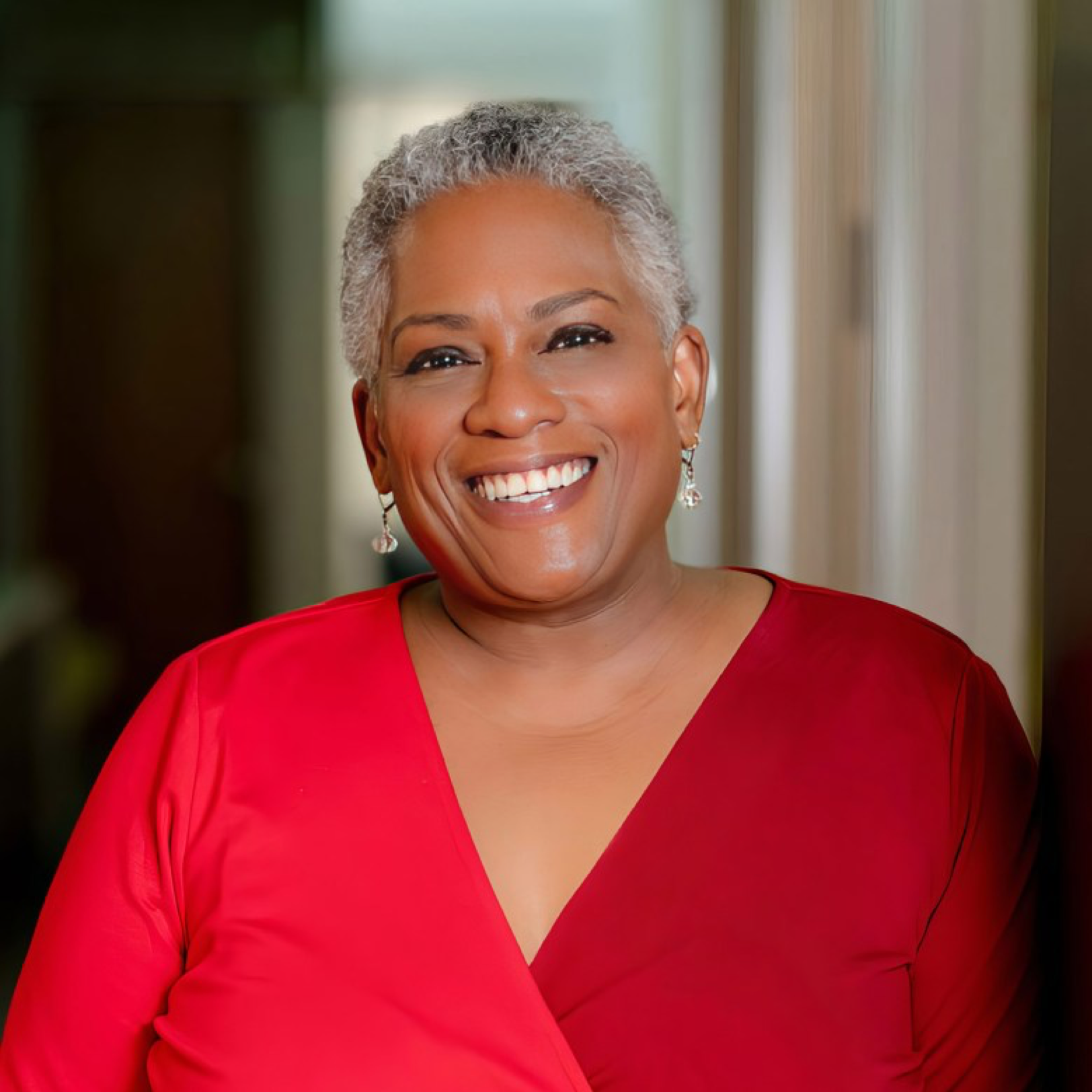
Denise Forte, president and CEO at The Education Trust (photo courtesy of Ed Trust website)
The president and CEO of the nonprofit Education Trust, Forte, has a deep knowledge of education policy, honed during her time as a Capitol Hill staffer and serving in the Department of Education during the Obama administration.
Ed Trust, she says, “is mission-driven: we believe Black and Latino students, students from low-income backgrounds, students with disabilities, and English learners deserve a quality education, because it is their best opportunity to thrive.”
2. Dr. Tracie Anderson Swilley
Leading a school of around 660 students, all while mentoring assistant principals to ascend to principalship, Dr.Tracie Anderson Swilley, is a foot soldier in the movement for equitable education.
Under her leadership over the last 13 years, Fairfield Central High School in Winnsboro, South Carolina, has seen tremendous improvement in math, reading, and record graduation rates. Math proficiency for Black students skyrocketed from 46% to 74%, reading jumped from 60% to 76%, and the graduation rate reached a record 90.1%.
Despite teaching low-income students — the entire class of 2024 is eligible for free and reduced lunch — every member was accepted into an institution for higher education. But her fight for education equity isn’t over.
Swilley told Education Week she wants to see more women of color, like herself, in school leadership roles, and bring attention to the unique obstacles they face in education.
3. Randi Weingarten

WASHINGTON, DC – SEPTEMBER 18: The PFLAG National Flag Bearer Award recipient Randi Weingarten, President, American Federation of Teachers attends PFLAG National’s “Love Takes Justice” Event Photo by Paul Morigi/Getty Images for PFLAG National)
“The most dangerous person in the world is Randi Weingarten.”
That’s the opinion of Mike Pompeo, former secretary of state and C.I.A director during former President Donald Trump’s first term. He saw Weingarten, a diminutive, 65-year-old leader of the American Federation of Teachers, the influential national teachers union, as a threat because of her decades-long fight to bring fairness and equity to education.
A fierce advocate for diversity and inclusion in public education, Weingarten is a frequent target of conservative politicians, who accuse her of indoctrinating kids with, “dangerous academic constructs like critical race theory and radical gender theory are being forced on elementary school children.” as Florida Gov. Ron DeSantis put it.
That hasn’t deterred Weingarten, a former educator, attorney and NAACP board member, from standing up for her 1.7 million members and the children they teach. And she challenged the second Trump administration — and Linda McMahon, Trump’s nominee to lead the Education Department, to take similar care if and when she is confirmed.
“Will Linda McMahon support us as we teach students to read? Will she protect kids and families, so that everyone in a school feels welcome and can learn?”
4. Becky Pringle

Becky Pringle at an Oakland rally (photo courtesy of NEA website)
As leader of the nation’s largest teacher’s union, Becky Pringle wields considerable influence in national politics. But she defines herself as a mother and grandmother to public school children who cares about education. She takes that charge seriously, using her clout to improve the quality of teaching, boosting student achievement and creating safer, better learning environments.
When the pandemic shuttered the nation’s schools, for example, Pringle helped to focus the nation’s attention on how COVID-19 lockdowns laid bare racial and economic inequities in education that have existed for generations — inequities that Pringle herself encountered as a student. Her fight, she says, is to eliminate those problems for the next generation.
5. Sharif El-Mekki
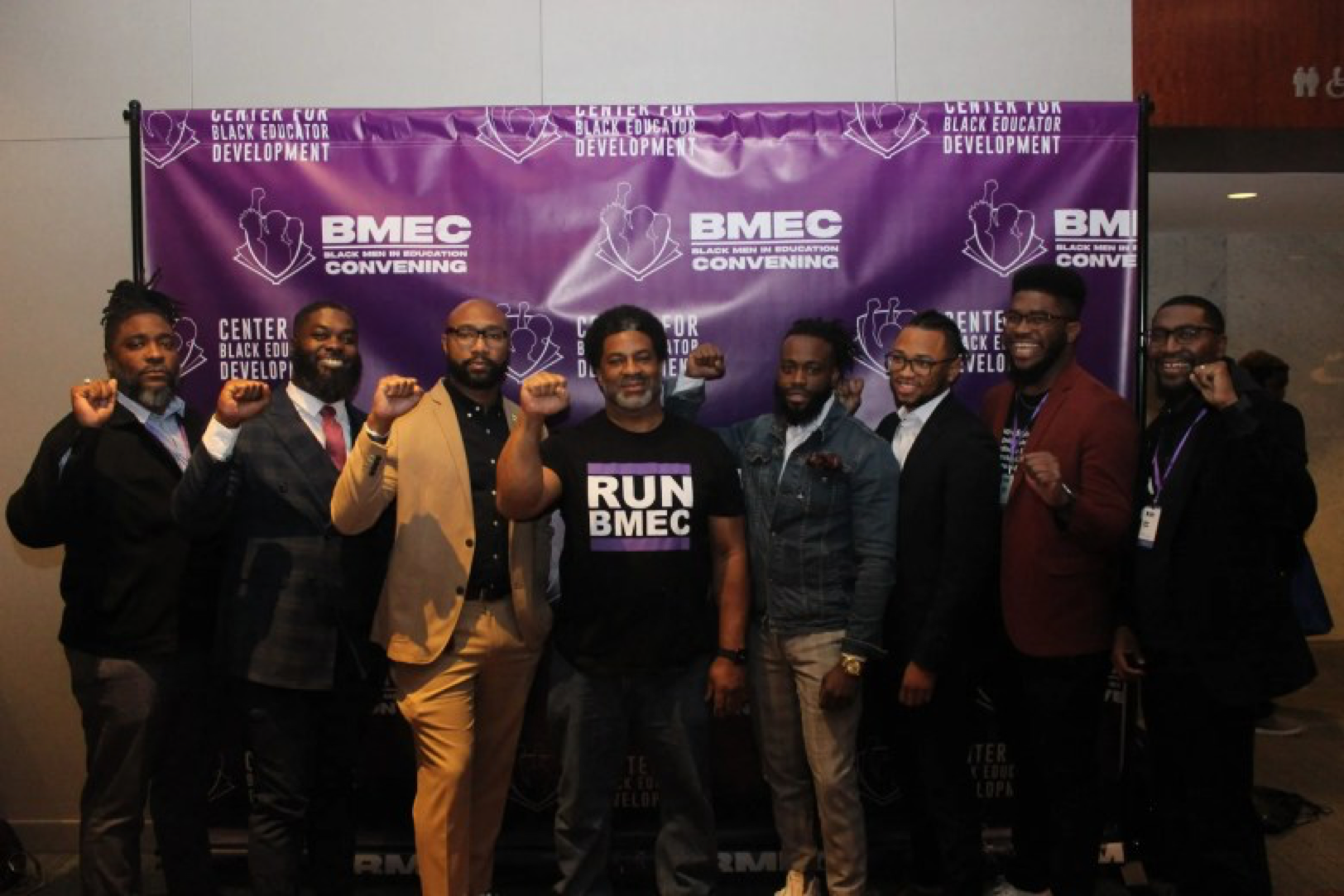
Sharif El-Mekki, center, led the annual Black Men Educators Convening in Philadelphia (Photo by Anaz X)
Studies have proven that Black children are more likely to succeed when the teacher at the head of the class looks like them. Yet some 80 percent of the teacher workforce is white and female.
Therefore, the mission of Sharif El Mekki, president and CEO of the Center for Black Educator Development, is simple: reverse that trend and put more Black teachers at the chalkboard.
A forceful personality, El-Mekki is a former teacher and administrator in west Philadelphia, one of the city’s toughest areas. As leader of a nonprofit, however, his goal is to rebuild the national Black Teacher Pipeline..But he wears more than one hat.
Besides his scholarly work training up Black teachers, El-Mekki has launched efforts like The Fellowship—Black Male Educators for Social Justice, monitors the pulse of the ‘hood through Philly’s 7th Ward blog, and hosts the 8 Black Hands podcast.
6. Stacy Davis Gates
Another former educator, Stacy Davis Gates, president of the Chicago Teachers Union, also serves in several leadership roles in teachers’ unions. She’s executive vice president of the Illinois Federation of Teachers, vice president of the American Federation of Teachers, and chair of United Working Families, a progressive political organization.
Davis Gates is currently on leave from the classroom, where she taught high school social studies for over a decade at Englewood, Clemente and Mason Community Links High Schools.
The CTU represents nearly 30,000 teachers, paraprofessional and school-related personnel, and school clinicians working in the Chicago Public Schools and, by extension, the students and families they serve.



#NNPA BlackPress
California, Districts Try to Recruit and Retain Black Teachers; Advocates Say More Should Be Done
SACRAMENTO OBSERVER — Many Black college students have not considered a teaching career because they have never had a Black teacher, said Preston Jackson, who teaches physical education at California Middle School in Sacramento. Those who consider a teaching career are often deterred by the cost of teacher preparation, taking required tests and unpaid student teaching.

A Series by EdSource | The Sacramento Observer

Recruiting and retaining Black teachers has taken on new urgency in recent years as California lawmakers try to ease the state’s teacher shortage. The state and individual school districts have launched initiatives to recruit teachers of color, but educators and advocates say more needs to be done.
Hiring a diverse group of teachers helps all students, but the impact is particularly significant for students of color, who then score higher on tests and are more likely to graduate from college, according to the Learning Policy Institute. A recently released report also found that Black boys are less likely to be identified for special education when they have a Black teacher.
In the last five years, state lawmakers have made earning a credential easier and more affordable and have offered incentives for school staff to become teachers — all moves meant to ease the teacher shortage and help to diversify the educator workforce.
Despite efforts by the state and school districts, the number of Black teachers doesn’t seem to be increasing. Black teachers say that to keep them in the classroom, teacher preparation must be more affordable, pay and benefits increased, and more done to ensure they are treated with respect, supported and given opportunities to lead.

“Black educators specifically said that they felt like they were being pushed out of the state of California,” said Jalisa Evans, chief executive director of the Black Educator Advocates Network of a recent survey of Black teachers. “When we look at the future of Black educators for the state, it can go either way, because what Black educators are feeling right now is that they’re not welcome.”
Task force offers recommendations
State Superintendent of Public Instruction Tony Thurmond called diversifying the teacher workforce a priority and established the California Department of Education Educator Diversity Advisory Group in 2021.
The advisory group has made several recommendations, including beginning a public relations campaign and offering sustained funding to recruit and retain teachers of color, and providing guidance and accountability to school districts on the matter. The group also wants universities, community groups and school districts to enter into partnerships to build pathways for teachers of color.
Since then, California has created a set of public service announcements and a video to help recruit teachers and has invested $10 million to help people of color to become school administrators, said Travis Bristol, chairman of the advisory group and an associate professor of education at UC Berkeley. Staff from county offices of education also have been meeting to share ideas on how they can support districts’ efforts to recruit and retain teachers of color, he said.
The state also has invested more than $350 million over the past six years to fund teacher residency programs, and recently passed legislation to ensure residents are paid a minimum salary. Residents work alongside an experienced teacher-mentor for a year of clinical training while completing coursework in a university preparation program — a time commitment that often precludes them from taking a job.
Legislators have also proposed a bill that would require that student teachers be paid. Completing the 600 hours of unpaid student teaching required by the state, while paying for tuition, books, supplies and living expenses, is a challenge for many Black teacher candidates.
Black teacher candidates typically take on much more student debt than their white counterparts, in part, because of the large racial wealth gap in the United States. A 2019 study by the Economic Policy Institute showed that the median white family had $184,000 in family wealth (property and cash), while the median Latino family had $38,000 and the median Black family had $23,000.
Lack of data makes it difficult to know what is working
It’s difficult to know if state efforts are working. California hasn’t released any data on teacher demographics since the 2018-19 school year, although the data is submitted annually by school districts. The California Department of Education (CDE) did not provide updated data or interviews requested by EdSource for this story.
The most recent data from CDE shows the number of Black teachers in California declined from 4.2% in 2009 to 3.9% during the 2018-19 school year. The National Center for Education Statistics data from the 2020-21 show that Black teachers made up 3.8% of the state educator workforce.
Having current data is a critical first step to understanding the problem and addressing it, said Mayra Lara, director of Southern California partnerships and engagement at The Education Trust-West, an education research and advocacy organization.
“Let’s be clear: The California Department of Education needs to annually publish educator demographic and experience data,” Lara said. “It has failed to do so for the past four years. … Without this data, families, communities and decision-makers really are in the dark when it comes to the diversity of the educator workforce.”
LA Unified losing Black teachers despite efforts
While most state programs focus on recruiting and retaining all teachers of color, some California school districts have initiatives focused solely on recruiting Black teachers.
The state’s largest school district, Los Angeles Unified, passed the Black Student Excellence through Educator Diversity, Preparation and Retention resolution two years ago. It required district staff to develop a strategic plan to ensure schools have Black teachers, administrators and mental health workers, and to advocate for programs that offer pathways for Black people to become teachers.
When the resolution was passed, in February 2022, Los Angeles Unified had 1,889 Black teachers — 9% of its teacher workforce. The following school year, that number declined to 1,823 or 7.9% of district teachers. The number of Black teachers in the district has gone down each year since 2016. The district did not provide data for the current school year.
Robert Whitman, director of the Educational Transformation Office at LA Unified, attributed the decrease, in part, to the difficulty attracting teachers to the district, primarily because of the area’s high cost of living.
“Those who are coming out of colleges now, in some cases, we find that they can make more money doing other things,” Whitman said. “And so, they may not necessarily see education as the most viable option.”
The underrepresentation of people of color prompted the district to create its own in-house credentialing program, approved by the California Commission on Teacher Credentialing, Whitman said. The program allows classified staff, such as substitute teachers, paraprofessionals, administrative assistants and bus drivers, to become credentialed teachers while earning a salary and benefits at their original jobs.
Grow-your-own programs such as this, and the state’s Classified School Employee Credentialing program, and a soon-to-be launched apprenticeship program, are meant to diversify the educator workforce because school staff recruited from the community more closely match the demographics of the student body than traditionally trained and recruited teachers, according to research.
Los Angeles Unified has other initiatives to increase the number of Black educators in the district, Whitman said, including working with universities and colleges to bring Black teachers, counselors and psychiatric social workers to their campuses. The district also has programs that help school workers earn a credential for free, and channels employees completing a bachelor’s degree toward the district’s teacher preparation program where they can begin teaching while earning their credential.
All new teachers at Los Angeles Unified are supported by mentors and affinity groups, which have been well received by Black teachers, who credit them with inspiring and helping them to see themselves as leaders in the district, Whitman said.
Oakland has more Black teachers than students
Recruiting and retaining Black teachers is an important part of the Oakland Unified three-year strategic plan, said Sarah Glasband, director of recruitment and retention for the district. To achieve its goals, the district has launched several partnerships that make an apprenticeship program, and a residency program that includes a housing subsidy, possible. A partnership with the Black Teacher Project, a nonprofit advocacy organization, offers affinity groups, workshops and seminars to support the district’s Black teachers.
The district also has a Classified School Employee Program funded by the state and a new high school program to train future teachers. District pathway programs have an average attrition rate of less than 10%, Glasband said.
This year, 21.3% of the district’s K-12 teachers are Black, compared with 20.3% of their student population, according to district data. Oakland Unified had a retention rate of about 85% for Black teachers between 2019 and 2023.
Better pay, a path to leadership will help teachers stay
Black teachers interviewed by EdSource and researchers say that to keep them in the classroom, more needs to be done to make teacher preparation affordable, improve pay and benefits, and ensure they are treated with respect, supported and given opportunities to lead.
The Black Educator Advocates Network came up with five recommendations after surveying 128 former and current Black teachers in California about what it would take to keep them in the classroom:
- Hire more Black educators and staff
- Build an anti-racist, culturally responsive and inclusive school environment
- Create safe spaces for Black educators and students to come together
- Provide and require culturally responsive training for all staff
- Recognize, provide leadership opportunities and include Black educators in decision making
Teachers interviewed by EdSource said paying teachers more also would make it easier for them to stay.
“I don’t want to say that it’s the pay that’s going to get more Black teachers,” Brooke Sims, a Stockton teacher, told EdSource. “But you get better pay, you get better health care.”
The average teacher salary in the state is $88,508, with the average starting pay at $51,600, according to the 2023 National Education Association report, “State of Educator Pay in America.” California’s minimum living wage was $54,070 last year, according to the report.
State efforts, such as an initiative that pays teachers $5,000 annually for five years after they earn National Board Certification, will help with pay parity across school districts, Bristol said. Teachers prove through assessments and a portfolio that they meet the National Board for Professional Teaching Standards. To be eligible for the grant, teachers must work at least half of their time in a high-needs school. Teachers who qualify are also given $2,500 to cover the cost of certification.
This incentive will help teachers continue their education and improve their practice, said Los Angeles teacher Petrina Miller. “It’s awesome,” she said.
Teacher candidates must be actively recruited
Many Black college students have not considered a teaching career because they have never had a Black teacher, said Preston Jackson, who teaches physical education at California Middle School in Sacramento. Those who consider a teaching career are often deterred by the cost of teacher preparation, taking required tests and unpaid student teaching.
“In order to increase the number of Black teachers in schools, it has to become deliberate,” Jackson said. “You have to actively recruit and actively seek them out to bring them into the profession.”
Since starting in 2005, Jackson has been one of only a handful of Black teachers at his school.
“And for almost every single one of my kids, I’m the first Black teacher they’ve ever had,” said Jackson. “… And for some of them, I’m the first one they’ve ever seen.”
Mentors are needed to help retain new teachers
Mentor teachers are the key ingredient to helping new Black educators transition successfully into teaching, according to teachers interviewed by EdSource. Alicia Simba says she could have taken a job for $25,000 more annually in a Bay Area district with few Black teachers or students but opted to take a lower salary to work in Oakland Unified.
But like many young teachers, Simba knew she wanted mentors to help her navigate her first years in the classroom. She works alongside Black teachers in Oakland Unified who have more than 20 years of teaching experience. One of her mentor teachers shared her experience of teaching on the day that Martin Luther King Jr. was shot. Other teachers told her about teaching in the 1980s during the crack cocaine epidemic.
“It really helps dispel some of the sort of narratives that I hear, which is that being a teacher is completely unsustainable,” Simba said. “Like, there’s no way that anyone could ever be a teacher long term, which are things that, you know, I’ve heard my friends say, and I’ve thought it myself.”
The most obvious way to retain Black teachers would be to make sure they are treated the same as non-Black teachers, said Brenda Walker, a Black teacher and president of the Associated Chino Teachers.
“If you are a district administrator, site administrator, site or colleague, parent or student, my bachelor’s degree, master’s degree, and my special education credential are just as valuable and carry as much weight, and are as respected as any other educator,” she said.
“However, it’s just as critical for all those groups to acknowledge and respect the unique cultural experience I bring to the table and acknowledge and respect that I’m a proud product of my ancestral history.”
Black teachers: how to recruit THEM and make them stay
This is the first part of a special series by EdSource on the recruitment and retention of Black teachers in California. The recruitment and hiring of Black educators has lagged, even as a teacher shortage has given the task new urgency.
____________________________________________________________
Photo Caption:
Website Tags and Keywords:
Twitter Tags/Handles:
#NNPA BlackPress
Christmas Travel: When is the Best Time to Take Your Trip
BIRMINGHAM TIMES — When planning for your trip, the thoughts of hitting the road or boarding a flight can be stressful. You envision not “sugar plums dancing in your head”, but crowded airports, long lines and very heavy traffic because Christmas travel can be notoriously difficult. It’s a time of high demand and volume with millions traveling during the winter weather, which is often synonymous with snowstorms, icy roads and delayed flights.

By Samuetta Drew | Birmingham Times
Christmas is one of the busiest travel seasons of the year. It’s a time when people schedule trips to visit family and friends, take that winter wonderland vacation or simply enjoy a festive getaway.
When planning for your trip, the thoughts of hitting the road or boarding a flight can be stressful. You envision not “sugar plums dancing in your head”, but crowded airports, long lines and very heavy traffic because Christmas travel can be notoriously difficult. It’s a time of high demand and volume with millions traveling during the winter weather, which is often synonymous with snowstorms, icy roads and delayed flights.
This safety article is meant to help you dodge the busiest crowds and make your trip as stress-free as possible, but also not to lose focus on practicing good safety measures. It will identify the best travel dates and times.
Most travelers wait until closer to Christmas, so plan your trips this year earlier in the week – specifically Monday, December 16, through Thursday, December 19. This is ideal for several reasons:
- Lower Crowds – airports and highways are less congested.
- Cheaper Flights – airlines often offer lower fares earlier in the week before the rush begins.
- Less Stress – with fewer people on the road and shorter lines at the airports, your travel experience will be much smoother.
The least busy days with fewer travelers during Christmas are:

- December 24 (Christmas Eve)
- December 25 (Christmas Day)
While not as bad as the days immediately before, Christmas Eve still poses some challenges, such as:
- Last Minute Travelers – many people wait until the last minute to travel.
- Shortened Hours – some businesses and transportation services close early.
- Higher Stress Levels – the pressure to arrive on time can add a little additional stress.
Avoid peak times at the airport. Opt for the late or early morning flights. The red-eye flights and early morning flights are generally less popular but offer significant advantages such as:
- Fewer Delays – airports are generally less busy during these times, reducing the risk of delays.
- Faster Security Checks – shorter lines at TSA means you will get through the airport faster, especially if it’s a large airport.
- Affordable Options – airlines sometimes offer discounts on less desirable flight times.
Hopefully this article will help you Keep an Eye on Safety when traveling over the 2024 Christmas season by decreasing your holiday chaos, which could result in your lack of focus while traveling.
#NNPA BlackPress
PRESS ROOM: Trace and ARDN Join Forces to Promote the United Nations Sustainable Development Goals
NNPA NEWSWIRE — The African Renaissance and Diaspora Network (ARDN), a New York-based nonprofit, is committed to promoting the African Renaissance by strengthening ties between Africa and its diaspora through development and peace-building initiatives. Trace, an international multimedia platform focused on Afro-urban entertainment and youth success, is globally recognized for its contributions to Afrocentric cultures and its support of creators and fans from the African diaspora.

Trace, a global multimedia platform dedicated to Afro-urban entertainment and youth success, and the African Renaissance and Diaspora Network (ARDN) have entered into a partnership to guide their joint actions over the next two years. The objectives and details of this partnership will be revealed during a digital press conference on Tuesday, December 17, at 3 PM (GMT+1). Main speakers will be Olivier Laouchez, CEO & Co-Founder of Trace, Djibril Diallo CEO & President of ARDN as well as Richard Gant, ARDN’s Art, Culture and Sports Chair and renown actor, screenwriter and director.
Mandatory registration here.
Two Organizations, One Shared Vision
The African Renaissance and Diaspora Network (ARDN), a New York-based nonprofit, is committed to promoting the African Renaissance by strengthening ties between Africa and its diaspora through development and peace-building initiatives.
Trace, an international multimedia platform focused on Afro-urban entertainment and youth success, is globally recognized for its contributions to Afrocentric cultures and its support of creators and fans from the African diaspora.
A Partnership for Global Impact
ARDN and Trace are collaborating to:
- Advocate for equality and success,
- Support the achievement of the United Nations Sustainable Development Goals (SDGs) by 2030,
- Foster peace and security, and
- Provide aid to vulnerable communities”Our partnership with Trace represents a significant milestone in our mission to rally support for Africa and its diaspora. Together, we will amplify our impact and raise global awareness of African cultural richness and challenges,” said Djibril Diallo, President of ARDN.
“We are proud to collaborate with ARDN to contribute to the SDGs, positively impact people and societies, and elevate African cultures,” added Olivier Laouchez, co-founder and Executive Chairman of Trace.
The ARDN Red Card Campaign: First Joint Initiative
A central focus of this partnership is the ARDN Red Card Campaign, which tackles gender-based violence and discrimination. Positioned within the “Pathway to Solutions” framework, the campaign features the Red Card Pledge—a global movement aligned with SDG #5 to advance gender equality and empower women and girls worldwide, serving as a critical step toward accelerating the achievement of the Sustainable Development Goals.
The campaign encourages individuals and organizations to symbolically raise a red card, taking a stand against discrimination and promoting actions to eliminate inequality. It underscores the indispensable role of women as agents of transformative societal change. With the support of Trace and its innovative Trace+ streaming platform, the initiative will scale globally, reaching broader audiences and galvanizing international efforts for change.
This launch marks the beginning of a worldwide collaboration aimed at mobilizing collective action through symbolic gestures like the red card. It is the inaugural joint initiative between ARDN and Trace.
Adding a dynamic musical element, Trace will contribute to the Afrobeat remix of the campaign’s theme song, AOFB (“Africa Open for Business”), produced by Mackadamion. Featuring a prominent Afrobeat artist, the remix will premiere on Trace networks, celebrating Africa’s emergence as a hub of innovation and opportunity through captivating rhythms and uplifting lyrics.
A Committed Partnership for Sustainable Change
The Trace X ARDN partnership reflects their shared commitment to inclusion, cultural pride, and sustainable development. Together, they aim to contribute to societal improvements benefiting the African diaspora and beyond.
For more information about this partnership and upcoming initiatives, please contact:
Trace Contact: press@trace.plus
ARDN Contact: angelauzoeme@gmail.com
About Trace
Trace is a leading multimedia and digital platform dedicated to Afro-urban music and cultures, as well as the success of youth and artists. Trace regularly engages 350 million fans in 190 countries through entertainment and empowerment platforms. Learn more at http://www.trace.plus | Download the free Trace+ app on the App Store and Google Play.
About ARDN
The African Renaissance and Diaspora Network (ARDN), founded in 1990 and headquartered in New York, is a non-profit organization with consultative status at the United Nations and representation in over 80 countries. ARDN works closely with the United Nations to champion sustainable development across Africa and its diaspora. Its flagship initiatives, such as the Red Card Campaign, address critical issues like discrimination and gender-based violence while celebrating Africa’s potential and empowering women’s leadership. Through strategic partnerships, ARDN is dedicated to advancing the UN Sustainable Development Goals and fostering meaningful global impact. Learn more at: http://www.ardn.ngo

WORK FROM HOME
Home-based business with potential monthly income of $10K+ per month. A proven training system and website provided to maximize business effectiveness. Perfect job to earn side and primary income. Contact Lynne for more details: Lynne4npusa@gmail.com 800-334-0540


‘Donald Trump Is Not a God:’ Rep. Bennie Thompson Blasts Trump’s Call to Jail Him

City of Oakland Celebrates Reopening of Main Library

Biden’s Legacy Secured with Record-Setting Black Judicial Appointments

A Student-Run Group Provides Critical Support Services to Underserved Residents

Promise Marks Performs Songs of Etta James in One-Woman Show, “A Sunday Kind of Love” at the Black Repertory Theater in Berkeley

BWOPA Honors Black Leadership and Legacy at 2024 Ella Hill Hutch Awards Dinner

California Respects the Power of Your Vote

California, Districts Try to Recruit and Retain Black Teachers; Advocates Say More Should Be Done

Christmas Travel: When is the Best Time to Take Your Trip

PRESS ROOM: Trace and ARDN Join Forces to Promote the United Nations Sustainable Development Goals

Recognizing and Valuing Home-Based Child Care

OP-ED: The Case for a Presidential Pardon for Marilyn Mosby

Oakland Post: Week of December 11 – 17, 2024

PRESS ROOM: Clyburn Statement on President Biden Providing Clemency and Pardons for Individuals Convicted of Non-Violent Crimes

Former Maryland Gov. Martin O’Malley Pledges Inclusive Leadership If He’s Elected DNC Chair

D.A. Price Charges Coliseum Flea Market Vendors in Organized Retail Theft Case

LIVE! — TOWN HALL ON RACISM AND ITS IMPACT — THURS. 11.14.24 5PM PST

Oakland Mayor Sheng Thao’s Open Letter to Philip Dreyfuss, Recall Election’s Primary Funder

South African Solidarity Committee Hosts 31st Annual Celebration

Oakland Post: Week of November 6 – 12, 2024

Oakland Post: Week of November 20 – 26, 2024

Oakland Awarded $28 Million Grant from Governor Newsom to Sustain Long-Term Solutions Addressing Homelessness

Poll Shows Strong Support for California’s Controversial Prop 36 Crime Initiative

Alameda County Judge Blasts Defendants Over Delay in West Oakland Fire Trial

Oakland Students Reflect on Their Journey Voting for the First Time in Local Elections

Martial Artist Victor Moore: An American Karate and Kickboxing Pioneer

Sacramento Kings and Black-Owned Digital License Plate Firm Enter History-Making Partnership

California to Offer $43.7 Million in Federal Grants to Combat Hate Crimes

An Inside Look into How San Francisco Analyzes Homeless Encampments

California Department of Aging Offers Free Resources for Family Caregivers in November
LIVE! — TOWN HALL ON RACISM AND ITS IMPACT — THURS. 11.14.24 5PM PST

AMG GLC43: The Perfect Blend of Power and Practicality

2024 Mercedes Benz GLC 43 AMG: Ultimate POV Test Drive

Unleashing Power: The GLC43 SUV with 416 HP

Why DeLorean Chose Stainless Steel: Innovations & Patents

DeLorean’s Untold Legacy

Why Driving the DeLorean is a Unique Experience

How Will the Outcome of This Election Affect the Auto Industry?

The Ariya Empower+

Trump vs. Biden: EV Showdown

Election’s Auto Industry Impact

The Auto Industry’s Struggle – Recovering from COVID

Unleash the AMG Power!

DeLorean: The Rise, Fall, and Second Acts of the DeLorean Motor Company

2024 AMG GLC43 SUV Review: Unleashing Mercedes-Benz’s Hybrid-Enhanced Power and Design
-
 Activism4 weeks ago
Oakland Post: Week of November 20 – 26, 2024
-
 California Black Media3 weeks ago
California to Offer $43.7 Million in Federal Grants to Combat Hate Crimes
-
 Activism4 weeks ago
An Inside Look into How San Francisco Analyzes Homeless Encampments
-
 California Black Media3 weeks ago
California Department of Aging Offers Free Resources for Family Caregivers in November
-

 Black History3 weeks ago
Emeline King: A Trailblazer in the Automotive Industry
-

 California Black Media3 weeks ago
Gov. Newsom Goes to Washington to Advocate for California Priorities
-

 Activism3 weeks ago
OCCUR Hosts “Faith Forward” Conference in Oakland
-

 #NNPA BlackPress4 weeks ago
PRESS ROOM: Clyburn, Pressley, Scanlon, Colleagues Urge Biden to Use Clemency Power to Address Mass Incarceration Before Leaving Office