
Bay Area
A Moral Budget for Oakland
As members of the Faith Alliance for a Moral Economy (FAME) and the Interfaith Movement for Human Integrity (IM4H) we have created a Moral Budget Platform in step with the key concerns we have heard from our over 45 of our community faith leaders and 20 congregations and/or faith -based institutions. The Moral Budget Platform is drawn from the righteous hopes of the people of Oakland who wish to see our neighborhoods reflect the just economic power and sustainability we all deserve.

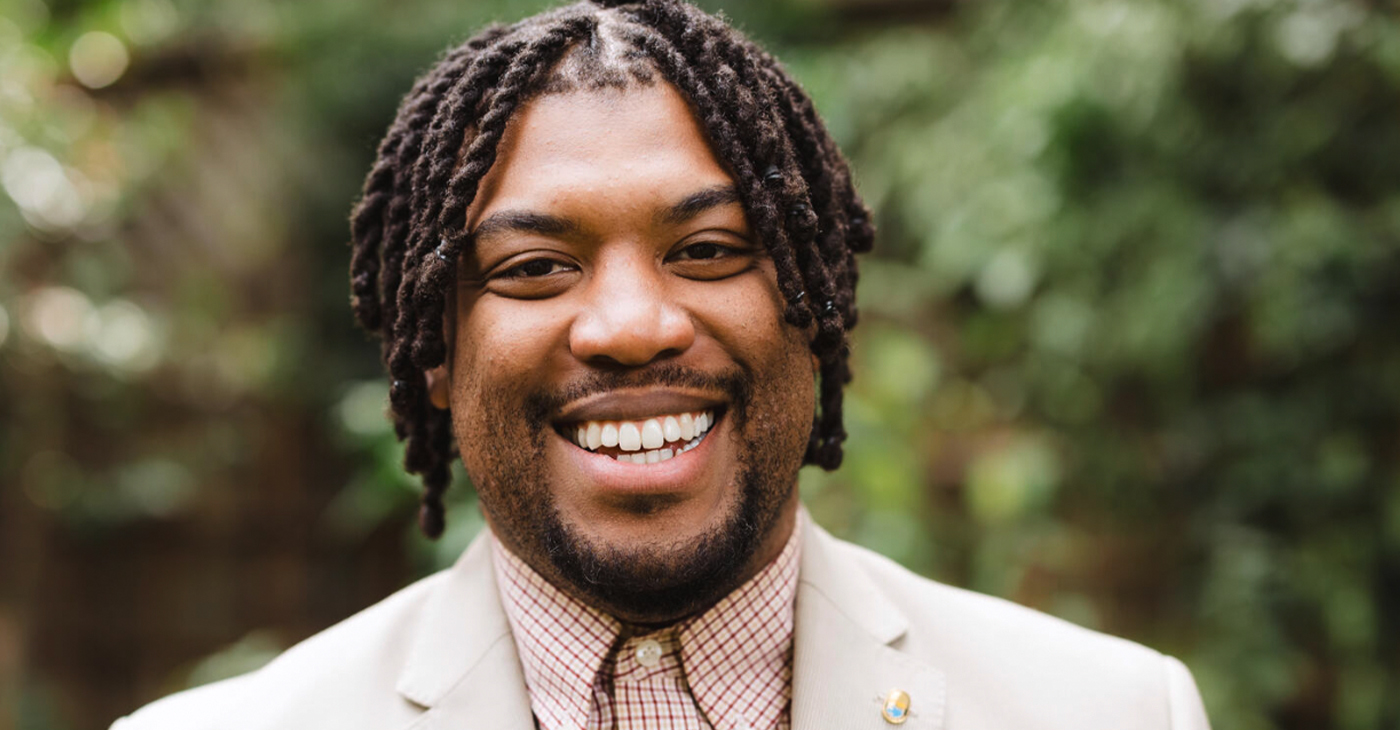
By Jeremy McCants
On Tuesday, Oakland Mayor Sheng Thao released her new budget proposal, and the City Council will begin its review.
This is a critical time for our voices to be heard as the people of Oakland already know what our city needs.
As members of the Faith Alliance for a Moral Economy (FAME) and the Interfaith Movement for Human Integrity (IM4H) we have created a Moral Budget Platform in step with the key concerns we have heard from our over 45 of our community faith leaders and 20 congregations and/or faith -based institutions.
The Moral Budget Platform is drawn from the righteous hopes of the people of Oakland who wish to see our neighborhoods reflect the just economic power and sustainability we all deserve.
Housing
Thousands of our congregants are in alignment. We are tired of seeing our neighbors forced to sleep on the streets and so our city’s budget must codify that 10,000 of the 30,000 planned housing units in our city are explicitly for affordable housing.
To invest in our people, we must invest in our land. We believe in public land for public good, meaning that any key developments within the city must include strong community benefits agreements to ensure access to jobs and economic sustainability for the people of Oakland.
Billionaires cannot treat our city and our land like playthings.
We are the lifeblood of this city, and we have a right to shape developments so that they don’t just benefit greedy profiteers but provide our communities with the affordable homes and quality jobs we deserve.
Further, our city must invest in the legal resources necessary to defend tenants facing unjust evictions and harassment from corporate landlords.
Public Safety
Everyone wants our city streets to be safer and so we must invest in public safety measures that are proven to prevent violence before it occurs.
We cannot allow biases to perpetuate disparate law enforcement practices and the killing of unarmed Black people by police. Our streets need to be safer for everyone, not just those armed with a badge and gun.
Successful programs like MACRO show that we can have a civilian response to human problems that leave us all safer and better supported, when appropriately resourced.
As a social justice-driven faith minister, I spend a lot of my time walking through the streets of Oakland and celebrating the incredible community that exists here.
The people of Oakland know what we need and deserve to build safe, abundant lives. As the City Council reviews Mayor Thao’s budget, all eyes will be on the dollars and cents behind our city.
If we want to ensure that our elected officials are putting our values in action we must join together and raise our voices. Together we can ensure that the line items on a budget spreadsheet are treated as they should be—as sacred extensions of our shared lives in this city we love.





Activism
Chase Oakland Community Center Hosts Alley-Oop Accelerator Building Community and Opportunity for Bay Area Entrepreneurs
Over the past three years, the Alley-Oop Accelerator has helped more than 20 Bay Area businesses grow, connect, and gain meaningful exposure. The program combines hands-on training, mentorship, and community-building to help participants navigate the legal, financial, and marketing challenges of small business ownership.
By Carla Thomas
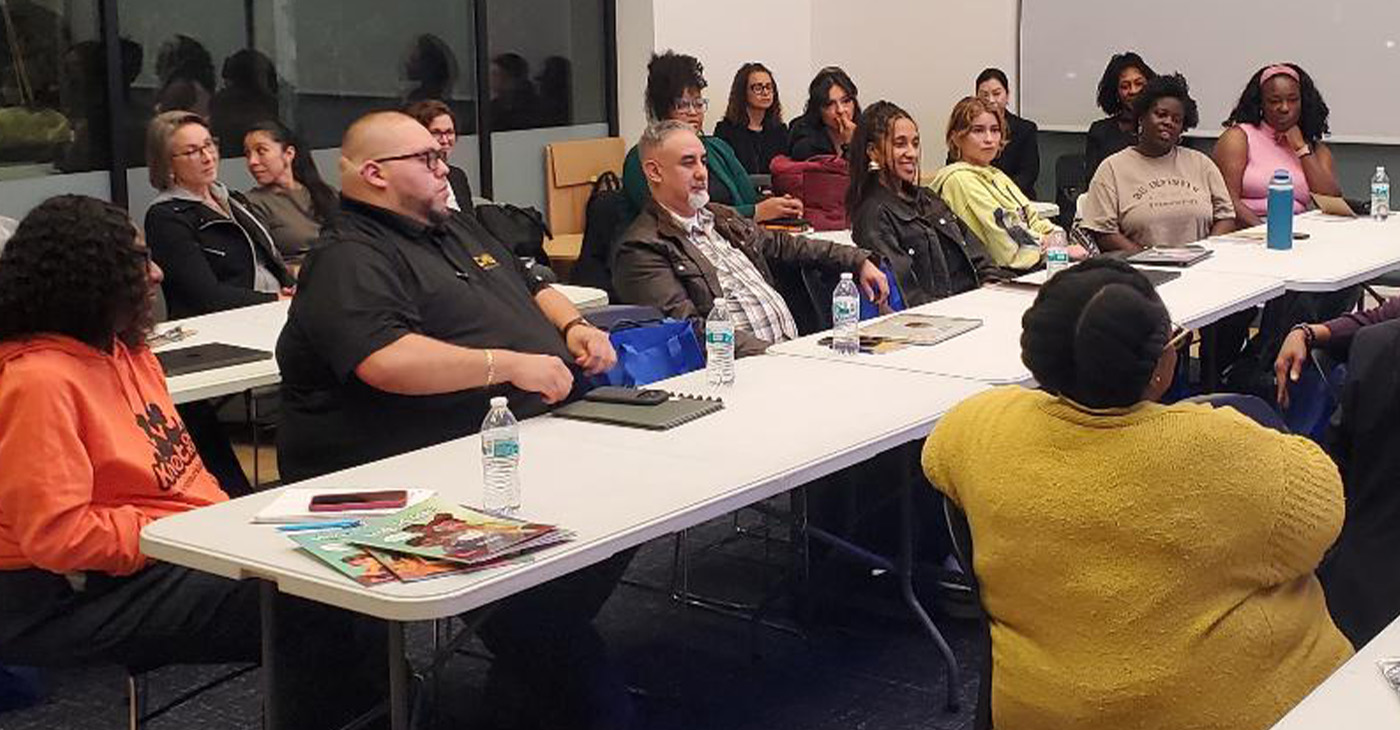
The Golden State Warriors and Chase bank hosted the third annual Alley-Oop Accelerator this month, an empowering eight-week program designed to help Bay Area entrepreneurs bring their visions for business to life.
The initiative kicked off on Feb. 12 at Chase’s Oakland Community Center on Broadway Street, welcoming 15 small business owners who joined a growing network of local innovators working to strengthen the region’s entrepreneurial ecosystem.
Over the past three years, the Alley-Oop Accelerator has helped more than 20 Bay Area businesses grow, connect, and gain meaningful exposure. The program combines hands-on training, mentorship, and community-building to help participants navigate the legal, financial, and marketing challenges of small business ownership.
At its core, the accelerator is designed to create an ecosystem of collaboration, where local entrepreneurs can learn from one another while accessing the resources of a global financial institution.
“This is our third year in a row working with the Golden State Warriors on the Alley-Oop Accelerator,” said Jaime Garcia, executive director of Chase’s Coaching for Impact team for the West Division. “We’ve already had 20-plus businesses graduate from the program, and we have 15 enrolled this year. The biggest thing about the program is really the community that’s built amongst the business owners — plus the exposure they’re able to get through Chase and the Golden State Warriors.”
According to Garcia, several graduates have gone on to receive vendor contracts with the Warriors and have gained broader recognition through collaborations with JPMorgan Chase.
“A lot of what Chase is trying to do,” Garcia added, “is bring businesses together because what they’ve asked for is an ecosystem, a network where they can connect, grow, and thrive organically.”
This year’s Alley-Oop Accelerator reflects that vision through its comprehensive curriculum and emphasis on practical learning. Participants explore the full spectrum of business essentials including financial management, marketing strategy, and legal compliance, while also preparing for real-world experiences such as pop-up market events.
Each entrepreneur benefits from one-on-one mentoring sessions through Chase’s Coaching for Impact program, which provides complimentary, personalized business consulting.
Garcia described the impact this hands-on approach has had on local small business owners. He recalled one candlemaker, who, after participating in the program, was invited to provide candles as gifts at Chase events.
“We were able to help give that business exposure,” he explained. “But then our team also worked with them on how to access capital to buy inventory and manage operations once those orders started coming in. It’s about preparation. When a hiccup happens, are you ready to handle it?”
The Coaching for Impact initiative, which launched in 2020 in just four cities, has since expanded to 46 nationwide.
“Every business is different,” Garcia said. “That’s why personal coaching matters so much. It’s life-changing.”
Participants in the 2026 program will each receive a $2,500 stipend, funding that Garcia said can make an outsized difference. “It’s amazing what some people can do with just $2,500,” he noted. “It sounds small, but it goes a long way when you have a plan for how to use it.”
For Chase and the Warriors, the Alley-Oop Accelerator represents more than an educational initiative, it’s a pathway to empowerment and economic inclusion. The program continues to foster lasting relationships among the entrepreneurs who, as Garcia put it, “build each other up” through shared growth and opportunity.
“Starting a business is never easy, but with the right support, it becomes possible, and even exhilarating,” said Oscar Lopez, the senior business consultant for Chase in Oakland.
Activism
Oakland Post: Week of February 18 – 24, 2026
The printed Weekly Edition of the Oakland Post: Week of – February 18 – 24, 2026
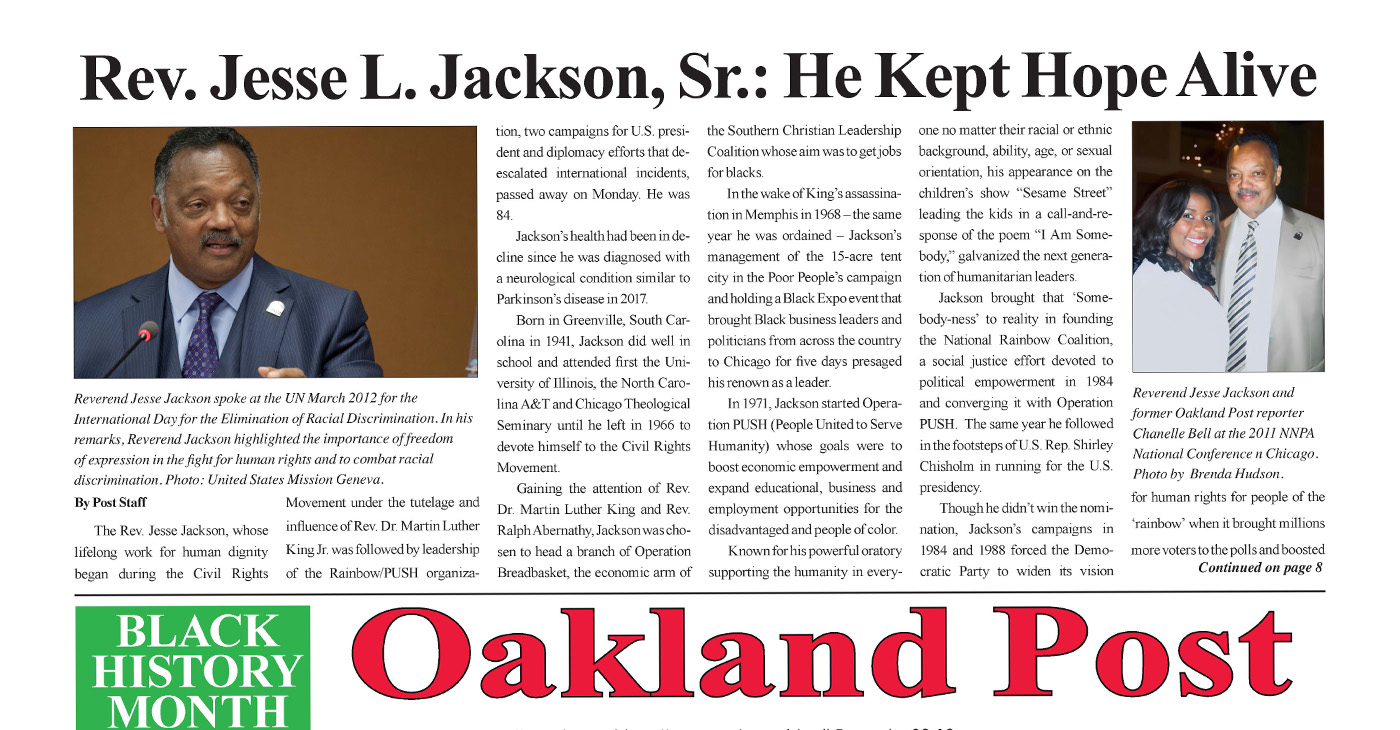
To enlarge your view of this issue, use the slider, magnifying glass icon or full page icon in the lower right corner of the browser window.
Bay Area
CITY OF SAN LEANDRO STATE OF CALIFORNIA PUBLIC WORKS DEPARTMENT ENGINEERING DIVISION NOTICE TO BIDDERS FOR ANNUAL STREET OVERLAY/REHABILITATION 2019-21 – PHASE III
WORK DESCRIPTION: The work to be done consists of roadway paving, base cement stabilization, concrete curb ramps, driveways, sidewalks, curbs and gutters, traffic detection loops and pavement striping, and doing all appurtenant work in place and ready for use, all as shown on the plans and described in the specifications with the title indicated in Paragraph 1 above, and on file in the office of the City Engineer. Reference to said plans and specifications is hereby made for further particulars.
PROJECT NO. 2020.0050
BID NO. 25-26.011
- BID OPENING: The bidder shall complete the “Proposal to the City of San Leandro” form contained in the Contract Book. The proposal shall be submitted in its entirety. Incomplete proposals will be considered non-responsive. Sealed bids containing the completed Proposal Section subject to the conditions named herein and in the specifications for ANNUAL STREET OVERLAY/REHABILITATION 2019-21 – PHASE III/PROJECT NO. 2020.0050 addressed to the City of San Leandro will be received at City Hall, 835 East 14th Street, 2nd Floor San Leandro at the office of the City Clerk up to 3:00 p.m. on Thursday, March 19, 2026, at which time they will be publicly opened and read.
- WORK DESCRIPTION: The work to be done consists of roadway paving, base cement stabilization, concrete curb ramps, driveways, sidewalks, curbs and gutters, traffic detection loops and pavement striping, and doing all appurtenant work in place and ready for use, all as shown on the plans and described in the specifications with the title indicated in Paragraph 1 above, and on file in the office of the City Engineer. Reference to said plans and specifications is hereby made for further particulars.
- OBTAINING THE PROJECT PLANS AND CONTRACT BOOK: The project plans and Contract Book may be obtained free of charge from the City’s website at:https://www.sanleandro.org/Bids.aspx Bidders who download the plans are encouraged to contact the City of San Leandro Public Works Department Engineering division at 510-577-3428 to be placed on the project planholder’s list to receive courtesy notifications of addenda and other project information. Project addenda, if any, will be posted on the website. A bidder who fails to address all project addenda in its proposal may be deemed non-responsive.Bidders may also purchase the Project Plans and Contract Book from East Bay Blueprint & Supply Co., at 1745 14th Street, Oakland, CA 94606; Phone Number: (510) 261-2990 or email: ebbp@eastbayblueprint.com.
- PRE-BID CONFERENCE: A mandatory pre-bid conference will be held on Tuesday, February 24, 2026, at 2:00 PM and on Wednesday, February 25, 2026, at 10:00 AM as follows:
Tuesday, February 24, 2026, at 2:00 PM
Zoom Meeting ID: 883 8752 6074
Passcode: 502955
Zoom Link: https://sanleandro-org.zoom.us/j/88387526074?pwd=hZ5rjB8AWdLAUem3CtByFiZxqKarHj.1
And - Wednesday, February 25, 2026, at 10:00 AM
Zoom Meeting ID: 898 2672 0472
Passcode: 091848
Zoom Link: https://sanleandro-org.zoom.us/j/89826720472?pwd=JgZX2nXMpLSRM5xDPr7EJUxl7QIznr.1The information presented at the conferences will be identical, all bidders must attend one of the pre-bid conference and sign the attendance sheet. A firm that didn’t attend the pre-bid conference isn’t qualified to bid on the project.Questions regarding the plans and specifications may be submitted in writing to the project engineer until 5:00 p.m. five (5) days before, excluding Saturdays, Sundays and Holidays, bids must be received by the City. The City will not respond to oral questions outside of the pre-bid conference. The response, if any, will be by written addendum only. Oral responses do not constitute a revision to these plans or specifications. - VALUE OF WORK: The Engineer has estimated that the value of work is between $1,000,000 and $5,000,000.
- SAN LEANDRO BUSINESS PREFERENCE AND PARTICIPATION GOALS: The work performed under this contract is subject to Section 1-6-225 of the San Leandro Municipal Code regarding local business preference and participation. A list of companies that hold a San Leandro business license is located on the City webpage under the finance department, here: https://www.sanleandro.org/340/Business-License
- SAN LEANDRO COMMUNITY WORKFORCE AGREEMENT: The work performed under this contract is subject to the Community Workforce Agreement adopted by City Council Resolution 2015-104. Contractors attention is directed to Section 10.
Dated: February 13, 2026 Sarah Bunting, City Clerk

WORK FROM HOME
Home-based business with potential monthly income of $10K+ per month. A proven training system and website provided to maximize business effectiveness. Perfect job to earn side and primary income. Contact Lynne for more details: Lynne4npusa@gmail.com 800-334-0540


PRESS ROOM: NBA Hall of Fame Nominee Terry Cummings Joins 100 Black Men of DeKalb County to Launch Victory & Values Initiative

Reflecting on Black History Milestones in Birmingham AL

OP-ED: One Hundred Years of Black Workers Telling the Truth

PRESS ROOM: Civil Rights TV Launches in Selma as the World’s First 24/7 Civil Rights Television Network

Advancements in solar technology that are changing the way we power the world

U.S. manufacturing rebounds – how foundry services are adapting to rising demand

Why has blood testing become so popular in today’s world?

Ghana Mourns a Son of the African World

OP-ED: Trump’s Policies Hurt Black America—and Everyone Else

OP-ED: Meta Deleted Me. I Still Don’t Know Why. And neither will you.

More than a Mission: Paying It Forward for the Future of Education

Avoid Eviction This Season: Landlord Checklist for Stable Tenancies

How chronic back problems affect Black communities differently

How cancer care is evolving with modern medicine

Diabetes disparity: Understanding Type 2 risks for Black Americans

Life Expectancy in Marin City, a Black Community, Is 15-17 Years Less than the Rest of Marin County

Oakland Post: Week of January 28, 2025 – February 3, 2026

Community Celebrates Turner Group Construction Company as Collins Drive Becomes Turner Group Drive

California Launches Study on Mileage Tax to Potentially Replace Gas Tax as Republicans Push Back

Discrimination in City Contracts

Oakland Post: Week of January 21 – 27, 2026

Book Review: Books on Black History and Black Life for Kids

Medi-Cal Cares for You and Your Baby Every Step of the Way

COMMENTARY: The Biases We Don’t See — Preventing AI-Driven Inequality in Health Care

Post Newspaper Invites NNPA to Join Nationwide Probate Reform Initiative

After Don Lemon’s Arrest, Black Officials Raise Concerns About Independent Black Media

OP-ED: The Dream Cannot be Realized Without Financial Freedom

COMMENTARY: The National Protest Must Be Accompanied with Our Votes

Black History Events in the East Bay

Art of the African Diaspora Celebrates Legacy and Community at Richmond Art Center

Hyundai Ioniq 5 Parking, Safety, and 360 View #shorts

2025 Ioniq 5 New Wiper & Powerful Performance! #shorts

Electric SUV Range: Is 259 Miles Enough? #shorts

EV Charging: How Fast Can You Charge an Electric Vehicle? #shorts

Biometric Cooling… Messaging Seats…Come on! 2025 Infiniti QX80 Autograph 4WD

Charged Up: Witness the Magic of a Fully Electric Car! #shorts

Range Rover Sport PHEV Included…: See What’s Inside This Luxury SUV! #shorts

Invisible Hood View: Perfect Parking with X-Ray Vision! #shorts

AI Is Reshaping Black Healthcare: Promise, Peril, and the Push for Improved Results in California

ESSAY: Technology and Medicine, a Primary Care Point of View

Sanctuary Cities

The RESISTANCE – FREEDOM NOW

STATE OF THE PEOPLE: Freddie

ECONOMIC BOYCOTT DAY!!!!!

I told You So
-
 Activism4 weeks ago
Life Expectancy in Marin City, a Black Community, Is 15-17 Years Less than the Rest of Marin County
-
 Activism4 weeks ago
Oakland Post: Week of January 28, 2025 – February 3, 2026
-
 Activism3 weeks ago
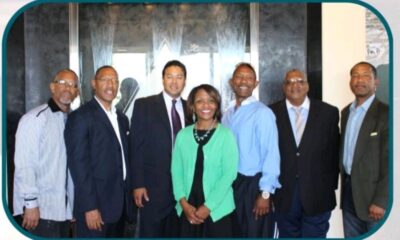
Community Celebrates Turner Group Construction Company as Collins Drive Becomes Turner Group Drive
-
 Business3 weeks ago
California Launches Study on Mileage Tax to Potentially Replace Gas Tax as Republicans Push Back
-
 Activism3 weeks ago
Discrimination in City Contracts
-
 Arts and Culture3 weeks ago
Book Review: Books on Black History and Black Life for Kids
-
 Activism4 weeks ago
Medi-Cal Cares for You and Your Baby Every Step of the Way
-
 Activism3 weeks ago
COMMENTARY: The Biases We Don’t See — Preventing AI-Driven Inequality in Health Care
