
City Government
A’s Dave Kaval Responds to Community Concerns Over New Stadium

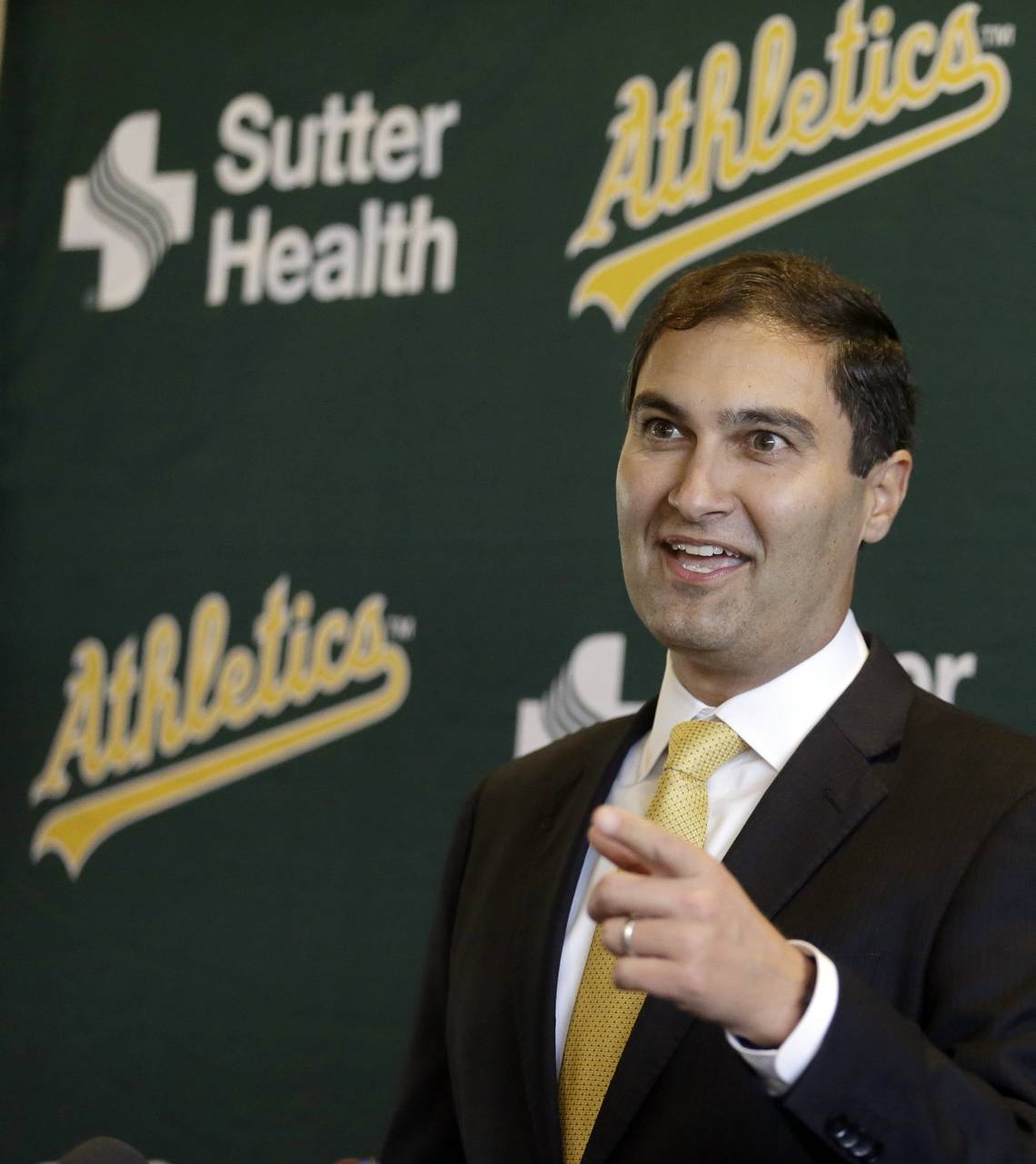
Since the Oakland Athletic’s first mentioned their intent to build a new home stadium in 2014, the project has spurred a multitude of reactions from city officials, industry workers, and the general public.
In early 2019 the A’s announced their plans to purchase and develop two large pieces of public land in Oakland: the Coliseum, and Howard Terminal at the Port of Oakland. Preliminary digital renderings presented a 34,000 seat waterfront stadium, flanked by a hotel and 3,000 condominiums — all accessible via a multi-million dollar gondola.
The new ballpark is estimated to generate $3 billion in benefits in the first 10 years, and over 6,000 permanent jobs, according to the Bay Area Council Economic Institute. Still, some residents and community members have remained skeptical that the development is a land-grab that will not benefit residents.
Oakland United Coalition — which was created in direct response to talks of the A’s plans to redevelop the coliseum in 2014 — has been at the forefront of the skepticism facing the development. The coalition has demanded a community benefits agreement — a legally binding agreement that would commit the A’s to fulfill community needs.
A’s President Dave Kaval said the A’s have long “committed” to a community benefits agreement — but that the contract is largely in the hands of the City of Oakland.
“These are the two biggest public land swaths in the city of Oakland, so it makes sense that folks are concerned,” said Jahmese Meyers, deputy director of the East Bay Alliance for a Sustainable Economy — part of Oakland United. “For Oakland United, ultimately, no matter where the stadium locates, whether it stays at the Coliseum or at Howard Terminal, it’s public land — it needs to be for public good.”
Kaval said that the A’s are glad that there has been so much community involvement in the project, and want to ensure that all parties benefit from whatever agreement is reached.
“Were going to do every thing we can to create a plan that allows for existence between all the key stakeholder groups and the new ballpark project,” said Kaval.
Some of the loudest opposition to the Howard Terminal ballpark has come from industry workers who rely on the prosperity of the Port of Oakland. The International Longshore Workers Union (ILWU) Local 10 held a public meeting on Sept. 21 in staunch opposition to the Howard Terminal Development.
“This is not about baseball, this is about gobbling up land, this is a real estate investment,” said Derrick Muhammad, former secretary treasurer at the ILWU Local 10.
Port workers pointed to the fact that the A’s waterfront ballpark would sit on a site three times smaller than the Coliseum, and require extensive infrastructure, transportation amendments and removal of decades of toxic waste. Some also worry that placing a large residential development in a highly polluted industrial area could threaten business operations.
“I think it’s also important to note that there are 24,000 people who live currently within a mile of Howard Terminal, so there is already a fair amount of residential in that area,” said Kaval, adding that the A’s have committed to a “robust transportation plan” to ensure that port operations are not impeded.
The A’s have also agreed to the port’s conditions, which include the widening of the turning basin for cargo ships, and a “buffer zone” between residential developments and industry.
Residents also worry about parking, as the new stadium will have significantly smaller lot compared to the Coliseum. Workers are concerned that the trucks currently parked at Howard Terminal will be forced into West Oakland streets, and that the city will be unable to control thousands of baseball fans descending on the stadium for a game.
“It’s incredibly important that traffic is not pushed into the neighborhoods,” said Kaval, who also pointed to the 14,000 parking spots in the nearby downtown area. “The one nice thing about having a stadium in a commercial area is you can leverage the parking that people use in the day for business — which at night is largely empty. So it’s a kind of symbiotic use.”
The A’s have also incurred criticism for their claim that the projects will be “100 percent privately funded.” A recently approved California Bill, SB 293, could facilitate the creation of new tax districts to fund infrastructure for the ballpark. The bill specifically cites Howard Terminal as site that could benefit from an infrastructure financing district.
In response, Kaval argued that SB 293 is not restricted to the ballpark project, and could be used as a “positive tool” for anything infrastructure-related in Oakland.
“I think it’s important to note that the bill only gives the ability of the city council to implement the infrastructure district…and no decisions have been made on that. That’s something that the city council is going to have to vote on,” said Kaval.
When it comes to the sale of the Coliseum, the City of Oakland made it’s position clear on Sept. 29 when it filed a lawsuit against Alameda County to block the sale of the county’s portion of the 150-acre lot, according to the San Francisco Chronicle.
Mayor Libby Schaaf, who has been a supporter of the project since day one, expressed dismay to the Chronicle after the city’s move. Following the suit, Major League Baseball Commissioner Rob Manfred urged the city to drop the lawsuit, or risk the team relocating to another city.
Despite the setback, the A’s plan to finalize permits by mid 2020, and project to break ground by 2021.


Activism
Oakland Post: Week of March 4 – 10, 2026
The printed Weekly Edition of the Oakland Post: Week of March 4 – 10, 2026


To enlarge your view of this issue, use the slider, magnifying glass icon or full page icon in the lower right corner of the browser window.

Activism
Oakland Post: Week of February 25 – March 3, 2026
The printed Weekly Edition of the Oakland Post: Week of – February 25 – March 3, 2026

To enlarge your view of this issue, use the slider, magnifying glass icon or full page icon in the lower right corner of the browser window.
Activism
Oakland Post: Week of February 18 – 24, 2026
The printed Weekly Edition of the Oakland Post: Week of – February 18 – 24, 2026
To enlarge your view of this issue, use the slider, magnifying glass icon or full page icon in the lower right corner of the browser window.


WORK FROM HOME
Home-based business with potential monthly income of $10K+ per month. A proven training system and website provided to maximize business effectiveness. Perfect job to earn side and primary income. Contact Lynne for more details: Lynne4npusa@gmail.com 800-334-0540


COMMENTARY: Women of Color Shape Our Past and Future

Woman’s Search for Family’s Roots Leads to Ancestor John T. Ward – A Successful Entrepreneur and Conductor on the Underground Railroad

Advocates Raise Alarm Over ICE Operation, MOU and Detention Risks in Baltimore County

Pete Buttigieg to Join Mayor Randall Woodfin for Community Town Hall in Birmingham

WATCH: Week One – NNPA’s “Leadership Matters” Video Series

Oakland Post: Week of March 4 – 10, 2026

OP-ED: NNPA Launches 2026 “Leadership Matters” Video Series

PRESS ROOM: PMG and Cranbrook Horizons-Upward Bound Launch Journey Fellowship Cohort 2

Los Angeles Summit Brings Together Leaders to Tackle Poverty and Affordability

Civil Rights TV Launches 24/7 Network Focused on Black History, Education and Equity

REVIEW: The Ultimate Hot Girl Summer Getaway: Sunseeker Resort Florida

COMMENTARY: How You Stop a Prescription Medicine is as Important as How You Start

PRESS ROOM: From Congress to Corporate America: NNPA Spotlights Visionaries in New Video Series

Poll Shows Support for Policies That Help Families Afford Child Care

Oakland Post: Week of February 25 – March 3, 2026

Oakland Post: Week of January 28, 2025 – February 3, 2026

Life Expectancy in Marin City, a Black Community, Is 15-17 Years Less than the Rest of Marin County

California Launches Study on Mileage Tax to Potentially Replace Gas Tax as Republicans Push Back

Community Celebrates Turner Group Construction Company as Collins Drive Becomes Turner Group Drive

Discrimination in City Contracts

Book Review: Books on Black History and Black Life for Kids

COMMENTARY: The Biases We Don’t See — Preventing AI-Driven Inequality in Health Care

Black History Events in the East Bay

Post Newspaper Invites NNPA to Join Nationwide Probate Reform Initiative

Art of the African Diaspora Celebrates Legacy and Community at Richmond Art Center

Medi-Cal Cares for You and Your Baby Every Step of the Way

COMMENTARY: The National Protest Must Be Accompanied with Our Votes

New Bill, the RIDER Safety Act, Would Support Transit Ambassadors and Safety on Public Transit

Oakland Post: Week of February 4 – 10, 2026

After Don Lemon’s Arrest, Black Officials Raise Concerns About Independent Black Media

Hyundai Ioniq 5 Parking, Safety, and 360 View #shorts

2025 Ioniq 5 New Wiper & Powerful Performance! #shorts

Electric SUV Range: Is 259 Miles Enough? #shorts

EV Charging: How Fast Can You Charge an Electric Vehicle? #shorts

Biometric Cooling… Messaging Seats…Come on! 2025 Infiniti QX80 Autograph 4WD

Charged Up: Witness the Magic of a Fully Electric Car! #shorts

Range Rover Sport PHEV Included…: See What’s Inside This Luxury SUV! #shorts

Invisible Hood View: Perfect Parking with X-Ray Vision! #shorts

AI Is Reshaping Black Healthcare: Promise, Peril, and the Push for Improved Results in California

ESSAY: Technology and Medicine, a Primary Care Point of View

Sanctuary Cities

The RESISTANCE – FREEDOM NOW

STATE OF THE PEOPLE: Freddie

ECONOMIC BOYCOTT DAY!!!!!

I told You So
-
 Activism4 weeks ago
Discrimination in City Contracts
-

 Activism4 weeks ago
Oakland Post: Week of February 11 – 17, 2026
-
 #NNPA BlackPress2 weeks ago
Reflecting on Black History Milestones in Birmingham AL
-

 Advice4 weeks ago
Rising Optimism Among Small And Middle Market Business Leaders Suggests Growth for California
-

 Bay Area3 weeks ago
CITY OF SAN LEANDRO STATE OF CALIFORNIA PUBLIC WORKS DEPARTMENT ENGINEERING DIVISION NOTICE TO BIDDERS FOR ANNUAL STREET OVERLAY/REHABILITATION 2019-21 – PHASE III
-

 #NNPA BlackPress3 weeks ago
U.S. manufacturing rebounds – how foundry services are adapting to rising demand
-
 #NNPA BlackPress2 weeks ago
PRESS ROOM: NBA Hall of Fame Nominee Terry Cummings Joins 100 Black Men of DeKalb County to Launch Victory & Values Initiative
-
 Activism3 weeks ago
Oakland Post: Week of February 18 – 24, 2026

2 Comments