
Op-Ed
Blacks Need to Join Discussion on the Economy


By Benjamin F. Chavis, Jr.
NNPA Columnist
One’s worldview or social perspective is mainly informed by a matrix of different socioeconomic and political circumstances. A polling of Black America about the current “recovery” of the economy of the United States would produce a dramatically different set of responses from the polling results of White America That is because the vast economic inequality between Blacks and Whites in the U.S. today appears to be escalating.
According the latest reports from the U.S. Department of Commerce, the steady overall pace of the recovery of the economy continues grow and expand. Yet while there was a .7 percent decline in the economy for the first quarter of 2015, the forecast for the remainder of 2015 looks very favorable and profitable, especially for those who are already wealthy.
I have always believed that Black Americans should become much more aware of the economic trends that are affecting the U.S. economy as a whole. Too often we get left out of the national discussion concerning the economy because we do not consistently articulate the overall daily national economic interests of 45 million Black Americans.
While it is important to continue to cite the fact that the current annual Black American spending in the U.S. economy totals more than $1.2 trillion, how do we really leverage that fact to help empower Black American families and communities to get out of poverty? Economic productivity is not just about how much a person or a group spends. Economic productivity is also about how much a person or a group produces, invests, and leverages to achieve sustainable financial development and empowerment.

The wealth gap between Black and White Americans continues grow wider. The U.S. Census Bureau reported in 2011 that the median White household had $111,146 in wealth holdings, compared to only $7,113 for the median Black household. Four years later, that gap has widened to the point that it is now being called the “racial wealth gap.”
The state of Black America’s economy has to be a priority issue that is addressed in every municipality and in every state where Black Americans are concentrated. This also needs to be addressed as well at the federal level not once a year but every day of every month in each of the four quarters that the Gross Domestic Product (GDP) is determined and debated. The GDP, as defined by the U.S. Department of Commerce Bureau of Economic Analysis, is the value of the aggregate production of goods and services in the United States and that is adjusted for price changes.
Black American economists and professionals in the financial services arena should formally issue on a quarterly basis a report on the Black American GDP. Do not misunderstand what I am calling for and the reason for doing such a report routinely each quarter. This is not just about statistics. This is about the need to make the national economic debate more inclusive of the economic interests of the Black American community.
We are grateful to the National Urban League for its annual report on the State of Black America that is published each year. Its 2015 report, State of Black America® – “Save Our Cities: Education, Jobs + Justice,” that documented the facts that economic inequality between Black and White Americans was rapidly increasing across the nation. Marc Morial, president and CEO of the National Urban League, emphasized, “Black America is in crisis – a jobs crisis, an education crisis and a justice crisis.” I agree with Morial and I would add that Black America’s crisis today is also an economic crisis.
We should remain vigilant and not let the disparities or the increasing economic inequalities break our spirit. We have been through hard time before today and we will face hard socioeconomic times in the future. Our ancestors did not let racism, injustice and inequity break their collective and individual determination to make progress even in the face of brutal and institutionalized oppression. Our struggle and labor for economic equality will continue in America and throughout the world. Let’s keep pushing forward to advance the social and economic progress of Black America.
Benjamin F. Chavis, Jr. is the president and CEO of the National Newspaper Publishers Association (NNPA) and can be reached for national advertisement sales and partnership proposals at: dr.bchavis@nnpa.org; and for lectures and other professional consultations at: http://drbenjaminfchavisjr.wix.com/drbfc











Advice
Rising Optimism Among Small And Middle Market Business Leaders Suggests Growth for California
“Business leaders across the Pacific region continue to demonstrate a unique blend of resilience and forward-thinking, even in the face of ongoing economic uncertainty,” said Brennon Crist, Managing Director and Head of the Pacific Segment, Commercial Banking, J.P. Morgan. “Their commitment to innovation and growth is evident in the way they adapt to challenges and seize new opportunities. It’s this spirit that keeps our region at the forefront of business leadership and progress. We look forward to helping our clients navigate all that’s ahead in 2026.”


Sponsored by JPMorganChase
Business optimism is returning for small and midsize business leaders at the start of 2026, fueling confidence and growth plans.
The 2026 Business Leaders Outlook survey, released in January by JPMorganChase reveals a turnaround from last June, when economic headwinds and uncertainty about shifting policies and tariffs caused some leaders to put their business plans on hold.
Midsize companies, who often find themselves more exposed to geopolitical shifts and policy changes, experienced a significant dip in business and economic confidence in June of 2025. As they have become more comfortable with the complexities of today’s environment, we are seeing optimism rebounding in the middle market nationwide – an encouraging sign for growth, hiring, and innovation. Small businesses, meanwhile, maintained steady optimism throughout 2025, but they aren’t shielded from domestic concerns. Many cited inflation and wage pressures as the top challenges for 2026 and are taking steps to ensure their businesses are prepared for what’s ahead.
“Business leaders across the Pacific region continue to demonstrate a unique blend of resilience and forward-thinking, even in the face of ongoing economic uncertainty,” said Brennon Crist, Managing Director and Head of the Pacific Segment, Commercial Banking, J.P. Morgan. “Their commitment to innovation and growth is evident in the way they adapt to challenges and seize new opportunities. It’s this spirit that keeps our region at the forefront of business leadership and progress. We look forward to helping our clients navigate all that’s ahead in 2026.”

Overall, both small and midsize business leaders are feeling more confident to pursue growth opportunities, embrace emerging technologies and, in some cases, forge new strategic partnerships. That bodes well for entrepreneurs in California. Here are a few other key findings from the Business Leaders Outlook about trends expected to drive activity this year:
- Inflation remains the top concern for small business owners. Following the 2024 U.S. presidential election, many anticipated a favorable business environment. By June 2025, however, that feeling shifted amid concerns about political dynamics, tariffs, evolving regulations and global economic headwinds.
Going into 2026, 37% of respondents cited inflation as their top concern. Rising taxes came in second at 27% and the impact of tariffs was third at 22%. Other concerns included managing cash flow, hiring and labor costs.
- For middle market leaders, uncertainty remains an issue. Almost half (49%) of all midsize business leaders surveyed cited “economic uncertainty” as their top concern – even with an improved outlook from a few months ago. Revenue and sales growth was second at 33%, while tariffs and labor both were third at 31%.
- And tariffs are impacting businesses costs. Sixty-one percent of midsize business leaders said tariffs have had a negative impact on the cost of doing business.
- Despite challenges, leaders are bullish on their own enterprises. Though the overall outlook is mixed, 74% of small business owners and 71% of middle market companies are optimistic about their company’s prospects for 2026.
- Adaption is the theme. For small business owners surveyed across the U.S., responding to continuing pressures is important in 2026. Building cash reserves (47%), renegotiating supplier terms (36%) and ramping up investments in marketing and technology are among the top priorities.
- Big plans are on the horizon. A majority midsized company leaders expect revenue growth this year, and nearly three out of five of (58%) plan to introduce new products or services in the coming year, while 53% look to expand into new domestic and/or international markets. Forty-nine percentsay they’re pursuing strategic partnerships or investments.
The bottom line
Rebounding optimism among U.S. business leaders at the start of the year is setting the stage for an active 2026. With business leaders looking to implement ambitious growth plans that position themselves for the future, momentum in California could be beneficial for leaders looking to launch, grow or scale their business this year.

#NNPA BlackPress
COMMENTARY: The National Protest Must Be Accompanied with Our Votes
Just as Trump is gathering election data like having the FBI take all the election data in Georgia from the 2020 election, so must we organize in preparation for the coming primary season to have the right people on ballots in each Republican district, so that we can regain control of the House of Representatives and by doing so, restore the separation of powers and balance that our democracy is being deprived of.
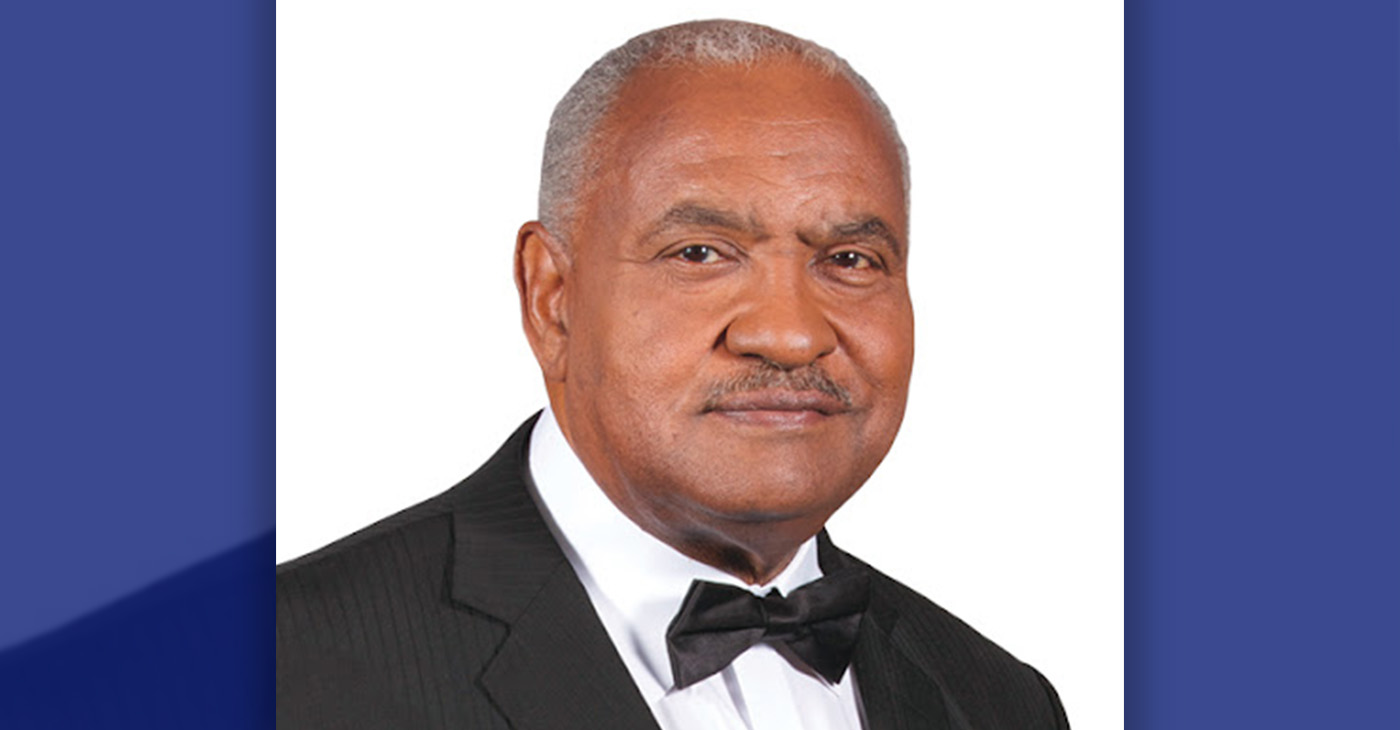
By Dr. John E. Warren, Publisher San Diego Voice & Viewpoint Newspaper
As thousands of Americans march every week in cities across this great nation, it must be remembered that the protest without the vote is of no concern to Donald Trump and his administration.
In every city, there is a personal connection to the U.S. Congress. In too many cases, the member of Congress representing the people of that city and the congressional district in which it sits, is a Republican. It is the Republicans who are giving silent support to the destructive actions of those persons like the U.S. Attorney General, the Director of Homeland Security, and the National Intelligence Director, who are carrying out the revenge campaign of the President rather than upholding the oath of office each of them took “to Defend The Constitution of the United States.”
Just as Trump is gathering election data like having the FBI take all the election data in Georgia from the 2020 election, so must we organize in preparation for the coming primary season to have the right people on ballots in each Republican district, so that we can regain control of the House of Representatives and by doing so, restore the separation of powers and balance that our democracy is being deprived of.
In California, the primary comes in June 2026. The congressional races must be a priority just as much as the local election of people has been so important in keeping ICE from acquiring facilities to build more prisons around the country.
“We the People” are winning this battle, even though it might not look like it. Each of us must get involved now, right where we are.
In this Black History month, it is important to remember that all we have accomplished in this nation has been “in spite of” and not “because of.” Frederick Douglas said, “Power concedes nothing without a struggle.”
Today, the struggle is to maintain our very institutions and history. Our strength in this struggle rests in our “collectiveness.” Our newspapers and journalists are at the greatest risk. We must not personally add to the attack by ignoring those who have been our very foundation, our Black press.
Are you spending your dollars this Black History Month with those who salute and honor contributions by supporting those who tell our stories? Remember that silence is the same as consent and support for the opposition. Where do you stand and where will your dollars go?
Activism
Post Newspaper Invites NNPA to Join Nationwide Probate Reform Initiative
The Post’s Probate Reform Group meets the first Thursday of every month via Zoom and invites the public to attend. The Post is making the initiative national and will submit information from its monthly meeting to the NNPA to educate, advocate, and inform its readers.

By Tanya Dennis

The National Newspaper Publishers Association (NNPA) represents the Black press with over 200 newspapers nationwide.
Last night the Post announced that it is actively recruiting the Black press to inform the public that there is a probate “five-alarm fire” occurring in Black communities and invited every Black newspaper starting from the Birmingham Times in Alabama to the Milwaukee Times Weekly in Wisconsin, to join the Post in our “Year of Action” for probate reform.
The Post’s Probate Reform Group meets the first Thursday of every month via Zoom and invites the public to attend. The Post is making the initiative national and will submit information from its monthly meeting to the NNPA to educate, advocate, and inform its readers.
Reporter Tanya Dennis says, “The adage that ‘When America catches a cold, Black folks catch the flu” is too true in practice; that’s why we’re engaging the Black Press to not only warn, but educate the Black community regarding the criminal actions we see in probate court: Thousands are losing generational wealth to strangers. It’s a travesty that happens daily.”
Venus Gist, a co-host of the reform group, states, “ Unfortunately, people are their own worst enemy when it comes to speaking with loved ones regarding their demise. It’s an uncomfortable subject that most avoid, but they do so at their peril. The courts rely on dissention between family members, so I encourage not only a will and trust [be created] but also videotape the reading of your documents so you can show you’re of sound mind.”

In better times, drafting a will was enough; then a trust was an added requirement to ‘iron-clad’ documents and to assure easy transference of wealth.
No longer.
As the courts became underfunded in the last 20 years, predatory behavior emerged to the extent that criminality is now occurring at alarming rates with no oversight, with courts isolating the conserved, and, I’ve heard, many times killing conservatees for profit. Plundering the assets of estates until beneficiaries are penniless is also common.”
Post Newspaper Publisher Paul Cobb says, “The simple solution is to avoid probate at all costs. If beneficiaries can’t agree, hire a private mediator and attorney to work things out. The moment you walk into court, you are vulnerable to the whims of the court. Your will and trust mean nothing.”
Zakiya Jendayi, a co-host of the Probate Reform Group and a victim herself, says, “In my case, the will and trust were clear that I am the beneficiary of the estate, but the opposing attorney said I used undue influence to make myself beneficiary. He said that without proof, and the judge upheld the attorney’s baseless assertion. In court, the will and trust is easily discounted.”
The Black press reaches out to 47 million Black Americans with one voice. The power of the press has never been so important as it is now in this national movement to save Black generational wealth from predatory attorneys, guardians and judges.
The next probate reform meeting is on March 5, from 7 – 9 p.m. PST. Zoom Details:
Meeting ID: 825 0367 1750
Passcode: 475480
All are welcome.

WORK FROM HOME
Home-based business with potential monthly income of $10K+ per month. A proven training system and website provided to maximize business effectiveness. Perfect job to earn side and primary income. Contact Lynne for more details: Lynne4npusa@gmail.com 800-334-0540


Poll Shows Support for Policies That Help Families Afford Child Care

Oakland Post: Week of February 25 – March 3, 2026

Trump’s MAGA Allies are Creating Executive Order Plan to Steal the 2026 Midterms

PRESS ROOM: NBA Hall of Fame Nominee Terry Cummings Joins 100 Black Men of DeKalb County to Launch Victory & Values Initiative

Reflecting on Black History Milestones in Birmingham AL

OP-ED: One Hundred Years of Black Workers Telling the Truth

PRESS ROOM: Civil Rights TV Launches in Selma as the World’s First 24/7 Civil Rights Television Network

Advancements in solar technology that are changing the way we power the world

U.S. manufacturing rebounds – how foundry services are adapting to rising demand

Why has blood testing become so popular in today’s world?

Ghana Mourns a Son of the African World

OP-ED: Trump’s Policies Hurt Black America—and Everyone Else

OP-ED: Meta Deleted Me. I Still Don’t Know Why. And neither will you.

More than a Mission: Paying It Forward for the Future of Education

Avoid Eviction This Season: Landlord Checklist for Stable Tenancies

Life Expectancy in Marin City, a Black Community, Is 15-17 Years Less than the Rest of Marin County

Oakland Post: Week of January 28, 2025 – February 3, 2026

Community Celebrates Turner Group Construction Company as Collins Drive Becomes Turner Group Drive

California Launches Study on Mileage Tax to Potentially Replace Gas Tax as Republicans Push Back

Discrimination in City Contracts

Oakland Post: Week of January 21 – 27, 2026

Book Review: Books on Black History and Black Life for Kids

COMMENTARY: The Biases We Don’t See — Preventing AI-Driven Inequality in Health Care

Medi-Cal Cares for You and Your Baby Every Step of the Way

Post Newspaper Invites NNPA to Join Nationwide Probate Reform Initiative

After Don Lemon’s Arrest, Black Officials Raise Concerns About Independent Black Media

COMMENTARY: The National Protest Must Be Accompanied with Our Votes

OP-ED: The Dream Cannot be Realized Without Financial Freedom

Black History Events in the East Bay

Art of the African Diaspora Celebrates Legacy and Community at Richmond Art Center

Hyundai Ioniq 5 Parking, Safety, and 360 View #shorts

2025 Ioniq 5 New Wiper & Powerful Performance! #shorts

Electric SUV Range: Is 259 Miles Enough? #shorts

EV Charging: How Fast Can You Charge an Electric Vehicle? #shorts

Biometric Cooling… Messaging Seats…Come on! 2025 Infiniti QX80 Autograph 4WD

Charged Up: Witness the Magic of a Fully Electric Car! #shorts

Range Rover Sport PHEV Included…: See What’s Inside This Luxury SUV! #shorts

Invisible Hood View: Perfect Parking with X-Ray Vision! #shorts

AI Is Reshaping Black Healthcare: Promise, Peril, and the Push for Improved Results in California

ESSAY: Technology and Medicine, a Primary Care Point of View

Sanctuary Cities

The RESISTANCE – FREEDOM NOW

STATE OF THE PEOPLE: Freddie

ECONOMIC BOYCOTT DAY!!!!!

I told You So

-
 Activism4 weeks ago
Life Expectancy in Marin City, a Black Community, Is 15-17 Years Less than the Rest of Marin County
-
 Activism4 weeks ago
Oakland Post: Week of January 28, 2025 – February 3, 2026
-
 Activism3 weeks ago
Community Celebrates Turner Group Construction Company as Collins Drive Becomes Turner Group Drive
-
 Business3 weeks ago
California Launches Study on Mileage Tax to Potentially Replace Gas Tax as Republicans Push Back
-
 Activism3 weeks ago
Discrimination in City Contracts
-
 Arts and Culture3 weeks ago
Book Review: Books on Black History and Black Life for Kids
-
 Activism3 weeks ago
COMMENTARY: The Biases We Don’t See — Preventing AI-Driven Inequality in Health Care
-
 Activism4 weeks ago
Medi-Cal Cares for You and Your Baby Every Step of the Way

Pingback: U.S. Factory Orders Slump in April: 8th Decline in 9 Months - Binary Option Evolution