
Arts and Culture
Cascada de Flores Performs in Marin City Library
The Cascada de Flores concerts bring nostalgic songs and traditions of Mexico to the audience and allow them to express themselves. The ensemble also offers special programs such as Radio Flor, a creative concert set in an old-time radio format, as well as storytelling with song and dance for children of all ages, according to cascadadeflores.com


By Godfrey Lee
The Marin City Library celebrated National Hispanic Heritage Month with the music of the Latin music group “Cascada de Flores,” which in Spanish means ‘cascade of flowers.’ Cascada de Flores performed on Saturday, Oct. 7, at the Marin City Library at 164 Donahue St.
They will perform again on Sunday, Oct. 15, from 2:00 p.m. to 3:00 p.m. at the Corte Madera Library, 707 Meadowsweet Dr. in Corte Madera.
The Cascada de Flores concerts bring nostalgic songs and traditions of Mexico to the audience and allow them to express themselves. The ensemble also offers special programs such as Radio Flor, a creative concert set in an old-time radio format, as well as storytelling with song and dance for children of all ages, according to cascadadeflores.com
The group members are Saúl Sierra-Alonso on bass, Arwen Lawrence on vocals, guitar, percussion, and dance, and Jorge Liceaga, vocalist and guitarist.
Lawrence toured with the Grammy-winning mariachi group Los Camperos de Nati Cano, which helped her deepen her love for Mexico’s musical language. She recorded and performed with them in venues such as the Teatro Degollado in Guadalajara and the Lincoln Center of New York.
Liceaga grew up in Mexico City and brought his first guitar with the money he’d earned shining shoes. Self-taught, he was later mentored by local legend Leonardo ‘El León’ Salas, who taught Jorge to ‘guasanguearla’ (play with that special Yucatecan swing). Liceaga also founded the Flamencos of Gitanerías (gypsy artists), giving him a raw and complicated education in flamenco, contributing to his special sensitivity as an accompanist.

Lawrence and Liceaga founded Cascada de Flores in San Francisco, CA in 1999. Cascada de Flores has since recorded four albums, collaborated in numerous projects, including theater and cinema, and toured several areas of the United States. In Mexico, they have been delightfully received in Mexico City, La Tasca in Jalapa, and in Oaxaca City. They even traveled to study with the Trovadores of Santiago de Cuba, according to cascadadeflores.com
Saúl Sierra-Alonso, the bass player, was born and raised in Mexico City, where he started playing professionally in 1990. As a San Francisco Bay Area resident since the fall of 1999, Sierra has performed, toured, or recorded with over 50 artists, including Poncho Sanchez and Pete Escovedo.
For the past 20 years, Sierra-Alonso has played with some of the leading bands in the Bay Area, including The John Santos Quintet/Sextet and The Bay Area Afro-Cuban All Stars.
Sierra-Alonso keeps himself busy performing, composing, arranging, and teaching in the San Francisco Bay Area. Two of his newest projects include The Saul Sierra Trio, a contemporary jazz fusion jazz trio, and The Saul Sierra Quintet, a piano-less Latin jazz quintet, according to saulsierra.com.
Sierra-Alonso is also a member of the California State University East Bay music faculty as the Latin Jazz Ensemble director.
Cascada de Flores is now a phenomenon cherished by the Latinos and non-Latino fans. Opening minds and hearts to the real stories of Mexico and Latin America has become this group’s unofficial mission.
Firmly committed to music and cultural education, Cascada de Flores has performed in over 1,000 schools and libraries, reaching over 500,000 children with their educational program.
They present a bilingual music and dance program for children in schools, libraries, and theaters such as Montalvo Arts Center in Saratoga, Herbst Theater in San Francisco, and the Mexican Heritage Plaza in San Jose.
Members of Cascada de Flores also present ongoing bilingual classes and special workshops for children and families focused on traditional Latin American folk songs and Mexican traditional music and dance, according to cascadadeflores.com.
For more information, go to cascadadeflores.com.








Advice
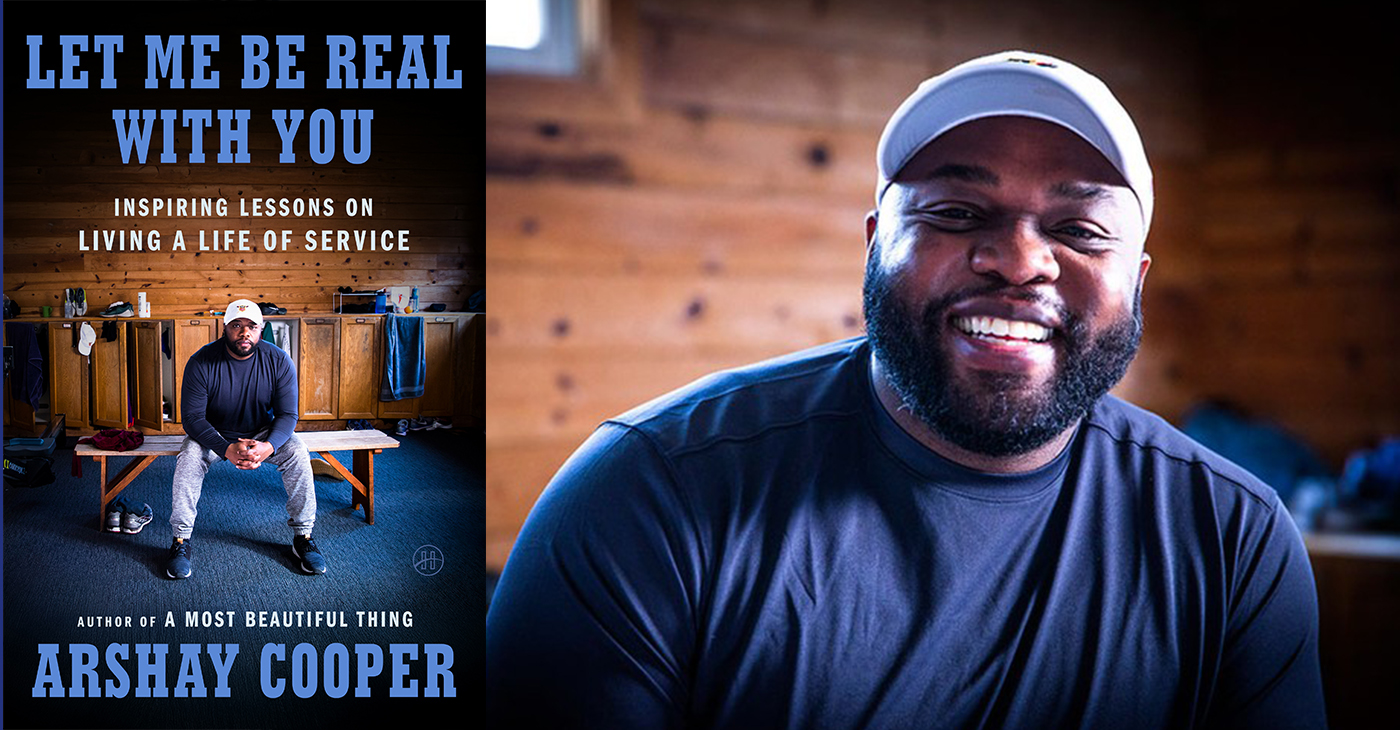
BOOK REVIEW: Let Me Be Real With You
At first look, this book might seem like just any other self-help offering. It’s inspirational for casual reader and business reader, both, just like most books in this genre. Dig a little deeper, though, and you’ll spot what makes “Let Me Be Real With You” stand out.
By Terri Schlichenmeyer
Author: Arshay Cooper, Copyright: c.2025, Publisher: HarperOne, SRP: $26.00, Page Count: 40 Pages
The hole you’re in is a deep one.
You can see the clouds above, and they look like a storm; you sense the wind, and it’s cold. It’s dark down there, and lonesome, too. You feel like you were born there — but how do you get out of the deep hole you’re in? You read the new book “Let Me Be Real With You” by Arshay Cooper. You find a hand-up and bring someone with you.
In the months after his first book was published, Cooper received a lot of requests to speak to youth about his life growing up on the West Side of Chicago, his struggles, and his many accomplishments. He was poor, bullied, and belittled, but he knew that if he could escape those things, he would succeed. He focused on doing what was best, and right. He looked for mentors and strove to understand when opportunities presented themselves.
Still, his early life left him with trauma. Here, he shows how it’s overcome-able.
We must always have hope, Cooper says, but hope is “merely the catalyst for action. The hope we receive must transform into the hope we give.”
Learn to tell your own story, as honestly as you know it. Be open to suggestions, and don’t dismiss them without great thought. Know that masculinity doesn’t equal stoicism; we are hard-wired to need other people, and sharing “pain and relatability can dissipate shame and foster empathy in powerful ways.”
Remember that trauma is intergenerational, and it can be passed down from parent to child. Let your mentors see your potential. Get therapy, if you need it; there’s no shame in it, and it will help, if you learn to trust it. Enjoy the outdoors when you can. Learn self-control. Give back to your community. Respect your financial wellness. Embrace your intelligence. Pick your friends and relationships wisely. “Do it afraid.”
And finally, remember that “You were born to soar to great heights and rule the sky.”
You just needed someone to tell you that.
At first look, this book might seem like just any other self-help offering. It’s inspirational for casual reader and business reader, both, just like most books in this genre. Dig a little deeper, though, and you’ll spot what makes “Let Me Be Real With You” stand out.
With a willingness to discuss the struggles he tackled in the past, Cooper writes with a solidly honest voice that’s exceptionally believable, and not one bit dramatic. You won’t find unnecessarily embellished stories or tall tales here, either; Cooper instead uses his real experiences to help readers understand that there are few things that are truly insurmountable. He then explains how one’s past can shape one’s future, and how today’s actions can change the future of the world.
“Let Me Be Real With You” is full of motivation, and instruction that’s do-able for adults and teens. If you need that, or if you’ve vowed to do better this coming year, it might help make you whole.
Alameda County
Bling It On: Holiday Lights Brighten Dark Nights All Around the Bay
On the block where I grew up in the 1960s, it was an unwritten agreement among the owners of those row homes to put up holiday lights: around the front window and door, along the porch banister, etc. Some put the Christmas tree in the window, and you could see it through the open slats of the blinds.
By Wanda Ravernell
I have always liked Christmas lights.
From my desk at my front window, I feel a quiet joy when the lights on the house across the street come on just as night falls.
On the block where I grew up in the 1960s, it was an unwritten agreement among the owners of those row homes to put up holiday lights: around the front window and door, along the porch banister, etc. Some put the Christmas tree in the window, and you could see it through the open slats of the blinds.
My father, the renegade of the block, made no effort with lights, so my mother hung a wreath with two bells in the window. Just enough to let you know someone was at home.
Two doors down was a different story. Mr. King, the overachiever of the block, went all out for Christmas: The tree in the window, the lights along the roof and a Santa on his sleigh on the porch roof.
There are a few ‘Mr. Kings’ in my neighborhood.
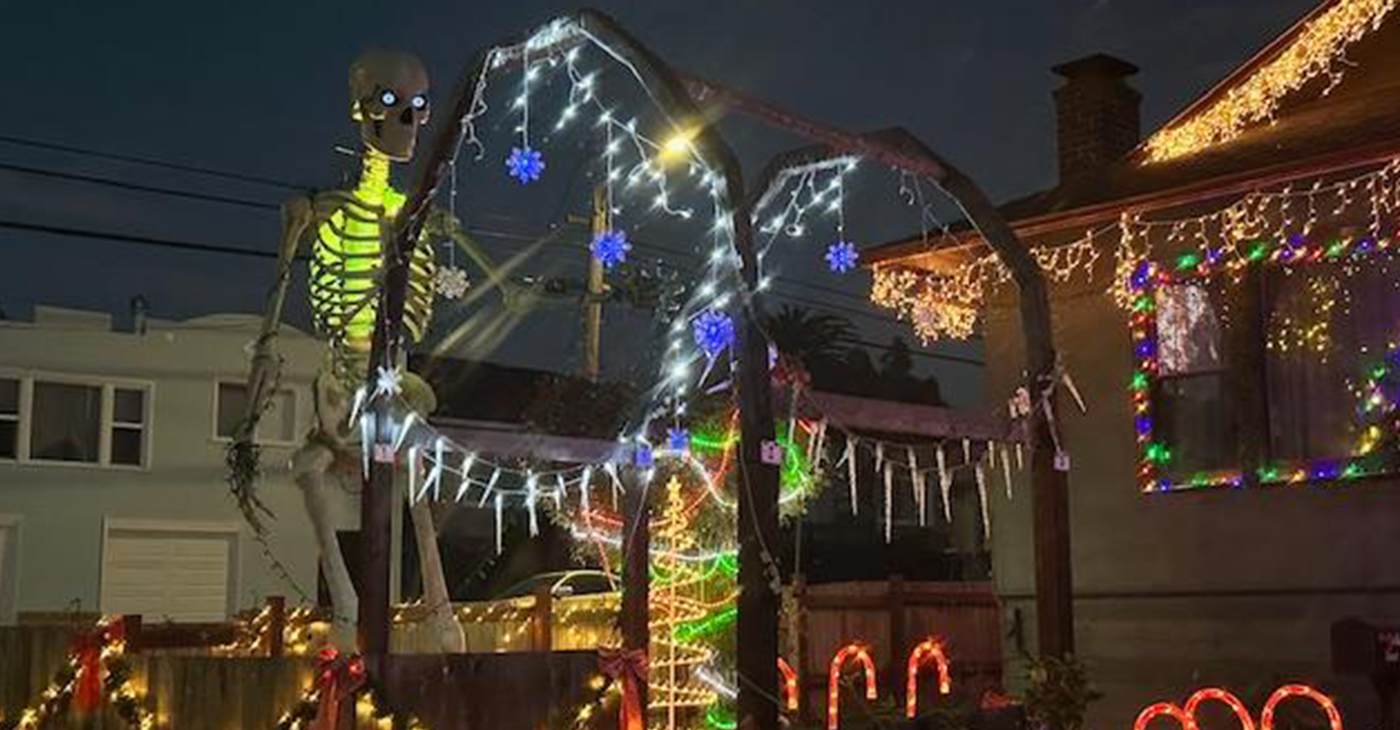
In particular is the gentleman down the street. For Halloween, they erected a 10-foot skeleton in the yard, placed ‘shrunken heads’ on fence poles, pumpkins on steps and swooping bat wings from the porch roof. They have not held back for Christmas.
The skeleton stayed up this year, this time swathed in lights, as is every other inch of the house front. It is a light show that rivals the one in the old Wanamaker’s department store in Philadelphia.
I would hate to see their light bill…
As the shortest day of the year approaches, make Mr. King’s spirit happy and get out and see the lights in your own neighborhood, shopping plazas and merchant areas.
Here are some places recommended by 510 Families and Johnny FunCheap.
Oakland
Oakland’s Temple Hill Holiday Lights and Gardens is the place to go for a drive-by or a leisurely stroll for a religious holiday experience. Wear a jacket, because it’s chilly outside the Church of Jesus Christ of Latter-day Saints, at 4220 Lincoln Ave., particularly after dark. The gardens are open all day from 9 a.m. to 9 p.m. with the lights on from dusk until closing.
Alameda
Just across the High Street Bridge from Oakland, you’ll find Christmas Tree Lane in Alameda.
On Thompson Avenue between High Street and Fernside drive, displays range from classic trees and blow-ups to a comedic response to the film “The Nightmare Before Christmas.” Lights turn on at dusk and can be seen through the first week in January.
Berkeley
The Fourth Street business district from University Avenue to Virginia Street in Berkeley comes alive with lights beginning at 5 p.m. through Jan. 1, 2026.
There’s also a display at one house at 928 Arlington St., and, for children, the Tilden Park Carousel Winter Wonderland runs through Jan. 4, 2026. Closed Christmas Day. For more information and tickets, call (510) 559-1004.
Richmond
The Sundar Shadi Holiday Display, featuring a recreation of the town of Bethlehem with life-size figures, is open through Dec. 26 at 7501 Moeser Lane in El Cerrito.
Marin County
In Marin, the go-to spot for ‘oohs and ahhs’ is the Holiday Light Spectacular from 4-9 p.m. through Jan. 4, 2026, at Marin Center Fairgrounds at 10 Ave of the Flags in San Rafael through Jan. 4. Displays dazzle, with lighted walkways and activities almost daily. For more info, go to: www.marincounty.gov/departments/cultural-services/department-sponsored-events/holiday-light-spectacular
The arches at Marin County Civic Center at 3501 Civic Center Dr. will also be illuminated nightly.
San Francisco
Look for light installations in Golden Gate Park, chocolate and cheer at Ghirardelli Square, and downtown, the ice rink in Union Square and the holiday tree in Civic Center Plaza are enchanting spots day and night. For neighborhoods, you can’t beat the streets in Noe Valley, Pacific Heights, and Bernal Heights. For glee and over-the-top glitz there’s the Castro, particularly at 68 Castro Street.
Livermore
The winner of the 2024 Great Light Flight award, Deacon Dave has set up his display with a group of creative volunteers at 352 Hillcrest Avenue since 1982. See it through Jan. 1, 2026. For more info, go to https://www.casadelpomba.com
Fremont
Crippsmas Place is a community of over 90 decorated homes with candy canes passed out nightly through Dec. 31. A tradition since 1967, the event features visits by Mr. and Mrs. Claus on Dec. 18 and Dec. 23 and entertainment by the Tri-M Honor Society at 6 p.m. on Dec. 22. Chrippsmas Place is located on: Cripps Place, Asquith Place, Nicolet Court, Wellington Place, Perkins Street, and the stretch of Nicolet Avenue between Gibraltar Drive and Perkins Street.
Activism
Oakland Mandala: A New Event and Point of Beauty
Led by Oakland resident Mandisa Snodey, a group of artists conceived and painted the mandala on Linden street near McClymonds High School as part of a Black Friday event the day after Thanksgiving to support Black-owned businesses.

By Post Staff
The first annual Oakland Mandala, sponsored by Miges Odanes Village Center, Credo Studio, and the Mandala Medicine Movement is on view now until the winter rains wash it away.
Led by Oakland resident Mandisa Snodey, a group of artists conceived and painted the mandala on Linden street near McClymonds High School as part of a Black Friday event the day after Thanksgiving to support Black-owned businesses.
“This is a lineage-based community art project, using temporary paint, aimed at community building, neighborhood beautification, and celebration of the arts and all people’s creativity,” Snodey said. “The theme of this year’s mandala was ‘Unified Humanity.’
“We gathered at 7 a.m. on Friday for the Black Friday Block Party and finished painting close to sunset. Our youngest painter was 2 years old and our eldest close to 70 years young: we had families, community members, professional artists, and people who have never painted before all working together.”
Snodey urges residents to come visit and take a picture with the mandala. It’s located between 28th and 30th on Linden Street in West Oakland. If you post on social media, please use the hashtags “#oaklandmandala” and “#mandalamedicinemovement.”
Snodey extends special thanks to the Bay Area Mural Program (BAMP), Few and Far Women, “and other Bay Area Artists who participated and made this first annual mandala a beautiful success.”


WORK FROM HOME
Home-based business with potential monthly income of $10K+ per month. A proven training system and website provided to maximize business effectiveness. Perfect job to earn side and primary income. Contact Lynne for more details: Lynne4npusa@gmail.com 800-334-0540


Big God Ministry Gives Away Toys in Marin City

First 5 Alameda County Distributes Over $8 Million in First Wave of Critical Relief Funds for Historically Underpaid Caregivers

2025 in Review: Seven Questions for Assemblymember Lori Wilson — Advocate for Equity, the Environment, and More

2025 in Review: Seven Questions for Assemblymember Tina McKinnor, Champion of Reparations, Housing and Workers’ Rights

2025 in Review: Seven Questions for Sen. Laura Richardson, Who Made Legislative History This Year

2025 in Review: Seven Questions for Sen. Lola Smallwood-Cuevas – an Advocate for Jobs and Justice

Alfred Cralle: Inventor of the Ice Cream Scoop

BOOK REVIEW: Let Me Be Real With You

Oakland Post: Week of December 24 – 30, 2025

Bling It On: Holiday Lights Brighten Dark Nights All Around the Bay

Oakland Council Expands Citywide Security Cameras Despite Major Opposition

Lu Lu’s House is Not Just Toying Around with the Community

Desmond Gumbs — Visionary Founder, Mentor, and Builder of Opportunity

Families Across the U.S. Are Facing an ‘Affordability Crisis,’ Says United Way Bay Area

Black Arts Movement Business District Named New Cultural District in California

IN MEMORIAM: William ‘Bill’ Patterson, 94

Oakland Post: Week of November 19 – 25, 2025

Seth Curry Makes Impressive Debut with the Golden State Warriors

Oakland Post: Week of November 26 – December 2, 2025

LIHEAP Funds Released After Weeks of Delay as States and the District Rush to Protect Households from the Cold

Seven Steps to Help Your Child Build Meaningful Connections

Beyoncé and Jay-Z make rare public appearance with Lewis Hamilton at Las Vegas Grand Prix

Seven Steps to Help Your Child Build Meaningful Connections

Lewis Hamilton set to start LAST in Saturday Night’s Las Vegas Grand Prix

Trinidad and Tobago – Prime Minister Confirms U.S. Marines Working on Tobago Radar System

Teens Reject Today’s News as Trump Intensifies His Assault on the Press

Thanksgiving Celebrated Across the Tri-State

Post Salon to Discuss Proposal to Bring Costco to Oakland Community meeting to be held at City Hall, Thursday, Dec. 18

Breaking the Silence: Black Veterans Speak Out on PTSD and the Path to Recovery

FBI Report Warns of Fear, Paralysis, And Political Turmoil Under Director Kash Patel

Hyundai Ioniq 5 Parking, Safety, and 360 View #shorts

2025 Ioniq 5 New Wiper & Powerful Performance! #shorts

Electric SUV Range: Is 259 Miles Enough? #shorts

EV Charging: How Fast Can You Charge an Electric Vehicle? #shorts

Biometric Cooling… Messaging Seats…Come on! 2025 Infiniti QX80 Autograph 4WD

Charged Up: Witness the Magic of a Fully Electric Car! #shorts

Range Rover Sport PHEV Included…: See What’s Inside This Luxury SUV! #shorts

Invisible Hood View: Perfect Parking with X-Ray Vision! #shorts

AI Is Reshaping Black Healthcare: Promise, Peril, and the Push for Improved Results in California

ESSAY: Technology and Medicine, a Primary Care Point of View

Sanctuary Cities

The RESISTANCE – FREEDOM NOW

STATE OF THE PEOPLE: Freddie

ECONOMIC BOYCOTT DAY!!!!!

I told You So
-
 Alameda County4 weeks ago
Seth Curry Makes Impressive Debut with the Golden State Warriors
-
 Bay Area3 weeks ago
Post Salon to Discuss Proposal to Bring Costco to Oakland Community meeting to be held at City Hall, Thursday, Dec. 18
-

 Activism3 weeks ago
Mayor Lee, City Leaders Announce $334 Million Bond Sale for Affordable Housing, Roads, Park Renovations, Libraries and Senior Centers
-

 Activism3 weeks ago
Oakland Post: Week of December 10 – 16, 2025
-

 Arts and Culture3 weeks ago
Fayeth Gardens Holds 3rd Annual Kwanzaa Celebration at Hayward City Hall on Dec. 28
-
 Activism3 weeks ago
Oakland School Board Grapples with Potential $100 Million Shortfall Next Year
-

 Activism3 weeks ago
2025 in Review: Seven Questions for Black Women’s Think Tank Founder Kellie Todd Griffin
-

 Advice3 weeks ago
COMMENTARY: If You Don’t Want Your ‘Black Card’ Revoked, Watch What You Bring to Holiday Dinners
