
City Government
Children & Families Measure Placed on November Ballot

Mayor Edwin M. Lee and all 11 members of the Board of Supervisors voted to send end to a Charter Amendment to the November ballot to extend the Children’s Fund and the Public Education Enrichment Fund for 25 and 26 years, respectively.
The proposed Charter Amendment also creates the “Our Children, Our Families Council” to prepare a Children and Families Plan to better service youth and families and reforms Rainy Day Reserves that fund youth, family and education programs.
“ If we want families to stay, grow and thrive here in San Francisco, we need to do more and that is why this November, we will ask San Francisco voters to renew the Children’s Fund and the Public Education Enrichment Fund – all without raising property tax rates,” said Mayor Lee. “We know we must invest in our schools and our families so we can do even more to prepare our young people for their future.”
This Charter Amendment integrates reauthorization of both the Children and Youth Fund (formerly called the Children’s Fund) and the Public Education Enrichment Fund (PEEF), establishes the ‘Our Children, Our Families Council’, and creates a City Rainy Day Reserve and a School Rainy Day Reserve out of the existing Rainy Day Reserve.
In 1991, the voters first created in the City Charter a Children’s Fund, which receives a set portion of the property tax each year.
The current amount of the set-aside in 3 cents for each $100 of assessed property value. The Children’s Fund is used to increase services for children under 18 years of age, including childcare, health services, job training, social services, out-of-school programs, educational programs, recreational and cultural programs, and delinquency prevention services.
The Department of Children, Youth and Their Families currently administers the Children’s Fund. The Children’s Fund and the property tax set-aside are set to expire on June 30, 2016.
The proposal would extend the Children and Youth Fund and the property tax set-aside for 25 years, until June 30, 2041. The proposal would increase the property tax set-aside a quarter cent each year for four years, from the current three cents for each $100 of assessed property value to four cents for each $100 of assessed property value in fiscal year 2018-2019 and thereafter. The proposal would not increase or otherwise change the property tax rate; it would only affect how the City may spend the tax.
The proposal would allow the City to use the Children and Youth Fund to provide services to Disconnected Transitional-Aged Youth (TAY), as well as to continue to provide services to children younger than 18 years. TAY are 18 through 24 years old youth who: are homeless or in danger of homelessness; have dropped out of high school; have a disability or other special needs, including substance abuse; are low-income parents; are undocumented; are new immigrants and/or English Learners; are Lesbian, Gay, Bisexual, Transgender, Queer, and Questioning (LGBTQQ); and/or are transitioning from the foster care, juvenile justice, criminal justice or special education systems.
The proposal would also set a spending baseline for services to Disconnected Transitional-Aged Youth based on what the City spent in fiscal year 2013-2014. The City would be required to continue spending this amount each year, adjusted for inflation, for these purposes, separate from the set-aside for the Fund.
In 2004, voters created the PEEF requiring the City to make a specified annual contribution. The annual contribution was approximately $77.1 million for fiscal year 2013-2014.
The charter requires the City to disburse funds from the PEEF each year: one-third of the PEEF to the San Francisco Unified School District (SFUSD) for arts, music, sports, and library programs; one-third to the First Five Commission for universal pre-school programs for 5 year-olds in San Francisco; and one-third to SFUSD for general education purposes. The PEEF, and the requirements for the City’s annual contributions to and disbursements from the PEEF, are set to expire on June 30, 2015.
The proposal would extend the PEEF, and the city’s annual contributions to and disbursements from the PEEF, for 26 years, until June 30, 2041. The proposal would change the current allocation for universal preschool for four-year-olds to an allocation for universal early education for three to five year-olds, but still give priority to four year-olds.
This early education portion of the PEEF could also be used to develop services for children from birth to three years old. The proposal would move oversight of the program from the First Five Commission to the City’s Office of Early Care and Education. The proposal would also create a Citizens Advisory Committee for this portion of the PEEF.
The proposal would eliminate the City’s authority to defer up to 25 percent of its contributions to and disbursements from the PEEF in years in which the City projected a revenue shortfall of $100 million or more.
The proposal would create “Our Children, Our Families Council” to advise the City on the unmet needs of children and families in San Francisco and on priorities, program goals, and best practices for addressing those needs through the creation of a Children and Families Plan for the City.







Activism
Oakland Post: Week of December 24 – 30, 2025
The printed Weekly Edition of the Oakland Post: Week of – December 24 – 30, 2025

To enlarge your view of this issue, use the slider, magnifying glass icon or full page icon in the lower right corner of the browser window.
Alameda County
Oakland Council Expands Citywide Security Cameras Despite Major Opposition
In a 7-1 vote in favor of the contract, with only District 3 Councilmember Carroll Fife voting no, the Council agreed to maintain its existing network of 291 cameras and add 40 new “pan-tilt-zoom cameras.”

By Post Staff
The Oakland City Council this week approved a $2.25 million contract with Flock Safety for a mass surveillance network of hundreds of security cameras to track vehicles in the city.
In a 7-1 vote in favor of the contract, with only District 3 Councilmember Carroll Fife voting no, the Council agreed to maintain its existing network of 291 cameras and add 40 new “pan-tilt-zoom cameras.”
In recent weeks hundreds of local residents have spoken against the camera system, raising concerns that data will be shared with immigration authorities and other federal agencies at a time when mass surveillance is growing across the country with little regard for individual rights.
The Flock network, supported by the Oakland Police Department, has the backing of residents and councilmembers who see it as an important tool to protect public safety.
“This system makes the Department more efficient as it allows for information related to disruptive/violent criminal activities to be captured … and allows for precise and focused enforcement,” OPD wrote in its proposal to City Council.
According to OPD, police made 232 arrests using data from Flock cameras between July 2024 and November of this year.
Based on the data, police say they recovered 68 guns, and utilizing the countywide system, they have found 1,100 stolen vehicles.

However, Flock’s cameras cast a wide net. The company’s cameras in Oakland last month captured license plate numbers and other information from about 1.4 million vehicles.
Speaking at Tuesday’s Council meeting, Fife was critical of her colleagues for signing a contract with a company that has been in the national spotlight for sharing data with federal agencies.
Flock’s cameras – which are automated license plate readers – have been used in tracking people who have had abortions, monitoring protesters, and aiding in deportation roundups.
“I don’t know how we get up and have several press conferences talking about how we are supportive of a sanctuary city status but then use a vendor that has been shown to have a direct relationship with (the U.S.) Border Control,” she said. “It doesn’t make sense to me.”
Several councilmembers who voted in favor of the contract said they supported the deal as long as some safeguards were written into the Council’s resolution.
“We’re not aiming for perfection,” said District 1 Councilmember Zac Unger. “This is not Orwellian facial recognition technology — that’s prohibited in Oakland. The road forward here is to add as many amendments as we can.”
Amendments passed by the Council prohibit OPD from sharing camera data with any other agencies for the purpose of “criminalizing reproductive or gender affirming healthcare” or for federal immigration enforcement. California state law also prohibits the sharing of license plate reader data with the federal government, and because Oakland’s sanctuary city status, OPD is not allowed to cooperate with immigration authorities.
A former member of Oakland’s Privacy Advisory Commission has sued OPD, alleging that it has violated its own rules around data sharing.
So far, OPD has shared Flock data with 50 other law enforcement agencies.
Activism
Black Arts Movement Business District Named New Cultural District in California
Located in the heart of District 3, the BAMBD is widely regarded as one of the nation’s most important centers of Black cultural production — a space where artists, entrepreneurs, organizers, and cultural workers have shaped generations of local and national identity. The state’s recognition affirms the district’s historic importance and its future promise.

By Post Staff
Oakland’s Black Arts Movement Business District (BAMBD) has been selected as one of California’s 10 new state-designated Cultural Districts, a distinction awarded by the California Arts Council (CAC), according to a media statement released by Councilmember Carroll Fife.
The BAMBD now joins 23 other districts across the state recognized for their deep cultural legacy, artistic excellence, and contributions to California’s creative economy.
Located in the heart of District 3, the BAMBD is widely regarded as one of the nation’s most important centers of Black cultural production — a space where artists, entrepreneurs, organizers, and cultural workers have shaped generations of local and national identity. The state’s recognition affirms the district’s historic importance and its future promise.
“This designation is a testament to what Black Oakland has built — and what we continue to build when we insist on investing in our own cultural and economic power,” said Fife.
“For years, our community has fought for meaningful recognition and resources for the Black Arts Movement Business District,” she said. “This announcement validates that work and ensures that BAMBD receives the support it needs to grow, thrive, and continue shaping the cultural fabric of California.”
Since taking office, Fife has led and supported multiple initiatives that strengthened the groundwork for this achievement, including:
- Restoring and protecting arts and cultural staffing within the City of Oakland.
- Creating the West Oakland Community Fund to reinvest in historically excluded communities
- Advancing a Black New Deal study to expand economic opportunity for Black Oakland
- Ensuring racial equity impact analyses for development proposals, improving access for Black businesses and Black contractors
- Introduced legislation and budget amendments that formalized, protected, and expanded the BAMBD
“These efforts weren’t abstract,” Fife said. “They were intentional, coordinated, and rooted in a belief that Black arts and Black businesses deserve deep, sustained public investment.”
As part of the Cultural District designation, BAMBD will receive:
- $10,000 over two years
- Dedicated technical assistance
- Statewide marketing and branding support
- Official designation from Jan. 1, 2026, through Dec. 31, 2030
This support will elevate the visibility of BAMBD’s artists, cultural organizations, small businesses, and legacy institutions, while helping attract new investment to the district.
“The BAMBD has always been more than a district,” Fife continued. “This recognition by the State of California gives us another tool in the fight to preserve Black culture, build Black economic power, and protect the families and institutions that make Oakland strong.”
For questions, contact Councilmember Carroll Fife at CFife@oaklandca.gov.


WORK FROM HOME
Home-based business with potential monthly income of $10K+ per month. A proven training system and website provided to maximize business effectiveness. Perfect job to earn side and primary income. Contact Lynne for more details: Lynne4npusa@gmail.com 800-334-0540


Big God Ministry Gives Away Toys in Marin City

First 5 Alameda County Distributes Over $8 Million in First Wave of Critical Relief Funds for Historically Underpaid Caregivers

2025 in Review: Seven Questions for Assemblymember Lori Wilson — Advocate for Equity, the Environment, and More

2025 in Review: Seven Questions for Assemblymember Tina McKinnor, Champion of Reparations, Housing and Workers’ Rights

2025 in Review: Seven Questions for Sen. Laura Richardson, Who Made Legislative History This Year

2025 in Review: Seven Questions for Sen. Lola Smallwood-Cuevas – an Advocate for Jobs and Justice

Alfred Cralle: Inventor of the Ice Cream Scoop

BOOK REVIEW: Let Me Be Real With You

Oakland Post: Week of December 24 – 30, 2025

Bling It On: Holiday Lights Brighten Dark Nights All Around the Bay

Oakland Council Expands Citywide Security Cameras Despite Major Opposition

Lu Lu’s House is Not Just Toying Around with the Community

Desmond Gumbs — Visionary Founder, Mentor, and Builder of Opportunity

Families Across the U.S. Are Facing an ‘Affordability Crisis,’ Says United Way Bay Area

Black Arts Movement Business District Named New Cultural District in California

Oakland Post: Week of November 12 – 18, 2025

IN MEMORIAM: William ‘Bill’ Patterson, 94

How Charles R. Drew University Navigated More Than $20 Million in Fed Cuts – Still Prioritizing Students and Community Health

No Justice in the Justice System

Oakland Post: Week of November 19 – 25, 2025

LIHEAP Funds Released After Weeks of Delay as States and the District Rush to Protect Households from the Cold

Seth Curry Makes Impressive Debut with the Golden State Warriors

Oakland Post: Week of November 26 – December 2, 2025

Seven Steps to Help Your Child Build Meaningful Connections

Beyoncé and Jay-Z make rare public appearance with Lewis Hamilton at Las Vegas Grand Prix

Seven Steps to Help Your Child Build Meaningful Connections

Lewis Hamilton set to start LAST in Saturday Night’s Las Vegas Grand Prix

Trinidad and Tobago – Prime Minister Confirms U.S. Marines Working on Tobago Radar System

The Perfumed Hand of Hypocrisy: Trump Hosted Former Terror Suspect While America Condemns a Muslim Mayor

Thanksgiving Celebrated Across the Tri-State

Hyundai Ioniq 5 Parking, Safety, and 360 View #shorts

2025 Ioniq 5 New Wiper & Powerful Performance! #shorts

Electric SUV Range: Is 259 Miles Enough? #shorts

EV Charging: How Fast Can You Charge an Electric Vehicle? #shorts

Biometric Cooling… Messaging Seats…Come on! 2025 Infiniti QX80 Autograph 4WD

Charged Up: Witness the Magic of a Fully Electric Car! #shorts

Range Rover Sport PHEV Included…: See What’s Inside This Luxury SUV! #shorts

Invisible Hood View: Perfect Parking with X-Ray Vision! #shorts

AI Is Reshaping Black Healthcare: Promise, Peril, and the Push for Improved Results in California

ESSAY: Technology and Medicine, a Primary Care Point of View

Sanctuary Cities

The RESISTANCE – FREEDOM NOW

STATE OF THE PEOPLE: Freddie

ECONOMIC BOYCOTT DAY!!!!!

I told You So
-
 #NNPA BlackPress4 weeks ago
LIHEAP Funds Released After Weeks of Delay as States and the District Rush to Protect Households from the Cold
-
 Alameda County4 weeks ago
Seth Curry Makes Impressive Debut with the Golden State Warriors
-
 #NNPA BlackPress4 weeks ago
Seven Steps to Help Your Child Build Meaningful Connections
-
 #NNPA BlackPress4 weeks ago
Seven Steps to Help Your Child Build Meaningful Connections
-
 #NNPA BlackPress4 weeks ago
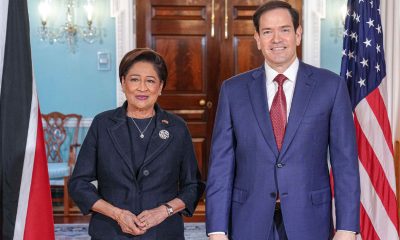
Trinidad and Tobago – Prime Minister Confirms U.S. Marines Working on Tobago Radar System
-
 #NNPA BlackPress4 weeks ago
Thanksgiving Celebrated Across the Tri-State
-

 #NNPA BlackPress4 weeks ago
Teens Reject Today’s News as Trump Intensifies His Assault on the Press
-

 #NNPA BlackPress4 weeks ago
Breaking the Silence: Black Veterans Speak Out on PTSD and the Path to Recovery
