
Government
City Council approves agreement with MLB for Youth Academy
THE BIRMINGHAM TIMES — The Birmingham City Council voted 8-1 on Tuesday to approve an agreement with Major League Baseball for a Youth Academy at George Ward Park. Council President Valerie Abbott was the lone “no” vote.

By Erica Wright
The Birmingham City Council voted 8-1 on Tuesday to approve an agreement with Major League Baseball for a Youth Academy at George Ward Park.
Council President Valerie Abbott was the lone “no” vote.
The matter has divided the council and was delayed for several weeks because of community opposition.
After a lengthy discussion during Tuesday’s council meeting, it appears the youth academy could come to George Ward Park in Bimingham’s South Side.
“The process moves forward for Major League Baseball to be at George Ward Park and the council was very supportive of it and I appreciate their support,” said Council President Pro Tempore William Parker, chair of the Parks and Recreation Committee.
MLB must now decide whether to open at George Ward Park or another location in Birmingham. City officials believe George Ward is still the best option.
“ . . . we’re moving forward to making sure we bring MLB here to George Ward Park,” said Parker. “I’m confident and hopeful that as we move forward and get all the agreements signed and executed that we can move forward with the academy at the park.”
Councilor Steven Hoyt said the academy was important for the development of young people.
“We’re talking about the future of our children, we shouldn’t be debating about that at all,” he said. “. . . baseball and this program gives them some balance as it relates to development . . .this program presents an opportunity to give them some self-esteem about themselves.”
Opposition from some community members led to weeks of debate on the council and on social media.
The MLB first proposed having the academy at George Ward but after concern from residents of the Glen Iris neighborhood decided to reassess the academy at that location to consider other sites such as Banks Middle School, Cooper Green Park and East Lake Park.
Abbott said her “no” vote was based on concerns from her constituents in District 3 which is where the academy would be located.
“I do not believe that there is one person on this council who would vote in defiance of their constituent’s wishes,” Abbott said. “I have had two constituents who have contacted me in favor of this and everyone else has been opposed to it . . . I don’t think there is one person opposed to Major League Baseball Youth Academy, the location was the only issue. We have a city that is 150 square miles and there are other places that the youth academy could go if anyone would put any effort into it. I believe that.”
Residents Still Concerned
Later in the day, a special called Parks and Recreation committee meeting was held to hear from citizens to speak on the academy.
Kristina Scott, a resident of the Glen Iris neighborhood said she moved from Homewood to Birmingham two and a half years ago to be a part of a more diverse community.
“I’m a huge baseball fan and I could not be any more excited to see the resources of the MLB Academy . . . come into the city of Birmingham and make those facilities available for the youth of Birmingham,” she said. “For me, that is something that is important is that we’re welcoming of people from all over the city and from all over the community.”
Keith Graham, a member of the New South Softball League that plays at George Ward, said, “at the end of the day we’re arguing over dirt or kids and what’s more important, dirt or children,” he said. “We’re bringing a program that’s going to help get our children where they need to be and get them the structure because some of them don’t have any structure at home and this program will help them get that.”
Steven Foster, president of the Five Points South Neighborhood Association, still had concerns with the lack of communication from city officials.
“I think a lot of the differences that we’ve had, and what it’s come down to, is the lack of transparency and I think what was intended got lost in the weeds . . . with projects like this, if notice is given at least six months . . . I think a lot of this [the opposition] could have been avoided if more transparency or more communication had been put forth.”
Jennifer Powell, who lives on the south side, expressed concern over what happens to green space at the park.
“Part of why I bought my house eight years ago in Birmingham on South side is because of the green areas, the trees … I’m not opposed to people coming in but my question is why choose a park with these beautiful trees and that’s being so well used by so many people already from all over this city instead of choosing somewhere else that doesn’t have the trees or is not already being used and that you don’t have to tear down to build up, why not just choose another area?” she said Powell.
Parker acknowledged the matter could have been better handled.
“Communication, miscommunication, there were some mistakes,” he said. “Moving forward, we’re going to take corrective action to make sure those mistakes don’t ever happen again. . . this is the first in a series of meetings I want to talk about and we’re going to have with the community, I think we need to have them ongoing because I think it’s important that we make sure we’re all on the same page and build that trust but it has to be a two-way street. There’s a lot of mistrust from both parties in this but we’ve got to work together and the communication has to be better.”
The Parks and Rec Committee will meet again on April 16 at 5:30 p.m. at City Hall to update residents and hear again from the public on the park.
This article originally appeared in The Birmingham Times.












Activism
Oakland Post: Week of March 11 -17, 2026
The printed Weekly Edition of the Oakland Post: Week of March 11 – 17, 2026
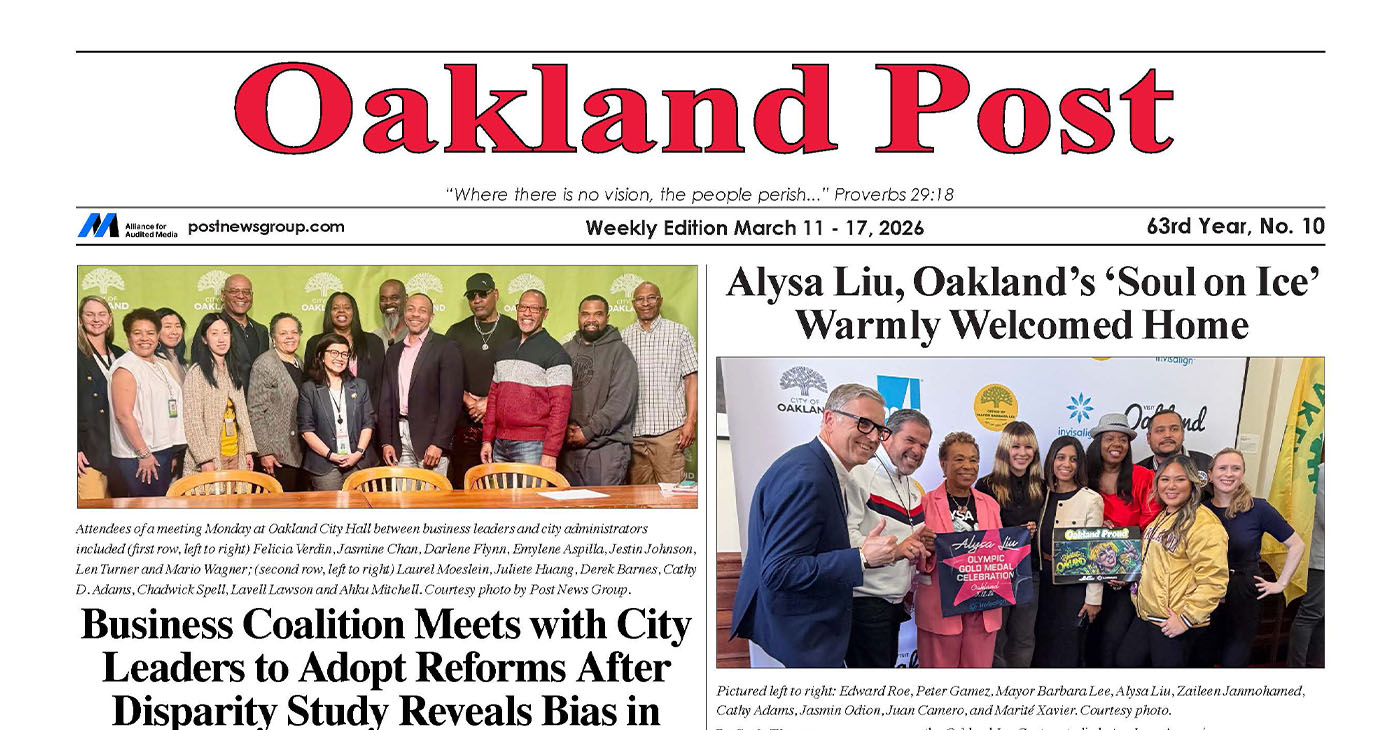
To enlarge your view of this issue, use the slider, magnifying glass icon or full page icon in the lower right corner of the browser window.
Activism
Oakland Post: Week of March 4 – 10, 2026
The printed Weekly Edition of the Oakland Post: Week of March 4 – 10, 2026

To enlarge your view of this issue, use the slider, magnifying glass icon or full page icon in the lower right corner of the browser window.
Activism
Oakland Post: Week of February 25 – March 3, 2026
The printed Weekly Edition of the Oakland Post: Week of – February 25 – March 3, 2026

To enlarge your view of this issue, use the slider, magnifying glass icon or full page icon in the lower right corner of the browser window.

WORK FROM HOME
Home-based business with potential monthly income of $10K+ per month. A proven training system and website provided to maximize business effectiveness. Perfect job to earn side and primary income. Contact Lynne for more details: Lynne4npusa@gmail.com 800-334-0540


Financial Wellness and Mental Health: Managing Money Stress in College

Oakland Post: Week of March 11 -17, 2026

Women & Wealth: Tips for Navigating Your Lifelong Financial Journey

COMMENTARY: Women of Color Shape Our Past and Future

Woman’s Search for Family’s Roots Leads to Ancestor John T. Ward – A Successful Entrepreneur and Conductor on the Underground Railroad

Advocates Raise Alarm Over ICE Operation, MOU and Detention Risks in Baltimore County

Pete Buttigieg to Join Mayor Randall Woodfin for Community Town Hall in Birmingham

WATCH: Week One – NNPA’s “Leadership Matters” Video Series

Oakland Post: Week of March 4 – 10, 2026

OP-ED: NNPA Launches 2026 “Leadership Matters” Video Series

PRESS ROOM: PMG and Cranbrook Horizons-Upward Bound Launch Journey Fellowship Cohort 2

Los Angeles Summit Brings Together Leaders to Tackle Poverty and Affordability

Civil Rights TV Launches 24/7 Network Focused on Black History, Education and Equity

REVIEW: The Ultimate Hot Girl Summer Getaway: Sunseeker Resort Florida

COMMENTARY: How You Stop a Prescription Medicine is as Important as How You Start

Oakland Post: Week of January 28, 2025 – February 3, 2026

Life Expectancy in Marin City, a Black Community, Is 15-17 Years Less than the Rest of Marin County

Community Celebrates Turner Group Construction Company as Collins Drive Becomes Turner Group Drive

California Launches Study on Mileage Tax to Potentially Replace Gas Tax as Republicans Push Back

Book Review: Books on Black History and Black Life for Kids

Discrimination in City Contracts

COMMENTARY: The Biases We Don’t See — Preventing AI-Driven Inequality in Health Care

Post Newspaper Invites NNPA to Join Nationwide Probate Reform Initiative

Black History Events in the East Bay

Medi-Cal Cares for You and Your Baby Every Step of the Way

Art of the African Diaspora Celebrates Legacy and Community at Richmond Art Center

COMMENTARY: The National Protest Must Be Accompanied with Our Votes

New Bill, the RIDER Safety Act, Would Support Transit Ambassadors and Safety on Public Transit

Oakland Post: Week of February 4 – 10, 2026

Oakland Post: Week of February 11 – 17, 2026

Hyundai Ioniq 5 Parking, Safety, and 360 View #shorts

2025 Ioniq 5 New Wiper & Powerful Performance! #shorts

Electric SUV Range: Is 259 Miles Enough? #shorts

EV Charging: How Fast Can You Charge an Electric Vehicle? #shorts

Biometric Cooling… Messaging Seats…Come on! 2025 Infiniti QX80 Autograph 4WD

Charged Up: Witness the Magic of a Fully Electric Car! #shorts

Range Rover Sport PHEV Included…: See What’s Inside This Luxury SUV! #shorts

Invisible Hood View: Perfect Parking with X-Ray Vision! #shorts

AI Is Reshaping Black Healthcare: Promise, Peril, and the Push for Improved Results in California

ESSAY: Technology and Medicine, a Primary Care Point of View

Sanctuary Cities

The RESISTANCE – FREEDOM NOW

STATE OF THE PEOPLE: Freddie

ECONOMIC BOYCOTT DAY!!!!!

I told You So
-
 Activism4 weeks ago
Oakland Post: Week of February 11 – 17, 2026
-

 #NNPA BlackPress3 weeks ago
Reflecting on Black History Milestones in Birmingham AL
-

 Bay Area4 weeks ago
CITY OF SAN LEANDRO STATE OF CALIFORNIA PUBLIC WORKS DEPARTMENT ENGINEERING DIVISION NOTICE TO BIDDERS FOR ANNUAL STREET OVERLAY/REHABILITATION 2019-21 – PHASE III
-
 #NNPA BlackPress3 weeks ago
PRESS ROOM: NBA Hall of Fame Nominee Terry Cummings Joins 100 Black Men of DeKalb County to Launch Victory & Values Initiative
-

 #NNPA BlackPress3 weeks ago
U.S. manufacturing rebounds – how foundry services are adapting to rising demand
-
 Activism4 weeks ago
Oakland Post: Week of February 18 – 24, 2026
-

 #NNPA BlackPress3 weeks ago
OP-ED: One Hundred Years of Black Workers Telling the Truth
-

 #NNPA BlackPress3 weeks ago
Advancements in solar technology that are changing the way we power the world
