
#NNPA BlackPress
Clippers Owner Celebrates Future While Forum Owner Cries “Foul!”
BLACK VOICE NEWS — The Clippers recently unveiled additional details and renderings of its privately financed sports and entertainment center anchored by the team’s new basketball arena in the City of Inglewood.

S.E. Williams | Contributors

The Clippers recently unveiled additional details and renderings of its privately financed sports and entertainment center anchored by the team’s new basketball arena in the City of Inglewood.
“My goal is simple,” explained Clippers Chairman Steve Ballmer. “I want the Clippers to have the best home in all of sports. “What that means to me is an unparalleled environment for players, for fans, for sponsors and for the community of Inglewood”
He expounded, “Our goal is to build a facility that re-sets fans’ expectations while having a transformative impact on the city we will call home.”
The Inglewood Basketball and Entertainment Center is expected to revitalize mostly vacant land under the flight path of the Los Angeles International Airport and transform it into what will hopefully be a vibrant campus. In addition to the arena, the campus will include team’s business offices, basketball offices and training facility, as well as both community and retail spaces.
The arena as proposed will have a three-dimensional oval design with a unique exterior of diamond-shaped metal panels inspired by the concept of a basketball swishing through a net. In addition to the aesthetics, the panels are designed to provide solar benefit for maximum energy efficiency as part of the facility’s Leadership in Energy and Environmental Desire (LEED) design. LEED is an internationally recognized third party building certification system focused on improving the environment through sustainability.

The Clippers campus is designed to achieve net zero greenhouse gas emissions through a combination of carbon offset credits and sustainable design features.

Clippers Chairman Steve Ballmer (Photo by blackvoicenews.com.)
When Clippers’ officials unveiled the renderings and other details of the project, they highlighted what was identified as the facility’s “most striking” feature intended to highlight the temperate climate of Southern California—the integration of indoor/outdoor sky gardens for food and beverages. The sky gardens will be accessible from every concourse level.
The Clippers’ Complex also envisions a multi-purpose plaza that will include a concert stage, community basketball courts and space for the community to gather and watch everything from Clippers Playoff Games and movie premiers on a supersized LED screen.
The same day the Clipper organization unveiled renderings and plans for the arena and its new campus it also welcomed new highly acclaimed players Paul George and Kawhi Leonard to the team. And in that regard, no one during their introduction appeared more genuinely excited than Ballmer. “I’m just delighted and so proud right now…,” he exclaimed. I’m pumped to say hello as Clippers to Paul and Kawhi.”
While Ballmer, the Clippers organization, their fans and the City of Inglewood celebrate what looks to be a very bright and mutually-beneficial future, New York billionaire and Jim Dolan CEO of the Madison Square Garden Company (MSG) , who own’s the NBA Knicks, the Forum in Inglewood and several other high profile holdings, is continuing to be pilloried in the media for his ongoing attempts to block the development of the new Clippers’ arena in Inglewood and in the process stymie the economic potential of the city itself because he fears the competition it presents to his multi-million dollar investment in the Forum.
Reports and court documents have detailed the obstruction efforts of Dolan and his partner(s) at MSG. The allegations range from funding an opposition candidate against Inglewood’s longtime mayor, James T. Butts Jr.; funding community groups to oppose the project; seeking to attract the Lakers back to the Forum as their home court and the list goes on.
One of what is purportedly one of his most spurious and outrageous accusations is his claim that—as alleged in Vanity Fair—’Ballmer and Butts double-crossed him after MSG spent a lot of money in Inglewood when few others were willing to do so.’
Although Dolan has continued to claim the contract with the city of Inglewood was exclusive and prevented similar venues from being established in the city it appears there was nothing in the MSG contract with the city that spoke to an exclusive arrangement.
Dolan continues to claim he was tricked, bamboozled and taken advantage of regarding the Forum contract even though evidence clearly states otherwise. “My position is that we invested $140 million and were the first ones to do so in Inglewood and that we had an agreement with the city, both in paper and in spirit, that the city would help us with that investment to make it successful,”
It appears rather than taking ownership for his failure and the failure of MSG to exercise judicious business acumen when negotiating the Forum contract with the City of Inglewood, Dolan has resorted to bullying tactics. In addition to some of his efforts detailed above he has sued not only the city of Inglewood but also Mayor Butts, personally—a personal suit prevents the city from paying for Butts’ defense.
While Dolan continues to fight against the mayor, Ballmer, the development of the Clippers arena, and by proxy—the city of Inglewood itself—plans for the new arena and its campus continue.
“Inglewood is a diverse, dynamic community blessed with a skilled workforce, emerging infrastructure and a bold economic blueprint for the future,” said Gillian Zucker, President of Business Operations for the Clippers organization.
Speaking directly to the Clippers proposed arena he continued. “In addition to the thousands of jobs this facility will create for the local community, we are equally committed to working with our new neighbors in the continuing renaissance developing in the City of Inglewood.”
The proposed Clippers arena complex will be located on West Century Boulevard between South Prairie and South Yukon Avenues.
This article originally appeared in Black Voice News.









#NNPA BlackPress
PRESS ROOM: NBA Hall of Fame Nominee Terry Cummings Joins 100 Black Men of DeKalb County to Launch Victory & Values Initiative
NNPA NEWSWIRE — NBA Hall of Fame nominee and Basketball Legend Terry Cummings was administered the official member’s oath and ceremonially pinned during a special induction ceremony held on Friday, February 20th.

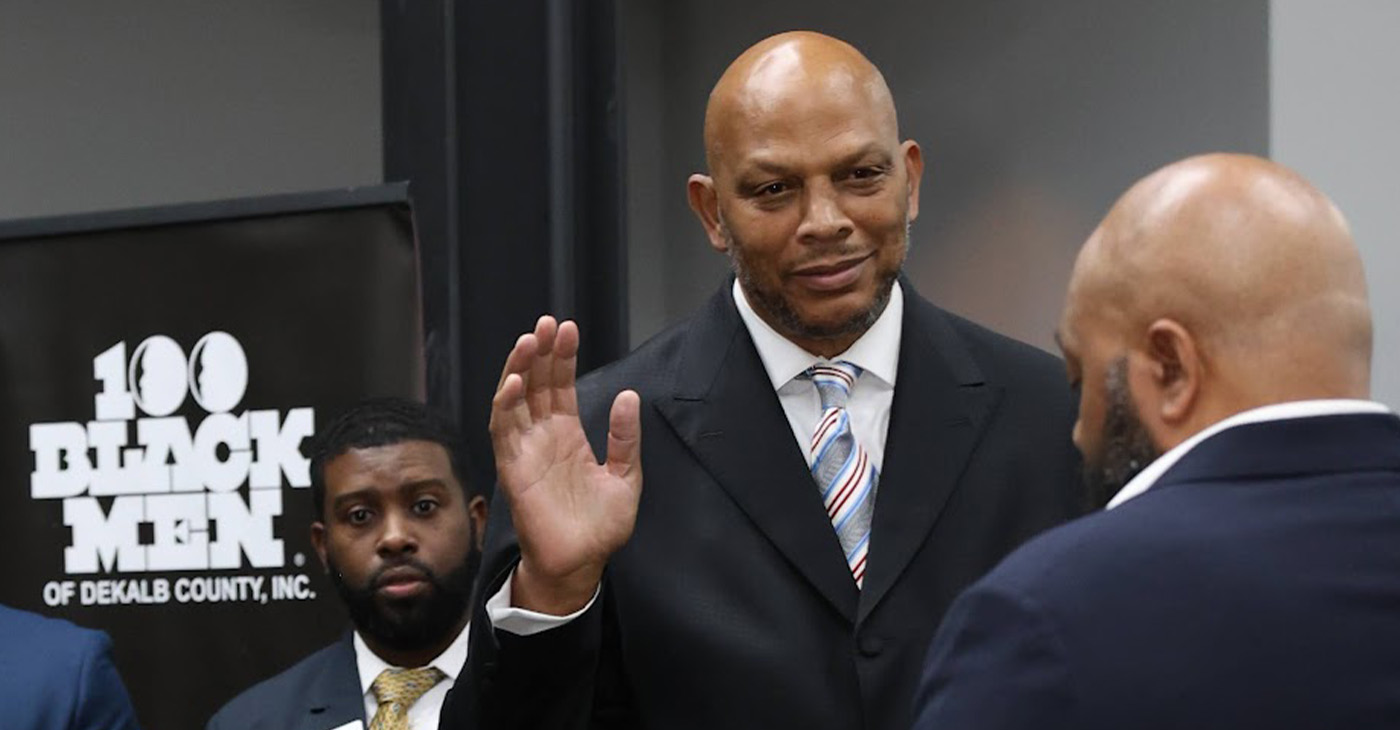
Cummings becomes an honorary member, joining other role model sports stars
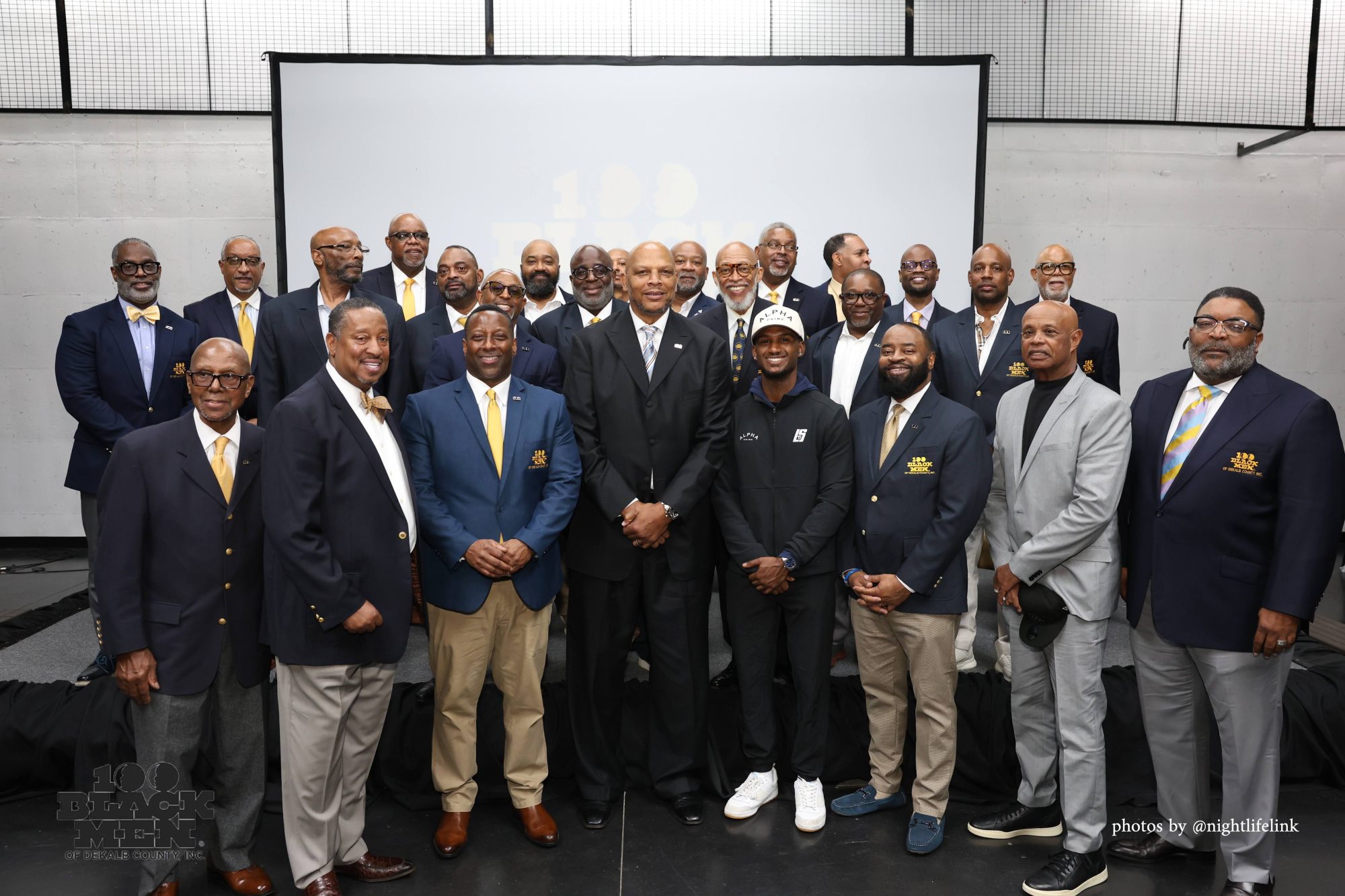
NBA Hall of Fame nominee and Basketball Legend Terry Cummings has officially become an honorary member of the 100 Black Men of DeKalb County, marking a powerful new chapter for the 100 Black Men and youth development across the region.
Cummings was administered the official member’s oath and ceremonially pinned during a special induction ceremony held on Friday, February 20th. The moment signified more than membership — it marked the launch of the organization’s transformative new platform, the Victory & Values Initiative.
The Victory & Values Initiative is a groundbreaking youth development program designed to empower elementary and middle school students through a dynamic blend of sports, mentorship, and STEM exposure. The initiative focuses on building health, discipline, character, leadership, and access to opportunity — creating pathways for long-term academic and personal success.
“This is about more than sports,” said Cummings during the ceremony. “It’s about using the platform of athletics to teach life lessons, create access, and build the next generation of leaders.”
The induction ceremony also featured notable guests including NASCAR’s newest Star Driver, Lavar Scott and NASCAR Director of Athletic Performance, Phil Horton, who joined Cummings for a powerful Victory & Values Town Hall discussion. The Town Hall was moderated by renowned Sports Emcee John Hollins and focused on leadership, resilience, discipline, and the importance of mentorship in shaping young lives.
A “Day at NASCAR” for 75+ Youth
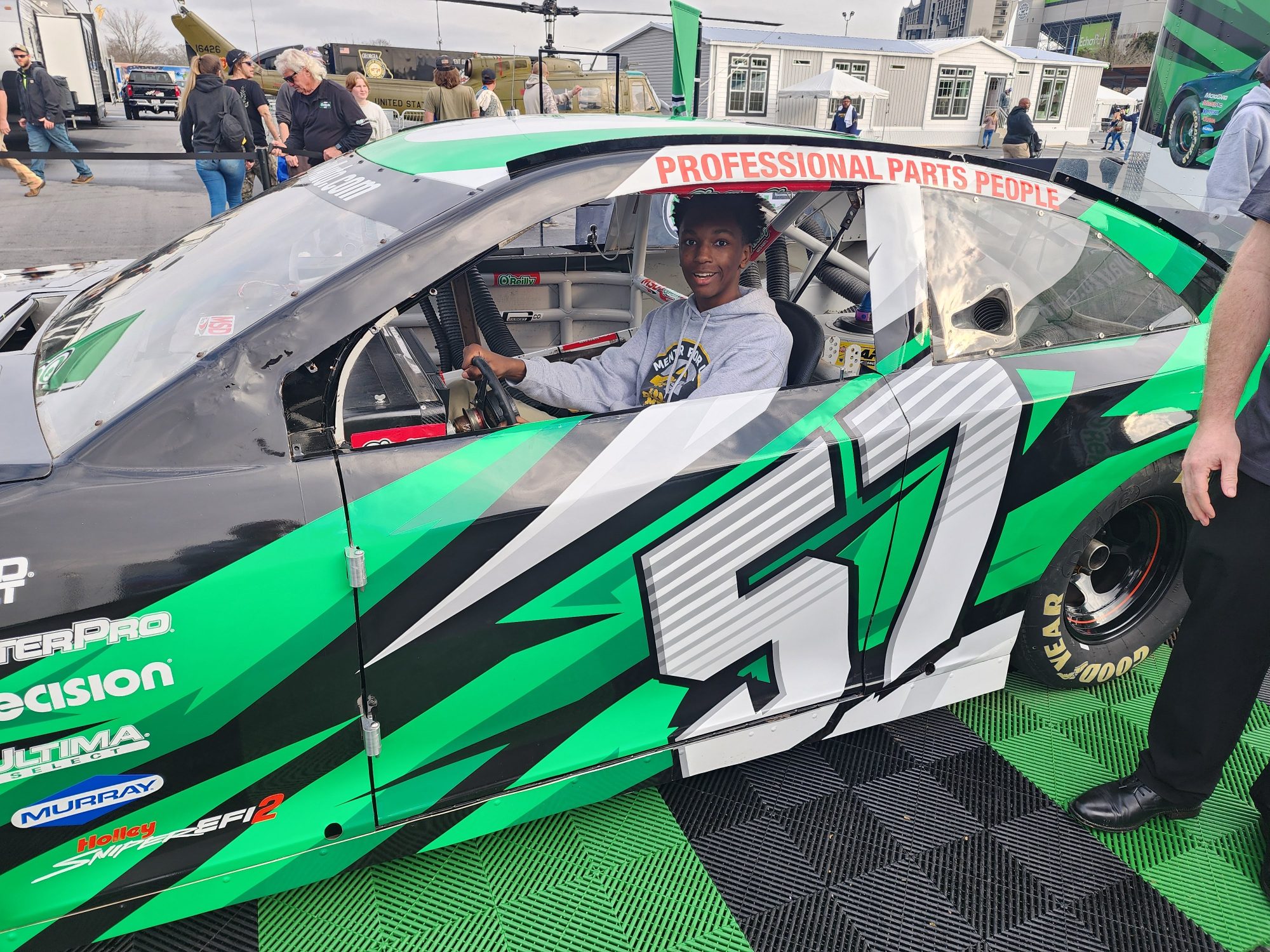
Cummings wasted no time getting to work. On his first full day as an honorary member, he joined his new brothers of the 100 Black Men of DeKalb County to host a “Day at NASCAR,” escorting more than 75 youth to a once-in-a-lifetime experience at EchoPark Motor Speedway (formerly Atlanta Motor Speedway).
The youth participants received behind-the-scenes access including: an exclusive tour of Pit Row, access to the Garage Area and exploration of the interactive Fan Zone.
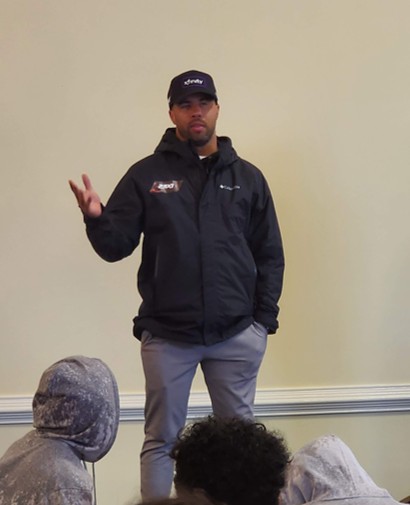
The experience culminated with a surprise meet-and-greet and Q&A session with NASCAR Superstar Bubba Wallace, who shared insights on perseverance, preparation, and breaking barriers in professional sports.
The day served as a living example of the ‘Victory & Values’ Initiative in action — exposing youth to new industries, expanding their vision for the future, and connecting them directly with high- level mentors and role models.
Building Leaders Through Access and Mentorship
The 100 Black Men of DeKalb County – a chapter of the largest, national mentoring organization in the county – continues to expand its footprint with programs focused on academic excellence, economic empowerment, leadership development, and health & wellness.
The launch of ‘Victory & Values’ represents a strategic expansion of the organization’s impact
- intentionally integrating athletics and STEM to engage youth at an early age while reinforcing core principles such as integrity, accountability, teamwork, and perseverance.
“Our mission has always been to mentor the next generation,” said Vaughn Irons, President-Elect of the 100 Black Men of DeKalb County. “With Terry Cummings joining the brotherhood, along with partners in NASCAR and professional sports, we are creating unprecedented access and exposure for our youth. Victory & Values is about turning inspiration into structured opportunity.”
By connecting elementary and middle school students to professional athletes, executives, STEM professionals, and community leaders, the initiative aims to:
- Increase youth exposure to careers in sports business, engineering, and performance science
- Strengthen mentorship pipelines
- Promote physical wellness and mental resilience
- Build character-driven leadership at an early age
Open Invitation to Youth and Families
All youth are invited to participate in the Victory & Values Initiative, along with the other countless, impactful programs offered by the 100 Black Men of DeKalb County.
Parents and guardians seeking mentorship, leadership development, academic enrichment, and transformative exposure opportunities for their children are encouraged to connect with the organization.
As NBA Legend Terry Cummings’ induction demonstrates, Victory & Values is more than a program — it is a movement designed to build champions in life, not just in sports.
For more information about the Victory & Values Initiative or to enroll a student, contact: 100 Black Men of DeKalb County at Phone at 404.241.1338, info@100bmod.org or Tee Foxx at 404.791.6525,

#NNPA BlackPress
Reflecting on Black History Milestones in Birmingham AL
THE BIRMINGHAM TIMES — As we bring Black History Month to a close here’s a look at some historic Birmingham milestones since the city’s founding.
Compiled by The Birmingham Times
As we bring Black History Month to a close here’s a look at some historic Birmingham milestones since the city’s founding.
1871—City of Birmingham founded; now the state’s most populous city, Birmingham was established at the crossing of two rail lines near one of the world’s richest mineral deposits.
1885—Birmingham Barons baseball team originally established as Birmingham Coal Barons.
1890—The Penny Savings Bank, founded by the Rev. William Reuben Pettiford in Birmingham, opens, becoming the first Black-owned and Black-operated financial institution in Alabama.
1902—Woodward Building, construction completed on the first of four steel-frame skyscrapers that would make up Birmingham’s “Heaviest Corner on Earth.”
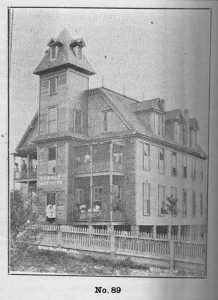
The Tuggle Institute, a boarding school for African American children in Birmingham Alabama, pictured in 1906. (Public Domain)
1903 —Social worker Carrie A. Tuggle opens the Tuggle Institute and School, the first orphan home in Alabama for African American boys. The Institute operated until Tuggle’s death on Nov. 5, 1924, and was later renamed Tuggle Elementary School in 1936.
1904 —Vulcan Statue, the world’s largest cast-iron statue, created as Birmingham’s entry in the St. Louis World’s Fair, was sculpted by Giuseppe Moretti.
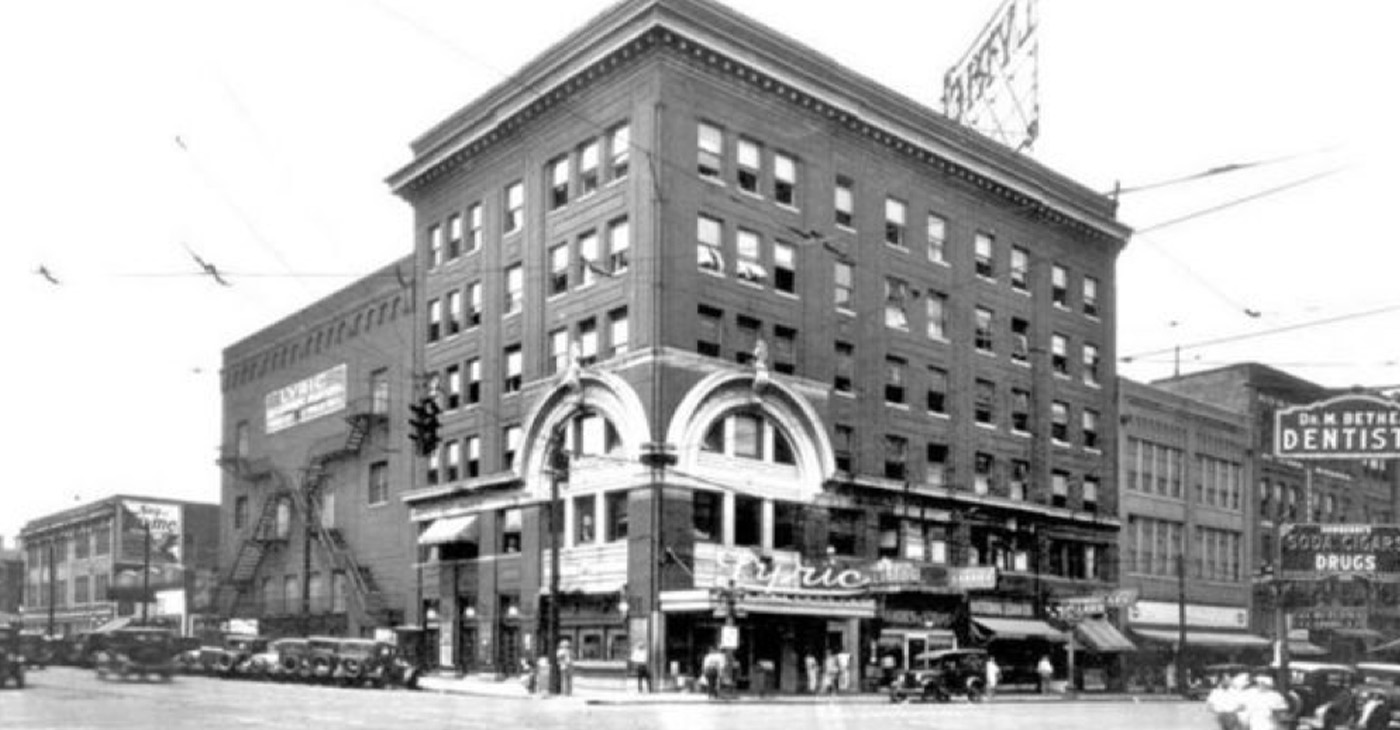
1914—Birmingham’s Lyric Theatre was established as one of the first in the South where Black and white audiences could see the same show for the same price, though Black sat in an isolated section with inferior accommodations
1918—Birmingham College and Southern University merged to establish Birmingham-Southern College.
1925—The Pittsburgh of the South, Birmingham, is the largest cast iron and steel producer in the Southern U.S.
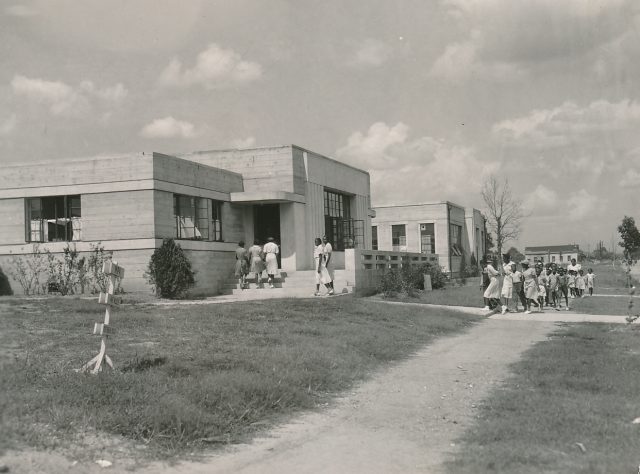
The Slossfield Community Center campus included a health clinic, a maternity ward, a recreational center, and an education building. The complex was built between 1936 and 1939 by ACIPCO (American Cast Iron Pipe Company). (National Archives Record Group 69-N)
1939—Slossfield Health Clinic, located in a neighborhood surrounding ACIPCO’s plant, considered one of Birmingham’s most blighted, opens.
1941—The Sisters of Charity of Nazareth (SCN) assume responsibility for a small health clinic in the predominantly African American community of Ensley near Birmingham, Alabama. The clinic later becomes Holy Family Hospital.
1941—World War II. The demand for steel during the war brought Birmingham out of the Great Depression.
1948—Slossfield’s medical center closes in 1948 after World War II. The rest of the Slossfield Community Center campus closed in 1954.
1951—Birmingham Museum of Art, currently home to one of the finest collections in the Southeast, with extensive holdings from around the globe dating from ancient to modern times, opens.
1954—A.G. Gaston Motel founded by entrepreneur and activist A.G. Gaston to provide higher-class service to Black visitors.
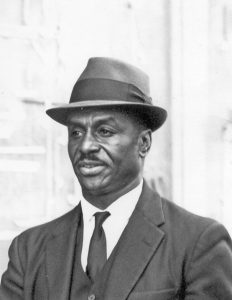
The Rev. Fred L. Shuttlesworth and other local Black ministers established the Alabama Christian Movement for Human Rights (ACMHR) during a mass meeting at Birmingham’s Sardis Baptist Church. (File)
1956—The home of Birmingham minister and Civil Rights leader Fred Shuttlesworth is bombed. Although the structure is severely damaged, Shuttlesworth emerges uninjured.
- During a mass meeting at Birmingham’s Sardis Baptist Church, Shuttlesworth and other local Black ministers establish the Alabama Christian Movement for Human Rights (ACMHR). Founded in response to the State of Alabama’s eight-year ban on the NAACP, ACMHR was central to the civil rights movement in Birmingham.
- The Freedom Riders arrive at the Greyhound bus terminal in Montgomery, where they are attacked by an angry mob. The Freedom Ride, an integrated bus trip from Washington, D.C., through the Deep South, was formed to test the 1960 Supreme Court decision prohibiting segregation in bus and train terminal facilities.
1963—After previously establishing the ACMHR and the Southern Christian Leadership Conference (SCLC), Shuttlesworth invites Rev. Martin Luther King, Jr. to Birmingham to lead what becomes the Birmingham Campaign for Desegregation. King writes Letter From Birmingham Jail.
- Sixteenth Street Baptist Church was bombed, killing four young girls in an attack against the Civil Rights Movement and humanity.
1966—Oscar Adams Jr. becomes the first African American to join the Birmingham Bar Association.
1968—Arthur Shores was appointed to the Birmingham City Council, making him the first African American to serve as a councilman.
1970—The Sisters of Charity of Nazareth (SCNs) transfer ownership of Holy Family Hospital to a local non-profit organization, which was renamed Community Hospital. By 1986, the facility was sold and operated as Medical Park West until its closing in 1988. The facility would briefly reopen in 1989 as Community Hospital with 22 beds, only to close it down for good soon thereafter.
1974—J. Richmond Pearson and U.W. Clemon were the first African Americans elected to the Alabama State Senate since Reconstruction.
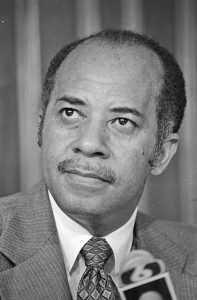
Richard Arrington. (File)
1979—Richard Arrington Jr. was elected as the first African American mayor of Birmingham. Arrington served in that post for nearly 20 years, until his resignation in July 1999.
1980—Oscar Adams Jr. was appointed to the Alabama Supreme Court, making him the first African American justice to hold that office.
1984—J. Mason Davis becomes the first African American president of the Birmingham Bar Association. He is also the first minority adjunct professor at The University of Alabama School of Law, serving from 1972 to 1997.
1986—Reuben Davis and Chris McNair were elected to the County Commission, the first district by district election, and are the first African Americans to serve on the commission.
1991—Carole Smitherman appointed to become the first African American woman to serve as a circuit court judge in Alabama
1992—Birmingham Civil Rights Institute opens its doors at Kelly Ingram Park in the Civil Rights District.
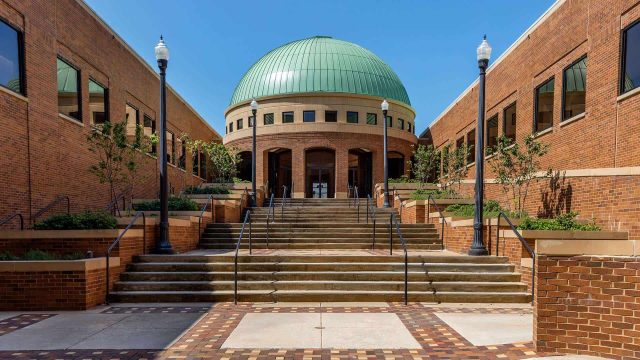
The Birmingham Civil Rights Institute. (File)
1993—Alabama Jazz Hall of Fame opens.
2002—Shelia Smoot elected first Black female Jefferson County Commissioner.
2003—Helen Shores Lee becomes the first African American woman to serve as a judge on the Jefferson County Circuit Court.
2005—Condoleezza Rice, a Birmingham native, is named U.S. Secretary of State.
2008-11—Jefferson County and creditors attempt to reach a settlement of the $3.14 billion sewer debt, but any deal would need to erase $1 billion or more of that debt.
2009—Carole Smitherman becomes Birmingham’s first African American female mayor.
2010—Railroad Park, a 19-acre park, opened, becoming a catalyst for revitalization in downtown Birmingham
2011—A massive storm in April, causing numerous powerful tornadoes, rips through the southeastern United States, killing 250 people in Alabama, including 20 people in Jefferson County communities of Pleasant Grove (10), Concord (6), Cahaba Heights (1), Pratt City (1), Forestdale (1), and McDonald Chapel (1).
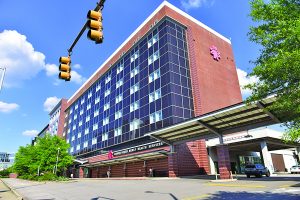
In 2012 the Jefferson County Commission voted 3-2 to close the inpatient care unit and emergency room at Cooper Green Mercy Hospital. (File)
2012—Cooper Green Mercy Hospital downsized. The Jefferson County Commission votes 3-2 to close the inpatient care unit and emergency room at Cooper Green following weeks of debate and protests from community leaders who have begged the county to continue operating the facility for the sick and poor.
2016—Lynneice Washington elected District Attorney for the Bessemer Cutoff, the first African American DA in the state of Alabama.
2016—Theo Lawson was named the first African American Jefferson County attorney.
2016—Representative Terri Sewell introduces legislation leading to Birmingham Civil Rights National Monument designation by presidential proclamation one year later.
2017—John Henry joins the Jefferson County Commission Finance Department and becomes the county’s first Black chief financial officer.
2017—Danny Carr and Mark Pettway were elected the county’s first Black district attorney and first Black sheriff, respectively.
2019—Walter Gonsoulin was named the first permanent African American superintendent of the Jefferson County School System
2020—Felicia Rucker-Sumerlin was named the first female Deputy Chief in the 200-year history of the Jefferson County Sheriff’s Office.
2020—Elisabeth French becomes the first woman selected to serve as Presiding Judge in Jefferson County’s 200-year history. She will oversee the 10th Judicial Circuit, the largest in Alabama’s Judicial System.
2021—Ashley M. Jones, founder of the Magic City Poetry Festival, is named Poet Laureate for Alabama, making her the first Black Poet Laureate for the state and the youngest person to hold the position.
2022—Dr. Adolphus Jackson of Birmingham is elected President of the Alabama Dental Association, the first African American to serve as president of the state Association.
2022—Birmingham Mayor Randall Woodfin issues a proclamation declaring March 18 Reverend Fred Shuttlesworth Day, the 100th anniversary of the leader’s birth.
2023—Writer and educator Salaam Green becomes the city’s first poet laureate.
2024—Democrats Yashiba “Red” Blanchard and Jameria Moore on Tuesday became the first Black female judges elected to Probate Court in Jefferson County, Alabama.
2024—Myrna Carter Jackson, a Birmingham civic leader and Foot Soldier who participated in marches, sit-ins, demonstrations, and other Civil Rights activities, dies. She was 82.
2024—Hezekiah Jackson IV, who served as president of the Metro Birmingham NAACP, Birmingham Citizens Advisory Board, and the Inglenook Neighborhood Association, dies. He was 65.
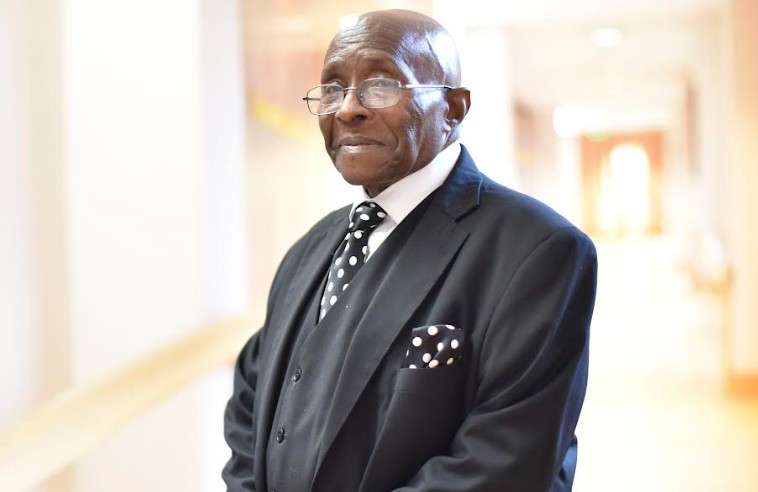
For decades, Bishop Calvin Woods Sr., was one of Birmingham’s leading voices for equality. (File)
2025—Judge Carole Smitherman retires after 50 years in law and politics in Birmingham, including being the first Black woman hired as a deputy district attorney in Jefferson County and becoming the city’s first Black woman municipal and circuit court judge.
2025—Bishop Calvin Woods Sr., distinguished Birmingham Civil Rights leader and longtime pastor of Shiloh Baptist Church in Norwood, dies. He was 91.
2025—Former U.S. Attorney General Eric Holder Jr. accepts the prestigious 202d L. Shuttlesworth Human Rights Award at the downtown Sheraton.
2026—Claudette Colvin, who refused to move to a bus seat at the start of the Civil Rights Movement, dies at 86. Homegoing celebration was held at Greater Shiloh Missionary Baptist Church in SW Birmingham.
Source: The Birmingham Times, 1963: How The Birmingham Civil Rights Movement Changed America and the World; City of Birmingham Public Library; Associated Press; blackpast.org; Politics and Welfare in Birmingham, 1900–1975.
#NNPA BlackPress
OP-ED: One Hundred Years of Black Workers Telling the Truth
NNPA NEWSWIRE — … history provides a framework for understanding what happened in Minnesota this January, when Black journalists Don Lemon and Georgia Fort were arrested after covering a protest inside a church opposing U.S. Immigration and Customs Enforcement activity in the area. The message was unmistakable: documenting dissent can itself be treated as a crime.

By Fred Redmond, Secretary Treasurer AFL-CIO
In 1917, A. Philip Randolph and Chandler Owen launched The Messenger, a pro-labor, anti-war magazine that connected racism to exploitation and demanded justice for Black workers. Two years later, the federal government responded with tactics of targeted censorship—surveillance, harassment and threats of prosecution—and branded a small Black labor magazine “the most dangerous” publication in the country simply for encouraging Black workers to organize.
More than a century later, two highly respected Black journalists—Don Lemon and Georgia Fort—are handcuffed and indicted for filming a protest inside a church. The tools have changed, but the oppressive government playbook has not.
That continuity matters as we mark 100 years since the launch of Negro History Week, founded in February 1926 by Carter G. Woodson. Negro History Week rejected the lie that Black people had no history worth teaching and no role worth remembering. It challenged an education system that erased Black achievement and a public narrative that treated Black people as a problem, not a people. What later became Black History Month grew from that project of memory and resistance. From its earliest days, Black history celebrations were about more than remembrance. They also were acts of resistance, challenging the ongoing use of law, fear and surveillance to silence Black workers and suppress the truth about power in this country.

That pairing matters: The birth of Negro History Week alongside the rise of an apparatus built to monitor and suppress Black labor dissent. The same government that denied Black people their history also treated them as a threat when they spoke collectively as workers. When Black workers asserted their right to organize and be heard, they faced not just employer retaliation, but state repression.
Randolph went on to organize the Brotherhood of Sleeping Car Porters, the first major Black-led union, and was under constant federal surveillance. As Black workers organized in factories, on farms and in service jobs across the country, local police and FBI “Red Squads” and federal counterintelligence programs infiltrated meetings, built massive files, and worked to neutralize leaders who linked racial justice to workplace democracy.
That history provides a framework for understanding what happened in Minnesota this January, when Black journalists Don Lemon and Georgia Fort were arrested after covering a protest inside a church opposing U.S. Immigration and Customs Enforcement activity in the area. The message was unmistakable: documenting dissent can itself be treated as a crime.
At the same time, major media outlets are shrinking their newsrooms and walking away from race coverage. The Washington Post recently laid off some 300 journalists, including race and ethnicity reporters. In late 2025, NBC News shuttered entire teams dedicated to covering Black, Latino and Asian American, Native Hawaiian and Pacific Islander stories. In Pittsburgh, the 240‑year‑old Post‑Gazette is being shut down by its owners, who responded to a court order requiring them to honor The NewsGuild‑CWA (TNG-CWA) journalists’ contract after years of striking. When powerful newsrooms dismantle the very beats created after 2020 to cover racism and inequality, they send a different version of the same message: some truths about power are no longer welcome.
The National Writers Union said the arrests “set a disastrous precedent for press freedom in the United States,” and the National Association of Black Journalists called on the government to “halt all retaliatory posture toward journalists.” SAG‑AFTRA has condemned the arrests of Fort and Lemon, a member, and unions like TNG‑CWA are warning that union‑busting, mass layoffs, and criminal charges against journalists are part of the same effort to make it dangerous for workers to tell the truth.
This Black History Month, the labor movement must be clear: the right to organize and the right to dissent stand or fall together. There is no freedom of association if workers cannot gather, speak and be heard. When Black journalists are criminalized for documenting protest, the real target is the possibility of multiracial worker power. If true worker power and economic dignity are to have a future, it will be because the labor movement continues to refuse that silence.
The AFL-CIO recognizes that the same tactics used to quash Black voices are used to suppress all our voices—on shop floors, in independent media, in the streets, on picket lines and in places of worship. We stand with our union brothers, sisters and siblings in insisting that the First Amendment is a right and a core worker protection, not a luxury.
A century ago, Woodson insisted that Black people had a history worth telling and Randolph told Black workers they deserved more than exploitation. The government tried to silence them. This Black History Month, the question remains the same: Will Black truth tellers be honored or handcuffed?
The labor movement’s answer must be clear. We stand with Black workers and Black journalists in their right to dissent, to document, and to demand a better future.
Fred Redmond, the highest-ranking African American labor official in history, is the secretary-treasurer of the AFL-CIO, the nation’s largest labor federation, representing 64 unions and nearly 15 million workers.

WORK FROM HOME
Home-based business with potential monthly income of $10K+ per month. A proven training system and website provided to maximize business effectiveness. Perfect job to earn side and primary income. Contact Lynne for more details: Lynne4npusa@gmail.com 800-334-0540


PRESS ROOM: NBA Hall of Fame Nominee Terry Cummings Joins 100 Black Men of DeKalb County to Launch Victory & Values Initiative

Reflecting on Black History Milestones in Birmingham AL

OP-ED: One Hundred Years of Black Workers Telling the Truth

PRESS ROOM: Civil Rights TV Launches in Selma as the World’s First 24/7 Civil Rights Television Network

Advancements in solar technology that are changing the way we power the world

U.S. manufacturing rebounds – how foundry services are adapting to rising demand

Why has blood testing become so popular in today’s world?

Ghana Mourns a Son of the African World

OP-ED: Trump’s Policies Hurt Black America—and Everyone Else

OP-ED: Meta Deleted Me. I Still Don’t Know Why. And neither will you.

More than a Mission: Paying It Forward for the Future of Education

Avoid Eviction This Season: Landlord Checklist for Stable Tenancies

How chronic back problems affect Black communities differently

How cancer care is evolving with modern medicine

Diabetes disparity: Understanding Type 2 risks for Black Americans

Life Expectancy in Marin City, a Black Community, Is 15-17 Years Less than the Rest of Marin County

Oakland Post: Week of January 28, 2025 – February 3, 2026

Community Celebrates Turner Group Construction Company as Collins Drive Becomes Turner Group Drive

California Launches Study on Mileage Tax to Potentially Replace Gas Tax as Republicans Push Back

Discrimination in City Contracts

Oakland Post: Week of January 21 – 27, 2026

Book Review: Books on Black History and Black Life for Kids

Medi-Cal Cares for You and Your Baby Every Step of the Way

COMMENTARY: The Biases We Don’t See — Preventing AI-Driven Inequality in Health Care

Post Newspaper Invites NNPA to Join Nationwide Probate Reform Initiative

After Don Lemon’s Arrest, Black Officials Raise Concerns About Independent Black Media

OP-ED: The Dream Cannot be Realized Without Financial Freedom

COMMENTARY: The National Protest Must Be Accompanied with Our Votes

Black History Events in the East Bay

Art of the African Diaspora Celebrates Legacy and Community at Richmond Art Center

Hyundai Ioniq 5 Parking, Safety, and 360 View #shorts

2025 Ioniq 5 New Wiper & Powerful Performance! #shorts

Electric SUV Range: Is 259 Miles Enough? #shorts

EV Charging: How Fast Can You Charge an Electric Vehicle? #shorts

Biometric Cooling… Messaging Seats…Come on! 2025 Infiniti QX80 Autograph 4WD

Charged Up: Witness the Magic of a Fully Electric Car! #shorts

Range Rover Sport PHEV Included…: See What’s Inside This Luxury SUV! #shorts

Invisible Hood View: Perfect Parking with X-Ray Vision! #shorts

AI Is Reshaping Black Healthcare: Promise, Peril, and the Push for Improved Results in California

ESSAY: Technology and Medicine, a Primary Care Point of View

Sanctuary Cities

The RESISTANCE – FREEDOM NOW

STATE OF THE PEOPLE: Freddie

ECONOMIC BOYCOTT DAY!!!!!

I told You So

-
 Activism4 weeks ago
Life Expectancy in Marin City, a Black Community, Is 15-17 Years Less than the Rest of Marin County
-
 Activism4 weeks ago
Oakland Post: Week of January 28, 2025 – February 3, 2026
-
 Activism3 weeks ago
Community Celebrates Turner Group Construction Company as Collins Drive Becomes Turner Group Drive
-
 Business3 weeks ago
California Launches Study on Mileage Tax to Potentially Replace Gas Tax as Republicans Push Back
-
 Activism3 weeks ago
Discrimination in City Contracts
-
 Arts and Culture3 weeks ago
Book Review: Books on Black History and Black Life for Kids
-
 Activism4 weeks ago
Medi-Cal Cares for You and Your Baby Every Step of the Way
-
 Activism3 weeks ago
COMMENTARY: The Biases We Don’t See — Preventing AI-Driven Inequality in Health Care
