
Environment
Conference: Struggle for Equity Intensifies in Post-Katrina New Orleans

By Nikolas Zelinski
It has been 10 years since Katrina hit New Orleans, leaving a lasting impact and growing disparities in the hurricane’s wake.
To shine a spotlight on conditions for Black people in the city and the ongoing struggles of Black people, national and New Orleans-based civil rights groups held an online town hall meeting recently to discuss Black Resistance after Hurricane Katrina, resistance to the privatization of schools and the expansion of the cradle-to-prison pipeline, the exclusion of Black workers from quality jobs, and resistance to the expansion of white power in post Katrina New Orleans.
<p><p>
The online town hall, held on Sept 24, provides an opportunity to connect with front-line organizers to better understand the current struggles in the efforts to dismantle the plantation economy, end white supremacy, and build a world that respects Black lives in school, at work, and in communities.
Alongside a decrease in general population, the city has lost a large portion of its African American inhabitants between 2005 and 2013.
Moderating the discussion was Van Jones, president, Dream Corps and Co-founder, ColorOfChange. The host was Rashad Robinson, executive director of Color of Change.
According to organizers, nearly 100,000 people have moved out the city, and median housing prices have shot up.

While parts of the city are rebounding, conditions of African Americans are stark, with.52 percent of African American males are unemployed; 50 percent of African American children live in poverty; and African American families earn 50 percent less than white families.
The conference focused on connections between Hurricane Katrina, lack of employment opportunities for Blacks, youth poverty and incarceration, and white supremacist symbols and attitudes in the city.
“We watched the city turn into the largest construction zone in the country. We watched how Black people were excluded from the construction, while immigrant workers were exploited,” said Saket Soni, executive director for the New Orleans Worker Center for Racial Justice.
African Americans make up four percent of the construction workforce in the city, according to the conference press release.
Another topic was the criminalization of youth. Gina Womack, Executive Director of Friends and Families of Louisiana’s Incarcerated Children (FFLIC), explained that her organization launched a program called Let Kids be Kids.
“Children’s youthful behavior should not be criminalized,” she said. “Our children should have the opportunity for positive moderation and conflict management.”
Womack hopes to reduce the number of security guards at school, because “our kids are allowed to be detained for minor infractions, or subjective behavior called willful disobedience.”
Quess, a two-time national slam poetry champion, pointed out that New Orleans has the highest rate of imprisonment per capita in the world.
Quess, co-founder of the Black Youth Project 100, has organized to demand protest the removal of confederate monuments and street names in New Orleans, such as the Robert E. Lee statue.
“We live in a state that venerates war criminals,” Quess said.
Twenty-one schools around the city bear the name of confederates, Quess continued. “We hope to send the message that systematic racism and symbolic white supremacy work together.
ColorofChange, which hosted the online conference, was co-founded by Rashad Robinson, James Rucker, and Van Jones 10 years ago in the wake of the hurricane. Robinson saw the need for African Americans and their allies to have an organization that could hold governmental bodies accountable for disaster relief.
“We started the process of building ColorofChange in a living room in Oakland,” said Robinson.


Activism
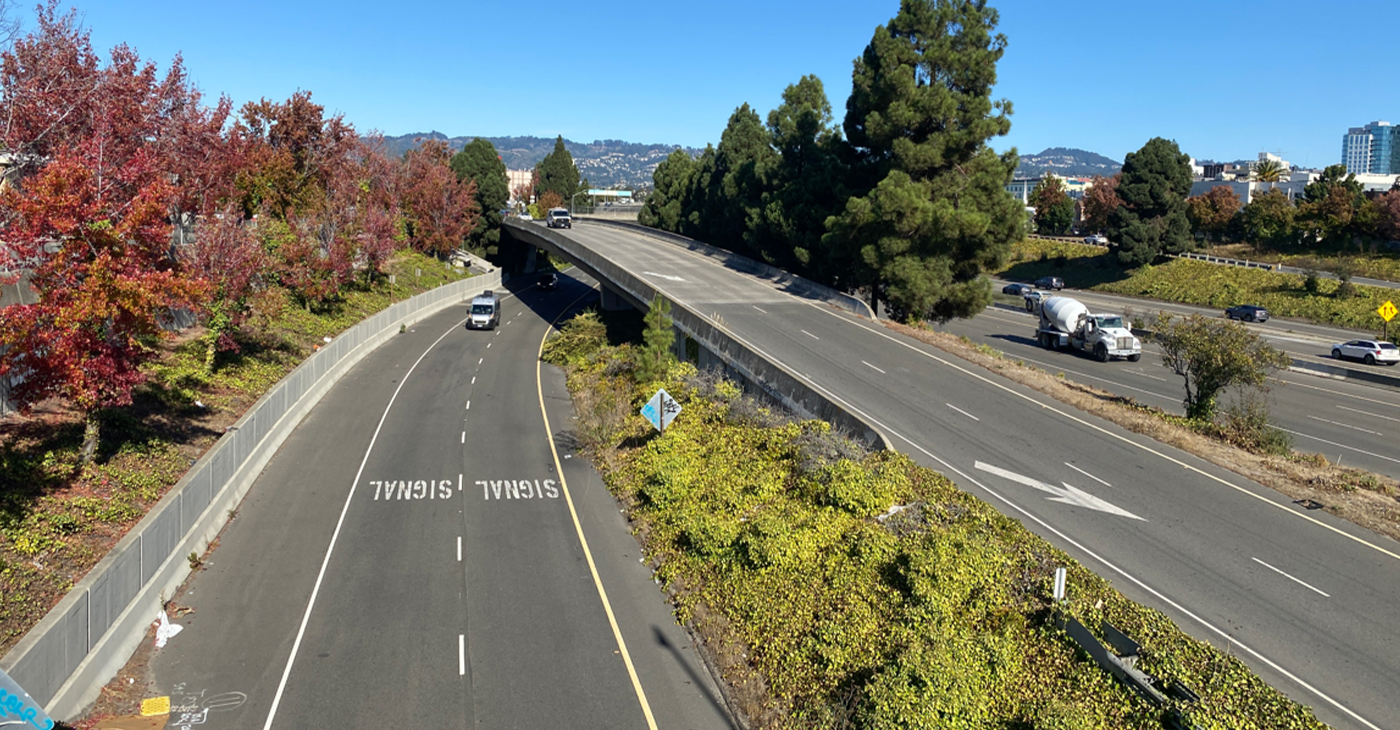
Past, Present, Possible! Oakland Residents Invited to Reimagine the 980 Freeway
Organizers ask attendees coming to 1233 Preservation Park Way to think of the event as a “time portal”—a walkable journey through the Past (harm and flourishing), Present (community conditions and resilience), and Future (collective visioning).
By Randolph Belle
Special to The Post
Join EVOAK!, a nonprofit addressing the historical harm to West Oakland since construction of the 980 freeway began in 1968, will hold a block party on Oct. 25 at Preservation Park for a day of imagination and community-building from 10 a.m. to 4 p.m.
Organizers ask attendees coming to 1233 Preservation Park Way to think of the event as a “time portal”—a walkable journey through the Past (harm and flourishing), Present (community conditions and resilience), and Future (collective visioning).
Activities include:
- Interactive Visioning: Site mapping, 3-D/digital modeling, and design activities to reimagine housing, parks, culture, enterprise, and mobility.
- Story & Memory: Oral history circles capturing life before the freeway, the rupture it caused, and visions for repair.
- Data & Policy: Exhibits on health, environment, wealth impacts, and policy discussions.
- Culture & Reflection: Films, installations, and performances honoring Oakland’s creativity and civic power.
The site of the party – Preservation Park – itself tells part of the story of the impact on the community. Its stately Victorians were uprooted and relocated to the site decades ago to make way for the I-980 freeway, which displaced hundreds of Black families and severed the heart of West Oakland. Now, in that same space, attendees will gather to reckon with past harms, honor the resilience that carried the community forward, and co-create an equitable and inclusive future.
A Legacy of Resistance
In 1979, Paul Cobb, publisher of the Post News Group and then a 36-year-old civil-rights organizer, defiantly planted himself in front of a bulldozer on Brush Street to prevent another historic Victorian home from being flattened for the long-delayed I-980 Freeway. Refusing to move, Cobb was arrested and hauled off in handcuffs—a moment that landed him on the front page of the Oakland Tribune.
Cobb and his family had a long history of fighting for their community, particularly around infrastructure projects in West Oakland. In 1954, his family was part of an NAACP lawsuit challenging the U.S. Post Office’s decision to place its main facility in the neighborhood, which wiped out an entire community of Black residents.
In 1964, they opposed the BART line down Seventh Street—the “Harlem of the West.” Later, Cobb was deeply involved in successfully rerouting the Cypress Freeway out of the neighborhood after the Loma Prieta earthquake.
The 980 Freeway, a 1.6-mile stretch, created an ominous barrier severing West Oakland from Downtown. Opposition stemmed from its very existence and the national practice of plowing freeways through Black communities with little input from residents and no regard for health, economic, or social impacts. By the time Cobb stood before the bulldozer, construction was inevitable, and his fight shifted toward jobs and economic opportunity.
Fast-forward 45 years: Cobb recalled the story at a convening of “Super OGs” organized to gather input from legacy residents on reimagining the corridor. He quickly retrieved his framed Tribune front page, adding a new dimension to the conversation about the dedication required to make change. Themes of harm repair and restoration surfaced again and again, grounded in memories of a thriving, cohesive Black neighborhood before the freeway.
The Lasting Scar
The 980 Freeway was touted as a road to prosperity—funneling economic opportunity into the City Center, igniting downtown commerce, and creating jobs. Instead, it cut a gash through the city, erasing 503 homes, four churches, 22 businesses, and hundreds of dreams. A promised second approach to the Bay Bridge never materialized.
Planning began in the late 1940s, bulldozers arrived in 1968, and after years of delays and opposition, the freeway opened in 1985. By then, Oakland’s economic engines had shifted, leaving behind a 600-foot-wide wound that resulted in fewer jobs, poorer health outcomes, and a divided neighborhood. The harm of displacement and loss of generational wealth was compounded through redlining, disinvestment, drugs, and the police state. Many residents fled to outlying cities, while those who stayed carried forward the spirit of perseverance.
The Big Picture
At stake now is up to 67 acres of new, buildable land in Downtown West Oakland. This time, we must not repeat the institutional wrongs of the past. Instead, we must be as deliberate in building a collective, equitable vision as planners once were in destroying communities.
EVOAK!’s strategy is rooted in four pillars: health, housing, economic development, and cultural preservation. These were the very foundations stripped away, and they are what they aim to reclaim. West Oakland continues to suffer among the worst social determinants of health in the region, much of it linked to the three freeways cutting through the neighborhood.
The harms of urban planning also decimated cultural life, reinforced oppressive public safety policies, underfunded education, and fueled poverty and blight.
Healing the Wound
West Oakland was once the center of Black culture during the Great Migration—the birthplace of the Black Panther Party and home to the “School of Champions,” the mighty Warriors of McClymonds High. Drawing on that legacy, we must channel the community’s proud past into a bold, community-led future that restores connection, sparks innovation, and uplifts every resident.
Two years ago, Caltrans won a federal Reconnecting Communities grant to fund Vision 980, a community-driven study co-led by local partners. Phase 1 launched in Spring 2024 with surveys and outreach; Phase 2, a feasibility study, begins in 2026. Over 4,000 surveys have already been completed. This once-in-a-lifetime opportunity could transform the corridor into a blank slate—making way for accessible housing, open space, cultural facilities, and economic opportunity for West Oakland and the entire region.
Leading with Community
In parallel, EVOAK! is advancing a community-led process to complement Caltrans’ work. EVOAK! is developing a framework for community power-building, quantifying harm, exploring policy and legislative repair strategies, structuring community governance, and hosting arts activations to spark collective imagination. The goal: a spirit of co-creation and true collaboration.
What EVOAK! Learned So Far
Through surveys, interviews, and gatherings, residents have voiced their priorities: a healthy environment, stable housing, and opportunities to thrive. Elders with decades in the neighborhood shared stories of resilience, community bonds, and visions of what repair should look like.
They heard from folks like Ezra Payton, whose family home was destroyed at Eighth and Brush streets; Ernestine Nettles, still a pillar of civic life and activism; Tom Bowden, a blues man who performed on Seventh Street as a child 70 years ago; Queen Thurston, whose family moved to West Oakland in 1942; Leo Bazille who served on the Oakland City Council from 1983 to 1993; Herman Brown, still organizing in the community today; Greg Bridges, whose family’s home was picked up and moved in the construction process; Martha Carpenter Peterson, who has a vivid memory of better times in West Oakland; Sharon Graves, who experienced both the challenges and the triumphs of the neighborhood; Lionel Wilson, Jr., whose family were anchors of pre-freeway North Oakland; Dorothy Lazard, a resident of 13th Street in the ’60s and font of historical knowledge; Bishop Henry Williams, whose simple request is to “tell the truth,” James Moree, affectionately known as “Jimmy”; the Flippin twins, still anchored in the community; and Maxine Ussery, whose father was a business and land owner before redlining.
EVOAK! will continue to capture these stories and invites the public to share theirs as well.
Beyond the Block Party
The 980 Block Party is just the beginning. Beyond this one-day event, EVOAK! Is building a long-term process to ensure West Oakland’s future is shaped by those who lived its past. To succeed, EVOAK! Is seeking partners across the community—residents, neighborhood associations, faith groups, and organizations—to help connect with legacy residents and host conversations.
980 Block Party Event Details
Saturday, Oct. 25
10 a.m. – 4 p.m.
Preservation Park, 1233 Preservation Park Way, Oakland, CA 94612
980BlockParty.org
info@evoak.org
Activism
Mayor Lee’s Economic Development Summit at Oakstop Furthers Creative Strategies for Oakland’s Future
Oakstop’s workforce development initiative, “The Oakstop Effect: WFD,” focuses on providing pathways to employment and advancement for Black adults aged 18–64. Through culturally relevant, mission-driven training facilitated by Black professionals with relatable backgrounds, the program creates supportive environments for skill-building, wealth creation, and worker empowerment.

By Carla Thomas
On Monday, Aug. 4, Oakland Mayor Barbara Lee convened the Mayor’s Economic Development Working Group at Oakstop, drawing leaders from business, workforce development, arts and culture, education, small business, and community organizations.
This initiative builds on the administration’s deep-rooted community engagement efforts, expanding on the dozens of roundtables and listening sessions conducted during Lee’s first 76 days in office.
The collaborative session aimed to shape an economic strategy rooted in equity, creativity, and community using the mayor’s five-point economic plan, including empowering small businesses, strengthening the local workforce, revitalizing Oakland’s cultural and social landscape, attracting and retaining strategic sectors, and ensuring economic opportunity for all communities.
During breakout sessions, participants shared recommendations across five focus areas: economic policy, small business support, workforce development, narrative change, and integration of arts and culture.
More than 100 participants at the meeting, which included former Alameda County Supervisor Keith Carson, Black Cultural Zone CEO Carolyn Johnson, East Oakland Youth Development Center CEO Selena Wilson, African American Sports and Entertainment Group founder, Ray Bobbitt, Executive Director of the Oakland School for the Arts Mike Oz, Visit Oakland Executive Director Peter Gamez and activist-artist Kev Choice.
“Our economic development working group aims to spark collaboration, uplift existing successes, and identify what’s needed to keep The Town open for business — vibrant, safe, and rooted in equity,” said Lee remarked at the gathering.
Oakstop founder and CEO Trevor Parham stated that the summit felt like an open community forum. “It’s critical to have as many perspectives as possible to drive solutions so we can cover not only our concerns, but fulfill our economic mission,” said Parham.
Parham says the community should expect summits and collaborations more often at Oakstop. “I’m excited about the prospects and the outcomes from bringing people from different industry sectors as well as different levels.”
Oakstop’s workforce development initiative, “The Oakstop Effect: WFD,” focuses on providing pathways to employment and advancement for Black adults aged 18–64. Through culturally relevant, mission-driven training facilitated by Black professionals with relatable backgrounds, the program creates supportive environments for skill-building, wealth creation, and worker empowerment.
“Our goal is to foster worker power for local workers, to build wealth, while building skills and redefining the workplace,” said Parham.
The program is powered through partnerships with organizations such as Philanthropic Ventures Foundation and Community Vision. Beyond workforce development, Oakstop offers co-working spaces, event venues, art galleries, and mental health and wellness programs — reinforcing its mission of community empowerment and economic mobility.
With a strategic equity framework, cultural and economic integration, and a continuous pipeline of sustainable talent, Lee plans to revitalize the Oakland economy by creating policies and opportunities that stabilize the city.
Antonio Ray Harvey
Air Quality Board Rejects Two Rules Written to Ban Gas Water Heaters and Furnaces
The proposal would have affected 17 million residents in Southern California, requiring businesses, homeowners, and renters to convert to electric units. “We’ve gone through six months, and we’ve made a decision today,” said SCAQMD board member Carlos Rodriguez. “It’s time to move forward with what’s next on our policy agenda.”
By Antonio Ray Harvey
California Black Media
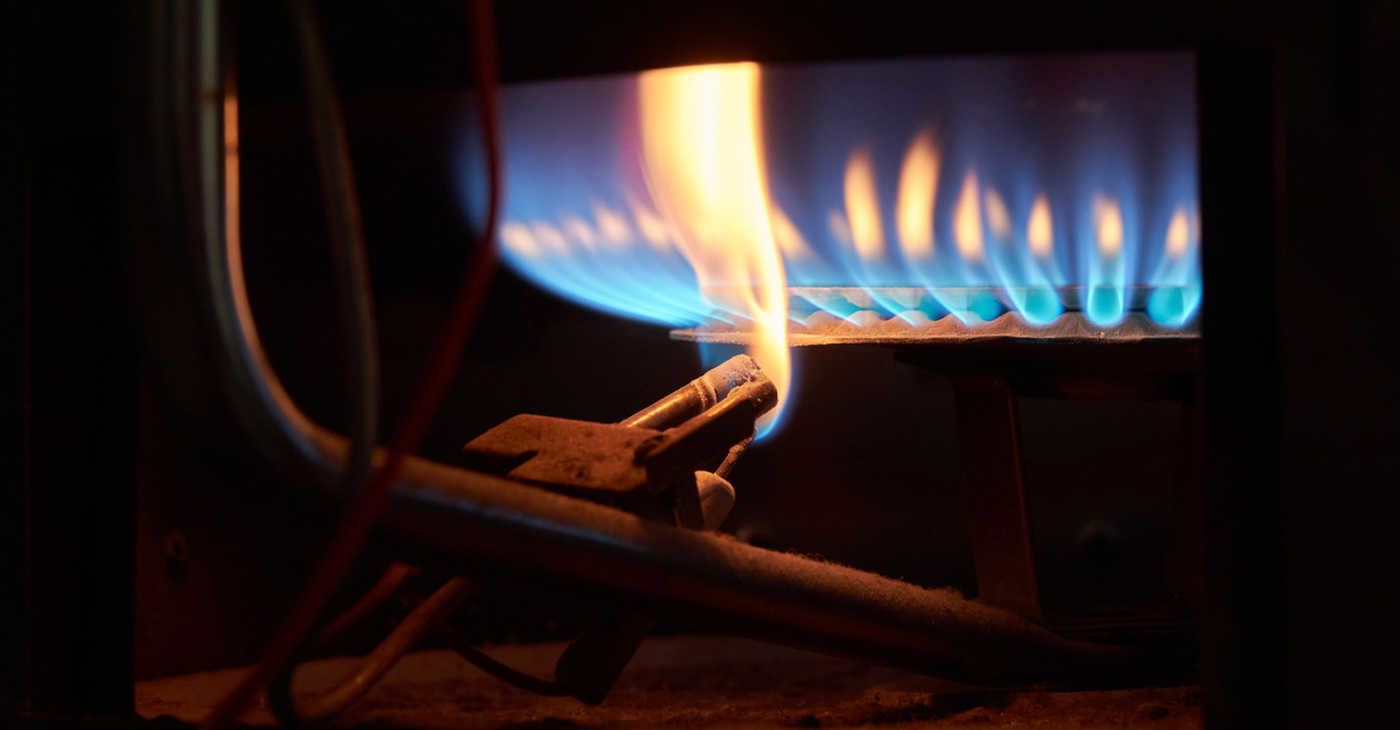
Two proposed rules to eliminate the usage of gas water heaters and furnaces by the South Coast Air Quality Management District (SCAQMD) in Southern California were rejected by the Governing Board on June 6.
Energy policy analysts say the board’s decision has broader implications for the state.
With a 7-5 vote, the board decided not to amend Rules 1111 and 1121 at the meeting held in Diamond Bar in L.A. County.
The proposal would have affected 17 million residents in Southern California, requiring businesses, homeowners, and renters to convert to electric units.
“We’ve gone through six months, and we’ve made a decision today,” said SCAQMD board member Carlos Rodriguez. “It’s time to move forward with what’s next on our policy agenda.”
The AQMD governing board is a 13-member body responsible for setting air quality policies and regulations within the South Coast Air Basin, which covers areas in four counties: Riverside County, Orange County, San Bernardino County and parts of Los Angeles County.
The board is made up of representatives from various elected offices within the region, along with members who are appointed by the Governor, Speaker of the Assembly, and Senate Rules Committee.
Holly J. Mitchell, who serves as a County Supervisor for the Second District of Los Angeles County, is a SCAQMD board member. She supported the amendments, but respected the board’s final decision, stating it was a “compromise.”

“In my policymaking experience, if you can come up with amended language that everyone finds some fault with, you’ve probably threaded the needle as best as you can,” Mitchell said before the vote. “What I am not okay with is serving on AQMD is making no decision. Why be here? We have a responsibility to do all that we can to get us on a path to cleaner air.”
The rules proposed by AQMD, Rule 1111 and Rule 1121, aim to reduce nitrogen oxide (NOx) emissions from natural gas-fired furnaces and water heaters.
Rule 1111 and Rule 1121 were designed to control air pollution, particularly emissions of nitrogen oxides (NOx).
Two days before the Governing Board’s vote, gubernatorial candidate Antonio Villaraigosa asked SCAQMD to reject the two rules.
Villaraigosa expressed his concerns during a Zoom call with the Cost of Living Council, a Southern California organization that also opposes the rules. Villaraigosa said the regulations are difficult to understand.
“Let me be clear, I’ve been a big supporter of AQMD over the decades. I have been a believer and a fighter on the issue of climate change my entire life,” Villaraigosa said. “But there is no question that what is going on now just doesn’t make sense. We are engaging in regulations that are put on the backs of working families, small businesses, and the middle class, and we don’t have the grid for all this.”
Rules 1111 and 1121 would also establish manufacturer requirements for the sale of space and water heating units that meet low-NOx and zero-NOx emission standards that change over time, according to SCAQMD.
The requirements also include a mitigation fee for NOx-emitting units, with an option to pay a higher mitigation fee if manufacturers sell more low-NOx water heating and space units.
Proponents of the proposed rules say the fees are designed to incentivize actions that reduce emissions.


WORK FROM HOME
Home-based business with potential monthly income of $10K+ per month. A proven training system and website provided to maximize business effectiveness. Perfect job to earn side and primary income. Contact Lynne for more details: Lynne4npusa@gmail.com 800-334-0540


Bling It On: Holiday Lights Brighten Dark Nights All Around the Bay

Oakland Council Expands Citywide Security Cameras Despite Major Opposition

Lu Lu’s House is Not Just Toying Around with the Community

Desmond Gumbs — Visionary Founder, Mentor, and Builder of Opportunity

Families Across the U.S. Are Facing an ‘Affordability Crisis,’ Says United Way Bay Area

Black Arts Movement Business District Named New Cultural District in California

Support Your Child’s Mental Health: Medi-Cal Covers Therapy, Medication, and More

Ann Lowe: The Quiet Genius of American Couture

2025 in Review: Seven Questions for Black Women’s Think Tank Founder Kellie Todd Griffin

BRIDGE Housing President and CEO Ken Lombard Scores Top Honors for Affordable Housing Leadership

Oakland School Board Grapples with Potential $100 Million Shortfall Next Year

COMMENTARY: If You Don’t Want Your ‘Black Card’ Revoked, Watch What You Bring to Holiday Dinners

Mayor Lee, City Leaders Announce $334 Million Bond Sale for Affordable Housing, Roads, Park Renovations, Libraries and Senior Centers

Fayeth Gardens Holds 3rd Annual Kwanzaa Celebration at Hayward City Hall on Dec. 28

Post Salon to Discuss Proposal to Bring Costco to Oakland Community meeting to be held at City Hall, Thursday, Dec. 18

Oakland Post: Week of November 12 – 18, 2025

IN MEMORIAM: William ‘Bill’ Patterson, 94

How Charles R. Drew University Navigated More Than $20 Million in Fed Cuts – Still Prioritizing Students and Community Health

No Justice in the Justice System

Oakland Post: Week of November 19 – 25, 2025

LIHEAP Funds Released After Weeks of Delay as States and the District Rush to Protect Households from the Cold

Seth Curry Makes Impressive Debut with the Golden State Warriors

Oakland Post: Week of November 26 – December 2, 2025

Seven Steps to Help Your Child Build Meaningful Connections

Beyoncé and Jay-Z make rare public appearance with Lewis Hamilton at Las Vegas Grand Prix

Seven Steps to Help Your Child Build Meaningful Connections

Lewis Hamilton set to start LAST in Saturday Night’s Las Vegas Grand Prix

Protecting Pedophiles: The GOP’s Warped Crusade Against Its Own Lies

The Perfumed Hand of Hypocrisy: Trump Hosted Former Terror Suspect While America Condemns a Muslim Mayor

Trinidad and Tobago – Prime Minister Confirms U.S. Marines Working on Tobago Radar System

Hyundai Ioniq 5 Parking, Safety, and 360 View #shorts

2025 Ioniq 5 New Wiper & Powerful Performance! #shorts

Electric SUV Range: Is 259 Miles Enough? #shorts

EV Charging: How Fast Can You Charge an Electric Vehicle? #shorts

Biometric Cooling… Messaging Seats…Come on! 2025 Infiniti QX80 Autograph 4WD

Charged Up: Witness the Magic of a Fully Electric Car! #shorts

Range Rover Sport PHEV Included…: See What’s Inside This Luxury SUV! #shorts

Invisible Hood View: Perfect Parking with X-Ray Vision! #shorts

AI Is Reshaping Black Healthcare: Promise, Peril, and the Push for Improved Results in California

ESSAY: Technology and Medicine, a Primary Care Point of View

Sanctuary Cities

The RESISTANCE – FREEDOM NOW

STATE OF THE PEOPLE: Freddie

ECONOMIC BOYCOTT DAY!!!!!

I told You So
-
 Activism4 weeks ago
Oakland Post: Week of November 19 – 25, 2025
-
 #NNPA BlackPress3 weeks ago
LIHEAP Funds Released After Weeks of Delay as States and the District Rush to Protect Households from the Cold
-
 Alameda County3 weeks ago
Seth Curry Makes Impressive Debut with the Golden State Warriors
-
 Activism4 weeks ago
Oakland Post: Week of November 26 – December 2, 2025
-
 #NNPA BlackPress3 weeks ago
Seven Steps to Help Your Child Build Meaningful Connections
-
 #NNPA BlackPress4 weeks ago
Beyoncé and Jay-Z make rare public appearance with Lewis Hamilton at Las Vegas Grand Prix
-
 #NNPA BlackPress3 weeks ago
Seven Steps to Help Your Child Build Meaningful Connections
-
 #NNPA BlackPress3 weeks ago
Trinidad and Tobago – Prime Minister Confirms U.S. Marines Working on Tobago Radar System
