
Activism
ESSAY: Technology and Medicine, a Primary Care Point of View
The COVID-19 pandemic, for example, restricted millions of people to their homes, which required reliance on the internet for communication and information. Personal internet searches became essential to understanding information about COVID, human physiology, symptoms, and keeping up with vaccine updates. However, this increase in independent online research resulted in people accessing more misinformation circulating on the internet. This posed a challenge for medical providers trying to treat patients according to research-based guidelines. With so much information within reach, it was difficult for providers to help their patients distinguish between legitimate evidence-based sources and opinion, speculation, and fabrication.


Dr. Adia Scrubb
Special to California Black Media Partners
Technology has enhanced communication between medical professionals and patients; improved patient care management; and eased access to care and information, benefiting both patients and medical clinicians.
However, despite the ease and many conveniences these patient care improvements have ushered in, adequate patient care still includes physician supervision, examinations, and interaction, which present challenges for keeping up with demands on the healthcare system and accurate patient education.
Technology has made more educational resources available at our fingertips, and it has created independence for those who want to know more about their bodies.
The COVID-19 pandemic, for example, restricted millions of people to their homes, which required reliance on the internet for communication and information. Personal internet searches became essential to understanding information about COVID, human physiology, symptoms, and keeping up with vaccine updates. However, this increase in independent online research resulted in people accessing more misinformation circulating on the internet. This posed a challenge for medical providers trying to treat patients according to research-based guidelines. With so much information within reach, it was difficult for providers to help their patients distinguish between legitimate evidence-based sources and opinion, speculation, and fabrication.

Nowadays, patients continuously arm themselves with medical information and challenge clinicians with the research they gather from internet sources to advocate for themselves and their care. This often leaves medical professionals with the complex task of navigating challenging discussions, pointing patients to validated and verified medical information, and following evidence-based medical guidelines for treatment.
Reviewing information before an appointment can certainly make an office visit much more productive, but it is essential to acknowledge the possible bias and limitations of internet searches. Consideration of the author, source, and date of the information may help determine its validity.
Furthermore, simply asking medical professionals for their preferred patient information resources will direct patients to safe and validated information that is in line with standards of care practices. This can help patients better understand the recommendations from their doctors and streamline their internet searches.
Access to individual online medical record information, such as blood tests, MRI reports, and office visit notes, has been a significant expansion of technology in medicine. This digitization of medical information enables and positions patients to take a leading role in managing their care. What used to be multiple sheets of paper in a large file folder is now a click away at any time. Despite these benefits, instant access can be overwhelming for both patients and medical providers, especially since patients, in many instances, can receive their test results online before the physician has had the opportunity to review them.
Patients may review the office visit notes or their lab results out of context or misinterpret information, which can lead to anxiety, confusion, and fear. Clinicians are put in a difficult position when they are not able to suddenly break away from their scheduled office visits to reassure an unscheduled patient about their results and next steps.
Medical providers have tools to assist with identifying sensitive results that need urgent review, and efforts are made to notify anxious patients as soon as possible. However, a patient can be proactive in scheduling a follow-up visit ahead of time to review results with their provider specifically. This can help patients avoid the stress of suddenly trying to get a hold of their doctor when dealing with unclear or concerning results. Normal test results often don’t require explanation, but allowing several days for your provider to work through hundreds of test results before sending messages requesting clarification will help medical professionals prioritize their responses to test results based on medical urgency.
Technological improvements such as online messaging and video/telephone appointments have made access to care much easier both for patients and clinicians. Telephone and video visits have been especially beneficial for patients who are elderly, disabled, or do not have access to transportation. However, the increase — and ease of — access has created much higher demand for physician time both during and outside of the office visit. Test results, patient messages, insurance forms, emails, and medication requests are all pouring in while providers conduct their daily scheduled appointments. Thus, very little time is left in the day for a clinician to respond to every email, fill out every form, and review every lab result when they are responsible for 1,800 or more patients.
This situation, unfortunately, creates a perceived delay in response in a culture where an instant response is expected from messaging and phone calls. But the reality is that the medical provider is constantly playing catch up to thousands of inquiries due to the around-the-clock online access patients now have.
Patients can make the most of their experience and their physician’s time by taking the time to learn their physician’s communication preferences. Despite the multiple modalities of access (telephone, email, video, in-person), a medical provider will have a preferred method of communication with their patients. Some may ask their patients to make an appointment to explain a complex topic, instead of responding to multiple messages. Others may prefer to communicate via phone call if they have to deliver bad news.
There will likely be more medical providers who prefer to communicate only through email or video appointments as remote work becomes more common. If a patient’s communication preferences align with their physician’s preferences, it will create a stronger patient-doctor relationship and foster more effective and impactful communication.
The expansion of technology in medicine has fostered better collaboration, communication, and education between patients and their medical professionals. Combining electronic resources with rapport, mutual respect, and trust for providers will help patients navigate this new landscape of healthcare.
About the Author
Dr. Adia Scrubb, MD, MPP, is a Board-Certified Family Medicine Physician currently practicing in Solano County.














Activism
Chase Oakland Community Center Hosts Alley-Oop Accelerator Building Community and Opportunity for Bay Area Entrepreneurs
Over the past three years, the Alley-Oop Accelerator has helped more than 20 Bay Area businesses grow, connect, and gain meaningful exposure. The program combines hands-on training, mentorship, and community-building to help participants navigate the legal, financial, and marketing challenges of small business ownership.
By Carla Thomas
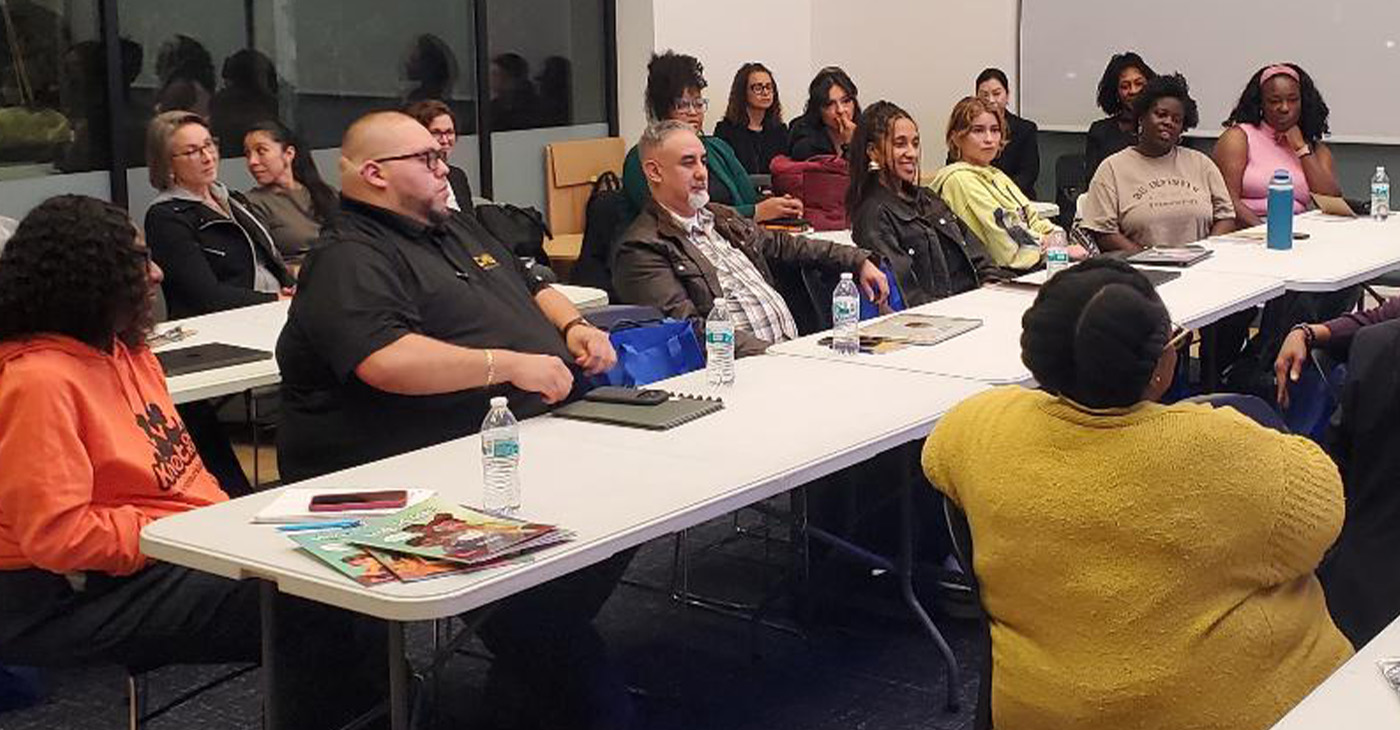
The Golden State Warriors and Chase bank hosted the third annual Alley-Oop Accelerator this month, an empowering eight-week program designed to help Bay Area entrepreneurs bring their visions for business to life.
The initiative kicked off on Feb. 12 at Chase’s Oakland Community Center on Broadway Street, welcoming 15 small business owners who joined a growing network of local innovators working to strengthen the region’s entrepreneurial ecosystem.
Over the past three years, the Alley-Oop Accelerator has helped more than 20 Bay Area businesses grow, connect, and gain meaningful exposure. The program combines hands-on training, mentorship, and community-building to help participants navigate the legal, financial, and marketing challenges of small business ownership.
At its core, the accelerator is designed to create an ecosystem of collaboration, where local entrepreneurs can learn from one another while accessing the resources of a global financial institution.
“This is our third year in a row working with the Golden State Warriors on the Alley-Oop Accelerator,” said Jaime Garcia, executive director of Chase’s Coaching for Impact team for the West Division. “We’ve already had 20-plus businesses graduate from the program, and we have 15 enrolled this year. The biggest thing about the program is really the community that’s built amongst the business owners — plus the exposure they’re able to get through Chase and the Golden State Warriors.”
According to Garcia, several graduates have gone on to receive vendor contracts with the Warriors and have gained broader recognition through collaborations with JPMorgan Chase.
“A lot of what Chase is trying to do,” Garcia added, “is bring businesses together because what they’ve asked for is an ecosystem, a network where they can connect, grow, and thrive organically.”
This year’s Alley-Oop Accelerator reflects that vision through its comprehensive curriculum and emphasis on practical learning. Participants explore the full spectrum of business essentials including financial management, marketing strategy, and legal compliance, while also preparing for real-world experiences such as pop-up market events.
Each entrepreneur benefits from one-on-one mentoring sessions through Chase’s Coaching for Impact program, which provides complimentary, personalized business consulting.
Garcia described the impact this hands-on approach has had on local small business owners. He recalled one candlemaker, who, after participating in the program, was invited to provide candles as gifts at Chase events.
“We were able to help give that business exposure,” he explained. “But then our team also worked with them on how to access capital to buy inventory and manage operations once those orders started coming in. It’s about preparation. When a hiccup happens, are you ready to handle it?”
The Coaching for Impact initiative, which launched in 2020 in just four cities, has since expanded to 46 nationwide.
“Every business is different,” Garcia said. “That’s why personal coaching matters so much. It’s life-changing.”
Participants in the 2026 program will each receive a $2,500 stipend, funding that Garcia said can make an outsized difference. “It’s amazing what some people can do with just $2,500,” he noted. “It sounds small, but it goes a long way when you have a plan for how to use it.”
For Chase and the Warriors, the Alley-Oop Accelerator represents more than an educational initiative, it’s a pathway to empowerment and economic inclusion. The program continues to foster lasting relationships among the entrepreneurs who, as Garcia put it, “build each other up” through shared growth and opportunity.
“Starting a business is never easy, but with the right support, it becomes possible, and even exhilarating,” said Oscar Lopez, the senior business consultant for Chase in Oakland.
Activism
Oakland Post: Week of February 18 – 24, 2026
The printed Weekly Edition of the Oakland Post: Week of – February 18 – 24, 2026

To enlarge your view of this issue, use the slider, magnifying glass icon or full page icon in the lower right corner of the browser window.
Activism
Oakland Post: Week of February 11 – 17, 2026
The printed Weekly Edition of the Oakland Post: Week of – February 11 – 17, 2026

To enlarge your view of this issue, use the slider, magnifying glass icon or full page icon in the lower right corner of the browser window.

WORK FROM HOME
Home-based business with potential monthly income of $10K+ per month. A proven training system and website provided to maximize business effectiveness. Perfect job to earn side and primary income. Contact Lynne for more details: Lynne4npusa@gmail.com 800-334-0540


PRESS ROOM: NBA Hall of Fame Nominee Terry Cummings Joins 100 Black Men of DeKalb County to Launch Victory & Values Initiative

Reflecting on Black History Milestones in Birmingham AL

OP-ED: One Hundred Years of Black Workers Telling the Truth

PRESS ROOM: Civil Rights TV Launches in Selma as the World’s First 24/7 Civil Rights Television Network

Advancements in solar technology that are changing the way we power the world

U.S. manufacturing rebounds – how foundry services are adapting to rising demand

Why has blood testing become so popular in today’s world?

Ghana Mourns a Son of the African World

OP-ED: Trump’s Policies Hurt Black America—and Everyone Else

OP-ED: Meta Deleted Me. I Still Don’t Know Why. And neither will you.

More than a Mission: Paying It Forward for the Future of Education

Avoid Eviction This Season: Landlord Checklist for Stable Tenancies

How chronic back problems affect Black communities differently

How cancer care is evolving with modern medicine

Diabetes disparity: Understanding Type 2 risks for Black Americans

Life Expectancy in Marin City, a Black Community, Is 15-17 Years Less than the Rest of Marin County

Oakland Post: Week of January 28, 2025 – February 3, 2026

Community Celebrates Turner Group Construction Company as Collins Drive Becomes Turner Group Drive

California Launches Study on Mileage Tax to Potentially Replace Gas Tax as Republicans Push Back

Discrimination in City Contracts

Oakland Post: Week of January 21 – 27, 2026

Book Review: Books on Black History and Black Life for Kids

Medi-Cal Cares for You and Your Baby Every Step of the Way

COMMENTARY: The Biases We Don’t See — Preventing AI-Driven Inequality in Health Care

After Don Lemon’s Arrest, Black Officials Raise Concerns About Independent Black Media

Post Newspaper Invites NNPA to Join Nationwide Probate Reform Initiative

OP-ED: The Dream Cannot be Realized Without Financial Freedom

Travis Scott Teaches Us How to Give Forward

COMMENTARY: The National Protest Must Be Accompanied with Our Votes

Four Stolen Futures: Will H-E-B Do The Right Thing?

Hyundai Ioniq 5 Parking, Safety, and 360 View #shorts

2025 Ioniq 5 New Wiper & Powerful Performance! #shorts

Electric SUV Range: Is 259 Miles Enough? #shorts

EV Charging: How Fast Can You Charge an Electric Vehicle? #shorts

Biometric Cooling… Messaging Seats…Come on! 2025 Infiniti QX80 Autograph 4WD

Charged Up: Witness the Magic of a Fully Electric Car! #shorts

Range Rover Sport PHEV Included…: See What’s Inside This Luxury SUV! #shorts

Invisible Hood View: Perfect Parking with X-Ray Vision! #shorts

AI Is Reshaping Black Healthcare: Promise, Peril, and the Push for Improved Results in California

ESSAY: Technology and Medicine, a Primary Care Point of View

Sanctuary Cities

The RESISTANCE – FREEDOM NOW

STATE OF THE PEOPLE: Freddie

ECONOMIC BOYCOTT DAY!!!!!

I told You So

-
 Activism4 weeks ago
Life Expectancy in Marin City, a Black Community, Is 15-17 Years Less than the Rest of Marin County
-
 Activism4 weeks ago
Oakland Post: Week of January 28, 2025 – February 3, 2026
-
 Activism3 weeks ago
Community Celebrates Turner Group Construction Company as Collins Drive Becomes Turner Group Drive
-
 Business3 weeks ago
California Launches Study on Mileage Tax to Potentially Replace Gas Tax as Republicans Push Back
-
 Activism3 weeks ago
Discrimination in City Contracts
-
 Arts and Culture3 weeks ago
Book Review: Books on Black History and Black Life for Kids
-
 Activism4 weeks ago
Medi-Cal Cares for You and Your Baby Every Step of the Way
-
 Activism3 weeks ago
COMMENTARY: The Biases We Don’t See — Preventing AI-Driven Inequality in Health Care
