
Entertainment
Film Review: Black or White


Octavia Spencer and Anthony Mackie co-star in the melodrama Black or White. (Courtesy Photo)
By Dwight Brown
NNPA Film Critic
Race relations can be a touchy subject. Only a very perceptive filmmaker could tackle the topic and be remotely successful. It would require a writer/director to be smart, balanced, sensitive and able to see both sides of the issue. The characters would almost need to be extensions of our opinions and thoughts, so everyone has something in the game. On most of those levels, this very shallow, poorly conceived and developed film, which is based on a true story, is a well-meaning misfire.
A White middle-aged Los Angeles attorney, Elliott Anderson (Kevin Costner), can’t get over the loss of his recently deceased wife. He’s turned to the bottle. His life is empty, except for the daily embrace of his biracial granddaughter Eloise (Jillian Estell). Elliott is content to raise Eloise, but he is inept when it comes to school schedules and child rearing responsibilities. His wife did all that stuff. Eloise lives with her granddaddy because her mom, his daughter, died in childbirth and her dad Reggie (Andre Holland), a drug addict, is MIA. Cue the stereotypes.
Mike Binder is an actor/writer/director (Reign Over Me): a jack-of-all-trades filmmaker. His movies are made for around $10 Million and gross around $19 million. He worked previously with Costner on The Upside of Anger, which fits the same budget/box office formula, and this ill-conceived film continues that pattern. The characters are poorly drawn. The dialogue is never memorable, unless Elliott is calling Reggie the N-word. And note that Black characters do not use derogatory terms when referring to White characters. Really? The premise is decent but the execution is preposterous and plays out like an afternoon soap opera. This kind of lopsided story doesn’t play out in real life. File it in The Help category.
Meanwhile, on the other side of town, Compton, Reggie’s family wants a little more sharing time with Eloise. In fact, the matriarch of the family, Rowena (Octavia Spencer), has decided to take Elliott to court. She is an entrepreneur who works out of her garage. Her nephew Jeremiah (Anthony Mackie), a successful lawyer, will handle the custody battle. Between bottles of Jack Daniels, or whatever alcohol is handy, Elliott and his law firm partners prepare for a fight. He also, to his credit, has hired a Black math tutor for Eloise; Duvan (Mpho Koaho, TNT’s Falling Skies) is a brainy, wizard type who Elliott also turns into his “Man Friday.”
Supposedly the story is based on Binder’s own experience co-raising a biracial child. Judging by what’s on view, he seems to know a lot more about rich White people than he does about Black middle class people. Maybe he should have hired someone like Duvan to tutor him on Black culture before he went down this path. The animosity between Elliott and Rowena is a joke. They hate each other, but he allows her family to come over and use his pool. Does that happen during most custody battles? Prepare to suspend your disbelief. It’s an action you’ll have to do over and over again if you stick with this movie until it ends 120 minutes later.
Kevin Costner has had his golden moments in film: Dancing With Wolves, Field of Dreams, Open Range. This is not one of them. He must be a teetotaler in life, because he is not a convincing drunk. Nor does he find any way to make any sense out of the pompous Elliott character. Think back to Costner’s appearance at Whitney Houston’s funeral. It’s that same grandiose persona. Granted Octavia Spencer can bug her eyes out with the best of them, but her shaping of the grandmother character, who wants her grandbaby home, makes no sense. It’s a tough character to play, because it is so poorly written. She was far better in Fruitvale Station, where she worked the character and its mannerisms like an Oscar-caliber actress.
Jillian Estell is a gorgeous little girl; she should be shooting commercials. But her acting is stiff. She is no Quvenzhané Wallis—not at all. Andre Holland brings no inner complexity whatsoever to the pathetic Reggie role. No depth. No extra dimension. Nothing. The supporting actors who play Elliott’s partners and staff are solid, SAG-card holding thespians and they turn in a strong days work. The one actor who seems to rise above the fray is Anthony Mackie as the smart lawyer who is embarrassed by his deadbeat cousin.
The film’s musical score is surprisingly rich and beautiful, thanks to jazz musician Terrence Blanchard, whose composing credits also include Red Tails, Inside Man and Love & Basketball. If the rest of the movie was up to his high standards, it would have been brilliant. The other tech elements (editing, set design) are fine but nothing stands out—except Rowena’s clothes, which look like they were pulled of a costume rack and not bought in a department store.
Black or White may have good intentions, but what they are, are not obvious from what’s on view. The burden of failure rests on the writer/director who hasn’t a clue how to portray Black families; can’t get a seasoned actor to play a believable drunk, and mixes drama, melodrama and comedy (courts scenes with a sassy judge and Rowena cause a chuckle) together into an unaffecting mélange.
Black or White doesn’t work on a sociological level. Does it set race relations back? Not really. Does it gives us any new insights? None. Is it entertaining? Somewhat, more like a stodgy extended episode of Days of our Lives than a hip exploration like The Young and the Restless.
Visit NNPA Film Critic Dwight Brown at DwightBrownInk.com.




Activism
OP-ED: AB 1349 Puts Corporate Power Over Community
Since Ticketmaster and Live Nation merged in 2010, ticket prices have jumped more than 150 percent. Activities that once fit a family’s budget now take significant disposable income that most working families simply don’t have. The problem is compounded by a system that has tilted access toward the wealthy and white-collar workers. If you have a fancy credit card, you get “presale access,” and if you work in an office instead of a warehouse, you might be able to wait in an online queue to buy a ticket. Access now means privilege.
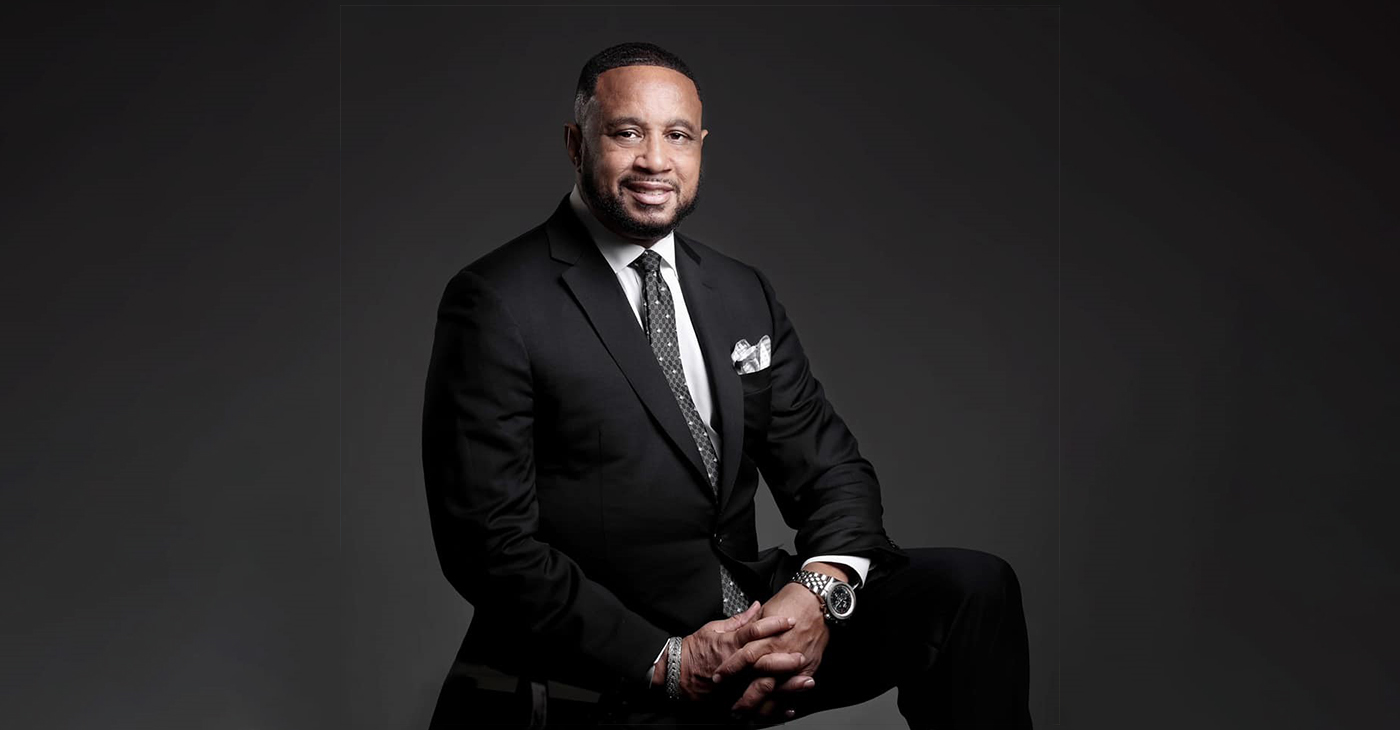
By Bishop Joseph Simmons, Senior Pastor, Greater St. Paul Baptist Church, Oakland
As a pastor, I believe in the power that a sense of community can have on improving people’s lives. Live events are one of the few places where people from different backgrounds and ages can share the same space and experience – where construction workers sit next to lawyers at a concert, and teenagers enjoy a basketball game with their grandparents. Yet, over the past decade, I’ve witnessed these experiences – the concerts, games, and cultural events where we gather – become increasingly unaffordable, and it is a shame.
These moments of connection matter as they form part of the fabric that holds communities together. But that fabric is fraying because of Ticketmaster/Live Nation’s unchecked control over access to live events. Unfortunately, AB 1349 would only further entrench their corporate power over our spaces.
Since Ticketmaster and Live Nation merged in 2010, ticket prices have jumped more than 150 percent. Activities that once fit a family’s budget now take significant disposable income that most working families simply don’t have. The problem is compounded by a system that has tilted access toward the wealthy and white-collar workers. If you have a fancy credit card, you get “presale access,” and if you work in an office instead of a warehouse, you might be able to wait in an online queue to buy a ticket. Access now means privilege.
Power over live events is concentrated in a single corporate entity, and this regime operates without transparency or accountability – much like a dictator. Ticketmaster controls 80 percent of first-sale tickets and nearly a third of resale tickets, but they still want more. More power, more control for Ticketmaster means higher prices and less access for consumers. It’s the agenda they are pushing nationally, with the help of former Trump political operatives, who are quietly trying to undo the antitrust lawsuit launched against Ticketmaster/Live Nation under President Biden’s DOJ.
That’s why I’m deeply concerned about AB 1349 in its current form. Rather than reining in Ticketmaster’s power, the bill risks strengthening it, aligning with Trump. AB 1349 gives Ticketmaster the ability to control a consumer’s ticket forever by granting Ticketmaster’s regime new powers in state law to prevent consumers from reselling or giving away their tickets. It also creates new pathways for Ticketmaster to discriminate and retaliate against consumers who choose to shop around for the best service and fees on resale platforms that aren’t yet controlled by Ticketmaster. These provisions are anti-consumer and anti-democratic.
California has an opportunity to stand with consumers, to demand transparency, and to restore genuine competition in this industry. But that requires legislation developed with input from the community and faith leaders, not proposals backed by the very company causing the harm.
Will our laws reflect fairness, inclusion, and accountability? Or will we let corporate interests tighten their grip on spaces that should belong to everyone? I, for one, support the former and encourage the California Legislature to reject AB 1349 outright or amend it to remove any provisions that expand Ticketmaster’s control. I also urge community members to contact their representatives and advocate for accessible, inclusive live events for all Californians. Let’s work together to ensure these gathering spaces remain open and welcoming to everyone, regardless of income or background.
Activism
Oakland Post: Week of December 31, 2025 – January 6, 2026
The printed Weekly Edition of the Oakland Post: Week of – December 31, 2025 – January 6, 2026
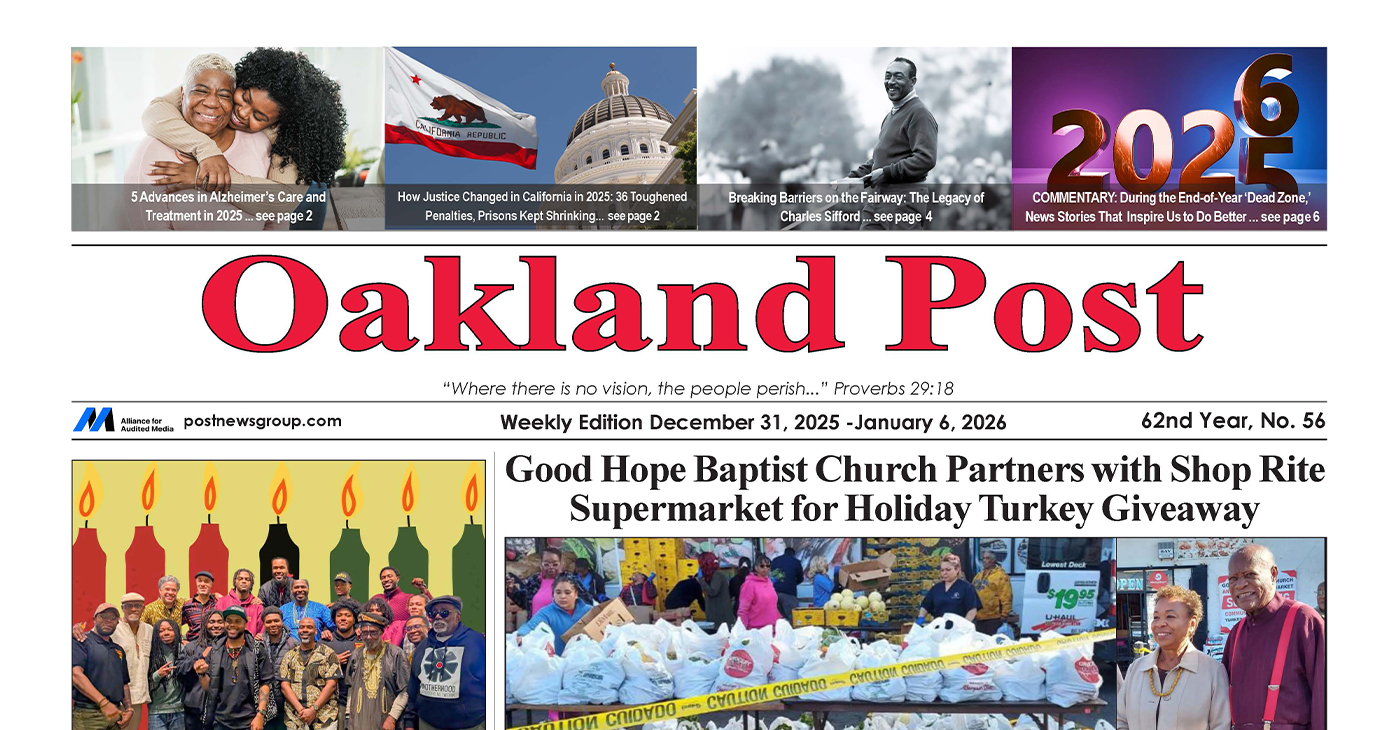
To enlarge your view of this issue, use the slider, magnifying glass icon or full page icon in the lower right corner of the browser window.
Activism
Oakland Post: Week of December 24 – 30, 2025
The printed Weekly Edition of the Oakland Post: Week of – December 24 – 30, 2025

To enlarge your view of this issue, use the slider, magnifying glass icon or full page icon in the lower right corner of the browser window.


WORK FROM HOME
Home-based business with potential monthly income of $10K+ per month. A proven training system and website provided to maximize business effectiveness. Perfect job to earn side and primary income. Contact Lynne for more details: Lynne4npusa@gmail.com 800-334-0540


OP-ED: AB 1349 Puts Corporate Power Over Community

Oakland Post: Week of December 31, 2025 – January 6, 2026

Big God Ministry Gives Away Toys in Marin City

First 5 Alameda County Distributes Over $8 Million in First Wave of Critical Relief Funds for Historically Underpaid Caregivers

2025 in Review: Seven Questions for Assemblymember Lori Wilson — Advocate for Equity, the Environment, and More

2025 in Review: Seven Questions for Assemblymember Tina McKinnor, Champion of Reparations, Housing and Workers’ Rights

2025 in Review: Seven Questions for Sen. Laura Richardson, Who Made Legislative History This Year

2025 in Review: Seven Questions for Sen. Lola Smallwood-Cuevas – an Advocate for Jobs and Justice

Alfred Cralle: Inventor of the Ice Cream Scoop

BOOK REVIEW: Let Me Be Real With You

Oakland Post: Week of December 24 – 30, 2025

Bling It On: Holiday Lights Brighten Dark Nights All Around the Bay

Oakland Council Expands Citywide Security Cameras Despite Major Opposition

Lu Lu’s House is Not Just Toying Around with the Community

Desmond Gumbs — Visionary Founder, Mentor, and Builder of Opportunity

Oakland Post: Week of November 26 – December 2, 2025

Seth Curry Makes Impressive Debut with the Golden State Warriors

LIHEAP Funds Released After Weeks of Delay as States and the District Rush to Protect Households from the Cold

Seven Steps to Help Your Child Build Meaningful Connections

Seven Steps to Help Your Child Build Meaningful Connections

Post Salon to Discuss Proposal to Bring Costco to Oakland Community meeting to be held at City Hall, Thursday, Dec. 18

Mayor Lee, City Leaders Announce $334 Million Bond Sale for Affordable Housing, Roads, Park Renovations, Libraries and Senior Centers

FBI Report Warns of Fear, Paralysis, And Political Turmoil Under Director Kash Patel

Oakland Post: Week of December 10 – 16, 2025

Trinidad and Tobago – Prime Minister Confirms U.S. Marines Working on Tobago Radar System

Oakland School Board Grapples with Potential $100 Million Shortfall Next Year

Fayeth Gardens Holds 3rd Annual Kwanzaa Celebration at Hayward City Hall on Dec. 28

2025 in Review: Seven Questions for Black Women’s Think Tank Founder Kellie Todd Griffin

A Nation in Freefall While the Powerful Feast: Trump Calls Affordability a ‘Con Job’

Teens Reject Today’s News as Trump Intensifies His Assault on the Press

Hyundai Ioniq 5 Parking, Safety, and 360 View #shorts

2025 Ioniq 5 New Wiper & Powerful Performance! #shorts

Electric SUV Range: Is 259 Miles Enough? #shorts

EV Charging: How Fast Can You Charge an Electric Vehicle? #shorts

Biometric Cooling… Messaging Seats…Come on! 2025 Infiniti QX80 Autograph 4WD

Charged Up: Witness the Magic of a Fully Electric Car! #shorts

Range Rover Sport PHEV Included…: See What’s Inside This Luxury SUV! #shorts

Invisible Hood View: Perfect Parking with X-Ray Vision! #shorts

AI Is Reshaping Black Healthcare: Promise, Peril, and the Push for Improved Results in California

ESSAY: Technology and Medicine, a Primary Care Point of View

Sanctuary Cities

The RESISTANCE – FREEDOM NOW

STATE OF THE PEOPLE: Freddie

ECONOMIC BOYCOTT DAY!!!!!

I told You So
-
 Bay Area4 weeks ago
Post Salon to Discuss Proposal to Bring Costco to Oakland Community meeting to be held at City Hall, Thursday, Dec. 18
-
 Activism4 weeks ago
Mayor Lee, City Leaders Announce $334 Million Bond Sale for Affordable Housing, Roads, Park Renovations, Libraries and Senior Centers
-
 Activism4 weeks ago
Oakland Post: Week of December 10 – 16, 2025
-
 Activism4 weeks ago
Oakland School Board Grapples with Potential $100 Million Shortfall Next Year
-
 Arts and Culture4 weeks ago
Fayeth Gardens Holds 3rd Annual Kwanzaa Celebration at Hayward City Hall on Dec. 28
-
 Activism4 weeks ago
2025 in Review: Seven Questions for Black Women’s Think Tank Founder Kellie Todd Griffin
-

 Advice4 weeks ago
COMMENTARY: If You Don’t Want Your ‘Black Card’ Revoked, Watch What You Bring to Holiday Dinners
-

 Activism4 weeks ago
Ann Lowe: The Quiet Genius of American Couture
