
Government
Gov. Newsom Nominates Rob Bonta as Next Attorney General
“Rob represents what makes California great – our desire to take on righteous fights and reverse systematic injustices,” said Newsom. “Growing up with parents steeped in social justice movements, Rob has become a national leader in the fight to repair our justice system and defend the rights of every Californian.”

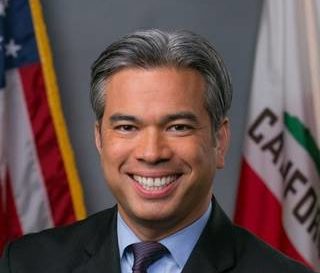
After weeks of speculation, Gov. Gavin Newsom has picked Assemblymember Rob Bonta as his replacement for former California attorney Gen. Xavier Becerra.
Last December, President Biden nominated Becerra to his Cabinet as Secretary of Housing and Urban Development. He was recently sworn into that role.
On Wednesday, the governor’s office issued a press release announcing Newsom has submitted the nomination of Rob Andres Bonta (D-Alameda), 48, as the state’s next Attorney General.
“Rob represents what makes California great – our desire to take on righteous fights and reverse systematic injustices,” said Newsom. “Growing up with parents steeped in social justice movements, Rob has become a national leader in the fight to repair our justice system and defend the rights of every Californian.”
Under California law, the legislature has 90 days to approve Bonta’s nomination.
Born in the Philippines, Bonta was elected to the California State Assembly’s 18th District in 2012, where he represents sections of Alameda County, including parts of Oakland and San Leandro. He became the first Filipino American state legislator in California’s then 160-plus-year history. He is also the state’s first Filipino American Attorney General.
Bonta’s father was involved in the Civil Rights Movement and stood with Dr. Martin Luther King, Jr., marching for equality and justice in Selma. His mother was and continues to be a long-time leader in the Filipino social justice movement.
Bonta thanked the governor, saying “I am humbled by the confidence you have placed in me.”
“I became a lawyer because I saw the law as the best way to make a positive difference for the most people, and it would be an honor of a lifetime to serve as the attorney for the people of this great state,” he said. “As California’s Attorney General, I will work tirelessly every day to ensure that every Californian who has been wronged can find justice and that every person is treated fairly under the law.”
Growing up in a trailer not far away from César Chávez’s home, Bonta watched closely as his parents worked for the United Farm Workers of America (UFWA) and organized Filipino and Mexican American farmworkers. This experience had a huge impact on Bonta’s life choices and pursuits, inspiring his life’s commitment to aiding people.
Bonta worked his way through college cleaning laundry rooms and, with the help of financial aid, he was able to attend college and law school. He obtained his Juris Doctorate from Yale Law School after attending Yale College and Oxford University in England. He was also a scholar-athlete and captain of the Yale Soccer team.
His legal career included work as a Deputy City Attorney for the City and County of San Francisco, where he represented the City and County and its employees. He also worked as a private attorney, fighting to protect Californians from exploitation and racial profiling. Bonta was undefeated in trial court, never losing a jury verdict for his clients.
Bonta started his political career as a publicly-elected official at the local level, first as a director of the Alameda Health Care District and later as Vice Mayor of the City of Alameda.
In the state assembly, Bonta currently serves as the assistant majority leader, serving on the appropriations, communications and conveyance, governmental organization, and health committees. Bonta has authored significant pieces of legislation that include:
Assembly Bill (AB) 1482, a landmark legislative victory for tenants in California. The 2019 legislation banned outrageous rent increases and unjust evictions and is considered the most impactful bill for tenants ever to become law.
AB 32, the historic, first-in-the-nation legislation to end the use of for-profit, private prisons and detention facilities in California.
AB 266, the Medical Cannabis Regulation and Safety Act, a set of regulations created to ensure patient and consumer safety and protect children from cannabis marketing and safeguard the environment from harmful cultivation practices.
In 2018, California passed historic bail reform, Senate Bill 10, to end an unfair, unsafe, predatory, for-profit money bail system and replace it with a system that’s safer and fairer. Bonta co-authored SB 10 with his colleague Senator Bob Hertzberg,
Bonta recently appeared in a virtual meeting with state Steven Bradford (D-Gardena), the chair of the California Legislative Black Caucus. Author and co-author, Bradford and Bonta discussed the language in SB 2, which will revoke the certification of peace officers convicted of violating a person’s civil rights.
Newsom says he can’t wait to see Bonta get to work.
“At this moment when so many communities are under attack for who they are and who they love, Rob has fought to strengthen hate crime laws and protect our communities from the forces of hate. He will be a phenomenal Attorney General, said Newsom.






Activism
Oakland Post: Week of March 4 – 10, 2026
The printed Weekly Edition of the Oakland Post: Week of March 4 – 10, 2026


To enlarge your view of this issue, use the slider, magnifying glass icon or full page icon in the lower right corner of the browser window.

Activism
Oakland Post: Week of February 25 – March 3, 2026
The printed Weekly Edition of the Oakland Post: Week of – February 25 – March 3, 2026

To enlarge your view of this issue, use the slider, magnifying glass icon or full page icon in the lower right corner of the browser window.
Activism
Oakland Post: Week of February 18 – 24, 2026
The printed Weekly Edition of the Oakland Post: Week of – February 18 – 24, 2026
To enlarge your view of this issue, use the slider, magnifying glass icon or full page icon in the lower right corner of the browser window.

WORK FROM HOME
Home-based business with potential monthly income of $10K+ per month. A proven training system and website provided to maximize business effectiveness. Perfect job to earn side and primary income. Contact Lynne for more details: Lynne4npusa@gmail.com 800-334-0540


COMMENTARY: Women of Color Shape Our Past and Future

Woman’s Search for Family’s Roots Leads to Ancestor John T. Ward – A Successful Entrepreneur and Conductor on the Underground Railroad

Advocates Raise Alarm Over ICE Operation, MOU and Detention Risks in Baltimore County

Pete Buttigieg to Join Mayor Randall Woodfin for Community Town Hall in Birmingham

WATCH: Week One – NNPA’s “Leadership Matters” Video Series

Oakland Post: Week of March 4 – 10, 2026

OP-ED: NNPA Launches 2026 “Leadership Matters” Video Series

PRESS ROOM: PMG and Cranbrook Horizons-Upward Bound Launch Journey Fellowship Cohort 2

Los Angeles Summit Brings Together Leaders to Tackle Poverty and Affordability

Civil Rights TV Launches 24/7 Network Focused on Black History, Education and Equity

REVIEW: The Ultimate Hot Girl Summer Getaway: Sunseeker Resort Florida

COMMENTARY: How You Stop a Prescription Medicine is as Important as How You Start

PRESS ROOM: From Congress to Corporate America: NNPA Spotlights Visionaries in New Video Series

Poll Shows Support for Policies That Help Families Afford Child Care

Oakland Post: Week of February 25 – March 3, 2026

Oakland Post: Week of January 28, 2025 – February 3, 2026

Life Expectancy in Marin City, a Black Community, Is 15-17 Years Less than the Rest of Marin County

California Launches Study on Mileage Tax to Potentially Replace Gas Tax as Republicans Push Back

Community Celebrates Turner Group Construction Company as Collins Drive Becomes Turner Group Drive

Discrimination in City Contracts

Book Review: Books on Black History and Black Life for Kids

Oakland Post: Week of January 21 – 27, 2026

COMMENTARY: The Biases We Don’t See — Preventing AI-Driven Inequality in Health Care

Post Newspaper Invites NNPA to Join Nationwide Probate Reform Initiative

Black History Events in the East Bay

Medi-Cal Cares for You and Your Baby Every Step of the Way

Art of the African Diaspora Celebrates Legacy and Community at Richmond Art Center

COMMENTARY: The National Protest Must Be Accompanied with Our Votes

New Bill, the RIDER Safety Act, Would Support Transit Ambassadors and Safety on Public Transit

After Don Lemon’s Arrest, Black Officials Raise Concerns About Independent Black Media

Hyundai Ioniq 5 Parking, Safety, and 360 View #shorts

2025 Ioniq 5 New Wiper & Powerful Performance! #shorts

Electric SUV Range: Is 259 Miles Enough? #shorts

EV Charging: How Fast Can You Charge an Electric Vehicle? #shorts

Biometric Cooling… Messaging Seats…Come on! 2025 Infiniti QX80 Autograph 4WD

Charged Up: Witness the Magic of a Fully Electric Car! #shorts

Range Rover Sport PHEV Included…: See What’s Inside This Luxury SUV! #shorts

Invisible Hood View: Perfect Parking with X-Ray Vision! #shorts

AI Is Reshaping Black Healthcare: Promise, Peril, and the Push for Improved Results in California

ESSAY: Technology and Medicine, a Primary Care Point of View

Sanctuary Cities

The RESISTANCE – FREEDOM NOW

STATE OF THE PEOPLE: Freddie

ECONOMIC BOYCOTT DAY!!!!!

I told You So
-
 Business4 weeks ago
California Launches Study on Mileage Tax to Potentially Replace Gas Tax as Republicans Push Back
-
 Activism4 weeks ago
Community Celebrates Turner Group Construction Company as Collins Drive Becomes Turner Group Drive
-
 Activism4 weeks ago
Discrimination in City Contracts
-
 Arts and Culture4 weeks ago
Book Review: Books on Black History and Black Life for Kids
-
 Activism4 weeks ago
COMMENTARY: The Biases We Don’t See — Preventing AI-Driven Inequality in Health Care
-
 Activism4 weeks ago
Post Newspaper Invites NNPA to Join Nationwide Probate Reform Initiative
-
 #NNPA BlackPress4 weeks ago
COMMENTARY: The National Protest Must Be Accompanied with Our Votes
-
 Activism4 weeks ago
New Bill, the RIDER Safety Act, Would Support Transit Ambassadors and Safety on Public Transit
