
Op-Ed
Jimmie Lee Jackson Inspired Selma March


By George E. Curry
NNPA Columnist
Although Dr. Martin Luther King, Jr. and John Lewis captured the headlines, it was the death of 26-year-old Jimmie Lee Jackson that inspired the 1965 Selma-to-Montgomery March.
After fighting in the Vietnam War, Jackson had returned home to Marion, Ala., which also happens to be the birthplace of Coretta Scott King, about 30 miles northwest of Selma in the soil-rich Black Belt region of Alabama. Although Blacks made up a majority of Black Belt counties, they were less than 1 percent of the registered voters.
A pulpwood worker, Jackson had attempted five times to register, none successfully. In an effort to expand voter registration in the area, James Orange, a Southern Christian Leadership Conference (SCLC) field organizer, and George Best of the Student Nonviolent Coordinating Committee (SNCC) had moved to Perry County in early 1965. Before long, local residents were trying to register to vote, most of them for the first time.
On Feb. 18, Orange, who included students in the movement, was arrested, allegedly for contributing to delinquency of minors. That set off a round of protests.
Shortly after being released from jail in Selma, C. T. Vivian of SCLC was sent to Marion to address a mass meeting at Zion Chapel Methodist Church. The plan was to hold a night march to the jail, which would cover less than the length of a football field, to demand James Orange’s release. If confronted by police, demonstrators were instructed to kneel in prayer and return to the church.
But White law enforcement officials had another plan.
In his excellent book, Selma 1965: The March That Changed the South, Charles E. Fager recounted:
“But when the preachers at the head of the line came out of the door, the sidewalk was lined with helmeted state troopers, long, black billy clubs at the ready, and they were stopped less than a half block down. ‘This is an unlawful assembly,’ the police chief announced over a public address system. ‘You are hereby ordered to disperse. Go home or go back to the church.’
“Just then all of the street lights around the square went out, and troopers began clubbing the Rev. James Dobynes, a black minister at the front of the line.”
NBC News correspondent Richard Valeriani was knocked to the ground, bleeding from a head wound, and another journalist, UPI photographer Pete Fisher, was also beaten and his camera was smashed into tiny pieces.
“The panicked crowd tried to get back into the church, but the doors were jammed full and the people spilled around it down a side street, taking cover wherever they could,” Fager wrote. “The troopers came after them, clubs swinging, splitting scalps and smashing ribs as they advanced. Two or three dozen people rushed through the doors of Mack’s Café, a few doors down, seeking refuge in its crowded, dark interior. Among them were Jimmie Lee Jackson, a young man of twenty-six years old, his mother, Viola and his grandfather Cager Lee, eighty-two. The old man had already been caught and beaten behind the church, and was bleeding.
“His grandson was helping him out of the door to get medical attention when a squad of troopers came toward them, chasing and beating people before them, and forced the two men back into the café. The troopers came inside, smashed all the lights within reach and began clubbing people indiscriminately. When one hit Viola and knocked her screaming to the floor, Jimmie Lee lunged at him. The trooper struck him across the face, and the young Jackson went careening into the floor himself. Then a trooper picked him up and slammed him against a cigarette machine while another trooper, a man named Fowler, drew his pistol and calmly shot Jackson point blank in the stomach.”
The author noted, “Jackson didn’t realize he had been shot until a few moments later, because the troopers continued beating him and the others unmercifully.”
Someone took Jackson to the Perry County Hospital. He was transferred to Good Samaritan Hospital in Selma, where he died a week later.
The state trooper, James Bonard Fowler, was not charged until May 10, 2007 as a result of a cold case investigation. He pled guilty to manslaughter and was sentenced to only six months in jail.
According to Taylor Branch’s Pulitzer Prize-winning At Canaan’s Edge, although Dr. King had preached many funerals by then, a reporter noticed “a tear glistened from the corner of his eye as he rose to speak.”
King deplored “the cowardice of every Negro” who “stands on the sidelines in the struggle for justice.” King said, “Jimmie Lee Jackson is speaking to us from the casket and he is saying to us that we must substitute courage for caution…We must not be bitter, and we must not harbor ideas of retaliation with violence. We must not lose faith in our white brothers.”
Whatever its purported shortcomings, the movie “Selma,” allows Jimmie Lee Jackson to continue speaking to us from the grave.
George E. Curry, former editor-in-chief of Emerge magazine, is editor-in-chief of the National Newspaper Publishers Association News Service (NNPA.) He is a keynote speaker, moderator, and media coach. Curry can be reached through his Web site, www.georgecurry.com. You can also follow him at www.twitter.com/currygeorge and George E. Curry Fan Page on Facebook.
###







Advice
Rising Optimism Among Small And Middle Market Business Leaders Suggests Growth for California
“Business leaders across the Pacific region continue to demonstrate a unique blend of resilience and forward-thinking, even in the face of ongoing economic uncertainty,” said Brennon Crist, Managing Director and Head of the Pacific Segment, Commercial Banking, J.P. Morgan. “Their commitment to innovation and growth is evident in the way they adapt to challenges and seize new opportunities. It’s this spirit that keeps our region at the forefront of business leadership and progress. We look forward to helping our clients navigate all that’s ahead in 2026.”


Sponsored by JPMorganChase
Business optimism is returning for small and midsize business leaders at the start of 2026, fueling confidence and growth plans.
The 2026 Business Leaders Outlook survey, released in January by JPMorganChase reveals a turnaround from last June, when economic headwinds and uncertainty about shifting policies and tariffs caused some leaders to put their business plans on hold.
Midsize companies, who often find themselves more exposed to geopolitical shifts and policy changes, experienced a significant dip in business and economic confidence in June of 2025. As they have become more comfortable with the complexities of today’s environment, we are seeing optimism rebounding in the middle market nationwide – an encouraging sign for growth, hiring, and innovation. Small businesses, meanwhile, maintained steady optimism throughout 2025, but they aren’t shielded from domestic concerns. Many cited inflation and wage pressures as the top challenges for 2026 and are taking steps to ensure their businesses are prepared for what’s ahead.
“Business leaders across the Pacific region continue to demonstrate a unique blend of resilience and forward-thinking, even in the face of ongoing economic uncertainty,” said Brennon Crist, Managing Director and Head of the Pacific Segment, Commercial Banking, J.P. Morgan. “Their commitment to innovation and growth is evident in the way they adapt to challenges and seize new opportunities. It’s this spirit that keeps our region at the forefront of business leadership and progress. We look forward to helping our clients navigate all that’s ahead in 2026.”

Overall, both small and midsize business leaders are feeling more confident to pursue growth opportunities, embrace emerging technologies and, in some cases, forge new strategic partnerships. That bodes well for entrepreneurs in California. Here are a few other key findings from the Business Leaders Outlook about trends expected to drive activity this year:
- Inflation remains the top concern for small business owners. Following the 2024 U.S. presidential election, many anticipated a favorable business environment. By June 2025, however, that feeling shifted amid concerns about political dynamics, tariffs, evolving regulations and global economic headwinds.
Going into 2026, 37% of respondents cited inflation as their top concern. Rising taxes came in second at 27% and the impact of tariffs was third at 22%. Other concerns included managing cash flow, hiring and labor costs.
- For middle market leaders, uncertainty remains an issue. Almost half (49%) of all midsize business leaders surveyed cited “economic uncertainty” as their top concern – even with an improved outlook from a few months ago. Revenue and sales growth was second at 33%, while tariffs and labor both were third at 31%.
- And tariffs are impacting businesses costs. Sixty-one percent of midsize business leaders said tariffs have had a negative impact on the cost of doing business.
- Despite challenges, leaders are bullish on their own enterprises. Though the overall outlook is mixed, 74% of small business owners and 71% of middle market companies are optimistic about their company’s prospects for 2026.
- Adaption is the theme. For small business owners surveyed across the U.S., responding to continuing pressures is important in 2026. Building cash reserves (47%), renegotiating supplier terms (36%) and ramping up investments in marketing and technology are among the top priorities.
- Big plans are on the horizon. A majority midsized company leaders expect revenue growth this year, and nearly three out of five of (58%) plan to introduce new products or services in the coming year, while 53% look to expand into new domestic and/or international markets. Forty-nine percentsay they’re pursuing strategic partnerships or investments.
The bottom line
Rebounding optimism among U.S. business leaders at the start of the year is setting the stage for an active 2026. With business leaders looking to implement ambitious growth plans that position themselves for the future, momentum in California could be beneficial for leaders looking to launch, grow or scale their business this year.

#NNPA BlackPress
COMMENTARY: The National Protest Must Be Accompanied with Our Votes
Just as Trump is gathering election data like having the FBI take all the election data in Georgia from the 2020 election, so must we organize in preparation for the coming primary season to have the right people on ballots in each Republican district, so that we can regain control of the House of Representatives and by doing so, restore the separation of powers and balance that our democracy is being deprived of.
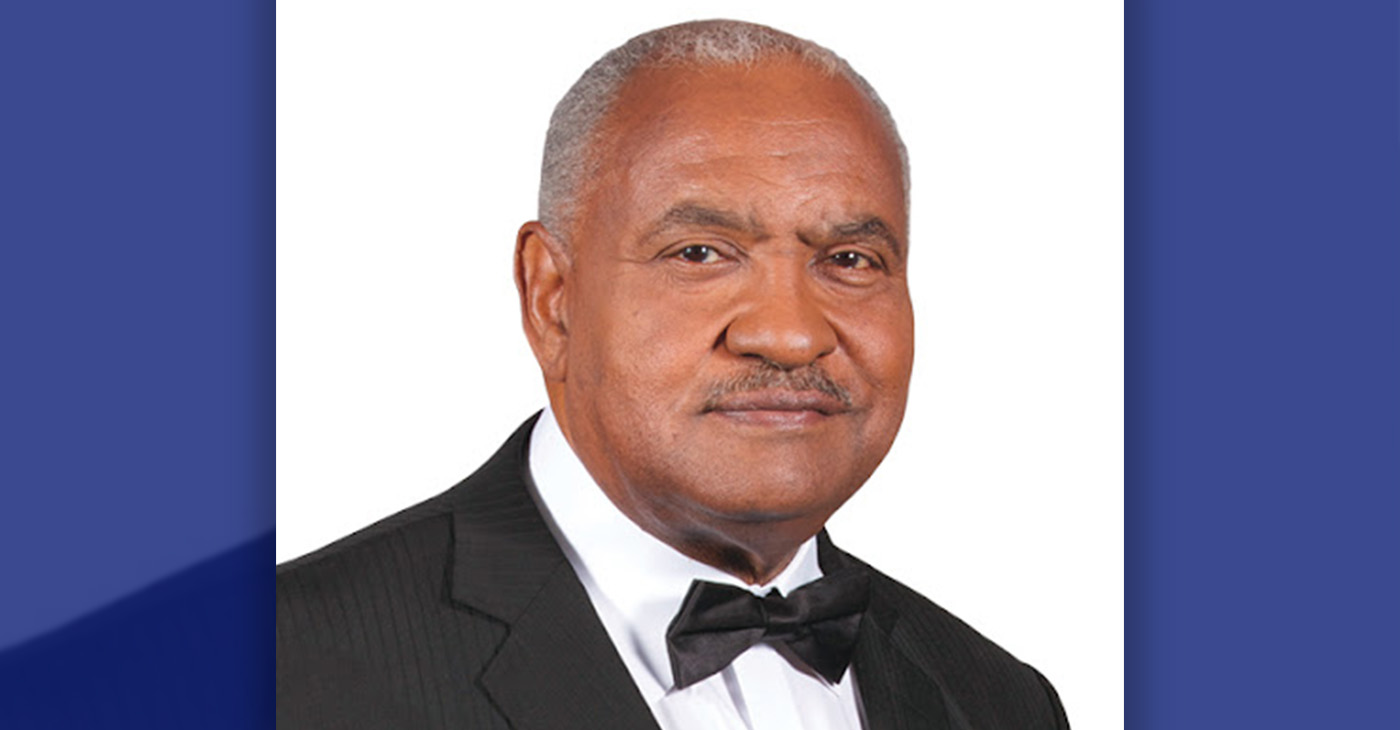
By Dr. John E. Warren, Publisher San Diego Voice & Viewpoint Newspaper
As thousands of Americans march every week in cities across this great nation, it must be remembered that the protest without the vote is of no concern to Donald Trump and his administration.
In every city, there is a personal connection to the U.S. Congress. In too many cases, the member of Congress representing the people of that city and the congressional district in which it sits, is a Republican. It is the Republicans who are giving silent support to the destructive actions of those persons like the U.S. Attorney General, the Director of Homeland Security, and the National Intelligence Director, who are carrying out the revenge campaign of the President rather than upholding the oath of office each of them took “to Defend The Constitution of the United States.”
Just as Trump is gathering election data like having the FBI take all the election data in Georgia from the 2020 election, so must we organize in preparation for the coming primary season to have the right people on ballots in each Republican district, so that we can regain control of the House of Representatives and by doing so, restore the separation of powers and balance that our democracy is being deprived of.
In California, the primary comes in June 2026. The congressional races must be a priority just as much as the local election of people has been so important in keeping ICE from acquiring facilities to build more prisons around the country.
“We the People” are winning this battle, even though it might not look like it. Each of us must get involved now, right where we are.
In this Black History month, it is important to remember that all we have accomplished in this nation has been “in spite of” and not “because of.” Frederick Douglas said, “Power concedes nothing without a struggle.”
Today, the struggle is to maintain our very institutions and history. Our strength in this struggle rests in our “collectiveness.” Our newspapers and journalists are at the greatest risk. We must not personally add to the attack by ignoring those who have been our very foundation, our Black press.
Are you spending your dollars this Black History Month with those who salute and honor contributions by supporting those who tell our stories? Remember that silence is the same as consent and support for the opposition. Where do you stand and where will your dollars go?
Activism
Post Newspaper Invites NNPA to Join Nationwide Probate Reform Initiative
The Post’s Probate Reform Group meets the first Thursday of every month via Zoom and invites the public to attend. The Post is making the initiative national and will submit information from its monthly meeting to the NNPA to educate, advocate, and inform its readers.

By Tanya Dennis
The National Newspaper Publishers Association (NNPA) represents the Black press with over 200 newspapers nationwide.
Last night the Post announced that it is actively recruiting the Black press to inform the public that there is a probate “five-alarm fire” occurring in Black communities and invited every Black newspaper starting from the Birmingham Times in Alabama to the Milwaukee Times Weekly in Wisconsin, to join the Post in our “Year of Action” for probate reform.
The Post’s Probate Reform Group meets the first Thursday of every month via Zoom and invites the public to attend. The Post is making the initiative national and will submit information from its monthly meeting to the NNPA to educate, advocate, and inform its readers.
Reporter Tanya Dennis says, “The adage that ‘When America catches a cold, Black folks catch the flu” is too true in practice; that’s why we’re engaging the Black Press to not only warn, but educate the Black community regarding the criminal actions we see in probate court: Thousands are losing generational wealth to strangers. It’s a travesty that happens daily.”
Venus Gist, a co-host of the reform group, states, “ Unfortunately, people are their own worst enemy when it comes to speaking with loved ones regarding their demise. It’s an uncomfortable subject that most avoid, but they do so at their peril. The courts rely on dissention between family members, so I encourage not only a will and trust [be created] but also videotape the reading of your documents so you can show you’re of sound mind.”
In better times, drafting a will was enough; then a trust was an added requirement to ‘iron-clad’ documents and to assure easy transference of wealth.
No longer.
As the courts became underfunded in the last 20 years, predatory behavior emerged to the extent that criminality is now occurring at alarming rates with no oversight, with courts isolating the conserved, and, I’ve heard, many times killing conservatees for profit. Plundering the assets of estates until beneficiaries are penniless is also common.”
Post Newspaper Publisher Paul Cobb says, “The simple solution is to avoid probate at all costs. If beneficiaries can’t agree, hire a private mediator and attorney to work things out. The moment you walk into court, you are vulnerable to the whims of the court. Your will and trust mean nothing.”
Zakiya Jendayi, a co-host of the Probate Reform Group and a victim herself, says, “In my case, the will and trust were clear that I am the beneficiary of the estate, but the opposing attorney said I used undue influence to make myself beneficiary. He said that without proof, and the judge upheld the attorney’s baseless assertion. In court, the will and trust is easily discounted.”
The Black press reaches out to 47 million Black Americans with one voice. The power of the press has never been so important as it is now in this national movement to save Black generational wealth from predatory attorneys, guardians and judges.
The next probate reform meeting is on March 5, from 7 – 9 p.m. PST. Zoom Details:
Meeting ID: 825 0367 1750
Passcode: 475480
All are welcome.

WORK FROM HOME
Home-based business with potential monthly income of $10K+ per month. A proven training system and website provided to maximize business effectiveness. Perfect job to earn side and primary income. Contact Lynne for more details: Lynne4npusa@gmail.com 800-334-0540


COMMENTARY: Women of Color Shape Our Past and Future

Woman’s Search for Family’s Roots Leads to Ancestor John T. Ward – A Successful Entrepreneur and Conductor on the Underground Railroad

Advocates Raise Alarm Over ICE Operation, MOU and Detention Risks in Baltimore County

Pete Buttigieg to Join Mayor Randall Woodfin for Community Town Hall in Birmingham

WATCH: Week One – NNPA’s “Leadership Matters” Video Series

Oakland Post: Week of March 4 – 10, 2026

OP-ED: NNPA Launches 2026 “Leadership Matters” Video Series

PRESS ROOM: PMG and Cranbrook Horizons-Upward Bound Launch Journey Fellowship Cohort 2

Los Angeles Summit Brings Together Leaders to Tackle Poverty and Affordability

Civil Rights TV Launches 24/7 Network Focused on Black History, Education and Equity

REVIEW: The Ultimate Hot Girl Summer Getaway: Sunseeker Resort Florida

COMMENTARY: How You Stop a Prescription Medicine is as Important as How You Start

PRESS ROOM: From Congress to Corporate America: NNPA Spotlights Visionaries in New Video Series

Poll Shows Support for Policies That Help Families Afford Child Care

Oakland Post: Week of February 25 – March 3, 2026

Oakland Post: Week of January 28, 2025 – February 3, 2026

Life Expectancy in Marin City, a Black Community, Is 15-17 Years Less than the Rest of Marin County

Community Celebrates Turner Group Construction Company as Collins Drive Becomes Turner Group Drive

California Launches Study on Mileage Tax to Potentially Replace Gas Tax as Republicans Push Back

Discrimination in City Contracts

Book Review: Books on Black History and Black Life for Kids

COMMENTARY: The Biases We Don’t See — Preventing AI-Driven Inequality in Health Care

Black History Events in the East Bay

Post Newspaper Invites NNPA to Join Nationwide Probate Reform Initiative

Medi-Cal Cares for You and Your Baby Every Step of the Way

Art of the African Diaspora Celebrates Legacy and Community at Richmond Art Center

COMMENTARY: The National Protest Must Be Accompanied with Our Votes

New Bill, the RIDER Safety Act, Would Support Transit Ambassadors and Safety on Public Transit

Oakland Post: Week of February 4 – 10, 2026

After Don Lemon’s Arrest, Black Officials Raise Concerns About Independent Black Media

Hyundai Ioniq 5 Parking, Safety, and 360 View #shorts

2025 Ioniq 5 New Wiper & Powerful Performance! #shorts

Electric SUV Range: Is 259 Miles Enough? #shorts

EV Charging: How Fast Can You Charge an Electric Vehicle? #shorts

Biometric Cooling… Messaging Seats…Come on! 2025 Infiniti QX80 Autograph 4WD

Charged Up: Witness the Magic of a Fully Electric Car! #shorts

Range Rover Sport PHEV Included…: See What’s Inside This Luxury SUV! #shorts

Invisible Hood View: Perfect Parking with X-Ray Vision! #shorts

AI Is Reshaping Black Healthcare: Promise, Peril, and the Push for Improved Results in California

ESSAY: Technology and Medicine, a Primary Care Point of View

Sanctuary Cities

The RESISTANCE – FREEDOM NOW

STATE OF THE PEOPLE: Freddie

ECONOMIC BOYCOTT DAY!!!!!

I told You So
-
 Activism4 weeks ago
Discrimination in City Contracts
-

 Activism4 weeks ago
Oakland Post: Week of February 11 – 17, 2026
-
 #NNPA BlackPress2 weeks ago
Reflecting on Black History Milestones in Birmingham AL
-

 Advice4 weeks ago
Rising Optimism Among Small And Middle Market Business Leaders Suggests Growth for California
-

 Bay Area3 weeks ago
CITY OF SAN LEANDRO STATE OF CALIFORNIA PUBLIC WORKS DEPARTMENT ENGINEERING DIVISION NOTICE TO BIDDERS FOR ANNUAL STREET OVERLAY/REHABILITATION 2019-21 – PHASE III
-

 #NNPA BlackPress2 weeks ago
U.S. manufacturing rebounds – how foundry services are adapting to rising demand
-
 #NNPA BlackPress2 weeks ago
PRESS ROOM: NBA Hall of Fame Nominee Terry Cummings Joins 100 Black Men of DeKalb County to Launch Victory & Values Initiative
-
 Activism3 weeks ago
Oakland Post: Week of February 18 – 24, 2026
