
Black History
Langston Hughes: Renaissance Poet and Writer
African American writers and poets have for years openly challenged cultural stigmas, creating classic works of literature. Many have earned Pulitzer and Nobel prizes, NAACP and Coretta Scott King Book awards among other honors.

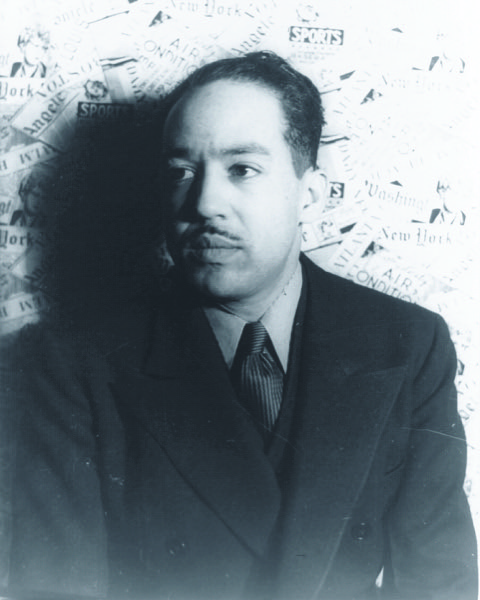
African American writers and poets have for years openly challenged cultural stigmas, creating classic works of literature. Many have earned Pulitzer and Nobel prizes, NAACP and Coretta Scott King Book awards among other honors.
Among these literary giants stands James Mercer Langston Hughes (1902–1967), whose poetry and other writings made him a leading figure in the Harlem Renaissance of the 1920s.
Born in Joplin, Mo., Langston Hughes’s parents separated shortly after he was born. His father relocated to Mexico, and the child was raised by his mother and grandmother. After his grandmother died, he and his mother eventually settled in Cleveland.
Hughes began experimenting with poetry during grammar school. His work was so well liked that he was elected class poet. He stated that “in retrospect,” he thought it was because of the stereotype about African Americans “having rhythm.”
It was summer after he graduated from high school that he penned “The Negro Speaks of Rivers.” Published in The Crisis (1921), a piece that brought him considerable attention and put it his work on the path to being noticed.
That same year Hughes enrolled in New York City’s Columbia College. He left a year later, citing “racial prejudice among students and teachers” as one of the reasons. He describes his first interaction at Columbia as “largely isolating and exclusionary.” In his autobiography Big Sea, he opens a chapter with “I didn’t like Columbia.”
He would later build a relationship with the university––after he became a prominent writer.
After Columbia, Hughes remained in Harlem while working and continuing to write. In 1925, he won an Opportunity magazine poetry prize. Writer Carl Van Vechten then introduced Hughes’s poetry to the publisher Alfred A. Knopf.
“The Weary Blues “was published in 1926.
Hughes also spent time in Washington, D.C., where he worked as a hotel busboy. As poet Vachel Lindsay sat in the hotel’s dining room, Hughes placed three of his own poems beside Lindsay’s plate. The following day, several newspapers reported that Lindsay had “discovered” an African-American busboy poet. Later that year, Hughes received a scholarship to Lincoln University.
He also received the Witter Bynner Undergraduate Poetry Award and published “The Negro Artist and the Racial Mountain” in The Nation.
In 1926, Hughes published a second collection of poetry, “Fine Clothes to the Jew.” It faced great criticism from the Black press. By 1929, he had helped launch the influential magazine Fire!! His first prose volume, “Not Without Laughter” was published in 1930. He traveled in the American South in 1931, then to the Soviet Union, Haiti, Japan, and other countries; and served as a newspaper correspondent (1937) during the Spanish Civil War.
Hughes published countless other works during the 1950s and 1960s, including several books in his series “Simple.” He won several awards including the Anisfeld-Wolfe Award for best book on racial relations, the Spingarn Medal from the NAACP, the Golden Harmon Award and the Guggenheim Fellowship.
Hughes continued writing until he died in 1967.
Sources: https://www.biography.com/writer/langston-hughes
https://www.britannica.com/biography/Langston-Hughes
https://allpoetry.com/Langston-Hughes





Activism
Oakland Post: Week of March 4 – 10, 2026
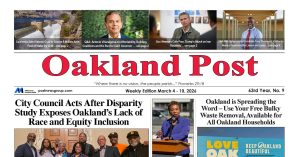
The printed Weekly Edition of the Oakland Post: Week of March 4 – 10, 2026

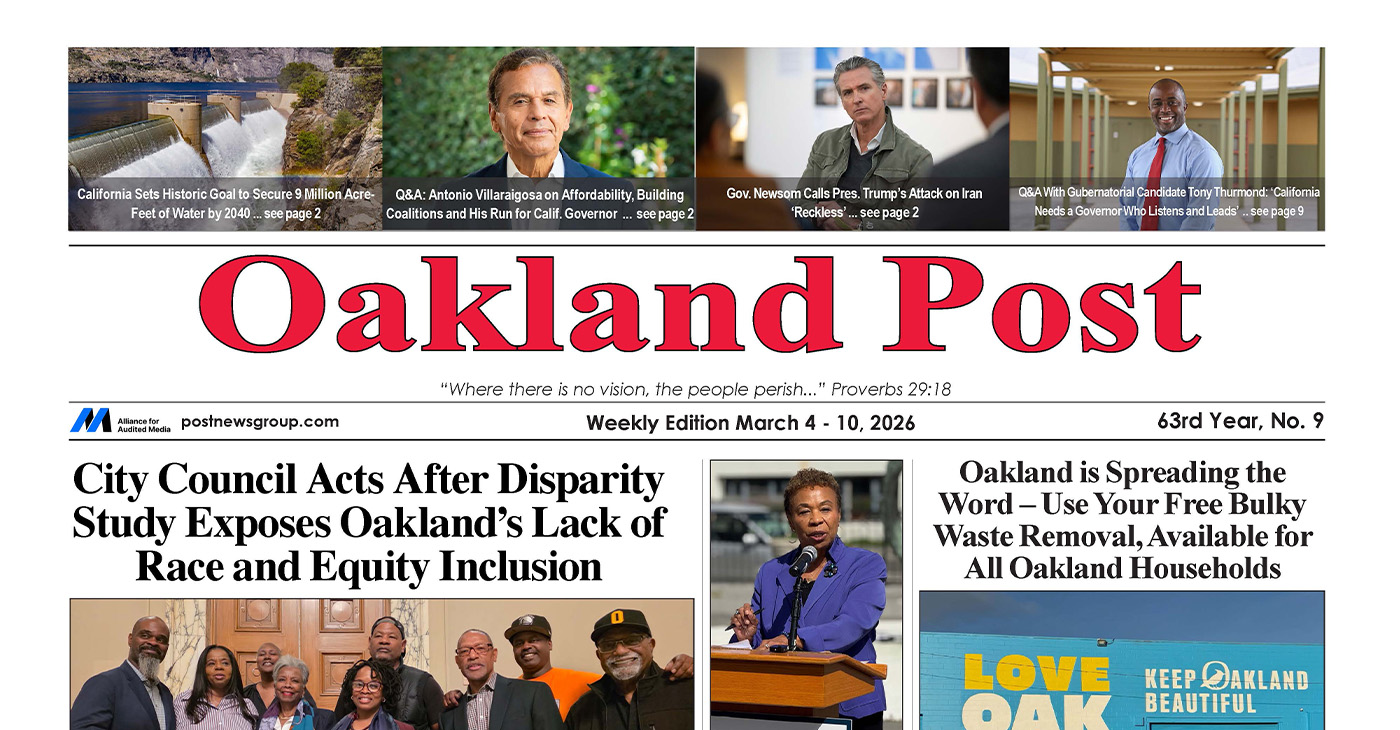
To enlarge your view of this issue, use the slider, magnifying glass icon or full page icon in the lower right corner of the browser window.

Activism
Oakland Post: Week of February 25 – March 3, 2026
The printed Weekly Edition of the Oakland Post: Week of – February 25 – March 3, 2026
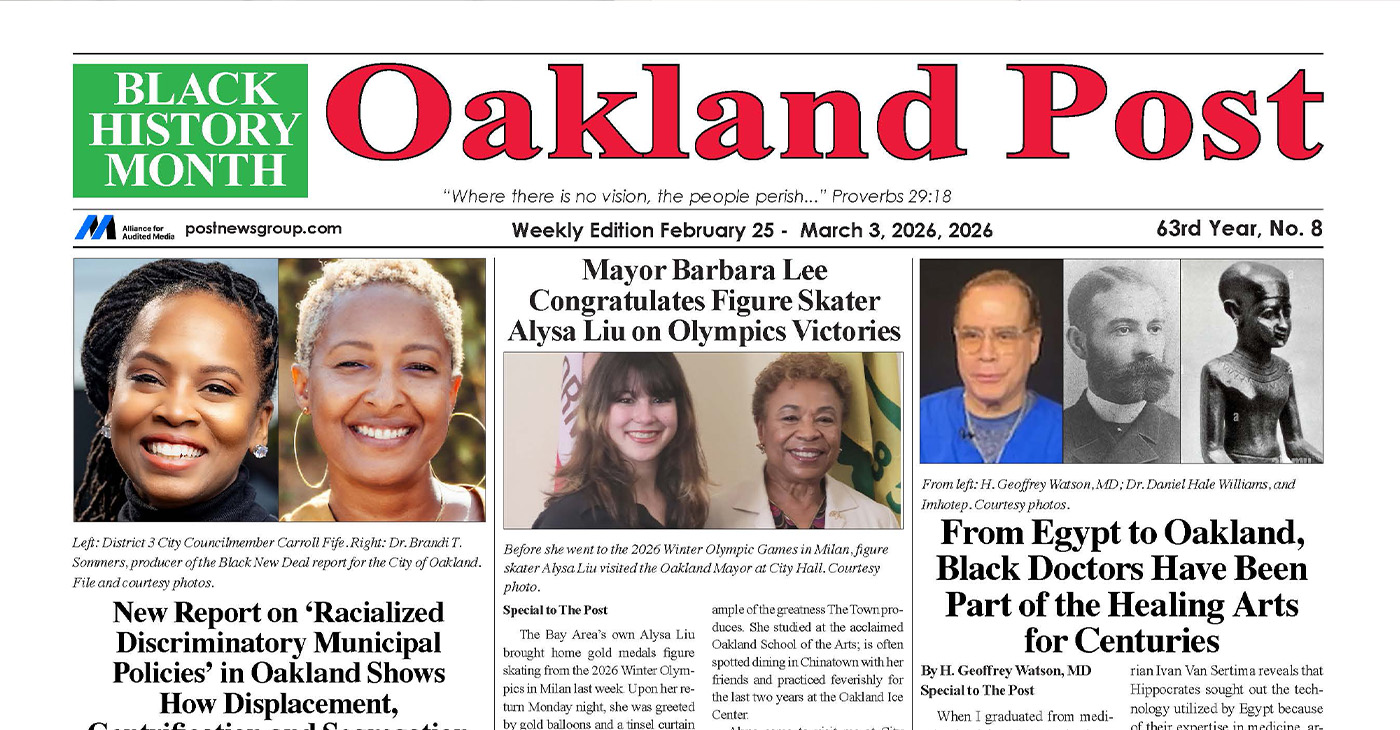
To enlarge your view of this issue, use the slider, magnifying glass icon or full page icon in the lower right corner of the browser window.
Activism
Oakland Post: Week of February 18 – 24, 2026
The printed Weekly Edition of the Oakland Post: Week of – February 18 – 24, 2026
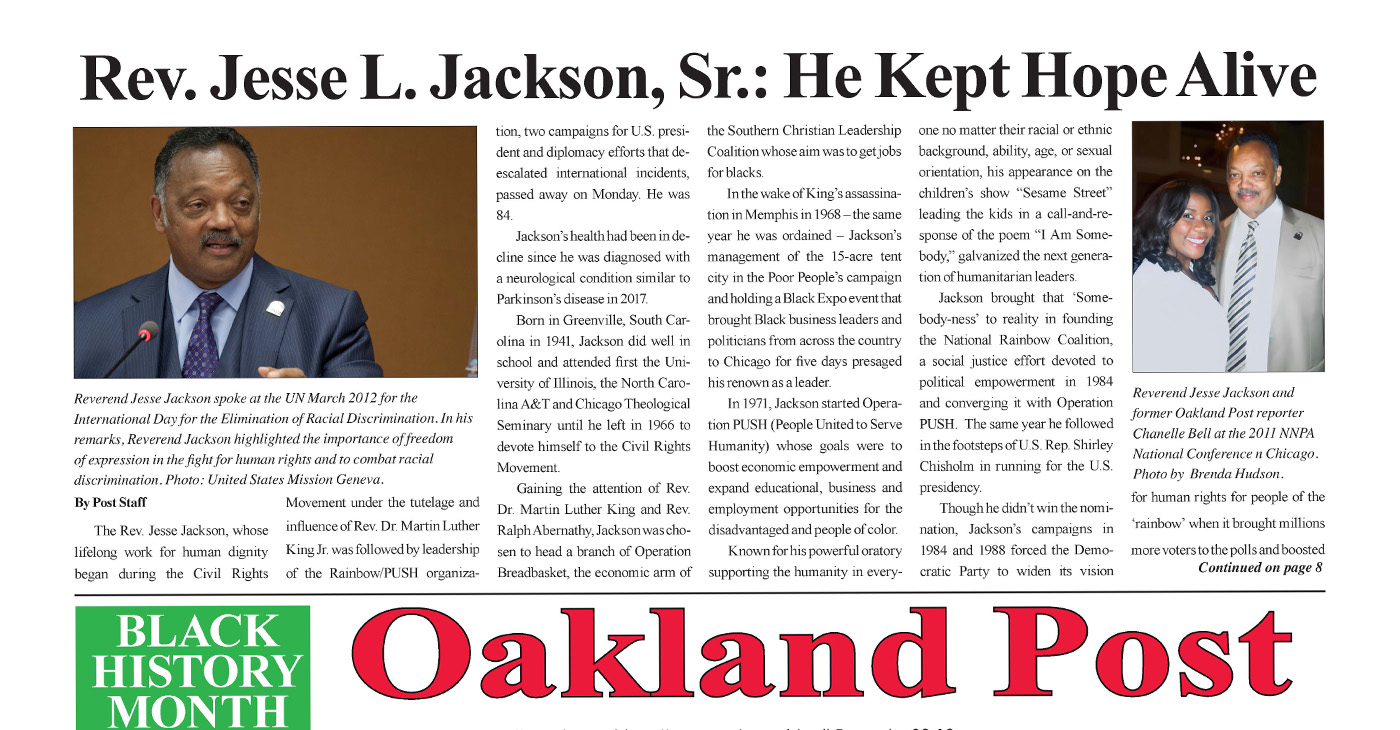
To enlarge your view of this issue, use the slider, magnifying glass icon or full page icon in the lower right corner of the browser window.

WORK FROM HOME
Home-based business with potential monthly income of $10K+ per month. A proven training system and website provided to maximize business effectiveness. Perfect job to earn side and primary income. Contact Lynne for more details: Lynne4npusa@gmail.com 800-334-0540


COMMENTARY: Women of Color Shape Our Past and Future

Woman’s Search for Family’s Roots Leads to Ancestor John T. Ward – A Successful Entrepreneur and Conductor on the Underground Railroad

Advocates Raise Alarm Over ICE Operation, MOU and Detention Risks in Baltimore County

Pete Buttigieg to Join Mayor Randall Woodfin for Community Town Hall in Birmingham

WATCH: Week One – NNPA’s “Leadership Matters” Video Series

Oakland Post: Week of March 4 – 10, 2026

OP-ED: NNPA Launches 2026 “Leadership Matters” Video Series

PRESS ROOM: PMG and Cranbrook Horizons-Upward Bound Launch Journey Fellowship Cohort 2

Los Angeles Summit Brings Together Leaders to Tackle Poverty and Affordability

Civil Rights TV Launches 24/7 Network Focused on Black History, Education and Equity

REVIEW: The Ultimate Hot Girl Summer Getaway: Sunseeker Resort Florida

COMMENTARY: How You Stop a Prescription Medicine is as Important as How You Start

PRESS ROOM: From Congress to Corporate America: NNPA Spotlights Visionaries in New Video Series

Poll Shows Support for Policies That Help Families Afford Child Care

Oakland Post: Week of February 25 – March 3, 2026

Oakland Post: Week of January 28, 2025 – February 3, 2026

Life Expectancy in Marin City, a Black Community, Is 15-17 Years Less than the Rest of Marin County

Community Celebrates Turner Group Construction Company as Collins Drive Becomes Turner Group Drive

California Launches Study on Mileage Tax to Potentially Replace Gas Tax as Republicans Push Back

Discrimination in City Contracts

Book Review: Books on Black History and Black Life for Kids

Oakland Post: Week of January 21 – 27, 2026

COMMENTARY: The Biases We Don’t See — Preventing AI-Driven Inequality in Health Care

Post Newspaper Invites NNPA to Join Nationwide Probate Reform Initiative

Black History Events in the East Bay

Medi-Cal Cares for You and Your Baby Every Step of the Way

Art of the African Diaspora Celebrates Legacy and Community at Richmond Art Center

COMMENTARY: The National Protest Must Be Accompanied with Our Votes

New Bill, the RIDER Safety Act, Would Support Transit Ambassadors and Safety on Public Transit

After Don Lemon’s Arrest, Black Officials Raise Concerns About Independent Black Media

Hyundai Ioniq 5 Parking, Safety, and 360 View #shorts

2025 Ioniq 5 New Wiper & Powerful Performance! #shorts

Electric SUV Range: Is 259 Miles Enough? #shorts

EV Charging: How Fast Can You Charge an Electric Vehicle? #shorts

Biometric Cooling… Messaging Seats…Come on! 2025 Infiniti QX80 Autograph 4WD

Charged Up: Witness the Magic of a Fully Electric Car! #shorts

Range Rover Sport PHEV Included…: See What’s Inside This Luxury SUV! #shorts

Invisible Hood View: Perfect Parking with X-Ray Vision! #shorts

AI Is Reshaping Black Healthcare: Promise, Peril, and the Push for Improved Results in California

ESSAY: Technology and Medicine, a Primary Care Point of View

Sanctuary Cities

The RESISTANCE – FREEDOM NOW

STATE OF THE PEOPLE: Freddie

ECONOMIC BOYCOTT DAY!!!!!

I told You So
-
 Activism4 weeks ago
Community Celebrates Turner Group Construction Company as Collins Drive Becomes Turner Group Drive
-
 Business4 weeks ago
California Launches Study on Mileage Tax to Potentially Replace Gas Tax as Republicans Push Back
-
 Activism4 weeks ago
Discrimination in City Contracts
-
 Arts and Culture4 weeks ago
Book Review: Books on Black History and Black Life for Kids
-
 Activism4 weeks ago
COMMENTARY: The Biases We Don’t See — Preventing AI-Driven Inequality in Health Care
-
 Activism4 weeks ago
Post Newspaper Invites NNPA to Join Nationwide Probate Reform Initiative
-
 #NNPA BlackPress4 weeks ago
COMMENTARY: The National Protest Must Be Accompanied with Our Votes
-
 Activism4 weeks ago
New Bill, the RIDER Safety Act, Would Support Transit Ambassadors and Safety on Public Transit
