
Commentary
LOOKING BACK: In 2018, “Living While Black” Stories Exploded on Social and Mainstream Media
NNPA NEWSWIRE — The national political environment has become contentious with President Trump’s relentless focus on vilifying and stereotyping minorities, particularly Mexican immigrants, while at the same time failing to quickly and affirmatively denounce racism and xenophobia.

By Lauren Victoria Burke, NNPA Newswire Contributor
Whether it was sitting at a Starbucks in Philadelphia, sleeping at college or simply walking to one’s apartment in one’s own building, a major social media trend emerged in 2018. That trend was: Documenting bias and micro-aggressions that would later be featured in mainstream media.
Much of what was documented was recording by the object so many have with them 24/7: Their cell phone. The wave of incidents documented was not new — but the media attention on such stories along with the responses that have followed signals a cultural shift that’s likely to last for years to come.
There were multiple incidents. Below are six that made headlines and garnered widespread media attention:
- In April in Oakland, California, Michelle Snider posted a YouTube video of Jennifer Schulte calling the police on her and her husband Kenzie Smith. Schulte dialed 911 because she was upset they were BBQ’ing in a public park. The story quickly went viral and Schulte was tagged as “BBQ Betty.”
- In May in Connecticut, Sarah Braasch called the police on Yale graduate student Lolade Siyonbola. The problem? after she fell asleep in a common room in her dorm. When police arrived, Siyonbola ran the conversation live on her Facebook Live.
- In May in Philadelphia, two men, Donte Robinson and Rashon Nelson, were arrested at a Starbucks after an employee called the cops on them as they waited for a business meeting to begin. The multi-billion-dollar coffee chain would later close all of its stores to conduct training for all their employees regarding racial bias.
- In August in Madison, Wisconsin, Shelia Stubbs, who is the only African-American on the 37-member Dane County Board of Supervisors, was campaigning in her district when someone called the police.
- In December in New Jersey, Andrew Johnson, a Black high school wrestler, was compelled to have an impromptu pre-match haircut after a referee with a racist incident in his past decided Johnson’s hair violated the rules. The referee, Alan Maloney, was later fired.
- In late December, a security guard at a DoubleTree Hotel called the police on Jermaine Massey as he used a phone in a lobby. Two employees were fired because of the incident.
It was likely not coincidental that such incidents have spiked on social media and in mainstream news during the presidency of Donald Trump.
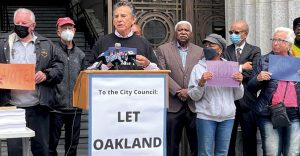
The national political environment has become contentious with President Trump’s relentless focus on vilifying and stereotyping minorities, particularly Mexican immigrants, while at the same time failing to quickly and affirmatively denounce racism and xenophobia.
Hate crimes along with a resurgence of white supremacist groups have been recorded by the Southern Poverty Law Center and other hate watchdog organizations. The incidents have highlighted the power of social media a few years after the birth of Black Lives Matter which also featured the power of social media content.
Lauren Victoria Burke is an independent journalist and writer for NNPA as well as a political analyst and strategist as Principal of Win Digital Media LLC. She may be contacted at LBurke007@gmail.com and on twitter at @LVBurke











Activism
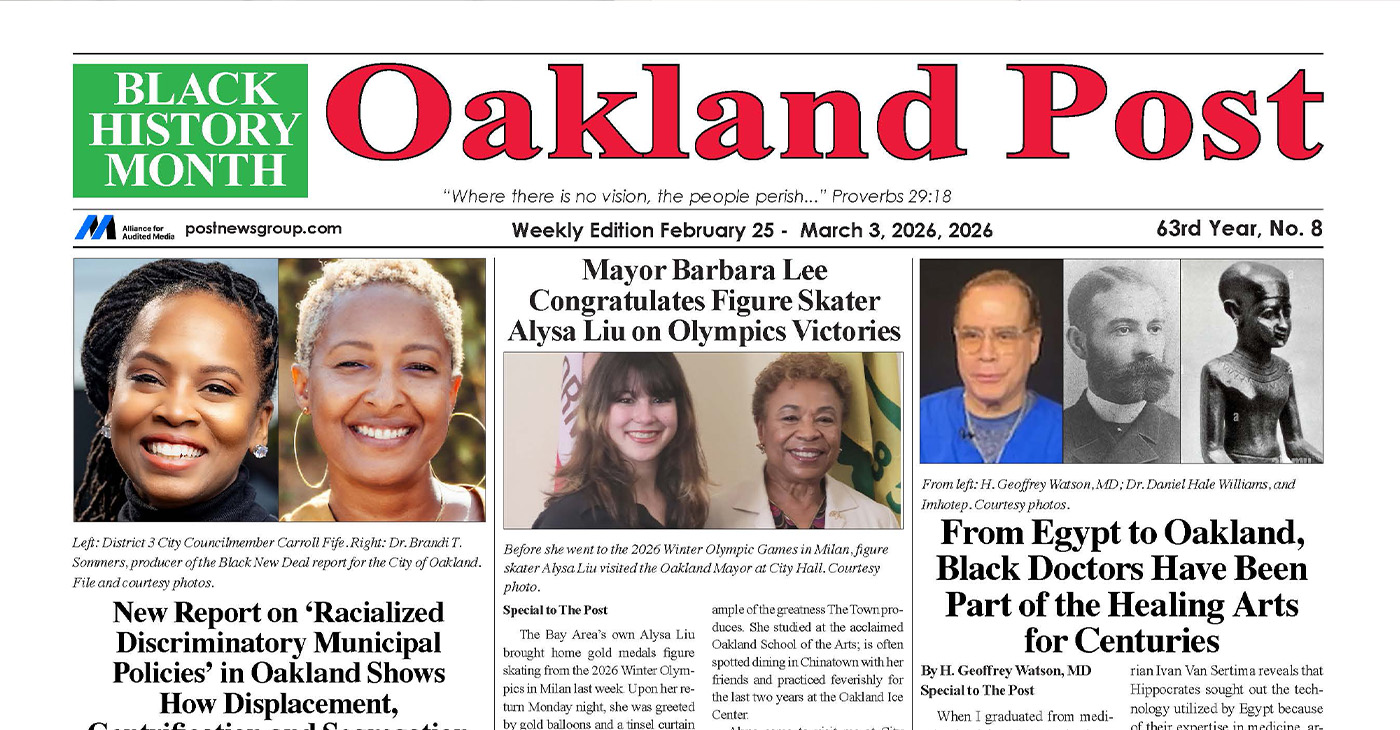
Oakland Post: Week of February 25 – March 3, 2026
The printed Weekly Edition of the Oakland Post: Week of – February 25 – March 3, 2026

To enlarge your view of this issue, use the slider, magnifying glass icon or full page icon in the lower right corner of the browser window.

Activism
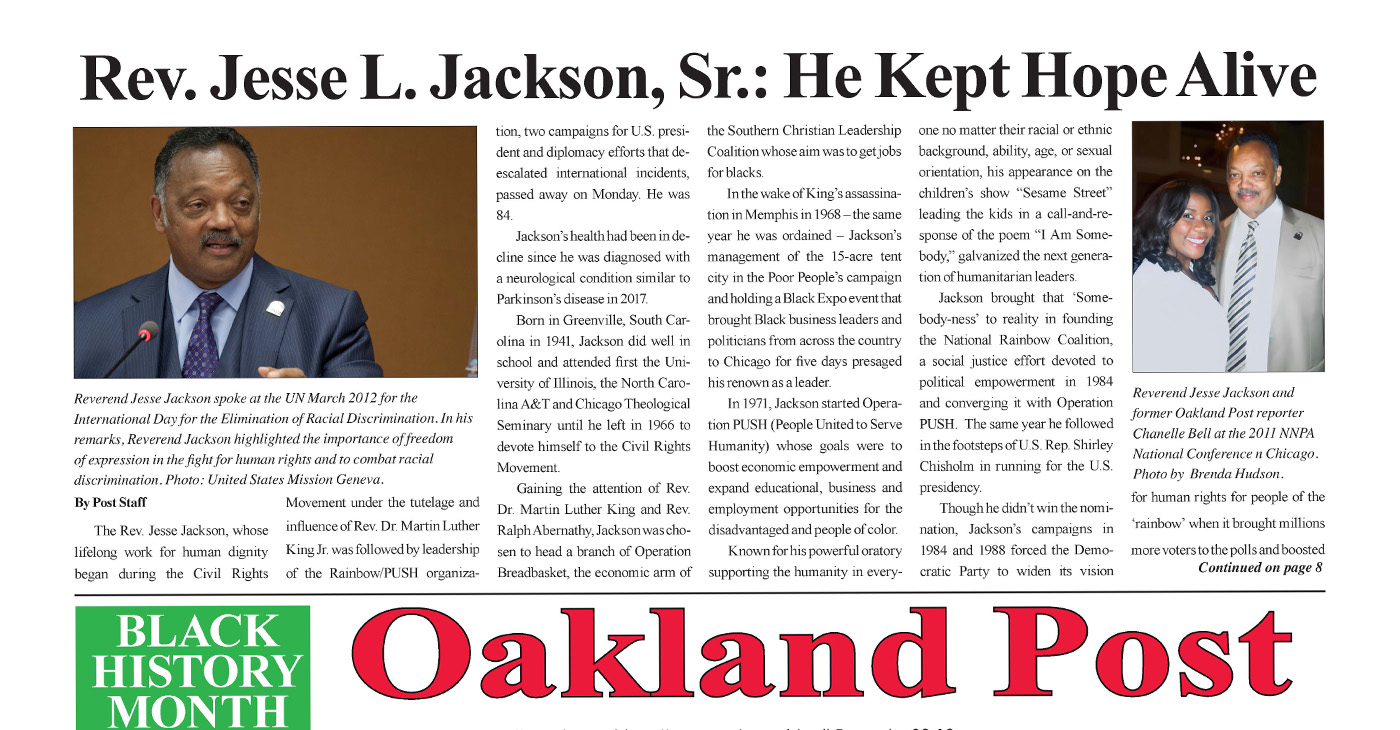
Oakland Post: Week of February 18 – 24, 2026
The printed Weekly Edition of the Oakland Post: Week of – February 18 – 24, 2026
To enlarge your view of this issue, use the slider, magnifying glass icon or full page icon in the lower right corner of the browser window.
Activism
Oakland Post: Week of February 11 – 17, 2026
The printed Weekly Edition of the Oakland Post: Week of – February 11 – 17, 2026

To enlarge your view of this issue, use the slider, magnifying glass icon or full page icon in the lower right corner of the browser window.
WORK FROM HOME
Home-based business with potential monthly income of $10K+ per month. A proven training system and website provided to maximize business effectiveness. Perfect job to earn side and primary income. Contact Lynne for more details: Lynne4npusa@gmail.com 800-334-0540


Poll Shows Support for Policies That Help Families Afford Child Care

Oakland Post: Week of February 25 – March 3, 2026

Trump’s MAGA Allies are Creating Executive Order Plan to Steal the 2026 Midterms

PRESS ROOM: NBA Hall of Fame Nominee Terry Cummings Joins 100 Black Men of DeKalb County to Launch Victory & Values Initiative

Reflecting on Black History Milestones in Birmingham AL

OP-ED: One Hundred Years of Black Workers Telling the Truth

PRESS ROOM: Civil Rights TV Launches in Selma as the World’s First 24/7 Civil Rights Television Network

Advancements in solar technology that are changing the way we power the world

U.S. manufacturing rebounds – how foundry services are adapting to rising demand

Why has blood testing become so popular in today’s world?

Ghana Mourns a Son of the African World

OP-ED: Trump’s Policies Hurt Black America—and Everyone Else

OP-ED: Meta Deleted Me. I Still Don’t Know Why. And neither will you.

More than a Mission: Paying It Forward for the Future of Education

Avoid Eviction This Season: Landlord Checklist for Stable Tenancies

Life Expectancy in Marin City, a Black Community, Is 15-17 Years Less than the Rest of Marin County

Oakland Post: Week of January 28, 2025 – February 3, 2026

Community Celebrates Turner Group Construction Company as Collins Drive Becomes Turner Group Drive

California Launches Study on Mileage Tax to Potentially Replace Gas Tax as Republicans Push Back

Discrimination in City Contracts

Oakland Post: Week of January 21 – 27, 2026

Book Review: Books on Black History and Black Life for Kids

Medi-Cal Cares for You and Your Baby Every Step of the Way

COMMENTARY: The Biases We Don’t See — Preventing AI-Driven Inequality in Health Care

Post Newspaper Invites NNPA to Join Nationwide Probate Reform Initiative

After Don Lemon’s Arrest, Black Officials Raise Concerns About Independent Black Media

OP-ED: The Dream Cannot be Realized Without Financial Freedom

COMMENTARY: The National Protest Must Be Accompanied with Our Votes

Black History Events in the East Bay

Art of the African Diaspora Celebrates Legacy and Community at Richmond Art Center

Hyundai Ioniq 5 Parking, Safety, and 360 View #shorts

2025 Ioniq 5 New Wiper & Powerful Performance! #shorts

Electric SUV Range: Is 259 Miles Enough? #shorts

EV Charging: How Fast Can You Charge an Electric Vehicle? #shorts

Biometric Cooling… Messaging Seats…Come on! 2025 Infiniti QX80 Autograph 4WD

Charged Up: Witness the Magic of a Fully Electric Car! #shorts

Range Rover Sport PHEV Included…: See What’s Inside This Luxury SUV! #shorts

Invisible Hood View: Perfect Parking with X-Ray Vision! #shorts

AI Is Reshaping Black Healthcare: Promise, Peril, and the Push for Improved Results in California

ESSAY: Technology and Medicine, a Primary Care Point of View

Sanctuary Cities

The RESISTANCE – FREEDOM NOW

STATE OF THE PEOPLE: Freddie

ECONOMIC BOYCOTT DAY!!!!!

I told You So

-
 Activism4 weeks ago
Life Expectancy in Marin City, a Black Community, Is 15-17 Years Less than the Rest of Marin County
-
 Activism4 weeks ago
Oakland Post: Week of January 28, 2025 – February 3, 2026
-
 Activism3 weeks ago
Community Celebrates Turner Group Construction Company as Collins Drive Becomes Turner Group Drive
-
 Business3 weeks ago
California Launches Study on Mileage Tax to Potentially Replace Gas Tax as Republicans Push Back
-
 Activism3 weeks ago
Discrimination in City Contracts
-
 Arts and Culture3 weeks ago
Book Review: Books on Black History and Black Life for Kids
-
 Activism4 weeks ago
Medi-Cal Cares for You and Your Baby Every Step of the Way
-
 Activism3 weeks ago
COMMENTARY: The Biases We Don’t See — Preventing AI-Driven Inequality in Health Care
