
Marin County
Marin Youth Court is Now Youth Transforming Justice


Marin Youth Court, a restorative justice program, was established in 2004 at the YMCA San Francisco-Marin. MYC has worked with nearly 1,300 teens and their families, helping young people take accountability for their poor choices while keeping them out of the juvenile justice system.
More than 95% of those entering the program completed the requirements and the recidivism rate is 7%.
As of July 1, 2020, the restorative justice team separated from the YMCA and is operating independently. The new name is Youth Transforming Justice (YTJ), which will continue to run MYC and Suspensions Alternatives programs in the San Rafael schools. YTJ will also run a drug and alcohol harm reduction program and launch a youth advocacy/lobbying component focused on transforming the juvenile justice system.
“Marin Youth Court for 16 years was one program and we are thankful for the partnership with the Y,” said YTJ Associate Director Julie Whyte. Youth Transforming Justice is an expansion of the work done by her, Restorative Justice Associate Antonio Zavala and Don Carney, who is executive director of YTJ and the founder of the Marin Youth Court.
The non-profit status has been filed and is awaiting approval. Until then, YTJ will have the JoMiJo Foundation as its fiscal sponsor.
Contributions can be made via check to ‘The JoMiJo Foundation/Youth Transforming Justice,’ 369-B Third St. #114, San Rafael, CA 94901.

Activism
Life Expectancy in Marin City, a Black Community, Is 15-17 Years Less than the Rest of Marin County
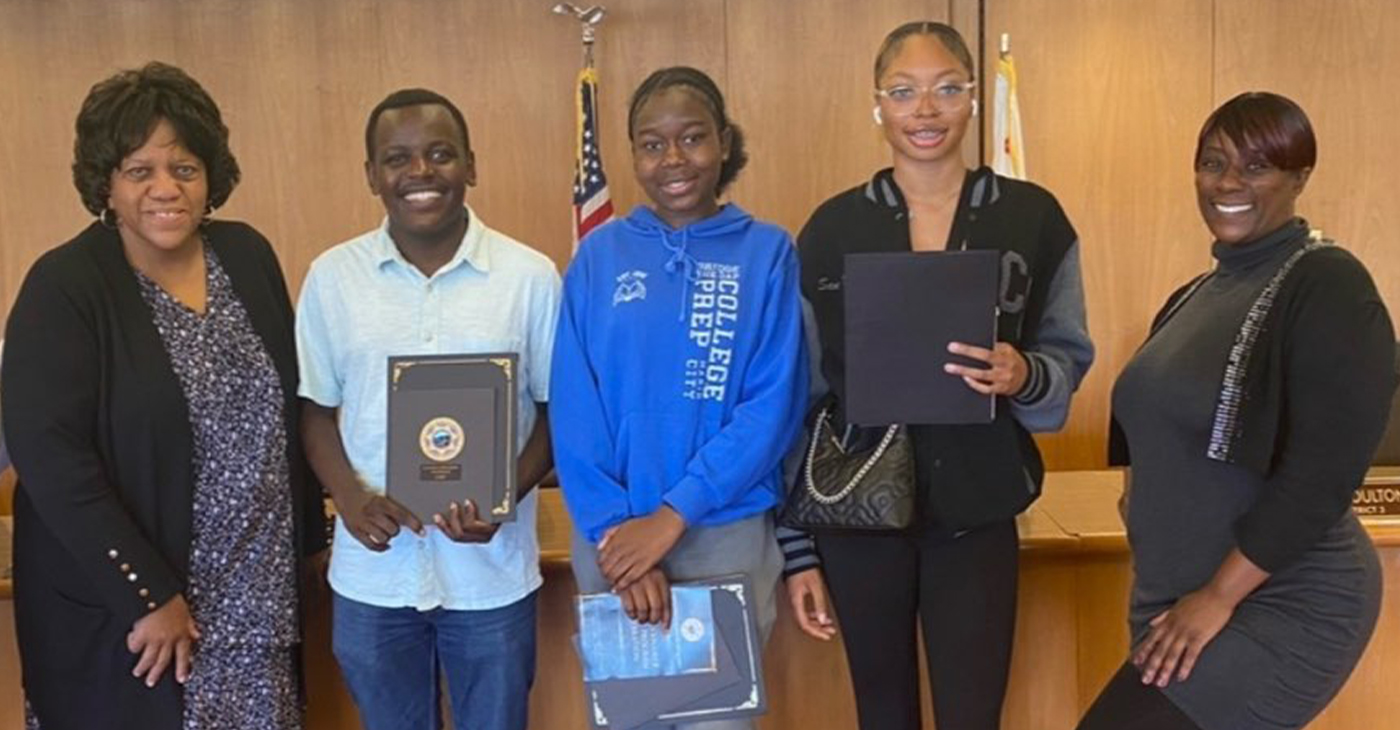
“Marin City residents have been fighting for years just to stay here. Residents live with the fear of being forced out, public housing torn down and rebuilt for the wealthy. Due to ongoing issues continually being ignored, residents feel they must be empowered to make their own decisions for the future survival and protection of their community,” said Terrie Green, a lifelong resident and executive director of Marin City Climate Resilience (MCCR).

By Ken Epstein
People may be aware of the existence of Marin City and know a little about its history as a center of U.S. resistance to fascism in the World War II. But fewer know of the community’s ongoing struggles to survive potential displacement while facing severe toxic health and environmental conditions on a daily basis.
These conditions cause chronic disease and premature death, dramatically shown in the sharp difference in life expectancy between Black and white people living in households only a few miles apart.
A historically African American enclave, Marin City, occupies a 0.5-square mile area between Mill Valley and Sausalito with its own freeway exit near the Golden Gate Bridge. In contrast, the rest of Marin County rates among the healthiest, wealthiest, and most environmentally friendly counties in the country. However, it is one of the least racially equitable counties in California, with Black residents being the most impacted, according to the Advancement Project, a civil rights organization,.
The community owes its continued existence to the World War II generation that came to the Bay Area from the South to work in the shipyards and to the resiliency of its residents. Despite often facing discriminatory practices, such as redlining and a segregated school district, Marin City residents have continually created a strong community rich in culture, spirituality, and community values.

The current statistics are brutal. At present, Marin City residents face more than a 17-year difference in life expectancy compared to neighboring cities and towns. Contributing to these conditions are a lack of investment in public housing and infrastructure: unsafe drinking water, air pollution caused by proximity to the U.S. 101 freeway, unsanitary stormwater drainage that produces mold and mildew, as well as old and broken lead pipes and sewage in homes.
As an unincorporated community, Marin City residents must rely primarily on the elected Marin County Board of Supervisors, Department of Public Works, Transportation Authority of Marin and Caltrans for the decisions and investments that impact their lives.
“Marin City residents have been fighting for years just to stay here. Residents live with the fear of being forced out, public housing torn down and rebuilt for the wealthy. Due to ongoing issues continually being ignored, residents feel they must be empowered to make their own decisions for the future survival and protection of their community,” said Terrie Green, a lifelong resident and executive director of Marin City Climate Resilience (MCCR).
MCCR’s focus is on environmental justice. Its purpose is to empower and advocate for individuals to embrace sustainable living, envision a future free of environmental harm and collectively work towards a better Marin City. MCCR’s motto is “Forever Marin City.”
MCCR has created a unique team of Marin City Youth Environmentalists who have studied and researched environmental issues impacting the health of the community.
Serenity Allen is an MCCR Youth Coordinator/Young Environmentalist studying to be a medical social worker at Xavier University. She has been working in the community for six years. “I strongly believe that where you live should not determine how long you are able to live,” she said.
Allen referred to the work done by former Marin County Public Health Officer Dr. Matt Willis, who stated that Marin City has a 17-year life expectancy difference between residents of Marin City (77 years) and more affluent areas like Ross (94 years).
“The research shows this gap is heavily correlated with race and socioeconomic status. Sausalito, which is not even two miles outside of Marin City, has a life expectancy of 92 years,” Allen said.
“Many elements contribute to this gap,” she said. “A major factor may be the 12 acres of toxic flood waters that pour down off the highway into low-lying Marin City.
In addition, “We do not have a barrier wall protecting us along our highway; the rest of Marin County has 16 barrier walls to protect from noise and air pollution. Marin City has been fighting for a barrier wall since 2008,” she said.
Octavien Green, an MCCR high school environmentalist, spoke about the impact of the absence of recreational facilities on health and wellness, particularly for youth.
“Lack of investment in our recreational facilities means we have fewer spaces and opportunities for physical activity, which contribute to serious health problems like heart disease, diabetes, weak bones and low energy, especially for kids. We are presently involved in an ongoing struggle just to rebuild a sports ball field for the community that’s been unusable for the last 15 years.”
“Marin City is the center of Black culture for all of Marin County,” said Green. “Historically, though, the county has not invested in the community, and you see it in the life expectancy, the highest chronic disease and disability rates and eight times the amount of asthma. In the last six weeks, we’ve had three young people in their 40s and 50s die from heart attacks. This is alarming and must be addressed.”
Looking toward next steps, she said, “The way forward is through incorporation,” which would mean that Marin City would have its own elected leadership to find solutions that determine the future of the community.
This is the first in a series of articles on Marin City, examining conditions in the community and interviewing both community members and public officials.

Activism
Marin Civic Center Library Marks Black History Month with 3 Events
The Civic Center Library’s Afternoon Book Club will celebrate and commemorate Black History and will meet in person on Thursday, Feb. 20 from 1-2 p.m. to discuss “The Nickel Boys” by Colson Whitehead. (This afternoon book club generally meets on the 3rd Thursday of every month from 1:00 p.m. to 2:00 p.m.)

By Godfrey Lee
The Marin County Civic Center Library in San Rafael will be celebrating Black History Month with presentations by Fauna Solomon on the steelpan drum, Keenan D. Webster on West African music and a book club discussion on “The Nickel Boys” by Colson Whitehead.
The library is located at 3501 Civic Center Dr., Room 427, in San Rafael, CA. 94903. Their phone number is (415) 473-6057.
Solomon will be sharing about the history and sounds of the steelpan drum on Friday, Feb. 14, from 12- 12:45 p.m. at the Civic Center Library.
Solomon is a former teacher and professional musician from Guyana, South America, and uses storytelling and performance to explore the complex and dynamic history of the instrument. Having played since age 5, Fauna has performed across the country. Her program traces the steelpan’s evolution from the West Indies to its global recognition, offering insight into its cultural and historical significance.
The Civic Center Library’s Afternoon Book Club will celebrate and commemorate Black History. It will meet in person on Thursday, Feb. 20 from 1-2 p.m. to discuss “The Nickel Boys” by Colson Whitehead. (This afternoon book club generally meets on the 3rd Thursday of every month from 1:00 p.m. to 2:00 p.m.)
A copy of the book can be requested online, or ask at the Info Desk of the Civic Center Library (or call 415-473-6057) for assistance in placing a hold.
“The Nickel Boys” is the story of two boys unjustly sentenced to a hellish reform school in Jim Crow-era Florida and is based on the real story of the Nickel Academy, a reform school that operated for 111 years and warped the lives of thousands of children.
When Elwood Curtis, a Black boy growing up in 1960s Tallahassee, is unfairly sentenced to the Nickel Academy, he finds himself trapped in a grotesque chamber of horrors. Elwood’s only salvation is his friendship with fellow “delinquent” Turner, which deepens despite Turner’s conviction that Elwood is hopelessly naive, that the world is crooked, and that the only way to survive is to scheme and avoid trouble. As life at the academy becomes ever more perilous, the tension between Elwood’s ideals and Turner’s skepticism leads to a decision whose repercussions will echo down the decades.
Later in the afternoon at the Civic Center Library, local musician Keenan D. Webster will be sharing about the traditional instruments of the Mandinka and the Mande-speaking people of West Africa on from 4-5 p.m. on Feb. 20.
Experience the Kora (West African Mandinka harp), the Kamele Ngoni (West African Mande harp), the Balaphone (Mandinka xylophone), and more. Feel the beauty, fire, and energy of this incredible music, and learn how these traditions gave birth to the banjo and influenced blues, jazz, and popular music of today.
Webster was born in Nashville, Tennessee. His love for the blues, spirituals, and gospel and folk music of the South deepened in his youth. As a teenager in Los Angeles, California, he became fascinated with African, Afro-Cuban, reggae, and other music from the African diaspora, and was further inspired to learn about his roots, music, culture and spirituality with the Gullah, Mandinka, Mende and Yoruba people of West Africa.
He started with drums of West Africa and Afro-Cuban roots. Then came jazz and Blues, playing the saxophone and flute, and later the Native American flute. He has a deep appreciation for world music and has familiarized himself with classical music from India, the Middle East, and Southeast Asia. Webster has been on a mission to use music for world peace, healing, to fight against racism, and to bring all people together.
Activism
Andre Thierry Explores Zydeco Music at Marin City Library
Grammy-nominated Andre Thierry leads the musical program with an interactive, engaging experience that combines traditional and newly composed music.

By Godfrey Lee
The “Are You Ready to Learn” music program allows children, families, and adults, to explore the rich Kreole culture and Zydeco music of southwestern Louisiana.
Grammy-nominated Andre Thierry leads the musical program with an interactive, engaging experience that combines traditional and newly composed music.
The program, created by Thierry, showcases a mix of African and Native American Blues and French Kreole dance melodies with elements of Afro-Caribbean music.
Children and families sing and dance while learning about popular Zydeco instruments like vest rub boards, drums, and accordion.
For information on the program, go to https://www.andrethierry.com
The free program will take place on Sunday, Feb. 9, at 1 p.m., at the Marin City Library, 164 Donahue St., in Marin City. For more information, call 415-332-6158.
Thierry will be performing again the Fairfax Library, 2097 Sir Francis Drake Blvd., Fairfax, on Saturday, Feb. 15, at 11 a.m. For more information, call 415-453-8092.


WORK FROM HOME
Home-based business with potential monthly income of $10K+ per month. A proven training system and website provided to maximize business effectiveness. Perfect job to earn side and primary income. Contact Lynne for more details: Lynne4npusa@gmail.com 800-334-0540


COMMENTARY: Women of Color Shape Our Past and Future

Woman’s Search for Family’s Roots Leads to Ancestor John T. Ward – A Successful Entrepreneur and Conductor on the Underground Railroad

Advocates Raise Alarm Over ICE Operation, MOU and Detention Risks in Baltimore County

Pete Buttigieg to Join Mayor Randall Woodfin for Community Town Hall in Birmingham

WATCH: Week One – NNPA’s “Leadership Matters” Video Series

Oakland Post: Week of March 4 – 10, 2026

OP-ED: NNPA Launches 2026 “Leadership Matters” Video Series

PRESS ROOM: PMG and Cranbrook Horizons-Upward Bound Launch Journey Fellowship Cohort 2

Los Angeles Summit Brings Together Leaders to Tackle Poverty and Affordability

Civil Rights TV Launches 24/7 Network Focused on Black History, Education and Equity

REVIEW: The Ultimate Hot Girl Summer Getaway: Sunseeker Resort Florida

COMMENTARY: How You Stop a Prescription Medicine is as Important as How You Start

PRESS ROOM: From Congress to Corporate America: NNPA Spotlights Visionaries in New Video Series

Poll Shows Support for Policies That Help Families Afford Child Care

Oakland Post: Week of February 25 – March 3, 2026

Oakland Post: Week of January 28, 2025 – February 3, 2026

Life Expectancy in Marin City, a Black Community, Is 15-17 Years Less than the Rest of Marin County

Community Celebrates Turner Group Construction Company as Collins Drive Becomes Turner Group Drive

California Launches Study on Mileage Tax to Potentially Replace Gas Tax as Republicans Push Back

Discrimination in City Contracts

Book Review: Books on Black History and Black Life for Kids

COMMENTARY: The Biases We Don’t See — Preventing AI-Driven Inequality in Health Care

Black History Events in the East Bay

Post Newspaper Invites NNPA to Join Nationwide Probate Reform Initiative

Medi-Cal Cares for You and Your Baby Every Step of the Way

Art of the African Diaspora Celebrates Legacy and Community at Richmond Art Center

COMMENTARY: The National Protest Must Be Accompanied with Our Votes

New Bill, the RIDER Safety Act, Would Support Transit Ambassadors and Safety on Public Transit

After Don Lemon’s Arrest, Black Officials Raise Concerns About Independent Black Media

Oakland Post: Week of February 4 – 10, 2026

Hyundai Ioniq 5 Parking, Safety, and 360 View #shorts

2025 Ioniq 5 New Wiper & Powerful Performance! #shorts

Electric SUV Range: Is 259 Miles Enough? #shorts

EV Charging: How Fast Can You Charge an Electric Vehicle? #shorts

Biometric Cooling… Messaging Seats…Come on! 2025 Infiniti QX80 Autograph 4WD

Charged Up: Witness the Magic of a Fully Electric Car! #shorts

Range Rover Sport PHEV Included…: See What’s Inside This Luxury SUV! #shorts

Invisible Hood View: Perfect Parking with X-Ray Vision! #shorts

AI Is Reshaping Black Healthcare: Promise, Peril, and the Push for Improved Results in California

ESSAY: Technology and Medicine, a Primary Care Point of View

Sanctuary Cities

The RESISTANCE – FREEDOM NOW

STATE OF THE PEOPLE: Freddie

ECONOMIC BOYCOTT DAY!!!!!

I told You So
-
 Activism4 weeks ago
Discrimination in City Contracts
-

 Activism4 weeks ago
Oakland Post: Week of February 11 – 17, 2026
-
 #NNPA BlackPress2 weeks ago
Reflecting on Black History Milestones in Birmingham AL
-

 Advice4 weeks ago
Rising Optimism Among Small And Middle Market Business Leaders Suggests Growth for California
-

 Bay Area3 weeks ago
CITY OF SAN LEANDRO STATE OF CALIFORNIA PUBLIC WORKS DEPARTMENT ENGINEERING DIVISION NOTICE TO BIDDERS FOR ANNUAL STREET OVERLAY/REHABILITATION 2019-21 – PHASE III
-

 #NNPA BlackPress2 weeks ago
U.S. manufacturing rebounds – how foundry services are adapting to rising demand
-

 #NNPA BlackPress2 weeks ago
PRESS ROOM: NBA Hall of Fame Nominee Terry Cummings Joins 100 Black Men of DeKalb County to Launch Victory & Values Initiative
-

 #NNPA BlackPress2 weeks ago
Advancements in solar technology that are changing the way we power the world
