
Alameda County
More Cuts Coming to WCCUSD Amid Declining Enrollment
The WCCUSD is currently in the second year of a 2024-2026 fiscal solvency plan. Fiscal insolvency could place the district under state receivership, which would mean it would no longer be in charge of making the financial decisions.

The Richmond Standard
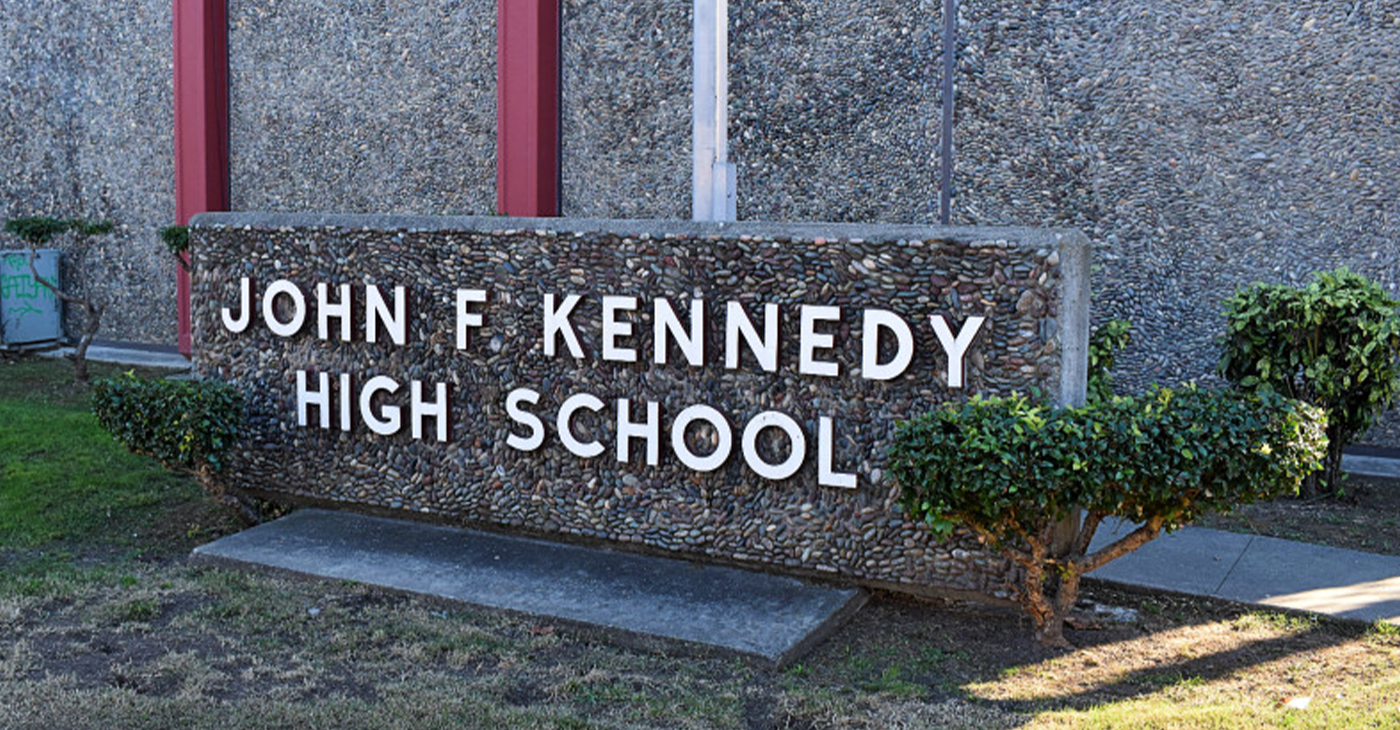
In the wake of $19 million in cuts it experienced this fiscal year, the West Contra Costa Unified School District (WCCUSD) says it needs to make another $13.2 million in cuts to staffing and programs over the next three fiscal years as declining enrollment continues to impact the district’s operating budget.
The WCCUSD is currently in the second year of a 2024-2026 fiscal solvency plan. Fiscal insolvency could place the district under state receivership, which would mean it would no longer be in charge of making the financial decisions.
Last year as part of the plan, the district identified $19 million in budget reductions. Now, the district is looking to make another $7.2 million in cuts for the 2025-26 fiscal year, and another $6 million in the 2026-27 fiscal year.
The Board of Education was asked last week to approve staff’s cost-cutting proposals, which includes the elimination of 43 positions next fiscal year, or about 1.28 percent of the district’s total staffing.
Of those positions, 26 would be members of the United Teachers of Richmond, the union representing teachers, counselors, psychologists, early childhood educators and nurses.
Another 47 positions, including 19 members of the United Teachers of Richmond, are proposed to be cut the following fiscal year.

In a newsletter last month, WCCUSD Interim Superintendent Dr. Kim Moses said the district is looking to make reductions that have “the least impact on student programming and school staffing.”
“Although no one wants to make reductions in WCCUSD, continuing our fiscal solvency plan is necessary to ensure the district’s fiscal solvency and maintain local control over budget decisions,” Dr. Moses stated.
Even with the proposed cuts, the district said it will still lean too heavily on its reserves. It doesn’t help that state and federal funding sources available during the COVID-19 pandemic recovery no longer exist.
A main source for the loss in operating revenue is declining enrollment, a problem facing a number of districts, particularly those in the expensive Bay Area, according to the district.
In California, the amount of unrestricted state funding each district receives is determined by student attendance. The district has seen enrollment drop by nearly 3,000 students since the 2019-2020 school year, from 28,247 total students to 25,273 in 2024-2025, which has also led to reduced state funding. The district says 10.5 percent of the enrollment decline was experienced amid the COVID pandemic.
Enrollment is projected to drop by roughly another 500 students by fiscal year 2026-2027.
While attendance-based funding is declining, compensation packages for WCCUSD staff have increased since 2019, with salaries up by over 19.5 percent and benefits up by 26.2 percent, according to the district.
The education publication EdSource reported that the WCCUSD was the first in the state to become insolvent in 1991, resulting in a $29 million “bailout loan” that took two decades to pay off.
Speaking to EdSource, Francisco Ortiz, president of United Teachers of Richmond, warned about further cutting staff, saying most schools in the district are regularly using substitute teachers. He recommended drawing down the rainy-day reserves to keep teachers, as it is currently a rainy day financially.
“Our most vulnerable students are the ones receiving the blunt end of this. Cutting classroom teachers is not the answer,” Ortiz told EdSource.








Activism
Chase Oakland Community Center Hosts Alley-Oop Accelerator Building Community and Opportunity for Bay Area Entrepreneurs
Over the past three years, the Alley-Oop Accelerator has helped more than 20 Bay Area businesses grow, connect, and gain meaningful exposure. The program combines hands-on training, mentorship, and community-building to help participants navigate the legal, financial, and marketing challenges of small business ownership.
By Carla Thomas

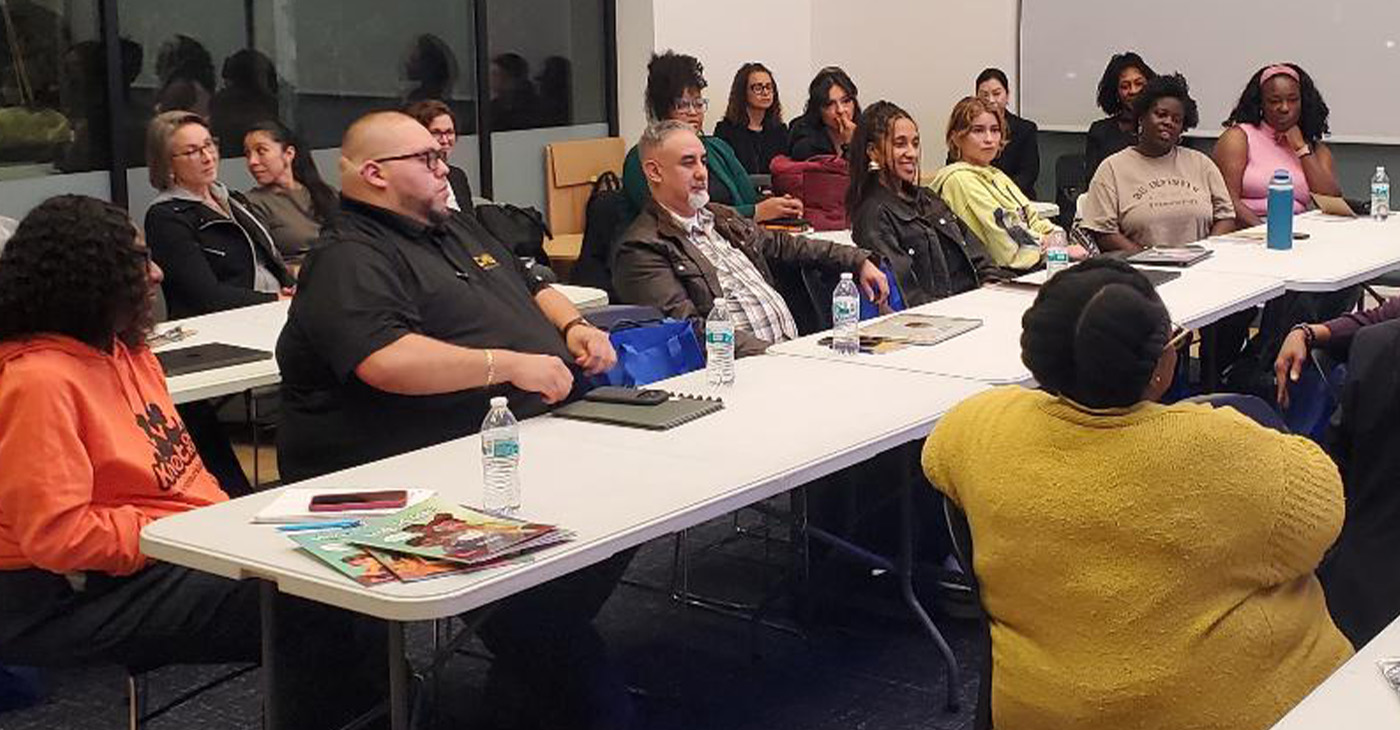
The Golden State Warriors and Chase bank hosted the third annual Alley-Oop Accelerator this month, an empowering eight-week program designed to help Bay Area entrepreneurs bring their visions for business to life.
The initiative kicked off on Feb. 12 at Chase’s Oakland Community Center on Broadway Street, welcoming 15 small business owners who joined a growing network of local innovators working to strengthen the region’s entrepreneurial ecosystem.
Over the past three years, the Alley-Oop Accelerator has helped more than 20 Bay Area businesses grow, connect, and gain meaningful exposure. The program combines hands-on training, mentorship, and community-building to help participants navigate the legal, financial, and marketing challenges of small business ownership.
At its core, the accelerator is designed to create an ecosystem of collaboration, where local entrepreneurs can learn from one another while accessing the resources of a global financial institution.
“This is our third year in a row working with the Golden State Warriors on the Alley-Oop Accelerator,” said Jaime Garcia, executive director of Chase’s Coaching for Impact team for the West Division. “We’ve already had 20-plus businesses graduate from the program, and we have 15 enrolled this year. The biggest thing about the program is really the community that’s built amongst the business owners — plus the exposure they’re able to get through Chase and the Golden State Warriors.”
According to Garcia, several graduates have gone on to receive vendor contracts with the Warriors and have gained broader recognition through collaborations with JPMorgan Chase.
“A lot of what Chase is trying to do,” Garcia added, “is bring businesses together because what they’ve asked for is an ecosystem, a network where they can connect, grow, and thrive organically.”
This year’s Alley-Oop Accelerator reflects that vision through its comprehensive curriculum and emphasis on practical learning. Participants explore the full spectrum of business essentials including financial management, marketing strategy, and legal compliance, while also preparing for real-world experiences such as pop-up market events.
Each entrepreneur benefits from one-on-one mentoring sessions through Chase’s Coaching for Impact program, which provides complimentary, personalized business consulting.
Garcia described the impact this hands-on approach has had on local small business owners. He recalled one candlemaker, who, after participating in the program, was invited to provide candles as gifts at Chase events.
“We were able to help give that business exposure,” he explained. “But then our team also worked with them on how to access capital to buy inventory and manage operations once those orders started coming in. It’s about preparation. When a hiccup happens, are you ready to handle it?”
The Coaching for Impact initiative, which launched in 2020 in just four cities, has since expanded to 46 nationwide.
“Every business is different,” Garcia said. “That’s why personal coaching matters so much. It’s life-changing.”
Participants in the 2026 program will each receive a $2,500 stipend, funding that Garcia said can make an outsized difference. “It’s amazing what some people can do with just $2,500,” he noted. “It sounds small, but it goes a long way when you have a plan for how to use it.”
For Chase and the Warriors, the Alley-Oop Accelerator represents more than an educational initiative, it’s a pathway to empowerment and economic inclusion. The program continues to foster lasting relationships among the entrepreneurs who, as Garcia put it, “build each other up” through shared growth and opportunity.
“Starting a business is never easy, but with the right support, it becomes possible, and even exhilarating,” said Oscar Lopez, the senior business consultant for Chase in Oakland.
Activism
Post Newspaper Invites NNPA to Join Nationwide Probate Reform Initiative
The Post’s Probate Reform Group meets the first Thursday of every month via Zoom and invites the public to attend. The Post is making the initiative national and will submit information from its monthly meeting to the NNPA to educate, advocate, and inform its readers.

By Tanya Dennis
The National Newspaper Publishers Association (NNPA) represents the Black press with over 200 newspapers nationwide.
Last night the Post announced that it is actively recruiting the Black press to inform the public that there is a probate “five-alarm fire” occurring in Black communities and invited every Black newspaper starting from the Birmingham Times in Alabama to the Milwaukee Times Weekly in Wisconsin, to join the Post in our “Year of Action” for probate reform.
The Post’s Probate Reform Group meets the first Thursday of every month via Zoom and invites the public to attend. The Post is making the initiative national and will submit information from its monthly meeting to the NNPA to educate, advocate, and inform its readers.
Reporter Tanya Dennis says, “The adage that ‘When America catches a cold, Black folks catch the flu” is too true in practice; that’s why we’re engaging the Black Press to not only warn, but educate the Black community regarding the criminal actions we see in probate court: Thousands are losing generational wealth to strangers. It’s a travesty that happens daily.”
Venus Gist, a co-host of the reform group, states, “ Unfortunately, people are their own worst enemy when it comes to speaking with loved ones regarding their demise. It’s an uncomfortable subject that most avoid, but they do so at their peril. The courts rely on dissention between family members, so I encourage not only a will and trust [be created] but also videotape the reading of your documents so you can show you’re of sound mind.”
In better times, drafting a will was enough; then a trust was an added requirement to ‘iron-clad’ documents and to assure easy transference of wealth.
No longer.
As the courts became underfunded in the last 20 years, predatory behavior emerged to the extent that criminality is now occurring at alarming rates with no oversight, with courts isolating the conserved, and, I’ve heard, many times killing conservatees for profit. Plundering the assets of estates until beneficiaries are penniless is also common.”
Post Newspaper Publisher Paul Cobb says, “The simple solution is to avoid probate at all costs. If beneficiaries can’t agree, hire a private mediator and attorney to work things out. The moment you walk into court, you are vulnerable to the whims of the court. Your will and trust mean nothing.”
Zakiya Jendayi, a co-host of the Probate Reform Group and a victim herself, says, “In my case, the will and trust were clear that I am the beneficiary of the estate, but the opposing attorney said I used undue influence to make myself beneficiary. He said that without proof, and the judge upheld the attorney’s baseless assertion. In court, the will and trust is easily discounted.”
The Black press reaches out to 47 million Black Americans with one voice. The power of the press has never been so important as it is now in this national movement to save Black generational wealth from predatory attorneys, guardians and judges.
The next probate reform meeting is on March 5, from 7 – 9 p.m. PST. Zoom Details:
Meeting ID: 825 0367 1750
Passcode: 475480
All are welcome.
Activism
Community Celebrates Turner Group Construction Company as Collins Drive Becomes Turner Group Drive
The event drew family, friends, and longtime supporters of Turner Group Construction, along with a host of dignitaries. The mood was joyful and warm, filled with hugs, handshakes and belated New Year’s greetings. Guests enjoyed hors d’oeuvres and a festive display of gourmet cupcakes as they conversed about the street sign reveal.
By Carla Thomas
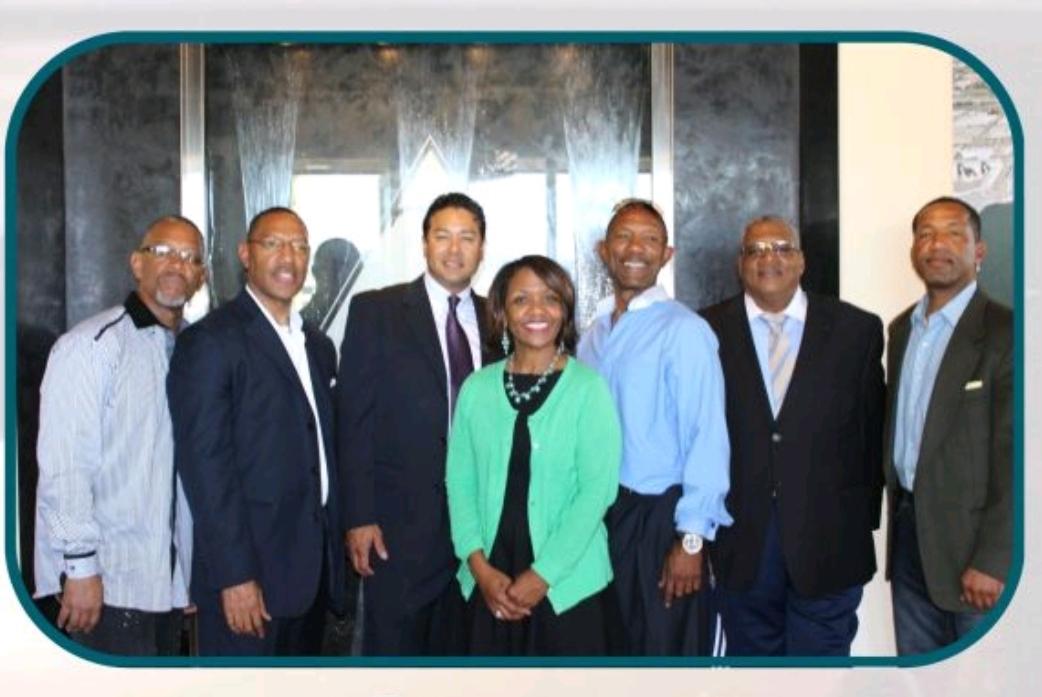
It was a family affair on Friday, Jan. 23, at the corner of Hegenberger Road and Collins Drive in East Oakland as community members, local leaders, and elected officials gathered to celebrate the renaming of Collins Drive to Turner Group Drive. The renaming saluted the Turner Group’s 45-plus years of economic development and community investment.
The event drew family, friends, and longtime supporters of Turner Group Construction, along with a host of dignitaries. The mood was joyful and warm, filled with hugs, handshakes and belated New Year’s greetings. Guests enjoyed hors d’oeuvres and a festive display of gourmet cupcakes as they conversed about the street sign reveal.
Special guests included former Alameda County Supervisor Keith Carson, veteran broadcaster Valerie Coleman-Morris, Chevron Senior Public Affairs Representative Andrea Bailey, community leaders Cephus “Uncle Bobby” Johnson and Beatrice “Aunt Bea” Johnson of the Oscar Grant Foundation, and Oakland City Councilmembers Ken Houston, Carroll Fife, and Kevin Jenkins. Members of WEBCORE, the Nor Cal Carpenters Union, the National Association of Minority Contractors (NAMC), Swinerton and Alten construction companies, activists Elaine Brown and David Newton, and many others joined the celebration.
Inside the event tent, an emotional Oakland City Councilmember Ken Houston spoke of his deep connection to the Turner family.

“I grew up on the same street with the Turners,” he said. “When my father passed away, their parents and siblings embraced me like family. This is our city, and it’s an honor to name this street Turner Group Drive because of the love and effort this company and family have given. Many dreams came out of this building. I wouldn’t be where I am today without the Turners.”
Councilmember Kevin Jenkins, whose father once taught the Turner brothers, added, “Len Turner is an amazing person. He’ll help anyone.”
Oakland Mayor Barbara Lee praised the company’s legacy, noting its creation of the Construction Resource Center, which trains and mentors the next generation of builders and developers through partnerships across the region. “This is a great day for Oakland and a profound acknowledgment of the Turner Group’s contribution to our community,” she said.
Fife echoed that sentiment: “This is a day for celebrating Black excellence. The Turner Group has poured into people and the community, showing us what’s possible.”
Among the many family members in attendance was the Turners’ 92-year-old patriarch, whose presence underscored the strength of the family’s legacy.
A touching highlight of the event came when Coleman-Morris was honored for her lasting mentorship of LaTanya Hawkins, now program manager of the Construction Resource Center. In 1979, Hawkins, then a fourth-grader, wrote Coleman-Morris a letter seeking advice. Coleman responded with words of encouragement that inspired Hawkins to pursue her dreams. The two stayed in touch for decades. On stage, they embraced as Coleman reflected on “the power of small acts of kindness to change a life.”
Coleman-Morris also shared reflections on leadership and community spirit, saying, “If we change the way we look at things, the things we see will change.” She then recited the Serenity Prayer, reminding the crowd, “We are a powerful community, we just need to believe it.”
Company leaders Len and Lance Turner closed the ceremony with words of gratitude and humor. Len thanked his mother, wife, family, legal team, and longtime supporters including Carson, Geoffrey Pete, and the late Dorothy King of Everett & Jones Barbecue. He also acknowledged the challenges the company had overcome, saying, “Without all of this support, I wouldn’t be here today.”
Through Turner Group Construction and the Construction Resource Center, the Turners have created new opportunities for underrepresented groups in the construction industry and continue to inspire the next generation of builders.

WORK FROM HOME
Home-based business with potential monthly income of $10K+ per month. A proven training system and website provided to maximize business effectiveness. Perfect job to earn side and primary income. Contact Lynne for more details: Lynne4npusa@gmail.com 800-334-0540


PRESS ROOM: NBA Hall of Fame Nominee Terry Cummings Joins 100 Black Men of DeKalb County to Launch Victory & Values Initiative

Reflecting on Black History Milestones in Birmingham AL

OP-ED: One Hundred Years of Black Workers Telling the Truth

PRESS ROOM: Civil Rights TV Launches in Selma as the World’s First 24/7 Civil Rights Television Network

Advancements in solar technology that are changing the way we power the world

U.S. manufacturing rebounds – how foundry services are adapting to rising demand

Why has blood testing become so popular in today’s world?

Ghana Mourns a Son of the African World

OP-ED: Trump’s Policies Hurt Black America—and Everyone Else

OP-ED: Meta Deleted Me. I Still Don’t Know Why. And neither will you.

More than a Mission: Paying It Forward for the Future of Education

Avoid Eviction This Season: Landlord Checklist for Stable Tenancies

How chronic back problems affect Black communities differently

How cancer care is evolving with modern medicine

Diabetes disparity: Understanding Type 2 risks for Black Americans

Life Expectancy in Marin City, a Black Community, Is 15-17 Years Less than the Rest of Marin County

Oakland Post: Week of January 28, 2025 – February 3, 2026

Community Celebrates Turner Group Construction Company as Collins Drive Becomes Turner Group Drive

California Launches Study on Mileage Tax to Potentially Replace Gas Tax as Republicans Push Back

Discrimination in City Contracts

Oakland Post: Week of January 21 – 27, 2026

Book Review: Books on Black History and Black Life for Kids

Medi-Cal Cares for You and Your Baby Every Step of the Way

COMMENTARY: The Biases We Don’t See — Preventing AI-Driven Inequality in Health Care

After Don Lemon’s Arrest, Black Officials Raise Concerns About Independent Black Media

Post Newspaper Invites NNPA to Join Nationwide Probate Reform Initiative

OP-ED: The Dream Cannot be Realized Without Financial Freedom

COMMENTARY: The National Protest Must Be Accompanied with Our Votes

Four Stolen Futures: Will H-E-B Do The Right Thing?

Black History Events in the East Bay

Hyundai Ioniq 5 Parking, Safety, and 360 View #shorts

2025 Ioniq 5 New Wiper & Powerful Performance! #shorts

Electric SUV Range: Is 259 Miles Enough? #shorts

EV Charging: How Fast Can You Charge an Electric Vehicle? #shorts

Biometric Cooling… Messaging Seats…Come on! 2025 Infiniti QX80 Autograph 4WD

Charged Up: Witness the Magic of a Fully Electric Car! #shorts

Range Rover Sport PHEV Included…: See What’s Inside This Luxury SUV! #shorts

Invisible Hood View: Perfect Parking with X-Ray Vision! #shorts

AI Is Reshaping Black Healthcare: Promise, Peril, and the Push for Improved Results in California

ESSAY: Technology and Medicine, a Primary Care Point of View

Sanctuary Cities

The RESISTANCE – FREEDOM NOW

STATE OF THE PEOPLE: Freddie

ECONOMIC BOYCOTT DAY!!!!!

I told You So

-
 Activism4 weeks ago
Life Expectancy in Marin City, a Black Community, Is 15-17 Years Less than the Rest of Marin County
-
 Activism4 weeks ago
Oakland Post: Week of January 28, 2025 – February 3, 2026
-
 Activism3 weeks ago
Community Celebrates Turner Group Construction Company as Collins Drive Becomes Turner Group Drive
-
 Business3 weeks ago
California Launches Study on Mileage Tax to Potentially Replace Gas Tax as Republicans Push Back
-
 Activism3 weeks ago
Discrimination in City Contracts
-
 Arts and Culture3 weeks ago
Book Review: Books on Black History and Black Life for Kids
-
 Activism4 weeks ago
Medi-Cal Cares for You and Your Baby Every Step of the Way
-
 Activism3 weeks ago
COMMENTARY: The Biases We Don’t See — Preventing AI-Driven Inequality in Health Care
