
Advice
Mortgage Rates Are Dropping: What it Means for California Homeowners and Homebuyers
The Federal Reserve (the Fed), the U.S.’ central bank that dictates interest rates, continues to indicate that a potential rate cut is on the horizon. Not only can this impact affordability for prospective buyers, but it could be advantageous for current homeowners that are locked into higher interest rates. But, what does this all mean? Chase Bank answers some of your questions as it relates to prospective homebuyers and homeowners:


Sponsored by JPMorganChase

Homeownership is more than just a lofty American dream—it’s how many can build generational wealth. For the Black community, 90% of wealth gains come from homeownership, meaning that owning a home continues to be a crucial method for Black and Latino households to build and accumulate wealth.
The Federal Reserve (the Fed), the U.S.’ central bank that dictates interest rates, continues to indicate that a potential rate cut is on the horizon. Not only can this impact affordability for prospective buyers, but it could be advantageous for current homeowners that are locked into higher interest rates.
But, what does this all mean? Chase Bank answers some of your questions as it relates to prospective homebuyers and homeowners:
What role do interest rates play in buying a home?
Mortgages respond to market conditions, including the Fed’s monetary policy. As interest rates climb, so do the interest on new mortgages and mortgage payments. Conversely, if rates fall, so does the interest on mortgages. So, buying at a lower rate can save you money in mortgage payments.
Should I wait to buy a home once interest rates fall?
Timing the market perfectly is not only challenging, but near impossible to do. While we hope the Fed will cut rates this year, it’s never guaranteed. Lower interest rates can save you money, but they’re not the only factor affecting affordability. So, instead of focusing on perfectly timing the market, we recommend leaning into what you can control: being financially prepared to buy a home.

Outside of readying your finances for homeownership, you can look for options that can lower costs and promote savings such as low down payment mortgages, down payment assistance programs and grants. And don’t forget you always can buy a home now and refinance in the future once rates drop.
How do I prepare myself to buy a home in this current environment?
We not only want consumers to attain homeownership but to sustain it. That’s why it’s important to understand what exactly you can afford before getting into the market. There are a variety of resources to help you prepare financially for buying a home to see how much you can afford in the areas you’re looking to buy, compare loan options and obtain a free credit score. You’ll also want to start compiling all of your necessary documents for pre-approval, such as W2s, bank statements, income documentation, etc.
What about the down payment? Do I need to have 20% of the home cost saved up?
Most first-time home buyers are singularly focused on saving for a down payment. However, long gone are the days of putting down 20% of the purchase price – low down payment loan options are available with some requiring as low as 3% down. Plus, there are a variety of incentives and grants that can lower your costs. For instance, Chase offers a homebuyer grant of up to $7,500, where eligible, to help with the interest rate, closing costs, and the down payment. These grants are offered in low- to moderate-income communities and neighborhoods that are designated by the U.S. Census as majority-Black, Hispanic and/or Latino.
Should I only work with one lender for my mortgage?
Studies show that 45% of borrowers who shopped around for mortgages received lower offers. Make lenders compete for your business – many have varying fees and closing costs that can add up. Also, interest rates can fluctuate daily, so lock in your rate with your lender if they offer that option for extra peace of mind.
I’m an existing homebuyer. How does a rate cut impact my situation?
It can be a good time to refinance when interest rates are going down, especially for those with rates above or at 7%. For current homeowners looking to refinance, we advise them to keep their end goal in mind as they consider whether refinancing makes sense for their personal situation. Work with your local advisor or using a Refinance Savings Calculator to understand when it makes sense for your specific situation to refinance.
Why should I refinance when rates are lower?
When interest rates are lower, you may be able to refinance your loan for a shorter term without seeing much of a change in your monthly payment. Even if your payments are higher, you may see significant savings over the life of your loan by making fewer interest payments. For example, you may decide to refinance a 30-year loan into a 15-year loan. While it has higher monthly payments, you’ll pay the loan down faster and pay less in interest.
Whether we’ll see a rate cut or not, there are many tools for first-time homebuyers and experienced owners to keep homeownership affordable and sustainable. For more information visit Chase.com/afford to start your journey, invest in your future and save in the long run.
For informational/educational purposes only: Views and strategies described may not be appropriate for everyone and are not intended as specific advice/recommendation for any individual. Information has been obtained from sources believed to be reliable, but JPMorgan Chase & Co. or its affiliates and/or subsidiaries do not warrant its completeness or accuracy.
Deposit products provided JPMorgan Chase Bank, N.A. Member FDIC
© 2024 JPMorgan Chase & Co.





Advice
Rising Optimism Among Small And Middle Market Business Leaders Suggests Growth for California
“Business leaders across the Pacific region continue to demonstrate a unique blend of resilience and forward-thinking, even in the face of ongoing economic uncertainty,” said Brennon Crist, Managing Director and Head of the Pacific Segment, Commercial Banking, J.P. Morgan. “Their commitment to innovation and growth is evident in the way they adapt to challenges and seize new opportunities. It’s this spirit that keeps our region at the forefront of business leadership and progress. We look forward to helping our clients navigate all that’s ahead in 2026.”

Sponsored by JPMorganChase
Business optimism is returning for small and midsize business leaders at the start of 2026, fueling confidence and growth plans.
The 2026 Business Leaders Outlook survey, released in January by JPMorganChase reveals a turnaround from last June, when economic headwinds and uncertainty about shifting policies and tariffs caused some leaders to put their business plans on hold.
Midsize companies, who often find themselves more exposed to geopolitical shifts and policy changes, experienced a significant dip in business and economic confidence in June of 2025. As they have become more comfortable with the complexities of today’s environment, we are seeing optimism rebounding in the middle market nationwide – an encouraging sign for growth, hiring, and innovation. Small businesses, meanwhile, maintained steady optimism throughout 2025, but they aren’t shielded from domestic concerns. Many cited inflation and wage pressures as the top challenges for 2026 and are taking steps to ensure their businesses are prepared for what’s ahead.
“Business leaders across the Pacific region continue to demonstrate a unique blend of resilience and forward-thinking, even in the face of ongoing economic uncertainty,” said Brennon Crist, Managing Director and Head of the Pacific Segment, Commercial Banking, J.P. Morgan. “Their commitment to innovation and growth is evident in the way they adapt to challenges and seize new opportunities. It’s this spirit that keeps our region at the forefront of business leadership and progress. We look forward to helping our clients navigate all that’s ahead in 2026.”
Overall, both small and midsize business leaders are feeling more confident to pursue growth opportunities, embrace emerging technologies and, in some cases, forge new strategic partnerships. That bodes well for entrepreneurs in California. Here are a few other key findings from the Business Leaders Outlook about trends expected to drive activity this year:
- Inflation remains the top concern for small business owners. Following the 2024 U.S. presidential election, many anticipated a favorable business environment. By June 2025, however, that feeling shifted amid concerns about political dynamics, tariffs, evolving regulations and global economic headwinds.
Going into 2026, 37% of respondents cited inflation as their top concern. Rising taxes came in second at 27% and the impact of tariffs was third at 22%. Other concerns included managing cash flow, hiring and labor costs.
- For middle market leaders, uncertainty remains an issue. Almost half (49%) of all midsize business leaders surveyed cited “economic uncertainty” as their top concern – even with an improved outlook from a few months ago. Revenue and sales growth was second at 33%, while tariffs and labor both were third at 31%.
- And tariffs are impacting businesses costs. Sixty-one percent of midsize business leaders said tariffs have had a negative impact on the cost of doing business.
- Despite challenges, leaders are bullish on their own enterprises. Though the overall outlook is mixed, 74% of small business owners and 71% of middle market companies are optimistic about their company’s prospects for 2026.
- Adaption is the theme. For small business owners surveyed across the U.S., responding to continuing pressures is important in 2026. Building cash reserves (47%), renegotiating supplier terms (36%) and ramping up investments in marketing and technology are among the top priorities.
- Big plans are on the horizon. A majority midsized company leaders expect revenue growth this year, and nearly three out of five of (58%) plan to introduce new products or services in the coming year, while 53% look to expand into new domestic and/or international markets. Forty-nine percentsay they’re pursuing strategic partnerships or investments.
The bottom line
Rebounding optimism among U.S. business leaders at the start of the year is setting the stage for an active 2026. With business leaders looking to implement ambitious growth plans that position themselves for the future, momentum in California could be beneficial for leaders looking to launch, grow or scale their business this year.
Activism
Can You Afford a Mortgage but Not the Down Payment? Dream For All Offers Up to $150K
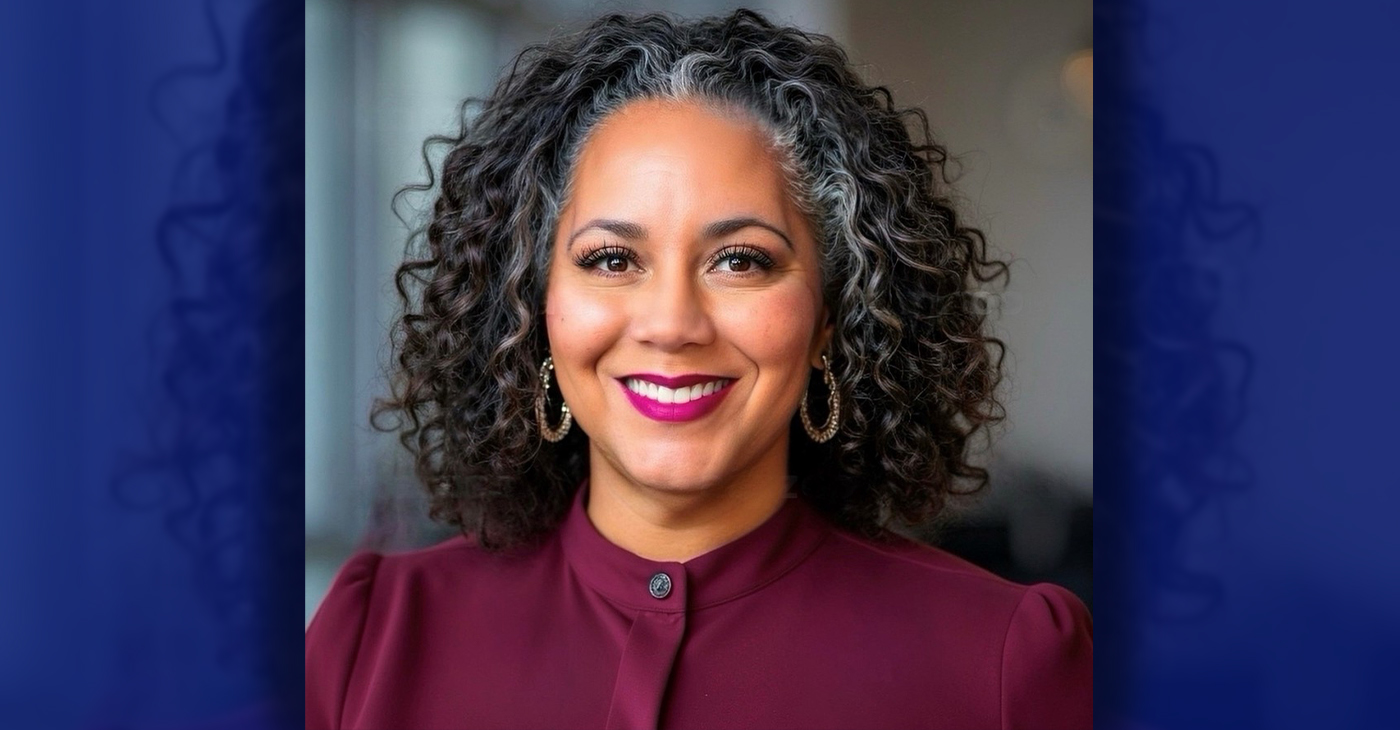
Duvernay-Smith’s journey exemplifies the transformative potential of Dream For All, a program designed to help first-generation homebuyers across California. Applications will open on Feb. 24, and close on March 16. The program uses a random selection process to ensure equitable access, and Gov. Gavin Newsom’s office has directed that a minimum of 10% of funds go to applicants in Qualified Census Tracts — communities that historically faced discriminatory or unfair barriers to home ownership.
By Tanu Henry, California Black Media
Tiffany Duvernay-Smith went from knowing the harsh realities of homelessness to owning her first home – made possible by the California Housing Finance Agency’s (CalHFA) Dream For All program, which is reopening applications this month with up to $150,000 in down payment assistance for first-generation buyers.
“I feel like I was the least likely person,” says Duvernay-Smith, who is Coordinator for the Los Angeles Homeless Services Authority’s Lived Experience Board, a published journalist, artist and outspoken advocate for unhoused people, people living with disabilities and domestic violence survivors.
“I didn’t know my story would change from homeless to homeowner,” she added. “But if there’s a house with your name on it, nothing can stop you.”
Duvernay-Smith’s journey exemplifies the transformative potential of Dream For All, a program designed to help first-generation homebuyers across California. Applications will open on Feb. 24 and close on March 16. The program uses a random selection process to ensure equitable access, and Gov. Gavin Newsom’s office has directed that at least 10% of funds be allocated to applicants in Qualified Census Tracts—communities that have historically faced discriminatory or unfair barriers to homeownership.
For eligible participants, the program provides up to 20% of the home’s purchase price or appraised value as down payment assistance, capped at $150,000.
CalHFA expects to make $150 million to $200 million available in 2026, potentially helping 1,000 to 1,500 families, with a total of approximately 2,000 households supported through the 2025–26 budget allocation of $300 million.
The program is particularly impactful for Black Californians, who continue to face the highest rates of homelessness across the state and significant barriers to homeownership due to decades of discriminatory housing policies and wealth inequities.
“Black Californians continue to face some of the widest homeownership gaps in the state,” says Regina Brown Wilson, Executive Director of California Black Media. “Programs like Dream For All are critical because they directly address generational inequities.”
Wilson spoke during an online news briefing on Jan. 30 that featured Eric Johnson, information officer in CalHFA’s Marketing and Communications Division, and Shonta Clark, senior loan consultant and CalHFA program educator, home counselor, and broker in Southern California.
“There are a lot of people in California with steady jobs, good incomes, and strong credit scores – but who haven’t been able to save the five or even six figures needed for a down payment on a home,” says Johnson. “That’s exactly what Dream For All is designed to address.
Eligibility requirements focus on first-generation homebuyers—those who have not owned a home in the past seven years and whose parents do not currently own one. CalHFA defines a “first-time homebuyer” as someone who has not owned and lived in their own home in the past three years. Foster youth are automatically considered first-generation homebuyers, reflecting the program’s commitment to reaching Californians who have faced systemic barriers, CalHFA says.
Applicants must work with CalHFA-approved lenders and provide standard documentation such as government-issued IDs and parental information.
Johnson encourages applicants to remain optimistic.
“Take the first step. Despite high interest rates and high prices, it is still possible to buy your first home in California. Believe in yourself and know that homeownership is meant for you,” says Johnson.
#NNPA BlackPress
Why Black Parents Should Consider Montessori
BLACKPRESSUSA NEWSWIRE — I have found that there are some educational approaches that consistently provide a safer, more enriching, and more affirmative environment for Black children. The Montessori method, developed by Italian physician Maria Montessori and introduced to the U.S. in the early 20th century, is one such approach.

As a mother of four children, I’ve done A LOT of school shopping. I don’t mean the autumn ritual of purchasing school supplies. I mean shopping for schools – pouring over promotional materials, combing through websites, asking friends and community members for referrals to their favorite schools, attending open houses and orientations, comparing curriculums and educational philosophies, meeting teachers and principals, and students who all claim that their school is the best.
But keep in mind – I’m not just a mom of four children. I’m a mom of four Black children, and I’m also a psychologist who is very interested in protecting my little ones from the traumatic experience that school can too often become.
For Black children in the United States, school can sometimes feel more like a prison than an educational institution. Research shows that Black students experience school as more hostile and demoralizing than other students do, that they are disciplined more frequently and more harshly for typical childhood offenses (such as running in the halls or chewing gum in class), that they are often labeled as deviant or viewed as deficient more quickly than other children, that teachers have lower academic expectations of Black students (which, in turn, lowers those students’ expectations of themselves), and that Black parents feel less respected and less engaged by their children’s teachers and school administrators. Perhaps these are some of the underlying reasons that Black students tend to underperform in most schools across the country.

The truth is that schools are more than academic institutions. They are places where children go to gain a sense of who they are, how they relate to others, and where they fit into the world. The best schools are places that answer these questions positively – ‘you are a valuable human being, you are a person who will grow up to contribute great things to your community, and you belong here, with us, exploring the world and learning how to use your gifts.’ Unfortunately, Black children looking for answers to these universal questions of childhood will often hit a brick wall once they walk into the classroom. If the curriculum does not reflect their cultural experiences, the teachers don’t appear to value them, and they spend most of their time being shamed into compliance rather than guided towards their highest potential, well…what can we really expect? How are they supposed to master basic academic skills if their spirits have been crushed?
Here’s the good news. In my years of school shopping, and in the research of Black education specialists such as Jawanza Kunjufu and Amos Wilson, I have found that there are some educational approaches that consistently provide a safer, more enriching, and more affirmative environment for Black children. The Montessori method, developed by Italian physician Maria Montessori and introduced to the U.S. in the early 20th century, is one such approach.
The key feature of Montessori schooling is that children decide (for the most part) what they want to do each day. Led by their own interests and skill levels, children in a Montessori classroom move around freely and work independently or with others on tasks of their own
choosing. The classroom is intentionally stocked with materials tailored to the developmental needs of children, including the need to learn through different senses (sight, touch/texture, movement, etc.). The teacher in a Montessori classroom is less like a boss and more like a caring guide who works with each child individually, demonstrating various activities and then giving them space to try it on their own. The idea is that over time, students learn to master even the toughest tasks and concepts, and they feel an intense sense of pride and accomplishment because they did it by themselves, without pressure or pushing.
I think that this aspect of the Montessori method is good for all kids. Do you remember the feeling of having your creativity or motivation crushed by being told exactly what to do, when to do it, how to do it, and why? The truth is that when presented with a new challenge and then given space, children actually accomplish a lot! They are born with a natural desire to learn. It is that spirit of curiosity, sense of wonder, and excitement to explore that Montessori helps to keep alive in a child. But that’s not the only reason that I think Black parents need to consider Montessori.
Fostering a love of learning is great. But more importantly, I think that Montessori students excel at learning to love. It begins with Montessori’s acknowledgement that all children are precious because childhood is a precious time. In many school systems, Black children are treated like miniature adults (at best) or miniature criminals (at worst), and are subjected to stressful situations that no kids are equipped to handle – expectations to be still and silent for long periods, competitive and high-stakes testing, and punitive classroom discipline. It’s easy to get the sense that rather than being prepared for college or careers, our children are being prepared to fail. Couple this with the aforementioned bias against Black children that seems to run rampant within the U.S. school system, and you end up with children who feel burned out and bitter about school by the time they hit 3rd grade.
In my experience, Montessori does a better job of protecting the space that is childhood – and all the joy of discovery and learning that should come along with that. Without the requirement that students “sit down and shut up,” behavioral issues in Montessori classrooms tend to be non-existent (or at least, the Montessori method doesn’t harp on them; children are gently redirected rather than shamed in front of the class). Montessori students don’t learn for the sake of tests; they demonstrate what they’ve learned by sharing with their teacher or classmates how they solve real-world problems using the skills they’ve gained through reading, math, or science activities. And by allowing children a choice of what to focus on throughout the day, Montessori teachers demonstrate that they honor and trust children’s natural intelligence. The individualized, careful attention they provide indicates to children that they are each seen, heard, and valued for who they are, and who they might become. Now that’s love (and good education).
As a parent, I’ve come to realize that many schools offer high-quality academics. Montessori is no different. Students in Montessori schools gain exposure to advanced concepts and the materials to work with these concepts hands-on. Across the nation, Montessori schools emphasize early literacy development, an especially important indicator of life success for young Black boys and men. Montessori students are provided with the opportunity to be
successful every day, and the chance to develop a sense of competence and self-worth based on completing tasks at their own pace.
But I have also learned that the important questions to ask when school shopping are often not about academics at all. I now ask, ‘Will my children be treated kindly? Will they be listened to? Protected from bias and bullying? Will they feel safe? Will this precious time in their lives be honored as a space for growth, development, awe, and excitement? Will they get to see people like them included in the curriculum? Will they be seen as valuable even if they don’t always ‘measure up’ to other kids on a task? Will they get extra support if they need it? Will the school include me in major decisions? Will the school leaders help to make sure that my children reach their fullest potential? Will the teacher care about my children almost as much as I do?’
Consistently, it’s been the Montessori schools that have answered with a loud, resounding ‘Yes!’ That is why my children ended up in Montessori schools, and I couldn’t be happier with that decision. If you’re a parent like me, shopping for schools with the same questions in mind, I’d urge you to consider Montessori education as a viable option for your precious little ones. Today more than ever, getting it right for our children is priceless.


WORK FROM HOME
Home-based business with potential monthly income of $10K+ per month. A proven training system and website provided to maximize business effectiveness. Perfect job to earn side and primary income. Contact Lynne for more details: Lynne4npusa@gmail.com 800-334-0540


PRESS ROOM: NBA Hall of Fame Nominee Terry Cummings Joins 100 Black Men of DeKalb County to Launch Victory & Values Initiative

Reflecting on Black History Milestones in Birmingham AL

OP-ED: One Hundred Years of Black Workers Telling the Truth

PRESS ROOM: Civil Rights TV Launches in Selma as the World’s First 24/7 Civil Rights Television Network

Advancements in solar technology that are changing the way we power the world

U.S. manufacturing rebounds – how foundry services are adapting to rising demand

Why has blood testing become so popular in today’s world?

Ghana Mourns a Son of the African World

OP-ED: Trump’s Policies Hurt Black America—and Everyone Else

OP-ED: Meta Deleted Me. I Still Don’t Know Why. And neither will you.

More than a Mission: Paying It Forward for the Future of Education

Avoid Eviction This Season: Landlord Checklist for Stable Tenancies

How chronic back problems affect Black communities differently

How cancer care is evolving with modern medicine

Diabetes disparity: Understanding Type 2 risks for Black Americans

Life Expectancy in Marin City, a Black Community, Is 15-17 Years Less than the Rest of Marin County

Oakland Post: Week of January 28, 2025 – February 3, 2026

Community Celebrates Turner Group Construction Company as Collins Drive Becomes Turner Group Drive

California Launches Study on Mileage Tax to Potentially Replace Gas Tax as Republicans Push Back

Discrimination in City Contracts

Oakland Post: Week of January 21 – 27, 2026

Book Review: Books on Black History and Black Life for Kids

Medi-Cal Cares for You and Your Baby Every Step of the Way

COMMENTARY: The Biases We Don’t See — Preventing AI-Driven Inequality in Health Care

After Don Lemon’s Arrest, Black Officials Raise Concerns About Independent Black Media

Post Newspaper Invites NNPA to Join Nationwide Probate Reform Initiative

OP-ED: The Dream Cannot be Realized Without Financial Freedom

COMMENTARY: The National Protest Must Be Accompanied with Our Votes

Four Stolen Futures: Will H-E-B Do The Right Thing?

Black History Events in the East Bay

Hyundai Ioniq 5 Parking, Safety, and 360 View #shorts

2025 Ioniq 5 New Wiper & Powerful Performance! #shorts

Electric SUV Range: Is 259 Miles Enough? #shorts

EV Charging: How Fast Can You Charge an Electric Vehicle? #shorts

Biometric Cooling… Messaging Seats…Come on! 2025 Infiniti QX80 Autograph 4WD

Charged Up: Witness the Magic of a Fully Electric Car! #shorts

Range Rover Sport PHEV Included…: See What’s Inside This Luxury SUV! #shorts

Invisible Hood View: Perfect Parking with X-Ray Vision! #shorts

AI Is Reshaping Black Healthcare: Promise, Peril, and the Push for Improved Results in California

ESSAY: Technology and Medicine, a Primary Care Point of View

Sanctuary Cities

The RESISTANCE – FREEDOM NOW

STATE OF THE PEOPLE: Freddie

ECONOMIC BOYCOTT DAY!!!!!

I told You So

-
 Activism4 weeks ago
Life Expectancy in Marin City, a Black Community, Is 15-17 Years Less than the Rest of Marin County
-
 Activism4 weeks ago
Oakland Post: Week of January 28, 2025 – February 3, 2026
-
 Activism3 weeks ago
Community Celebrates Turner Group Construction Company as Collins Drive Becomes Turner Group Drive
-
 Business3 weeks ago
California Launches Study on Mileage Tax to Potentially Replace Gas Tax as Republicans Push Back
-
 Activism3 weeks ago
Discrimination in City Contracts
-
 Arts and Culture3 weeks ago
Book Review: Books on Black History and Black Life for Kids
-
 Activism4 weeks ago
Medi-Cal Cares for You and Your Baby Every Step of the Way
-
 Activism3 weeks ago
COMMENTARY: The Biases We Don’t See — Preventing AI-Driven Inequality in Health Care
