
Commentary
Myrtis Dightman: The Jackie Robinson of Rodeo
Dightman never finished higher than third in the world standings despite his skills and showmanship. He retired in 1989 after a 30-year career. In 1997, he became the first living African American to be inducted into the Rodeo Hall of Fame.


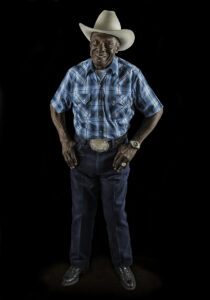
Myrtis Dightman Jr.
Despite what television westerns and American lore demonstrate, 1 in 4 of the real-life trailblazing, sharpshooting, horseback-riding cowboys were Black.
While Texas ranchers went off to war, their slaves maintained the cattle herds. It was then that they learned to tend cattle, a skill that would make them invaluable in the post-Civil War era. The cowboy lifestyle would soon came into its own in Texas cattle country. It remains a way of life today, especially for Myrtis Dightman (1935–).
Born in Crockett, Texas, Dightman is an esteemed cowboy and a pioneer bull rider. His father, Myrtis Dightman Sr., was a Hall-of-Fame bull rider who broke the color barrier in 1964 when he became the first Black cowboy to compete in the National Finals Rodeo. Dightman Jr. was raised on a ranch and quit school at age 15 to work there full time, alongside his brother, after their father’s death.
Living the ranch lifestyle, cowboys and rodeos piqued Dightman’s interest at an early age. Yet he always found it odd that there were “so few Black cowboys competing in rodeos.” And that, he later said, was the main reason he “jumped into the rodeo arena.”
Dightman first participated in the Prairie View Trail Ride in 1957, which had been established that year to promote Black western heritage. From 1958 to 1960 he worked as a bullfighter. In 1960 he began as a bull rider, competing more than five times in the world championship bull-riding competition. In 1966 he became the first black cowboy to qualify for the Professional Rodeo Association National Finals.
As the competition years passed, he would come close to, but not touch, the championship title. This wasn’t because he wasn’t qualified, or that the bulls’ their bucking was stronger than his ride. According to Dightman, “The championship title would disappear from my grasp each time a judge put the pencil to the paper.”
Years later Dightman would ask a fellow cowboy what it would take for him to win a world title. His friend offered: “Keep riding like you’ve been riding and turn white.”
Dightman would go on to qualify six more times, finishing third in the Professional Rodeo Cowboys Association World Standings in 1967 and 1968. He also won the Calgary Stampede in 1971. The following year, he won the bull-riding competition at the Cheyenne Frontier Days Rodeo and finished seventh in the world in the Professional Rodeo Association National Finals.
Dightman never finished higher than third in the world standings despite his skills and showmanship. He retired in 1989 after a 30-year career. In 1997, he became the first living African American to be inducted into the Rodeo Hall of Fame.
Despite the covert racism Dightman endured during his years on the rodeo circuit, he never lost his inner drive. He made it possible for future Black cowboys to participate in national events, and win.











Activism
Oakland Post: Week of March 4 – 10, 2026
The printed Weekly Edition of the Oakland Post: Week of March 4 – 10, 2026

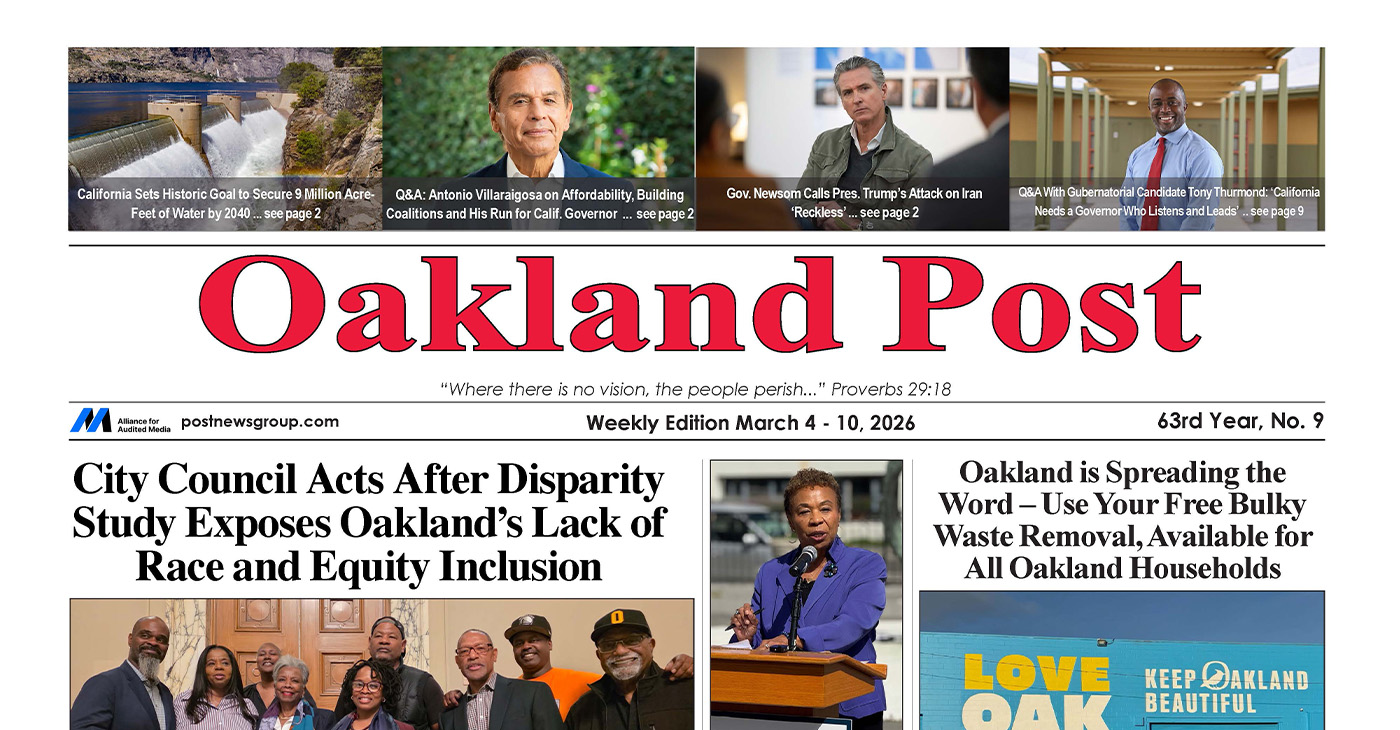
To enlarge your view of this issue, use the slider, magnifying glass icon or full page icon in the lower right corner of the browser window.

Activism
Oakland Post: Week of February 25 – March 3, 2026
The printed Weekly Edition of the Oakland Post: Week of – February 25 – March 3, 2026
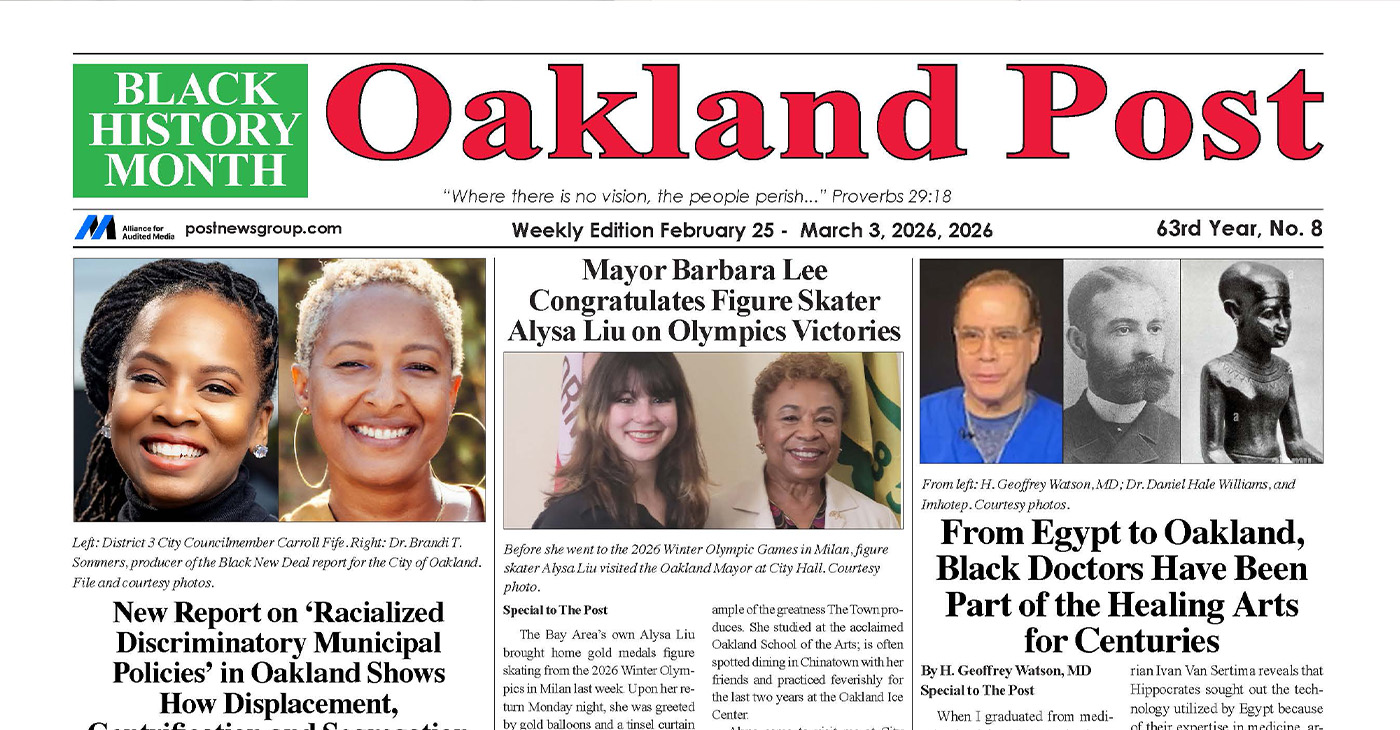
To enlarge your view of this issue, use the slider, magnifying glass icon or full page icon in the lower right corner of the browser window.
Activism
Oakland Post: Week of February 18 – 24, 2026
The printed Weekly Edition of the Oakland Post: Week of – February 18 – 24, 2026
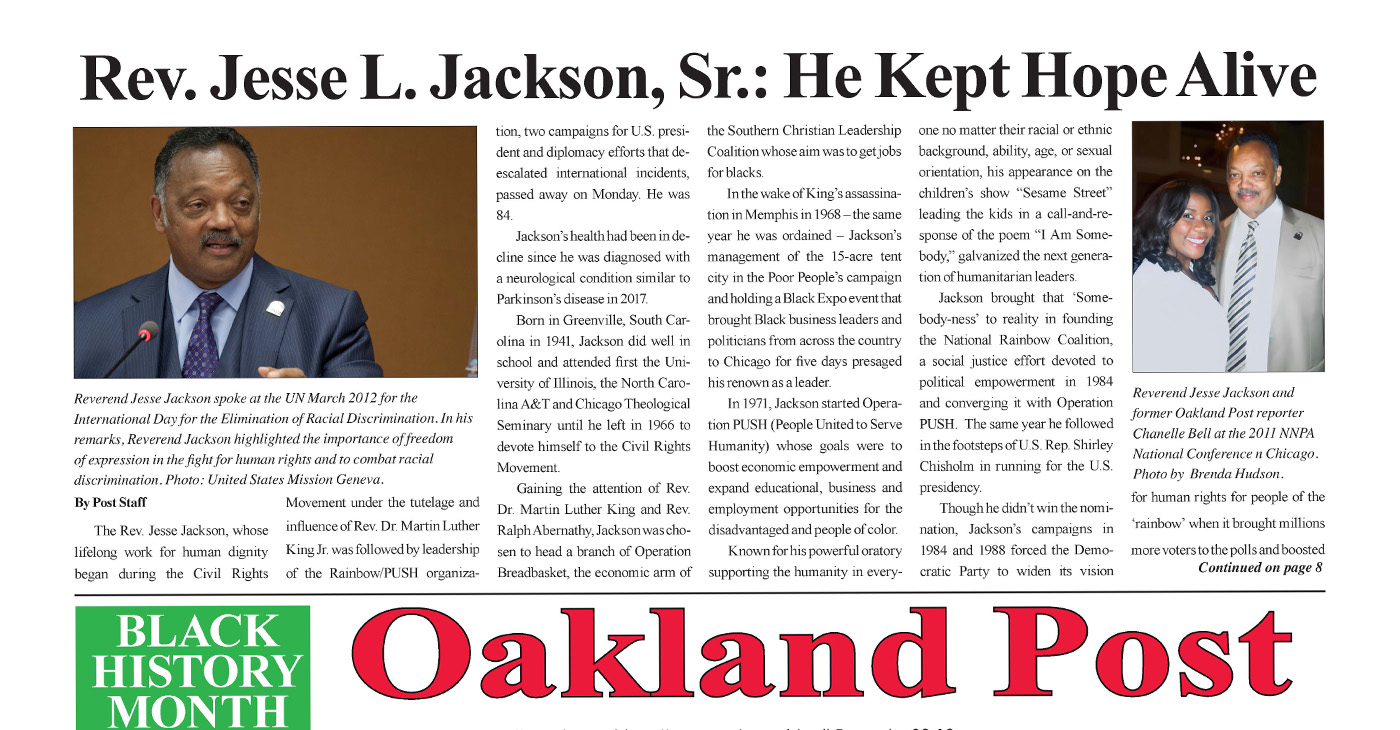
To enlarge your view of this issue, use the slider, magnifying glass icon or full page icon in the lower right corner of the browser window.
WORK FROM HOME
Home-based business with potential monthly income of $10K+ per month. A proven training system and website provided to maximize business effectiveness. Perfect job to earn side and primary income. Contact Lynne for more details: Lynne4npusa@gmail.com 800-334-0540


COMMENTARY: Women of Color Shape Our Past and Future

Woman’s Search for Family’s Roots Leads to Ancestor John T. Ward – A Successful Entrepreneur and Conductor on the Underground Railroad

Advocates Raise Alarm Over ICE Operation, MOU and Detention Risks in Baltimore County

Pete Buttigieg to Join Mayor Randall Woodfin for Community Town Hall in Birmingham

WATCH: Week One – NNPA’s “Leadership Matters” Video Series

Oakland Post: Week of March 4 – 10, 2026

OP-ED: NNPA Launches 2026 “Leadership Matters” Video Series

PRESS ROOM: PMG and Cranbrook Horizons-Upward Bound Launch Journey Fellowship Cohort 2

Los Angeles Summit Brings Together Leaders to Tackle Poverty and Affordability

Civil Rights TV Launches 24/7 Network Focused on Black History, Education and Equity

REVIEW: The Ultimate Hot Girl Summer Getaway: Sunseeker Resort Florida

COMMENTARY: How You Stop a Prescription Medicine is as Important as How You Start

PRESS ROOM: From Congress to Corporate America: NNPA Spotlights Visionaries in New Video Series

Poll Shows Support for Policies That Help Families Afford Child Care

Oakland Post: Week of February 25 – March 3, 2026

Oakland Post: Week of January 28, 2025 – February 3, 2026

Life Expectancy in Marin City, a Black Community, Is 15-17 Years Less than the Rest of Marin County

California Launches Study on Mileage Tax to Potentially Replace Gas Tax as Republicans Push Back

Community Celebrates Turner Group Construction Company as Collins Drive Becomes Turner Group Drive

Discrimination in City Contracts

Book Review: Books on Black History and Black Life for Kids

Oakland Post: Week of January 21 – 27, 2026

COMMENTARY: The Biases We Don’t See — Preventing AI-Driven Inequality in Health Care

Post Newspaper Invites NNPA to Join Nationwide Probate Reform Initiative

Black History Events in the East Bay

Medi-Cal Cares for You and Your Baby Every Step of the Way

Art of the African Diaspora Celebrates Legacy and Community at Richmond Art Center

COMMENTARY: The National Protest Must Be Accompanied with Our Votes

New Bill, the RIDER Safety Act, Would Support Transit Ambassadors and Safety on Public Transit

After Don Lemon’s Arrest, Black Officials Raise Concerns About Independent Black Media

Hyundai Ioniq 5 Parking, Safety, and 360 View #shorts

2025 Ioniq 5 New Wiper & Powerful Performance! #shorts

Electric SUV Range: Is 259 Miles Enough? #shorts

EV Charging: How Fast Can You Charge an Electric Vehicle? #shorts

Biometric Cooling… Messaging Seats…Come on! 2025 Infiniti QX80 Autograph 4WD

Charged Up: Witness the Magic of a Fully Electric Car! #shorts

Range Rover Sport PHEV Included…: See What’s Inside This Luxury SUV! #shorts

Invisible Hood View: Perfect Parking with X-Ray Vision! #shorts

AI Is Reshaping Black Healthcare: Promise, Peril, and the Push for Improved Results in California

ESSAY: Technology and Medicine, a Primary Care Point of View

Sanctuary Cities

The RESISTANCE – FREEDOM NOW

STATE OF THE PEOPLE: Freddie

ECONOMIC BOYCOTT DAY!!!!!

I told You So

-
 Business4 weeks ago
California Launches Study on Mileage Tax to Potentially Replace Gas Tax as Republicans Push Back
-
 Activism4 weeks ago
Community Celebrates Turner Group Construction Company as Collins Drive Becomes Turner Group Drive
-
 Activism4 weeks ago
Discrimination in City Contracts
-
 Arts and Culture4 weeks ago
Book Review: Books on Black History and Black Life for Kids
-
 Activism4 weeks ago
COMMENTARY: The Biases We Don’t See — Preventing AI-Driven Inequality in Health Care
-
 Activism4 weeks ago
Post Newspaper Invites NNPA to Join Nationwide Probate Reform Initiative
-
 #NNPA BlackPress4 weeks ago
COMMENTARY: The National Protest Must Be Accompanied with Our Votes
-
 Activism4 weeks ago
New Bill, the RIDER Safety Act, Would Support Transit Ambassadors and Safety on Public Transit
