Film
Newark Museum Black Film Festival Marks 45th Anniversary
HUDSON VALLEY PRESS — The Newark Museum Black Film Festival (NMBFF), the longest-running black film festival in the United States, is celebrating its 45th anniversary with a blockbuster lineup of films and documentaries.

By The Hudson Valley Press
NEWARK, NJ – The Newark Museum Black Film Festival (NMBFF), the longest-running black film festival in the United States, is celebrating its 45th anniversary with a blockbuster lineup of films and documentaries.

In keeping with a cultural event that is authentically Newark, this year’s opening night will screen the HBO documentary United Skates on June 26 and will feature a one-of-a-kind experience – a pop up roller rink set up outside the Museum. The festival will close on July 31 with a screening of Boyz N the Hood and an appearance by Donald Bogle, a film historian and award-winning author. Other films in the line-up include Losing Ground (July 3); Sammy Davis, Jr., I’ve Gotta Be Me (Jul 10); and 72 Hours: A Brooklyn Love Story (July 24).
“Since 1974, we have been a constant champion of films for and by African Americans and the African Diaspora,” said Linda C. Harrison, the Museum’s Director and CEO. “In the beginning, we were one of the few places where you could see films that reflected the diversity of the black experience. In staking our claim to authenticity, we are embracing the tagline ‘Reel Black.’”
NMBFF also will include festival pop-ups focused on African films on Sunday, July 14; and Latina films on July 28. Additionally, the Museum has partnered with Woman in Media to present Girls on the Reel, a STEAM program that provides 15 high school girls from Newark with an opportunity to take stop-motion animation workshops in the Museum’s MakerSPACE. The students will create, shoot and edit a Museum-inspired motion picture that will be screened as part of the NMBFF on July 24 along with 72 Hours: A Brooklyn Love Story.
In the past 44 years, NBFF has screened more than 917 films to an audience of more than 194,000 adults and youth. Past films of note have included Selma, Ashes and Embers, Body and Soul, Do the Right Thing and Daughters of the Dust. In partnership with organizations and businesses in Newark, NMBFF films have been screened at Rutgers-Newark, the Newark Public Library and Cityplex 12.
“This year we will continue to uphold our mandate to bring the best of cinema from across the Diaspora to the citizens of Newark and surrounding municipalities,’’ said NMBFF Chair Richard Wesley.
NMBFF has brought to Newark luminaries such as the late Gordon Parks and Paul Robeson, Jr. and James Van Der Zee; and James Earl Jones, Danny Glover, Reggie and Warington Hudlin, Ayoka Chenzira, Spike lee, Pam Grier, Donald Bogle, Richard Wesley, Euzhan Palcy, Ava DuVernay and S. Epatha Merkerson to participate in post-screening discussions.
“The intimate discussions between the audience and filmmakers is a unique aspect of NBFF,” said Pat Faison, NMBFF Coordinator who has been with the festival since its inception. Among the guests this year will be Oscar and Emmy nominated Samuel D. Pollard, who directed Sammy Davis Jr., I’ve Gotta Be Me.
The NMBFF started in 1974 with a touring black film festival that was put together by filmmaker Oliver Franklin who worked at the Annenberg Center for Communication, Art & Sciences at the University of Pennsylvania. The late Gus Henningburg, who was then the Executive Director of the Greater Newark Urban Coalition, learned about the festival and proposed it to the Newark Museum.
In 1976 when the touring festival was no longer available, the Museum made the decision to produce the Festival and established a Selection Committee, whose volunteer members represented important institutions in the community.
In 1981, a Children’s Festival was added, which is now called Youth Cinema. In 1985, the Museum initiated the Paul Robeson Awards to honor excellence in independent filmmaking in five categories.
Warrington Hudlin, President, Black Filmmaker Foundation said, ‘’The Festival came into existence to fill the void left by movie theaters that were fleeing Newark and other inner cities throughout the United States. The real beneficiaries soon became the newly minted generation of young African American filmmakers who were graduating from film schools with films under their arms and looking for a place to screen them. And even today, if a filmmaker wants to put his or her film to a litmus test for authenticity, I say ‘screen it in Newark’.’’
“Newark Museum Black Film Festival is a total and complete national treasure,” said actor- producer-director-filmmaker Penwah. “It is such an honor to be associated with such a groundbreaking and vital movement! The staff, the content, the participants – just plain and simple ‘blacknificence.’ They are official originators, not duplicators. Follow their lead!”
Financial support for the festival from Bank of America for the past 19 years has allowed it to expand in the past to venues beyond the museum, including the NJ State Museum in Trenton, Rutgers-Camden and Monmouth Arts Council in Asbury Park.
“The Newark Museum Black Film Festival never fails to bring an impressive lineup of movies to Newark and beyond,’’ said Bob Doherty, Bank of America New Jersey president. “Celebrating differences in culture, ethnicity and experience helps create stronger and more vibrant communities.’’
Tito’s Vodka is the official Spirit Sponsor for the second year. The 2019 NBFF season will begin on June 26 and run through July 31 at 6:30 pm. For a complete schedule, visit www.newarkmuseum.org/NBFF.


Arts and Culture
Paul Robeson: A Voice for the Ages, A Champion for Justice
Robeson first gained widespread recognition on stage and screen, delivering commanding performances that captivated audiences. Yet, it was his voice in concert halls that sealed his legacy. His repertoire was vast, spanning spirituals, classical compositions, global folk traditions, and songs of struggle — music that carried the weight of the oppressed and the hopes of the marginalized.

By Tamara Shiloh
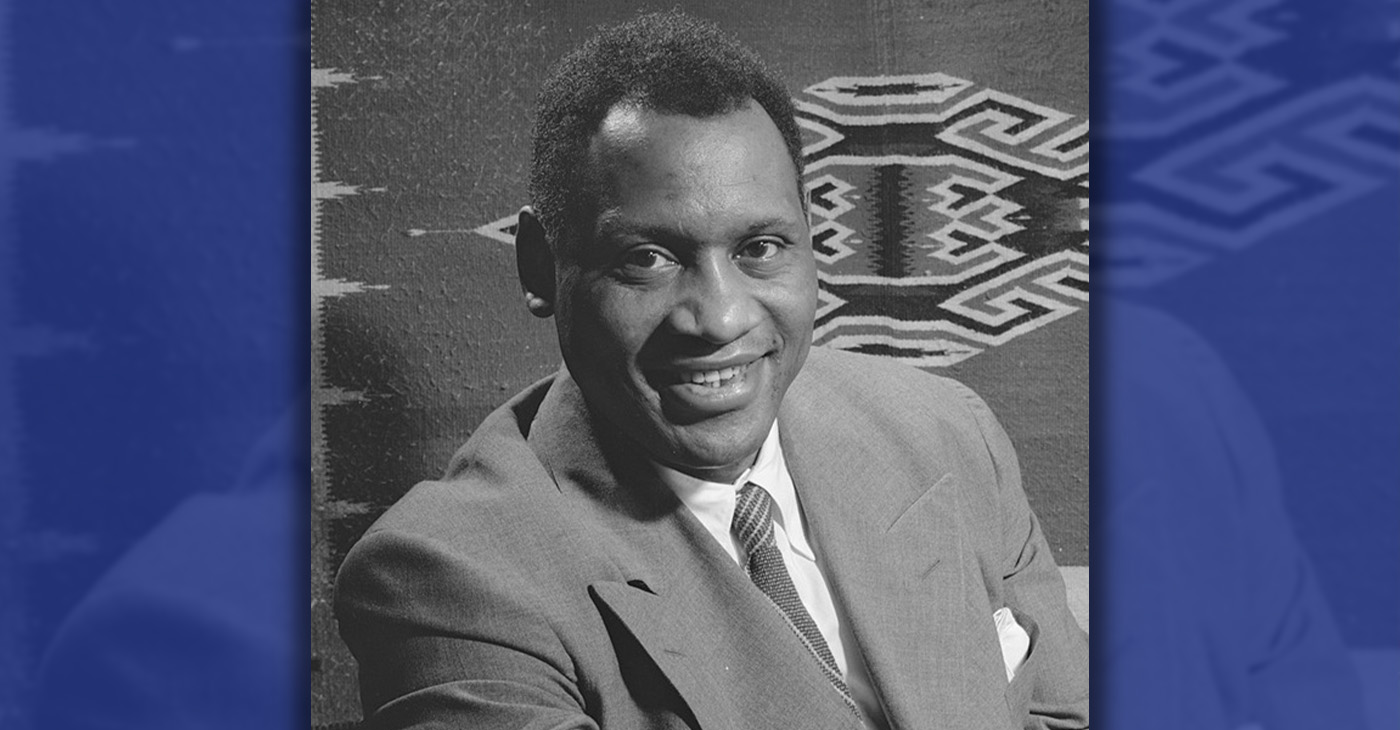
Paul Robeson was born April 9, 1898, in Princeton, New Jersey. At 6’ 3”, he was a towering man of intellect, talent, and conviction. Before he became an international icon, he earned his law degree from Columbia University in 1923, supporting himself by teaching Latin and playing professional football on the weekends. But the law would not hold him for long. His voice had other plans.
Robeson first gained widespread recognition on stage and screen, delivering commanding performances that captivated audiences. Yet, it was his voice in concert halls that sealed his legacy. His repertoire was vast, spanning spirituals, classical compositions, global folk traditions, and songs of struggle — music that carried the weight of the oppressed and the hopes of the marginalized.
In 1921, he married Eslanda Goode, a fellow Columbia student and a journalist with her own remarkable intellect and ambition. Their marriage, which lasted over four decades, was a partnership in every sense. Goode became his manager, encouraging him to leave law behind and fully embrace his calling. In 1927, they welcomed their son, Paul Robeson Jr.
By the mid-1920s, Robeson was making waves in theater. He starred in All God’s Chillun Got Wings (1924) and The Emperor Jones (1925). That same year, he made his film debut in Body and Soul, directed by pioneering Black filmmaker Oscar Micheaux. In 1928, he mesmerized London audiences in Show Boat, where his rendition of Ol’ Man River transformed the song into a powerful anthem of resilience.
Robeson and his family moved to Europe in the late 1920s, and over the next decade, he built an impressive career in both film and music. He starred in Borderline (1930) and later again in the 1933 film adaptation of The Emperor Jones. Over the next few years, he appeared in six British films, including Jericho and Big Fella (both released in 1937). He also starred in the second screen adaptation of Show Boat (1936), alongside Hattie McDaniel and Irene Dunne. However, his final film, Tales of Manhattan (1942), left him deeply disillusioned. He openly criticized its degrading depiction of Black life, signaling his growing commitment to using his platform for activism.
In 1963, after years of political persecution and declining health, Robeson returned to the United States. Following Goode’s death in 1965, he lived quietly with his sister. On January 23, 1976, Robeson passed away from a stroke at the age of 77 in Philadelphia.

Arts and Culture
‘Giants Rising’ Film Screening in Marin City Library
A journey into the heart of America’s most iconic forests, “Giants Rising” tells the epic tale of the coast redwoods — the tallest and among the oldest living beings on Earth. Living links to the past, redwoods hold powers that may play a role in our future, including their ability to withstand fire and capture carbon, to offer clues about longevity, and to enhance our own well-being.

By Godfrey Lee
The film “Giants Rising” will be screened on Saturday, Jan. 11, from 3-6 p.m. at the St. Andrew Presbyterian Church, located 100 Donahue St. in Marin City.
A journey into the heart of America’s most iconic forests, “Giants Rising” tells the epic tale of the coast redwoods — the tallest and among the oldest living beings on Earth. Living links to the past, redwoods hold powers that may play a role in our future, including their ability to withstand fire and capture carbon, to offer clues about longevity, and to enhance our own well-being.
Through the voices of scientists, artists, Native communities, and others, we discover the many connections that sustain these forests and the promise of solutions that will help us all rise up to face the challenges that lay ahead.
The film’s website is www.giantsrising.com. The “Giants Rising” trailer is at https://player.vimeo.com/video/904153467. The registration link to the event is https://marinlibrary.bibliocommons.com/events/673de7abb41279410057889e
This event is sponsored by the Friends of the Marin City Library and hosted in conjunction with the Golden Gate National Recreation Area and St. Andrew Presbyterian Church.
All library events are free. For more information, contact Etienne Douglas at (415) 332-6158 or email etienne.douglas@marincounty.gov. For event-specific information, contact Zaira Sierra at zsierra@parksconservancy.org.
#NNPA BlackPress
FILM REVIEW: The Six Triple Eight: Tyler Perry Salutes WWII Black Women Soldiers
NNPA NEWSWIRE — The film features an all-star cast including Susan Sarandon as Eleanor Roosevelt, Sam Waterston as President Franklin Delano Roosevelt, Oprah Winfrey as Mary McLeod Bethune and Ebony Obsidian (Sistas, If Beale Street Could Talk)) who shows her acting chops by holding her own playing Lena, a bereaved private, opposite Washington.
By Nsenga K. Burton
NNPA Newswire Culture and Entertainment Editor
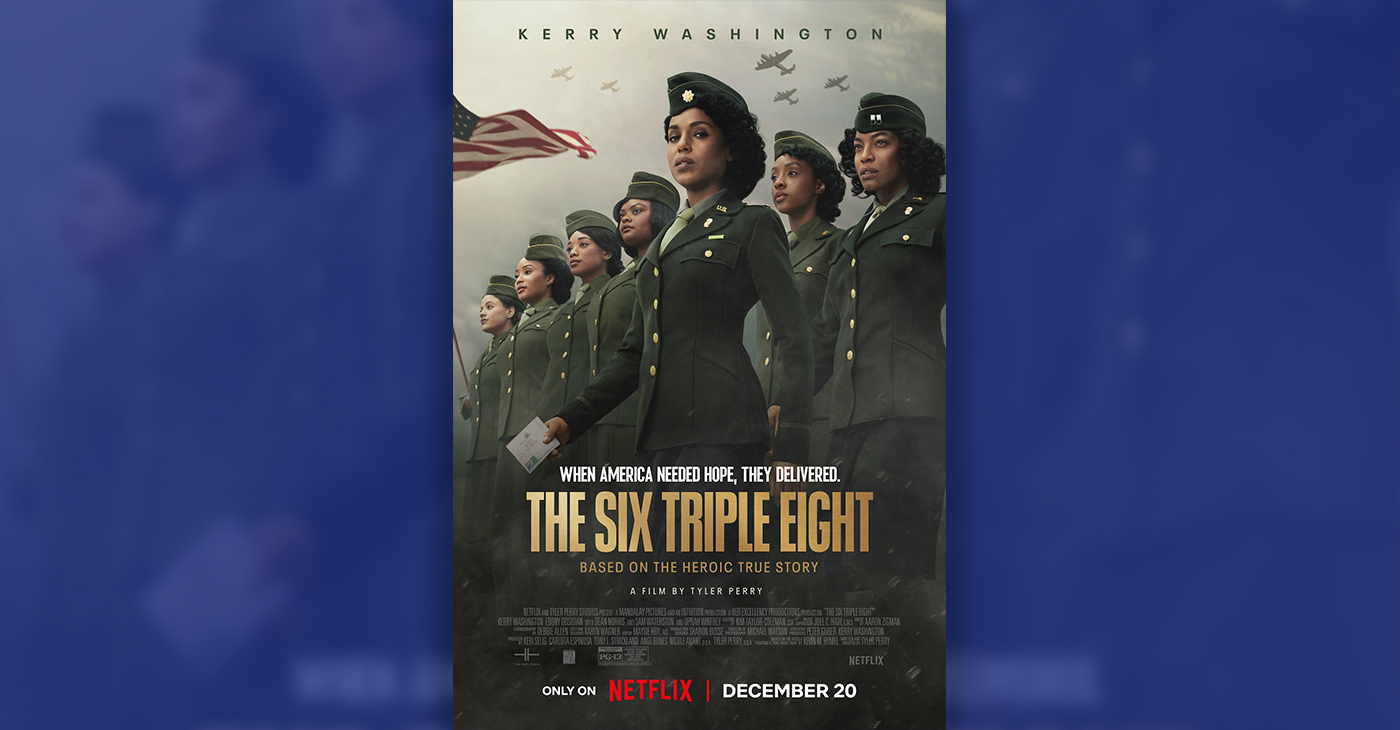
The Six Triple Eight tells the important yet often overlooked story of the 6888th Central Postal Directory Battalion, an all-Black, all-woman unit in World War II. The film chronicles the battalion’s efforts to clear a massive backlog of undelivered mail meant for U.S. troops, a task that was both vital and challenging. In a show-stopping speech atop a mountain of mail, Major Charity Adams, played fiercely by Kerry Washington, explains the importance of mail during wartime and its relationship to soldier morale. Adams, who is continuously denied promotions despite her impeccable professional performance, leads 855 Black women through 17 million pieces of mail in an abandoned, cold and drafty school rife with “vermin” to raise the morale of soldiers and bring closure to families who haven’t heard from loved ones in nearly a year.
The film features an all-star cast, including Susan Sarandon as Eleanor Roosevelt, Sam Waterston as President Franklin Delano Roosevelt, Oprah Winfrey as Mary McLeod Bethune, and Ebony Obsidian (Sistas, If Beale Street Could Talk), who shows her acting chops by holding her own playing Lena, a bereaved private, opposite Washington.
Lena is a highly sensitive and intelligent young woman who is distraught over the death of her Jewish “boyfriend,” Abram David (Gregg Sulkin), who is killed in the war. Instead of attending college, Lena enlists in the army to “fight Hitler.” En route to basic training in Georgia, Lena is joined with a group of women in the segregated battalion, all of whom are running away from a traumatic past and running towards a brighter future. What emerges is a strong sisterhood that bonds the women, whether in their barracks or crossing the big pond, which is one of the highlights of the film.
The Six Triple Eight has all of the tropes of a film set during the 1940s, including de facto segregation here and abroad, the mistreatment of Black women in and out of the service by any and everybody, aggressive white men using the N-word with the hard “R,” and older Black women whose hearts are free, but minds are shackled to fear that living in segregation and being subjected to impromptu violence, ridicule, jail or scorn brings to bear.
While the film elevates the untold story of the dynamic, pioneering, and committed Black servicewomen of the Six Triple Eight, the narrative falls prey to Perry’s signature style — heavy-handed dialogue, uneven performances and a redundant script that keeps beating viewers over the head with what many already know as opposed to what we need to know. For example, a short montage of the women working with the mail is usurped by abusive treatment from white, male leaders. A film like this would benefit more from seeing and understanding the dynamism, intelligence and dedication it took for these women to develop and implement a strategy to get this volume of mail to the soldiers and their families.
In another scene, the 6888 soldiers yell out their prior professions, which would prove helpful to keeping their assignment when they come under attack again from the white military men. Visually seeing the Black women demonstrate their talents would be far more satisfying than hearing them ticked off like a grocery list, which undermines the significance of their work and preparation for war as Black women during this harrowing time in history. The lack of emphasis on their skills and capabilities diminishes the overall impact of their story, leaving viewers wanting more depth and insight into their achievements.
While the film highlights the struggles these women faced against institutional racism and sexism, it ultimately falls short in delivering a nuanced portrayal of their significant contributions to the war effort. This is a must-see film because of the subject matter and strong performances by Washington and Obsidian, but the story’s execution makes it difficult to get through.
Tyler Perry is beloved as a filmmaker because he sometimes makes films that people need to see at a particular moment in time (For Colored Girls), resuscitates or helps to keep the careers of super accomplished actors alive (Debi Morgan, Alfre Woodward, Cicely Tyson) and gives young, talented actors like Obsidian, Taylor Polidore Williams (Beauty in Black, Snowfall, All-American HBCU) and Crystal Renee Hayslett (Zatima) a chance to play a lead role when mainstream Hollywood is taking too long. One thing Perry hasn’t done is extend that generosity of spirit to the same extent to the writing and directing categories. Debbie Allen choreographed the march scene for Six Triple Eight. What might this film have been had she directed the film?
This much-anticipated film is a love letter to Black servicewomen and a movie that audiences need to see now that would benefit immensely from stronger writing and direction. Six Triple Eight is a commendable effort to elevate an untold story, but it ultimately leaves viewers craving a more nuanced exploration of the remarkable women at its center.
Six Triple Eight is now playing on Netflix.
This review was written by media critic Nsenga K. Burton, Ph.D., editor-at-large for NNPA/Black Press USA and editor-in-chief of The Burton Wire. Follow her on IG @TheBurtonWire.

WORK FROM HOME
Home-based business with potential monthly income of $10K+ per month. A proven training system and website provided to maximize business effectiveness. Perfect job to earn side and primary income. Contact Lynne for more details: Lynne4npusa@gmail.com 800-334-0540


let it be known news updated

Headlines & Hot Topics w/J.Anthony Brown

Sit In

INFIGHTING AT THE DEMOCRATIC NATIONAL COMMITTEE

Headlines & Hot Topics w/ J’Anthony Brown

Mr. Rangel, An American Hero fromm Harlem

No better off-roader #ROX

First Ride on Toyota Mobility Scooter

Tour of Toyota Campus 360 Video

#GR86 on Eagle Canyon Racetrack 360 Video

RAV-4 Introduction 360 Video

It Just Got Even Better 2026 Toyota RAV4 AWD GR Sport Walkaround

Driving the #GR86 at Eagles Canyon Racetrack HQC

Performance Off Road in Land Cruiser HQC

Off-Road in Land Cruiser HQC

AI Is Reshaping Black Healthcare: Promise, Peril, and the Push for Improved Results in California

ESSAY: Technology and Medicine, a Primary Care Point of View

The RESISTANCE – FREEDOM NOW

Faces Around the Bay: Author Karen Lewis Took the ‘Detour to Straight Street’

BOOK REVIEW: Love, Rita: An American Story of Sisterhood, Joy, Loss, and Legacy

Oakland Post: Week of April 30 – May 6, 2025

Oakland Post: Week of May 7 – 13, 2025

Trump Targets the National Museum of African American History and Culture

MLK Bust Quietly Removed from Oval Office Under Trump

The Save Act…a modern Day Poll Tax

STATE OF THE PEOPLE: Freddie

After Two Decades, Oakland Unified Will Finally Regain Local Control

Hakeem Challenges Mike

Barbara Lee Accepts Victory With “Responsibility, Humility and Love”

Oakland Post: Week of May 14 – 20, 2025
AI Is Reshaping Black Healthcare: Promise, Peril, and the Push for Improved Results in California
ESSAY: Technology and Medicine, a Primary Care Point of View

Sanctuary Cities
The RESISTANCE – FREEDOM NOW
STATE OF THE PEOPLE: Freddie

ECONOMIC BOYCOTT DAY!!!!!

I told You So
Trump Targets the National Museum of African American History and Culture
Hakeem Challenges Mike
The Save Act…a modern Day Poll Tax

Its All A Game

Headlines and Hot Topics

Headlines & Hot Topics

President Trump’s Miss on Education. April Ryan

Headlines and hot topics
-
 Activism3 weeks ago
After Two Decades, Oakland Unified Will Finally Regain Local Control
-
 Activism4 weeks ago
Oakland Post: Week of May 14 – 20, 2025
-

 Alameda County3 weeks ago
Oakland Begins Month-Long Closure on Largest Homeless Encampment
-

 Activism3 weeks ago
New Oakland Moving Forward
-

 Barbara Lee3 weeks ago
WNBA’s Golden State Valkyries Kick Off Season with Community Programs in Oakland
-

 Activism3 weeks ago
East Bay Community Foundation’s New Grants Give Oakland’s Small Businesses a Boost
-

 Bo Tefu3 weeks ago
Gov. Newsom Highlights Record-Breaking Tourism Revenue, Warns of Economic Threats from Federal Policies
-

 Bay Area3 weeks ago
Chevron Richmond Installs Baker Hughes Flare.IQ, Real-time Flare Monitoring, Control and Reduction System