
Oakland
Opinion: Institutional Racism Is Real In Oakland

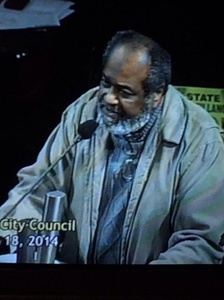
Exposing Racism in Oakland. Photo courtesy of whatshappeningblackoakland.wordpress.com.
By Wilson Riles Jr.
It was a surprise to me, despite my 38 years of involvement with Oakland City government, to learn that many more departments of the city are “complainant driven” than just the Police Department (OPD).
Being “complainant driven” is a governmental administration term, meaning that counting the number of interactions with complainants is a simple, crude way to measure the level of “public service.”
Usually, in such a management scenario there is little concern for the (harder to measure) quality of the interaction or for justice for the targets of complaints.
There is even less concern for positive results. “Complainant driven” is something that only “delights” budget makers and bean counters.
In OPD, officers have been paid on the bases of moving the complainant “meter” in one direction or another. Patrol officers are distributed around the city in order to maximize opportunities for rapid complainant responses.
That this makes no difference to crime reduction, nor to the identification or the arrest of perpetrators, seems irrelevant. When critics, like me, insist that the quality of the complainant response must improve, inevitably every city administration’s cry is that the number of complainants an individual officer can respond to would go way, way down.
Thus, more officers must be hired to do the job if one wants quality. I say ridiculous!
Such a cry assumes a lot and ignores a lot. When critics attempt to dive into those assumptions, missing factors, and alternative approaches, somehow, we never get back to the abomination of being complainant driven.
Complainants drive the city bureaucratic machinery in such a way that inequality, racism, and costly ineffectiveness are the result. This is nothing but the facilitation of invidious institutional practices that furthers bias, blindness, and racism, regardless of the biases or lack of them of city staff.
Somewhere in this process good city management would ask:
- What are the present-day and historical factors that generate complaints?
- Who complains to the Police as a first response?
- Does this type of poor quality response ever result in an improved quality of life? [The answer is rarely!]
- Are there alternative approaches and processes that have proved themselves less costly, more beneficial, and more cost effective? [The answer is definitely!]
“Complainant driven” governmental structures are rooted in and mired in systemic, institutional white supremacy and in elitist class consciousness.
Now, I have discovered that the Zoning/Planning Department is complainant driven also. The police powers of that department were exercised on me due to religiously bigoted and dominance-displaying neighborhood complaints.
[In no way am I equating what happen to me, my family, and friends to what happens to brothers and sisters caught up in the criminal justice system, but the systemic, discriminatory, unjust elements are the same.]
The zoning division of the Planning Department assumed we were guilty of something simply because we were the target of complaints. Charges that had nothing to do with the complaints were piled high and penalties were threatened to coerce us to give up our constitutional rights and we were shoehorned into an expensive, horrendously frustrating process in order to defend ourselves.
Not until, nearly three years later, at the very end of that process was there any chance to question the validity or the accuracy of the complaints.
Not until the end was there any consideration of just outcomes. Just as in the criminal justice system, one only gets to that end point if one has huge resources or a lot of friends who can organize.
This is wrong!
 Because these institutional biases and prejudices are so deeply embedded in these systems and because they no longer need conscious racism from city staff to be manifest, a radical change in structural processes, goals, and accountable management are absolutely needed.
Elected leadership can no longer play rhetorical games.
The wishy washy, inconsistent leadership provided by the city council and the mayors over past years must be, now, focused like a laser on uncovering and overturning our city’s furtherance of inequality.
Complainant driven systems must end.
Wilson Riles Jr. served as a member on the Oakland City Council from 1979 to 1992 representing District 5 Fruitvale District.








Activism
Big God Ministry Gives Away Toys in Marin City
Pastor Hall also gave a message of encouragement to the crowd, thanking Jesus for the “best year of their lives.” He asked each of the children what they wanted to be when they grow up.

By Godfrey Lee
Big God Ministries, pastored by David Hall, gave toys to the children in Marin City on Monday, Dec. 15, on the lawn near the corner of Drake Avenue and Donahue Street.
Pastor Hall also gave a message of encouragement to the crowd, thanking Jesus for the “best year of their lives.” He asked each of the children what they wanted to be when they grew up.
Around 75 parents and children were there to receive the presents, which consisted mainly of Gideon Bibles, Cat in the Hat pillows, Barbie dolls, Tonka trucks, and Lego building sets.
A half dozen volunteers from the Big God Ministry, including Donnie Roary, helped to set up the tables for the toy giveaway. The worship music was sung by Ruby Friedman, Keri Carpenter, and Jake Monaghan, who also played the accordion.
Big God Ministries meets on Sundays at 10 a.m. at the Mill Valley Community Center, 180 Camino Alto, Mill Valley, CA Their phone number is (415) 797-2567.
Activism
First 5 Alameda County Distributes Over $8 Million in First Wave of Critical Relief Funds for Historically Underpaid Caregivers
“Family, Friend, and Neighbor caregivers are lifelines for so many children and families in Alameda County,” said Kristin Spanos, CEO, First 5 Alameda County. “Yet, they often go unrecognized and undercompensated for their labor and ability to give individualized, culturally connected care. At First 5, we support the conditions that allow families to thrive, and getting this money into the hands of these caregivers and families at a time of heightened financial stress for parents is part of that commitment.”

Family, Friend, and Neighbor Caregivers Can Now Opt Into $4,000 Grants to Help Bolster Economic Stability and Strengthen Early Learning Experiences
By Post Staff
Today, First 5 Alameda County announced the distribution of $4,000 relief grants to more than 2,000 Family, Friend, and Neighbor (FFN) caregivers, totaling over $8 million in the first round of funding. Over the full course of the funding initiative, First 5 Alameda County anticipates supporting over 3,000 FFN caregivers, who collectively care for an estimated 5,200 children across Alameda County. These grants are only a portion of the estimated $190 million being invested into expanding our early childcare system through direct caregiver relief to upcoming facilities, shelter, and long-term sustainability investments for providers fromMeasure C in its first year. This investment builds on the early rollout of Measure C and reflects a comprehensive, system-wide strategy to strengthen Alameda County’s early childhood ecosystem so families can rely on sustainable, accessible care,
These important caregivers provide child care in Alameda County to their relatives, friends, and neighbors. While public benefits continue to decrease for families, and inflation and the cost of living continue to rise, these grants provide direct economic support for FFN caregivers, whose wages have historically been very low or nonexistent, and very few of whom receive benefits. As families continue to face growing financial pressures, especially during the winter and holiday season, these grants will help these caregivers with living expenses such as rent, utilities, supplies, and food.

“Family, Friend, and Neighbor caregivers are lifelines for so many children and families in Alameda County,” said Kristin Spanos, CEO, First 5 Alameda County. “Yet, they often go unrecognized and undercompensated for their labor and ability to give individualized, culturally connected care. At First 5, we support the conditions that allow families to thrive, and getting this money into the hands of these caregivers and families at a time of heightened financial stress for parents is part of that commitment.”
The funding for these relief grants comes from Measure C, a local voter-approved sales tax in Alameda County that invests in young children, their families, communities, providers, and caregivers. Within the first year of First 5’s 5-Year Plan for Measure C, in addition to the relief grants to informal FFN caregivers, other significant investments will benefit licensed child care providers. These investments include over $40 million in Early Care and Education (ECE) Emergency Grants, which have already flowed to nearly 800 center-based and family child care providers. As part of First 5’s 5-Year Plan, preparations are also underway to distribute facilities grants early next year for child care providers who need to make urgent repairs or improvements, and to launch the Emergency Revolving Fund in Spring 2026 to support licensed child care providers in Alameda County who are at risk of closure.
The FFN Relief Grants recognize and support the essential work that an estimated 3,000 FFN caregivers provide to 5,200 children in Alameda County. There is still an opportunity to receive funds for FFN caregivers who have not yet received them.
In partnership with First 5 Alameda County, Child Care Payment Agencies play a critical role in identifying eligible caregivers and leading coordinated outreach efforts to ensure FFN caregivers are informed of and able to access these relief funds.FFN caregivers are eligible for the grant if they receive a child care payment from an Alameda County Child Care Payment Agency, 4Cs of Alameda County, BANANAS, Hively, and Davis Street, and are currently caring for a child 12 years old or younger in Alameda County. Additionally, FFN caregivers who provided care for a child 12 years or younger at any time since April 1, 2025, but are no longer doing so, are also eligible for the funds. Eligible caregivers are being contacted by their Child Care Payment Agency on a rolling basis, beginning with those who provided care between April and July 2025.
“This money is coming to me at a critical time of heightened economic strain,” said Jill Morton, a caregiver in Oakland, California. “Since I am a non-licensed childcare provider, I didn’t think I was eligible for this financial support. I was relieved that this money can help pay my rent, purchase learning materials for the children as well as enhance childcare, buy groceries and take care of grandchildren.”
Eligible FFN caregivers who provided care at any time between April 1, 2025 and July 31, 2025, who haven’t yet opted into the process, are encouraged to check their mail and email for an eligibility letter. Those who have cared for a child after this period should expect to receive communications from their child care payment agency in the coming months. FFN caregivers with questions may also contact the agency they work with to receive child care payments, or the First 5 Alameda help desk, Monday through Friday, from 9 a.m. to 5:00 p.m. PST, at 510-227-6964. The help desk will be closed 12/25/25 – 1/1/26. Additional grant payments will be made on a rolling basis as opt-ins are received by the four child care payment agencies in Alameda County.
Beginning in the second year of Measure C implementation, FFN caregivers who care for a child from birth to age five and receive an Alameda County subsidized voucher will get an additional $500 per month. This amounts to an annual increase of about $6,000 per child receiving a subsidy. Together with more Measure C funding expected to flow back into the community as part of First 5’s 5-Year Plan, investments will continue to become available in the coming year for addressing the needs of childcare providers in Alameda County.
About First 5 Alameda County
First 5 Alameda County builds the local childhood systems and supports needed to ensure our county’s youngest children are safe, healthy, and ready to succeed in school and life.
Our Mission
In partnership with the community, we support a county-wide continuous prevention and early intervention system that promotes optimal health and development, narrows disparities, and improves the lives of children from birth to age five and their families.
Our Vision
Every child in Alameda County will have optimal health, development, and well-being to reach their greatest potential.
Learn more at www.first5alameda.org.
Activism
Oakland Post: Week of December 24 – 30, 2025
The printed Weekly Edition of the Oakland Post: Week of – December 24 – 30, 2025

To enlarge your view of this issue, use the slider, magnifying glass icon or full page icon in the lower right corner of the browser window.

WORK FROM HOME
Home-based business with potential monthly income of $10K+ per month. A proven training system and website provided to maximize business effectiveness. Perfect job to earn side and primary income. Contact Lynne for more details: Lynne4npusa@gmail.com 800-334-0540


Big God Ministry Gives Away Toys in Marin City

First 5 Alameda County Distributes Over $8 Million in First Wave of Critical Relief Funds for Historically Underpaid Caregivers

2025 in Review: Seven Questions for Assemblymember Lori Wilson — Advocate for Equity, the Environment, and More

2025 in Review: Seven Questions for Assemblymember Tina McKinnor, Champion of Reparations, Housing and Workers’ Rights

2025 in Review: Seven Questions for Sen. Laura Richardson, Who Made Legislative History This Year

2025 in Review: Seven Questions for Sen. Lola Smallwood-Cuevas – an Advocate for Jobs and Justice

Alfred Cralle: Inventor of the Ice Cream Scoop

BOOK REVIEW: Let Me Be Real With You

Oakland Post: Week of December 24 – 30, 2025

Bling It On: Holiday Lights Brighten Dark Nights All Around the Bay

Oakland Council Expands Citywide Security Cameras Despite Major Opposition

Lu Lu’s House is Not Just Toying Around with the Community

Desmond Gumbs — Visionary Founder, Mentor, and Builder of Opportunity

Families Across the U.S. Are Facing an ‘Affordability Crisis,’ Says United Way Bay Area

Black Arts Movement Business District Named New Cultural District in California

IN MEMORIAM: William ‘Bill’ Patterson, 94

Oakland Post: Week of November 19 – 25, 2025

Seth Curry Makes Impressive Debut with the Golden State Warriors

Oakland Post: Week of November 26 – December 2, 2025

LIHEAP Funds Released After Weeks of Delay as States and the District Rush to Protect Households from the Cold

Seven Steps to Help Your Child Build Meaningful Connections

Beyoncé and Jay-Z make rare public appearance with Lewis Hamilton at Las Vegas Grand Prix

Seven Steps to Help Your Child Build Meaningful Connections

Lewis Hamilton set to start LAST in Saturday Night’s Las Vegas Grand Prix

Trinidad and Tobago – Prime Minister Confirms U.S. Marines Working on Tobago Radar System

Teens Reject Today’s News as Trump Intensifies His Assault on the Press

Thanksgiving Celebrated Across the Tri-State

Post Salon to Discuss Proposal to Bring Costco to Oakland Community meeting to be held at City Hall, Thursday, Dec. 18

Breaking the Silence: Black Veterans Speak Out on PTSD and the Path to Recovery

FBI Report Warns of Fear, Paralysis, And Political Turmoil Under Director Kash Patel

Hyundai Ioniq 5 Parking, Safety, and 360 View #shorts

2025 Ioniq 5 New Wiper & Powerful Performance! #shorts

Electric SUV Range: Is 259 Miles Enough? #shorts

EV Charging: How Fast Can You Charge an Electric Vehicle? #shorts

Biometric Cooling… Messaging Seats…Come on! 2025 Infiniti QX80 Autograph 4WD

Charged Up: Witness the Magic of a Fully Electric Car! #shorts

Range Rover Sport PHEV Included…: See What’s Inside This Luxury SUV! #shorts

Invisible Hood View: Perfect Parking with X-Ray Vision! #shorts

AI Is Reshaping Black Healthcare: Promise, Peril, and the Push for Improved Results in California

ESSAY: Technology and Medicine, a Primary Care Point of View

Sanctuary Cities

The RESISTANCE – FREEDOM NOW

STATE OF THE PEOPLE: Freddie

ECONOMIC BOYCOTT DAY!!!!!

I told You So
-
 Alameda County4 weeks ago
Seth Curry Makes Impressive Debut with the Golden State Warriors
-
 Bay Area3 weeks ago
Post Salon to Discuss Proposal to Bring Costco to Oakland Community meeting to be held at City Hall, Thursday, Dec. 18
-

 Activism3 weeks ago
Mayor Lee, City Leaders Announce $334 Million Bond Sale for Affordable Housing, Roads, Park Renovations, Libraries and Senior Centers
-

 Activism3 weeks ago
Oakland Post: Week of December 10 – 16, 2025
-

 Arts and Culture3 weeks ago
Fayeth Gardens Holds 3rd Annual Kwanzaa Celebration at Hayward City Hall on Dec. 28
-

 Activism3 weeks ago
Oakland School Board Grapples with Potential $100 Million Shortfall Next Year
-

 Activism3 weeks ago
2025 in Review: Seven Questions for Black Women’s Think Tank Founder Kellie Todd Griffin
-

 Advice3 weeks ago
COMMENTARY: If You Don’t Want Your ‘Black Card’ Revoked, Watch What You Bring to Holiday Dinners
