
#NNPA BlackPress
Parents Now Pay More for Childcare Than Housing Across the U.S.
BLACKPRESSUSA NEWSWIRE — Childcare is draining American families with a force that has begun to rival housing costs, and new national analysis shows that in cities across the country, parents are paying more to care for their children than to keep a roof over their heads.



By Stacy M. Brown
Black Press USA Senior National Correspondent
Childcare is draining American families with a force that has begun to rival housing costs, and new national analysis shows that in cities across the country, parents are paying more to care for their children than to keep a roof over their heads. Researchers at LendingTree found that infant care exceeds average rent in 11 of the nation’s 100 largest metro areas, while childcare for two children exceeds rent in 85 cities across the country.
The spike in expenses lands at a moment when the federal shutdown has blocked funding for 140 Head Start programs that serve 65,000 preschoolers. At least 20 programs have partially or fully closed, directly affecting nearly 10,000 children whose families now face soaring out-of-pocket Childcare costs with no federal support.
Matt Schulz, chief consumer finance analyst for LendingTree, called the price crush unavoidable for many families. “Spending almost $1,300 a month on Childcare is a massive burden for parents, but most families don’t have another choice,” Schulz stated. “They can’t stay home. They don’t have family or friends they can rely on for Childcare. They have no other option but to put up a ton of money each month for Childcare.”
According to LendingTree, full-time infant care across the 100 largest metro areas averages $1,282 per month, compared with $1,716 for a two-bedroom rental. But in cities like Springfield, Massachusetts, parents now spend $1,996 on infant care compared with $1,734 for a two-bedroom apartment. That fifteen percent gap is the highest in the country. Milwaukee follows at nearly fifteen percent. Wichita, Omaha, Baltimore, Buffalo, Syracuse, Spokane, Minneapolis, Toledo, and Worcester also report infant care costs that outpace rent by significant margins.
The financial blow becomes more punishing for households with two children. Families in Omaha are paying $2,891 a month for Childcare for an infant and a four-year-old, more than twice the city’s average monthly rent of $1,368. Milwaukee and Buffalo are close behind, with Childcare there also costing more than double the rent. Households in Springfield, Syracuse, Toledo, Spokane, Minneapolis, Wichita, and Rochester all face gaps of seventy percent or more between Childcare costs and rent.
LendingTree notes that while the situation is severe in many regions, the pressure is also felt in cities where rent is extremely high. In Miami, San Jose, and San Francisco, rent still exceeds Childcare costs, but Childcare remains a heavy expense that continues to climb. Nationally, the price of Childcare increased more than thirty percent between 2020 and 2024, driven in part by shortages of early childhood educators and widespread Childcare deserts in rural and low-income regions.
For many households, the federal shutdown has turned an already strained system into a breaking point. Without funding, Head Start programs in more than a dozen states have already halted classes or reduced hours. Advocates warn that families who lose subsidized early childhood education face few alternatives, especially in communities that already lack available Childcare slots.
Schulz said families should brace for continued financial pressure. “High rent and Childcare costs create massive challenges for most young families,” he said. “However, to the degree possible, it is important to not fully ignore long-term goals like retirement and emergency savings.”
District of Columbia Story
In Washington, Childcare Rivals the Region’s Soaring Rent as Federal Shutdown Cuts Off Funding for Thousands
In the nation’s capital, where the price of nearly everything feels inflated, Childcare has emerged as one of the most punishing expenses for families. New data from LendingTree shows that in the Washington metro area, full-time infant care averages $2,140 per month, almost equal to the region’s two-bedroom rent of $2,253. For households with two young children, the burden jumps even higher to $3,854 per month, seventy-one percent more than the region’s average rent.
The fallout from the federal shutdown is making the pressure even worse. As of November 1, 140 Head Start programs nationwide serving 65,000 preschoolers have received no federal funding. Twenty programs have been forced to fully or partially close, affecting nearly 10,000 children. Programs in the D.C. region warn that unless Congress releases funds, more families will be pushed into the already overburdened private Childcare market, where prices outpace salaries for many workers.
Nationally, the LendingTree analysis found that the cost of infant care exceeds rent in eleven cities and that the price of caring for an infant and a four-year-old is higher than rent in eighty-five cities. Washington ranks fourteenth on that list. The average D.C. area family with two children is paying $1,601 more per month for Childcare than for housing. Baltimore, also in the region, reports infant care costs of $2,084 compared with rent of $1,857, a twelve percent gap that adds to financial pressure across the wider metro corridor.
Matt Schulz of LendingTree said many families cannot escape the mounting costs. “Most families don’t have another choice,” he stated. “They can’t stay home. They don’t have family or friends they can rely on for Childcare.”
The tight supply of early childhood educators in the District, the high cost of commercial space for licensed centers, and the region’s elevated cost of living all contribute to the problem. Industry experts also point to the surge in demand as more parents return to in-person work.
Washington’s struggle mirrors national trends. Between 2023 and 2024, the average price of Childcare nationwide jumped more than thirteen percent. The District remains one of the most expensive cities in the country for infant care, exceeding the cost of public university tuition in many states.
Local officials have urged Congress to restart Childcare funding immediately. Without the federal support that sustains Head Start and Early Head Start operations in the region, families who already pay some of the highest Childcare prices in the country will face even fewer options.
Schulz warned that the situation demands urgent attention. “It makes an already difficult financial situation that much more challenging,” he said.







#NNPA BlackPress
Poll Shows Support for Policies That Help Families Afford Child Care
BLACKPRESSUSA NEWSWIRE — New national polling shows persistent voter concern about the affordability and availability of child care for working parents, alongside broad support across key demographic groups for federal child care policies that help families afford care.


By First Five Years Fund
New national polling shows persistent voter concern about the affordability and availability of child care for working parents, alongside broad support across key demographic groups for federal child care policies that help families afford care.
The national survey was conducted by UpOne Insight on behalf of the First Five Years Fund from January 13–18, 2026.
Key findings include:
• Parents need help: 80% of voters say the ability of working parents to find and afford child care is either in a state of crisis or a major problem.
• This is an affordability issue: 82% believe federal child care funding will help lower costs for working families — including 69% of Republicans, 84% of Independents, and 94% of Democrats.
• And there continues to be strong support (62%) for the Child Care and Development Block Grant (CCDBG), a federal program that makes it possible for hundreds of thousands of families to afford safe, quality care for their children while parents work or go to school, including a majority of Republicans, 63% of Independents and 72% of Democrats.
• Support for funding child care programs remains strong: 75% believe child care funding should be increased or kept at current levels — including 75% of Republicans, 85% of Independents, and 97% of Democrats.
• 74% say funding for child care is an important and good use of tax dollars, including a majority of Republicans, three-quarters of Independents, and nine in ten Democrats.
FFYF Executive Director Sarah Rittling said, “Voters across the country are sending a clear message: federal child care and early learning programs work. These investments help parents stay in the workforce, strengthen families, and support healthy child development. They have also long had strong bipartisan support in Congress. At a time when affordability is top of mind for families, continued federal funding is essential to ensure child care remains accessible and within reach.”
First Five Years Fund works to protect, prioritize, and build bipartisan support for quality child care and early learning programs at the federal level. Reliable, affordable, and high-quality early learning and child care can be transformative, not only enhancing a child’s prospects for a brighter future but also bolstering working parents and fostering economic stability nationwide.
We work with Congress and the Administration to identify federal solutions that work for families with young children, as well as states and communities. We work with policymakers to identify ways to increase access to affordable, high-quality child care and early learning programs for children. And we collaborate with advocacy groups to help align best practices with the best possible policies. http://www.ffyf.org

#NNPA BlackPress
Trump’s MAGA Allies are Creating Executive Order Plan to Steal the 2026 Midterms
NNPA NEWSWIRE — The document that could lead to an executive order proposes using the claim that China interfered with the 2020 elections as grounds to “declare a national emergency.” The move would be an unprecedented step that would grant Trump new authority over the voting systems in the U.S.

By Lauren Victoria Burke, NNPA Newswire Correspondent
A group of MAGA pro-Trump activists, who say they are working in coordination with the White House, are circulating a 17-page draft executive order that would claim without evidence that China interfered with the 2020 presidential election. Donald Trump lost the 2020 presidential to President Joe Biden by over 7 million votes. Since Trump lost to Biden in 2020, he has repeatedly claimed that the election was “stolen” without evidence. The report of a group of “Trump allies” preparing an executive order to give Trump power over elections was first reported by The Washington Post.
The lies around the right-wing campaign that pushed falsehoods that the 2020 election was stolen was trafficked through right-wing media, particularly Fox News. Fox News was then sued for defamation for the claims by Dominion Voting Systems. Fox lost the case and had to settle for the largest defamation amount on record of $787.5 million in April 2023.
The document that could lead to an executive order proposes using the claim that China interfered with the 2020 elections as grounds to “declare a national emergency.” The move would be an unprecedented step that would grant Trump new authority over the voting systems in the U.S.

The story in The Washington Post arrives as Trump increasingly signals that he may take actions that would alter the result of the 2026 midterms. The Republicans are widely expected to lose as their approval ratings plummet as a result of a failing economy under Trump. Over 50 members of Congress have announced they will retire this year and not return in 2027.
The Trump Department of Justice, which now has a large image of Trump on the side of it, “sued five new states Thursday [Feb. 26, 2026] demanding access to their unredacted voter rolls — escalating a campaign that has been rejected by multiple federal courts and faces resistance from Republican-led states as well,” according to Democracy Docket, a group that works to protect voting rights.
Trump claimed back in late 2020, the last year of his first term, that he had the authority to issue an executive order related to mail-in voting for the 2020 elections — which he would then lose. But the Constitution states that control of elections lies with the states. As the GOP works to place hurdles in front of voting, Democrats worked to make voting easier.
In March 2021, President Biden signed an executive order calling on federal agencies to expand voting access as part of the Biden Administration’s effort “to promote and defend the right to vote for all Americans who are legally entitled to participate in elections.”
Trump’s focus is clearly on altering the November 2026 midterm elections. Trump’s polling numbers and the elections and special elections that have taken place around the U.S. over the last year clearly indicate that Republicans are about to be hit by a blue wave of Democratic victories.
Lauren Victoria Burke is an independent investigative journalist and the founder of Black Virginia News. She is a political analyst who appears on #RolandMartinUnfiltered and hosts the show LAUREN LIVE on YouTube @LaurenVictoriaBurke. She can be contacted at LBurke007@gmail.com and on twitter at @LVBurke
#NNPA BlackPress
PRESS ROOM: NBA Hall of Fame Nominee Terry Cummings Joins 100 Black Men of DeKalb County to Launch Victory & Values Initiative
NNPA NEWSWIRE — NBA Hall of Fame nominee and Basketball Legend Terry Cummings was administered the official member’s oath and ceremonially pinned during a special induction ceremony held on Friday, February 20th.

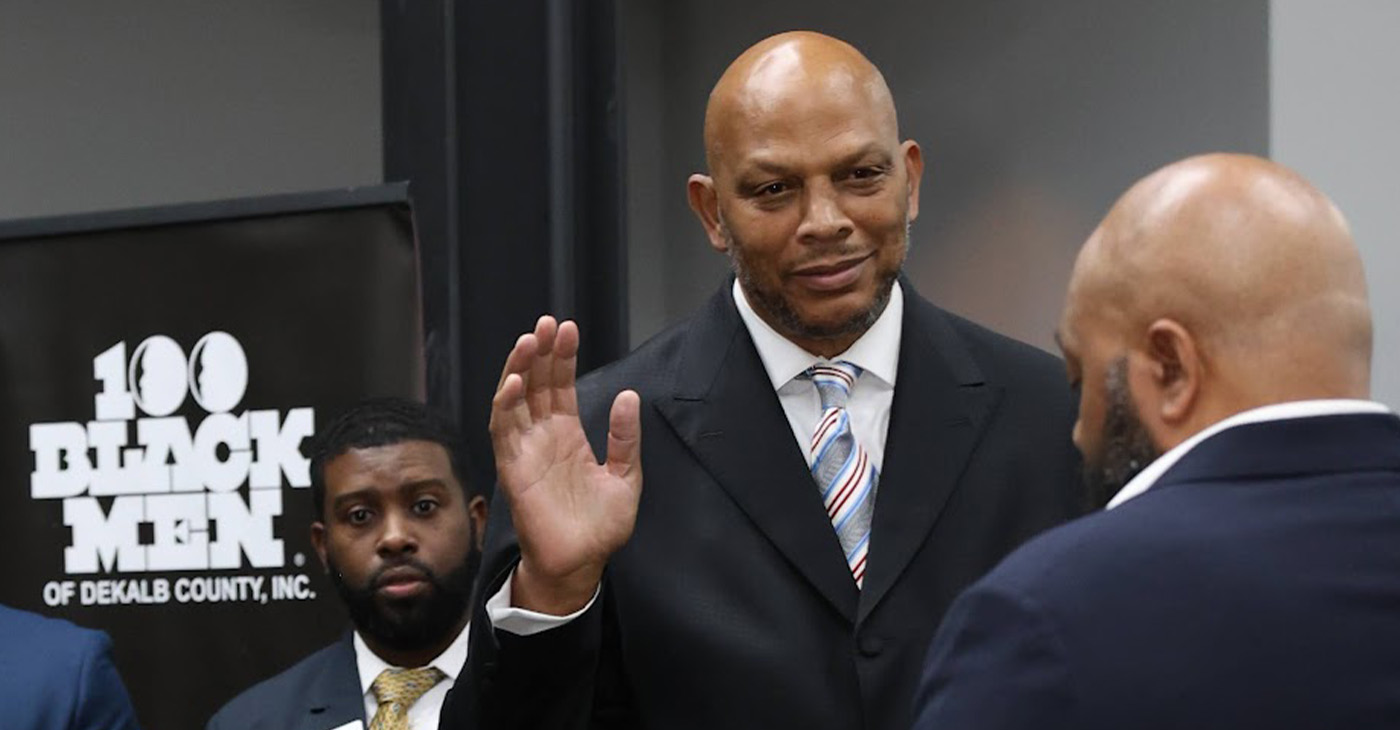
Cummings becomes an honorary member, joining other role model sports stars
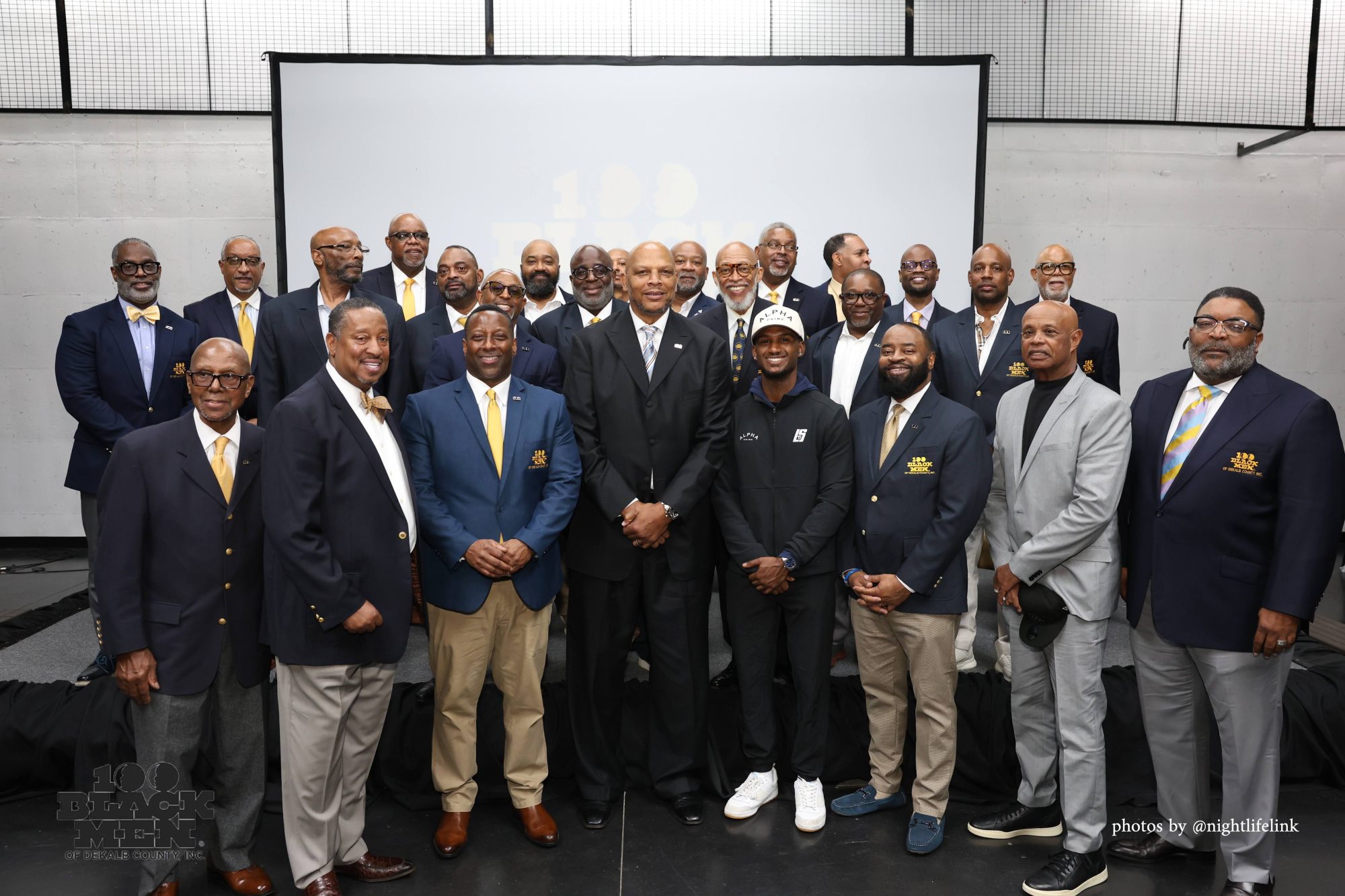
NBA Hall of Fame nominee and Basketball Legend Terry Cummings has officially become an honorary member of the 100 Black Men of DeKalb County, marking a powerful new chapter for the 100 Black Men and youth development across the region.
Cummings was administered the official member’s oath and ceremonially pinned during a special induction ceremony held on Friday, February 20th. The moment signified more than membership — it marked the launch of the organization’s transformative new platform, the Victory & Values Initiative.
The Victory & Values Initiative is a groundbreaking youth development program designed to empower elementary and middle school students through a dynamic blend of sports, mentorship, and STEM exposure. The initiative focuses on building health, discipline, character, leadership, and access to opportunity — creating pathways for long-term academic and personal success.
“This is about more than sports,” said Cummings during the ceremony. “It’s about using the platform of athletics to teach life lessons, create access, and build the next generation of leaders.”

The induction ceremony also featured notable guests including NASCAR’s newest Star Driver, Lavar Scott and NASCAR Director of Athletic Performance, Phil Horton, who joined Cummings for a powerful Victory & Values Town Hall discussion. The Town Hall was moderated by renowned Sports Emcee John Hollins and focused on leadership, resilience, discipline, and the importance of mentorship in shaping young lives.
A “Day at NASCAR” for 75+ Youth

Cummings wasted no time getting to work. On his first full day as an honorary member, he joined his new brothers of the 100 Black Men of DeKalb County to host a “Day at NASCAR,” escorting more than 75 youth to a once-in-a-lifetime experience at EchoPark Motor Speedway (formerly Atlanta Motor Speedway).
The youth participants received behind-the-scenes access including: an exclusive tour of Pit Row, access to the Garage Area and exploration of the interactive Fan Zone.
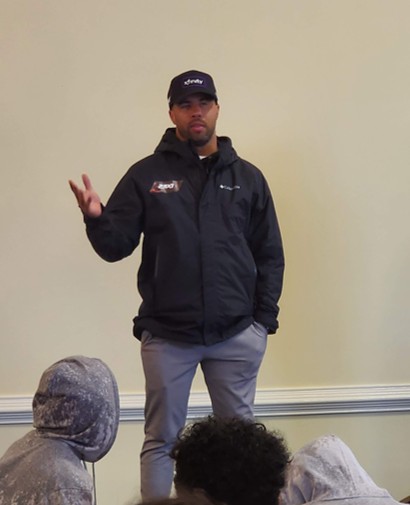
The experience culminated with a surprise meet-and-greet and Q&A session with NASCAR Superstar Bubba Wallace, who shared insights on perseverance, preparation, and breaking barriers in professional sports.
The day served as a living example of the ‘Victory & Values’ Initiative in action — exposing youth to new industries, expanding their vision for the future, and connecting them directly with high- level mentors and role models.
Building Leaders Through Access and Mentorship
The 100 Black Men of DeKalb County – a chapter of the largest, national mentoring organization in the county – continues to expand its footprint with programs focused on academic excellence, economic empowerment, leadership development, and health & wellness.
The launch of ‘Victory & Values’ represents a strategic expansion of the organization’s impact
- intentionally integrating athletics and STEM to engage youth at an early age while reinforcing core principles such as integrity, accountability, teamwork, and perseverance.
“Our mission has always been to mentor the next generation,” said Vaughn Irons, President-Elect of the 100 Black Men of DeKalb County. “With Terry Cummings joining the brotherhood, along with partners in NASCAR and professional sports, we are creating unprecedented access and exposure for our youth. Victory & Values is about turning inspiration into structured opportunity.”
By connecting elementary and middle school students to professional athletes, executives, STEM professionals, and community leaders, the initiative aims to:
- Increase youth exposure to careers in sports business, engineering, and performance science
- Strengthen mentorship pipelines
- Promote physical wellness and mental resilience
- Build character-driven leadership at an early age
Open Invitation to Youth and Families
All youth are invited to participate in the Victory & Values Initiative, along with the other countless, impactful programs offered by the 100 Black Men of DeKalb County.
Parents and guardians seeking mentorship, leadership development, academic enrichment, and transformative exposure opportunities for their children are encouraged to connect with the organization.
As NBA Legend Terry Cummings’ induction demonstrates, Victory & Values is more than a program — it is a movement designed to build champions in life, not just in sports.
For more information about the Victory & Values Initiative or to enroll a student, contact: 100 Black Men of DeKalb County at Phone at 404.241.1338, info@100bmod.org or Tee Foxx at 404.791.6525,



WORK FROM HOME
Home-based business with potential monthly income of $10K+ per month. A proven training system and website provided to maximize business effectiveness. Perfect job to earn side and primary income. Contact Lynne for more details: Lynne4npusa@gmail.com 800-334-0540


Poll Shows Support for Policies That Help Families Afford Child Care

Oakland Post: Week of February 25 – March 3, 2026

Trump’s MAGA Allies are Creating Executive Order Plan to Steal the 2026 Midterms

PRESS ROOM: NBA Hall of Fame Nominee Terry Cummings Joins 100 Black Men of DeKalb County to Launch Victory & Values Initiative

Reflecting on Black History Milestones in Birmingham AL

OP-ED: One Hundred Years of Black Workers Telling the Truth

PRESS ROOM: Civil Rights TV Launches in Selma as the World’s First 24/7 Civil Rights Television Network

Advancements in solar technology that are changing the way we power the world

U.S. manufacturing rebounds – how foundry services are adapting to rising demand

Why has blood testing become so popular in today’s world?

Ghana Mourns a Son of the African World

OP-ED: Trump’s Policies Hurt Black America—and Everyone Else

OP-ED: Meta Deleted Me. I Still Don’t Know Why. And neither will you.

More than a Mission: Paying It Forward for the Future of Education

Avoid Eviction This Season: Landlord Checklist for Stable Tenancies

Life Expectancy in Marin City, a Black Community, Is 15-17 Years Less than the Rest of Marin County

Oakland Post: Week of January 28, 2025 – February 3, 2026

Community Celebrates Turner Group Construction Company as Collins Drive Becomes Turner Group Drive

California Launches Study on Mileage Tax to Potentially Replace Gas Tax as Republicans Push Back

Discrimination in City Contracts

Oakland Post: Week of January 21 – 27, 2026

Book Review: Books on Black History and Black Life for Kids

COMMENTARY: The Biases We Don’t See — Preventing AI-Driven Inequality in Health Care

Medi-Cal Cares for You and Your Baby Every Step of the Way

Post Newspaper Invites NNPA to Join Nationwide Probate Reform Initiative

Black History Events in the East Bay

Art of the African Diaspora Celebrates Legacy and Community at Richmond Art Center

COMMENTARY: The National Protest Must Be Accompanied with Our Votes

After Don Lemon’s Arrest, Black Officials Raise Concerns About Independent Black Media

New Bill, the RIDER Safety Act, Would Support Transit Ambassadors and Safety on Public Transit

Hyundai Ioniq 5 Parking, Safety, and 360 View #shorts

2025 Ioniq 5 New Wiper & Powerful Performance! #shorts

Electric SUV Range: Is 259 Miles Enough? #shorts

EV Charging: How Fast Can You Charge an Electric Vehicle? #shorts

Biometric Cooling… Messaging Seats…Come on! 2025 Infiniti QX80 Autograph 4WD

Charged Up: Witness the Magic of a Fully Electric Car! #shorts

Range Rover Sport PHEV Included…: See What’s Inside This Luxury SUV! #shorts

Invisible Hood View: Perfect Parking with X-Ray Vision! #shorts

AI Is Reshaping Black Healthcare: Promise, Peril, and the Push for Improved Results in California

ESSAY: Technology and Medicine, a Primary Care Point of View

Sanctuary Cities

The RESISTANCE – FREEDOM NOW

STATE OF THE PEOPLE: Freddie

ECONOMIC BOYCOTT DAY!!!!!

I told You So

-
 Activism3 weeks ago
Community Celebrates Turner Group Construction Company as Collins Drive Becomes Turner Group Drive
-
 Business3 weeks ago
California Launches Study on Mileage Tax to Potentially Replace Gas Tax as Republicans Push Back
-
 Activism3 weeks ago
Discrimination in City Contracts
-
 Arts and Culture3 weeks ago
Book Review: Books on Black History and Black Life for Kids
-
 Activism3 weeks ago
COMMENTARY: The Biases We Don’t See — Preventing AI-Driven Inequality in Health Care
-
 Activism3 weeks ago
Post Newspaper Invites NNPA to Join Nationwide Probate Reform Initiative
-
 Alameda County3 weeks ago
Black History Events in the East Bay
-
 Activism3 weeks ago
Art of the African Diaspora Celebrates Legacy and Community at Richmond Art Center
