
City Government
Proposed Youth Curfew Fails for Lack of Support

A proposal for a youth curfew in Oakland died this week at the city’s Public Safety Committee meeting in the face of opposition by City Council members and outraged hostility by young people and their supporters who filled the council chambers.
Brought to the Tuesday committee meeting by District 5 Councilmember Noel Gallo, the “Juvenile Protection Curfew Ordinance” was designed to help remedy the “victimization, exploitation and criminal activities that adversely impact youth in the City of Oakland.”
Gallo’s suggestion was to create a seven-day-a week, 10 p.m. to 6 a.m. curfew and also would ban young people from being in public during school hours, 8:30 a.m. to 1:30 p.m. He emphasized he did not wish to to have young people arrested but instead called for 24-hour-a-day youth action centers where those detained would be taken for family and academic counseling and resources.
While Public Safety Committee members declined to send the proposal to the full council for a vote, the committee voted to hold hearings on how the city can help reduce truancy and support students.
Speaker after speaker argued that a curfew would violate young people’s rights, underscoring their tense relations with the Oakland police officers, which speakers said regularly harass, racially profile and arrest teenagers.
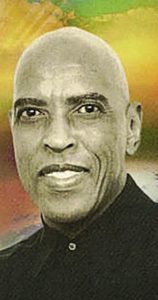
“There are lots of problems (in the schools), but a curfew is bigger problem. I don’t want someone to take our constitutional rights away from us,” said Andre Mouton, who has worked with young people in East Oakland schools,
“(Young people) will run, and these police shoot. They will treat them like meat. We don’t want one kid killed by a curfew law,” he said.
Some young people talked about their reasons for being out at night, including taking a bus home from work, or soccer games, as well as buying dinner for young siblings. An undocumented young man said the curfew could mean he would be picked up and deported.
A group of four teenagers performed a poem with the refrain, ““I’m here today to say that curfews do not reduce crime. They criminalize us in our day to day,” recited Pablo Paredes, Diana Bonilla, Michele Ramos and Daniel Ramos.
I’ve been kicked out of my house numerous times,” with the result that she is out of the house after 10 p.m., said Patricia Carter. “Should I go to jail because I don’t have good parents?”
Councilmember Libby Schaaf and Lynette McElhaney opposed the curfew, as did Councilmember Dan Kalb, who said he wanted police to devote their attention to high priority 911 calls.
“If they’re stopping a bunch of 16-year-olds hanging out a little later than normal … I don’t think that’s a good use of their time,” he said.
Police Chief Sean Whent opposed the curfew on grounds that it would be difficult to enforce and strain his already limited resources. “I think it would really impair our effectiveness and really impact our ability to do other stuff like violent crime prevention,” he said.






Activism
Oakland Post: Week of December 31, 2025 – January 6, 2026
The printed Weekly Edition of the Oakland Post: Week of – December 31, 2025 – January 6, 2026

To enlarge your view of this issue, use the slider, magnifying glass icon or full page icon in the lower right corner of the browser window.
Activism
Oakland Post: Week of December 24 – 30, 2025
The printed Weekly Edition of the Oakland Post: Week of – December 24 – 30, 2025

To enlarge your view of this issue, use the slider, magnifying glass icon or full page icon in the lower right corner of the browser window.
Alameda County
Oakland Council Expands Citywide Security Cameras Despite Major Opposition
In a 7-1 vote in favor of the contract, with only District 3 Councilmember Carroll Fife voting no, the Council agreed to maintain its existing network of 291 cameras and add 40 new “pan-tilt-zoom cameras.”

By Post Staff
The Oakland City Council this week approved a $2.25 million contract with Flock Safety for a mass surveillance network of hundreds of security cameras to track vehicles in the city.
In a 7-1 vote in favor of the contract, with only District 3 Councilmember Carroll Fife voting no, the Council agreed to maintain its existing network of 291 cameras and add 40 new “pan-tilt-zoom cameras.”
In recent weeks hundreds of local residents have spoken against the camera system, raising concerns that data will be shared with immigration authorities and other federal agencies at a time when mass surveillance is growing across the country with little regard for individual rights.
The Flock network, supported by the Oakland Police Department, has the backing of residents and councilmembers who see it as an important tool to protect public safety.
“This system makes the Department more efficient as it allows for information related to disruptive/violent criminal activities to be captured … and allows for precise and focused enforcement,” OPD wrote in its proposal to City Council.
According to OPD, police made 232 arrests using data from Flock cameras between July 2024 and November of this year.
Based on the data, police say they recovered 68 guns, and utilizing the countywide system, they have found 1,100 stolen vehicles.
However, Flock’s cameras cast a wide net. The company’s cameras in Oakland last month captured license plate numbers and other information from about 1.4 million vehicles.
Speaking at Tuesday’s Council meeting, Fife was critical of her colleagues for signing a contract with a company that has been in the national spotlight for sharing data with federal agencies.
Flock’s cameras – which are automated license plate readers – have been used in tracking people who have had abortions, monitoring protesters, and aiding in deportation roundups.
“I don’t know how we get up and have several press conferences talking about how we are supportive of a sanctuary city status but then use a vendor that has been shown to have a direct relationship with (the U.S.) Border Control,” she said. “It doesn’t make sense to me.”
Several councilmembers who voted in favor of the contract said they supported the deal as long as some safeguards were written into the Council’s resolution.
“We’re not aiming for perfection,” said District 1 Councilmember Zac Unger. “This is not Orwellian facial recognition technology — that’s prohibited in Oakland. The road forward here is to add as many amendments as we can.”
Amendments passed by the Council prohibit OPD from sharing camera data with any other agencies for the purpose of “criminalizing reproductive or gender affirming healthcare” or for federal immigration enforcement. California state law also prohibits the sharing of license plate reader data with the federal government, and because Oakland’s sanctuary city status, OPD is not allowed to cooperate with immigration authorities.
A former member of Oakland’s Privacy Advisory Commission has sued OPD, alleging that it has violated its own rules around data sharing.
So far, OPD has shared Flock data with 50 other law enforcement agencies.


WORK FROM HOME
Home-based business with potential monthly income of $10K+ per month. A proven training system and website provided to maximize business effectiveness. Perfect job to earn side and primary income. Contact Lynne for more details: Lynne4npusa@gmail.com 800-334-0540


OP-ED: AB 1349 Puts Corporate Power Over Community

Oakland Post: Week of December 31, 2025 – January 6, 2026

Big God Ministry Gives Away Toys in Marin City

First 5 Alameda County Distributes Over $8 Million in First Wave of Critical Relief Funds for Historically Underpaid Caregivers

2025 in Review: Seven Questions for Assemblymember Lori Wilson — Advocate for Equity, the Environment, and More

2025 in Review: Seven Questions for Assemblymember Tina McKinnor, Champion of Reparations, Housing and Workers’ Rights

2025 in Review: Seven Questions for Sen. Laura Richardson, Who Made Legislative History This Year

2025 in Review: Seven Questions for Sen. Lola Smallwood-Cuevas – an Advocate for Jobs and Justice

Alfred Cralle: Inventor of the Ice Cream Scoop

BOOK REVIEW: Let Me Be Real With You

Oakland Post: Week of December 24 – 30, 2025

Bling It On: Holiday Lights Brighten Dark Nights All Around the Bay

Oakland Council Expands Citywide Security Cameras Despite Major Opposition

Lu Lu’s House is Not Just Toying Around with the Community

Desmond Gumbs — Visionary Founder, Mentor, and Builder of Opportunity

Post Salon to Discuss Proposal to Bring Costco to Oakland Community meeting to be held at City Hall, Thursday, Dec. 18

Mayor Lee, City Leaders Announce $334 Million Bond Sale for Affordable Housing, Roads, Park Renovations, Libraries and Senior Centers

Oakland Post: Week of December 10 – 16, 2025

Oakland School Board Grapples with Potential $100 Million Shortfall Next Year

2025 in Review: Seven Questions for Black Women’s Think Tank Founder Kellie Todd Griffin

Fayeth Gardens Holds 3rd Annual Kwanzaa Celebration at Hayward City Hall on Dec. 28

COMMENTARY: If You Don’t Want Your ‘Black Card’ Revoked, Watch What You Bring to Holiday Dinners

Ann Lowe: The Quiet Genius of American Couture
Desmond Gumbs — Visionary Founder, Mentor, and Builder of Opportunity

Support Your Child’s Mental Health: Medi-Cal Covers Therapy, Medication, and More

BRIDGE Housing President and CEO Ken Lombard Scores Top Honors for Affordable Housing Leadership

Families Across the U.S. Are Facing an ‘Affordability Crisis,’ Says United Way Bay Area
Oakland Council Expands Citywide Security Cameras Despite Major Opposition
Bling It On: Holiday Lights Brighten Dark Nights All Around the Bay

Black Arts Movement Business District Named New Cultural District in California

Hyundai Ioniq 5 Parking, Safety, and 360 View #shorts

2025 Ioniq 5 New Wiper & Powerful Performance! #shorts

Electric SUV Range: Is 259 Miles Enough? #shorts

EV Charging: How Fast Can You Charge an Electric Vehicle? #shorts

Biometric Cooling… Messaging Seats…Come on! 2025 Infiniti QX80 Autograph 4WD

Charged Up: Witness the Magic of a Fully Electric Car! #shorts

Range Rover Sport PHEV Included…: See What’s Inside This Luxury SUV! #shorts

Invisible Hood View: Perfect Parking with X-Ray Vision! #shorts

AI Is Reshaping Black Healthcare: Promise, Peril, and the Push for Improved Results in California

ESSAY: Technology and Medicine, a Primary Care Point of View

Sanctuary Cities

The RESISTANCE – FREEDOM NOW

STATE OF THE PEOPLE: Freddie

ECONOMIC BOYCOTT DAY!!!!!

I told You So
-
 Activism4 weeks ago
Desmond Gumbs — Visionary Founder, Mentor, and Builder of Opportunity
-
 Activism4 weeks ago
Families Across the U.S. Are Facing an ‘Affordability Crisis,’ Says United Way Bay Area
-
 Alameda County4 weeks ago
Oakland Council Expands Citywide Security Cameras Despite Major Opposition
-
 Alameda County4 weeks ago
Bling It On: Holiday Lights Brighten Dark Nights All Around the Bay
-
 Activism4 weeks ago
Black Arts Movement Business District Named New Cultural District in California
-
 Activism4 weeks ago
Oakland Post: Week of December 17 – 23, 2025
-
 Activism4 weeks ago
Lu Lu’s House is Not Just Toying Around with the Community
-
 Activism3 weeks ago
First 5 Alameda County Distributes Over $8 Million in First Wave of Critical Relief Funds for Historically Underpaid Caregivers
