
Business
Sherman Industries unlikely to relocate in Five Points West
THE BIRMINGHAM TIMES — After fierce neighborhood opposition, the Jefferson County Department of Health (JCDH) will not issue a permit for Sherman Industries, LLC to relocate to the Five Points West Community.

By Erica Wright
After fierce neighborhood opposition, the Jefferson County Department of Health (JCDH) will not issue a permit for Sherman Industries, LLC to relocate to the Five Points West Community.
JCDH said it has granted a request from Sherman Industries, LLC to place a hold on the air permit needed for the relocation.
City leaders and neighborhood officers, who fought against moving the facility to Five Points West, welcomed the news.
“Sherman Industries’ decision to suspend the air permit request for the Fayette Avenue site is good news for the neighborhood leaders and residents who expressed their concerns about the plant operating in their community,” said Birmingham Mayor Randall Woodfin in a statement released by the city.
Dora Sims, president of the Five Points West Community, said she was happy that residents were able to make a difference.
“When we come together in a collaborative effort it makes a big statement to let people know what we want in our community . . . people need to know that their voices are very powerful in terms of what they want in their neighborhoods,” said Sims.
She pointed out that a number of groups in the surrounding West End communities and organizations such as Saving Our Neighborhoods united to oppose the concrete batch company.
“It’s all a big win for everyone when we come together in a collaborative effort, working together in a positive sense and making a difference for where we live,” said Sims.
City Officials Opposed
Sims also thanked Woodfin and the council for their support.
“Mayor Woodfin came to our meetings and told us he was on our side and he was going to make certain this did not come to Five Points West,” she said. “Also all of the city council coming together to work and . . . that all nine members of the council rallied to support our councilor [Steven Hoyt] and the mayor means a lot.”
In a statement released by the Birmingham City Council, Hoyt said, “It takes a collective effort to move our community forward and today is a day we can all be proud of. I’d like to thank Mayor Randall Woodfin for his leadership, and also the representatives of Sherman Industries for hearing our concerns about the location of this proposed development.”
Hoyt, who has been a vocal opponent of the move, said he will continue his efforts to get the property rezoned to not allow that type of company to relocate in the area.
“As elected leaders, we have a moral obligation to fight for our people,” he said. “While this is move in the right direction, we need to continue to make sure the residents of Five Points West and surrounding areas are protected from any future efforts to place heavy industry in our blossoming community.”
Earlier this month, the Birmingham City Council passed a resolution opposing the relocation of the facility to Five Points West and Woodfin also expressed his disagreement with the facility moving.
The city’s statement said the mayor has been clear in his support of the residents. “The city will work jointly to find an appropriate location for the Sherman Industries plant whether it be in Birmingham or the region,” the statement said. “This must be an ongoing inclusive effort which includes the public, the city, JCDH, and the company. The mayor is committed to keeping the concerns of the neighborhoods in the forefront and will keep them informed of any additional developments in this matter.”
The health department said a public hearing and information meeting scheduled for June 6 at the Birmingham CrossPlex about the move has been cancelled.
Residents Speak Against
Last month, Sherman Industries, LLC had requested to place a concrete batch plant at 3420 Fayette Avenue in Five Points West. That would have replaced the existing facility on Second Avenue South, which has been in operation since the 1950s.
Many neighborhood leaders and residents expressed their concern over the facility moving to their community.
“We on the western side of town, do not welcome Sherman Industries to our community . . . our health is very important just like yours and theirs,” Walladean Streeter, president of the Bush Hills neighborhood told the council earlier this month. “They show no concern to the citizens of the western area and we’re very upset about that because we are human… and they’re bringing the problems to us. We have children all around that area, we have new restaurants coming and the smoke, the dust goes right out there to them. We need you and we’re asking you to support us in every way that you can to stop that from happening.”
At that same council meeting, April Williams, a resident of the Bush Hills Neighborhood, said there is nothing good about a cement plant being in a high-dense residential area. “I’m not proposing it being in any residential area, but if it’s not good for Railroad Park and that area, surely we all agree it’s not good for CrossPlex and the Five Points West area.”
Efforts to reach a spokesman with Lehigh Hanson Inc., of which Sherman Industries is a subsidiary, for comment were unsuccessful.
However in a statement reported by AL.com, Jeff Sieg, of Leigh Hanson, said the company is still working with the city.
“Sherman Industries has been working closely with the City of Birmingham regarding our proposed concrete batch plant at Fayette Ave. The company intends to continue this approach in an effort to improve the city’s and the community’s understanding of the scope of our project and to attempt to identify a mutually acceptable solution at Fayette Avenue in Five Points West, or possibly an equally viable location,” Sieg said in the statement.
This article originally appeared in The Birmingham Times .





Activism
Oakland Post: Week of February 25 – March 3, 2026
The printed Weekly Edition of the Oakland Post: Week of – February 25 – March 3, 2026

To enlarge your view of this issue, use the slider, magnifying glass icon or full page icon in the lower right corner of the browser window.
Activism
Chase Oakland Community Center Hosts Alley-Oop Accelerator Building Community and Opportunity for Bay Area Entrepreneurs
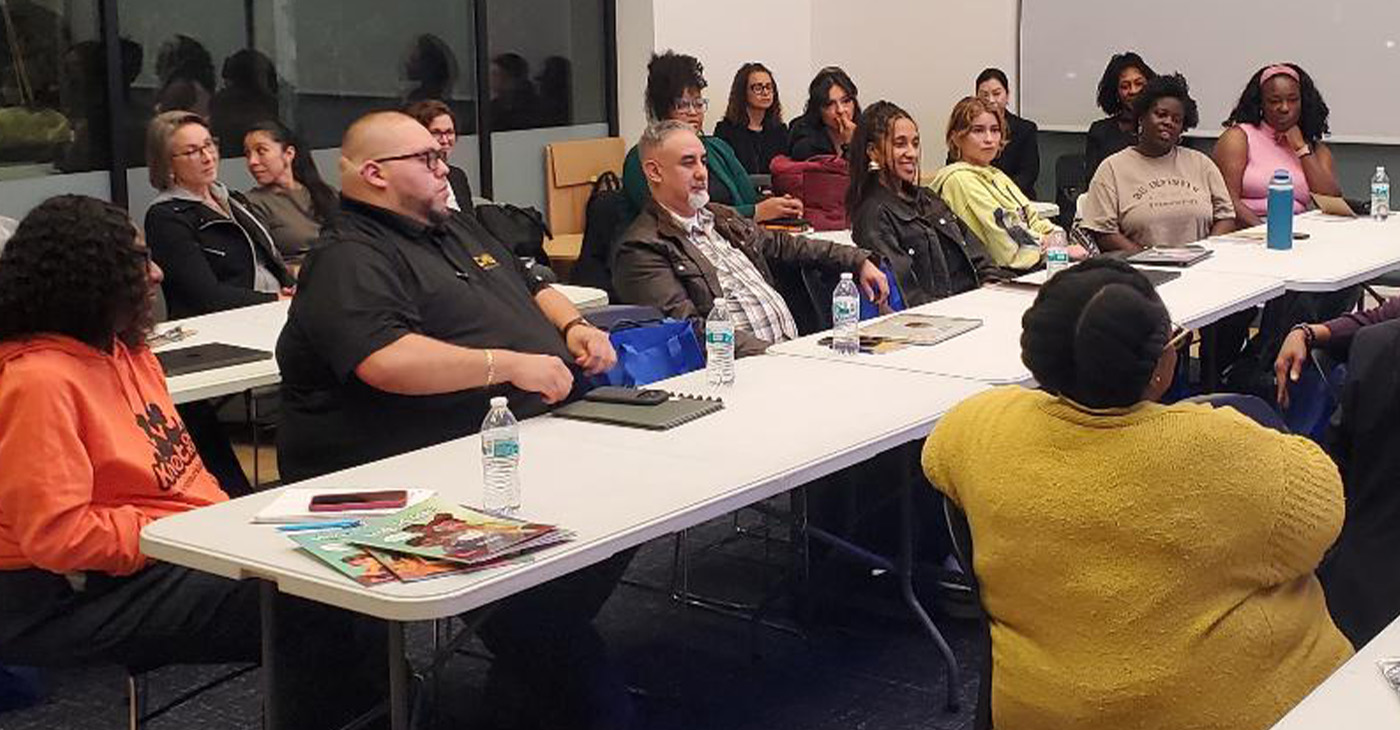
Over the past three years, the Alley-Oop Accelerator has helped more than 20 Bay Area businesses grow, connect, and gain meaningful exposure. The program combines hands-on training, mentorship, and community-building to help participants navigate the legal, financial, and marketing challenges of small business ownership.
By Carla Thomas

The Golden State Warriors and Chase bank hosted the third annual Alley-Oop Accelerator this month, an empowering eight-week program designed to help Bay Area entrepreneurs bring their visions for business to life.
The initiative kicked off on Feb. 12 at Chase’s Oakland Community Center on Broadway Street, welcoming 15 small business owners who joined a growing network of local innovators working to strengthen the region’s entrepreneurial ecosystem.
Over the past three years, the Alley-Oop Accelerator has helped more than 20 Bay Area businesses grow, connect, and gain meaningful exposure. The program combines hands-on training, mentorship, and community-building to help participants navigate the legal, financial, and marketing challenges of small business ownership.
At its core, the accelerator is designed to create an ecosystem of collaboration, where local entrepreneurs can learn from one another while accessing the resources of a global financial institution.
“This is our third year in a row working with the Golden State Warriors on the Alley-Oop Accelerator,” said Jaime Garcia, executive director of Chase’s Coaching for Impact team for the West Division. “We’ve already had 20-plus businesses graduate from the program, and we have 15 enrolled this year. The biggest thing about the program is really the community that’s built amongst the business owners — plus the exposure they’re able to get through Chase and the Golden State Warriors.”
According to Garcia, several graduates have gone on to receive vendor contracts with the Warriors and have gained broader recognition through collaborations with JPMorgan Chase.
“A lot of what Chase is trying to do,” Garcia added, “is bring businesses together because what they’ve asked for is an ecosystem, a network where they can connect, grow, and thrive organically.”
This year’s Alley-Oop Accelerator reflects that vision through its comprehensive curriculum and emphasis on practical learning. Participants explore the full spectrum of business essentials including financial management, marketing strategy, and legal compliance, while also preparing for real-world experiences such as pop-up market events.
Each entrepreneur benefits from one-on-one mentoring sessions through Chase’s Coaching for Impact program, which provides complimentary, personalized business consulting.
Garcia described the impact this hands-on approach has had on local small business owners. He recalled one candlemaker, who, after participating in the program, was invited to provide candles as gifts at Chase events.
“We were able to help give that business exposure,” he explained. “But then our team also worked with them on how to access capital to buy inventory and manage operations once those orders started coming in. It’s about preparation. When a hiccup happens, are you ready to handle it?”
The Coaching for Impact initiative, which launched in 2020 in just four cities, has since expanded to 46 nationwide.
“Every business is different,” Garcia said. “That’s why personal coaching matters so much. It’s life-changing.”
Participants in the 2026 program will each receive a $2,500 stipend, funding that Garcia said can make an outsized difference. “It’s amazing what some people can do with just $2,500,” he noted. “It sounds small, but it goes a long way when you have a plan for how to use it.”
For Chase and the Warriors, the Alley-Oop Accelerator represents more than an educational initiative, it’s a pathway to empowerment and economic inclusion. The program continues to foster lasting relationships among the entrepreneurs who, as Garcia put it, “build each other up” through shared growth and opportunity.
“Starting a business is never easy, but with the right support, it becomes possible, and even exhilarating,” said Oscar Lopez, the senior business consultant for Chase in Oakland.
Activism
Oakland Post: Week of February 18 – 24, 2026
The printed Weekly Edition of the Oakland Post: Week of – February 18 – 24, 2026
To enlarge your view of this issue, use the slider, magnifying glass icon or full page icon in the lower right corner of the browser window.


WORK FROM HOME
Home-based business with potential monthly income of $10K+ per month. A proven training system and website provided to maximize business effectiveness. Perfect job to earn side and primary income. Contact Lynne for more details: Lynne4npusa@gmail.com 800-334-0540


Poll Shows Support for Policies That Help Families Afford Child Care

Oakland Post: Week of February 25 – March 3, 2026

Trump’s MAGA Allies are Creating Executive Order Plan to Steal the 2026 Midterms

PRESS ROOM: NBA Hall of Fame Nominee Terry Cummings Joins 100 Black Men of DeKalb County to Launch Victory & Values Initiative

Reflecting on Black History Milestones in Birmingham AL

OP-ED: One Hundred Years of Black Workers Telling the Truth

PRESS ROOM: Civil Rights TV Launches in Selma as the World’s First 24/7 Civil Rights Television Network

Advancements in solar technology that are changing the way we power the world

U.S. manufacturing rebounds – how foundry services are adapting to rising demand

Why has blood testing become so popular in today’s world?

Ghana Mourns a Son of the African World

OP-ED: Trump’s Policies Hurt Black America—and Everyone Else

OP-ED: Meta Deleted Me. I Still Don’t Know Why. And neither will you.

More than a Mission: Paying It Forward for the Future of Education

Avoid Eviction This Season: Landlord Checklist for Stable Tenancies

Oakland Post: Week of January 28, 2025 – February 3, 2026

Life Expectancy in Marin City, a Black Community, Is 15-17 Years Less than the Rest of Marin County

Community Celebrates Turner Group Construction Company as Collins Drive Becomes Turner Group Drive

California Launches Study on Mileage Tax to Potentially Replace Gas Tax as Republicans Push Back

Discrimination in City Contracts

Book Review: Books on Black History and Black Life for Kids

Oakland Post: Week of January 21 – 27, 2026

COMMENTARY: The Biases We Don’t See — Preventing AI-Driven Inequality in Health Care

Post Newspaper Invites NNPA to Join Nationwide Probate Reform Initiative

Medi-Cal Cares for You and Your Baby Every Step of the Way

Black History Events in the East Bay

Art of the African Diaspora Celebrates Legacy and Community at Richmond Art Center

COMMENTARY: The National Protest Must Be Accompanied with Our Votes

New Bill, the RIDER Safety Act, Would Support Transit Ambassadors and Safety on Public Transit

After Don Lemon’s Arrest, Black Officials Raise Concerns About Independent Black Media

Hyundai Ioniq 5 Parking, Safety, and 360 View #shorts

2025 Ioniq 5 New Wiper & Powerful Performance! #shorts

Electric SUV Range: Is 259 Miles Enough? #shorts

EV Charging: How Fast Can You Charge an Electric Vehicle? #shorts

Biometric Cooling… Messaging Seats…Come on! 2025 Infiniti QX80 Autograph 4WD

Charged Up: Witness the Magic of a Fully Electric Car! #shorts

Range Rover Sport PHEV Included…: See What’s Inside This Luxury SUV! #shorts

Invisible Hood View: Perfect Parking with X-Ray Vision! #shorts

AI Is Reshaping Black Healthcare: Promise, Peril, and the Push for Improved Results in California

ESSAY: Technology and Medicine, a Primary Care Point of View

Sanctuary Cities

The RESISTANCE – FREEDOM NOW

STATE OF THE PEOPLE: Freddie

ECONOMIC BOYCOTT DAY!!!!!

I told You So

-
 Activism4 weeks ago
Community Celebrates Turner Group Construction Company as Collins Drive Becomes Turner Group Drive
-
 Business4 weeks ago
California Launches Study on Mileage Tax to Potentially Replace Gas Tax as Republicans Push Back
-
 Activism4 weeks ago
Discrimination in City Contracts
-
 Arts and Culture4 weeks ago
Book Review: Books on Black History and Black Life for Kids
-
 Activism4 weeks ago
COMMENTARY: The Biases We Don’t See — Preventing AI-Driven Inequality in Health Care
-
 Activism4 weeks ago
Post Newspaper Invites NNPA to Join Nationwide Probate Reform Initiative
-
 Alameda County4 weeks ago
Black History Events in the East Bay
-
 Activism4 weeks ago
Art of the African Diaspora Celebrates Legacy and Community at Richmond Art Center
