
Religion
The Black Church and the Strength to Forgive


Emanuel AME Church stands in the background as a mourner visits a sidewalk memorial in memory of the shooting victims Saturday, June 20, 2015, in Charleston, S.C. (AP Photo/David Goldman)
By Jazelle Hunt
Washington Correspondent
WASHINGTON (NNPA) – For many outside the Black community, they had never seen anything like it. Though suffering and deep in pain from the loss of loved ones at the hands of Dylann Roof at Emanuel A.M.E. Church in Charleston, S.C., they reflected the finest reflection of Christian values.
A daughter Ethel Lance, 70, one of the nine killed at Bible study, struggled to find the right words.
“I will never be able to hold her again. But I forgive you and have mercy on your soul,” she said, her voice trembling with emotion. “It hurts me, it hurts a lot of people, but God forgive you and I forgive you.”
Speaking for her family, a sister of Rev. DePayne Middleton-Doctor, 49, had a similar message.
“We have no room for hate,” she said softly. “We have to forgive. I pray God on your soul. And I also thank God that I won’t be around when your judgment day comes with him.”
One-by-one, they took turns, sharing their grief, but not any rancor. How could they be so forgiving?
In order to understand the answer to that question, experts on religion say, you have to understand the role the church plays in Black America and how the nation’s most religious group – African Americans – take the teachings of Jesus’ literally.
“To understand the Black Christian tradition and faith that has nurtured Black people for centuries is to know that they live by a deep, resilient faith that God is on the side of justice, God is on the side of love,” explained Rev. Forrest Harris, president of American Baptist College in Nashville, Tenn. and a scholar on the Black Christian church. “And that ultimately, though people will tragically experience what we saw happen at Mother Emanuel, ultimately love will prevail and hope will prevail.”
Rev. Susan K. Smith of Columbus, Ohio says that Scripture shows that it’s reasonable to feel and wrestle with difficult emotions, instead of jumping straight to forgiveness.
“If you don’t deal with your real, strong feelings, it’s almost impossible to get to a place where you can forgive,” she said. Smith points to Psalm 13, saying, “The Psalmist, who expresses his pain…then at the end of the Psalm there’s a ‘but, I will praise you anyway.’ This is vital, because what we have with God is a relationship, and in relationships there are always times when you don’t get it.”
Rev. Amos Brown, pastor of the Third Baptist Church of San Francisco and NAACP national board member, said Blacks should not bear the brunt of suffering – or forgiveness – in the U.S.
“I do not feel in my spirit that Blacks should have to be the sacrificial lambs all the time,” he explained. “The pain is so great and it’s insulting that America has still not confessed to its wrong and its evil. And that evil is racism.”
Relatives of the nine slain in Charleston refused to be overcome by the evil of racism.
“In this particular context, we’re all deeply moved by the family offering up forgiveness, and I want to honor that supernatural manifestation of grace,” says Pastor Michael McBride, leader of The Way Christian Center in Berkeley, Calif., and director of the PICO Network Live Free Campaign, which uses faith to fight mass-criminalization.
“The process of forgiveness first has to acknowledge the offense…the gravity of the offense…the pain that’s been caused. Then it requires an analysis made in very clear terms the kinds of grievances that have been done, so as to not allow those grievances to continue to be perpetrated.”
According to a 2009 Pew Research Center report, nearly 80 percent of Black people say religion is very important in their lives, with 53 percent attending church every week (compared to 39 percent of the overall population). Church is especially important to Black women who are unrivaled in their dedication to their faith (84 percent say they are) and attend church each week (nearly 60 percent do).
Pastor Jonathan Newton, executive minister at Metropolitan A.M.E. Church in Washington, D.C., points out that the lesson of forgiveness is not only God’s way, but also served Black Christians well during the Civil Rights Movement by lending moral weight to the cause.
On the other hand, Pastor Newton explains that forgiveness is not necessarily passive.
Like Mother Emanuel, Metropolitan A.M.E. was founded in the early 1800s and has a storied legacy within the course of Black history. On Friday, hundreds gathered to pray for its sister church in Charleston – later, the church received a bomb threat in return. The previous day, a few other A.M.E. churches in South Carolina were threatened as well.
“[After the shooting] one of our A.M.E. bishops sent around to the churches a litany to explain that the church doors will remain open; we will continue to do what God calls us to do. But while we forgive, we still step up security,” he says.
“Our [A.M.E.] tradition starts with the concept of social justice. The disparate treatment of people is not to be quietly tolerated. That we forgive doesn’t mean we forget, it just means we release the hold that bitterness and hatred has on us.”
The A.M.E. church is indeed grounded in resistance. Free Blacks in Philadelphia founded the denomination in the late 1700s when White Methodist Episcopalians refused to pray along side them and used force to interrupt their worship. The Black parishioners began their own church and successfully sued for the right to be an independent congregation. O
This is not the first time a White supremacist had targeted a Black church.
According to one study, there were more than 300 racially-motivated church bombings or burnings in the 1960s, and an additional 200 between 1989 and 1996. In 2008, two White men were convicted of burning down a COGIC church in Springfield, Mass. in reaction to President Barack Obama’s election.
Pastor Newton and others maintain that emulating Christ’s example of love does not conflict with seeking justice and true reconciliation.
“This sounds trite, but the first thing is prayer. We believe that prayer changes things, but also prayer brings calm, reasonable, rational thinking.”
“[Then] we deal with it, and not try to suppress…we talk about the anger, the hurt. Our faith is what makes us strong through using political actions and our educations …in our strides to social justice.”








Activism
Tribute to Allen Temple Baptist Church Pastor Emeritus Rev. Dr. J. Alfred Smith Sr., 94
Dr. Smith did not set out to become famous; however, he became a renowned, celebrated pastor, preacher, professor, prophet, author, and theologian. He has been honored as one of the top Black preachers of America, earned and received countless awards, and was the recipient of hundreds of honoree acknowledgements that would be a small book in itself.

“I decided early to give my life to something eternal and absolute. Not too little gods…. but to God who is the same yesterday, today, and tomorrow.” J. Alfred Smith Sr.
By Rev. Dr. Martha C. Taylor, Allen Temple Baptist Church Historian
Most tributes are written from the writer’s personal perspective of the deceased. My intent is to expand this tribute so that readers feel a sense of shared experiences and admiration. Pastor Smith had a unique gift of making each person feel as if their relationship with him was deep and personal; making every single one of us feel like the most important person he knew. To that extent this tribute is written as shared experiences and admiration for a man who was exceptional in his ministry, his mission and his life. To pay tribute to this giant of a man is a high privilege and honor.
The Rev. Dr. J. Alfred Smith Sr., lived a life beyond himself. Using his famous quote, “I wish I could make it plain,” my desire is to make this tribute plain so that the reader can feel Dr. Smith’s compassion, wisdom, his love for the other, his faithful service while he traveled the Jericho Road.
His deep faith was a powerful example to others; affirming a shared hope in God as we recall his lasting legacy. We celebrate his life, his love for the other, and a legacy that few will attain.

Alfred Smith was born May 19, 1931, in Kansas City, Missouri. He was raised by his loving mother, Amy Gates Smith, and his grandmother, Mrs. Martha Henry. He obtained his early education in Kansas City and graduated in 1948 from the R. T. Coles High School. That same year, he was licensed to preach, and in 1951 he was ordained at Pilgrim Rest Baptist Church in Kansas City where he served as assistant pastor for three years.
In 1950, Pastor Smith married the love of his life, Joanna Goodwin. To this union, five beautiful children were added to the family bringing even more joy and happiness. Their marriage lasted until she was called home to be with the Lord on Aug. 12, 2007. Later, The Lord blessed Dr. Smith and Rev. Bernestine Farley in marriage. Together they were powerful ministry partners with a blended family. Rev. Bernie, as she is fondly called, is an ordained minister having served at the Allen Temple Arms I and II.
During the 1950s to ’60s, Dr. Smith pastured various small churches in Missouri He also served for three years as principal of Lincoln Elementary School at Keyesville, Missouri, over a period of 20 years. With a heart to excel, and knowing that God wants his leaders properly equipped to serve the people, he burned the midnight oil and enrolled in several colleges and universities and earned four degrees; a Bachelor of Science in elementary education (1952), Bachelor of Divinity (1959), Masters of Theology in Church and Community (1966), Master’s in American Church History (1972), and a Doctor of Ministry (1975).
In 1971, Dr. Smith was elected senior pastor of Allen Temple Baptist Church. He was elected president of the Progressive Baptist State Convention of California in 1979, and president of the Progressive National Baptist Convention in 1986. Smith joined the teaching faculty at the American Baptist Seminary of the West as professor of Christian Ministries in 1992.
The question that arises at this time is what were some of the human qualities, God-given gifts, his dedication to his calling that impacted his ministry locally and beyond? Pastor Smith loved to pray; he knew his power and strength came from a deep prayer life with God. His meetings started with prayer, his phone calls ended in prayer, and amazingly, he often would make phone calls and say, “I was just thinking of you, let’s have a word of prayer.”
Dr. Smith did not set out to become famous; however, he became a renowned, celebrated pastor, preacher, professor, prophet, author, and theologian. He has been honored as one of the top Black preachers of America, earned and received countless awards, and was the recipient of hundreds of honoree acknowledgements that would be a small book in itself.
He addressed the United Nations to oppose South African apartheid and preached in pulpits worldwide, never shying away from controversial issues that represent the marginalized. Dr. Smith had a way of attracting people; he led marches that galvanized communities and people of varying nationalities to the steps of City Hall to speak on issues that plague communities. One of his favorite quotes: “To get to the sweet bye and bye you have to deal with the nasty now and now.” Dr. Smith fuels his passionate, prophetic preaching and praying power from his dependence upon God, which started at his mother’s knee, Amy Gates Smith.
Pastor Smith served everyone – from the lonely to high-ranking officials. Like Jesus, he walked with the marginalized with an open-door policy, all were welcome. The powerful often sought wise counsel from him. Pastor Smith preached and taught all over the universe.
Life has many turns; the Rev. Dr. Jacqueline A. Thompson – Allen Temple’s senior pastor – was licensed and ordained by Dr. Smith; she was his daughter in the ministry who became his pastor. They shared a close relationship.
James Ella James said it like this “He was one of the most important people in my life. He was a real friend, brother, trustworthy and very caring person. It is so hard to describe James Alfred Smith. I don’t know anybody like him.”
I believe we all share James Ella James thoughts and feelings about Dr Smith.
He was never too busy to listen; he had a compassionate heart that comforted others. Most of us know he could shed tears at the drop of a hat. He was a wonderful counselor who offered grace and perspective.
After Sunday morning worship, he always went to the narthex, shook hands, and personally greeted people. He told me when you are greeting the people don’t forget to pat the little children on the head and tell them how much they are growing.
The Rev Dr. Otis Moss Jr said Pastor Smith’s preaching, teaching, and leadership commitments did not take him away from human rights struggles. ‘They take him deeper and deeper into the human rights struggles.”
Perhaps one of the outstanding contributions Pastor Smith made in his ministry was not only housing for seniors and HIV AIDS, but he also ensured that women were ordained and preached in the pulpit and elsewhere.
Among those he ordained early on was Rev. Dr. Ella Mitchell. Women from the four corners of America, there are numerous women who owe Dr. Smith a debt of gratitude for embracing them into the ministry.
When Dr. Smith’s health was challenged with a stroke, crippling him, he then preached from a wheelchair. His last sermon at Allen Temple was on Father’s Day, June 15: “A Good Daddy and his two sons.”
On Sept. 19, 2025, the Lord said, “Well Done, Good and Faithful Servant.”
Dr. Smith’s legacy of faith will live on.
All Services will be held on the Allen Temple Baptist Church Campus and will be livestreamed on Thursday, Oct. 9, 2025, lying in repose from 2 p.m. to 5 p.m., followed by an evening of worship and witness on Friday, Oct. 10, Celebration of Life – 11 a.m.
Activism
Juneteenth: Celebrating Our History, Honoring Our Shared Spaces
It’s been empowering to watch Juneteenth blossom into a widely celebrated holiday, filled with vibrant outdoor events like cookouts, festivals, parades, and more. It’s inspiring to see the community embrace our history—showing up in droves to celebrate freedom, a freedom delayed for some enslaved Americans more than two years after the Emancipation Proclamation was signed.

By Wayne Wilson, Public Affairs Campaign Manager, Caltrans
Juneteenth marks an important moment in our shared history—a time to reflect on the legacy of our ancestors who, even in the face of injustice, chose freedom, unity, and community over fear, anger, and hopelessness. We honor their resilience and the paths they paved so future generations can continue to walk with pride.
It’s been empowering to watch Juneteenth blossom into a widely celebrated holiday, filled with vibrant outdoor events like cookouts, festivals, parades, and more. It’s inspiring to see the community embrace our history—showing up in droves to celebrate freedom, a freedom delayed for some enslaved Americans more than two years after the Emancipation Proclamation was signed.
As we head into the weekend full of festivities and summer celebrations, I want to offer a friendly reminder about who is not invited to the cookout: litter.
At Clean California, we believe the places where we gather—parks, parade routes, street corners, and church lots—should reflect the pride and beauty of the people who fill them. Our mission is to restore and beautify public spaces, transforming areas impacted by trash and neglect into spaces that reflect the strength and spirit of the communities who use them.
Too often, after the music fades and the grills cool, our public spaces are left littered with trash. Just as our ancestors took pride in their communities, we honor their legacy when we clean up after ourselves, teach our children to do the same, and care for our shared spaces.
Small acts can inspire big change. Since 2021, Clean California and its partners have collected and removed over 2.9 million cubic yards of litter. We did this by partnering with local nonprofits and community organizations to organize grassroots cleanup events and beautification projects across California.
Now, we invite all California communities to continue the incredible momentum and take the pledge toward building a cleaner community through our Clean California Community Designation Program. This recognizes cities and neighborhoods committed to long-term cleanliness and civic pride.
This Juneteenth, let’s not only celebrate our history—but also contribute to its legacy. By picking up after ourselves and by leaving no litter behind after celebrations, we have an opportunity to honor our past and shape a cleaner, safer, more vibrant future.
Visit CleanCA.com to learn more about Clean California.
Activism
Oak Temple Hill Hosts Interfaith Leaders from Across the Bay Area
Distinguished faith leaders Rev. Ken Chambers, executive director the Interfaith Council of Alameda County (ICAC); Michael Pappas, executive director of the San Francisco Interfaith Council; and Dr. Ejaz Naqzi, president of the Contra Costa County Interfaith Council addressed the group on key issues including homelessness, food insecurity, immigration, and meaningful opportunities to care for individuals and communities in need.

Special to the Post
Interfaith leaders from the Bay Area participated in a panel discussion at the annual meeting of communication leaders from The Church of Jesus Christ of Latter-day Saints held on Temple Hill in Oakland on May 31. Distinguished faith leaders Rev. Ken Chambers, executive director the Interfaith Council of Alameda County (ICAC); Michael Pappas, executive director of the San Francisco Interfaith Council; and Dr. Ejaz Naqzi, president of the Contra Costa County Interfaith Council addressed the group on key issues including homelessness, food insecurity, immigration, and meaningful opportunities to care for individuals and communities in need.
Chambers, said he is thankful for the leadership and support of the Church of Jesus Christ Latter-Day Saints’ global ministry, which recently worked with the interfaith congregations of ICAC to help Yasjmine Oeveraas a homeless Norwegian mother and her family find shelter and access to government services.
Oeveraas told the story of how she was assisted by ICAC to the Oakland Post. “I’m a Norwegian citizen who escaped an abusive marriage with nowhere to go. We’ve been homeless in Florida since January 2024. Recently, we came to California for my son’s passport, but my plan to drive for Uber fell through, leaving us homeless again. Through 2-1-1, I was connected to Rev. Ken Chambers, pastor of the West Side Missionary Baptist Church and president of the Interfaith Council of Alameda County, and his car park program, which changed our lives. We spent about a week-and-a-half living in our car before being blessed with a trailer. After four years of uncertainty and 18 months of homelessness, this program has given us stability and hope again.

“Now, both my son and I have the opportunity to continue our education. I’m pursuing cyber analytics, something I couldn’t do while living in the car. My son can also complete his education, which is a huge relief. This program has given us the space to focus and regain our dignity. I am working harder than ever to reach my goals and give back to others in need.”
Richard Kopf, communication director for The Church of Jesus Christ in the Bay Area stated: “As followers of Jesus Christ, we embrace interfaith cooperation and are united in our efforts to show God’s love for all of his children.”


WORK FROM HOME
Home-based business with potential monthly income of $10K+ per month. A proven training system and website provided to maximize business effectiveness. Perfect job to earn side and primary income. Contact Lynne for more details: Lynne4npusa@gmail.com 800-334-0540


Big God Ministry Gives Away Toys in Marin City

First 5 Alameda County Distributes Over $8 Million in First Wave of Critical Relief Funds for Historically Underpaid Caregivers

2025 in Review: Seven Questions for Assemblymember Lori Wilson — Advocate for Equity, the Environment, and More

2025 in Review: Seven Questions for Assemblymember Tina McKinnor, Champion of Reparations, Housing and Workers’ Rights

2025 in Review: Seven Questions for Sen. Laura Richardson, Who Made Legislative History This Year

2025 in Review: Seven Questions for Sen. Lola Smallwood-Cuevas – an Advocate for Jobs and Justice

Alfred Cralle: Inventor of the Ice Cream Scoop

BOOK REVIEW: Let Me Be Real With You

Oakland Post: Week of December 24 – 30, 2025

Bling It On: Holiday Lights Brighten Dark Nights All Around the Bay

Oakland Council Expands Citywide Security Cameras Despite Major Opposition

Lu Lu’s House is Not Just Toying Around with the Community

Desmond Gumbs — Visionary Founder, Mentor, and Builder of Opportunity

Families Across the U.S. Are Facing an ‘Affordability Crisis,’ Says United Way Bay Area

Black Arts Movement Business District Named New Cultural District in California

Oakland Post: Week of November 12 – 18, 2025

IN MEMORIAM: William ‘Bill’ Patterson, 94

How Charles R. Drew University Navigated More Than $20 Million in Fed Cuts – Still Prioritizing Students and Community Health

No Justice in the Justice System

Oakland Post: Week of November 19 – 25, 2025

LIHEAP Funds Released After Weeks of Delay as States and the District Rush to Protect Households from the Cold

Seth Curry Makes Impressive Debut with the Golden State Warriors

Oakland Post: Week of November 26 – December 2, 2025

Seven Steps to Help Your Child Build Meaningful Connections

Beyoncé and Jay-Z make rare public appearance with Lewis Hamilton at Las Vegas Grand Prix

Seven Steps to Help Your Child Build Meaningful Connections

Lewis Hamilton set to start LAST in Saturday Night’s Las Vegas Grand Prix

Trinidad and Tobago – Prime Minister Confirms U.S. Marines Working on Tobago Radar System

The Perfumed Hand of Hypocrisy: Trump Hosted Former Terror Suspect While America Condemns a Muslim Mayor

Thanksgiving Celebrated Across the Tri-State

Hyundai Ioniq 5 Parking, Safety, and 360 View #shorts

2025 Ioniq 5 New Wiper & Powerful Performance! #shorts

Electric SUV Range: Is 259 Miles Enough? #shorts

EV Charging: How Fast Can You Charge an Electric Vehicle? #shorts

Biometric Cooling… Messaging Seats…Come on! 2025 Infiniti QX80 Autograph 4WD

Charged Up: Witness the Magic of a Fully Electric Car! #shorts

Range Rover Sport PHEV Included…: See What’s Inside This Luxury SUV! #shorts

Invisible Hood View: Perfect Parking with X-Ray Vision! #shorts

AI Is Reshaping Black Healthcare: Promise, Peril, and the Push for Improved Results in California

ESSAY: Technology and Medicine, a Primary Care Point of View

Sanctuary Cities

The RESISTANCE – FREEDOM NOW

STATE OF THE PEOPLE: Freddie

ECONOMIC BOYCOTT DAY!!!!!

I told You So
-
 #NNPA BlackPress4 weeks ago
LIHEAP Funds Released After Weeks of Delay as States and the District Rush to Protect Households from the Cold
-
 Alameda County4 weeks ago
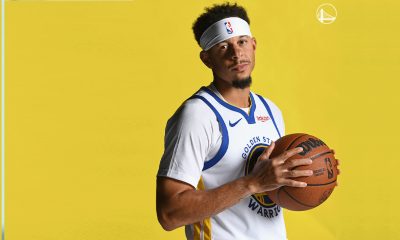
Seth Curry Makes Impressive Debut with the Golden State Warriors
-
 #NNPA BlackPress4 weeks ago
Seven Steps to Help Your Child Build Meaningful Connections
-
 #NNPA BlackPress4 weeks ago
Seven Steps to Help Your Child Build Meaningful Connections
-
 #NNPA BlackPress4 weeks ago
Trinidad and Tobago – Prime Minister Confirms U.S. Marines Working on Tobago Radar System
-
 #NNPA BlackPress4 weeks ago
Thanksgiving Celebrated Across the Tri-State
-
 #NNPA BlackPress4 weeks ago
Teens Reject Today’s News as Trump Intensifies His Assault on the Press
-
 #NNPA BlackPress4 weeks ago
Breaking the Silence: Black Veterans Speak Out on PTSD and the Path to Recovery
