
Bay Area
Tobacco Flavor Bans Multiply, But for Some Blacks, Menthol Continues to Divide


As states and communities rush to ban the sale of flavored tobacco products linked to vaping, Carol McGruder races from town to town, urging officials to include what she calls “the mother lode of all flavors”: menthol.
McGruder, co-chair of the African American Tobacco Control Leadership Council, has tried for years to warn lawmakers that menthol attracts new smokers, especially African Americans. Now that more officials are willing to listen, she wants them to prohibit menthol cigarettes and cigarillos, not just e-cigarette flavors, to reduce smoking among Black people.
McGruder and other tobacco control researchers are using the youth vaping epidemic — and the vaping-related illnesses sweeping the country — as an opportunity to take on menthol cigarettes, even though they are not related to the illnesses.
“We started to see that vaping is something that we could leverage in order to deal with this whole menthol issue,” said Valerie Yerger, an associate professor of health policy at the University of California-San Francisco.
Menthol is a substance found in mint plants that creates a cooling sensation and masks tobacco flavor in both e-cigarettes and cigarettes. Those properties make menthol more appealing to first-time smokers and vapers, even as they pose the same health threats as non-menthol products and may be harder to quit.
Nearly nine out of 10 African American smokers prefer mentholated cigarettes, according to the Centers for Disease Control and Prevention.
But even as tobacco control activists see opportunity, some African Americans, including smokers, fear discrimination. They predict that banning menthol will lead to a surge in illicit sales of cigarettes and result in additional policing in communities that already face tension with law enforcement.
Joseph Paul, director of political and civic affairs at City of Refuge Los Angeles, a church with about 17,000 members in Gardena, Calif., spoke at a board of supervisors meeting in September against a proposed flavor ban in Los Angeles County that was adopted a week later.
If officials truly wanted to end youth vaping, he later told California Healthline, the ordinance should have targeted only vape flavors and exempted adult smokers and their menthol cigarettes.
“Menthol cigarettes are very popular in the Black community, my people smoke menthol cigarettes,” he said.
The Los Angeles County ban prohibits sales but not possession of flavored e-cigarette products, menthol cigarettes and chewing tobacco in the unincorporated area of the county, inhabited by about 1 million people. Shops have until April to clear their shelves of flavored tobacco products.
Paul warned that people will start selling menthol cigarettes illegally: “It’s supply and demand.” That will make the community more vulnerable to police harassment, he said.
In New York City, when officials proposed a ban on menthol cigarettes earlier this year, which has yet to be acted upon, the Rev. Al Sharpton made a similar argument against the measure: Banning menthol would lead to greater tensions with police in Black communities.
“I think there is an ‘Eric Garner’ concern here,” the civil rights activist told The New York Times in July, referring to the well-known case of a 43-year old Black man who died in a chokehold in 2014 while being arrested by New York City police on suspicion of selling single cigarettes.
In July 2016, Chicago became the first major U.S. city to ban menthol cigarette sales, but it limited the prohibition to within 500 feet of schools.
Of the more than 200 communities in the country that restrict or ban the sale of flavored tobacco, fewer than 60 include restrictions on menthol cigarettes, according to the Campaign for Tobacco-Free Kids.
Aspen, Colo., will ban all flavored nicotine products, including menthol cigarettes, effective Jan. 1. A few communities in Minnesota already have such bans in place. In California, close to 50 communities restrict or ban flavored tobacco products; of those, more than 30 include restrictions on menthol cigarettes. Notably, San Francisco banned menthol cigarettes along with all flavored tobacco products in 2018, before banning all vapes and e-cigarettes earlier this year.
At the national level, the Food and Drug Administration banned the sale of flavors in combustible cigarettes in 2009, but exempted menthol. Last November, the agency proposed a ban on menthol-flavored combustible cigarettes, calling their use among youths “especially troubling,” but it has not yet taken action.
Then the Trump administration said in September it would soon ban all flavored e-cigarette products, but it may now be backing away from banning mint and menthol.
Big Tobacco aggressively pushed menthol cigarettes on Black youths in the 1950s and 1960s, and now some people consider Kools and Newports part of Black culture, McGruder said.
McGruder and others point out that the tobacco industry has supported and funded civil rights groups and causes, forming relationships with prominent Black leaders such as Sharpton. Big Tobacco acknowledged that it has contributed to Sharpton’s organization, the National Action Network, and similar groups.
Bobby Sheffield, a pastor and vice president of the Riverside County Black Chamber of Commerce, said the criminalization argument is a scare tactic.
“We’re not trying to have anyone incarcerated because they have this product in their possession,” Sheffield said. His organization, which represents local businesses, started campaigning this year for menthol bans in California’s Inland Empire, including the cities of Riverside, San Bernardino and Perris.
Some smokers understand the need to keep tobacco out of the hands of children, but they don’t think it’s fair to include menthol cigarettes.
“It’s stupid. Now they’re trying to act like menthol cigarettes are the problem. These have been around for a long time,” said April Macklin of Sacramento, who smokes Benson & Hedges menthols. She smoked when she was younger, quit, and started again three years ago.
The city of Sacramento will ban the sale of flavored tobacco, including menthol cigarettes, effective Jan. 1.
Macklin, 53, said she might just quit because she won’t smoke anything other than menthol. But even with a ban in place, she doubts menthol cigarettes will be gone for good. “I’m sure people will figure something out,” she said.
This story was produced by Kaiser Health News and first published on the website California Healthline.










Activism
Oakland Post: Week of March 4 – 10, 2026
The printed Weekly Edition of the Oakland Post: Week of March 4 – 10, 2026


To enlarge your view of this issue, use the slider, magnifying glass icon or full page icon in the lower right corner of the browser window.

Activism
Oakland Post: Week of February 25 – March 3, 2026
The printed Weekly Edition of the Oakland Post: Week of – February 25 – March 3, 2026
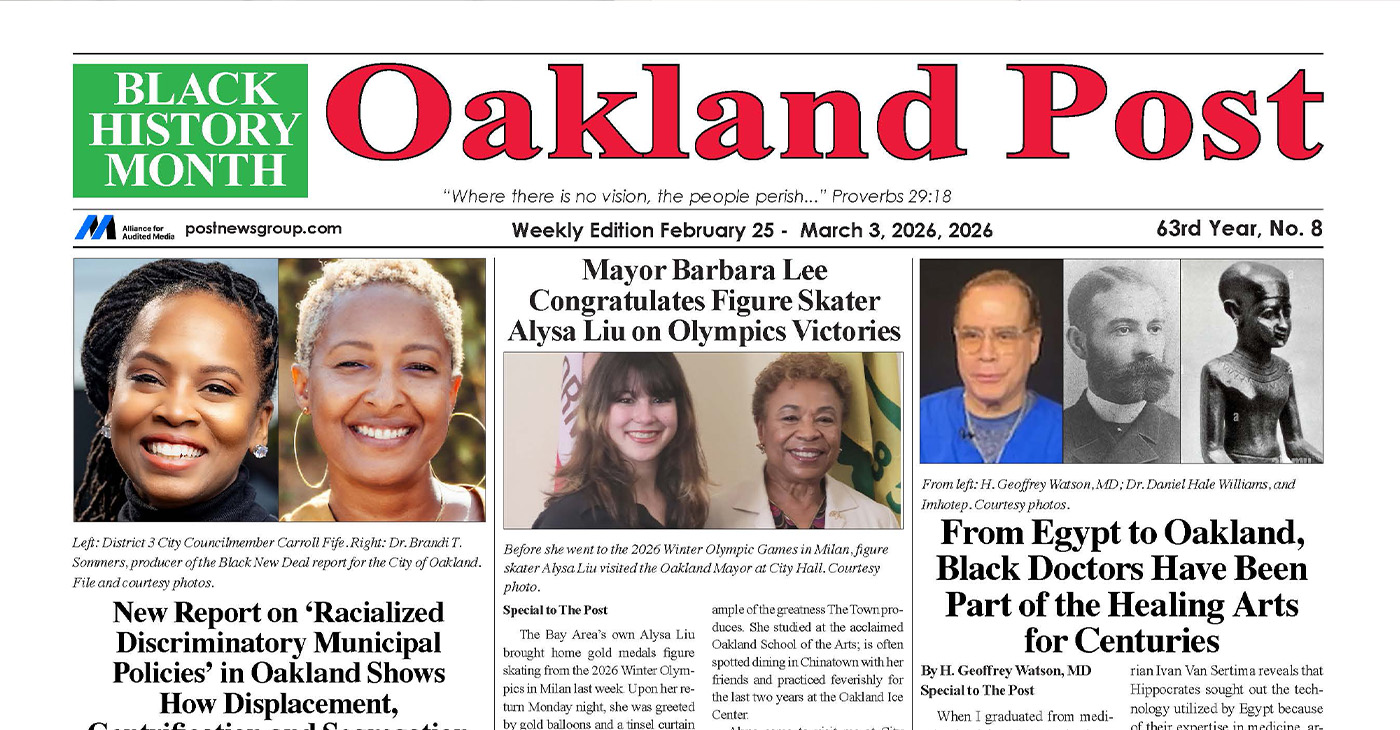
To enlarge your view of this issue, use the slider, magnifying glass icon or full page icon in the lower right corner of the browser window.
Activism
Chase Oakland Community Center Hosts Alley-Oop Accelerator Building Community and Opportunity for Bay Area Entrepreneurs
Over the past three years, the Alley-Oop Accelerator has helped more than 20 Bay Area businesses grow, connect, and gain meaningful exposure. The program combines hands-on training, mentorship, and community-building to help participants navigate the legal, financial, and marketing challenges of small business ownership.
By Carla Thomas
The Golden State Warriors and Chase bank hosted the third annual Alley-Oop Accelerator this month, an empowering eight-week program designed to help Bay Area entrepreneurs bring their visions for business to life.
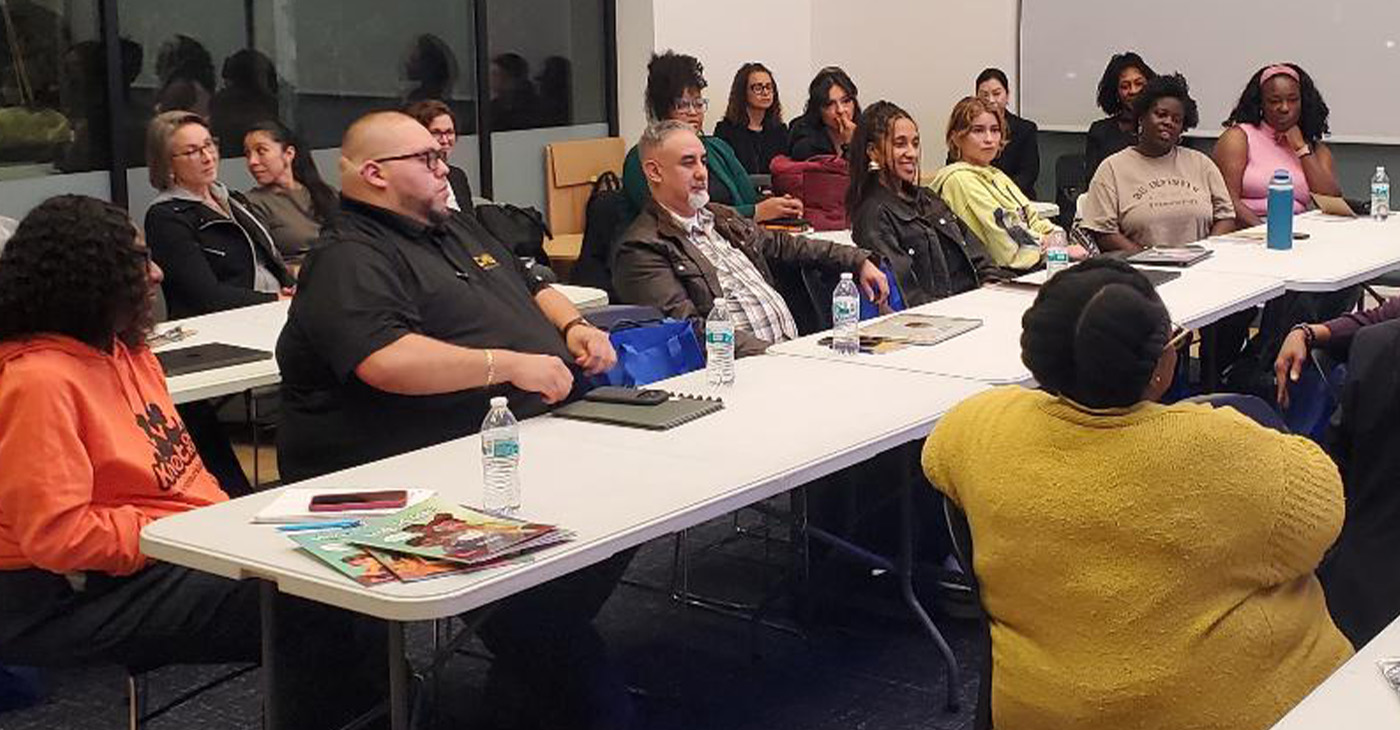
The initiative kicked off on Feb. 12 at Chase’s Oakland Community Center on Broadway Street, welcoming 15 small business owners who joined a growing network of local innovators working to strengthen the region’s entrepreneurial ecosystem.
Over the past three years, the Alley-Oop Accelerator has helped more than 20 Bay Area businesses grow, connect, and gain meaningful exposure. The program combines hands-on training, mentorship, and community-building to help participants navigate the legal, financial, and marketing challenges of small business ownership.
At its core, the accelerator is designed to create an ecosystem of collaboration, where local entrepreneurs can learn from one another while accessing the resources of a global financial institution.
“This is our third year in a row working with the Golden State Warriors on the Alley-Oop Accelerator,” said Jaime Garcia, executive director of Chase’s Coaching for Impact team for the West Division. “We’ve already had 20-plus businesses graduate from the program, and we have 15 enrolled this year. The biggest thing about the program is really the community that’s built amongst the business owners — plus the exposure they’re able to get through Chase and the Golden State Warriors.”

According to Garcia, several graduates have gone on to receive vendor contracts with the Warriors and have gained broader recognition through collaborations with JPMorgan Chase.
“A lot of what Chase is trying to do,” Garcia added, “is bring businesses together because what they’ve asked for is an ecosystem, a network where they can connect, grow, and thrive organically.”
This year’s Alley-Oop Accelerator reflects that vision through its comprehensive curriculum and emphasis on practical learning. Participants explore the full spectrum of business essentials including financial management, marketing strategy, and legal compliance, while also preparing for real-world experiences such as pop-up market events.
Each entrepreneur benefits from one-on-one mentoring sessions through Chase’s Coaching for Impact program, which provides complimentary, personalized business consulting.
Garcia described the impact this hands-on approach has had on local small business owners. He recalled one candlemaker, who, after participating in the program, was invited to provide candles as gifts at Chase events.
“We were able to help give that business exposure,” he explained. “But then our team also worked with them on how to access capital to buy inventory and manage operations once those orders started coming in. It’s about preparation. When a hiccup happens, are you ready to handle it?”
The Coaching for Impact initiative, which launched in 2020 in just four cities, has since expanded to 46 nationwide.
“Every business is different,” Garcia said. “That’s why personal coaching matters so much. It’s life-changing.”
Participants in the 2026 program will each receive a $2,500 stipend, funding that Garcia said can make an outsized difference. “It’s amazing what some people can do with just $2,500,” he noted. “It sounds small, but it goes a long way when you have a plan for how to use it.”
For Chase and the Warriors, the Alley-Oop Accelerator represents more than an educational initiative, it’s a pathway to empowerment and economic inclusion. The program continues to foster lasting relationships among the entrepreneurs who, as Garcia put it, “build each other up” through shared growth and opportunity.
“Starting a business is never easy, but with the right support, it becomes possible, and even exhilarating,” said Oscar Lopez, the senior business consultant for Chase in Oakland.


WORK FROM HOME
Home-based business with potential monthly income of $10K+ per month. A proven training system and website provided to maximize business effectiveness. Perfect job to earn side and primary income. Contact Lynne for more details: Lynne4npusa@gmail.com 800-334-0540


COMMENTARY: Women of Color Shape Our Past and Future

Woman’s Search for Family’s Roots Leads to Ancestor John T. Ward – A Successful Entrepreneur and Conductor on the Underground Railroad

Advocates Raise Alarm Over ICE Operation, MOU and Detention Risks in Baltimore County

Pete Buttigieg to Join Mayor Randall Woodfin for Community Town Hall in Birmingham

WATCH: Week One – NNPA’s “Leadership Matters” Video Series

Oakland Post: Week of March 4 – 10, 2026

OP-ED: NNPA Launches 2026 “Leadership Matters” Video Series

PRESS ROOM: PMG and Cranbrook Horizons-Upward Bound Launch Journey Fellowship Cohort 2

Los Angeles Summit Brings Together Leaders to Tackle Poverty and Affordability

Civil Rights TV Launches 24/7 Network Focused on Black History, Education and Equity

REVIEW: The Ultimate Hot Girl Summer Getaway: Sunseeker Resort Florida

COMMENTARY: How You Stop a Prescription Medicine is as Important as How You Start

PRESS ROOM: From Congress to Corporate America: NNPA Spotlights Visionaries in New Video Series

Poll Shows Support for Policies That Help Families Afford Child Care

Oakland Post: Week of February 25 – March 3, 2026

Oakland Post: Week of January 28, 2025 – February 3, 2026

Life Expectancy in Marin City, a Black Community, Is 15-17 Years Less than the Rest of Marin County

California Launches Study on Mileage Tax to Potentially Replace Gas Tax as Republicans Push Back

Community Celebrates Turner Group Construction Company as Collins Drive Becomes Turner Group Drive

Discrimination in City Contracts

Book Review: Books on Black History and Black Life for Kids

Oakland Post: Week of January 21 – 27, 2026

COMMENTARY: The Biases We Don’t See — Preventing AI-Driven Inequality in Health Care

Post Newspaper Invites NNPA to Join Nationwide Probate Reform Initiative

Black History Events in the East Bay

Medi-Cal Cares for You and Your Baby Every Step of the Way

Art of the African Diaspora Celebrates Legacy and Community at Richmond Art Center

COMMENTARY: The National Protest Must Be Accompanied with Our Votes

New Bill, the RIDER Safety Act, Would Support Transit Ambassadors and Safety on Public Transit

After Don Lemon’s Arrest, Black Officials Raise Concerns About Independent Black Media

Hyundai Ioniq 5 Parking, Safety, and 360 View #shorts

2025 Ioniq 5 New Wiper & Powerful Performance! #shorts

Electric SUV Range: Is 259 Miles Enough? #shorts

EV Charging: How Fast Can You Charge an Electric Vehicle? #shorts

Biometric Cooling… Messaging Seats…Come on! 2025 Infiniti QX80 Autograph 4WD

Charged Up: Witness the Magic of a Fully Electric Car! #shorts

Range Rover Sport PHEV Included…: See What’s Inside This Luxury SUV! #shorts

Invisible Hood View: Perfect Parking with X-Ray Vision! #shorts

AI Is Reshaping Black Healthcare: Promise, Peril, and the Push for Improved Results in California

ESSAY: Technology and Medicine, a Primary Care Point of View

Sanctuary Cities

The RESISTANCE – FREEDOM NOW

STATE OF THE PEOPLE: Freddie

ECONOMIC BOYCOTT DAY!!!!!

I told You So
-
 Business4 weeks ago
California Launches Study on Mileage Tax to Potentially Replace Gas Tax as Republicans Push Back
-
 Activism4 weeks ago
Community Celebrates Turner Group Construction Company as Collins Drive Becomes Turner Group Drive
-
 Activism4 weeks ago
Discrimination in City Contracts
-
 Arts and Culture4 weeks ago
Book Review: Books on Black History and Black Life for Kids
-
 Activism4 weeks ago
COMMENTARY: The Biases We Don’t See — Preventing AI-Driven Inequality in Health Care
-
 Activism4 weeks ago
Post Newspaper Invites NNPA to Join Nationwide Probate Reform Initiative
-
 #NNPA BlackPress4 weeks ago
COMMENTARY: The National Protest Must Be Accompanied with Our Votes
-
 Activism4 weeks ago
New Bill, the RIDER Safety Act, Would Support Transit Ambassadors and Safety on Public Transit
