
COVID-19
Vice-President Harris’ Best Friend Forever, Derreck Johnson Shares Inaugural Experience
On Nov. 3, 2020, Johnson and Harris were both waiting for election results. Harris for the outcome of the presidential election, and Johnson, running for Oakland’s at-large City Council seat.

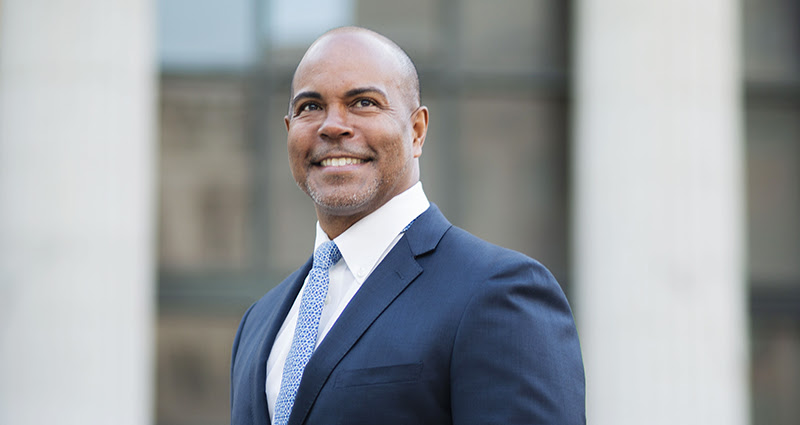
In 1981, Derreck Johnson, a senior at Bishop O’Dowd, was asked by a friend to hang out with her and her friend Kamala, who’d recently returned from Montreal. Derreck picked them up in his yellow convertible MG, and the three of them tooled around San Francisco for the day. That day was the beginning of Johnson and Harris’ 40-year friendship.
“We always had a strong influence on each other, because we were both driven to succeed in goals, we set for ourselves. Her, for the District Attorney position in San Francisco. I remember her saying ‘I’m going to make a difference with these abused girls.’ And me saying ‘I’m going to make a difference in business and employ those that need a second chance.’
“We both accomplished what we set out to do, and that is what we always had in common, yet when she walked out on that stage in her white suit and pearls it was a surreal, unbelievable moment in time for me after seeing her years of struggle and achievement.”
On Nov. 3, 2020, Johnson and Harris were both waiting for election results. Harris for the outcome of the presidential election, and Johnson, running for Oakland’s at-large City Council seat.
“To show you the kind of heart Kamala has, she called me on November 3 and said she was really proud of me as a first-time candidate, and in my head I said ‘You’re calling me and you’re getting ready to be vice president of the United States!’, then I said to her, “Hold on, you care about my little race?” and Kamala replied, “I care because that’s where it starts, local politics in our community are just as important as what I’m doing ,and no matter the outcome, I’m really proud of you.”
Johnson shared that if he hadn’t been running for office he would have been in Delaware with Harris as she waited for election results. “It was weird that she was running for office and I was running for office as well. After the smoke died down and her win was affirmed, we talked and Kamala said, ‘I don’t know what this inauguration is going to look like, but I want you to be there.’”
Johnson immediately booked his ticket for Wash., D.C., and called Harris’ sister Maya to plan where they would stay. Those plans abruptly ended when Johnson received a call from the vice president team stating he would be leaving on Saturday, January 16 on a chartered plane and that Johnson needed to get two COVID-19 tests 72 hours apart.
Vice President Harris was allowed to have 35 guests, the same amount as Biden had for his family. It was a controlled environment with lots of restrictions. After being tested two days in a row, on Saturday they were picked up by plane that had brought other guests from Los Angeles. “We all knew each other and this was the soul plane for real! We had an all-female flight crew. They said it was such an honor that they could serve us being a part of Kamala’s family.
“When we arrived in D.C., a motorcade was outside the plane. The police escort to our hotel assured no traffic on the highway as we passed, with police escorts in the front, back and side of us. We got to the hotel, and were tested again, then went to our rooms where memorabilia bags from the inauguration committee welcomed us. We quarantined until Tuesday. Besides us and the National Guard, we were the only ones in the hotel, it was very private. All were tested every day for the next five days.”
During their five-day quarantine they shared Kamala stories, many they knew, but were nice to hear again. On Tuesday, Johnson went to the vice president’s reception with Harris and spent private time with her.
Johnson said: “We are used to politics as usual, and then you see this person raised by a single mother in the streets of Berkeley, that you hung out with, and then realize she is the vice president of the United states! That is truly the ultimate American dream.”
On the day of the inauguration, Harris’ friends got up early for a final COVID-19 test then went to the Capitol.
“We walked around the Capitol into the chambers where the inauguration would take place, and when I walked down those stairs so much went through my head. I thought of her mother and my mother, Martin Luther King, all the people that came before us, and here I am, an
African American man born and raised in the ‘hood standing where Obama and Bush have been. It was an incredible feeling, it gave me the motivation to go for any and everything that is possible in my life, which has led to me to launch the “Black Owned” project with Oakland’s African American Chamber of Commerce on February 1.
“Black Owned “had been in the planning for 11 years, and after my experience, standing with Kamala at the Lincoln Memorial after Katy Perry and John Legend had performed, I knew I could not stall any longer, it was time to launch this project and help my community embrace financial literacy and support Black businesses in Oakland.
“Here I am, standing with my home girl, celebrating her achievement, standing where MLK gave his speech and where other Civil Rights leaders and people in the struggle have stood and I thought of those that have been marginalized and discriminated against, and how Kamala will get things done because she has experienced it.
“How can you lead when you’ve never engaged in the community? That’s why Kamala is so powerful. America sees a person who is true, and a person who will serve our interests. They see a person who will get things done because she has experienced the hardship and pain the common man has gone through.”
Johnson has partnered with Cathy Adams, president of the Black chamber to launch “Black Owned.”
“I encourage people to go online and buy a “Black Owned T-shirt as a show of unity in the effort to bring us all together. All profits go to the African American Chamber of Commerce. www.homeofchickenandwaffles.com






Activism
ESSAY: Technology and Medicine, a Primary Care Point of View
The COVID-19 pandemic, for example, restricted millions of people to their homes, which required reliance on the internet for communication and information. Personal internet searches became essential to understanding information about COVID, human physiology, symptoms, and keeping up with vaccine updates. However, this increase in independent online research resulted in people accessing more misinformation circulating on the internet. This posed a challenge for medical providers trying to treat patients according to research-based guidelines. With so much information within reach, it was difficult for providers to help their patients distinguish between legitimate evidence-based sources and opinion, speculation, and fabrication.


Dr. Adia Scrubb
Special to California Black Media Partners
Technology has enhanced communication between medical professionals and patients; improved patient care management; and eased access to care and information, benefiting both patients and medical clinicians.
However, despite the ease and many conveniences these patient care improvements have ushered in, adequate patient care still includes physician supervision, examinations, and interaction, which present challenges for keeping up with demands on the healthcare system and accurate patient education.
Technology has made more educational resources available at our fingertips, and it has created independence for those who want to know more about their bodies.
The COVID-19 pandemic, for example, restricted millions of people to their homes, which required reliance on the internet for communication and information. Personal internet searches became essential to understanding information about COVID, human physiology, symptoms, and keeping up with vaccine updates. However, this increase in independent online research resulted in people accessing more misinformation circulating on the internet. This posed a challenge for medical providers trying to treat patients according to research-based guidelines. With so much information within reach, it was difficult for providers to help their patients distinguish between legitimate evidence-based sources and opinion, speculation, and fabrication.
Nowadays, patients continuously arm themselves with medical information and challenge clinicians with the research they gather from internet sources to advocate for themselves and their care. This often leaves medical professionals with the complex task of navigating challenging discussions, pointing patients to validated and verified medical information, and following evidence-based medical guidelines for treatment.
Reviewing information before an appointment can certainly make an office visit much more productive, but it is essential to acknowledge the possible bias and limitations of internet searches. Consideration of the author, source, and date of the information may help determine its validity.
Furthermore, simply asking medical professionals for their preferred patient information resources will direct patients to safe and validated information that is in line with standards of care practices. This can help patients better understand the recommendations from their doctors and streamline their internet searches.
Access to individual online medical record information, such as blood tests, MRI reports, and office visit notes, has been a significant expansion of technology in medicine. This digitization of medical information enables and positions patients to take a leading role in managing their care. What used to be multiple sheets of paper in a large file folder is now a click away at any time. Despite these benefits, instant access can be overwhelming for both patients and medical providers, especially since patients, in many instances, can receive their test results online before the physician has had the opportunity to review them.
Patients may review the office visit notes or their lab results out of context or misinterpret information, which can lead to anxiety, confusion, and fear. Clinicians are put in a difficult position when they are not able to suddenly break away from their scheduled office visits to reassure an unscheduled patient about their results and next steps.
Medical providers have tools to assist with identifying sensitive results that need urgent review, and efforts are made to notify anxious patients as soon as possible. However, a patient can be proactive in scheduling a follow-up visit ahead of time to review results with their provider specifically. This can help patients avoid the stress of suddenly trying to get a hold of their doctor when dealing with unclear or concerning results. Normal test results often don’t require explanation, but allowing several days for your provider to work through hundreds of test results before sending messages requesting clarification will help medical professionals prioritize their responses to test results based on medical urgency.
Technological improvements such as online messaging and video/telephone appointments have made access to care much easier both for patients and clinicians. Telephone and video visits have been especially beneficial for patients who are elderly, disabled, or do not have access to transportation. However, the increase — and ease of — access has created much higher demand for physician time both during and outside of the office visit. Test results, patient messages, insurance forms, emails, and medication requests are all pouring in while providers conduct their daily scheduled appointments. Thus, very little time is left in the day for a clinician to respond to every email, fill out every form, and review every lab result when they are responsible for 1,800 or more patients.
This situation, unfortunately, creates a perceived delay in response in a culture where an instant response is expected from messaging and phone calls. But the reality is that the medical provider is constantly playing catch up to thousands of inquiries due to the around-the-clock online access patients now have.
Patients can make the most of their experience and their physician’s time by taking the time to learn their physician’s communication preferences. Despite the multiple modalities of access (telephone, email, video, in-person), a medical provider will have a preferred method of communication with their patients. Some may ask their patients to make an appointment to explain a complex topic, instead of responding to multiple messages. Others may prefer to communicate via phone call if they have to deliver bad news.
There will likely be more medical providers who prefer to communicate only through email or video appointments as remote work becomes more common. If a patient’s communication preferences align with their physician’s preferences, it will create a stronger patient-doctor relationship and foster more effective and impactful communication.
The expansion of technology in medicine has fostered better collaboration, communication, and education between patients and their medical professionals. Combining electronic resources with rapport, mutual respect, and trust for providers will help patients navigate this new landscape of healthcare.
About the Author
Dr. Adia Scrubb, MD, MPP, is a Board-Certified Family Medicine Physician currently practicing in Solano County.

Alameda County
After Years of Working Remotely, Oakland Requires All City Employees to Return to Office by April 7
City Administrator Jestin Johnson recently told city unions that he is ending Oakland’s telecommuting program. The new policy will require employees to come to work at least four days a week. These new regulations go into effect on Feb. 18 for non-union department heads, assistant and deputy directors, managers, and supervisors. All other employees must be back at work by April 7.

By Post Staff
The City Oakland is requiring all employees to return to the office, thereby ending the telecommuting policy established during the pandemic that has left some City Hall departments understaffed.
City Administrator Jestin Johnson recently told city unions that he is ending Oakland’s telecommuting program. The new policy will require employees to come to work at least four days a week.
These new regulations go into effect on Feb. 18 for non-union department heads, assistant and deputy directors, managers, and supervisors. All other employees must be back at work by April 7.
The administration may still grant the right to work remotely on a case-by-case basis.
In his memo to city unions, Johnson said former President Joe Biden had declared an end to the pandemic in September 2022, and that since then, “We have collectively moved into newer, safer health conditions.”
Johnson said “multiple departments” already have all their staff back in the office or workplace.
The City’s COVID-era policy, enacted in September 2021, was designed to reduce the spread of the debilitating and potentially fatal virus.
Many cities and companies across the country are now ending their pandemic-related remote work policies. Locally, mayoral candidate Loren Taylor in a press conference made the policy a central issue in his campaign for mayor.
City Hall reopened for in-person meetings two years ago, and the city’s decision to end remote work occurred before Taylor’s press conference.
At an endorsement meeting last Saturday of the John George Democratic Club, mayoral candidate Barbara Lee said she agreed that city workers should return to the job.
At the same time, she said, the city should allow employees time to readjust their lives, which were disrupted by the pandemic, and should recognize individual needs, taking care to maintain staff morale.
The John George club endorsed Lee for Mayor and Charlene Wang for City Council representative for District 2. The club also voted to take no position on the sales tax measure that will be on the April 15 ballot.
Activism
Freddie Ray Turner, 75
Fred enjoyed a 27-year career (1972-1999) with the Oakland Unified School District. Starting as a classroom teacher, he went on to serve as a vice principal, principal and retired as director of Student Services. But retirement was not in the cards for Fred. He went on to serve as the Fremont Unified School District’s director of Pupil Services for five years, retiring in 2004.

Special to The Post
Freddie Ray Turner was born in Mesa, Arizona, on July 15, 1949, the youngest of Carlanthe and Jimmie Turner’s seven children. Fred attended the Chandler public schools and graduated high school in 1966. He earned a Bachelor of Arts degree in Drama and Spanish from Arizona State University in Tempe, Arizona.
Relocated to the Bay Area, he continued his education, and earned a master’s degree in Education Administration from California State University-Hayward.
Fred enjoyed a 27-year career (1972-1999) with the Oakland Unified School District. Starting as a classroom teacher, he went on to serve as a vice principal, principal and retired as director of Student Services. But retirement was not in the cards for Fred. He went on to serve as the Fremont Unified School District’s director of Pupil Services for five years, retiring in 2004.
Throughout his life, Fred traveled the world. He didn’t just have a “travel bug,” Fred was a travel bug. He graduated from overnight stays in youth hostels in Paris, Rome, and Madrid to vacationing in much finer accommodations in Kenya, Turkey, China, Japan, Spain, Italy, Portugal, Israel, Amsterdam, and South Africa. If there was an airport, at some time in his life Fred Turner landed in it.

Fred was a devoted member of Brother-to-Brother from 2005 until his passing. He was also a life associate of the East Oakland-Hayward section of the National Council for Negro Women, an organization he strongly supported since 2013. Fred also served on the Board of Directors for the Leadership Institute at Allen Temple Baptist Church.
An avid reader, Fred’s response to the lockdown caused by the 2020 COVID pandemic was to organize “Plot Chasers,” a close group of friends who meet weekly to read and discuss short stories.
Fred passed away on Dec. 15, 2024, following a brief hospitalization. He was predeceased by his parents, his sister, Madelyn, and brothers Robert Lee and Franklin Eugene.
He leaves to mourn his surviving siblings Artie Mae Clark, Dorothy Rome, and Jimmie Richard Turner; first cousin, Catherine Markham; a host of nieces and nephews, great- nieces and nephews, and very close friends.
A Celebration of Life Service will be held at 12:30 p.m. on Saturday, Feb. 8, at Allen Temple Family Life Center, 8501 International Blvd., in Oakland, CA.
In lieu of flowers, the family is asking that friends honor Fred’s memory with a donation in Fred’s name to the National Alzheimer’s & Related Disorders Association, or to the East Bay AIDs Advocacy Foundation.

WORK FROM HOME
Home-based business with potential monthly income of $10K+ per month. A proven training system and website provided to maximize business effectiveness. Perfect job to earn side and primary income. Contact Lynne for more details: Lynne4npusa@gmail.com 800-334-0540


COMMENTARY: Women of Color Shape Our Past and Future

Woman’s Search for Family’s Roots Leads to Ancestor John T. Ward – A Successful Entrepreneur and Conductor on the Underground Railroad

Advocates Raise Alarm Over ICE Operation, MOU and Detention Risks in Baltimore County

Pete Buttigieg to Join Mayor Randall Woodfin for Community Town Hall in Birmingham

WATCH: Week One – NNPA’s “Leadership Matters” Video Series

Oakland Post: Week of March 4 – 10, 2026

OP-ED: NNPA Launches 2026 “Leadership Matters” Video Series

PRESS ROOM: PMG and Cranbrook Horizons-Upward Bound Launch Journey Fellowship Cohort 2

Los Angeles Summit Brings Together Leaders to Tackle Poverty and Affordability

Civil Rights TV Launches 24/7 Network Focused on Black History, Education and Equity

REVIEW: The Ultimate Hot Girl Summer Getaway: Sunseeker Resort Florida

COMMENTARY: How You Stop a Prescription Medicine is as Important as How You Start

PRESS ROOM: From Congress to Corporate America: NNPA Spotlights Visionaries in New Video Series

Poll Shows Support for Policies That Help Families Afford Child Care

Oakland Post: Week of February 25 – March 3, 2026

Oakland Post: Week of January 28, 2025 – February 3, 2026

Life Expectancy in Marin City, a Black Community, Is 15-17 Years Less than the Rest of Marin County

California Launches Study on Mileage Tax to Potentially Replace Gas Tax as Republicans Push Back

Community Celebrates Turner Group Construction Company as Collins Drive Becomes Turner Group Drive

Discrimination in City Contracts

Book Review: Books on Black History and Black Life for Kids

Oakland Post: Week of January 21 – 27, 2026

COMMENTARY: The Biases We Don’t See — Preventing AI-Driven Inequality in Health Care

Post Newspaper Invites NNPA to Join Nationwide Probate Reform Initiative

Black History Events in the East Bay

Medi-Cal Cares for You and Your Baby Every Step of the Way

Art of the African Diaspora Celebrates Legacy and Community at Richmond Art Center

COMMENTARY: The National Protest Must Be Accompanied with Our Votes

New Bill, the RIDER Safety Act, Would Support Transit Ambassadors and Safety on Public Transit

After Don Lemon’s Arrest, Black Officials Raise Concerns About Independent Black Media

Hyundai Ioniq 5 Parking, Safety, and 360 View #shorts

2025 Ioniq 5 New Wiper & Powerful Performance! #shorts

Electric SUV Range: Is 259 Miles Enough? #shorts

EV Charging: How Fast Can You Charge an Electric Vehicle? #shorts

Biometric Cooling… Messaging Seats…Come on! 2025 Infiniti QX80 Autograph 4WD

Charged Up: Witness the Magic of a Fully Electric Car! #shorts

Range Rover Sport PHEV Included…: See What’s Inside This Luxury SUV! #shorts

Invisible Hood View: Perfect Parking with X-Ray Vision! #shorts

AI Is Reshaping Black Healthcare: Promise, Peril, and the Push for Improved Results in California

ESSAY: Technology and Medicine, a Primary Care Point of View

Sanctuary Cities

The RESISTANCE – FREEDOM NOW

STATE OF THE PEOPLE: Freddie

ECONOMIC BOYCOTT DAY!!!!!

I told You So
-
 Business4 weeks ago
California Launches Study on Mileage Tax to Potentially Replace Gas Tax as Republicans Push Back
-
 Activism4 weeks ago
Community Celebrates Turner Group Construction Company as Collins Drive Becomes Turner Group Drive
-
 Activism4 weeks ago
Discrimination in City Contracts
-
 Arts and Culture4 weeks ago
Book Review: Books on Black History and Black Life for Kids
-
 Activism4 weeks ago
COMMENTARY: The Biases We Don’t See — Preventing AI-Driven Inequality in Health Care
-
 Activism4 weeks ago
Post Newspaper Invites NNPA to Join Nationwide Probate Reform Initiative
-
 #NNPA BlackPress4 weeks ago
COMMENTARY: The National Protest Must Be Accompanied with Our Votes
-
 Activism4 weeks ago
New Bill, the RIDER Safety Act, Would Support Transit Ambassadors and Safety on Public Transit
