
City Government
With Increasing Head Injuries, Will Cities Do Something About E-Scooters?

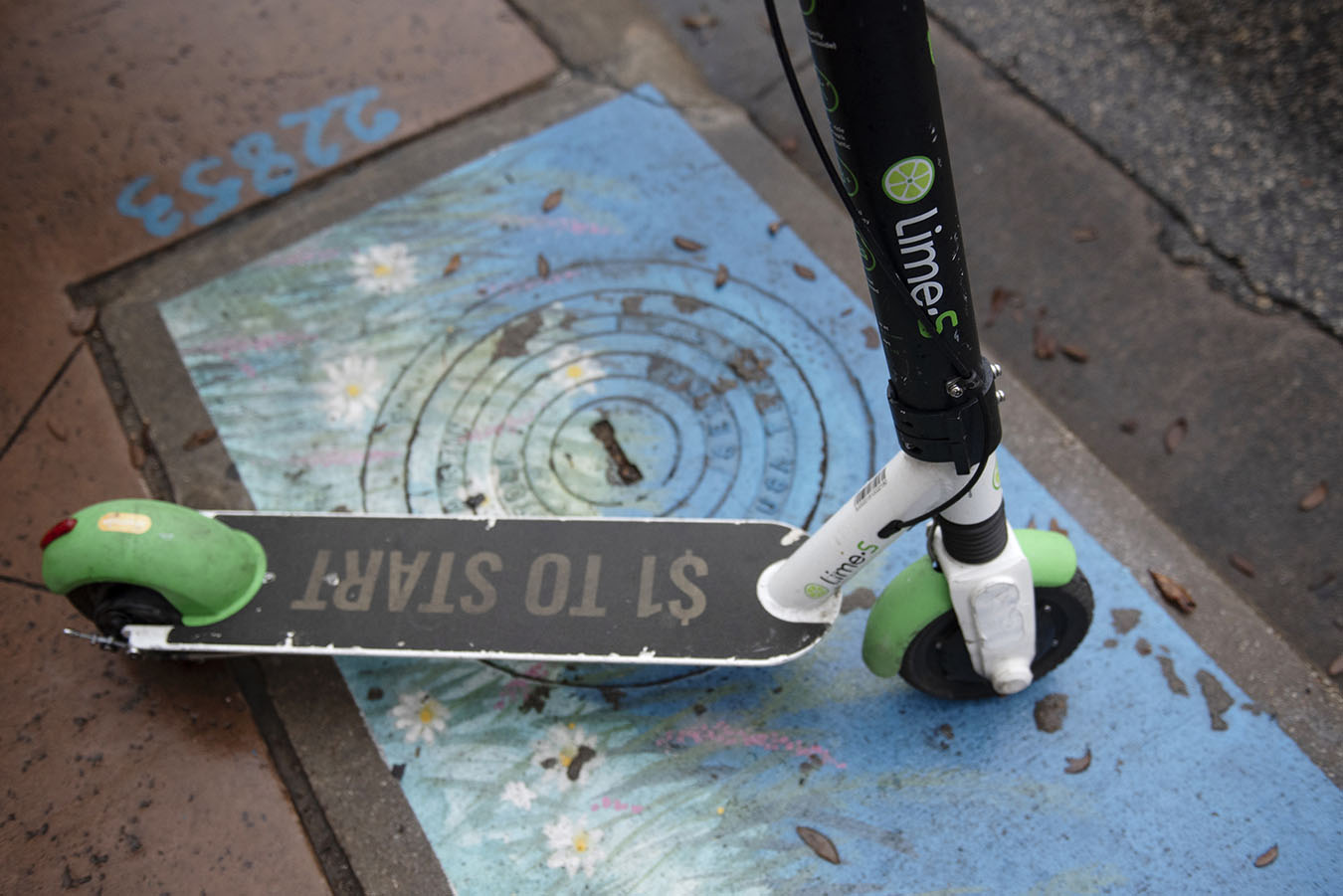
Almost half of the injured scooter riders in Austin, Texas, identified by the Centers for Disease Control and Prevention in its first-ever study of dockless electric scooters suffered a head injury, with 15 percent experiencing a traumatic brain injury.
The report, presented last week both in Austin and Atlanta, where the CDC is headquartered, covers 87 days last fall in Austin when almost 200 people were injured in scooter crashes.
Just one of the riders wore a helmet, and 33 percent of those riders were hurt on their first scooter ride.
Austin city officials requested the CDC’s help in tracking injuries last spring as e-scooters started taking over the city. The investigators identified 271 individuals with potential e-scooter-related injury incidents during the study period last fall; of those, 190 confirmed an e-scooter riding-related injury.
Most accidents occurred on streets. Most riders were men. Among the injured, 48% suffered a fracture, laceration or abrasion to the head; 70% injured upper limbs; and 55% injured lower limbs. Of the 190 riders, 35% suffered some type of fracture.
Despite injuries, 38% indicated they will use a scooter again.
“These injuries may have been preventable,” the study concludes. “Studies have shown that bicycle riders reduce the risk of head and brain injuries by wearing a helmet. Helmet use might also reduce the risk of head and brain injuries in the event of an e-scooter crash.”
With the increasing availability of scooters as an urban transit alternative, Austin and other cities around the world are trying to balance the safety and needs of scooter riders and the motorists, bicyclists and pedestrians who must navigate around them on sidewalks and streets.
Some localities ban the scooters outright, while others try to control the number permitted or specify boundaries for use or places to park them. Dockless scooters arrived in Austin last April and quickly went from zero to more than 15,000 permitted as 10 companies were licensed to operate, according to the city’s dockless mobility website.
Although all those scooters aren’t out at once, the two companies with the most devices in Austin — Bird and Lime — each boast on their websites about availability in more than 100 cities around the globe. As those numbers continue to multiply, the CDC’s report will help shape how cities approach transportation policies, regulation and public safety.
Paul Saffo, who has spent more than 20 years exploring large-scale, long-term change, teaches forecasting at Stanford University. He said cities also need to consider a fundamental question about private use of public property.
“Scooters are lying around on sidewalks and being used by a private company making profit off use of the public infrastructure. The question is: Is the public being fairly compensated for the private use by a for-profit of a public infrastructure?” he said. “Whose right of way is it? The pedestrian annoyed by scooter is presumably a taxpayer. Who gets the privileged use of a public infrastructure?”
The CDC epidemiologists, collaborating with Austin Public Health and the city’s Transportation Department, arrived in Austin last December to examine scooter-related injuries from September to November, including interviewing the injured and studying their medical records to determine road conditions, weather, helmet use and other behaviors, such as alcohol use while riding.
Among the findings, 55 percent of the injured riders identified as male. The median age was 29, although riders ranged in age from 9 to 79. Most injuries (55 percent) occurred in the street, while 33 percent were injured on the sidewalk.
The study also notes that findings don’t support the perception that scooter injuries are due to collisions with vehicles. But speed is a factor, the study suggests.
“While more than half of the interviewed riders were injured while riding a scooter in the street, just 10 percent of riders sustained injuries by colliding with a motor vehicle,” the study found. However, 37 percent of injured riders reported that excessive e-scooter speed contributed to their injury. And 29 percent of riders had consumed alcohol within the 12 hours preceding the scooter ride.
“Overall, 63 percent of the injured riders had ridden an e-scooter nine times or fewer before injury,” the study said.
“This study is a critical first step in cities adopting clear standards for safety that all operators must adhere to,” said Paul Steely White, Bird’s director of safety policy and advocacy. “There’s actionable information here for riders, operators and cities alike.” Bird, based in Santa Monica, Calif., turns its scooters off between midnight and 5 a.m. and limits the top speed to 15 mph.
Injuries, which are being recorded at hospitals and emergency rooms across the country, have resulted in fewer than a dozen fatalities nationwide — including one in Austin earlier this year.
Two scooter riders died in March in California and two others were killed last month after being hit by cars in Fort Lauderdale, Fla., and Hollywood, Calif.

Activism
Oakland Post: Week of March 4 – 10, 2026
The printed Weekly Edition of the Oakland Post: Week of March 4 – 10, 2026


To enlarge your view of this issue, use the slider, magnifying glass icon or full page icon in the lower right corner of the browser window.

Activism
Oakland Post: Week of February 25 – March 3, 2026
The printed Weekly Edition of the Oakland Post: Week of – February 25 – March 3, 2026

To enlarge your view of this issue, use the slider, magnifying glass icon or full page icon in the lower right corner of the browser window.
Activism
Oakland Post: Week of February 18 – 24, 2026
The printed Weekly Edition of the Oakland Post: Week of – February 18 – 24, 2026

To enlarge your view of this issue, use the slider, magnifying glass icon or full page icon in the lower right corner of the browser window.

WORK FROM HOME
Home-based business with potential monthly income of $10K+ per month. A proven training system and website provided to maximize business effectiveness. Perfect job to earn side and primary income. Contact Lynne for more details: Lynne4npusa@gmail.com 800-334-0540


COMMENTARY: Women of Color Shape Our Past and Future

Woman’s Search for Family’s Roots Leads to Ancestor John T. Ward – A Successful Entrepreneur and Conductor on the Underground Railroad

Advocates Raise Alarm Over ICE Operation, MOU and Detention Risks in Baltimore County

Pete Buttigieg to Join Mayor Randall Woodfin for Community Town Hall in Birmingham

WATCH: Week One – NNPA’s “Leadership Matters” Video Series

Oakland Post: Week of March 4 – 10, 2026

OP-ED: NNPA Launches 2026 “Leadership Matters” Video Series

PRESS ROOM: PMG and Cranbrook Horizons-Upward Bound Launch Journey Fellowship Cohort 2

Los Angeles Summit Brings Together Leaders to Tackle Poverty and Affordability

Civil Rights TV Launches 24/7 Network Focused on Black History, Education and Equity

REVIEW: The Ultimate Hot Girl Summer Getaway: Sunseeker Resort Florida

COMMENTARY: How You Stop a Prescription Medicine is as Important as How You Start

PRESS ROOM: From Congress to Corporate America: NNPA Spotlights Visionaries in New Video Series

Poll Shows Support for Policies That Help Families Afford Child Care

Oakland Post: Week of February 25 – March 3, 2026

Oakland Post: Week of January 28, 2025 – February 3, 2026

Life Expectancy in Marin City, a Black Community, Is 15-17 Years Less than the Rest of Marin County

California Launches Study on Mileage Tax to Potentially Replace Gas Tax as Republicans Push Back

Community Celebrates Turner Group Construction Company as Collins Drive Becomes Turner Group Drive

Book Review: Books on Black History and Black Life for Kids

Discrimination in City Contracts

COMMENTARY: The Biases We Don’t See — Preventing AI-Driven Inequality in Health Care

Black History Events in the East Bay

Post Newspaper Invites NNPA to Join Nationwide Probate Reform Initiative

Art of the African Diaspora Celebrates Legacy and Community at Richmond Art Center

Medi-Cal Cares for You and Your Baby Every Step of the Way

COMMENTARY: The National Protest Must Be Accompanied with Our Votes

New Bill, the RIDER Safety Act, Would Support Transit Ambassadors and Safety on Public Transit

Oakland Post: Week of February 4 – 10, 2026

After Don Lemon’s Arrest, Black Officials Raise Concerns About Independent Black Media

Hyundai Ioniq 5 Parking, Safety, and 360 View #shorts

2025 Ioniq 5 New Wiper & Powerful Performance! #shorts

Electric SUV Range: Is 259 Miles Enough? #shorts

EV Charging: How Fast Can You Charge an Electric Vehicle? #shorts

Biometric Cooling… Messaging Seats…Come on! 2025 Infiniti QX80 Autograph 4WD

Charged Up: Witness the Magic of a Fully Electric Car! #shorts

Range Rover Sport PHEV Included…: See What’s Inside This Luxury SUV! #shorts

Invisible Hood View: Perfect Parking with X-Ray Vision! #shorts

AI Is Reshaping Black Healthcare: Promise, Peril, and the Push for Improved Results in California

ESSAY: Technology and Medicine, a Primary Care Point of View

Sanctuary Cities

The RESISTANCE – FREEDOM NOW

STATE OF THE PEOPLE: Freddie

ECONOMIC BOYCOTT DAY!!!!!

I told You So
-

 Activism4 weeks ago
Oakland Post: Week of February 11 – 17, 2026
-

 #NNPA BlackPress2 weeks ago
Reflecting on Black History Milestones in Birmingham AL
-

 Bay Area3 weeks ago
CITY OF SAN LEANDRO STATE OF CALIFORNIA PUBLIC WORKS DEPARTMENT ENGINEERING DIVISION NOTICE TO BIDDERS FOR ANNUAL STREET OVERLAY/REHABILITATION 2019-21 – PHASE III
-

 #NNPA BlackPress2 weeks ago
PRESS ROOM: NBA Hall of Fame Nominee Terry Cummings Joins 100 Black Men of DeKalb County to Launch Victory & Values Initiative
-

 #NNPA BlackPress3 weeks ago
U.S. manufacturing rebounds – how foundry services are adapting to rising demand
-

 Activism3 weeks ago
Oakland Post: Week of February 18 – 24, 2026
-

 #NNPA BlackPress3 weeks ago
OP-ED: One Hundred Years of Black Workers Telling the Truth
-

 #NNPA BlackPress3 weeks ago
Advancements in solar technology that are changing the way we power the world
