
National
Grand Jury Indicts 6 Officers in Death of Freddie Gray


Baltimore States Attorney Marilyn Mosby announces the indictments of six Baltimore Police officers Thursday, May 21, 2015, on various charges related to the arrest and death of Freddie Gray. The indictments were very similar to the charges Mosby announced about three weeks ago. The most serious charge for each officer, ranging from second-degree “depraved heart” murder to assault, still stood. (Kevin Richardson/The Baltimore Sun via AP)
JULIET LINDERMAN, Associated Press
BALTIMORE (AP) — A grand jury’s decision to indict all six officers charged in the death of Freddie Gray, who died of injuries suffered in police custody, allows the state’s attorney to press ahead with the most serious charges despite criticism she was part of an “overzealous prosecution.”
The indictments announced Thursday were similar to the charges Baltimore State’s Attorney Marilyn Mosby announced three weeks ago. The most serious charge for each officer, ranging from second-degree “depraved heart” murder to assault, stood, though some of the lesser alleged offenses had changed.
Attorneys for the officers have said in court documents they are the victims of an “overzealous prosecution” riddled with personal and political conflicts of interest. At a minimum, they said, Mosby should be replaced with an independent prosecutor because she had a personal interest in calming unrest in the city that followed Gray’s death and because her husband is a city councilman who represents the areas most affected by upheaval.
Gray suffered a critical spinal injury April 12 after police handcuffed, shackled and placed him head-first into a van, Mosby has said. His pleas for medical attention were repeatedly ignored.
His death a week later spawned protests that on two occasions gave way to violence and looting. In the wake of the riots, Democratic Mayor Stephanie Rawlings-Blake implemented a curfew and Republican Gov. Larry Hogan declared a state of emergency.
Mosby said prosecutors presented evidence to the grand jury for the past two weeks. Some of the charges were changed based on new information, but she didn’t say what that was. She also did not take questions.
“As is often the case, during an ongoing investigation, charges can and should be revised based upon the evidence,” Mosby said.
Two officers, Edward Nero and Garrett Miller, were indicted on second-degree assault, reckless endangerment and misconduct in office for “failure to perform a duty regarding the safety of a prisoner” and for an illegal arrest, Mosby said. The indictments do not include the false-imprisonment charge both officers initially faced.
“I’m very glad that the grand jury chose not to indict officer Nero on false imprisonment and one count of second-degree assault. I’m quite confident he will be acquitted of the remaining charges at trial,” Nero’s defense attorney, Marc Zayon, said.
Caesar Goodson, who drove the van, faces manslaughter and a second-degree “depraved heart” murder charge, as well as misconduct in office and second-degree assault. Sgt. Alicia White, Lt. Brian Rice and Officer William Porter are each charged with manslaughter, second-degree assault and misconduct in office. Those officers also face reckless-endangerment charges.
Ivan Bates, an attorney for White, said he is “looking forward to seeing Ms. Mosby in court and proving that Sgt. Alicia White is innocent.”
Nero, Miller and Rice are white; Goodson, Porter and White are black.
Gray’s death became a symbol of what protesters say is a pattern of police brutality against African-Americans in Baltimore. Following Gray’s death, the Justice Department announced a civil rights investigation of the Baltimore Police Department to search for discriminatory policing practices and examine allegations that officers too often use excessive force and make unconstitutional searches and arrests.
Gray was arrested in the Sandtown-Winchester neighborhood of West Baltimore. According to court documents, he made eye contact with a police officer and took off running. He was apprehended two blocks away and arrested for possession of a knife that Miller wrote in charging documents is illegal under a city ordinance. Mosby said the arrest was unlawful because the knife is legal under state law.
None of the officers secured Gray’s seatbelt in the van, a violation of police policy. Soon after he was placed in the van, Goodson made a second stop during which Gray was secured in leg irons because he was “irate,” police said.
After a ride that included two more stops, including one to pick up a second passenger, the van arrived at the Western District police station. By that time, Gray was non-responsive.
The Rev. Cortly “C.D.” Witherspoon, president of the Southern Christian Leadership Conference’s Baltimore chapter, said he was surprised by the indictments.
“The track record of this city and state’s attorney’s office and even the grand jury in Baltimore is not to indict in these type cases,” he said.
In the neighborhood where Gray was arrested, the news was received Thursday evening more with a shrug than a cheer.
“We ain’t worried about the indictment. We want a conviction,” said Michael Banks, 44.
Lisa Logan, an HIV-awareness advocate, said she’s glad the case is proceeding. But she doesn’t understand why the van driver faces more serious charges than the officers who put Gray in the van.
“Something occurred, some law was broken, so justice is being done,” Logan said. “But how and who and how it all broke down, we’ll have to wait and see.”
Equal-justice advocate Noche Diaz, who said he moved to Baltimore from New York to join the protests, called the indictment “only a first step.”
“The only thing that got the charges in the first place was when people rose up and then more people around the country stood up,” he said. “There’s going to be a need to continue and renew that fight.”
___
Associated Press writer David Dishneau contributed to this report.
Copyright 2015 The Associated Press. All rights reserved. This material may not be published, broadcast, rewritten or redistributed.








Activism
2025 in Review: Seven Questions for Assemblymember Lori Wilson — Advocate for Equity, the Environment, and More
Her rise has also included several historic firsts: she is the only Black woman ever appointed to lead the influential Assembly Transportation Committee, and the first freshman legislator elected Chair of the California Legislative Black Caucus. She has also been a vocal advocate for vulnerable communities, becoming the first California legislator to publicly discuss being the parent of a transgender child — an act of visibility that has helped advanced representation at a time when political tensions related to social issues and culture have intensified.
By Edward Henderson, California Black Media
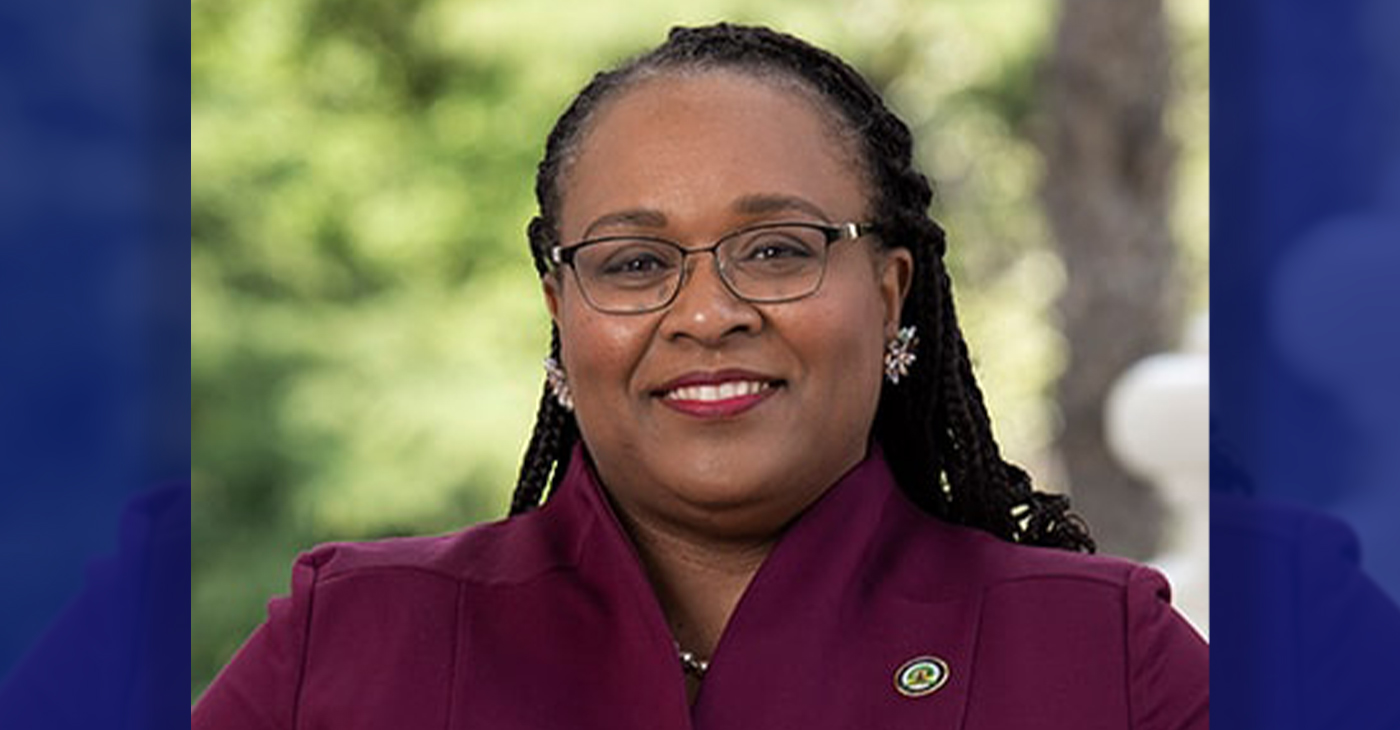
Assemblymember Lori D. Wilson (D-Suisun City) joined the California Legislature in 2022 after making history as Solano County’s first Black female mayor, bringing with her a track record of fiscal discipline, community investment, and inclusive leadership.
She represents the state’s 11th Assembly District, which spans Solano County and portions of Contra Costa and Sacramento Counties.
Her rise has also included several historic firsts: she is the only Black woman ever appointed to lead the influential Assembly Transportation Committee, and the first freshman legislator elected Chair of the California Legislative Black Caucus. She has also been a vocal advocate for vulnerable communities, becoming the first California legislator to publicly discuss being the parent of a transgender child — an act of visibility that has helped advanced representation at a time when political tensions related to social issues and culture have intensified.
California Black Media spoke with Wilson about her successes and disappointments this year and her outlook for 2026.
What stands out as your most important achievement this year?
Getting SB 237 passed in the Assembly. I had the opportunity to co-lead a diverse workgroup of colleagues, spanning a wide range of ideological perspectives on environmental issues.
How did your leadership contribute to improving the lives of Black Californians this year?

The Black Caucus concentrated on the Road to Repair package and prioritized passing a crucial bill that remained incomplete during my time as chair, which establishes a process for identifying descendants of enslaved people for benefit eligibility.
What frustrated you the most this year?
The lack of progress made on getting Prop 4 funds allocated to socially disadvantaged farmers. This delay has real consequences. These farmers have been waiting for essential support that was promised. Watching the process stall, despite the clear need and clear intent of the voters, has been deeply frustrating and reinforces how much work remains to make our systems more responsive and equitable.
What inspired you the most this year?
The resilience of Californians persists despite the unprecedented attacks from the federal government. Watching people stay engaged, hopeful, and determined reminded me why this work matters and why we must continue to protect the rights of every community in our state.
What is one lesson you learned this year that will inform your decision-making next year?
As a legislator, I have the authority to demand answers to my questions — and accept nothing less. That clarity has strengthened my approach to oversight and accountability.
In one word, what is the biggest challenge Black Californians are facing currently?
Affordability and access to quality educational opportunities.
What is the goal you want to achieve most in 2026?
Advance my legislative agenda despite a complex budget environment. The needs across our communities are real, and even in a tight fiscal year, I’m committed to moving forward policies that strengthen safety, expand opportunity, and improve quality of life for the people I represent.
Activism
2025 in Review: Seven Questions for Assemblymember Tina McKinnor, Champion of Reparations, Housing and Workers’ Rights
In 2025, McKinnor pushed forward legislation on renters’ protections, re-entry programs, reparations legislation, and efforts to support Inglewood Unified School District. She spoke with California Black Media about the past year and her work. Here are her responses.
By Joe W. Bowers Jr., California Black Media
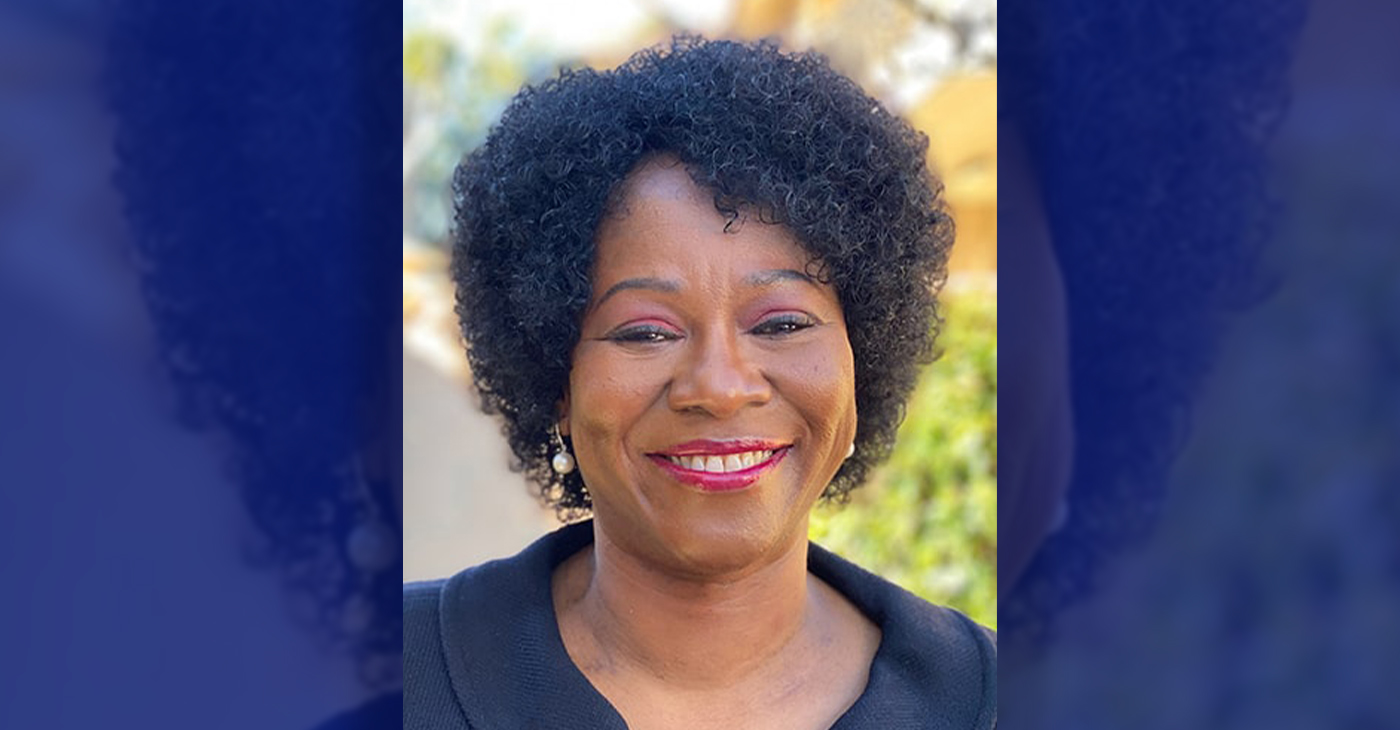
Assemblymember Tina McKinnor (D-Inglewood) represents
California’s 61st Assembly District.
As a member of the California Legislative Black Caucus (CLBC),
McKinnor was elected in 2022. She chairs the Los Angeles County Legislative Delegation and leads the Assembly Public Employment and Retirement Committee. McKinnor also served as a civic engagement director, managed political campaigns, and worked as chief of staff for former Assemblymembers Steven Bradford and Autumn Burke.
In 2025, McKinnor pushed forward legislation on renters’ protections, re-entry programs, reparations legislation, and efforts to support Inglewood Unified School District. She spoke with California Black Media about the past year and her work. Here are her responses.
Looking back on 2025, what do you see as your biggest win?
Assembly Bill (AB) 628. If rent is $3,000, people should at least have a stove and a refrigerator. It’s ridiculous that people were renting without basic appliances.
I’m also proud that I was able to secure $8.4 million in the state budget for people coming home from incarceration. That includes the Homecoming Project, the menopause program for incarcerated women, and the Justice Leaders Program.
How did your leadership help make life better for Black Californians this year?
After the Eaton Fire, I pushed to get the same kind of support for affected areas that wealthier regions get after disasters.
I also did a lot of work building political power— establishing the Black Legacy PAC and California for All of Us PAC so we could support Black candidates and educate voters. We also called voters to make sure they understood Prop 50.
People need to understand this: there are only 12 Black legislators in the Capitol. Folks act like we can just walk in and pass reparations, but that’s not how it works.
What frustrated you most this year?
The governor did not have the political will to sign these bills: AB 57 and AB 62. They both passed overwhelmingly in the Assembly and the Senate. We did the work. The only person who didn’t have the political will to sign them was the governor.
The public needs to ask the governor why he didn’t sign the bills. We can’t keep letting people off the hook. He has to answer.
I also introduced AB 51 — the bill to eliminate interest payments on Inglewood Unified School District’s long-standing state loan — held in the Appropriations Committee. That was frustrating,
What inspired you most in 2025?
The civil rights trip to Alabama was life changing. We visited the Legacy Museum and the National Memorial for Peace and Justice. We took members of the Black, Latino, Jewish, and API caucuses with us. It changed all of us.
People aren’t always against us — they just don’t know our history.
What’s one lesson from 2025 that will shape how you approach decisions next year?
The legislative trip to Norway taught me that collaboration matters. Government, labor, and industry sit down together there. They don’t make villains. Everybody doesn’t get everything they want, but they solve problems.
What’s the biggest challenge facing Black Californians in one word?
Inequity. It shows up in housing, wealth, stress – all these things.
What’s the number one goal you want to accomplish in 2026?
Bringing back AB 57 and AB 62, and securing money for the Inglewood Unified loan interest forgiveness.
Black History
Alfred Cralle: Inventor of the Ice Cream Scoop
Cralle learned carpentry, mechanics, and blacksmithing at a young age. These skills would later become essential in his innovative work. As a young man, he moved to Washington, D.C., where he worked as a porter in hotels and at an ice cream shop. It was there that he first noticed a common problem: scooping ice cream was messy and inefficient. Servers struggled because the ice cream stuck to spoons and ladles, and getting the right shape and portion was difficult. Many needed two hands — one to scoop and one to scrape the ice cream off the spoon.

By Tamara Shiloh
Alfred L. Cralle, an African American inventor and entrepreneur, forever changed the way the world enjoys ice cream. Born on Sept. 4, 1866, in Kenbridge, Virginia, Cralle grew up during Reconstruction — a time when opportunities for African Americans were still extremely limited. Despite the challenges of the era, he demonstrated curiosity, creativity, and a natural ability to understand how tools and machinery worked.
Cralle learned carpentry, mechanics, and blacksmithing at a young age. These skills would later become essential in his innovative work. As a young man, he moved to Washington, D.C., where he worked as a porter in hotels and at an ice cream shop. It was there that he first noticed a common problem: scooping ice cream was messy and inefficient. Servers struggled because the ice cream stuck to spoons and ladles, and getting the right shape and portion was difficult. Many needed two hands — one to scoop and one to scrape the ice cream off the spoon.
Cralle believed there had to be a better way.
Using his mechanical training, he began sketching and experimenting with ideas for a tool that could scoop ice cream easily using one hand. After refining his design, he developed what would become a simple yet brilliant invention: the Ice Cream Mold and Disher. On Feb. 2, 1897, Cralle received U.S. Patent No. 576,395 for the device.

His invention — what we now call the ice cream scoop — was groundbreaking. It featured a built-in scraper that automatically released the ice cream with a single squeeze of the handle. Durable, easy to use, and requiring only one hand, the scoop made serving faster and more consistent. His design was so effective that the basic mechanism is still used today in homes, restaurants, and ice cream shops around the world.
Although his invention became widely used, like many African American inventors of his time, he did not receive the compensation or widespread recognition he deserved. Racial barriers prevented him from fully benefiting from his own creation, even as businesses embraced the tool and the popularity of ice cream continued to grow.
After patenting the scoop, Cralle moved to Pittsburgh. There, he worked as a porter for the luxurious Sterling Hotel and later became a successful businessman. He remained active in his community and continued to create opportunities for himself despite the limitations faced by African Americans at the turn of the 20th century.
Tragically, Cralle died in 1920 at age 54, leaving behind a legacy that would only be fully appreciated long after his passing. Today, he is remembered as the brilliant mind behind one of the most widely used and universally loved kitchen tools.

WORK FROM HOME
Home-based business with potential monthly income of $10K+ per month. A proven training system and website provided to maximize business effectiveness. Perfect job to earn side and primary income. Contact Lynne for more details: Lynne4npusa@gmail.com 800-334-0540


Big God Ministry Gives Away Toys in Marin City

First 5 Alameda County Distributes Over $8 Million in First Wave of Critical Relief Funds for Historically Underpaid Caregivers

2025 in Review: Seven Questions for Assemblymember Lori Wilson — Advocate for Equity, the Environment, and More

2025 in Review: Seven Questions for Assemblymember Tina McKinnor, Champion of Reparations, Housing and Workers’ Rights

2025 in Review: Seven Questions for Sen. Laura Richardson, Who Made Legislative History This Year

2025 in Review: Seven Questions for Sen. Lola Smallwood-Cuevas – an Advocate for Jobs and Justice

Alfred Cralle: Inventor of the Ice Cream Scoop

BOOK REVIEW: Let Me Be Real With You

Oakland Post: Week of December 24 – 30, 2025

Bling It On: Holiday Lights Brighten Dark Nights All Around the Bay

Oakland Council Expands Citywide Security Cameras Despite Major Opposition

Lu Lu’s House is Not Just Toying Around with the Community

Desmond Gumbs — Visionary Founder, Mentor, and Builder of Opportunity

Families Across the U.S. Are Facing an ‘Affordability Crisis,’ Says United Way Bay Area

Black Arts Movement Business District Named New Cultural District in California

Oakland Post: Week of November 12 – 18, 2025

IN MEMORIAM: William ‘Bill’ Patterson, 94

How Charles R. Drew University Navigated More Than $20 Million in Fed Cuts – Still Prioritizing Students and Community Health

No Justice in the Justice System

Oakland Post: Week of November 19 – 25, 2025

Seth Curry Makes Impressive Debut with the Golden State Warriors

Oakland Post: Week of November 26 – December 2, 2025

LIHEAP Funds Released After Weeks of Delay as States and the District Rush to Protect Households from the Cold

Seven Steps to Help Your Child Build Meaningful Connections

Beyoncé and Jay-Z make rare public appearance with Lewis Hamilton at Las Vegas Grand Prix

Seven Steps to Help Your Child Build Meaningful Connections

Lewis Hamilton set to start LAST in Saturday Night’s Las Vegas Grand Prix

Trinidad and Tobago – Prime Minister Confirms U.S. Marines Working on Tobago Radar System

The Perfumed Hand of Hypocrisy: Trump Hosted Former Terror Suspect While America Condemns a Muslim Mayor

Thanksgiving Celebrated Across the Tri-State

Hyundai Ioniq 5 Parking, Safety, and 360 View #shorts

2025 Ioniq 5 New Wiper & Powerful Performance! #shorts

Electric SUV Range: Is 259 Miles Enough? #shorts

EV Charging: How Fast Can You Charge an Electric Vehicle? #shorts

Biometric Cooling… Messaging Seats…Come on! 2025 Infiniti QX80 Autograph 4WD

Charged Up: Witness the Magic of a Fully Electric Car! #shorts

Range Rover Sport PHEV Included…: See What’s Inside This Luxury SUV! #shorts

Invisible Hood View: Perfect Parking with X-Ray Vision! #shorts

AI Is Reshaping Black Healthcare: Promise, Peril, and the Push for Improved Results in California

ESSAY: Technology and Medicine, a Primary Care Point of View

Sanctuary Cities

The RESISTANCE – FREEDOM NOW

STATE OF THE PEOPLE: Freddie

ECONOMIC BOYCOTT DAY!!!!!

I told You So

-
 Alameda County4 weeks ago
Seth Curry Makes Impressive Debut with the Golden State Warriors
-
 #NNPA BlackPress4 weeks ago
LIHEAP Funds Released After Weeks of Delay as States and the District Rush to Protect Households from the Cold
-
 #NNPA BlackPress4 weeks ago
Seven Steps to Help Your Child Build Meaningful Connections
-
 #NNPA BlackPress4 weeks ago
Seven Steps to Help Your Child Build Meaningful Connections
-
 #NNPA BlackPress4 weeks ago
Trinidad and Tobago – Prime Minister Confirms U.S. Marines Working on Tobago Radar System
-
 #NNPA BlackPress4 weeks ago
Thanksgiving Celebrated Across the Tri-State
-

 #NNPA BlackPress4 weeks ago
Teens Reject Today’s News as Trump Intensifies His Assault on the Press
-

 #NNPA BlackPress4 weeks ago
Breaking the Silence: Black Veterans Speak Out on PTSD and the Path to Recovery
