
Politics
Military Recruits Still Not Using American-Made Sneakers


In this photo taken Wednesday July 1, 2015, workers, under ultraviolet light, apply cement to the midsole of the military tested New Balance 950v2 sneaker before the outsole is attached in Boston. New Balance is pressing the Pentagon to buy American-made footwear for the troops instead of sneakers from rival Nike that are made in China. (AP Photo/Stephan Savoia)
PHILIP MARCELO, Associated Press
BOSTON (AP) — New Balance thinks the U.S. military is dragging its feet.
Last April, the Department of Defense announced military recruits would start using athletic shoes 100 percent made and manufactured in America, in recognition of a law Congress passed in 1941 requiring the department give preference to American-made goods.
Over a year after the announcement, the Army, Navy, Air Force and Marines have still not purchased a single sneaker that meets the exacting standards of the 1941 law, known as the Berry Amendment.

Matthew LeBretton, New Balance’s vice president of public affairs, is convinced the delays are deliberate “payback” for companies like New Balance that have been vocally lobbying for the change for years.
“We’ve pushed and pushed to the point where we’re at now, and we’re still encountering tremendous resistance,” he said. “They’re not used to being pushed that way and I think that’s engendered this animosity.”
Mark Wright, a spokesman for the Department of Defense, said the department is simply continuing to test Berry-compliant sneakers.
“We’ve moved right along since the new policy went into effect last year,” he said. “I don’t think this is being slow-rolled at all. We’re trying to respond to the needs of our forces.”
To date, one variant of Boston-based New Balance’s proposed 950v2 sneaker has passed the military’s testing, after a previous version failed last year. Two other styles of the same shoe — covering the different foot and gait types that the military requires shoe companies offer — are still being tested.
No other shoe brand appears to be going through the testing; Saucony, another Massachusetts-based footwear company, said it’s developing a sneaker that eventually could be considered for military use.
Matthew Priest, president of the Footwear Distributors and Retailers of America, doesn’t believe there’s anything nefarious going on, despite New Balance’s concerns.
“The military is a bureaucracy like any other agency in the federal government,” he said, stressing that his association is remaining “neutral” in the fight because some of its members benefit from the policy change while others don’t. “Things just take time.”
Others see the delays as concerning.
Catherine Michael, spokeswoman for the American Apparel and Footwear Association, said the “sluggish and drawn-out process” is preventing domestic shoemakers from hiring and retaining U.S. workers for their factories.
U.S. Rep. Niki Tsongas, a Massachusetts Democrat whose district includes one of New Balance’s five American factories, said the Defense Department needs to step up.
“There have been signs of movement in the approval process, but it is time for (the department) to make more significant progress and reconcile what they perceive as challenges to moving forward,” she said.
New Balance and Saucony suggest part of the problem lies in an inefficient testing regimen.
Wright said the process involves an inquiry to assure that all shoe components are sourced, made and assembled in the U.S., followed by a “wear test” that lasts roughly 90 days in which soldiers put them through the paces and then fill out a report on how they felt.
“We know it won’t change overnight,” said David Costello, a spokesman for Wolverine Worldwide, Saucony’s parent company. “The wheels of government tend to move slowly.”
Frank Kendall, an Under Secretary of Defense, said in a March letter to Tsongas that the tests are being done one shoe type at a time because of a limited number of testers. He expects evaluations of New Balance’s three shoe variants to be done by September.
LeBretton said the testing is the most protracted the company, which is already the sole provider of sneakers for the Navy, has ever been involved in.
The U.S. Coast Guard, he notes, has already moved to comply with the Berry Amendment even though it doesn’t fall under the Pentagon’s revised policy.
The Coast Guard, which is overseen by the Department of Homeland Security, recently tapped New Balance, which it had a previous contract with, to provide thousands of American-made sneakers for its recruits.
“It’s mind-boggling,” LeBretton said. “It certainly highlights that there is this institutional slowdown” at the Pentagon.
Wright, of the Department of Defense, stresses the military is committed to honoring the “spirit” of the Berry Amendment even as it maintains sneakers are technically not part of a soldier’s officially issued uniform and shouldn’t be subject to the rule.
Currently, most recruits are given a one-time voucher to purchase sneakers at military supply stores that have met certain standards. Among the brands offered recruits are Asics, Brooks and New Balance.
New Balance and its supporters maintain the Berry Amendment should still apply, whether or not the military “issues” the sneakers or gives recruits a stipend to purchase them. “The bottom line is that the law is the law and the military needs to follow the law,” LeBretton said.
At New Balance’s factory in Boston, plant manager Tim Luke said the company remains at the ready.
It’s already invested in new equipment and training and begun ramping up production of “tens of thousands” of pairs of its Berry-compliant model.
“There’s a huge pride factor in this. We recognize where these shoes are going to go,” Luke said during a recent factory tour. “By now, we have the process completely defined and refined so when the chance finally comes, we’re ready to go.”
Copyright 2015 The Associated Press. All rights reserved. This material may not be published, broadcast, rewritten or redistributed.






Alameda County
Oakland Council Expands Citywide Security Cameras Despite Major Opposition
In a 7-1 vote in favor of the contract, with only District 3 Councilmember Carroll Fife voting no, the Council agreed to maintain its existing network of 291 cameras and add 40 new “pan-tilt-zoom cameras.”

By Post Staff
The Oakland City Council this week approved a $2.25 million contract with Flock Safety for a mass surveillance network of hundreds of security cameras to track vehicles in the city.
In a 7-1 vote in favor of the contract, with only District 3 Councilmember Carroll Fife voting no, the Council agreed to maintain its existing network of 291 cameras and add 40 new “pan-tilt-zoom cameras.”
In recent weeks hundreds of local residents have spoken against the camera system, raising concerns that data will be shared with immigration authorities and other federal agencies at a time when mass surveillance is growing across the country with little regard for individual rights.
The Flock network, supported by the Oakland Police Department, has the backing of residents and councilmembers who see it as an important tool to protect public safety.
“This system makes the Department more efficient as it allows for information related to disruptive/violent criminal activities to be captured … and allows for precise and focused enforcement,” OPD wrote in its proposal to City Council.
According to OPD, police made 232 arrests using data from Flock cameras between July 2024 and November of this year.
Based on the data, police say they recovered 68 guns, and utilizing the countywide system, they have found 1,100 stolen vehicles.
However, Flock’s cameras cast a wide net. The company’s cameras in Oakland last month captured license plate numbers and other information from about 1.4 million vehicles.
Speaking at Tuesday’s Council meeting, Fife was critical of her colleagues for signing a contract with a company that has been in the national spotlight for sharing data with federal agencies.
Flock’s cameras – which are automated license plate readers – have been used in tracking people who have had abortions, monitoring protesters, and aiding in deportation roundups.
“I don’t know how we get up and have several press conferences talking about how we are supportive of a sanctuary city status but then use a vendor that has been shown to have a direct relationship with (the U.S.) Border Control,” she said. “It doesn’t make sense to me.”
Several councilmembers who voted in favor of the contract said they supported the deal as long as some safeguards were written into the Council’s resolution.
“We’re not aiming for perfection,” said District 1 Councilmember Zac Unger. “This is not Orwellian facial recognition technology — that’s prohibited in Oakland. The road forward here is to add as many amendments as we can.”
Amendments passed by the Council prohibit OPD from sharing camera data with any other agencies for the purpose of “criminalizing reproductive or gender affirming healthcare” or for federal immigration enforcement. California state law also prohibits the sharing of license plate reader data with the federal government, and because Oakland’s sanctuary city status, OPD is not allowed to cooperate with immigration authorities.
A former member of Oakland’s Privacy Advisory Commission has sued OPD, alleging that it has violated its own rules around data sharing.
So far, OPD has shared Flock data with 50 other law enforcement agencies.
Activism
Families Across the U.S. Are Facing an ‘Affordability Crisis,’ Says United Way Bay Area
United Way’s Real Cost Measure data reveals that 27% of Bay Area households – more than 1 in 4 families – cannot afford essentials such as food, housing, childcare, transportation, and healthcare. A family of four needs $136,872 annually to cover these basic necessities, while two adults working full time at minimum wage earn only $69,326.

By Post Staff
A national poll released this week by Marist shows that 61% of Americans say the economy is not working well for them, while 70% report that their local area is not affordable. This marks the highest share of respondents expressing concern since the question was first asked in 2011.
According to United Way Bay Area (UWBA), the data underscores a growing reality in the region: more than 600,000 Bay Area households are working hard yet still cannot afford their basic needs.
Nationally, the Marist Poll found that rising prices are the top economic concern for 45% of Americans, followed by housing costs at 18%. In the Bay Area, however, that equation is reversed. Housing costs are the dominant driver of the affordability crisis.
United Way’s Real Cost Measure data reveals that 27% of Bay Area households – more than 1 in 4 families – cannot afford essentials such as food, housing, childcare, transportation, and healthcare. A family of four needs $136,872 annually to cover these basic necessities, while two adults working full time at minimum wage earn only $69,326.
“The national numbers confirm what we’re seeing every day through our 211 helpline and in communities across the region,” said Keisha Browder, CEO of United Way Bay Area. “People are working hard, but their paychecks simply aren’t keeping pace with the cost of living. This isn’t about individual failure; it’s about policy choices that leave too many of our neighbors one missed paycheck away from crisis.”
The Bay Area’s affordability crisis is particularly defined by extreme housing costs:
- Housing remains the No. 1 reason residents call UWBA’s 211 helpline, accounting for 49% of calls this year.
- Nearly 4 in 10 Bay Area households (35%) spend at least 30% of their income on housing, a level widely considered financially dangerous.
- Forty percent of households with children under age 6 fall below the Real Cost Measure.
- The impact is disproportionate: 49% of Latino households and 41% of Black households struggle to meet basic needs, compared to 15% of white households.
At the national level, the issue of affordability has also become a political flashpoint. In late 2025, President Donald Trump has increasingly referred to “affordability” as a “Democrat hoax” or “con job.” While he previously described himself as the “affordability president,” his recent messaging frames the term as a political tactic used by Democrats to assign blame for high prices.
The president has defended his administration by pointing to predecessors and asserting that prices are declining. However, many Americans remain unconvinced. The Marist Poll shows that 57% of respondents disapprove of Trump’s handling of the economy, while just 36% approve – his lowest approval rating on the issue across both terms in office.
Activism
Black Arts Movement Business District Named New Cultural District in California
Located in the heart of District 3, the BAMBD is widely regarded as one of the nation’s most important centers of Black cultural production — a space where artists, entrepreneurs, organizers, and cultural workers have shaped generations of local and national identity. The state’s recognition affirms the district’s historic importance and its future promise.
By Post Staff
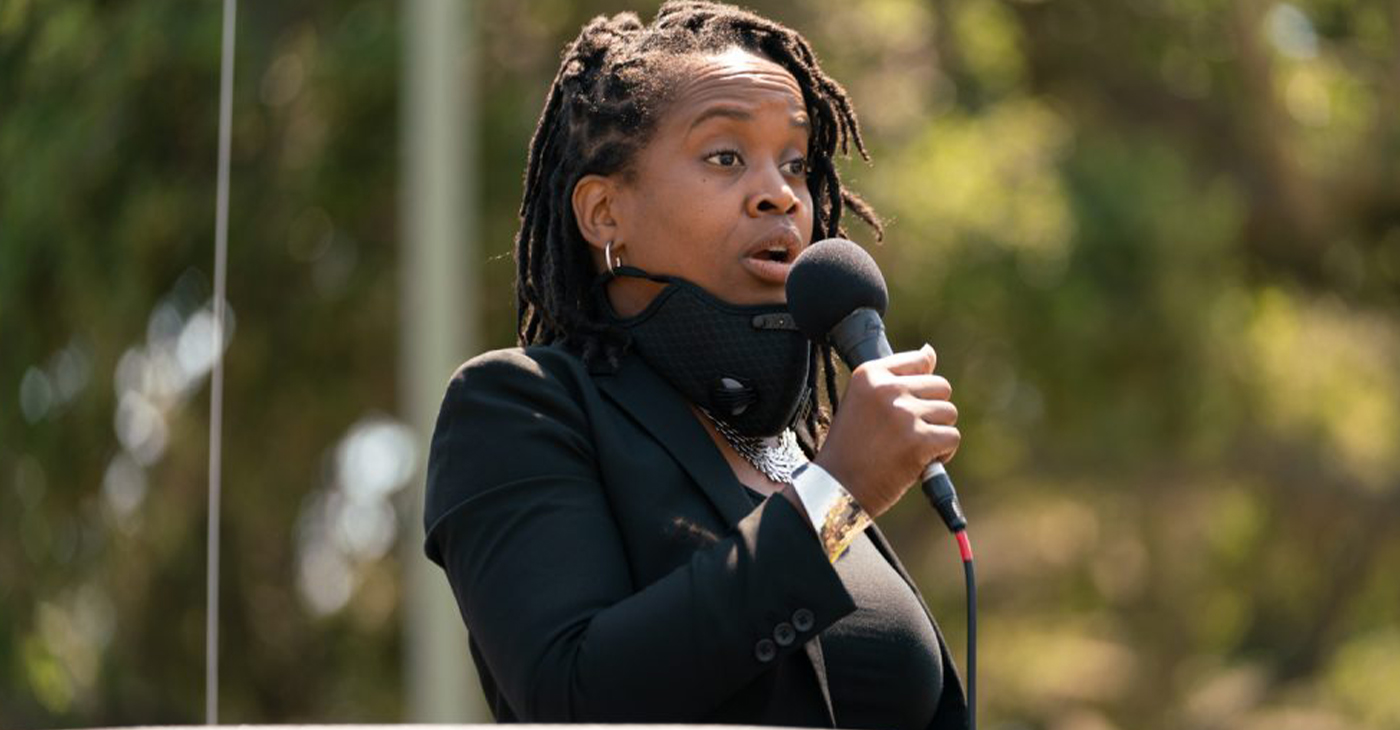
Oakland’s Black Arts Movement Business District (BAMBD) has been selected as one of California’s 10 new state-designated Cultural Districts, a distinction awarded by the California Arts Council (CAC), according to a media statement released by Councilmember Carroll Fife.
The BAMBD now joins 23 other districts across the state recognized for their deep cultural legacy, artistic excellence, and contributions to California’s creative economy.
Located in the heart of District 3, the BAMBD is widely regarded as one of the nation’s most important centers of Black cultural production — a space where artists, entrepreneurs, organizers, and cultural workers have shaped generations of local and national identity. The state’s recognition affirms the district’s historic importance and its future promise.
“This designation is a testament to what Black Oakland has built — and what we continue to build when we insist on investing in our own cultural and economic power,” said Fife.
“For years, our community has fought for meaningful recognition and resources for the Black Arts Movement Business District,” she said. “This announcement validates that work and ensures that BAMBD receives the support it needs to grow, thrive, and continue shaping the cultural fabric of California.”
Since taking office, Fife has led and supported multiple initiatives that strengthened the groundwork for this achievement, including:

- Restoring and protecting arts and cultural staffing within the City of Oakland.
- Creating the West Oakland Community Fund to reinvest in historically excluded communities
- Advancing a Black New Deal study to expand economic opportunity for Black Oakland
- Ensuring racial equity impact analyses for development proposals, improving access for Black businesses and Black contractors
- Introduced legislation and budget amendments that formalized, protected, and expanded the BAMBD
“These efforts weren’t abstract,” Fife said. “They were intentional, coordinated, and rooted in a belief that Black arts and Black businesses deserve deep, sustained public investment.”
As part of the Cultural District designation, BAMBD will receive:
- $10,000 over two years
- Dedicated technical assistance
- Statewide marketing and branding support
- Official designation from Jan. 1, 2026, through Dec. 31, 2030
This support will elevate the visibility of BAMBD’s artists, cultural organizations, small businesses, and legacy institutions, while helping attract new investment to the district.
“The BAMBD has always been more than a district,” Fife continued. “This recognition by the State of California gives us another tool in the fight to preserve Black culture, build Black economic power, and protect the families and institutions that make Oakland strong.”
For questions, contact Councilmember Carroll Fife at CFife@oaklandca.gov.


WORK FROM HOME
Home-based business with potential monthly income of $10K+ per month. A proven training system and website provided to maximize business effectiveness. Perfect job to earn side and primary income. Contact Lynne for more details: Lynne4npusa@gmail.com 800-334-0540


Bling It On: Holiday Lights Brighten Dark Nights All Around the Bay

Oakland Council Expands Citywide Security Cameras Despite Major Opposition

Lu Lu’s House is Not Just Toying Around with the Community

Desmond Gumbs — Visionary Founder, Mentor, and Builder of Opportunity

Families Across the U.S. Are Facing an ‘Affordability Crisis,’ Says United Way Bay Area

Black Arts Movement Business District Named New Cultural District in California

Support Your Child’s Mental Health: Medi-Cal Covers Therapy, Medication, and More

Ann Lowe: The Quiet Genius of American Couture

2025 in Review: Seven Questions for Black Women’s Think Tank Founder Kellie Todd Griffin

BRIDGE Housing President and CEO Ken Lombard Scores Top Honors for Affordable Housing Leadership

Oakland School Board Grapples with Potential $100 Million Shortfall Next Year

COMMENTARY: If You Don’t Want Your ‘Black Card’ Revoked, Watch What You Bring to Holiday Dinners

Mayor Lee, City Leaders Announce $334 Million Bond Sale for Affordable Housing, Roads, Park Renovations, Libraries and Senior Centers

Fayeth Gardens Holds 3rd Annual Kwanzaa Celebration at Hayward City Hall on Dec. 28

Post Salon to Discuss Proposal to Bring Costco to Oakland Community meeting to be held at City Hall, Thursday, Dec. 18

Oakland Post: Week of November 12 – 18, 2025

IN MEMORIAM: William ‘Bill’ Patterson, 94

How Charles R. Drew University Navigated More Than $20 Million in Fed Cuts – Still Prioritizing Students and Community Health

No Justice in the Justice System

Oakland Post: Week of November 19 – 25, 2025

LIHEAP Funds Released After Weeks of Delay as States and the District Rush to Protect Households from the Cold

Seth Curry Makes Impressive Debut with the Golden State Warriors

Oakland Post: Week of November 26 – December 2, 2025

Seven Steps to Help Your Child Build Meaningful Connections

Beyoncé and Jay-Z make rare public appearance with Lewis Hamilton at Las Vegas Grand Prix

Seven Steps to Help Your Child Build Meaningful Connections

Lewis Hamilton set to start LAST in Saturday Night’s Las Vegas Grand Prix

Protecting Pedophiles: The GOP’s Warped Crusade Against Its Own Lies

The Perfumed Hand of Hypocrisy: Trump Hosted Former Terror Suspect While America Condemns a Muslim Mayor

Trinidad and Tobago – Prime Minister Confirms U.S. Marines Working on Tobago Radar System

Hyundai Ioniq 5 Parking, Safety, and 360 View #shorts

2025 Ioniq 5 New Wiper & Powerful Performance! #shorts

Electric SUV Range: Is 259 Miles Enough? #shorts

EV Charging: How Fast Can You Charge an Electric Vehicle? #shorts

Biometric Cooling… Messaging Seats…Come on! 2025 Infiniti QX80 Autograph 4WD

Charged Up: Witness the Magic of a Fully Electric Car! #shorts

Range Rover Sport PHEV Included…: See What’s Inside This Luxury SUV! #shorts

Invisible Hood View: Perfect Parking with X-Ray Vision! #shorts

AI Is Reshaping Black Healthcare: Promise, Peril, and the Push for Improved Results in California

ESSAY: Technology and Medicine, a Primary Care Point of View

Sanctuary Cities

The RESISTANCE – FREEDOM NOW

STATE OF THE PEOPLE: Freddie

ECONOMIC BOYCOTT DAY!!!!!

I told You So
-
 Activism4 weeks ago
Oakland Post: Week of November 19 – 25, 2025
-
 #NNPA BlackPress3 weeks ago
LIHEAP Funds Released After Weeks of Delay as States and the District Rush to Protect Households from the Cold
-
 Alameda County3 weeks ago
Seth Curry Makes Impressive Debut with the Golden State Warriors
-
 Activism4 weeks ago
Oakland Post: Week of November 26 – December 2, 2025
-
 #NNPA BlackPress3 weeks ago
Seven Steps to Help Your Child Build Meaningful Connections
-
 #NNPA BlackPress4 weeks ago
Beyoncé and Jay-Z make rare public appearance with Lewis Hamilton at Las Vegas Grand Prix
-
 #NNPA BlackPress3 weeks ago
Seven Steps to Help Your Child Build Meaningful Connections
-
 #NNPA BlackPress3 weeks ago
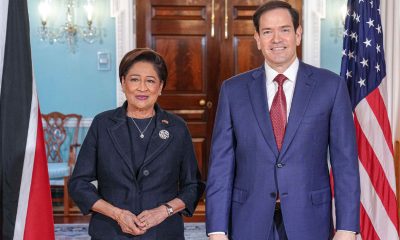
Trinidad and Tobago – Prime Minister Confirms U.S. Marines Working on Tobago Radar System
