
Op-Ed
Tear Down the Walls of Economic Inequality


By Julianne Malveaux
NNPA Columnist
After a spirited debate, the South Carolina House and Senate voted overwhelmingly to remove the Confederate battle flag from Statehouse grounds at the urging of Gov. Nikki Haley, who quickly signed the measure into law. The flag was lowered for the final time on Capitol grounds Friday morning. Many South Carolinians hailed its ceremonious removal as a “new day” for their state as well as a fitting tribute to State Senator Clementa Pinckney, one of the nine massacred at Emanuel A.M.E. Church, where he was the pastor.
Revulsion from the Bible study slaughter sparked conversations all over the country about the Confederate flag. An Iowan who sold ice to Walmart with a confederate logo (go figure) was told he had to change his logo or sell his ice elsewhere. The U.S. House of Representatives has banned display of the Confederate flag on sites maintained by the National Park Service. Mississippi Senators Thad Cochran and Roger Wicker say the Mississippi flag should be redesigned to remove the Confederate symbol.
At the same time, support for the Confederate flag is unwavering. A poll conducted for CNN found that 66 percent of Whites consider the Confederate flag more of a symbol of Southern pride than racism, a view shared by only 17 percent of Blacks. While 72 percent of Blacks consider the flag a symbol of racism, only 25 percent of Whites agree, with the remainder of them saying the flag represent each point of view equally, were undecided or expressed no opinion.
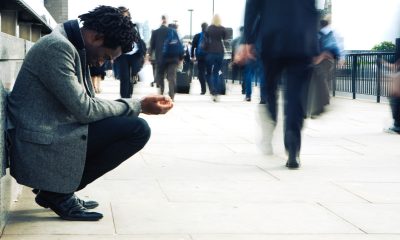
Removing the flag from public places and putting it in museums is a victory for those who reject this symbol of racial subjugation. Still, every economic statistic screams racial subjugation. President Obama had it right (if belatedly) when he said that employers are more willing to employ Johnny than Jamal. Last month, the Bureau of Labor Statistics (BLS) reported that Black unemployment rate was 9.5 percent, more than twice the 4.6 percent rate than Whites experienced. Some economists will say that African Americans are less educated than Whites, explaining part of the unemployment rate gap. Others will cite other factors, such as occupation and location. Race still plays a role in unemployment rate differentials.
White men and White high school dropouts have about the same unemployment rate as Black high school graduates, and highly educated Blacks always have higher unemployment rates than less well educated Whites. While education pays off for Blacks, as those with better educations are paid more than those with less education, Whites get a greater return on education than Blacks.
If we want to remove vestiges of racial subjugation, we ought to pay attention to unemployment rate differentials and work as hard to eradicate them as we did to take down that Confederate flag in South Carolina. How? President Obama could sign an executive order directing the Department of Labor and other federal departments to target money and programs to the inner city or, more specifically, to African Americans. In these closing months of his presidency, he has used executive orders for other purposes. Why not use one to ensure that Jamal gets treated the same way as Johnny?
In addition to Jamal and Johnny, how about Tamika and Theresa? Though the unemployment rate gap is smaller between Black and White women, there are gaps in pay and working conditions. Because more than 40 percent of Black families are female-headed, low pay for Black women translate to different living conditions for Black families.
Similar differences are measured in the poverty rate, where more than a quarter of Black families live in poverty, compared to fewer than 10 percent of White families. Average pay for an African American family is about $31,000, compared to about $52,000 for White families. Congress has been hostile to any poverty-prevention programs, fighting to reduce food stamps programs and pushing back on Obama-backed legislation to increase the minimum wage. In the midst of legislative hostility, could President Obama do anything to lower poverty and especially the gap in the poverty rate? Certainly appointing a Presidential Commission to propose legislation on poverty prevention would be a first, if only symbolic.
The wealth gap is staggering. African Americans have a scant 2.5 percent of our nation’s wealth. The median wealth for White families is $120,000, compared to $7,000 for Black families. The wealth gap is partly a function of the inability for African Americans to attain wealth, certainly during slavery and the Black Codes era, and beyond. There were exceptions, of course, but the gaping wealth gap affects the quality of life for African Americans. What to do? The president might consider the Institute of the Black World’s proposal for a John Hope Franklin Commission for Reparatory Justice to explore the possibility of, among other things, reparations.
Taking down the Confederate flag without tearing down the walls of racial economic inequality is a partial victory. While I am elated that South Carolina Gov. Nikki Haley has expressed her opposition to the Confederate flag as a symbol of hate and White supremacy, I wonder if she will fight to end the institutional racism that results in higher unemployment rates, lower incomes, and less wealth for African Americans.
Julianne Malveaux is an author and economist. She can be reached at www.juliannemalveaux.com.
###







Advice
COMMENTARY: If You Don’t Want Your ‘Black Card’ Revoked, Watch What You Bring to Holiday Dinners
From Thanksgiving to Christmas to New Year’s Day, whether it’s the dining room table or the bid whist (Spades? Uno, anyone?) table, your card may be in danger.

By Wanda Ravernell
Post Staff
From the fourth week of November to the first week in January, if you are of African descent, but particularly African American, certain violations of cultural etiquette will get your ‘Black card’ revoked.
From Thanksgiving to Christmas to New Year’s Day, whether it’s the dining room table or the bid whist (Spades? Uno, anyone?) table, your card may be in danger.
It could take until Super Bowl Sunday for reinstatement.
I don’t know much about the card table, but for years I was on probation by the ‘Aunties,’ the givers and takers of Black cards.
How I Got into Trouble
It was 1970-something and I was influenced by the health food movement that emerged from the hippie era. A vegetarian (which was then considered sacrilegious by most Black people I knew) prepared me a simple meal: grated cheese over steamed broccoli, lentils, and brown rice.
I introduced the broccoli dish at the Friday night supper with my aunt and grandfather. She pronounced the bright green broccoli undone, but she ate it. (I did not, of course, try brown rice on them.)
I knew that I would be allowed back in the kitchen when she attempted the dish, but the broccoli had been cooked to death. (Y’all remember when ALL vegetables, not just greens, were cooked to mush?)

My Black card, which had been revoked was then reattained because they ate what I prepared and imitated it.
Over the decades, various transgressions have become normalized. I remember when having a smoked turkey neck instead of a ham hock in collard greens was greeted with mumblings and murmurings at both the dining room and card tables. Then came vegan versions with just olive oil (What? No Crisco? No bacon, at least?) and garlic. And now my husband stir fries his collards in a wok.
But No Matter How Things Have Changed…
At holiday meals, there are assigned tasks. Uncle Jack chopped raw onions when needed. Uncle Buddy made the fruit salad for Easter. My mother brought the greens in winter, macaroni salad in summer. Aunt Deanie did the macaroni and cheese, and the great aunts, my deceased grandmother’s sisters, oversaw the preparation of the roast beef, turkey, and ham. My father, if he were present, did the carving.
These designations/assignments were binding agreements that could stand up in a court of law. Do not violate the law of assignments by bringing some other version of a tried-and-true dish, even if you call it a new ‘cheese and noodle item’ to ‘try out.’ The auntie lawgivers know what you are trying to do. It’s called a menu coup d’état, and they are not having it.
The time for experiments is in your own home: your spouse and kids are the Guinea pigs.
My mother’s variation of a classic that I detested from that Sunday to the present was adding crushed pineapple to mashed sweet potatoes. A relative stops by, tries it, and then it can be introduced as an add-on to the standard holiday menu.
My Aunt Vivian’s concoctions from Good Housekeeping or Ladies’ Home Journal magazine also made it to the Black people’s tables all over the country in the form of a green bean casserole.
What Not to Do and How Did It Cross Your Mind?
People are, of all things holy, preparing mac ‘n’ cheese with so much sugar it tastes like custard with noodles in it.
Also showing up in the wrong places: raisins. Raisins have been reported in the stuffing (makes no sense unless it’s in a ‘sweet meats’ dish), in a pan of corn bread, and – heresy in the Black kitchen – the MAC ‘n’ CHEESE.
These are not mere allegations: There is photographic evidence of these Black card violations, but I don’t want to defame witnesses who remained present at the scene of the crimes.
The cook – bless his/her heart – was probably well-meaning, if ignorant. Maybe they got the idea from a social media influencer, much like Aunt Viv got recipes from magazines.
Thankfully, a long-winded blessing of the food at the table can give the wary attendee time to locate the oddity’s place on the table and plan accordingly.
But who knows? Innovation always prevails, for, as the old folks say, ‘waste makes want.’ What if the leftovers were cut up, dipped in breadcrumbs and deep fried? The next day, that dish might make it to the TV tray by the card table.
An older cousin – on her way to being an Auntie – in her bonnet, leggings, T-shirt, and bunny slippers and too tired to object, might try it and like it….
And if she ‘rubs your head’ after eating it, the new dish might be a winner and (Whew!) everybody, thanks God, keeps their Black cards.
Until the next time.
Alameda County
Seth Curry Makes Impressive Debut with the Golden State Warriors
Seth looked comfortable in his new uniform, seamlessly fitting into the Warriors’ offensive and defensive system. He finished the night with an impressive 14 points, becoming one of the team’s top scorers for the game. Seth’s points came in a variety of ways – floaters, spot-up three-pointers, mid-range jumpers, and a handful of aggressive drives that kept the Oklahoma City Thunder defense on its heels.

By Y’Anad Burrell
Tuesday night was anything but ordinary for fans in San Francisco as Seth Curry made his highly anticipated debut as a new member of the Golden State Warriors. Seth didn’t disappoint, delivering a performance that not only showcased his scoring ability but also demonstrated his added value to the team.
At 35, the 12-year NBA veteran on Monday signed a contract to play with the Warriors for the rest of the season.
Seth looked comfortable in his new uniform, seamlessly fitting into the Warriors’ offensive and defensive system. He finished the night with an impressive 14 points, becoming one of the team’s top scorers for the game. Seth’s points came in a variety of ways – floaters, spot-up three-pointers, mid-range jumpers, and a handful of aggressive drives that kept the Oklahoma City Thunder defense on its heels.
One of the most memorable moments of the evening came before Seth even scored his first points. As he checked into the game, the Chase Center erupted into applause, with fans rising to their feet to give the newest Warrior a standing ovation.
The crowd’s reaction was a testament not only to Seth’s reputation as a sharpshooter but also to the excitement he brings to the Warriors. It was clear that fans quickly embraced Seth as one of their own, eager to see what he could bring to the team’s championship aspirations.
Warriors’ superstar Steph Curry – Seth’s brother – did not play due to an injury. One could only imagine what it would be like if the Curry brothers were on the court together. Magic in the making.
Seth’s debut proved to be a turning point for the Warriors. Not only did he contribute on the scoreboard, but he also brought a sense of confidence and composure to the floor.
While their loss last night, OKC 124 – GSW 112, Seth’s impact was a game-changer and there’s more yet to come. Beyond statistics, it was clear that Seth’s presence elevated the team’s performance, giving the Warriors a new force as they look to make a deep playoff run.
Activism
Essay: Intentional Self Care and Community Connections Can Improve Our Wellbeing
At the deepest and also most expansive level of reality, we are all part of the same being, our bodies made from the minerals of the earth, our spirits infused by the spiritual breath that animates the universe. Willingness to move more deeply into fear and pain is the first step toward moving into a larger consciousness. Willingness to move beyond the delusion of our separateness can show us new ways of working and living together.

By Dr. Lorraine Bonner, Special to California Black Media Partners
I went to a medical school that was steeped in the principles of classical Western medicine. However, I also learned mindfulness meditation during that time, which opened me to the multifaceted relationship between illnesses and the interconnecting environmental, mental and emotional realities that can impact an individual’s health.
Therefore, when I began to practice medicine, I also pursued training in hypnosis, relaxation techniques, meditation, and guided imagery, to bring a mind-body focus to my work in medical care and prevention.
The people I saw in my practice had a mix of problems, including high blood pressure, diabetes, and a variety of pain issues. I taught almost everyone relaxation breathing and made some general relaxation tapes. To anyone willing, I offered guided imagery.
“My work embraced an approach to wellness I call “Liberatory Health” — one that not only addresses the treatment and management of disease symptoms but also seeks to dismantle the conditions that make people sick in the first place.”
From my perspective, illness is only the outermost manifestation of our efforts to cope, often fueled by addictions such as sugar, tobacco, or alcohol, shackled by an individualistic cult belief that we have only ourselves to blame for our suffering.
At the deepest and also most expansive level of reality, we are all part of the same being, our bodies made from the minerals of the earth, our spirits infused by the spiritual breath that animates the universe. Willingness to move more deeply into fear and pain is the first step toward moving into a larger consciousness. Willingness to move beyond the delusion of our separateness can show us new ways of working and living together.
To put these ideas into practical form, I would quote the immortal Mr. Rogers: “Find the helpers.” There are already people in every community working for liberation. Some of them are running for office, others are giving food to those who need it. Some are volunteering in schools, libraries or hospitals. Some are studying liberation movements, or are working in urban or community gardens, or learning to practice restorative and transformative justice, or creating liberation art, music, dance, theater or writing. Some are mentoring high schoolers or apprenticing young people in a trade. There are many places where compassionate humans are finding other humans and working together for a better world.
A more compassionate world is possible, one in which we will all enjoy better health. Creating it will make us healthier, too.
In community, we are strong. Recognizing denial and overcoming the fragmenting effects of spiritual disorder offer us a path to liberation and true health.
Good health and well-being are the collective rights of all people!
About the Author
Dr. Lorraine Bonner is a retired physician. She is also a sculptor who works in clay, exploring issues of trust, trustworthiness and exploitation, as well as visions of a better world.

WORK FROM HOME
Home-based business with potential monthly income of $10K+ per month. A proven training system and website provided to maximize business effectiveness. Perfect job to earn side and primary income. Contact Lynne for more details: Lynne4npusa@gmail.com 800-334-0540


Support Your Child’s Mental Health: Medi-Cal Covers Therapy, Medication, and More

Ann Lowe: The Quiet Genius of American Couture

2025 in Review: Seven Questions for Black Women’s Think Tank Founder Kellie Todd Griffin

BRIDGE Housing President and CEO Ken Lombard Scores Top Honors for Affordable Housing Leadership

Oakland School Board Grapples with Potential $100 Million Shortfall Next Year

COMMENTARY: If You Don’t Want Your ‘Black Card’ Revoked, Watch What You Bring to Holiday Dinners

Mayor Lee, City Leaders Announce $334 Million Bond Sale for Affordable Housing, Roads, Park Renovations, Libraries and Senior Centers

Fayeth Gardens Holds 3rd Annual Kwanzaa Celebration at Hayward City Hall on Dec. 28

Post Salon to Discuss Proposal to Bring Costco to Oakland Community meeting to be held at City Hall, Thursday, Dec. 18

Oakland Post: Week of December 10 – 16, 2025

Seth Curry Makes Impressive Debut with the Golden State Warriors

A Nation in Freefall While the Powerful Feast: Trump Calls Affordability a ‘Con Job’

The Numbers Behind the Myth of the Hundred Million Dollar Contract

FBI Report Warns of Fear, Paralysis, And Political Turmoil Under Director Kash Patel

ACA Deadline Nears as 20 million Brace for Higher Health Costs

Oakland Post: Week of October 29 – November 4, 2025

Oakland Post: Week of November 12 – 18, 2025

Oakland Post: Week of November 5 – 11, 2025

IN MEMORIAM: William ‘Bill’ Patterson, 94

How Charles R. Drew University Navigated More Than $20 Million in Fed Cuts – Still Prioritizing Students and Community Health

No Justice in the Justice System

Beyoncé and Jay-Z make rare public appearance with Lewis Hamilton at Las Vegas Grand Prix

Lewis Hamilton set to start LAST in Saturday Night’s Las Vegas Grand Prix

Oakland Post: Week of November 19 – 25, 2025

LIHEAP Funds Released After Weeks of Delay as States and the District Rush to Protect Households from the Cold
Seth Curry Makes Impressive Debut with the Golden State Warriors

The Perfumed Hand of Hypocrisy: Trump Hosted Former Terror Suspect While America Condemns a Muslim Mayor

Protecting Pedophiles: The GOP’s Warped Crusade Against Its Own Lies

Thanksgiving Celebrated Across the Tri-State

Trump’s Death Threat Rhetoric Sends Nation into Crisis

Hyundai Ioniq 5 Parking, Safety, and 360 View #shorts

2025 Ioniq 5 New Wiper & Powerful Performance! #shorts

Electric SUV Range: Is 259 Miles Enough? #shorts

EV Charging: How Fast Can You Charge an Electric Vehicle? #shorts

Biometric Cooling… Messaging Seats…Come on! 2025 Infiniti QX80 Autograph 4WD

Charged Up: Witness the Magic of a Fully Electric Car! #shorts

Range Rover Sport PHEV Included…: See What’s Inside This Luxury SUV! #shorts

Invisible Hood View: Perfect Parking with X-Ray Vision! #shorts

AI Is Reshaping Black Healthcare: Promise, Peril, and the Push for Improved Results in California

ESSAY: Technology and Medicine, a Primary Care Point of View

Sanctuary Cities

The RESISTANCE – FREEDOM NOW

STATE OF THE PEOPLE: Freddie

ECONOMIC BOYCOTT DAY!!!!!

I told You So

-
 Activism4 weeks ago
Oakland Post: Week of November 12 – 18, 2025
-
 Activism4 weeks ago
IN MEMORIAM: William ‘Bill’ Patterson, 94
-
 Activism4 weeks ago
How Charles R. Drew University Navigated More Than $20 Million in Fed Cuts – Still Prioritizing Students and Community Health
-
 Bay Area4 weeks ago
No Justice in the Justice System
-
 #NNPA BlackPress3 weeks ago
Beyoncé and Jay-Z make rare public appearance with Lewis Hamilton at Las Vegas Grand Prix
-
 #NNPA BlackPress3 weeks ago
Lewis Hamilton set to start LAST in Saturday Night’s Las Vegas Grand Prix
-
 Activism3 weeks ago
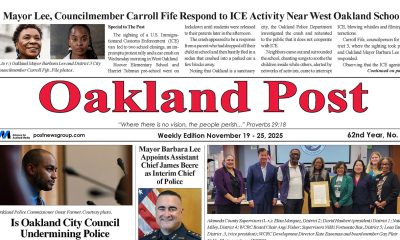
Oakland Post: Week of November 19 – 25, 2025
-
 #NNPA BlackPress2 weeks ago
LIHEAP Funds Released After Weeks of Delay as States and the District Rush to Protect Households from the Cold
