
#NNPA BlackPress
FBI Report Warns of Fear, Paralysis, And Political Turmoil Under Director Kash Patel
BLACKPRESSUSA NEWSWIRE — Six months into Kash Patel’s tenure as Director of the Federal Bureau of Investigation, a newly compiled internal report from a national alliance of retired and active-duty FBI agents and analysts delivers a stark warning about what the Bureau has become under his leadership.


Six months into Kash Patel’s tenure as Director of the Federal Bureau of Investigation, a newly compiled internal report from a national alliance of retired and active-duty FBI agents and analysts delivers a stark warning about what the Bureau has become under his leadership. The 115-page document, submitted to Congress this month, is built entirely on verified reporting from inside field offices across the country and paints a picture of an agency gripped by fear, divided by ideology, and drifting without direction.
The report’s authors write that they launched their inquiry after receiving troubling accounts from inside the Bureau only four months into Patel’s tenure. They describe their goal as a pulse check on whether the ninth FBI director was reforming the Bureau or destabilizing it. Their conclusion: the preliminary findings were discouraging.
Reports Describe Widespread Internal Distrust and Open Hostility Toward President Trump
Sources across the country told investigators that a large number of FBI employees openly express hostility toward President Donald Trump. One source reported seeing an “increasing number of FBI Special Agents who dislike the President,” adding that these employees were exhibiting what they called “TDS” and had lost “their ability to think critically about an issue and distinguish fact from fiction.” Another source described employees making off-color comments about the administration during office conversations.

The sentiment reportedly extends beyond domestic lines. Law enforcement and intelligence partners in allied countries have privately expressed fear that the Trump administration could damage long-term international cooperation according to a sub-source who reported those concerns directly to investigators.
Pardon Backlash and Fear of Retaliation
The President’s January 20 pardons of individuals convicted for their roles in the January 6 attack ignited what the report calls demoralization inside the Bureau. One FBI employee said they were “demoralized” that individuals “rightfully convicted” were pardoned and feared that some of those individuals or their supporters might target them or their family for carrying out their duties. Another source described widespread anger that lists of personnel who worked on January 6 investigations had been provided to the Justice Department for review, noting that agents “were just following orders” and now worry those lists could leak publicly.
Morale In Decline
Morale among FBI employees appears to be sinking fast. There were a few scattered positive notes, but the weight of the reporting describes morale as low, bad, or terrible. Agents with more than a decade of service told investigators they feel marginalized or ignored. Some are counting the days until they can retire. One even uses a countdown app on their phone.
Culture Of Fear
Layered over that unhappiness is something far more corrosive. A culture of fear. Sources say Patel, though personable, created mistrust from the start because of harsh remarks he made about the FBI before taking office. Agents took those comments personally. They now work in an atmosphere where employees keep their heads down and speak carefully. Managers wait for directions because they are afraid a wrong move could cost them their jobs. One source said agents dread coming to work because nobody knows who will be reassigned or fired next.
Leadership Concerns
The report also paints a picture of leaders unprepared for the jobs they hold. Multiple sources said Patel is in over his head and lacks the breadth of experience required to understand the Bureau’s complex programs. Some said Deputy Director Dan Bongino should never have been appointed because the role requires deep institutional knowledge of FBI operations. A sub-source recounted Bongino telling employees during a field office visit that “the truth is for chumps.” Employees who heard it were stunned and offended.
Social Media and Communication Breakdowns
Communication inside the Bureau has become another source of frustration. Sources said Patel and Bongino spend too much time posting on social media and not enough time communicating with employees in clear and official ways. Several told investigators they learn more about FBI operations from tweets than from internal channels.
ICE Assignments Raise Alarm
Nothing has sparked more frustration inside the FBI than the orders requiring agents to assist Immigration and Customs Enforcement. The reporting shows widespread resentment and fear over these assignments. Agents say they have little training in immigration law and were ordered into operations without proper planning. Some said they were put in tactically unsafe positions. They also warned that being pulled away from counterterrorism and counterintelligence investigations threatens national security. One sub-source asked, “If we’re not working CT and CI, then who is?”
DEI Program Removal
Even the future of diversity programs became a point of division. Some agents praised Patel’s removal of DEI initiatives. Others said the old system left them afraid to speak honestly because they worried about being labeled racist. The reporting shows a deep and unresolved conflict over whether DEI strengthened the organization or weakened it.
Notable Incidents
The document also details several incidents that have become part of FBI lore. Patel ordered all employees to remove pronouns and personal messages from their email signatures yet used the number nine in his own. Agents laughed at what they saw as hypocrisy. In another episode, FBI employees who discussed Patel’s request for an FBI-issued firearm were ordered to take polygraph examinations, which one respected source described as punitive. And in Utah, Patel refused to exit a plane without a medium-sized FBI raid jacket. A team scrambled to find one and finally secured a female agent’s jacket. Patel still refused to step out until patches were added. SWAT members removed patches from their own uniforms to satisfy the demand.
A Bureau at a Crossroad
The Alliance warns that the Bureau stands at a difficult crossroads. They write that the FBI faces some of the most daunting challenges in its history. But even in despair, a few voices say something different. One veteran source said “It is early, but most can see the mission is now the priority. Case work and threats are the focus again. Reform is headed in the right direction.”






#NNPA BlackPress
Black Artists in America, Installation Three Wraps at the Dixon Gallery and Gardens
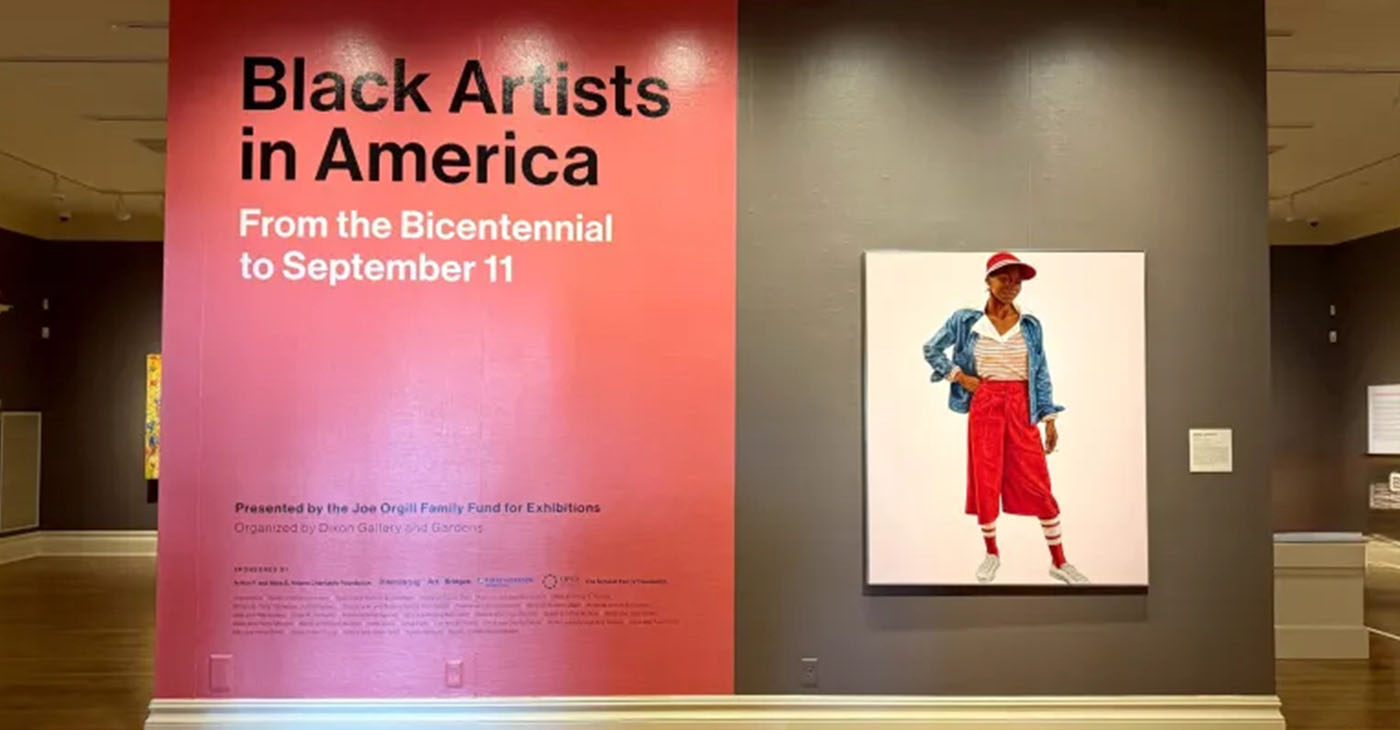
TRI-STATE DEFENDER — With 50+ paintings, sculptures and assemblages, the exhibit features artists like Varnette Honeywood from Los Angeles, whose pieces appeared in Bill Coby’s private collection (before they were auctioned off) and on “The Cosby Show.” Also included are works by Alonzo Davis, another Los Angeles artist who opened one of the first galleries there where Black Artists could exhibit.

By Candace A. Gray | Tri-State Defender
The tulips gleefully greet those who enter the gates at the Dixon Gallery & Gardens on an almost spring day. More than 650,000 bulbs of various hues are currently on display. And they are truly breathtaking.
Inside the gallery, and equally as breathtaking, is the “Black Artists in America, From the Bicentennial to September 11” exhibit, which runs through Sunday, March 29. This is the third installment of a three-part series that started years ago and illustrates part of the Black experience through visual arts in the 20th century.
“This story picks up where part two left off,’’ said Kevin Sharp, the Linda W. and S. Herbert Rhea director for the Dixon. “This era is when we really start to see the emergence of these important Black artists’ agency and freedom shine through. They start to say and express what they want to, and it was a really beautiful time.”
With 50+ paintings, sculptures and assemblages, the exhibit features artists like Varnette Honeywood from Los Angeles, whose pieces appeared in Bill Coby’s private collection (before they were auctioned off) and on “The Cosby Show.” Also included are works by Alonzo Davis, another Los Angeles artist who opened one of the first galleries there where Black Artists could exhibit.
“Though [Davis] was from LA, he actually lived in Memphis for a decade,” said Sharp. “He was a dean at Memphis College of Art, and later opened the first gallery in New York owned and operated by black curators.”
Another featured artist is former NFL player, Ernie Barnes. His work is distinctive. Where have you seen one of his most popular paintings, Sugar Shack? On the end scene and credits of the hit show “Good Times.” His piece Saturday Night, Durham, North Carolina, 1974 is in this collection.
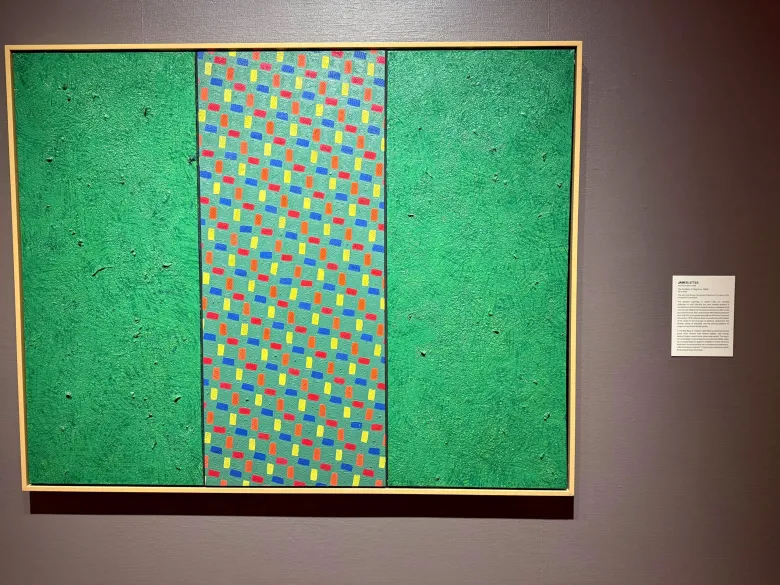
Memphis native James Little’s “The War Baby: The Triptych” is among more than 50 works featured in “Black Artists in America, From the Bicentennial to September 11” at the Dixon Gallery & Gardens, the final installment of a three-part series highlighting the impact and evolution of Black artists through 2011.
The exhibit features other artists with Memphis ties, including abstract painter James Little, who was raised in a segregated Memphis and attended Memphis Academy of Art (before it was Memphis College of Art). He later moved to New York, became a teacher and an internationally acclaimed fixture in the art world in 2022 when he was named a Whitney Biennial selected artist at the Whitney Museum of American Art in New York.
Other artists like Romare Bearden, who had a Southern experience but lived up North, were featured in all three installments.
“During this period of time, he was a major figure,” said Sharp. “He wrote one of the first books on the history of African American art during a time when there were more Black academics, art teachers, more Black everything!”
Speaking of Black educators, Sharp said the head curator behind this tri-part series and Dixon’s partner in the arts is Earnestine Jenkins, Ph.D., an art history professor at the University of Memphis, who also earned a Master of Arts degree from Memphis State University (now UofM). “We began working with Dr. Jenkins in 2018,” he said.
Sharp explained that it takes a team of curators, registrars, counterparts at other museums, and more, about three years to assemble an exhibit like this. It came together quite seamlessly, he added. Each room conjured up more jaw-dropping “wows” than the one before it. Each piece worked with the others to tell the story of Black people and their collective experience during this time period.
One of the last artists about whom Sharp shared information was Bettye Saar, who will turn 100 years old this year. She’s been working in Los Angeles for 80 years and is finally getting her due. Her medium is collages or assemblages, and an incredible work of hers is on display. She’s married to an artist and has two daughters, also artists.
The exhibit catalogue bears some of these artists’ stories, among other scholarly information.
The exhibit, presented by the Joe Orgill Family Fund for Exhibitions, is culturally and colorfully rich. It is a must see and admission to the Dixon is free.
Visit https://www.dixon.org/ to learn more.
Fun Facts: An original James Little design lives in the flooring of the basketball court at Tom Lee Park, and he makes and mixes his own paint colors.

#NNPA BlackPress
Grief, Advocacy, and Education: A Counselor Reflects on Black Maternal Health
SAN DIEGO VOICE & VIEWPOINT — Last month healthcare leaders, birth workers, and community members gathered to honor the legacy of Charleston native Dr. Janell Green Smith, a nurse-midwife and doctor of nursing practice who died in January from childbirth complications. She had participated in more than 300 births and specialized in helping Black women give birth safely.

By Jennifer Porter Gore | Word-In-Black | San Diego Voice and Viewpoint
In 2024, the number of U.S. mothers who died as a result of pregnancy or childbirth dropped compared to 2023. But while slightly fewer Black mothers died that year, they still had three times the mortality rate of white women.
South Carolina’s rates of maternal deaths outpaced even the national rates. In fact, the state’s overall rate of maternal deaths between 2019 and 2023 was higher than all but eight states and the District of Columbia.
Last month healthcare leaders, birth workers, and community members gathered to honor the legacy of Charleston native Dr. Janell Green Smith, a nurse-midwife and doctor of nursing practice who died in January from childbirth complications. She had participated in more than 300 births and specialized in helping Black women give birth safely.
Her death shocked the community and her colleagues who are determined to address concerns about Black maternal health. The event also covered the importance of protecting mental health during grief and of men’s role in solving the maternal health crisis.
As both a therapist and a father, Lawrence Lovell, a licensed professional counselor and founder of Breakthrough Solutions, discussed ways the event’s attendees could process their grief over Green Smith’s death. He also shared ways male partners can advocate for women’s maternal health during pregnancy and childbirth.
Lovell spoke not just as a therapist but also as a father whose own family had briefly crossed paths with Green Smith. The event, he said, emerged organically from a moment of collective mourning.
Despite the grief, “it was still, like, a really beautiful event, a much-needed event, and it almost felt like we were all giving each other a collective family hug,” says Lovell.
His connection to Green Smith, Lovell says, was brief but meaningful during his wife’s pregnancy with their second child. Green Smith was practicing at the same birthing center where they had their child. She began practicing in Greenville a short time later.Even that short connection carried significance for Lovell, given the small number of Black maternal health professionals.
Lovell did not initially plan to become a mental health practitioner; he chose the career path after graduating from college, when someone suggested he consider psychology. His interest deepened when he noticed how few Black men work in mental health.
“Being Black man and playing football in college, there weren’t a lot of people that look like me talking about mental health,” says Lovell. “[I wanted] to give people that look like me an opportunity to work with someone that looks like them.”
Working with Expectant and New Parents
Lovell often counsels couples preparing for parenthood by, helping partners understand what a successful pregnancy, childbirth, and postpartum recovery look like. That often means helping women manage postpartum depression.
As a man, Lovell says, it’s “humbling” that a woman “just trusts me enough to work with me through their pregnancy or their postpartum recovery.”
In his work, Lovell has noticed how few men understand pregnancy before they experience it with their partner. Because early pregnancy symptoms are often invisible, he says, men may underestimate how much support a mom-to-be actually needs.
“Sometimes they may not realize they don’t know much about pregnancy and what to expect in those three trimesters,” Lovell says. “I tell a lot of the men that just because you can’t see [she’s pregnant] doesn’t mean that she won’t appreciate your intense support in that first trimester.”
Education about pregnancy and postpartum recovery, he says, can change how men support their partners.
Teaching Advocacy in the Delivery Room
Another major focus of Lovell’s counseling is preparing men to advocate for mothers during labor.
“Helping men understand what pregnancy looks like: what delivery is going to look like, and what are the realistic expectations that I should have of myself in postpartum,” he says.
Lovell encourages partners to be honest about their expectations for what will happen during delivery. He helps them prepare for the big day by discussing the birth plan and knowing how to quickly recognize problems. Clear communication, he says, prevents misunderstandings.
He regularly trains men to ask their partners detailed questions about their expectations during and after pregnancy. Advocacy in medical settings can be especially important and requires attention to details the mother may not be able to address.
“It’s always important to fine-tune things and truly understand what helps your partner feel most supported,” Lovell says. “Instead of guessing, you should ask.”
Lovell recalls a moment during the birth of his first child when he had to take that role.
During the delivery, “I felt like something wasn’t as sanitary as I’d like it to be,” he says. “I asked, ‘Hey, can you switch those out? Can you change your gloves?’”
Lovell has a succinct but powerful message he regularly shares with clients’ families, and he shared it with attendees at last month’s event.
“Just to believe women,” he says. “I’ve worked with different couples, and sometimes I’m not really sure that there’s enough empathy from the men.”
That includes how women express pain.
“If a woman says, ‘my pain is at a nine,’ just because how you would express yourself at a nine is different than how she’s expressing herself at [that level] doesn’t mean you shouldn’t believe her,” he says.
Empathy, he says, can change outcomes far beyond the delivery room.
“We’ve got to believe women when they’re talking about their experiences and their feelings and their pain,” he says. “I think there’s a lot that we can prevent if we empathize better.”
#NNPA BlackPress
Future of Florida’s Black History Museum in Limbo
JACKSONVILLE FREE PRESS — A proposal sponsored by Tom Leek, a Republican from Ormond Beach, has now passed the Senate in back-to-back legislative sessions. But the House version, filed by Kiyan Michael, a Jacksonville Republican, did not receive final approval in either year, effectively stalling the effort.
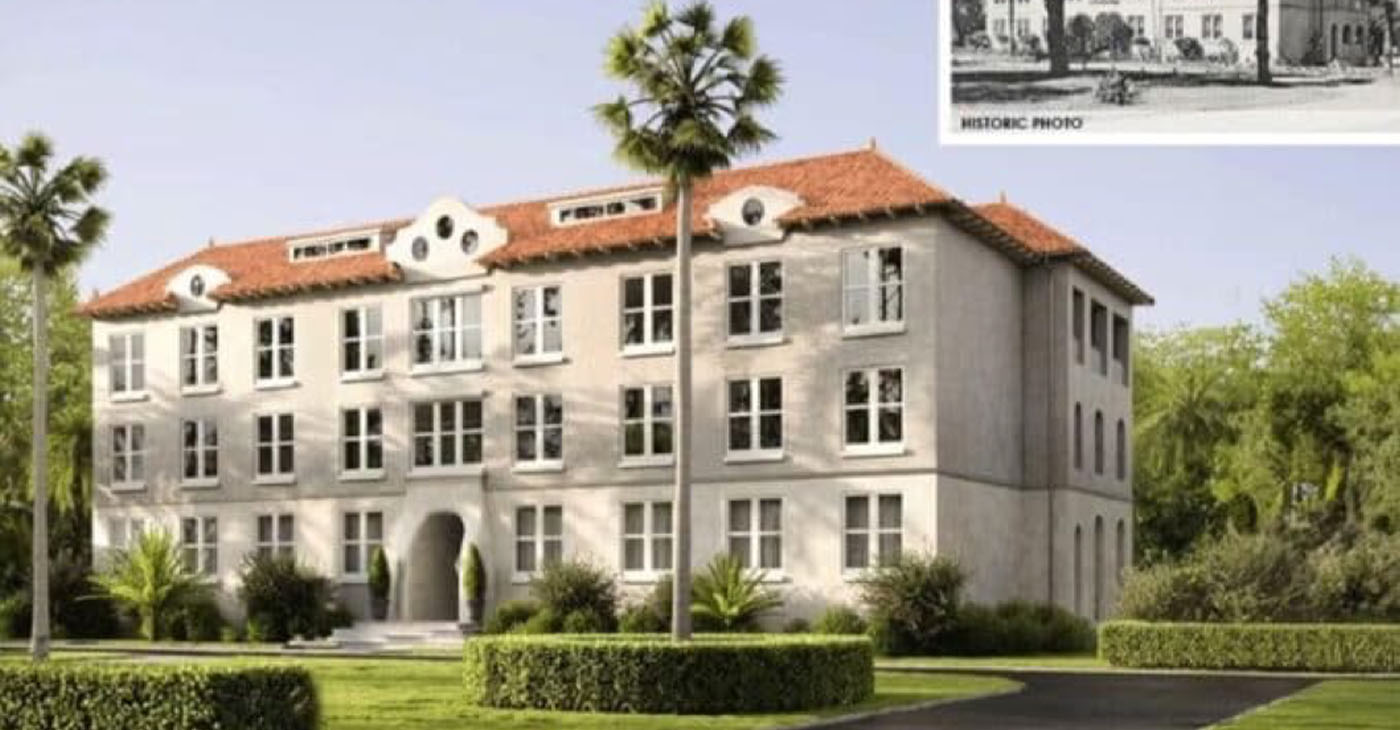
Jacksonville Free Press
Plans to establish a long-awaited Black history museum in Florida are once again on hold after legislation needed to advance the project failed to clear the state House for a second consecutive year, despite repeated approval in the Senate.
A proposal sponsored by Tom Leek, a Republican from Ormond Beach, has now passed the Senate in back-to-back legislative sessions. But the House version, filed by Kiyan Michael, a Jacksonville Republican, did not receive final approval in either year, effectively stalling the effort.
Under Florida law, identical or similar bills must pass both chambers before heading to the governor’s desk. Without House approval, the legislation has been unable to move forward, leaving the project in limbo. Long journey, contested location.
The proposed museum, formally known as the Florida Museum of Black History, has been years in the making, with lawmakers and community leaders framing it as a long-overdue institution to preserve and showcase the state’s African American heritage .A central point of contention has been the museum’s location. St. Augustine — widely recognized as the nation’s oldest city and a site deeply tied to both slavery and early Black history — emerged as the leading contender. Supporters argue the city’s historical significance makes it a natural home for the museum. However, competing interests and regional considerations have fueled debate, slowing consensus among lawmakers.

While the Senate-backed measure has consistently advanced, the lack of alignment in the House has underscored ongoing divisions about how and where the project should take shape.
The holdup in the Florida House appears to be less about opposition to the museum itself and more about a combination of procedural bottlenecks, unresolved structural issues, and lingering disagreements over how the project should be formalized and governed.
Despite the legislative setbacks, Republican Gov. Ron DeSantis has publicly voiced support for the museum. Speaking last month during the unveiling of a statue of abolitionist Frederick Douglass in St. Augustine, DeSantis said the project would move forward “one way or another,” signaling an intent to see the museum built regardless of legislative hurdles.
The anticipated museum has already cleared several hurdles. St. Johns County signed an agreement last year with Florida Memorial University to use the land that once housed its campus last year’s legislative session netted $1 million in funding for St. Johns County to work on planning and design for the museum. However, its anticipated that a million $3 million is needed.
Still, without statutory approval to finalize key components — including governance, funding mechanisms and site selection — the project remains largely conceptual.
With the House bill failing again, the timeline for the museum’s development is unclear. Lawmakers could revisit the proposal in the next legislative session, but any further delays risk pushing the project back several more years. Advocates warn that continued inaction could stall momentum for a museum many see as critical to telling a fuller, more accurate story of Florida’s past. For now, the effort remains paused — caught between political support at the top and legislative gridlock within the Capitol.


WORK FROM HOME
Home-based business with potential monthly income of $10K+ per month. A proven training system and website provided to maximize business effectiveness. Perfect job to earn side and primary income. Contact Lynne for more details: Lynne4npusa@gmail.com 800-334-0540


Black Artists in America, Installation Three Wraps at the Dixon Gallery and Gardens

Grief, Advocacy, and Education: A Counselor Reflects on Black Maternal Health

Future of Florida’s Black History Museum in Limbo

New Research Shows the Many Benefits of Early Learning

South Hampton K-8 Students Among Top 10 Finalists for Samsung’s ‘Solve for Tomorrow’ Competition

Cuba: No Negotiation with US on the President or Political System

Brooklyn Academy of Music Names Jamaican-Born Tamara McCaw as President

Trinidad & Tobego – U.S. Launches WhatsApp Channel for American Citizens in the Country

Oakland Post: Week of March 18 – 24, 2026

AI Innovation vs. Ethics and Environmental Impact

AI, Web3, and Digital Reparations

What If You Owned Your AI Agent?

Season 7, Episode 3 – January Reporter’s Roundtable 📱

Season 7, Episode 3 – January Reporter’s Roundtable

AI, Media, and Power | Part 2, Real-World Impacts and Tradeoffs

Book Review: Books on Black History and Black Life for Kids

California Launches Study on Mileage Tax to Potentially Replace Gas Tax as Republicans Push Back

Community Celebrates Turner Group Construction Company as Collins Drive Becomes Turner Group Drive

Discrimination in City Contracts

COMMENTARY: The Biases We Don’t See — Preventing AI-Driven Inequality in Health Care

Black History Events in the East Bay

Post Newspaper Invites NNPA to Join Nationwide Probate Reform Initiative

Art of the African Diaspora Celebrates Legacy and Community at Richmond Art Center

New Bill, the RIDER Safety Act, Would Support Transit Ambassadors and Safety on Public Transit

COMMENTARY: The National Protest Must Be Accompanied with Our Votes

Oakland Post: Week of February 4 – 10, 2026

Oakland Post: Week of February 11 – 17, 2026

Dorothy Lee Bolden: Uniting Domestic Workers

After Don Lemon’s Arrest, Black Officials Raise Concerns About Independent Black Media

Reflecting on Black History Milestones in Birmingham AL

Hyundai Ioniq 5 Parking, Safety, and 360 View #shorts

2025 Ioniq 5 New Wiper & Powerful Performance! #shorts

Electric SUV Range: Is 259 Miles Enough? #shorts

EV Charging: How Fast Can You Charge an Electric Vehicle? #shorts

Biometric Cooling… Messaging Seats…Come on! 2025 Infiniti QX80 Autograph 4WD

Charged Up: Witness the Magic of a Fully Electric Car! #shorts

Range Rover Sport PHEV Included…: See What’s Inside This Luxury SUV! #shorts

Invisible Hood View: Perfect Parking with X-Ray Vision! #shorts

AI Is Reshaping Black Healthcare: Promise, Peril, and the Push for Improved Results in California

ESSAY: Technology and Medicine, a Primary Care Point of View

Sanctuary Cities

The RESISTANCE – FREEDOM NOW

STATE OF THE PEOPLE: Freddie

ECONOMIC BOYCOTT DAY!!!!!

I told You So
-
 #NNPA BlackPress4 weeks ago
Reflecting on Black History Milestones in Birmingham AL
-
 #NNPA BlackPress4 weeks ago
PRESS ROOM: NBA Hall of Fame Nominee Terry Cummings Joins 100 Black Men of DeKalb County to Launch Victory & Values Initiative
-

 #NNPA BlackPress4 weeks ago
U.S. manufacturing rebounds – how foundry services are adapting to rising demand
-
 Activism4 weeks ago
Oakland Post: Week of February 25 – March 3, 2026
-

 #NNPA BlackPress4 weeks ago
Trump’s MAGA Allies are Creating Executive Order Plan to Steal the 2026 Midterms
-
 #NNPA BlackPress4 weeks ago
OP-ED: One Hundred Years of Black Workers Telling the Truth
-

 #NNPA BlackPress4 weeks ago
Advancements in solar technology that are changing the way we power the world
-
 #NNPA BlackPress4 weeks ago
PRESS ROOM: Civil Rights TV Launches in Selma as the World’s First 24/7 Civil Rights Television Network
