
National
Symbols are Important to Black America


A Confederate battle flag flies in front of the South Carolina statehouse Wednesday, July 8, 2015, in Columbia, S.C. The House is expected to debate a measure Wednesday that would remove the flag from the Capitol grounds. (AP Photo/John Bazemore)
By Jazelle Hunt
NNPA Washington Correspondent
WASHINGTON (NNPA) – Five days after South Carolina retired the Confederate flag with much fanfare, a small group of protesters in Oklahoma City greeted President Barack Obama with Confederate flags. The following weekend, Ku Klux Klan members in Charleston, S.C. brandished both Confederate and Nazi flags for a rally at the capitol
It’s an appropriate reflection of the way American culture values symbolism, even when it doesn’t line up with reality.
“The problem is even though we see these symbols [and] events [such as] the removal of the Confederate flag…it only serves to remind us that deep down inside, these are still only symbols, gestures even,” said Tewodross Melchishua, award-winning filmmaker and visual artist, and professor at Bowie State University in Maryland.
“The systems of White supremacy, bigotry, racism and oppression still remain at the core of this country. The symbols are removed but we know deep down inside that the attitudes and beliefs behind them remain.”
But Black America suffers the same attachment to these symbols, for better or for worse.
From the significance of Black church burnings, to Serena Williams’ dominance, Black people often attach larger-than-life meaning to people, objects, and events. In some ways it is an essential part of Black culture, and a means of empowerment. Karanja Keita Carroll, professor of Black Studies at the State University of New York-New Paltz, points out that the Black experience in America has made this kind of symbolism necessary.
“Our unique circumstances within the United States, being victims of White supremacy and having very minimal representation of who we are – the best of who we are – forces us to emphasize, highlight, and uplift those people who represent us, and thus function as a symbol for who we are,” said Carroll, who is also the associate editor of the Journal of Pan African Studies.
In other words, lack of positive representation in mainstream society has made conditions ripe for overreliance on and defense of Black public figures.
“As people of African descent, we naturally gravitate to, use and respond to symbol and metaphor. It is indeed subconscious but also a subliminal means of communication and signifying, which is also rooted in our oral traditions, language, music, fashion and visual culture,” Melchishua explained. “We are still bombarded with negative images of our people. We reconcile this by uplifting ourselves and defending our figures, icons, sometimes for the good and some times for the bad.”
The bad side manifests when all that uplifting backfires. As Black America puts people, things, and events on a pedestal, the possibility for disappointment looms large. The latest example, of course, is Bill Cosby and his renewed sexual assault scandal.
“It’s a double-edged sword because that representation can quickly turn into misrepresentation. There’s something old people say – just because you’re my skin doesn’t mean you’re my kin,” Carroll said. “The Cosby situation is interesting, to say the least, because prior to this, he was saying things like Black people need to teach their children to read…need to stop giving their children ‘ghetto’ names…and a whole bunch of stuff that devalues our existence. I don’t know if Cosby represents us.”
The other downfall is in the lack of control of our symbols and images. Black culture sometimes becomes marketable in the mainstream – but only in White hands. Last year saw the birth of the term, “Columbusing” – a new word for the age-old practice of Whites “discovering” things that people of color have pioneered, or already know.
Carroll said, “I think that symbols historically, for African people, from the mdw ntr [hieroglyphs] found within Egypt, to Adinkra symbols found within Ghana…but we need to make sure the symbols represent our political, social, and cultural image as a community.”
Both Carroll and Melchishua agree that exalting people and objects as representative or heroic isn’t a bad thing in itself, but it is important to support this with knowledge, critical thinking, and self-determination.
“These events mean something different to the mainstream because the narrative is always being changed but not by us and usually not with our permission,” Melchishua explained. “I would add that as a country we are very ignorant of history. The only way to truly reconcile this is with having a critical study of history and to challenge all symbols; those we have created within our own community, and those that have been imposed upon us.”










Activism
Ann Lowe: The Quiet Genius of American Couture
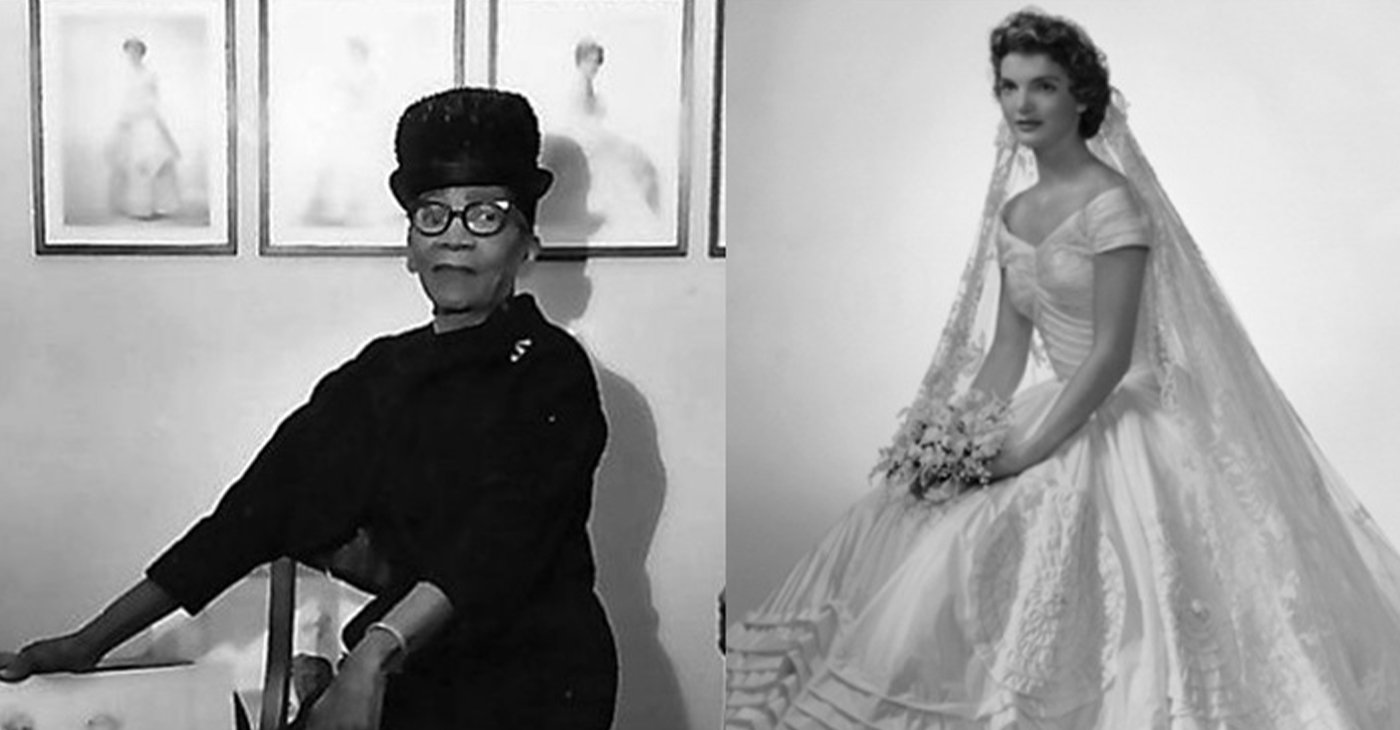
Lowe was born in Clayton, Alabama, into a family of gifted seamstresses. Her mother and grandmother were well-known dressmakers who created exquisite gowns for women in the area. By the time Lowe was a young girl, she was already showing extraordinary talent — cutting, sewing, and decorating fabric with a skill that far exceeded her age. When her mother died unexpectedly, Lowe – only 16 years old then – took over her mother’s sewing business, completing all the orders herself.
By Tamara Shiloh
Ann Cole Lowe, born Dec.14, 1898, was a pioneering American fashion designer whose extraordinary talent shaped some of the most widely recognized and celebrated gowns in U.S. history.
Although she designed dresses for society’s wealthiest families and created masterpieces worn at historic events, Lowe spent much of her life in the shadows — uncredited, underpaid, yet unmatched in skill. Today, she is celebrated as one of the first nationally recognized African American fashion designers and a true visionary in American couture.
Lowe was born in Clayton, Alabama, into a family of gifted seamstresses. Her mother and grandmother were well-known dressmakers who created exquisite gowns for women in the area. By the time Lowe was a young girl, she was already showing extraordinary talent — cutting, sewing, and decorating fabric with a skill that far exceeded her age. When her mother died unexpectedly, Lowe – only 16 years old then – took over her mother’s sewing business, completing all the orders herself. This early responsibility would prepare her for a lifetime of professional excellence.
In 1917, Lowe moved to New York City to study at the S.T. Taylor Design School. Although she was segregated from White students and forced to work separately, she, of course, excelled, graduating earlier than expected. Her instructors quickly recognized that her abilities were far above the typical student, especially her skill in hand-sewing, applique, and intricate floral embellishment – techniques that would become her signature.

Throughout the 1920s and 1930s, she designed gowns for high-society women in Florida and New York, operating boutiques and working for prestigious department stores. Her reputation for craftsmanship, originality, and elegance grew increasingly. She was known for creating gowns that moved beautifully, featured delicate hand-made flowers, and looked sculpted rather than sewn. Many wealthy clients specifically requested “an Ann Lowe gown” for weddings, balls, and galas.
Her most famous creation came in 1953: the wedding gown worn by Jacqueline Bouvier when she married Massachusetts Sen. John F. Kennedy. The dress – crafted from ivory silk taffeta with dozens of tiny, pleated rosettes – became one of the most photographed bridal gowns in American history. Despite this achievement, Lowe received no public credit at the time. When a flood destroyed her completed gowns 10 days before the wedding, she and her seamstresses worked day and night to remake everything – at her own expense. Her dedication and perfectionism never wavered.
She eventually opened “Ann Lowe Originals,” her own salon on New York’s Madison Avenue. She served clients such as the Rockefellers, DuPonts, Vanderbilts, and actresses like Olivia de Havilland. Yet even with her wealthy clientele, she struggled financially, often undercharging because she wanted every dress to be perfect, even if it meant losing money.
Lowe’s contributions were finally recognized later in life. Today, her exquisite gowns are preserved in museums, including the Smithsonian National Museum of African American History and Culture and the Metropolitan Museum of Art.
In the last five years of her life, Lowe lived with her daughter Ruth in Queens, N.Y. She died at her daughter’s home on Feb. 25, 1981, at the age of 82, after an extended illness.
Activism
Oakland Post: Week of December 10 – 16, 2025
The printed Weekly Edition of the Oakland Post: Week of – December 10 – 16, 2025

To enlarge your view of this issue, use the slider, magnifying glass icon or full page icon in the lower right corner of the browser window.
Alameda County
Seth Curry Makes Impressive Debut with the Golden State Warriors
Seth looked comfortable in his new uniform, seamlessly fitting into the Warriors’ offensive and defensive system. He finished the night with an impressive 14 points, becoming one of the team’s top scorers for the game. Seth’s points came in a variety of ways – floaters, spot-up three-pointers, mid-range jumpers, and a handful of aggressive drives that kept the Oklahoma City Thunder defense on its heels.

By Y’Anad Burrell
Tuesday night was anything but ordinary for fans in San Francisco as Seth Curry made his highly anticipated debut as a new member of the Golden State Warriors. Seth didn’t disappoint, delivering a performance that not only showcased his scoring ability but also demonstrated his added value to the team.
At 35, the 12-year NBA veteran on Monday signed a contract to play with the Warriors for the rest of the season.
Seth looked comfortable in his new uniform, seamlessly fitting into the Warriors’ offensive and defensive system. He finished the night with an impressive 14 points, becoming one of the team’s top scorers for the game. Seth’s points came in a variety of ways – floaters, spot-up three-pointers, mid-range jumpers, and a handful of aggressive drives that kept the Oklahoma City Thunder defense on its heels.
One of the most memorable moments of the evening came before Seth even scored his first points. As he checked into the game, the Chase Center erupted into applause, with fans rising to their feet to give the newest Warrior a standing ovation.
The crowd’s reaction was a testament not only to Seth’s reputation as a sharpshooter but also to the excitement he brings to the Warriors. It was clear that fans quickly embraced Seth as one of their own, eager to see what he could bring to the team’s championship aspirations.
Warriors’ superstar Steph Curry – Seth’s brother – did not play due to an injury. One could only imagine what it would be like if the Curry brothers were on the court together. Magic in the making.
Seth’s debut proved to be a turning point for the Warriors. Not only did he contribute on the scoreboard, but he also brought a sense of confidence and composure to the floor.
While their loss last night, OKC 124 – GSW 112, Seth’s impact was a game-changer and there’s more yet to come. Beyond statistics, it was clear that Seth’s presence elevated the team’s performance, giving the Warriors a new force as they look to make a deep playoff run.

WORK FROM HOME
Home-based business with potential monthly income of $10K+ per month. A proven training system and website provided to maximize business effectiveness. Perfect job to earn side and primary income. Contact Lynne for more details: Lynne4npusa@gmail.com 800-334-0540


Support Your Child’s Mental Health: Medi-Cal Covers Therapy, Medication, and More

Ann Lowe: The Quiet Genius of American Couture

2025 in Review: Seven Questions for Black Women’s Think Tank Founder Kellie Todd Griffin

BRIDGE Housing President and CEO Ken Lombard Scores Top Honors for Affordable Housing Leadership

Oakland School Board Grapples with Potential $100 Million Shortfall Next Year

COMMENTARY: If You Don’t Want Your ‘Black Card’ Revoked, Watch What You Bring to Holiday Dinners

Mayor Lee, City Leaders Announce $334 Million Bond Sale for Affordable Housing, Roads, Park Renovations, Libraries and Senior Centers

Fayeth Gardens Holds 3rd Annual Kwanzaa Celebration at Hayward City Hall on Dec. 28

Post Salon to Discuss Proposal to Bring Costco to Oakland Community meeting to be held at City Hall, Thursday, Dec. 18

Oakland Post: Week of December 10 – 16, 2025

Seth Curry Makes Impressive Debut with the Golden State Warriors

A Nation in Freefall While the Powerful Feast: Trump Calls Affordability a ‘Con Job’

The Numbers Behind the Myth of the Hundred Million Dollar Contract

FBI Report Warns of Fear, Paralysis, And Political Turmoil Under Director Kash Patel

ACA Deadline Nears as 20 million Brace for Higher Health Costs

Oakland Post: Week of October 29 – November 4, 2025

Oakland Post: Week of November 12 – 18, 2025

Oakland Post: Week of November 5 – 11, 2025

IN MEMORIAM: William ‘Bill’ Patterson, 94

How Charles R. Drew University Navigated More Than $20 Million in Fed Cuts – Still Prioritizing Students and Community Health

No Justice in the Justice System

Beyoncé and Jay-Z make rare public appearance with Lewis Hamilton at Las Vegas Grand Prix

Lewis Hamilton set to start LAST in Saturday Night’s Las Vegas Grand Prix

Oakland Post: Week of November 19 – 25, 2025

LIHEAP Funds Released After Weeks of Delay as States and the District Rush to Protect Households from the Cold

The Perfumed Hand of Hypocrisy: Trump Hosted Former Terror Suspect While America Condemns a Muslim Mayor
Seth Curry Makes Impressive Debut with the Golden State Warriors

Protecting Pedophiles: The GOP’s Warped Crusade Against Its Own Lies

Trump’s Death Threat Rhetoric Sends Nation into Crisis

Trinidad and Tobago – Prime Minister Confirms U.S. Marines Working on Tobago Radar System

Hyundai Ioniq 5 Parking, Safety, and 360 View #shorts

2025 Ioniq 5 New Wiper & Powerful Performance! #shorts

Electric SUV Range: Is 259 Miles Enough? #shorts

EV Charging: How Fast Can You Charge an Electric Vehicle? #shorts

Biometric Cooling… Messaging Seats…Come on! 2025 Infiniti QX80 Autograph 4WD

Charged Up: Witness the Magic of a Fully Electric Car! #shorts

Range Rover Sport PHEV Included…: See What’s Inside This Luxury SUV! #shorts

Invisible Hood View: Perfect Parking with X-Ray Vision! #shorts

AI Is Reshaping Black Healthcare: Promise, Peril, and the Push for Improved Results in California

ESSAY: Technology and Medicine, a Primary Care Point of View

Sanctuary Cities

The RESISTANCE – FREEDOM NOW

STATE OF THE PEOPLE: Freddie

ECONOMIC BOYCOTT DAY!!!!!

I told You So

-
 Activism4 weeks ago
Oakland Post: Week of November 12 – 18, 2025
-
 Activism4 weeks ago
IN MEMORIAM: William ‘Bill’ Patterson, 94
-
 Activism4 weeks ago
How Charles R. Drew University Navigated More Than $20 Million in Fed Cuts – Still Prioritizing Students and Community Health
-
 Bay Area4 weeks ago
No Justice in the Justice System
-
 #NNPA BlackPress3 weeks ago
Beyoncé and Jay-Z make rare public appearance with Lewis Hamilton at Las Vegas Grand Prix
-
 #NNPA BlackPress3 weeks ago
Lewis Hamilton set to start LAST in Saturday Night’s Las Vegas Grand Prix
-
 Activism3 weeks ago
Oakland Post: Week of November 19 – 25, 2025
-
 #NNPA BlackPress2 weeks ago
LIHEAP Funds Released After Weeks of Delay as States and the District Rush to Protect Households from the Cold
