
Business
New State Law Restricts Payday, Other “Debt Trap” Loans


Gov. Gavin Newsom recently signed Assembly Bill 539, putting restrictions on predatory lending practices in California that he says “create debt traps for families already struggling financially.”
Critics say lenders who offer these high-interest loans target disadvantaged people, large numbers of them Black and Brown consumers living in some of the most underserved census tracts in the state. These are Californians who are typically denied traditional bank loans because of poor credit or lack of collateral. However, the high interest rates on these loans can be crippling.
According to documents provided to California Black Media, a LoanMe Inc. loan for around $5,000 would require a payback of $42,000 over seven years at a 115 percent annual percentage rate
Tacking interest rates on loans as high as 200 percent sometimes — in addition to hidden fees, critics say that predatory lenders typically structure their loans in ways that force people who sign up for them to constantly re-borrow money to pay off the mounting debts they already owe.
“Many Californians living paycheck to paycheck are exploited by predatory lending practices each year,” said Newsom. “Defaulting on high-cost, high-interest rate installment loans push families further into poverty instead of pulling them out. These families deserve better, and this industry must be held to account.” The new legislation restricts the amount of interest that can be levied on loans ranging from $2,500-$10,000 to 36 percent, plus the federal funds rate.
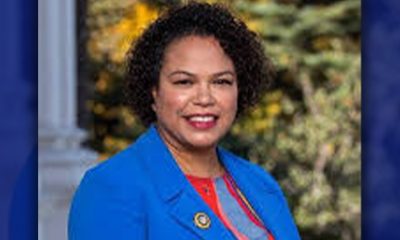
“Gov. Newsom’s signature on AB 539 sends a strong message that California will not allow lenders to thrive on high-cost loans that often leave consumers worse off than when they started,” said Assemblymember Monique Limόn (D-Santa Barbara,) co-author of the bill.
“I am grateful to the broad coalition of community groups, faith leaders, local governments, and responsible lenders who supported this historic achievement and helped us achieve strong bipartisan support of this legislation.”
Limon has been campaigning for the passage of AB 539 for more than two years now. She is also a champion for financial education that informs consumers about the dangers of high-interest loans.
Assemblymember Timothy Grayson (D-Concord), a co-author of the bill, says the governor signing the bill signals the end of the worst kinds of abusive loans in the state.
“Californians deserve real access to capital, not exploitative loans that trap them in perpetual payments and compounding debt,” said Grayson. “We must do more to protect financially vulnerable, hardworking families from predatory lenders who profit off their devastation.”
Figures from the California Department of Business Oversight (CBO) reveal that in 2016 the total dollar amount for payday loans in the state was $3.14 billion. The CBO also stated that seniors now represent the largest group taking out payday loans and more than 400,000 consumers in the state took out 10 payday loans in 2016. A third of those high-cost loans ended up in default.
Not everyone is cheering the passage of AB 539. Those opponents say the bill is restrictive and undermines the values of free-market capitalism.
The California-Hawaii chapter of the NAACP opposed the bill, arguing that it limits options for poor African Americans who need to borrow money in emergencies.
“We are deeply concerned about the impact AB 539 will have on small businesses and consumers. As proposed, AB 539 will limit lenders’ ability to provide a variety of short-term credit options to borrowers in need.” said the California Hispanic Chamber of Commerce in an interview with California Globe.









Activism
Big God Ministry Gives Away Toys in Marin City
Pastor Hall also gave a message of encouragement to the crowd, thanking Jesus for the “best year of their lives.” He asked each of the children what they wanted to be when they grow up.


By Godfrey Lee
Big God Ministries, pastored by David Hall, gave toys to the children in Marin City on Monday, Dec. 15, on the lawn near the corner of Drake Avenue and Donahue Street.
Pastor Hall also gave a message of encouragement to the crowd, thanking Jesus for the “best year of their lives.” He asked each of the children what they wanted to be when they grew up.
Around 75 parents and children were there to receive the presents, which consisted mainly of Gideon Bibles, Cat in the Hat pillows, Barbie dolls, Tonka trucks, and Lego building sets.
A half dozen volunteers from the Big God Ministry, including Donnie Roary, helped to set up the tables for the toy giveaway. The worship music was sung by Ruby Friedman, Keri Carpenter, and Jake Monaghan, who also played the accordion.
Big God Ministries meets on Sundays at 10 a.m. at the Mill Valley Community Center, 180 Camino Alto, Mill Valley, CA Their phone number is (415) 797-2567.

Activism
First 5 Alameda County Distributes Over $8 Million in First Wave of Critical Relief Funds for Historically Underpaid Caregivers
“Family, Friend, and Neighbor caregivers are lifelines for so many children and families in Alameda County,” said Kristin Spanos, CEO, First 5 Alameda County. “Yet, they often go unrecognized and undercompensated for their labor and ability to give individualized, culturally connected care. At First 5, we support the conditions that allow families to thrive, and getting this money into the hands of these caregivers and families at a time of heightened financial stress for parents is part of that commitment.”

Family, Friend, and Neighbor Caregivers Can Now Opt Into $4,000 Grants to Help Bolster Economic Stability and Strengthen Early Learning Experiences
By Post Staff
Today, First 5 Alameda County announced the distribution of $4,000 relief grants to more than 2,000 Family, Friend, and Neighbor (FFN) caregivers, totaling over $8 million in the first round of funding. Over the full course of the funding initiative, First 5 Alameda County anticipates supporting over 3,000 FFN caregivers, who collectively care for an estimated 5,200 children across Alameda County. These grants are only a portion of the estimated $190 million being invested into expanding our early childcare system through direct caregiver relief to upcoming facilities, shelter, and long-term sustainability investments for providers fromMeasure C in its first year. This investment builds on the early rollout of Measure C and reflects a comprehensive, system-wide strategy to strengthen Alameda County’s early childhood ecosystem so families can rely on sustainable, accessible care,
These important caregivers provide child care in Alameda County to their relatives, friends, and neighbors. While public benefits continue to decrease for families, and inflation and the cost of living continue to rise, these grants provide direct economic support for FFN caregivers, whose wages have historically been very low or nonexistent, and very few of whom receive benefits. As families continue to face growing financial pressures, especially during the winter and holiday season, these grants will help these caregivers with living expenses such as rent, utilities, supplies, and food.

“Family, Friend, and Neighbor caregivers are lifelines for so many children and families in Alameda County,” said Kristin Spanos, CEO, First 5 Alameda County. “Yet, they often go unrecognized and undercompensated for their labor and ability to give individualized, culturally connected care. At First 5, we support the conditions that allow families to thrive, and getting this money into the hands of these caregivers and families at a time of heightened financial stress for parents is part of that commitment.”
The funding for these relief grants comes from Measure C, a local voter-approved sales tax in Alameda County that invests in young children, their families, communities, providers, and caregivers. Within the first year of First 5’s 5-Year Plan for Measure C, in addition to the relief grants to informal FFN caregivers, other significant investments will benefit licensed child care providers. These investments include over $40 million in Early Care and Education (ECE) Emergency Grants, which have already flowed to nearly 800 center-based and family child care providers. As part of First 5’s 5-Year Plan, preparations are also underway to distribute facilities grants early next year for child care providers who need to make urgent repairs or improvements, and to launch the Emergency Revolving Fund in Spring 2026 to support licensed child care providers in Alameda County who are at risk of closure.
The FFN Relief Grants recognize and support the essential work that an estimated 3,000 FFN caregivers provide to 5,200 children in Alameda County. There is still an opportunity to receive funds for FFN caregivers who have not yet received them.
In partnership with First 5 Alameda County, Child Care Payment Agencies play a critical role in identifying eligible caregivers and leading coordinated outreach efforts to ensure FFN caregivers are informed of and able to access these relief funds.FFN caregivers are eligible for the grant if they receive a child care payment from an Alameda County Child Care Payment Agency, 4Cs of Alameda County, BANANAS, Hively, and Davis Street, and are currently caring for a child 12 years old or younger in Alameda County. Additionally, FFN caregivers who provided care for a child 12 years or younger at any time since April 1, 2025, but are no longer doing so, are also eligible for the funds. Eligible caregivers are being contacted by their Child Care Payment Agency on a rolling basis, beginning with those who provided care between April and July 2025.
“This money is coming to me at a critical time of heightened economic strain,” said Jill Morton, a caregiver in Oakland, California. “Since I am a non-licensed childcare provider, I didn’t think I was eligible for this financial support. I was relieved that this money can help pay my rent, purchase learning materials for the children as well as enhance childcare, buy groceries and take care of grandchildren.”
Eligible FFN caregivers who provided care at any time between April 1, 2025 and July 31, 2025, who haven’t yet opted into the process, are encouraged to check their mail and email for an eligibility letter. Those who have cared for a child after this period should expect to receive communications from their child care payment agency in the coming months. FFN caregivers with questions may also contact the agency they work with to receive child care payments, or the First 5 Alameda help desk, Monday through Friday, from 9 a.m. to 5:00 p.m. PST, at 510-227-6964. The help desk will be closed 12/25/25 – 1/1/26. Additional grant payments will be made on a rolling basis as opt-ins are received by the four child care payment agencies in Alameda County.
Beginning in the second year of Measure C implementation, FFN caregivers who care for a child from birth to age five and receive an Alameda County subsidized voucher will get an additional $500 per month. This amounts to an annual increase of about $6,000 per child receiving a subsidy. Together with more Measure C funding expected to flow back into the community as part of First 5’s 5-Year Plan, investments will continue to become available in the coming year for addressing the needs of childcare providers in Alameda County.
About First 5 Alameda County
First 5 Alameda County builds the local childhood systems and supports needed to ensure our county’s youngest children are safe, healthy, and ready to succeed in school and life.
Our Mission
In partnership with the community, we support a county-wide continuous prevention and early intervention system that promotes optimal health and development, narrows disparities, and improves the lives of children from birth to age five and their families.
Our Vision
Every child in Alameda County will have optimal health, development, and well-being to reach their greatest potential.
Learn more at www.first5alameda.org.
Black History
Alfred Cralle: Inventor of the Ice Cream Scoop
Cralle learned carpentry, mechanics, and blacksmithing at a young age. These skills would later become essential in his innovative work. As a young man, he moved to Washington, D.C., where he worked as a porter in hotels and at an ice cream shop. It was there that he first noticed a common problem: scooping ice cream was messy and inefficient. Servers struggled because the ice cream stuck to spoons and ladles, and getting the right shape and portion was difficult. Many needed two hands — one to scoop and one to scrape the ice cream off the spoon.

By Tamara Shiloh
Alfred L. Cralle, an African American inventor and entrepreneur, forever changed the way the world enjoys ice cream. Born on Sept. 4, 1866, in Kenbridge, Virginia, Cralle grew up during Reconstruction — a time when opportunities for African Americans were still extremely limited. Despite the challenges of the era, he demonstrated curiosity, creativity, and a natural ability to understand how tools and machinery worked.
Cralle learned carpentry, mechanics, and blacksmithing at a young age. These skills would later become essential in his innovative work. As a young man, he moved to Washington, D.C., where he worked as a porter in hotels and at an ice cream shop. It was there that he first noticed a common problem: scooping ice cream was messy and inefficient. Servers struggled because the ice cream stuck to spoons and ladles, and getting the right shape and portion was difficult. Many needed two hands — one to scoop and one to scrape the ice cream off the spoon.
Cralle believed there had to be a better way.
Using his mechanical training, he began sketching and experimenting with ideas for a tool that could scoop ice cream easily using one hand. After refining his design, he developed what would become a simple yet brilliant invention: the Ice Cream Mold and Disher. On Feb. 2, 1897, Cralle received U.S. Patent No. 576,395 for the device.
His invention — what we now call the ice cream scoop — was groundbreaking. It featured a built-in scraper that automatically released the ice cream with a single squeeze of the handle. Durable, easy to use, and requiring only one hand, the scoop made serving faster and more consistent. His design was so effective that the basic mechanism is still used today in homes, restaurants, and ice cream shops around the world.
Although his invention became widely used, like many African American inventors of his time, he did not receive the compensation or widespread recognition he deserved. Racial barriers prevented him from fully benefiting from his own creation, even as businesses embraced the tool and the popularity of ice cream continued to grow.
After patenting the scoop, Cralle moved to Pittsburgh. There, he worked as a porter for the luxurious Sterling Hotel and later became a successful businessman. He remained active in his community and continued to create opportunities for himself despite the limitations faced by African Americans at the turn of the 20th century.
Tragically, Cralle died in 1920 at age 54, leaving behind a legacy that would only be fully appreciated long after his passing. Today, he is remembered as the brilliant mind behind one of the most widely used and universally loved kitchen tools.


WORK FROM HOME
Home-based business with potential monthly income of $10K+ per month. A proven training system and website provided to maximize business effectiveness. Perfect job to earn side and primary income. Contact Lynne for more details: Lynne4npusa@gmail.com 800-334-0540


Big God Ministry Gives Away Toys in Marin City

First 5 Alameda County Distributes Over $8 Million in First Wave of Critical Relief Funds for Historically Underpaid Caregivers

2025 in Review: Seven Questions for Assemblymember Lori Wilson — Advocate for Equity, the Environment, and More

2025 in Review: Seven Questions for Assemblymember Tina McKinnor, Champion of Reparations, Housing and Workers’ Rights

2025 in Review: Seven Questions for Sen. Laura Richardson, Who Made Legislative History This Year

2025 in Review: Seven Questions for Sen. Lola Smallwood-Cuevas – an Advocate for Jobs and Justice

Alfred Cralle: Inventor of the Ice Cream Scoop

BOOK REVIEW: Let Me Be Real With You

Oakland Post: Week of December 24 – 30, 2025

Bling It On: Holiday Lights Brighten Dark Nights All Around the Bay

Oakland Council Expands Citywide Security Cameras Despite Major Opposition

Lu Lu’s House is Not Just Toying Around with the Community

Desmond Gumbs — Visionary Founder, Mentor, and Builder of Opportunity

Families Across the U.S. Are Facing an ‘Affordability Crisis,’ Says United Way Bay Area

Black Arts Movement Business District Named New Cultural District in California

Oakland Post: Week of November 12 – 18, 2025

IN MEMORIAM: William ‘Bill’ Patterson, 94

How Charles R. Drew University Navigated More Than $20 Million in Fed Cuts – Still Prioritizing Students and Community Health

No Justice in the Justice System

Oakland Post: Week of November 19 – 25, 2025

Seth Curry Makes Impressive Debut with the Golden State Warriors

LIHEAP Funds Released After Weeks of Delay as States and the District Rush to Protect Households from the Cold

Oakland Post: Week of November 26 – December 2, 2025

Seven Steps to Help Your Child Build Meaningful Connections

Beyoncé and Jay-Z make rare public appearance with Lewis Hamilton at Las Vegas Grand Prix

Seven Steps to Help Your Child Build Meaningful Connections

Lewis Hamilton set to start LAST in Saturday Night’s Las Vegas Grand Prix

Trinidad and Tobago – Prime Minister Confirms U.S. Marines Working on Tobago Radar System

The Perfumed Hand of Hypocrisy: Trump Hosted Former Terror Suspect While America Condemns a Muslim Mayor

Thanksgiving Celebrated Across the Tri-State

Hyundai Ioniq 5 Parking, Safety, and 360 View #shorts

2025 Ioniq 5 New Wiper & Powerful Performance! #shorts

Electric SUV Range: Is 259 Miles Enough? #shorts

EV Charging: How Fast Can You Charge an Electric Vehicle? #shorts

Biometric Cooling… Messaging Seats…Come on! 2025 Infiniti QX80 Autograph 4WD

Charged Up: Witness the Magic of a Fully Electric Car! #shorts

Range Rover Sport PHEV Included…: See What’s Inside This Luxury SUV! #shorts

Invisible Hood View: Perfect Parking with X-Ray Vision! #shorts

AI Is Reshaping Black Healthcare: Promise, Peril, and the Push for Improved Results in California

ESSAY: Technology and Medicine, a Primary Care Point of View

Sanctuary Cities

The RESISTANCE – FREEDOM NOW

STATE OF THE PEOPLE: Freddie

ECONOMIC BOYCOTT DAY!!!!!

I told You So
-
 Alameda County4 weeks ago
Seth Curry Makes Impressive Debut with the Golden State Warriors
-
 #NNPA BlackPress4 weeks ago
LIHEAP Funds Released After Weeks of Delay as States and the District Rush to Protect Households from the Cold
-
 #NNPA BlackPress4 weeks ago
Seven Steps to Help Your Child Build Meaningful Connections
-
 #NNPA BlackPress4 weeks ago
Seven Steps to Help Your Child Build Meaningful Connections
-
 #NNPA BlackPress4 weeks ago
Trinidad and Tobago – Prime Minister Confirms U.S. Marines Working on Tobago Radar System
-
 #NNPA BlackPress4 weeks ago
Thanksgiving Celebrated Across the Tri-State
-

 #NNPA BlackPress4 weeks ago
Teens Reject Today’s News as Trump Intensifies His Assault on the Press
-

 #NNPA BlackPress4 weeks ago
Breaking the Silence: Black Veterans Speak Out on PTSD and the Path to Recovery
