
Commentary
Opinion: Challenging a ‘Return to Normal’ After COVID-19 Pandemic Subsides


Lately, I have been stunned by the social dialogue around higher rates of COVID-19 diagnoses and deaths among Black people as a “Black people’s problem.”
Old racist myths about Black inferiority and poor choices by Black people have been woven into the discussion.
Do some people actually believe that Black people are more genetically prone to catching COVID-19? Or that the cultural structures of Black communities discourage Black people from practicing physical distancing?
Well, yes, apparently some do. I have heard the most outrageous questions and comments, and I view these questions and comments as stemming from white supremacist indoctrination. This indoctrination presents a patronizing savior response to educate, guide and “help out” Black people.
These questions and comments are also a dangerous blaming technique: A way to excuse wide-scale systematic oppression. A way to insinuate that if only Black people made the easy choice to move out of food deserts and eat the right foods, took time off from work and stayed home, or became “good” citizens and followed the rules then health inequity wouldn’t exist.
These perspectives are indoctrinations that have become unquestioned habit and normalized. They are, in effect, the unconscious white supremacist paving stones for the road back to normal.

Why would I ever want society to return to “normal?”
Normal is a prevailing U.S. culture where health inequity is a Black problem. Where the need for accessible health care is still up for debate. Where health justice and equitable policies languish without action.
I disagree with “returning to normal.”
As long as health inequity and high mortality rates remain a Black people’s problem, then real-world policies and active procedures will be slow in coming.
Returning to normal means returning to a network of systems that are killing people of color. I have every right to be outraged. I have every right to demand something better. Something that goes far beyond “accessibility.” Something that equates with inclusions, usability, and effectiveness. I have every right to be part of creating something that resembles health justice. Every person of color does.
The systems of this country are flailing.
The economic system, justice system, education system, health system and on and on. They are disintegrating. Now is the best time to birth new systems. This is the moment to serve the final blow to systems that are killing people of color.
This is the ideal time to experiment with the policies and procedures of health justice that before now could not find room to grow. No, not homogenized approaches to the multifaceted needs and desires of Black people.
Instead, make room for the Black-prioritized actualizers who have been planning for this moment. Let’s invest our time, our energy, our resources, and our support to the development of many paths that prioritize progressive change over returning to normal.
Preston Vargas, PhD, leads the Black Brothers Esteem program at the San Francisco AIDS Foundation. Join us at sfaf.org/BBE.









Activism
Oakland Post: Week of December 31, 2025 – January 6, 2026
The printed Weekly Edition of the Oakland Post: Week of – December 31, 2025 – January 6, 2026

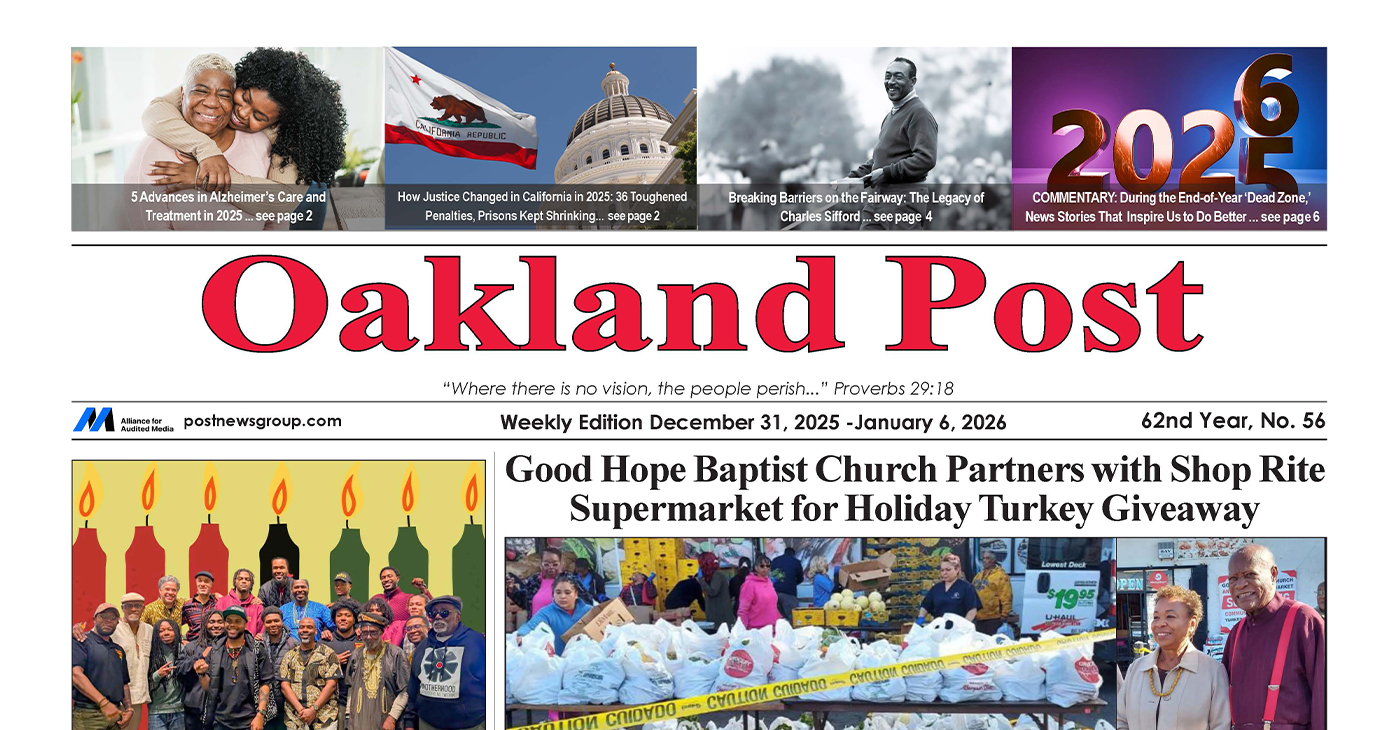
To enlarge your view of this issue, use the slider, magnifying glass icon or full page icon in the lower right corner of the browser window.

Activism
Big God Ministry Gives Away Toys in Marin City
Pastor Hall also gave a message of encouragement to the crowd, thanking Jesus for the “best year of their lives.” He asked each of the children what they wanted to be when they grow up.

By Godfrey Lee
Big God Ministries, pastored by David Hall, gave toys to the children in Marin City on Monday, Dec. 15, on the lawn near the corner of Drake Avenue and Donahue Street.
Pastor Hall also gave a message of encouragement to the crowd, thanking Jesus for the “best year of their lives.” He asked each of the children what they wanted to be when they grew up.
Around 75 parents and children were there to receive the presents, which consisted mainly of Gideon Bibles, Cat in the Hat pillows, Barbie dolls, Tonka trucks, and Lego building sets.
A half dozen volunteers from the Big God Ministry, including Donnie Roary, helped to set up the tables for the toy giveaway. The worship music was sung by Ruby Friedman, Keri Carpenter, and Jake Monaghan, who also played the accordion.
Big God Ministries meets on Sundays at 10 a.m. at the Mill Valley Community Center, 180 Camino Alto, Mill Valley, CA Their phone number is (415) 797-2567.
Activism
2025 in Review: Seven Questions for Assemblymember Lori Wilson — Advocate for Equity, the Environment, and More
Her rise has also included several historic firsts: she is the only Black woman ever appointed to lead the influential Assembly Transportation Committee, and the first freshman legislator elected Chair of the California Legislative Black Caucus. She has also been a vocal advocate for vulnerable communities, becoming the first California legislator to publicly discuss being the parent of a transgender child — an act of visibility that has helped advanced representation at a time when political tensions related to social issues and culture have intensified.
By Edward Henderson, California Black Media
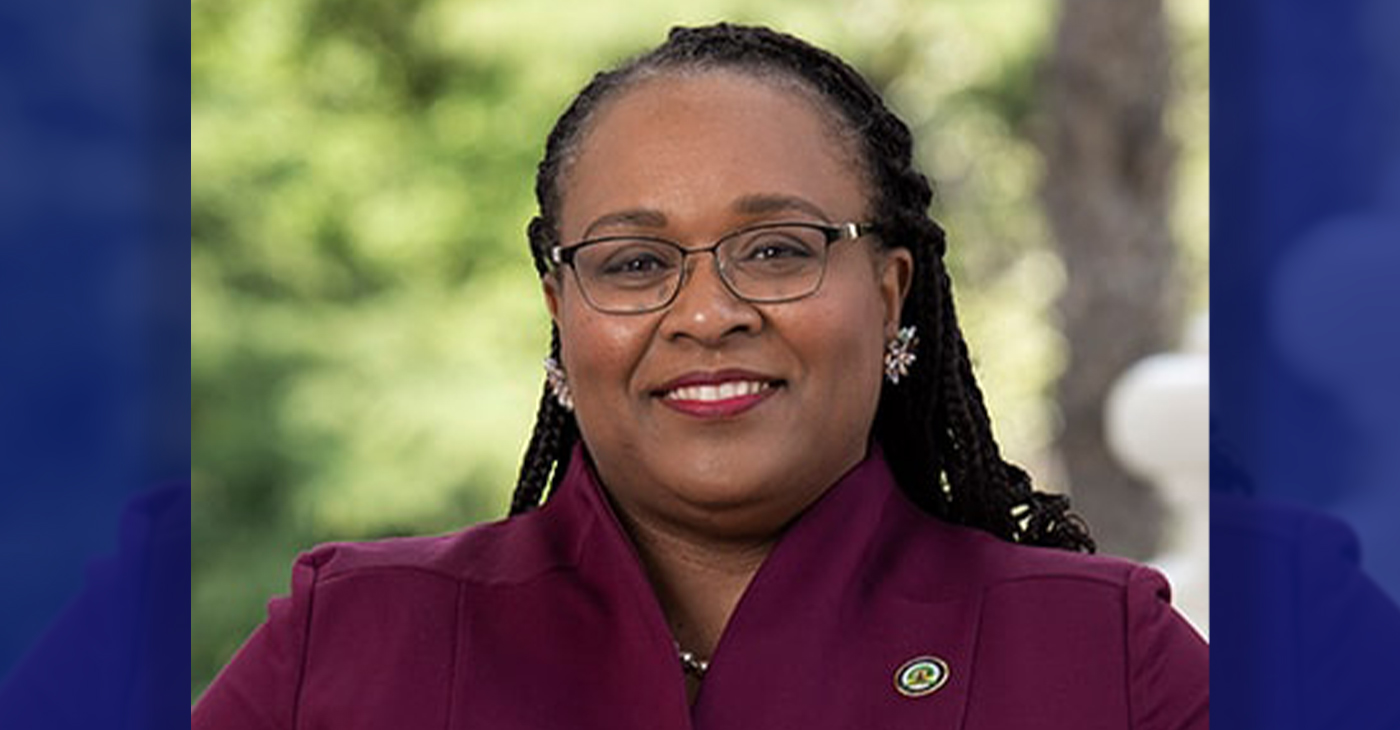
Assemblymember Lori D. Wilson (D-Suisun City) joined the California Legislature in 2022 after making history as Solano County’s first Black female mayor, bringing with her a track record of fiscal discipline, community investment, and inclusive leadership.
She represents the state’s 11th Assembly District, which spans Solano County and portions of Contra Costa and Sacramento Counties.
Her rise has also included several historic firsts: she is the only Black woman ever appointed to lead the influential Assembly Transportation Committee, and the first freshman legislator elected Chair of the California Legislative Black Caucus. She has also been a vocal advocate for vulnerable communities, becoming the first California legislator to publicly discuss being the parent of a transgender child — an act of visibility that has helped advanced representation at a time when political tensions related to social issues and culture have intensified.
California Black Media spoke with Wilson about her successes and disappointments this year and her outlook for 2026.
What stands out as your most important achievement this year?
Getting SB 237 passed in the Assembly. I had the opportunity to co-lead a diverse workgroup of colleagues, spanning a wide range of ideological perspectives on environmental issues.
How did your leadership contribute to improving the lives of Black Californians this year?

The Black Caucus concentrated on the Road to Repair package and prioritized passing a crucial bill that remained incomplete during my time as chair, which establishes a process for identifying descendants of enslaved people for benefit eligibility.
What frustrated you the most this year?
The lack of progress made on getting Prop 4 funds allocated to socially disadvantaged farmers. This delay has real consequences. These farmers have been waiting for essential support that was promised. Watching the process stall, despite the clear need and clear intent of the voters, has been deeply frustrating and reinforces how much work remains to make our systems more responsive and equitable.
What inspired you the most this year?
The resilience of Californians persists despite the unprecedented attacks from the federal government. Watching people stay engaged, hopeful, and determined reminded me why this work matters and why we must continue to protect the rights of every community in our state.
What is one lesson you learned this year that will inform your decision-making next year?
As a legislator, I have the authority to demand answers to my questions — and accept nothing less. That clarity has strengthened my approach to oversight and accountability.
In one word, what is the biggest challenge Black Californians are facing currently?
Affordability and access to quality educational opportunities.
What is the goal you want to achieve most in 2026?
Advance my legislative agenda despite a complex budget environment. The needs across our communities are real, and even in a tight fiscal year, I’m committed to moving forward policies that strengthen safety, expand opportunity, and improve quality of life for the people I represent.


WORK FROM HOME
Home-based business with potential monthly income of $10K+ per month. A proven training system and website provided to maximize business effectiveness. Perfect job to earn side and primary income. Contact Lynne for more details: Lynne4npusa@gmail.com 800-334-0540


Oakland Post: Week of December 31, 2025 – January 6, 2026

Big God Ministry Gives Away Toys in Marin City

First 5 Alameda County Distributes Over $8 Million in First Wave of Critical Relief Funds for Historically Underpaid Caregivers

2025 in Review: Seven Questions for Assemblymember Lori Wilson — Advocate for Equity, the Environment, and More

2025 in Review: Seven Questions for Assemblymember Tina McKinnor, Champion of Reparations, Housing and Workers’ Rights

2025 in Review: Seven Questions for Sen. Laura Richardson, Who Made Legislative History This Year

2025 in Review: Seven Questions for Sen. Lola Smallwood-Cuevas – an Advocate for Jobs and Justice

Alfred Cralle: Inventor of the Ice Cream Scoop

BOOK REVIEW: Let Me Be Real With You

Oakland Post: Week of December 24 – 30, 2025

Bling It On: Holiday Lights Brighten Dark Nights All Around the Bay

Oakland Council Expands Citywide Security Cameras Despite Major Opposition

Lu Lu’s House is Not Just Toying Around with the Community

Desmond Gumbs — Visionary Founder, Mentor, and Builder of Opportunity

Families Across the U.S. Are Facing an ‘Affordability Crisis,’ Says United Way Bay Area

IN MEMORIAM: William ‘Bill’ Patterson, 94

Oakland Post: Week of November 19 – 25, 2025

Seth Curry Makes Impressive Debut with the Golden State Warriors

Oakland Post: Week of November 26 – December 2, 2025

LIHEAP Funds Released After Weeks of Delay as States and the District Rush to Protect Households from the Cold

Seven Steps to Help Your Child Build Meaningful Connections

Beyoncé and Jay-Z make rare public appearance with Lewis Hamilton at Las Vegas Grand Prix

Seven Steps to Help Your Child Build Meaningful Connections

Lewis Hamilton set to start LAST in Saturday Night’s Las Vegas Grand Prix

Trinidad and Tobago – Prime Minister Confirms U.S. Marines Working on Tobago Radar System

Post Salon to Discuss Proposal to Bring Costco to Oakland Community meeting to be held at City Hall, Thursday, Dec. 18

Teens Reject Today’s News as Trump Intensifies His Assault on the Press

Thanksgiving Celebrated Across the Tri-State

FBI Report Warns of Fear, Paralysis, And Political Turmoil Under Director Kash Patel

Mayor Lee, City Leaders Announce $334 Million Bond Sale for Affordable Housing, Roads, Park Renovations, Libraries and Senior Centers

Hyundai Ioniq 5 Parking, Safety, and 360 View #shorts

2025 Ioniq 5 New Wiper & Powerful Performance! #shorts

Electric SUV Range: Is 259 Miles Enough? #shorts

EV Charging: How Fast Can You Charge an Electric Vehicle? #shorts

Biometric Cooling… Messaging Seats…Come on! 2025 Infiniti QX80 Autograph 4WD

Charged Up: Witness the Magic of a Fully Electric Car! #shorts

Range Rover Sport PHEV Included…: See What’s Inside This Luxury SUV! #shorts

Invisible Hood View: Perfect Parking with X-Ray Vision! #shorts

AI Is Reshaping Black Healthcare: Promise, Peril, and the Push for Improved Results in California

ESSAY: Technology and Medicine, a Primary Care Point of View

Sanctuary Cities

The RESISTANCE – FREEDOM NOW

STATE OF THE PEOPLE: Freddie

ECONOMIC BOYCOTT DAY!!!!!

I told You So
-
 Bay Area3 weeks ago
Post Salon to Discuss Proposal to Bring Costco to Oakland Community meeting to be held at City Hall, Thursday, Dec. 18
-
 Activism3 weeks ago
Mayor Lee, City Leaders Announce $334 Million Bond Sale for Affordable Housing, Roads, Park Renovations, Libraries and Senior Centers
-

 Activism3 weeks ago
Oakland Post: Week of December 10 – 16, 2025
-
 Activism3 weeks ago
Oakland School Board Grapples with Potential $100 Million Shortfall Next Year
-

 Arts and Culture3 weeks ago
Fayeth Gardens Holds 3rd Annual Kwanzaa Celebration at Hayward City Hall on Dec. 28
-

 Activism3 weeks ago
2025 in Review: Seven Questions for Black Women’s Think Tank Founder Kellie Todd Griffin
-

 Advice3 weeks ago
COMMENTARY: If You Don’t Want Your ‘Black Card’ Revoked, Watch What You Bring to Holiday Dinners
-

 Activism3 weeks ago
Ann Lowe: The Quiet Genius of American Couture
