
California Black Media
Aging Californians: Relaxing the State’s Public Meeting Law Is a Good Thing
During the COVID-19 pandemic, Gov. Gavin Newsom issued an executive order that temporarily suspended some of the requirements of the California’s public meeting law, the Bagley Keene Act. Newsom’s executive order allowed elected boards, commissions and other state “bodies” to hold remote meetings via teleconference without posting each official’s teleconference location (which in some cases were private homes); posting agendas at each location; or making those locations accessible to the public, as required by law.

By Manny Otiko
California Black Media
During the COVID-19 pandemic, Gov. Gavin Newsom issued an executive order that temporarily suspended some of the requirements of the California’s public meeting law, the Bagley Keene Act.
Newsom’s executive order allowed elected boards, commissions and other state “bodies” to hold remote meetings via teleconference without posting each official’s teleconference location (which in some cases were private homes); posting agendas at each location; or making those locations accessible to the public, as required by law.
A bill is currently being considered by the California legislature that would extend some of the changes to the Bagley-Keene Open Meeting Act until Jan. 1, 2026.
Senate Bill (SB) 544, which was amended Aug. 14 and is currently being reviewed by the Assembly Appropriations Committee, was introduced by Sen. John Laird (D-Santa Cruz) in February.
Supporters of the legislation argue that the bill saves taxpayer money by driving down the costs associated with in-person meetings by up to 90%, and that virtual meetings give access to vulnerable populations who may not be able to attend meetings in person.
One of those vulnerable populations is aging Californians.
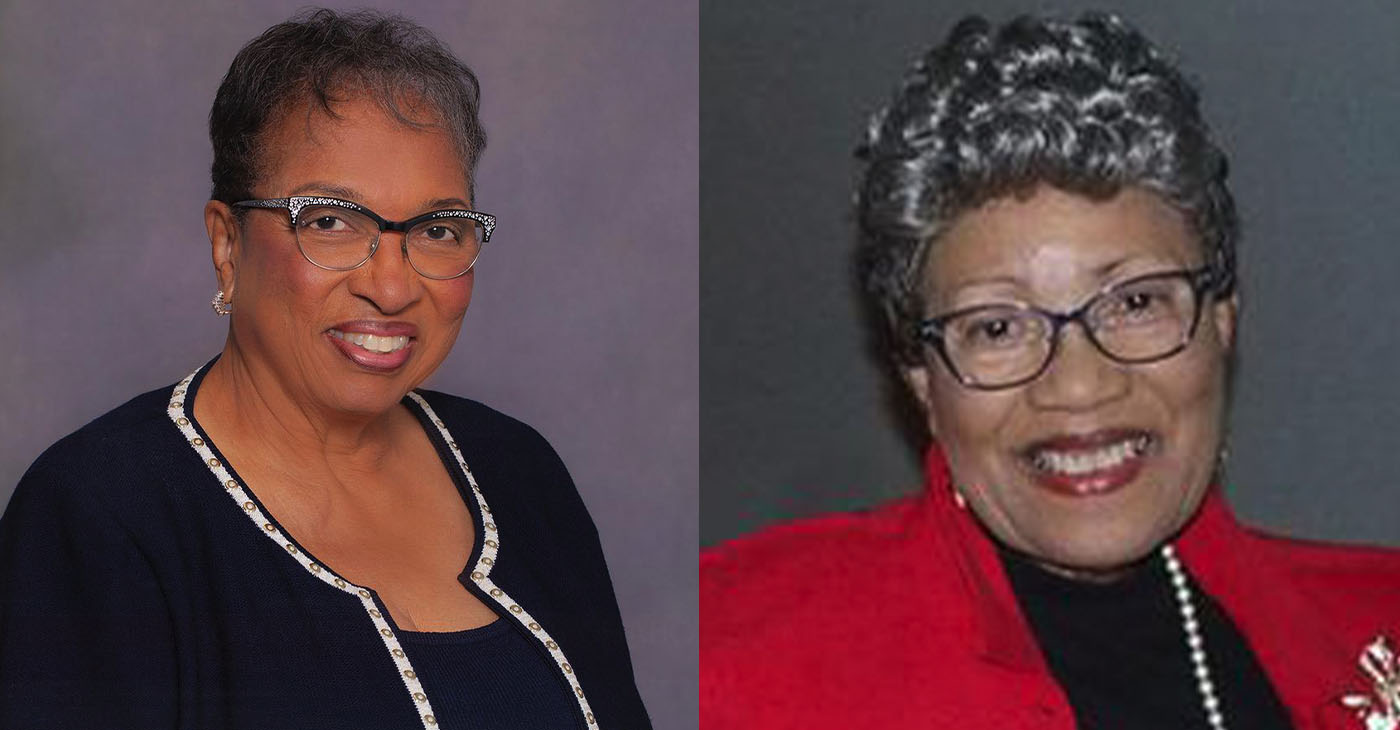
“For many citizens, this was a way to stay active in the community,” says former Assemblymember Cheryl Brown, who is now the chair of the California Commission on Aging.

“Once we got them trained, they fall in love with it. They become engaged with their government,” said Brown.
“They want more communication, and they don’t want to be isolated,” Brown says referring to the changes SB 544 is proposing. She wants people to have permanent access to public meetings.
During the pandemic, there was record participation in meetings because they were broadcast online and people could access them by teleconference.
However, SB 544 has its share of opponents.
Groups such as the First Amendment Coalition (FAC), the California Newspaper Publishers Association, California Common Cause, The Society of Professional Journalists, and other groups committed to holding government accountable have spoken out against the bill.
They believe that if SB 544 passed, it would lead to more government secrecy and turn state government boards and commissions into “faceless bureaucracies.”
The FAC was one of several civic groups that co-signed a letter critical of SB 544.
“This rewriting would ensure that a state body would never again have to meet in person. This would fundamentally undermine one of the law’s key protections for public access and participation — the guarantee that the press and public can be physically present in the same room as those sitting on the dais and making decisions. Such physical presence has been a constant hallmark of democratic institutions,” according to the letter.
David Loy, legal director at the FAC, told California Black Media (CBM) he is concerned SB 544 would allow more online meetings and it would diminish elected officials’ face-to-face contact with their constituents.
He added that the governor’s executive orders about online meetings were established during the COVID pandemic — and that the health crisis is over.
According to Loy, elected officials decide public policy in these meetings. And he feels that needs to be done in-person.
“Public officials should be meeting face-to-face with the people they serve,” he said.
Sedalia Sanders, former mayor of El Centro who is currently active with her city’s local agency on aging and is active with the California Commission on Aging, disagrees with Loy.
Sanders told CBM since many of the Commission’s meetings are held in Sacramento, she participates through video conferencing.
“I don’t think anything is lost,” she said.
Sanders says participants can still see and interact with their representatives through video cameras.
“For an elected official to participate in a meeting online, the majority of the board members still have to meet in person to form a quorum,” she added.
Although born during World War II, Sanders has embraced modern technology. She has a cell phone and navigates the internet. However, she said that not all senior citizens are as tech savvy as she is.
Many of them don’t know you have to pay for the internet. And this can be a problem, especially if you’re on a fixed income.
Brown says that the bill’s opponents are conflating the issues. Boards and commissions are different than elected leaders voting on public policy matters, and seniors and disabled communities support this bill because it’s about inclusion, not exclusion.
“Seniors don’t want to sit back and just play pickleball,” she said. “They want to have a say in the decisions that affect their lives and remote access allows them to do that.”







Activism
Oakland Post: Week of December 17 – 23, 2025
The printed Weekly Edition of the Oakland Post: Week of – December 17 – 23, 2025

To enlarge your view of this issue, use the slider, magnifying glass icon or full page icon in the lower right corner of the browser window.
Activism
2025 in Review: Seven Questions for Black Women’s Think Tank Founder Kellie Todd Griffin
As the president and CEO of the California Black Women’s Collective Empowerment Institute, Griffin is on a mission to shift the narrative and outcomes for Black women and girls. She founded the nation’s first Black Women’s Think Tank, securing $5 million in state funding to fuel policy change.

By Edward Henderson
California Black Media
With more than 25 years of experience spanning public affairs, community engagement, strategy, marketing, and communications, Kellie Todd Griffin is recognized across California as a leader who mobilizes people and policy around issues that matter.
As the president and CEO of the California Black Women’s Collective Empowerment Institute, Griffin is on a mission to shift the narrative and outcomes for Black women and girls. She founded the nation’s first Black Women’s Think Tank, securing $5 million in state funding to fuel policy change.
Griffin spoke with California Black Media (CBM) about her successes and setbacks in 2025 and her hopes for 2026.
Looking back at 2025, what stands out to you as your most important achievement and why?
Our greatest achievement in this year is we got an opportunity to honor the work of 35 Black women throughout California who are trailblazing the way for the next generation of leaders.
How did your leadership, efforts and investments as president and CEO California Black Women’s Collective Empowerment Institute contribute to improving the lives of Black Californians?
We’re training the next leaders. We have been able to train 35 women over a two-year period, and we’re about to start a new cohort of another 30 women. We also have trained over 500 middle and high school girls in leadership, advocacy, and financial literacy.

What frustrated you the most over the last year?
Getting the question, “why.” Why advocate for Black women? Why invest in Black people, Black communities? It’s always constantly having to explain that, although we are aware that there are other populations that are in great need, the quality-of-life indices for Black Californians continue to decrease. Our life expectancies are decreasing. Our unhoused population is increasing. Our health outcomes remain the worst.
We’re not asking anyone to choose one group to prioritize. We are saying, though, in addition to your investments into our immigrant brothers and sisters – or our religious brothers and sisters – we are also asking you to uplift the needs of Black Californians. That way, all of us can move forward together.
What inspired you the most over the last year?
I’ve always been amazed by the joy of Black women in the midst of crisis.
That is really our secret sauce. We don’t let the current state of any issue take our joy from us. It may break us a little bit. We may get tired a little bit. But we find ways to express that – through the arts, through music, through poetry.
What is one lesson you learned in 2025 that will inform your decision-making next year?
Reset. It’s so important not to be sitting still. We have a new administration. We’re seeing data showing that Black women have the largest unemployment rate. We’ve lost so many jobs. We can have rest – we can be restful – but we have to continue the resistance.
In one word, what is the biggest challenge Black Californians faced in 2025?
Motivation.
I choose motivation because of the tiredness. What is going to motivate us to be involved in 2026?
What is the goal you want to achieve most in 2026?
I want to get Black Californians in spaces and places of power and influence – as well as opportunities to thrive economically, socially, and physically.
Activism
Oakland Post: Week of December 10 – 16, 2025
The printed Weekly Edition of the Oakland Post: Week of – December 10 – 16, 2025

To enlarge your view of this issue, use the slider, magnifying glass icon or full page icon in the lower right corner of the browser window.

WORK FROM HOME
Home-based business with potential monthly income of $10K+ per month. A proven training system and website provided to maximize business effectiveness. Perfect job to earn side and primary income. Contact Lynne for more details: Lynne4npusa@gmail.com 800-334-0540


Bling It On: Holiday Lights Brighten Dark Nights All Around the Bay

Oakland Council Expands Citywide Security Cameras Despite Major Opposition

Lu Lu’s House is Not Just Toying Around with the Community

Desmond Gumbs — Visionary Founder, Mentor, and Builder of Opportunity

Families Across the U.S. Are Facing an ‘Affordability Crisis,’ Says United Way Bay Area

Black Arts Movement Business District Named New Cultural District in California

Oakland Post: Week of December 17 – 23, 2025

Support Your Child’s Mental Health: Medi-Cal Covers Therapy, Medication, and More

Ann Lowe: The Quiet Genius of American Couture

2025 in Review: Seven Questions for Black Women’s Think Tank Founder Kellie Todd Griffin

BRIDGE Housing President and CEO Ken Lombard Scores Top Honors for Affordable Housing Leadership

Oakland School Board Grapples with Potential $100 Million Shortfall Next Year

COMMENTARY: If You Don’t Want Your ‘Black Card’ Revoked, Watch What You Bring to Holiday Dinners

Mayor Lee, City Leaders Announce $334 Million Bond Sale for Affordable Housing, Roads, Park Renovations, Libraries and Senior Centers

Fayeth Gardens Holds 3rd Annual Kwanzaa Celebration at Hayward City Hall on Dec. 28

Oakland Post: Week of November 12 – 18, 2025

IN MEMORIAM: William ‘Bill’ Patterson, 94

How Charles R. Drew University Navigated More Than $20 Million in Fed Cuts – Still Prioritizing Students and Community Health

No Justice in the Justice System

Oakland Post: Week of November 19 – 25, 2025

LIHEAP Funds Released After Weeks of Delay as States and the District Rush to Protect Households from the Cold

Seth Curry Makes Impressive Debut with the Golden State Warriors

Oakland Post: Week of November 26 – December 2, 2025

Seven Steps to Help Your Child Build Meaningful Connections

Beyoncé and Jay-Z make rare public appearance with Lewis Hamilton at Las Vegas Grand Prix

Seven Steps to Help Your Child Build Meaningful Connections

Lewis Hamilton set to start LAST in Saturday Night’s Las Vegas Grand Prix

Protecting Pedophiles: The GOP’s Warped Crusade Against Its Own Lies

The Perfumed Hand of Hypocrisy: Trump Hosted Former Terror Suspect While America Condemns a Muslim Mayor

Trinidad and Tobago – Prime Minister Confirms U.S. Marines Working on Tobago Radar System

Hyundai Ioniq 5 Parking, Safety, and 360 View #shorts

2025 Ioniq 5 New Wiper & Powerful Performance! #shorts

Electric SUV Range: Is 259 Miles Enough? #shorts

EV Charging: How Fast Can You Charge an Electric Vehicle? #shorts

Biometric Cooling… Messaging Seats…Come on! 2025 Infiniti QX80 Autograph 4WD

Charged Up: Witness the Magic of a Fully Electric Car! #shorts

Range Rover Sport PHEV Included…: See What’s Inside This Luxury SUV! #shorts

Invisible Hood View: Perfect Parking with X-Ray Vision! #shorts

AI Is Reshaping Black Healthcare: Promise, Peril, and the Push for Improved Results in California

ESSAY: Technology and Medicine, a Primary Care Point of View

Sanctuary Cities

The RESISTANCE – FREEDOM NOW

STATE OF THE PEOPLE: Freddie

ECONOMIC BOYCOTT DAY!!!!!

I told You So

-
 #NNPA BlackPress3 weeks ago
LIHEAP Funds Released After Weeks of Delay as States and the District Rush to Protect Households from the Cold
-
 Alameda County3 weeks ago
Seth Curry Makes Impressive Debut with the Golden State Warriors
-
 Activism4 weeks ago
Oakland Post: Week of November 26 – December 2, 2025
-
 #NNPA BlackPress3 weeks ago
Seven Steps to Help Your Child Build Meaningful Connections
-
 #NNPA BlackPress3 weeks ago
Seven Steps to Help Your Child Build Meaningful Connections
-
 #NNPA BlackPress3 weeks ago
Trinidad and Tobago – Prime Minister Confirms U.S. Marines Working on Tobago Radar System
-

 #NNPA BlackPress3 weeks ago
Thanksgiving Celebrated Across the Tri-State
-

 #NNPA BlackPress3 weeks ago
Teens Reject Today’s News as Trump Intensifies His Assault on the Press
