
Activism
A Call to Save Liberty Hall: Oakland’s Beacon of Black Heritage Faces an Uncertain Future
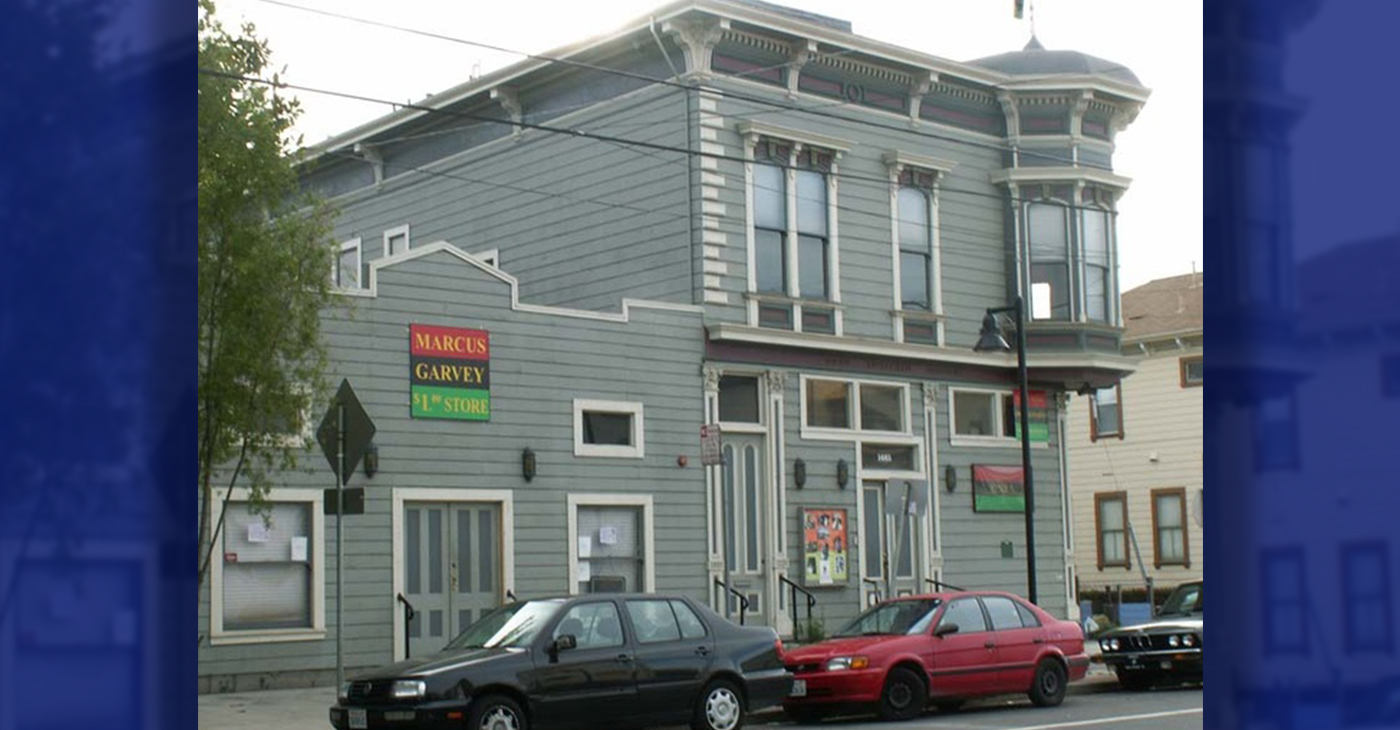
For generations, Liberty Hall has been more than bricks and wood — it has been a spiritual and cultural sanctuary for Black Oakland. The building once served as a hub for Marcus Garvey’s Universal Negro Improvement Association (UNIA), where Garvey’s call for economic independence and Pan-African unity resonated through the hearts of a people newly migrating to the West in search of freedom and dignity.

Special to The Post
On a quiet corner near the West Oakland BART Station stands a weathered but proud monument to African American history — the Universal Negro Improvement Association’s Liberty Hall, also known as the Marcus Garvey Building. Built in 1877, this two-story Italianate landmark has witnessed more than a century of struggle, self-determination, and community empowerment. Now, its survival hangs in the balance.
For generations, Liberty Hall has been more than bricks and wood — it has been a spiritual and cultural sanctuary for Black Oakland. The building once served as a hub for Marcus Garvey’s Universal Negro Improvement Association (UNIA), where Garvey’s call for economic independence and Pan-African unity resonated through the hearts of a people newly migrating to the West in search of freedom and dignity.
Local 188 of UNIA was the largest chapter in Northern California when the organization bought the building in 1925, but a fire burned the roof in 1931, and the chapter sold the building in 1933. The International Peace Movement, founded by Father Divine, used the building through the 1950s.
Since then, the building has been a meeting ground for civil rights organizers, artists, and educators like Overcomers With Hope who have carried that same flame of liberation through Oakland’s turbulent decades.
Today, local cultural organizer and artist Douglas “Pharoah” Stewart has stepped forward to lead the charge to save Liberty Hall. Stewart is already facing “Cultural Eviction” at the Oakland Cannery, and through his organization, Indigenous House, Stewart has rallied a coalition of artists, educators, historians, and community leaders to preserve and restore the site as a community-owned cooperative center — a place where arts, wellness, and economic empowerment can thrive for future generations.
“Liberty Hall is not just a building — it’s a living ancestor,” Stewart says. “This space gave birth to movements that shaped who we are as a people. If we lose this, we lose a piece of our soul.”
Stewart envisions transforming the historic landmark into a multi-purpose cooperative hub — complete with a cultural museum, community performance space, youth tech labs, and creative studios for local entrepreneurs. His vision echoes Garvey’s own: “A place where we can rise together, economically, spiritually, and culturally.”
But the fight is urgent. The aging building faces structural challenges, and time is running short to secure preservation funding. Stewart and his team are now calling on city officials, foundations, athletes, and celebrities to join forces with the community to raise the necessary capital for acquisition and restoration.
“We’re inviting everyone — from the Oakland A’s to local artists, from Golden State Warriors players to Black-owned businesses — to stand with us,” Stewart urges. “Let’s make Liberty Hall a model for what preservation can look like when the people lead.”
The Liberty Hall Project aligns with Oakland’s growing movement to protect historic Black cultural sites — places like Esther’s Orbit Room, Marcus Bookstore, and the California Hotel. For Stewart, Liberty Hall represents a chance to bridge the city’s past with its future, transforming preservation into a living, breathing act of justice.
“This is not nostalgia,” Stewart says. “This is nation-building. It’s about creating sustainable, community-owned spaces that honor our ancestors and empower our youth.”
As development pressures mount across West Oakland, Liberty Hall stands as a powerful reminder of resilience, resistance, and rebirth. The question now is whether the community — and those with the power to help — will answer the call.
For donations, partnerships, or information about the Liberty Hall Cooperative Development Project, contact Indigenous House at www.indigenoushouse.org Douglas Stewart dstewart.wealth@gmail.com



Activism
Oakland Post: Week of June 3 – 9, 2026
The printed Weekly Edition of the Oakland Post: Week of June 3 – 9, 2026

To enlarge your view of this issue, use the slider, magnifying glass icon or full page icon in the lower right corner of the browser window.
Activism
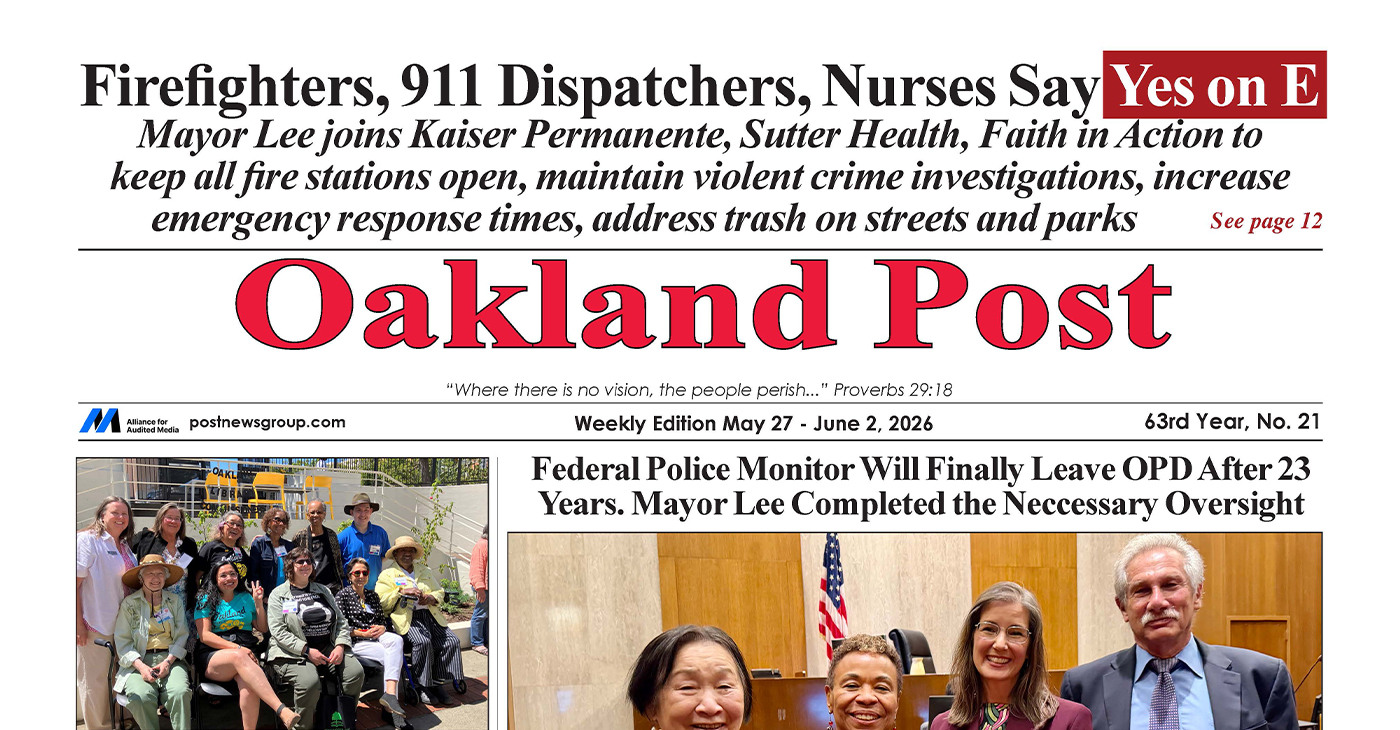
Oakland Post: Week of May 27 – June 2, 2026
The printed Weekly Edition of the Oakland Post: Week of May 27 – June 2, 2026
To enlarge your view of this issue, use the slider, magnifying glass icon or full page icon in the lower right corner of the browser window.
Activism
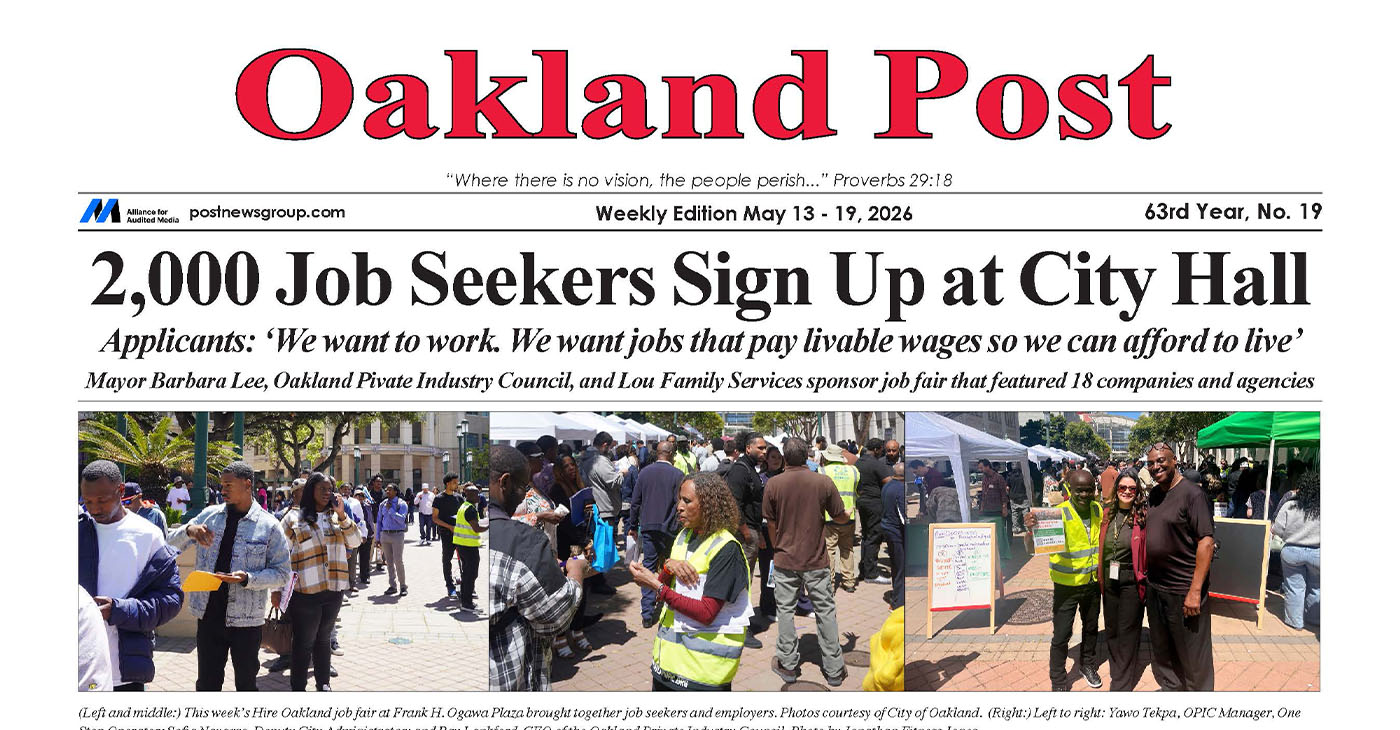
Oakland Post: Week of May 20 – 26, 2026
The printed Weekly Edition of the Oakland Post: Week of May 20 – 26 2026
To enlarge your view of this issue, use the slider, magnifying glass icon or full page icon in the lower right corner of the browser window.

WORK FROM HOME
Home-based business with potential monthly income of $10K+ per month. A proven training system and website provided to maximize business effectiveness. Perfect job to earn side and primary income. Contact Lynne for more details: Lynne4npusa@gmail.com 800-334-0540


Oakland Director Boots Dazzles Once Again in ‘I Love Boosters’

After 10-Year Wait, Fillmore Heritage Center Reopens in San Francisco

COMMENTARY: Black Music is the Sound of Black Freedom: Let Us Reclaim Both This Juneteenth

Oakland Post: Week of June 3 – 9, 2026

Study: Waiting Lists for Child Care Assistance Nearly Doubled

Venus Williams Calls a Sabalenka Exit a Tragedy

COMMENTARY: Using Art, Healing, And Community to Transform Mental Health Dialogue

Uptown Music Theatre Summer Camp Returns to Inspire the Next Generation of Performers

5 Cleveland Police Officers Injured, Gunfire Erupts During East Side Pursuit

15-YEAR-OLD COLUMBUS GIRL DIES, Community Mourns as Authorities Urge Water Safety Awareness

Let’s Talk Karmelo Anthony!

2026 World Cup is Here and Atlanta is Ready For It

COMMENTARY: What Andrew Young Reminded Me About Baltimore

COMMENTARY: When Politics Intersects with Professional Sports

K4: Crucial Driving Advice BEFORE You Buy! #shorts

Book Review: Books for College-Bound Students

Against All Odds: Mary Jackson’s Journey to NASA Engineer

Q&A with Steven Bradford: Why He Wants Your Vote for California Insurance Commissioner

OPINION: The Fire of Oakland’s Justin Jones

The Marin City Flea Market Is Back

California Launches Free Diaper Program for Newborns Statewide

The Ladies of Delta Sigma Theta Hold Day of Advocacy at the Capitol in Sacramento

EBMUD Enshrines the Legacy of its First Black Board Member William ‘Bill’ Patterson

Oakland Post: Week of May 6 – 12, 2026

OP-ED: Small Businesses Need Minnesota to Act on Pass-Through Tax Policy

Oakland Mayor Pushes Charter Overhaul to Clarify Roles in City Government, Increase Accountability and Improve Service Delivery

Snoop Dogg Celebrates 10 Til’ Midnight at the Compound

2026 Lucid Air Grand Touring Review — Is This $136K EV Sedan Worth It?

Mayor Barbara Lee Declares ‘Delroy Lindo Day,’ Presents Acclaimed Actor with Key to the City

Marin City Public Housing Residents Demand a Voice in County’s Renovation Plans

Hyundai Ioniq 5 Parking, Safety, and 360 View #shorts

2025 Ioniq 5 New Wiper & Powerful Performance! #shorts

Electric SUV Range: Is 259 Miles Enough? #shorts

EV Charging: How Fast Can You Charge an Electric Vehicle? #shorts

Biometric Cooling… Messaging Seats…Come on! 2025 Infiniti QX80 Autograph 4WD

Charged Up: Witness the Magic of a Fully Electric Car! #shorts

Range Rover Sport PHEV Included…: See What’s Inside This Luxury SUV! #shorts

Invisible Hood View: Perfect Parking with X-Ray Vision! #shorts

AI Is Reshaping Black Healthcare: Promise, Peril, and the Push for Improved Results in California

ESSAY: Technology and Medicine, a Primary Care Point of View

Sanctuary Cities

The RESISTANCE – FREEDOM NOW

STATE OF THE PEOPLE: Freddie

ECONOMIC BOYCOTT DAY!!!!!

I told You So
-
 Advice4 weeks ago
Book Review: Books for College-Bound Students
-
 Arts and Culture4 weeks ago
Against All Odds: Mary Jackson’s Journey to NASA Engineer
-
 Bay Area4 weeks ago
Q&A with Steven Bradford: Why He Wants Your Vote for California Insurance Commissioner
-
 Activism4 weeks ago
OPINION: The Fire of Oakland’s Justin Jones
-
 Alameda County4 weeks ago
The Marin City Flea Market Is Back
-
 Activism4 weeks ago
California Launches Free Diaper Program for Newborns Statewide
-
 Activism4 weeks ago
The Ladies of Delta Sigma Theta Hold Day of Advocacy at the Capitol in Sacramento
-
 Activism4 weeks ago
EBMUD Enshrines the Legacy of its First Black Board Member William ‘Bill’ Patterson
