
#NNPA BlackPress
Bill Cosby: The Fight, The Legacy, The Flowers He’s Earned
BLACKPRESSUSA NEWSWIRE — Six years ago this month, Bill Cosby was sentenced to prison. For some, it was the spectacle of a fallen idol. For others, it was the raw proof that this nation, still drunk on its own lies, can summon racism from the judge’s bench, let it seep into the prosecutor’s chair, and finally stain the jury box.


By Stacy M. Brown
Black Press USA Senior National Correspondent
Six years ago this month, Bill Cosby was sentenced to prison. For some, it was the spectacle of a fallen idol. For others, it was the raw proof that this nation, still drunk on its own lies, can summon racism from the judge’s bench, let it seep into the prosecutor’s chair, and finally stain the jury box. What was lost, what was deliberately hidden, is that Cosby—blind, wealthy, eighty years old—could have walked out untouched if he had only bent his back, signed a paper, confessed to a sin he swore he did not commit. He refused. He chose prison over surrender, isolation over capitulation. That act alone, in a country that has always demanded Black men bow their heads, ought to have been recognized as a radical declaration of dignity.
Refusing the Easy Way Out
Cosby remembered, on Let It Be Known, how they dangled freedom like meat before a starving man. “My lawyer came to me and said, the district attorney is offering you to sign a paper saying you did it… and that you wouldn’t have to do prison time,” he said. “I told my lawyer to continue with the trial… I wasn’t signing any papers or anything.” Even when caged, blind, and stripped of freedom, they offered him release if only he would renounce himself. “Sign the paper and go to these classes, and then we will let you go. Well, my signature would be in a sealed envelope, and nobody could open it.” Again, he refused. He could have chosen the coward’s path. He could have lived out his days in comfort. Instead, he chose to carry innocence as a burden, fully believing that he might never walk free again.

A Courtroom Steeped in Racism
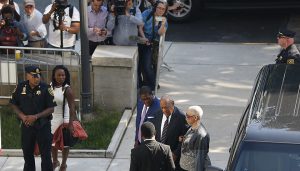
Bill and Camille Cosby, at right, arrive at the Montgomery County Courthouse in Norristown, Pa., on June 12, 2017. Cosby is on trial for sexual assault. (POOL PHOTO)
And in those courtrooms, the poison was naked. Black jurors were denied with cynical ease. A Black woman police officer was struck from service, not because she was unfit, but because she had once beaten back a false charge laid against her. At the retrial, when one Black juror was finally seated, a prosecutor spat, “You got your one.” Another juror declared Cosby guilty before hearing a single word and was still allowed to sit in judgment. And the judge—who should have been the steward of justice—was said to have whistled the theme from Kill Bill outside the jury room before the verdict in the retrial was returned.
The first trial ended in a mistrial, the jury grinding nearly 60 hours before breaking. They had leaned toward acquittal, but the judge forced them back. After the second trial ended in conviction, and when prosecutors argued he might flee because “he has a plane,” Cosby exploded once jurors left the room: “He doesn’t have a plane, you a–hole! I’m sick of him!” Never forget that prosecutors across jurisdictions passed on every other accusation. Only one case was carried forward—and even that was not about rape. The alleged victim admitted to bitterness when Valentine’s Day passed without a call. She later dialed Cosby to ask for tickets to his show for her parents. But facts were never the point. The performance of guilt was the only script the court was willing to stage.
With the Media, The Lie had No Rival.
Camille Cosby walked through those halls like a prophetess, entering a place fouled with racial contempt. She smiled, spoke softly to her husband, and left. That smile, quiet yet defiant, seemed to say: I know exactly what is happening here. And the media, hungry and complicit, huddled with the prosecutor’s mouthpiece to make certain every headline sang the same hymn of untruth. With no cameras in the room, the lie had no rival. The mention of Quaaludes covered newspapers and flooded television news, but the case was about Benadryl, 1 and a half tablets. Fiction and made-up lies were the norm at Cosby’s trials. Mainstream media pushed the narrative that Cosby “slipped” drugs into an unsuspecting woman’s beverage. However, no evidence of such was presented at trial.
Not discussed was how prevalent Quaalude use was among both sexes. The pill they called a disco biscuit was never just a drug but a mirror of America’s hunger for escape, a hunger dressed in sequins and sweat beneath the lights of Studio 54. Hugh Hefner reportedly handed them out like candy in his mansion; a promise wrapped in velvet but steeped in surrender. Andy Warhol scribbled about them in his diaries; the artist turned witness to a culture stumbling between decadence and decay. Later, Jordan Belfort made them infamous in a Wall Street gone wild, his intoxication filmed and sold as entertainment. Notably, during the second trial, when the judge stunningly allowed as many as 20 women to testify, an accuser swore she had already ingested a Quaalude before she visited Cosby with a friend in the 1970s. Another witness testified that she left her boyfriend on an exotic island after Cosby called with a job offer in Nevada, only to be miffed about Cosby’s indifference.
Still another wrote glowing words about Cosby in her autobiography, yet completely changed the story on the witness stand. When Cosby’s team wanted to put forth a witness who allegedly was with the primary accuser when the woman had come up with a ruse to “set Cosby up,” the judge refused to allow her to tell the jury. Striking was the one person who seemed, by far, the most credible witness. A chef who worked for Cosby was present on the night of the alleged incident. That chef, a meticulous older man, testified that the visit by the accuser for which Cosby was on trial occurred on his last night in Cosby’s employ. Significantly, it proved that even if something nefarious took place, which Cosby vehemently denied, it happened well outside the statute of limitations. Among other things, the state Supreme Court agreed. The justices said the trial was illegal, should never have taken place, and the verdict was wrong. The justices ordered that prosecutors refrain from going after Cosby again.
Inside Prison Walls
Behind walls meant to break him, Cosby spoke to men the world had abandoned. At SCI–Phoenix, he joined Man Up, blind, in a wheelchair, addressing those whose bodies bore chains. After speaking of his heroes, one inmate told him, “I will be your hero, Mr. Cosby.” He spoke to Men of Valor, too. “I noticed that in the Bible, the parts about Jesus, Jesus never smiled. And I want you, if you are going to do what you say you are going to do in your turnaround, make Jesus smile.”
Pound Cake Then and Now
In 2004, Cosby thundered about a boy shot dead for stealing pound cake. “And then we all run out and are outraged, the cops shouldn’t have shot him. What the hell was he doing with the pound cake in his hand?” He called out the rot of absent parenting. Now, with years and prison behind him, he said again: “They are putting us under siege.” At Phoenix, sagging pants and untied laces were forbidden. To him, these were not fashion, but chains disguised as choice. “They would rather have a picture of a youth doing nothing, not studying, and have his pants lowered.”
Camille’s Strength
It was Camille who preserved him. “My wife, Camille, is not only a very intelligent woman, but she is a woman who saved my mother’s life, and she has saved my life by continuously saying, it’s what you put in your mouth,” he said. “She makes sure that we eat like that, and that’s why, at age 88, I’m cancer-free, and I don’t have any ailments of forgetting things.” From prison, when he phoned, Camille silenced his weakness. “Whenever I called her, I just badly wanted to tell her how I felt,” Cosby said. “And she would say, ‘Just be quiet.’” He had called her strength “love and the strength of womanhood. And you could reverse it, the strength of womanhood and love.”
Giving Back
Cosby and Camille poured more than $200 million into higher education, including $20 million to Spelman College, at that time the largest gift ever given to an HBCU. Those gifts were not simply donations. They were lifelines—scholarships, endowments, futures carved from generosity.
Television and Film Legacy
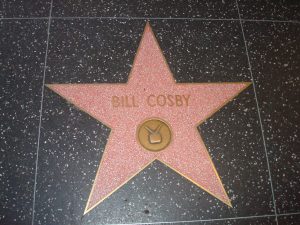
Cosby broke into I Spy, the first Black co-lead in a drama. He created Fat Albert, a mirror for Black children. He built The Cosby Show, which for five years reigned supreme, showing Cliff and Clair Huxtable as what America insisted could not exist: a Black family whole, professional, and loving. A Different World sent young people surging toward HBCUs. And with Sidney Poitier, he made Uptown Saturday Night, Let’s Do It Again, A Piece of the Action—comedies still treasured in Black homes, still testaments to resilience and wit when Hollywood offered little but caricature. Cosby demanded truth on screen. When told to strip a poster from Theo’s wall—one that read “Abolish Apartheid”—he warned them: “If you do, you can take the show with it.”
The Black Press
Unlike so many others who rose to fame, Cosby never turned his back on the Black Press. His only prison interview was with the Black Press. His first long interview after release was again with the Black Press. In 2014, he said, “I only expect the black media to uphold the standards of excellence in journalism, and when you do that, you have to go in with a neutral mind.”
Deserving a Parade
Cosby’s path has been strewn with glory, grief, and betrayal. Yet what remains is a record that cannot be erased. He shattered television’s barriers, poured hundreds of millions into education, gave film and television back to his people, and stood on innocence when it would have been so easy to surrender. Through it all, he was held by Camille, and he never abandoned the Black Press. We say, give flowers to the living. Bill Cosby has earned more than flowers. For what he has given Black culture, he deserves a parade. And somewhere, the ticker tape waits.












#NNPA BlackPress
NFL: Week Two Recap | Jalen Hurts did not fold; Caleb Williams exits game with injury
Philadelphia Eagles quarterback Jalen Hurts found Darius Cooper with nine seconds left for the game winning touchdown as his team beat the Tennessee Titans 24-20 in Nashville. Hurts finished the day 26/37 for 264 yards. He threw for two touchdowns and two interceptions. Prior to the final drive, the Eagles ran 25 plays for 45 […]
The post NFL: Week Two Recap | Jalen Hurts did not fold; Caleb Williams exits game with injury appeared first on BlackPressUSA.

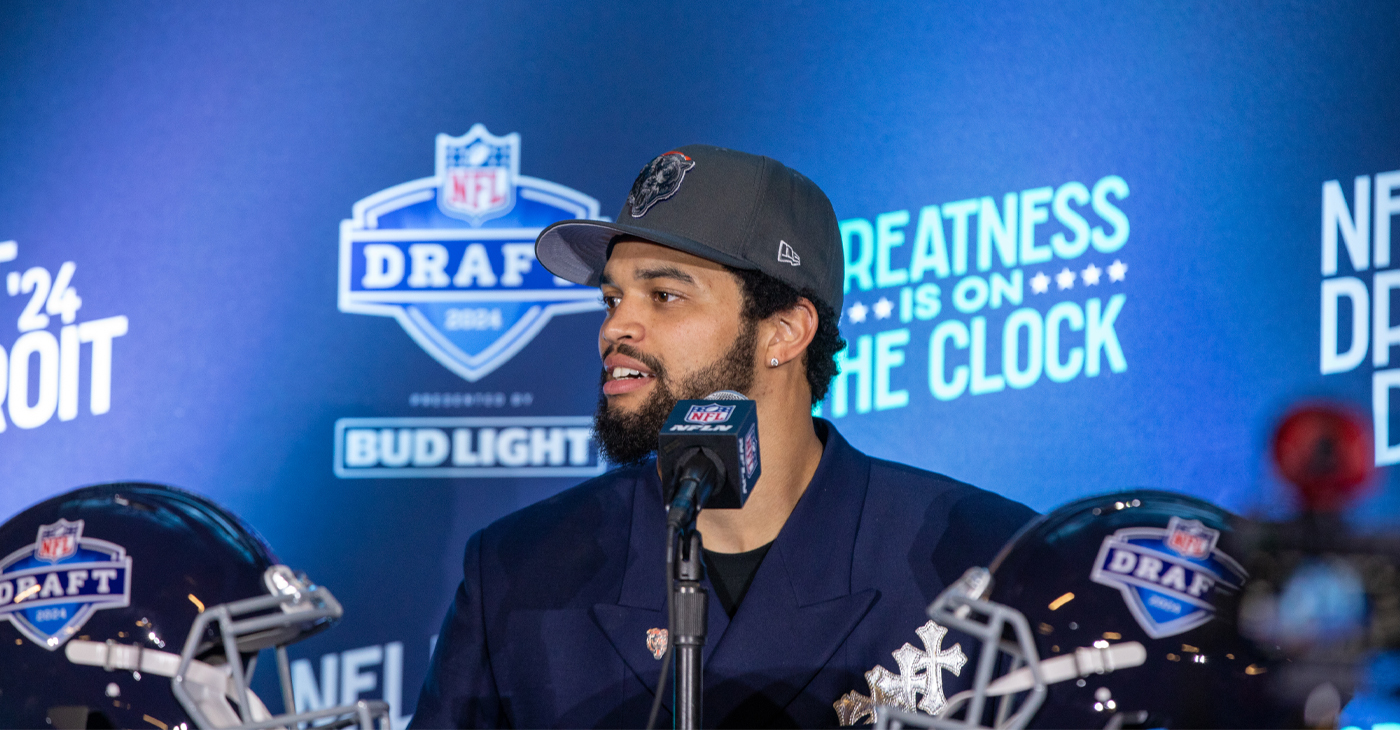
Philadelphia Eagles quarterback Jalen Hurts found Darius Cooper with nine seconds left for the game winning touchdown as his team beat the Tennessee Titans 24-20 in Nashville. Hurts finished the day 26/37 for 264 yards. He threw for two touchdowns and two interceptions.
Prior to the final drive, the Eagles ran 25 plays for 45 yards. During the final drive Hurts went 6-8 with 61 passing yards and the touchdown. Titans defensive tackle — and team captain — Jeffery Simmons said this week that the way to defend Jalen Hurts is to make him “play quarterback.”
Hurts said to Simmons after today’s game: “You started that sh**. I had to finish it.”
Running back Saquon Barkley suffered a stinger in the first half but he ultimately finished the game. He had four carries and nine yards and one catch for eleven yards. He will get an MRI for his injury, but admitted to Cameron Wolfe of the NFL Network he was fine.
Caleb Williams leaves game against Vikings with apparent lower-body injury
Chicago Bears quarterback Caleb Williams was helped off the field with a right leg injury with 7:42 remaining in the fourth quarter. Williams was down, writhing in pain after scrambling to his left. After departing the injury tent, Williams raised his right fist, acknowledging the crowd while expressing his frustration. Testing will commence on Monday to find out more details about his injury.
“We’ll know tomorrow,” Johnson admitted regarding Williams’ injury. “He’s in good spirits. He’s a team player.”
Williams finished the day with 138 passing yards and one interception.
“I’m actually happy it’s nothing with the knee — that was my first inclination,” Johnson said. “But, a hamstring could be pretty damaging as well. So, we’ll see. We’ll see how bad it is tomorrow and we’ll go from there.”
Bryce Young once again dominated the Falcons
Carolina Panthers quarterback Bryce Young is 5-1 against the Atlanta Falcons and is undefeated at Mercedes-Benz Stadium. Today, Young threw for 287 yards and three touchdowns as he led the Panthers to a 34-3 dismembering of the Atlanta Falcons. Georgia Tech alumnus Darren Waller caught two touchdowns and linebacker Devin Lloyd returned one of his two interceptions for a touchdown.
Cooper Rush started his second straight game for the Falcons and it did not go well. The partisan crowd voiced their displeasure after Rush completed 10/17 passes for 86 yards and two interceptions. Jack Strand entered the game for Rush prompting cheers from the Falcons fans. The rookie threw a pick-six on his first career pass attempt. Strand was the first QB to accomplish that feat since Sam Darnold in 2018 and is the first Falcons player to do that since Brett Favre in 1991. Strand finished the day with 59 passing yards and 16 rushing yards.
According to reports, quarterback Michael Penix, Jr. is expected to make his season debut this Thursday at the Green Bay Packers. His return should help the Falcons. They are the first team since the 2008 Rams to not run any plays in the red zone after the first two games to open a season.
The bright spots for the Falcons today were the Spelman College Jaguarettes performing with the Falcons cheerleaders and Florida A&M’s marching band, The Marching 100, also performed during halftime!
Jayden Daniels gets carted off after apparent arm injury
Washington Commanders quarterback Jayden Daniels appeared to injure his left elbow on the final play of the first half in his game against the Dallas Cowboys. During the play, Daniels got stepped on, braced himself for the fall, and his elbow bent the wrong way. Daniels draped a towel over his head as he exited the field on the cart.
He was later ruled out.
Daniels suffered a dislocated elbow to the same arm during week nine of last season against the Washington Commanders, which led to him being shut down for the remainder of the season.
The post NFL: Week Two Recap | Jalen Hurts did not fold; Caleb Williams exits game with injury appeared first on BlackPressUSA.

#NNPA BlackPress
The Complete Negotiation Framework — Every Stage, Every Tactic, Every Win
Master the complete vehicle-purchase negotiation framework with Roosevelt Gist and Roosevelt. Learn every stage, tactic, and win!
The post The Complete Negotiation Framework — Every Stage, Every Tactic, Every Win appeared first on BlackPressUSA.

Roosevelt Gist and Roosevelt deliver the complete vehicle-purchase negotiation framework in Episode 8 of The Color of Our Money Is Green. This episode covers the three foundations of every effective negotiation, the full seven-stage negotiation sequence with exact language for every stage, and five of the most common dealership tactics with the specific response each one requires.
What You Learn in This Episode:
The three foundations that make every negotiation tactic work
The complete seven-stage car-buying negotiation sequence
Exact language for every stage of the dealership conversation
Five common dealership tactics — the turnover, the four-square, the packed payment, spot delivery, and forced add-ons — and how to counter each one
Why signing preliminary paperwork isn’t the same as signing the final contract
___________________________________________________________________
“The Color of Our Money Is Green: A Buyer’s Guide to What Cars Actually Cost” — stan.store/RGist
____________________________________________________________________
AutoNetwork helps serious car shoppers inspect any new vehicle online before walking into a dealership. I’m Roosevelt — I’ve been reviewing cars and shaping digital car buying and credit union auto leasing since before YouTube car reviews existed.
You’ll find detailed walkaround reviews, POV test drives, and buyer-focused breakdowns covering comfort, space, features, and real-world value.
How to use the channel:
Watch the walkaround of the car you’re considering
Visit AutoNetwork.com for the full review
Check CouponsOffersAndDeals.com for current dealer specials
Walk in already knowing what you want — and what it should cost
 AutoNetwork.com
 CouponsOffersAndDeals.com
Affiliate disclosure: some links earn a small commission at no cost to you and help support the channel. Insta360 is one of those partners.
The post The Complete Negotiation Framework — Every Stage, Every Tactic, Every Win appeared first on BlackPressUSA.
#NNPA BlackPress
Mazda CX-90 Luxury: Heated Seats & Premium Comfort! #shorts
Stay toasty in the CX-90! Plush Nappa leather, heated/ventilated seats, and a memory-equipped heated steering wheel deliver ultimate luxury.
The post Mazda CX-90 Luxury: Heated Seats & Premium Comfort! #shorts appeared first on BlackPressUSA.

Experience ultimate comfort in the CX-90. Nappa leather, heated/ventilated seats, 8-way power adjustments, and memory settings for both front passengers. The heated steering wheel with memory tilt/telescope adds premium convenience.
 Watch the full video: https://youtu.be/EH5A4eQ4ipY
#AutoNetwork
The post Mazda CX-90 Luxury: Heated Seats & Premium Comfort! #shorts appeared first on BlackPressUSA.


Listening as a Lifeline: A Doula’s Witness to Black Maternal Health

New Protections for Ticket Buyers: Gov. Newsom Signs Assemblymember Isaac Bryan’s Bill

‘We Don’t Talk Trash — We Pick Up Trash!’

Zakiya Jendayi Arrested, Locked Out of Home by Sheriff’s Deputies

Oakland Post: Week of September 30 – October 6, 2026

Asm. Corey Jackson Announces Launch of 24-Hour Childcare in His District

IN MEMORIAM: The Rev. Leon “Sonny” Clark, Longtime Orange County Pastor and Community Leader, Dies at 72

Poll: Becerra Widens His Lead Over Hilton; Californians Split on Wealth Tax

From Historic Memories to New Possibilities: Oakland Celebrates Coliseum 60

County Office of Education Says OUSD Finances Are Getting Healthier, Materially Stronger

LIVE FREE Sunday Dinner Brings Faith, Fellowship and Civic Conversation to Oakland

Remembering Chauncey Bailey as Student Journalists Face Threats to Truth-Telling

BLACspace Cooperative Invites Bay Area to Experience Oakland’s Black Cultural Ecosystem Through a BLAC Map Tour + Party

In Wake of Death on Doorstep, Williams Chapel Baptist Church Calls for Better Care, Funding for Unhoused

Oakland Centenarian Nuna McKee Honored!

Standoff for Justice: Our Homes Are Worth Fighting For

Oakland Post: Week of August 26 – September 1, 2026

Frontier Airlines’ Return to Oakland Airport Brings Flights, Jobs and Opportunity

Gubernatorial Candidate Steve Hilton Blasts California New Tire Rules; Newsom Hits Back

Chef Sharon Lee Blends Culinary Excellence, Education and Empowerment

Jackie Wright Champions Bay Area Stories, Filmmakers and Cultural Institutions

Oakland Coliseum Project Opens Door for Small Businesses to Build Bigger

Big City Mayors Ask for “Yes” Vote on Housing Bond Measure; Conservatives Say “No”

Misnamed ‘Parent’ PAC Seeks to Influence Oakland School Board Elections

Gov. Newsom’s Latest Appointees Include Sacramento Advocate for Formerly Incarcerated Students; State’s New Tech Chief

Longtime BWOPA Member Brendalyn Goodall Appointed to California Workforce Development Board

Gov. Newsom Signs Law Shielding Immigration Aid Workers From Doxing Threats

Secretary of State Shirley N. Weber Urges Californians to Vote Early as Voter ID Battle Intensifies

Oakland Post: Week of September 2 – 8, 2026

IN MEMORIAM: Dolly Parton Dead at 80 — How She Built a Legacy of Love and Earned Her Place in Black Culture

The Conversation With Al McFarlane 6/23/26

Media Monday 6/22/26

LIVE! ASK ALMA! — TUES. 6.23.26 7PM EST

Car Buying Secrets: 4 Hidden Checks Before You Sign!

Is This 550 HP Charger Worth YOUR Money? AutoNetwork Review

Celebrating Juneteenth – Frederick Douglass on education and resistance

LIVE! — ASK ALMA! — TUES. 6.19.26 7PM EST

Hyundai Ioniq 5 Parking, Safety, and 360 View #shorts

2025 Ioniq 5 New Wiper & Powerful Performance! #shorts

Electric SUV Range: Is 259 Miles Enough? #shorts

EV Charging: How Fast Can You Charge an Electric Vehicle? #shorts

Biometric Cooling… Messaging Seats…Come on! 2025 Infiniti QX80 Autograph 4WD

Charged Up: Witness the Magic of a Fully Electric Car! #shorts

Range Rover Sport PHEV Included…: See What’s Inside This Luxury SUV! #shorts

Invisible Hood View: Perfect Parking with X-Ray Vision! #shorts
-
 Community3 weeks ago
Misnamed ‘Parent’ PAC Seeks to Influence Oakland School Board Elections
-
 Activism4 weeks ago
Oakland Post: Week of September 2 – 8, 2026
-

 Community3 weeks ago
Richmond Tiny House Village Farm & Garden Set to Open Gates on Sept. 26
-

 Activism3 weeks ago
Oakland Post: Week of September 9 – 15, 2026
-

 Black History3 weeks ago
Latest Massacre in Haiti Reveals Cruelty U.S. Deportations
-

 Black History3 weeks ago
OPINION: Nolan Wells’ Death One of Several Signifying Racial Terror Lives on in U.S. South
-

 Community3 weeks ago
Democratic Clubs Interview Candidates for Oakland School Board
-

 Business2 weeks ago
Mayor Lee Announces $1 Million Kaiser Permanente Grant for Pilot Program to Address Homelessness, Clean Up Public Spaces throughout Oakland
