
Activism
Black Lives Matter, Stacey Abrams Nominated for Nobel Peace Prize
“We hold the largest social movement in global history,”


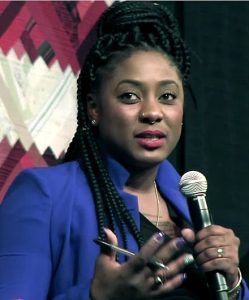

Patrisse Cullors
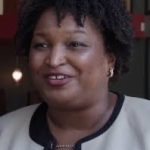
Stacey Abrams

Patrisse Cullors
The Black Girl Magic just keeps on keeping on.
Black Lives Matter, founded by Patrisse Cullors, Opal Tometi and Oakland’s own Alicia Garza, won Sweden’s Olof Palme human rights prize for 2020 on Saturday and was nominated for the Nobel Peace Prize along with voting rights activist and lawyer Stacey Abrams.
BLM was founded in 2013 after the acquittal of the man who killed 17-year-old Trayvon Martin who was attacked on his way home from a walk to the local store in Sanford, Fla., in February of 2012.
Seven years later, after the high-profile killing of George Floyd and others, about 20 million people took to the streets in protest in the U.S. and around the world using the name of the loosely structured organization.
“This illustrates that racism and racist violence is not just a problem in American society, but a global problem,” Palme prize organizers said.
In awarding the $100,000 prize last weekend, organizers said the foundation had “in a unique way exposed the hardship, pain, and wrath of the African-American minority at not being valued equal to people of a different colour.”
Around the same time, BLM was nominated for a Nobel Peace Prize by Norwegian lawmaker Petter Eide. In his nomination papers, Eide said BLM deserved the award “for their struggle against racism and racially motivated violence… BLM’s call for systemic change have spread around the world, forcing other countries to grapple with racism within their own societies.”
“We hold the largest social movement in global history,” Black Lives Matter tweeted in response on January 29. “Today, we have been nominated for the Nobel Peace Prize. People are waking up to our global call: for racial justice and an end to economic injustice, environmental racism, and white supremacy. We’re only getting started.”
Eide has since taken some heat from critics who believe BLM is a violent organization. But he reminded them that similar criticism arose when Rev. Dr. Martin Luther King Jr. was nominated and later received the Nobel prize in 1964.
BLM, to Eide, follows in King’s footsteps as well as in those of anti-apartheid freedom fighter Nelson Mandela in 1993.
Eide’s sentiments paralleled those of Lars Haltbrekken, a Norwegian legislator who nominated Stacey Abrams for the Nobel Peace prize on Saturday.
Abrams, the powerhouse who fought the voter suppression tactics that are believed to have led to her defeat in Georgia’s gubernatorial race in 2018, was nominated for the prize for helping to boost voter turnout in 2020 through nonviolent activism.
In a statement released to Reuters, Haltbrekken said, “Abrams’ work follows in Dr. Martin Luther King Jr.’s footsteps in the fight for equality before the law and for civil rights.”
Abrams launched Fair Fight, a voting rights movement encouraging voter registration, after she lost the gubernatorial race by 55,000 votes as her opponent, the Georgia Secretary of State at the time, purged thousands from the voter rolls.
“In the wake of the election, my mission was to figure out what work could I do, even if I didn’t have the title of governor,”Abrams said at the time. “What work could I do to enhance or protect our democracy? Because voting rights is the pinnacle of power in our country.”
Fair Fight was her answer to that question.
“Abrams’ efforts to complete King’s work are crucial if the United States of America shall succeed in its effort to create fraternity between all its peoples and a peaceful and just society,” Haltbrekken said.
If she wins, Abrams would join fellow Georgians King and former president Jimmy Carter, who won in 2002, as Nobel Peace prize winners.
Abrams’ declined to comment on the nomination.
Nominating someone is relatively easy, though not taken lightly. Members of national legislatures, universities, international courts of law and former Nobel winners are among those who can put a name to the Nobel committee. Last year, there were 210 individuals nominated and 107 organizations were nominees for the peace prize, which comes with a cash award of$1,145,000.
The Nobel committee will announce the short list of nominees in March.
Reuters, The Atlanta Journal-Constitution, BBC News and CBS news are the sources for this report.






Activism
Oakland Post: Week of March 18 – 24, 2026
The printed Weekly Edition of the Oakland Post: Week of March 18 – 24, 2026


To enlarge your view of this issue, use the slider, magnifying glass icon or full page icon in the lower right corner of the browser window.

Activism
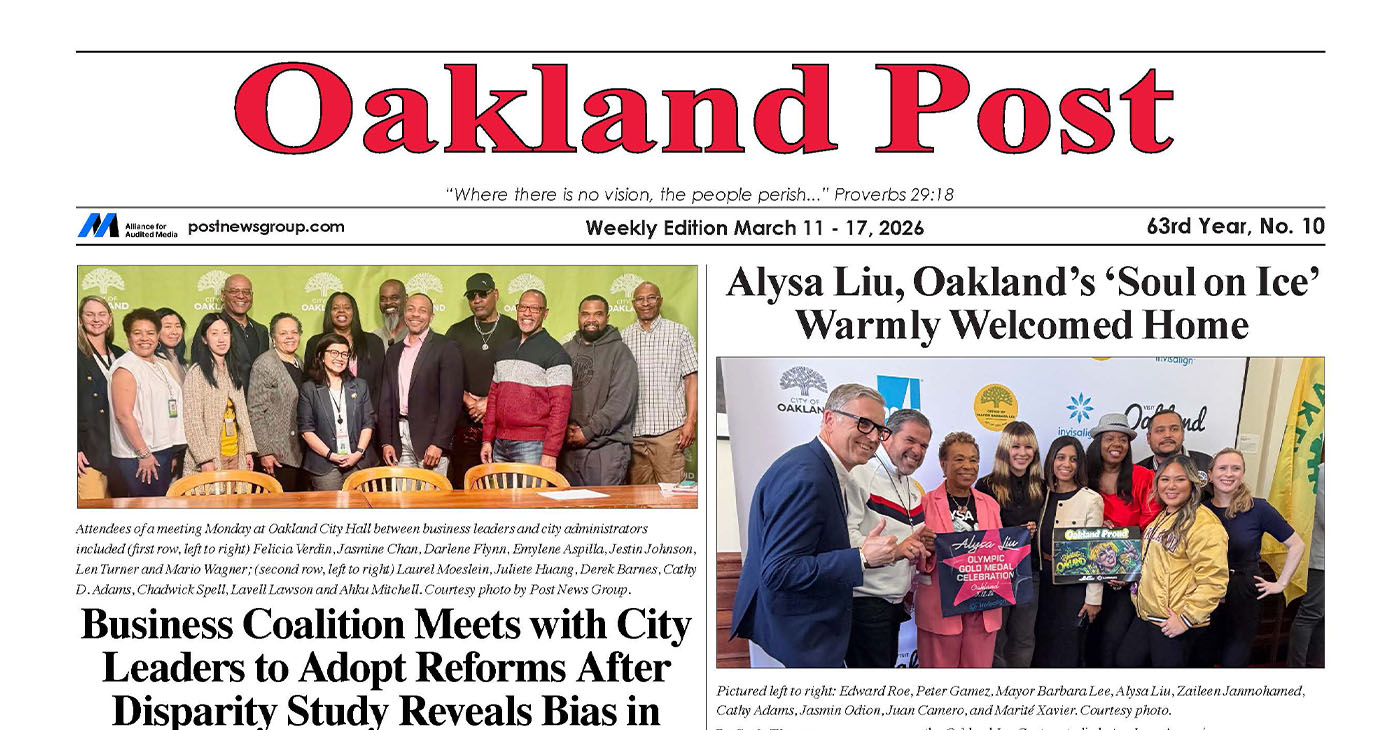
Oakland Post: Week of March 11 -17, 2026
The printed Weekly Edition of the Oakland Post: Week of March 11 – 17, 2026
To enlarge your view of this issue, use the slider, magnifying glass icon or full page icon in the lower right corner of the browser window.
Activism
Oakland Post: Week of March 4 – 10, 2026
The printed Weekly Edition of the Oakland Post: Week of March 4 – 10, 2026

To enlarge your view of this issue, use the slider, magnifying glass icon or full page icon in the lower right corner of the browser window.

WORK FROM HOME
Home-based business with potential monthly income of $10K+ per month. A proven training system and website provided to maximize business effectiveness. Perfect job to earn side and primary income. Contact Lynne for more details: Lynne4npusa@gmail.com 800-334-0540


Black Artists in America, Installation Three Wraps at the Dixon Gallery and Gardens

Grief, Advocacy, and Education: A Counselor Reflects on Black Maternal Health

Future of Florida’s Black History Museum in Limbo

New Research Shows the Many Benefits of Early Learning

South Hampton K-8 Students Among Top 10 Finalists for Samsung’s ‘Solve for Tomorrow’ Competition

Cuba: No Negotiation with US on the President or Political System

Brooklyn Academy of Music Names Jamaican-Born Tamara McCaw as President

Trinidad & Tobego – U.S. Launches WhatsApp Channel for American Citizens in the Country

Oakland Post: Week of March 18 – 24, 2026

AI Innovation vs. Ethics and Environmental Impact

AI, Web3, and Digital Reparations

What If You Owned Your AI Agent?

Season 7, Episode 3 – January Reporter’s Roundtable 📱

Season 7, Episode 3 – January Reporter’s Roundtable

AI, Media, and Power | Part 2, Real-World Impacts and Tradeoffs

Reflecting on Black History Milestones in Birmingham AL

CITY OF SAN LEANDRO STATE OF CALIFORNIA PUBLIC WORKS DEPARTMENT ENGINEERING DIVISION NOTICE TO BIDDERS FOR ANNUAL STREET OVERLAY/REHABILITATION 2019-21 – PHASE III

Oakland Post: Week of February 18 – 24, 2026

Oakland Post: Week of February 25 – March 3, 2026

PRESS ROOM: NBA Hall of Fame Nominee Terry Cummings Joins 100 Black Men of DeKalb County to Launch Victory & Values Initiative

Trump’s MAGA Allies are Creating Executive Order Plan to Steal the 2026 Midterms

Oakland Post: Week of March 4 – 10, 2026

Chase Oakland Community Center Hosts Alley-Oop Accelerator Building Community and Opportunity for Bay Area Entrepreneurs

U.S. manufacturing rebounds – how foundry services are adapting to rising demand

Poll Shows Support for Policies That Help Families Afford Child Care

OP-ED: One Hundred Years of Black Workers Telling the Truth

Advancements in solar technology that are changing the way we power the world

Woman’s Search for Family’s Roots Leads to Ancestor John T. Ward – A Successful Entrepreneur and Conductor on the Underground Railroad

Oakland Post: Week of March 11 -17, 2026

PRESS ROOM: Civil Rights TV Launches in Selma as the World’s First 24/7 Civil Rights Television Network

Hyundai Ioniq 5 Parking, Safety, and 360 View #shorts

2025 Ioniq 5 New Wiper & Powerful Performance! #shorts

Electric SUV Range: Is 259 Miles Enough? #shorts

EV Charging: How Fast Can You Charge an Electric Vehicle? #shorts

Biometric Cooling… Messaging Seats…Come on! 2025 Infiniti QX80 Autograph 4WD

Charged Up: Witness the Magic of a Fully Electric Car! #shorts

Range Rover Sport PHEV Included…: See What’s Inside This Luxury SUV! #shorts

Invisible Hood View: Perfect Parking with X-Ray Vision! #shorts

AI Is Reshaping Black Healthcare: Promise, Peril, and the Push for Improved Results in California

ESSAY: Technology and Medicine, a Primary Care Point of View

Sanctuary Cities

The RESISTANCE – FREEDOM NOW

STATE OF THE PEOPLE: Freddie

ECONOMIC BOYCOTT DAY!!!!!

I told You So
-
 Activism4 weeks ago
Oakland Post: Week of March 4 – 10, 2026
-
 #NNPA BlackPress4 weeks ago
Woman’s Search for Family’s Roots Leads to Ancestor John T. Ward – A Successful Entrepreneur and Conductor on the Underground Railroad
-
 Activism3 weeks ago
Oakland Post: Week of March 11 -17, 2026
-

 #NNPA BlackPress4 weeks ago
COMMENTARY: Women of Color Shape Our Past and Future
-

 #NNPA BlackPress4 weeks ago
OP-ED: NNPA Launches 2026 “Leadership Matters” Video Series
-

 #NNPA BlackPress4 weeks ago
Advocates Raise Alarm Over ICE Operation, MOU and Detention Risks in Baltimore County
-

 Advice3 weeks ago
Financial Wellness and Mental Health: Managing Money Stress in College
-

 #NNPA BlackPress4 weeks ago
Pete Buttigieg to Join Mayor Randall Woodfin for Community Town Hall in Birmingham
